
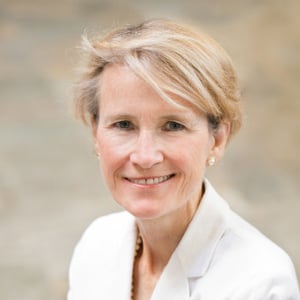
Professor, The University of Texas at Austin
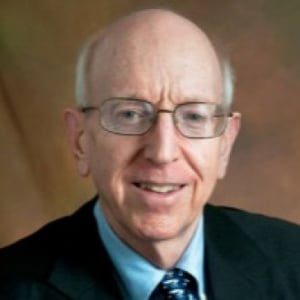
Senior Lecturer in Law, University of Chicago Law School
Following his graduation from Harvard Law School, Judge Posner clerked for Justice William J. Brennan, Jr. From 1963 to 1965, he was assistant to Commissioner Philip Elman of the Federal Trade Commission. For the next two years, he was assistant to the solicitor general of the United States. Prior to going to Stanford Law School in 1968 as Associate Professor, Judge Posner served as general counsel of the President's Task Force on Communications Policy. He first came to the University of Chicago Law School in 1969, and was Lee and Brena Freeman Professor of Law prior to his appointment in 1981 as a judge of the US Court of Appeals for the Seventh Circuit. He was the chief judge of the court from 1993 to 2000.
Judge Posner has written a number of books, including Economic Analysis of Law (9th ed., 2014); The Economics of Justice (1981); Law and Literature (3rd ed. 2009); The Problems of Jurisprudence (1990); Cardozo: A Study in Reputation (1990); The Essential Holmes (1992); Sex and Reason (1992); Overcoming Law (1995); The Federal Courts: Challenge and Reform (1996); Law and Legal Theory in England and America (1996); The Problematics of Moral and Legal Theory (1999); Antitrust Law (2d ed. 2001); Law, Pragmatism, and Democracy (2003); Catastrophe: Risk and Response (2004); Preventing Surprise Attacks: Intelligence Reform in the Wake of 9/11 (2005); How Judges Think (2008); A Failure of Capitalism: The Crisis of '08 and the Descent into Depression (2009); The Crisis of Capitalist Democracy (2010); The Behavior of Federal Judges: A Theoretical and Empirical Study of Rational Choice (coauthored with Lee Epstein and William M. Landes) (2013); and Reflections on Judging (2013). He also wrote books on the Clinton impeachment and Bush v. Gore, many articles in legal and economic journals, and book reviews in the popular press.
He has taught administrative law, antitrust, economic analysis of law, history of legal thought, conflict of laws, regulated industries, law and literature, the legislative process, family law, primitive law, torts, civil procedure, evidence, health law and economics, law and science, and jurisprudence. He was the founding editor of the Journal of Legal Studies and (with Orley Ashenfelter) the American Law and Economics Review. He is an Honorary Bencher of the Inner Temple and a corresponding fellow of the British Academy, and he was the President of the American Law and Economics Association from 1995 to 1996 and the honorary President of the Bentham Club of University College, London, for 1998. He has received honorary degrees from leading American and foreign universities, along with a number of awards, including the Thomas Jefferson Memorial Foundation Award in Law from the University of Virginia in 1994, the Marshall-Wythe Medallion from the College of William and Mary in 1998, the 2003 Research Award from the Fellows of the American Bar Foundation, the 2003 John Sherman Award from the US Department of Justice, the Learned Hand Medal for Excellence in Federal Jurisprudence from the Federal bar Council in 2005, the Thomas C. Schelling Award from the John F. Kennedy School of Government at Harvard University in 2005, and the Ronald H. Coase Medal from the American Law and Economics Association in 2010.

Thomas M. Siebel Senior Fellow, The Hoover Institution, Stanford University; Gary T. Schwartz Distinguished Professor of Law Emeritus, UCLA School of Law
Eugene Volokh is the Thomas M. Siebel Senior Fellow at the Hoover Institution (Stanford), as well as the Gary T. Schwartz Distinguished Professor of Law Emeritus and Distinguished Research Professor at UCLA School of Law. He recently retired from teaching at UCLA, after 30 years there, and is now focusing on research.
Volokh is the author of the textbooks The First Amendment and Related Statutes (8th ed. 2023), and Academic Legal Writing (5th ed. 2016), as well as over 100 academic law journal articles, mostly on First Amendment law. He is a member of The American Law Institute; the editor-in-chief of the Journal of Free Speech Law; and the creator and coauthor of The Volokh Conspiracy, a leading legal blog founded in 2002 (hosted at the Washington Post from 2014 to 2017 and now at Reason Magazine).
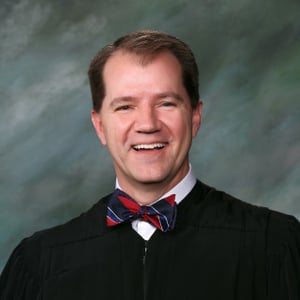
Judge, U.S. Court of Appeals, Fifth Circuit
Don Willett serves on the United States Court of Appeals for the Fifth Circuit.
Before joining the federal bench, Judge Willett served 13 years on the Supreme Court
of Texas. His career spans decades of public service, including roles as legal counsel to
a Texas Attorney General, a Texas Governor, a U.S. Attorney General, and the
President of the United States.
Raised by a heroic widowed mom in a doublewide trailer in a town of 32, Judge
Willett is his family’s first college graduate. He earned a triple-major B.B.A. from Baylor
University—where he serves on the Board of Regents—and three degrees from Duke
University—where he serves on the Board of Visitors: a J.D. with honors, an A.M. in
political science, and an LL.M. in judicial studies. After law school, he clerked on the
Fifth Circuit and practiced at Haynes and Boone before entering public service.
Judge Willett publishes widely in both leading law reviews and national media, including
The Yale Law Journal, The University of Pennsylvania Law Review, and The Wall Street
Journal. The longtime editor-in-chief of Judicature—the Scholarly Journal for Judges, he
holds academic appointments at various law schools and has received more than a
dozen Green Bag honors for “exemplary legal writing.” He was named Distinguished
Jurist of the Year by the Texas Review of Law & Politics, and he is a member of the
American Law Institute and a Life Fellow of the American, Texas, and Austin Bar
Foundations.
A onetime bull rider and professional drummer, Judge Willett was named “Tweeter
Laureate of Texas” in 2015. He is the namesake of Don R. Willett Elementary
School—home of mighty Willett Wranglers—located just a mile from where he grew up.
He and his radiant wife, Tiffany have three children—Jacob, Shane-David, and
Geneviève—plus the family pup, Amicus.
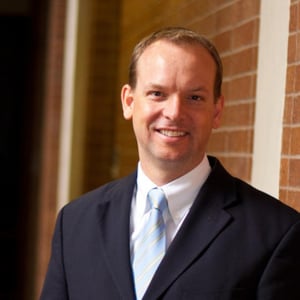
Sterling and Eleanor Colton Endowed Chair in Law; Associate Director, International Center for Law and Religion Studies, BYU Law
Professor Moore is a scholar of foreign relations law, international law, international human rights, and international development. His publications have appeared in the Harvard, Columbia, Virginia, and Northwestern Law Reviews, among others. Professor Moore has taught international law, international human rights, U.S. foreign relations law, civil procedure, legal scholarship, a plenary powers colloquium, and an international religious freedom clinic. As a teacher, he has been recognized with the University's R. Wayne Hansen Teaching and Learning Fellowship, the BYU Law Alumni Association Teacher of the Year Award, and the Student Bar Association First Year Professor of the Year Award. He is a member of the American Law Institute.
As a human rights expert, Professor Moore serves on the Organization for Security and Cooperation in Europe’s Moscow Mechanism. In 2020, he was elected to a brief term on the Human Rights Committee, a body of independent experts that oversees states’ compliance with the International Covenant on Civil and Political Rights. Professor Moore also serves as an Associate Director of the International Center for Law and Religion Studies, which seeks to secure the blessings of religious freedom and belief for everyone.
Between 2017 and 2019, Professor Moore served, variously, as the Acting Deputy Administrator and General Counsel of the U.S. Agency for International Development, the federal government’s lead agency for international development and humanitarian assistance. From 2016 to 2017, he was the Associate Dean for Research and Academic Affairs at Brigham Young University Law School. He was a Visiting Professor at the George Washington University Law School from 2008 to 2009.
Before joining BYU, Professor Moore clerked for Justice Samuel A. Alito, Jr. during the U.S. Supreme Court’s 2007 Term. From 2003 to 2007, Professor Moore was an assistant and then associate professor at the University of Kentucky College of Law. He arrived at the University of Kentucky after researching and teaching at the University of Chicago Law School as an Olin Fellow from 2001 to 2003. From 2000 to 2001, Professor Moore clerked for Judge Samuel A. Alito, Jr. on the U.S. Court of Appeals for the Third Circuit. From 1996 to 2000, he was an Honor Program trial attorney at the U.S. Department of Justice, Civil Division, Federal Programs Branch.
Professor Moore is a summa cum laude graduate of Brigham Young University Law School, where he served as Editor in Chief of the Law Review and graduated first in his class. He received his BA from Brigham Young University, where he was a Benson scholar and graduated summa cum laude, with University Honors, and as co-valedictorian of his college. He and his wife Natalie are the parents of seven wonderful children.
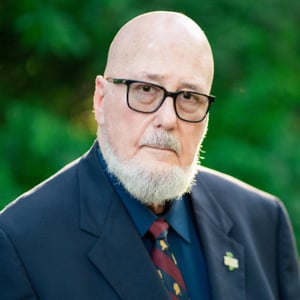
Senior Fellow, National Security Institute, Antonin Scalia School of Law, George Mason University; Retired Professor, Distinguished Fellow and Co-Founder, Center for National Security Law, University of Virginia School of Law (1987-2020)
Robert F. Turner holds both professional and academic doctorates from the University of Virginia School of Law. He co-founded the Center for National Security Law with Professor John Norton Moore in April 1981 and served as its associate director for 39 years, except for two periods of government service in the 1980s and during 1994-95, when he occupied the Charles H. Stockton Chair of International Law at the U.S. Naval War College in Newport, Rhode Island. He retired from UVA in January 2020 and currently serves as a non-resident senior fellow at the GMU National Security Institute. He also served briefly in 2020 as President of the Crime Prevention Research Center—one of the most respected pro-Second Amendment groups in the country—while its founder, Dr. John Lott, was on leave of absence.
A former Army captain and veteran of two tours in Vietnam, Turner served as a research associate and public affairs fellow at Stanford's Hoover Institution on War, Revolution and Peace before spending five years in the mid-1970s as national security adviser to U.S. Senator Robert P. Griffin, a member of the Senate Foreign Relations Committee (where Turner anticipated by seven years the Supreme Court’s landmark INS v. Chadha decision, striking down legislative vetoes). He also served in the executive branch during the Reagan administration as a member of the Senior Executive Service, first in the Pentagon as special assistant to the undersecretary of defense for policy, then in the White House as counsel to the President's Intelligence Oversight Board, and at the State Department as principal deputy and then acting assistant secretary for legislative affairs. In 1986, he became the first president of the congressionally established United States Institute of Peace.
A former three-term chairman of the ABA Standing Committee on Law and National Security (and for many years editor of the ABA National Security Law Report), Turner also chaired the Executive-Congressional Relations Subcommittee of the ABA Section on International Law and Practice and chaired or co-chaired the National Security Law Subcommittee of the Federalist Society’s International and National Security Law Practice Group for several years.
Turner taught undergraduate courses at Virginia on international law, U.S. foreign policy, the Vietnam War and foreign policy and the law in what is now the Woodrow Wilson Department of Politics. In addition, he co-taught National Security Law and advanced national security law seminars on the Indochina War and on war and peace with Moore at the Law School.
The author or editor of 18 books and monographs (including co-editor of the Center's 1,600-page National Security Law & Policy casebook, National Security Law Documents, and Legal Issues in the Struggle Against Terror) and numerous articles in law reviews and other professional journals, Turner has also contributed articles to most of the major U.S. newspapers, including The New York Times and USA Today. In an op-ed published in The International Herald Tribune in September 1990, he and Moore were the first to call for a war-crimes trial for Iraqi dictator Saddam Hussein and for international controls over Iraq's weapons of mass destruction, and the following month he wrote the lead story in The Washington Post Sunday Outlook Section, “Killing Saddam: Would It Be a Crime?,” arguing that Hussein would be a lawful target during Operation Desert Storm. (His reasoning contributed to the modern legal justification for drone strikes targeting specific terrorist leaders.) Three years before the terrorist attacks of September 11, 2001, Turner published an op-ed in USA Today entitled: “In Self-defense, U.S. Has Right to Kill bin Laden.”
In July 2007, he co-authored an article in The Washington Post with former U.S. Marine Corps Commandant General P.X. Kelley, “War Crimes and the White House,” criticizing the use of unlawful “enhanced interrogation techniques” by the Central Intelligence Agency. On the 40th anniversary of the fall of Saigon he authored an article in The Wall Street Journal, “Saigon’s Fall Still Echoes Today,” noting that after the war ended, Hanoi admitted it had made a decision in 1959 to open the Ho Chi Minh Trail and start sending troops, weapons and supplies into South Vietnam to overthrow its government — just as the United States had charged. In 2010 Turner received the first “person of the year” award from SACEI, a major Vietnamese-American human rights organization.
A frequent lecturer and debater, Turner has spoken at more than 100 law schools around the nation and in other fora — taking on as many as four opponents at a time. His debate opponents have included former or future deans of Yale, Stanford, the University of Chicago and Berkeley law schools. Following a 1987 debate against Dean Harlan Cleveland (Rhodes Scholar, U.S. Ambassador to NATO, and Presidential Medal of Freedom recipient) in which Turner defended the legality of U.S. support for the Nicaraguan contras during the Reagan Administration, the host student debating societies awarded Turner the victory by an 85-to-15 percent margin.
Turner has also written and lectured widely on University of Virginia founder and America’s third president Thomas Jefferson. In 2000-2001 he chaired the Jefferson-Hemings Scholars Commission. In his 2012 book Master of the Mountain, Jefferson critic Henry Wiencek described Turner as “Jefferson’s chief scholarly defender."
A former distinguished lecturer at the U.S. Military Academy at West Point, Turner is a member of the Council on Foreign Relations, the Academy of Political Science, the Committee on the Present Danger, The Heterodox Academy, and other professional organizations. He maintained a 4.0 gpa as a graduate student at Stanford in History and Political Science and in the UVA Department of Government and Foreign Affairs and was the first person admitted directly to the UVA academic law doctorate (SJD) program without first being required to earn an LL.M. master’s degree. He was selected for inclusion in Who’s Who in American Law less than two years after graduating from law school and Who’s Who in the World before he reached the age of 40. Turner has testified before more than a dozen different congressional committees on issues of international or constitutional law and other topics.

George C. Dix Professor in Constitutional Law, Northwestern University Pritzker School of Law
John O. McGinnis is a graduate of Harvard College and Harvard Law School where he was an editor of the Harvard Law Review. He also has an MA degree from Balliol College, Oxford, in philosophy and theology. Professor McGinnis clerked on the U.S. Court of Appeals for the District of Columbia. From 1987 to 1991, he was deputy assistant attorney general in the Office of Legal Counsel at the Department of Justice. He is the author of Accelerating Democracy: Transforming Government Through Technology (Princeton 2013) and Originalism and the Good Constitution (Harvard 2013) (with M. Rappaport). He is a past winner of the Paul Bator award given by the Federalist Society to an outstanding academic under 40. He has been listed by the United States on the roster of panelists who may be called upon to decide World Trade Organization Disputes.
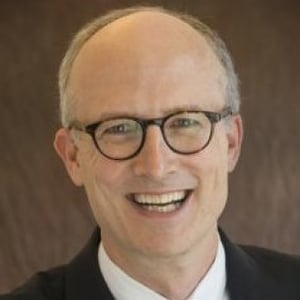
Michael J. Marks Professor of Law, University of Chicago Law School
M. Todd Henderson is the Michael J. Marks Professor of Law at the University of Chicago Law School. Professor Henderson’s research interests include corporations, securities regulation, and law and economics. He has taught classes ranging from Banking Regulation to Torts to American Indian Law.
Professor Henderson received an engineering degree cum laude from Princeton University in 1993. He worked for several years designing and building dams in California before matriculating at the Law School. While at the Law School, Todd was an editor of the Law Review and captained the Law School's all-University champion intramural football team. He graduated magna cum laude in 1998 and was elected to the Order of the Coif. Following law school, Todd served as clerk to the Hon. Dennis Jacobs of the US Court of Appeals for the Second Circuit. He then practiced appellate litigation at Kirkland & Ellis in Washington, DC, and was an engagement manager at McKinsey & Company in Boston, where he specialized in counseling telecommunications and high-tech clients on business and regulatory strategy.
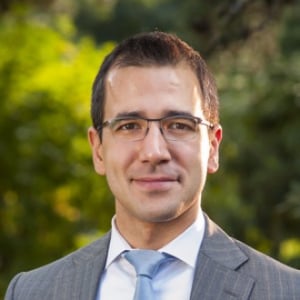
Associate Professor of Law, Lewis & Clark Law School
Ozan Varol is a rocket scientist turned award-winning law professor and author. He teaches in the areas of constitutional law, criminal law and procedure, comparative constitutional law, and Islamic law. His recent scholarship has focused on constitutional transitions and constitutional design. He also lectures and writes about civil-military relations and law and politics in the Middle East.
Professor Varol is the author of two forthcoming books with Oxford University: The Democratic Coup d’État (monograph) and Comparative Constitutional Law: A Global and Interdisciplinary Approach (co-authored textbook).
He has also authored more than a dozen book chapters or law review articles published or forthcoming in the California Law Review, Georgetown Law Journal, UC Davis Law Review, Iowa Law Review (twice), Harvard International Law Journal, Columbia Journal of Transnational Law, Virginia Journal of International Law, American Journal of Comparative Law (peer-reviewed), and the International Journal of Constitutional Law (peer-reviewed), among many other academic journals. His scholarship has been featured in various domestic and foreign media outlets, including BBC, CNN, Washington Post, Slate, and Foreign Policy.
Professor Varol’s articles have received numerous scholarly recognitions. He is the only scholar to twice win the American Society of Comparative Law’s paper competition for younger scholars. His 2014 article, Temporary Constitutions, was selected as one of the best three papers in the AALS Scholarly Papers Competition, which is widely considered the most prestigious in legal education, and awarded Honorable Mention. In 2014 and in 2016, his articles won the Federalist Society’s Young Legal Scholars Paper Competition. In addition, his article, The Democratic Coup d’État, was identified in a review by Professor Mark Tushnet (Harvard Law School) as “one of the best works of recent scholarship relating to constitutional law.”
To access Professor Varol’s personal website and download a free chapter from his forthcoming book, click here.

Can Courts Get the Law Right? Judicial Review’s Problem with Objectivity
Edward Snowden: Patriot or Traitor?
Georgia State University Law Review Symposium: Invisible Justices - Supreme Court Transparency in the Age of Social Media"
Topics
Fisher II, Academic Mismatch, and the Constitution: A Legal Issue, or Just a Policy One?
Following Justice Scalia's controversial question about mismatch research at the Fisher v. Texas oral argument, some commentators have...
Fisher II, Academic Mismatch, and the Constitution: A Legal Issue, or Just a Policy One?
Following Justice Scalia's controversial question about mismatch research at the Fisher v. Texas oral argument, some...
Should the US Enforce International Law
The Vietnam War and the War Powers Resolution
Chicago-Kent Student Chapter
Chicago, ILGonzalez v. Thaler - Post-Decision SCOTUScast
Ozan Varol
On January 10, 2012, the Supreme Court announced its decision in Gonzalez v. Thaler. This...
Labor Law Debate: Can the State Stop Collective Bargaining?
Chicago, IllinoisJones v. Harris and Mutual Fund Investment Fees
Chicago Student Chapter
Chicago, IL