
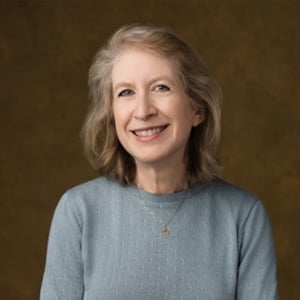
Senior Attorney, Pacific Legal Foundation
Debbie is a senior attorney in Pacific Legal Foundation’s Property Rights practice, where she primarily focuses on Supreme Court litigation. Debbie found her perfect vocational home at PLF, where she has litigated for the entirety of her 30+ year career.
Debbie has contributed to several of PLF’s Supreme Court victories, including Minnesota Voters Alliance v. Mansky (2018) (First Amendment), Pakdel v. City and County of San Francisco (ripeness doctrine), and Tyler v. Hennepin County (2023) (home equity theft), and currently serves on the litigation teams of many pending and forthcoming petitions for writs of certiorari. In conjunction with litigation, she publishes articles in both the mainstream and scholarly press, including Miranda for Janus: The Government’s Obligation to Ensure Informed Waiver of Constitutional Rights, 55 Loyola L.A. L. Rev. 405 (2022); Amicus briefs: A primer on a vital legal tool for protecting individual liberty, Daily Journal, Two Court Cases Prove Why Free Speech Protections Still Matter at Polling Places, End discrimination against corporate speech, Medical Marijuana and the Limits of the Compassionate Use Act: Ross v. Ragingwire Telecommunications, 12 Chapman L. Rev. 71 (2008), Kick It Up a Notch: First Amendment Protection for Commercial Speech, 54 Case Western Res. L. Rev. 1205 (2004), and Freedom, Responsibility and Risk: Fundamental Premises of Tort Reform, 36 Ind. L. Rev. 645 (2003). She also enjoys mentoring less-experienced attorneys and law clerks in the course of her practice.
Debbie grew up in an economically striving lower–middle–class family. Watching and learning from her exceptionally hard-working father, she grew to appreciate the bounty of political and economic freedom that can move a person up the ladder of success. Working her way through college and law school, Debbie studied political science, history, and literature at Claremont McKenna College (B.A. cum laude 1987) and law at the University of Southern California (J.D. 1990).
Debbie is PLF’s original telecommuter. She was an early adopter who started working from home in 1993—using DOS and a 48,800bps dial-up modem. Since then, she has furthered the cause of liberty and constitutional government while, alongside her husband, raising and homeschooling two children, both of whom are now graduated with the freedom to pursue their own dreams.
Debbie is licensed to practice in California, Arizona (inactive), various federal district and circuit courts, and the U.S. Supreme Court.

Professor of Law, Antonin Scalia Law School, George Mason University
ILYA SOMIN is Professor of Law at George Mason University and the B. Kenneth Simon Chair in Constitutional Studies at the Cato Institute. His research focuses on constitutional law, property law, democratic theory, federalism, and migration rights. He is the author of Free to Move: Foot Voting, Migration, and Political Freedom (Oxford University Press, revised and expanded edition, 2022), Democracy and Political Ignorance: Why Smaller Government is Smarter (Stanford University Press, revised and expanded second edition, 2016), and The Grasping Hand: Kelo v. City of New London and the Limits of Eminent Domain (University of Chicago Press, 2015, rev. paperback ed., 2016), coauthor of A Conspiracy Against Obamacare: The Volokh Conspiracy and the Health Care Case (Palgrave Macmillan, 2013), and co-editor of Eminent Domain: A Comparative Perspective (Cambridge University Press, 2017). Democracy and Political Ignorance has been translated into Italian and Japanese.
Somin’s work has appeared in numerous scholarly journals, including the Yale Law Journal, Stanford Law Review, Northwestern University Law Review, Georgetown Law Journal, Critical Review, and others. Somin has also published articles in a variety of popular press outlets, including the New York Times, Washington Post, Wall Street Journal, Los Angeles Times, CNN, NBC, The Atlantic, USA Today, Boston Globe, US News and World Report, South China Morning Post, National Law Journal and Reason. He has been quoted or interviewed by the New York Times, Washington Post, Wall Street Journal, Time, Newsweek, The Economist, the Christian Science Monitor, the Financial Times, The Guardian, the Associated Press, CBS, MSNBC, NPR, BBC, Reuters, the Canadian Broadcasting Corporation, the Australian Broadcasting Corporation, Radio Free Europe/Radio Liberty, Al Jazeera, and the Voice of America, among other media.
Somin’s writings have been cited in decisions by the United States Supreme Court, multiple state supreme courts and lower federal courts, and the Supreme Court of Israel. He is co-counsel for the plaintiffs in VOS Selections, Inc. v. Trump, a case challenging the constitutionality of President Trump’s “Liberation Day” tariffs. Somin has testified on the use of drones for targeted killing in the War on Terror before the US Senate Judiciary Subcommittee on the Constitution, Civil Rights, and Human Rights. In 2009, he testified on property rights issues at the United States Senate Judiciary Committee confirmation hearings for Supreme Court Justice Sonia Sotomayor. Somin writes regularly for the popular Volokh Conspiracy law and politics blog, now affiliated with Reason magazine (previously affiliated with the Washington Post from 2014 to 2017). From 2006 to 2013, he served as Co-Editor of the Supreme Court Economic Review, one of the country’s top-rated law and economics journals.
Somin has served as a visiting professor at the University of Pennsylvania Law School. He has also been a visiting professor or scholar at the Georgetown University Law Center, the University of Hamburg, Germany, the University of Torcuato Di Tella in Buenos Aires, Argentina, Uriel Reichman University in Israel, and Zhengzhou University in China. He is a University Affiliate of the Schar School of Policy and Government at George Mason University, and an affiliated faculty member of the George Mason University Institute for Immigration Research. Before joining the faculty at George Mason, Somin was the John M. Olin Fellow in Law at Northwestern University Law School in 2002-2003. In 2001-2002, he clerked for the Hon. Judge Jerry E. Smith of the U.S. Court of Appeals for the Fifth Circuit. Professor Somin earned his B.A., Summa Cum Laude, at Amherst College, M.A. in Political Science from Harvard University, and J.D. from Yale Law School.
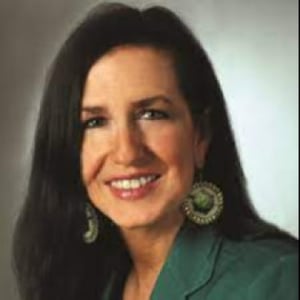
Shareholder, Greenberg Traurig
Jennifer Weddle is the Co-Chair of Greenberg Traurig's American Indian Law Practice and has wide-ranging experience in complex regulatory and jurisdictional issues, with a focus in Indian law, handling a variety of matters for tribal and non-tribal clients. She has a dynamic, inter-disciplinary practice that centers on providing strategies for resolving complex jurisdictional problems. Much of her practice focuses in the areas of tribal economic development and natural resources development. Jennifer also has U.S. Supreme Court experience, including serving as one of the attorneys for the respondent in Nevada v. Hicks (2001) and representing the petitioners in Ute Mountain Ute Tribe v. Padilla (2012) and Grand Canyon Skywalk Development, LLC v. Grand Canyon Resort Corporation (2013) and cert stage amici in Saginaw-Chippewa Tribe v. NLRB (2016) and United States v. Cooley (2020) and amici on the merits in Lewis v. Clarke (2017), U.S. v. Washington (2018), Carpenter v. Murphy (2018), McGirt v. Oklahoma (2020), and United States v. Cooley (2021).
Jennifer's work also includes negotiations for mineral leasing employment matters and representation before federal agencies. She has also been involved in civil litigation, working on numerous complex federal, state and tribal litigation matters, including class action tort litigation and large commercial disputes. Her transactional experience includes oil and gas renewables projects throughout the west, as well as Endangered Species Act work. Jennifer frequently assists tribes, banks and non-bank entities with financing and regulatory matters with Indian law components. Jennifer has wide-ranging project siting experience, including the application of NEPA, NHPA, and other environmental laws on tribal and public lands, including with respect to large linear multi-state energy and infrastructure projects. Jennifer has deep transactional, regulatory and litigation experience involving very complex matters with both legal and policy components.
Jennifer is past President of the National Native American Bar Association and past two-term Chair of the Federal Bar Association Indian Law Section. She currently serves as the Tenth Circuit Representative on the American Bar Association Standing Committee on the Federal Judiciary, a role she has held since 2018, spanning the evaluations for more than two dozen federal judicial nominees at every level of the federal courts. She is a ’00 graduate of Harvard Law School and a ’97 graduate of the University of Michigan (Classical Languages and Literature).
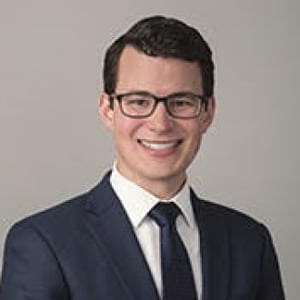
Associate Attorney, Gibson Dunn
David Casazza is an associate in the Washington, D.C. office of Gibson, Dunn & Crutcher. He practices in the firm’s Appellate and Constitutional Law, and Administrative Law and Regulatory Practice groups.
Mr. Casazza has represented clients in appellate and regulatory litigation before the Supreme Court of the United States, federal appellate courts, and federal district courts. These cases have involved a wide range of subjects including separation of powers, federal rulemaking challenges, data privacy protections, anti-terrorism claims and foreign sovereign immunity, energy infrastructure permitting, and a variety of First Amendment speech and religious liberty claims. He has also represented clients in complex litigation, obtaining dismissal with prejudice of consumer class actions attacking major brand names. He has been named by Best Lawyers as a 2021 and 2022 “One to Watch” in Appellate Practice.
He graduated magna cum laude from Harvard Law School, where he served as a Managing Editor for the Harvard Journal of Law and Public Policy and as Executive Vice President of the Harvard Federalist Society. Mr. Casazza received an A.B. magna cum laude in history from Princeton and an M.A. in history from the Johns Hopkins University.
Mr. Casazza served as a law clerk to Justice Samuel Alito on the Supreme Court of the United States and for Judge Jennifer Walker Elrod on the United States Court of Appeals for the Fifth Circuit.
He is a member of the bars of New York and the District of Columbia and is admitted to practice in the United States Courts of Appeals for the Third, Fourth, Fifth, and Ninth Circuits and in the United States District Court for the District of Columbia.

Of Counsel, Spencer Fane LLP
Anthony J. “A.J.” Ferate has built a multi-faceted background in the areas of the law, policy, energy, campaigns and elections, and defense over the last 20 years.
Through recent representation as Vice President of Regulatory Affairs for the Oklahoma Independent Petroleum Association (“OIPA”), A.J. held responsibilities over government efforts outside of the legislative branch on matters as broad as water, electric generation, commodity marketing, land matters, and seismicity. A.J. also maintained responsibility for legal matters at OIPA, including amicus briefing in appellate matters. A.J.’s extensive experience also includes management of public policy strategy for a Fortune 500 company.
For the past eleven years, A.J. has volunteered as General Counsel and spokesman for the Oklahoma Republican Party and has represented a number of elected officials, including U.S. Senator James Lankford, former statewide elected officials, a number of state legislators, and members of Congress.
Additionally, A.J. has assisted elected officials serve their constituents in all branches of government. Early in his career, A.J. held legislative aide duties in the Nebraska Legislature, then went on to work for former Nebraska Treasurer David Heineman. A.J. gained experience in the judiciary while serving Judge Gary L. Lumpkin at the Oklahoma Court of Criminal Appeals, the highest criminal appellate court in Oklahoma. Following this service, A.J. began work with Denise A. Bode of the Oklahoma Corporation Commission, assisting her in her duties regulating 70 percent of Oklahoma’s economy, including oil and gas and electric utilities.
A.J. honorably served ten years as an intelligence analyst for the United States Naval Reserve, including time at the Office of Naval Intelligence in the greater Washington DC area.
Opinion pieces authored or ghostwritten by A.J. have been published in the Seattle Times, Politico, Law360, The Oklahoman, Tulsa World and The Journal Record. A.J. has also been interviewed by national and international newspapers, and has also appeared on national radio programs including NPR’s The Diane Rehm Show and On Point with Tom Ashbrook.
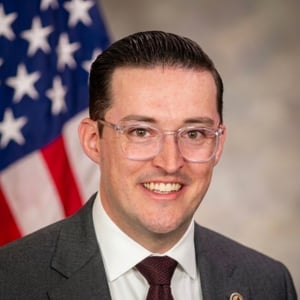
General Counsel and Senior Advisor, White House Task Force to Eliminate Fraud
Jason Manion has high-level legal experience in all three branches of federal government, in Ohio state government, and in private practice.
Since January 20, 2025, Jason has served in senior legal roles in the Trump-Vance Administration. He currently serves as General Counsel and Senior Advisor for the White House Task Force to Eliminate Fraud, a whole-of-government effort chaired by Vice President J.D. Vance to eliminate fraud, waste, and abuse within federal benefit programs.
Before joining the White House, Jason served as part of the senior leadership team at the U.S. Department of Justice, where he was Counselor to the Attorney General and Counselor and Chief of Staff to the Associate Attorney General. At the Justice Department, he oversaw a broad portfolio that included matters and issues arising out of the Civil, Civil Rights, Criminal, and National Security Divisions.
Previously, Jason was an award-winning federal prosecutor and accomplished appellate attorney. He worked as an appellate Assistant United States Attorney, a deputy Ohio solicitor general, and an appellate associate at Gibson, Dunn & Crutcher. In these various roles, he handled dozens of civil and criminal appeals (primarily in the U.S. Supreme Court, the U.S. Court of Appeals for the Sixth Circuit, and the Ohio Supreme Court) and presented eighteen oral arguments (in the Sixth Circuit, the D.C. Circuit, the Ohio Supreme Court, and federal district courts in Ohio and D.C.).
Jason has also worked on the confirmations of several of President Donald J. Trump’s Executive Branch and judicial nominees, including serving on the U.S. Senate Committee on the Judiciary as Special Counsel to Senator Ted Cruz for the confirmation of Justice Amy Coney Barrett.
Jason graduated from Harvard Law School and clerked for two Ohio-based Sixth Circuit judges, Judges Alice M. Batchelder and Eric E. Murphy. He has been an active member of the Federalist Society since law school and has served in multiple leadership roles in the Society.
Shareholder, Greenberg Traurig
Jennifer Weddle is the Co-Chair of Greenberg Traurig's American Indian Law Practice and has wide-ranging experience in complex regulatory and jurisdictional issues, with a focus in Indian law, handling a variety of matters for tribal and non-tribal clients. She has a dynamic, inter-disciplinary practice that centers on providing strategies for resolving complex jurisdictional problems. Much of her practice focuses in the areas of tribal economic development and natural resources development. Jennifer also has U.S. Supreme Court experience, including serving as one of the attorneys for the respondent in Nevada v. Hicks (2001) and representing the petitioners in Ute Mountain Ute Tribe v. Padilla (2012) and Grand Canyon Skywalk Development, LLC v. Grand Canyon Resort Corporation (2013) and cert stage amici in Saginaw-Chippewa Tribe v. NLRB (2016) and United States v. Cooley (2020) and amici on the merits in Lewis v. Clarke (2017), U.S. v. Washington (2018), Carpenter v. Murphy (2018), McGirt v. Oklahoma (2020), and United States v. Cooley (2021).
Jennifer's work also includes negotiations for mineral leasing employment matters and representation before federal agencies. She has also been involved in civil litigation, working on numerous complex federal, state and tribal litigation matters, including class action tort litigation and large commercial disputes. Her transactional experience includes oil and gas renewables projects throughout the west, as well as Endangered Species Act work. Jennifer frequently assists tribes, banks and non-bank entities with financing and regulatory matters with Indian law components. Jennifer has wide-ranging project siting experience, including the application of NEPA, NHPA, and other environmental laws on tribal and public lands, including with respect to large linear multi-state energy and infrastructure projects. Jennifer has deep transactional, regulatory and litigation experience involving very complex matters with both legal and policy components.
Jennifer is past President of the National Native American Bar Association and past two-term Chair of the Federal Bar Association Indian Law Section. She currently serves as the Tenth Circuit Representative on the American Bar Association Standing Committee on the Federal Judiciary, a role she has held since 2018, spanning the evaluations for more than two dozen federal judicial nominees at every level of the federal courts. She is a ’00 graduate of Harvard Law School and a ’97 graduate of the University of Michigan (Classical Languages and Literature).
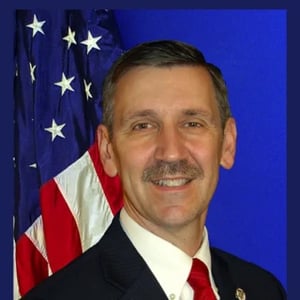
District Attorney, Tulsa County
Steve Kunzweiler is District Attorney for Tulsa County. Elected by Tulsa County voters in November 2014, Steve Kunzweiler and his staff are responsible for reviewing police investigations to determine whether the facts, the evidence and the law warrant filing a charge to initiate a criminal prosecution.
The Office of the Tulsa County District Attorney prosecutes criminals, advocates on behalf of victims, including deprived and neglected children, collects restitution for victims and business owners, supervises those on probation for misdemeanor and low-level crimes and promotes crime prevention. The Office of the District Attorney also represents Tulsa County's elected officials in civil legal matters.

From the Courthouse Steps: Pung v. Isabella County, Michigan
Deborah J. La Fetra, Ilya Somin
In Pung v. Isabella County, the U.S. Supreme Court rejected claims under the Takings Clause...
Courthouse Steps Decision: Haaland v. Brackeen
Jennifer H. Weddle
On Thursday, June 15, 2023, the Supreme Court issued its decision in Haaland v. Brackeen....
Courthouse Steps Decision: Oklahoma v. Castro-Huerta
David W. Casazza, Anthony J. Ferate, Jason Manion, Jennifer H. Weddle
On June 29, 2022, the Supreme Court decided Oklahoma v. Castro-Huerta. In a 5-4 decision,...
McGirt v. Oklahoma: State and Tribal Impact A Year Later
Tulsa Lawyers Chapter Event
Tulsa, OKRescheduled - Welcome to The Creek Reservation: Murphy v. Royal's Impact
Tulsa, OK