
Deputy Coordinator for Countering Violent Extremism, U.S. Department of State
Christopher K. Harnisch is the Deputy Coordinator for Countering Violent Extremism. In this capacity, he is responsible for developing and implementing strategies to counter terrorist messaging and recruitment, including terrorists’ use of the Internet. He also oversees terrorist detention policy.
Prior to his appointment to the Bureau of Counterterrorism, Harnisch served as the Director for Transnational Threats and the Director for Afghanistan at the National Security Council. A Virginia native, he returned to the area following several years in Silicon Valley where he served as a Strategic Sourcing and Operations Product Development Manager at Apple. Before his time in the private sector, Harnisch worked in the public policy and defense arenas. From 2011 to 2012, he served as an Army Intelligence Officer on NATO’s counter-corruption task force in Afghanistan. Previous to that, he worked on the Critical Threats Project at the American Enterprise Institute, where he researched and wrote about al-Qa’ida’s emerging safe havens, focusing especially on those in Yemen and Somalia. He served on the staff of Vice President Dick Cheney.
Chris earned a B.A. in International Studies from Middlebury College and an MBA and M.A. in International Relations from Yale University.
He has published pieces on foreign policy in numerous publications, including The Wall Street Journal, Washington Post, and National Review Online, and he has appeared as a guest analyst on various public panels and television and radio broadcasts. Recently, he has worked on initiatives aimed at bridging the civil-military divide, including co-chairing the Veterans Summit at Yale University. He is a Term Member at the Council on Foreign Relations.
Deputy Director, Program on Extremism, George Washington University
Seamus Hughes is the Deputy Director of the Program on Extremism at George Washington University. He is an expert on terrorism, homegrown violent extremism, and countering violent extremism (CVE). Hughes has authored numerous reports for the Program including ‘ISIS in America: From Retweets to Raqqa’ and ‘The Travelers: American Jihadists in Syria and Iraq.’ He regularly provides commentary to media outlets, including the New York Times, The Washington Post, The Wall Street Journal, Los Angeles Times, The Atlantic, CNN, MSNBC, FoxNews, BBC, PBS, and CBS’ 60 Minutes. He has testified before the U.S. Congress on multiple occasions.
Hughes previously worked at the National Counterterrorism Center (NCTC), serving as a lead staffer on U.S. government efforts to implement a national CVE strategy. He regularly led engagements with Muslim American communities across the country, provided counsel to civic leaders after high-profile terror-related incidents, and met with families of individuals who joined terrorist organizations. Hughes created a groundbreaking intervention program to help steer individuals away from violence through non-law enforcement means, and worked closely with the FBI Joint Terrorism Task Force, Fusion Centers, and U.S. Attorney Offices.
Prior to NCTC, Hughes served as the Senior Counterterrorism Advisor for the U.S. Senate Homeland Security and Governmental Affairs Committee. He organized over a dozen congressional hearings on the threat of homegrown violent extremism, and led fact-finding delegations to the various European and Middle Eastern countries. He authored two reports for the Senate: “A Ticking Time Bomb: Counterterrorism Lessons from the U.S. Government’s Failure to Prevent the Fort Hood Attack” and “Zachary Chesser: A Case Study in Online Islamist Radicalization and Its Meaning for the Threat of Homegrown Terrorism.”
Hughes has authored numerous legislative bills, including sections of the 9/11 Commission Recommendations Act and the Special Agent Samuel Hicks Families of Fallen Heroes Act. He is a graduate of the University of Maryland, and a recipient of the National Security Council Outstanding Service Award and two NCTC Director’s Awards for outstanding service. He teaches classes at George Washington University and Georgetown University.
Harold Brown Chair; Director, Transnational Threats Project; and Senior Adviser, International Security Program, Center for Strategic and International Studies
Seth G. Jones holds the Harold Brown Chair, is director of the Transnational Threats Project, and is a senior adviser to the International Security Program at the Center for Strategic and International Studies (CSIS). He teaches at Johns Hopkins University’s School of Advanced International Studies (SAIS) and the Center for Homeland Defense and Security (CHDS) at the U.S. Naval Postgraduate School.
Prior to joining CSIS, Dr. Jones was the director of the International Security and Defense Policy Center at the RAND Corporation. He also served as representative for the commander, U.S. Special Operations Command, to the assistant secretary of defense for special operations. Before that, he was a plans officer and adviser to the commanding general, U.S. Special Operations Forces, in Afghanistan (Combined Forces Special Operations Component Command–Afghanistan). In 2014, Dr. Jones served on a congressionally mandated panel that reviewed the FBI’s implementation of counterterrorism recommendations contained in the 9/11 Commission Report.
Dr. Jones specializes in counterterrorism, counterinsurgency, unconventional warfare, and covert action, including a focus on al Qaeda and ISIS. He is the author of A Covert Action: Reagan, the CIA, and the Cold War Struggle in Poland (W.W. Norton, 2018), Waging Insurgent Warfare (Oxford University Press, 2016), Hunting in the Shadows: The Pursuit of al Qa'ida after 9/11 (W.W. Norton, 2012), and In the Graveyard of Empires: America’s War in Afghanistan (W.W. Norton, 2009). Dr. Jones has published articles in a range of journals, such as Foreign Affairs, Foreign Policy, and International Security, as well as newspapers and magazines like the New York Times, Washington Post, and Wall Street Journal. Dr. Jones is a graduate of Bowdoin College and received his M.A. and Ph.D. from the University of Chicago.
Margaret Thatcher Fellow, Margaret Thatcher Center for Freedom, The Heritage Foundation
Robin Simcox is the Margaret Thatcher Fellow at The Heritage Foundation’s Margaret Thatcher Center for Freedom, where he specializes in counter-terrorism and national security policy.
Simcox has testified before Congress on multiple occasions on issues related to ISIS, al-Qaeda and associated movements. He has also provided oral evidence to a committee of Parliament established to examine British intelligence policy.
Simcox’s commentary has been published in newspapers such as The Washington Post, The Wall Street Journal, Los Angeles Times, The (London) Telegraph, and The Guardian. It also has appeared in magazines and journals such as Foreign Affairs, Foreign Policy, The Atlantic, West Point’s CTC Sentinel, and The Weekly Standard. He regularly appears on a variety of broadcast and cable news outlets, including Fox News Channel, MSNBC, CNN, CBS, BBC, and Sky News.
Prior to arriving at Heritage in January 2016, Simcox was a research fellow at the Henry Jackson Society, a foreign policy think tank in London. While there, he authored several important works on the terrorist group al-Qaeda, including "Al-Qaeda in the United States," a 728-page monograph profiling every known court conviction in America linked to al-Qaeda.
In joining Heritage’s Thatcher Center for Freedom and assuming the fellowship that bears the name of the former British prime minister, he became part of the leading policy center in Washington dedicated to strengthening the Anglo-American “special relationship” as well as U.S. and British leadership of the broader transatlantic alliance. Established in 2005, the Thatcher Center is the only public policy center in the world dedicated to advancing the vision and ideals of Lady Thatcher, who died in 2013.
Robin received a master of science degree in U.S. foreign policy from the Institute for the Study of the Americas, University of London, and a bachelor of arts degree in international history from the University of Leeds. He studied for a year at the University of Newcastle, Australia.
Harold Brown Chair; Director, Transnational Threats Project; and Senior Adviser, International Security Program, Center for Strategic and International Studies
Seth G. Jones holds the Harold Brown Chair, is director of the Transnational Threats Project, and is a senior adviser to the International Security Program at the Center for Strategic and International Studies (CSIS). He teaches at Johns Hopkins University’s School of Advanced International Studies (SAIS) and the Center for Homeland Defense and Security (CHDS) at the U.S. Naval Postgraduate School.
Prior to joining CSIS, Dr. Jones was the director of the International Security and Defense Policy Center at the RAND Corporation. He also served as representative for the commander, U.S. Special Operations Command, to the assistant secretary of defense for special operations. Before that, he was a plans officer and adviser to the commanding general, U.S. Special Operations Forces, in Afghanistan (Combined Forces Special Operations Component Command–Afghanistan). In 2014, Dr. Jones served on a congressionally mandated panel that reviewed the FBI’s implementation of counterterrorism recommendations contained in the 9/11 Commission Report.
Dr. Jones specializes in counterterrorism, counterinsurgency, unconventional warfare, and covert action, including a focus on al Qaeda and ISIS. He is the author of A Covert Action: Reagan, the CIA, and the Cold War Struggle in Poland (W.W. Norton, 2018), Waging Insurgent Warfare (Oxford University Press, 2016), Hunting in the Shadows: The Pursuit of al Qa'ida after 9/11 (W.W. Norton, 2012), and In the Graveyard of Empires: America’s War in Afghanistan (W.W. Norton, 2009). Dr. Jones has published articles in a range of journals, such as Foreign Affairs, Foreign Policy, and International Security, as well as newspapers and magazines like the New York Times, Washington Post, and Wall Street Journal. Dr. Jones is a graduate of Bowdoin College and received his M.A. and Ph.D. from the University of Chicago.
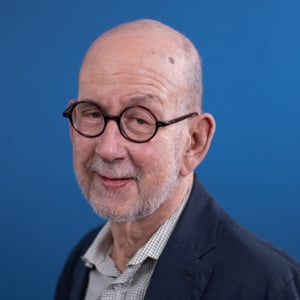
Freedom Scholar, Foundation for Defense of Democracies
Dr. Michael Ledeen is freedom scholar at FDD, and is an internationally-renowned scholar on Iran, Iraq, terrorism, and international security, and a world-renowned Italianist and expert on fascism. Ledeen has served as a consultant to the National Security Council and the Departments of State and Defense, and as a special advisor to the Secretary of State.
He is the author of more than 35 books, including Field of Fight: How to Win the War Against Radical Islam and its Allies, co-authored with General Michael T. Flynn (St. Martin’s Press, 2016). His previous books include Accomplice to Evil: Iran and the War Against the West; The War Against the Terror Masters; The Iranian Time Bomb; Tocqueville on American Character; and Freedom Betrayed: How America Led a Global Democratic Revolution, Won the Cold War, and Walked Away.
Ledeen regularly appears on cable news and talk radio programs, blogs at Forbes, The Hill, and PJ Media, and contributes periodically to The Wall Street Journal. Michael holds a PhD in Modern European History and Philosophy from the University of Wisconsin, and has taught at Washington University in St. Louis and the University of Rome.

Founder and CEO, Lexpat Global Services
Adam Pearlman is the Founder and Chief Executive Officer of Lexpat Global Services. He is a National Security Law expert and a proven senior leader with experience across the U.S. Departments of Justice, Defense, and State, in the White House, and with the U.S. Federal Judiciary.
Before founding Lexpat, Mr. Pearlman served as the Senior Advisor for Legal Policy in the State Department’s Bureau of Counterterrorism. There, he counseled senior officials on matters covering the entire spectrum of programs and operations to counter terrorism and violent extremism. While participating in sensitive diplomatic engagements and helping to coordinate military operations, he also advised in the development of sanctions policy and initiatives to build legal and operational capacity in partner nations. Mr. Pearlman also managed the Bureau’s participation in federal litigation and led U.S. delegations in multilateral forums concerning criminal justice and rule of law. Separately, Mr. Pearlman supported the State Department’s Bureau of International Narcotics and Law Enforcement Affairs (INL) as the contracted Senior Justice and Rule of Law Advisor in Cabo Verde, Africa. There he was the chief implementer of a Foreign Assistance program that grew eight-fold during his tenure, building host nation capacity across the law enforcement, justice sector, rule of law, anti-money laundering, and corrections disciplines.
A former Associate Deputy General Counsel of the Department of Defense, Mr. Pearlman was agency counsel for complex civil and criminal national security matters in federal and military courts. He also led the Supreme Court and appellate unit of the team dedicated to litigating classified counterterrorism cases. His earlier service in the Department of Justice spanned four litigating divisions and the Office of the Deputy Attorney General. His diverse experience included reviewing complex international transactions and mergers, and advising on immigration removal proceedings, human rights abuses, and terrorist financing investigations. Mr. Pearlman also served with distinction in Iraq as an early advisor to the Iraqi High Tribunal’s prosecution of Saddam Hussein. He was a law clerk for The Honorable Royce C. Lamberth of the U.S. District Court for the District of Columbia, and during law school interned in the White House Counsel’s Office.
Mr. Pearlman is a Senior Fellow at the National Security Institute at George Mason University’s Antonin Scalia Law School, a member of the American Bar Association’s Advisory Committee on Law and National Security, and the Editor-in-Chief of the U.S. Intelligence Community Law Sourcebook. Previously, he has been a Term Member of the Council on Foreign Relations, National Security Fellow at the Foundation for Defense of Democracies, member of the ABA’s Africa Law Initiative Council and of the Center for Strategic & International Studies’ (CSIS) Project on Nuclear Issues, vice chairman of the ABA Section of International Law’s committees on national security, and aerospace and defense, and a liaison to the Board of Directors of the ABA’s Rule of Law Initiative. He has published articles in the Harvard National Security Journal, Stanford Law & Policy Review, Intelligence & National Security, The Foreign Service Journal, Lawfare, and many other outlets.
Mr. Pearlman earned his B.A., with honors, from UCLA, and his J.D., with honors, from The George Washington University Law School, where he was a member of the International Law Review. He also earned a Master of Science of Strategic Intelligence degree from the National Intelligence University, where he was the inaugural recipient of the Kornblum Award for national security law and ethics. Mr. Pearlman is a Certified Financial Crime Specialist and holds certificates in international human rights law from the University of Oxford and in anti-corruption law from American University’s Washington College of Law. He is admitted to the State Bars of California and Virginia, as well as to the Bar of the United States Supreme Court. He speaks and reads Portuguese at the intermediate level.
Director of the Institute for Law, Science and Global Security a, Georgetown University
Professor Catherine Lotrionte is the Director of the Institute for Law, Science and Global Security and Visiting Assistant Professor of Government and Foreign Service at Georgetown University. Professor Lotrionte teaches courses on national security law, U.S. intelligence law, and international law. In addition to teaching, Professor Lotrionte coordinates research projects and events for the Institute for Law, Science and Global Security at Georgetown. She is the Institute Liaison for the Program on Nonproliferation Policy and Law, funded by the Defense Threat Reduction Agency, in cooperation with the Monterey Institute for International Studies’ James Martin Center for Nonproliferation Studies. Professor Lotrionte is also the Director of the CyberProject. Professor Lotrionte and the Institute focus on the role of international and domestic law in recent and upcoming developments in cyber technology and cyber threats.
In 2002 she was appointed by General Brent Scowcroft to be Counsel to the President's Foreign Intelligence Advisory Board at the White House, a position she held until 2006. In 2002 she served as a legal counsel for the Joint Inquiry Committee of the Senate Select Committee on Intelligence. Prior to that, Professor Lotrionte was Assistant General Counsel with the Office of General Counsel at the Central Intelligence Agency, where she provided legal advice relating to information warfare, foreign intelligence and counterintelligence activities, and international terrorism. Before working in the Office of General Counsel at the Central Intelligence Agency, Professor Lotrionte served in the U.S. Department of Justice.
Professor Lotrionte earned her Ph.D. from Georgetown University and her J.D. from New York University and is the author of numerous publications, including a forthcoming book concerning U.S. national security law in the post-Cold War era. She is a frequent speaker at cyber conferences held by academic, military, government, and media organizations. She is a Life Member of the Council on Foreign Relations.
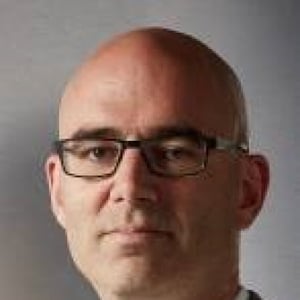
Ira A. Lipman Chair, Emerging Technologies & National Security a, Council on Foreign Relations (CFR)
Adam Segal is the Ira A. Lipman chair in emerging technologies and national security and director of the Digital and Cyberspace Policy Program at the Council on Foreign Relations (CFR). An expert on security issues, technology development, and Chinese domestic and foreign policy, Segal was the project director for the CFR-sponsored Independent Task Force report Defending an Open, Global, Secure, and Resilient Internet. His book The Hacked World Order: How Nations Fight, Trade, Maneuver, and Manipulate in the Digital Age (PublicAffairs, 2016) describes the increasingly contentious geopolitics of cyberspace. His work has appeared in the Financial Times, The Economist, Foreign Policy, The Wall Street Journal, and Foreign Affairs, among others. He currently writes for the blog, “Net Politics.”
Before coming to CFR, Segal was an arms control analyst for the China Project at the Union of Concerned Scientists. There, he wrote about missile defense, nuclear weapons, and Asian security issues. He has been a visiting scholar at the Hoover Institution at Stanford University, the Massachusetts Institute of Technology's Center for International Studies, the Shanghai Academy of Social Sciences, and Tsinghua University in Beijing. He has taught at Vassar College and Columbia University. Segal is the author of Advantage: How American Innovation Can Overcome the Asian Challenge (W.W. Norton, 2011) and Digital Dragon: High-Technology Enterprises in China (Cornell University Press, 2003), as well as several articles and book chapters on Chinese technology policy.
Segal has a BA and PhD in government from Cornell University, and an MA in international relations from the Fletcher School of Law and Diplomacy, Tufts University.

Former President & CEO, The Federalist Society for Law and Public Policy Studies
Eugene B. Meyer, former President and CEO of the Federalist Society, has served as Executive Director, CEO, and/or President of the organization for more than 40 years. He is responsible for shepherding the organization from a small group of law students to a community of 90,000 lawyers, law students, academics, judges, and others interested in the rule of law. The Society now includes a Student Chapter at nearly every ABA-accredited law school in the country and Lawyers Chapters in 220 major cities across the nation. Gene earned his B.A. in history at Yale in 1975 and his M.A. in political science from the London School of Economics in 1976. Gene currently serves on the boards of the U.S. Chess Center, the Holman Foundation, the Sarah Scaife Foundation, and the advisory board of the Adam Smith Society. He holds the title of International Chess Master.
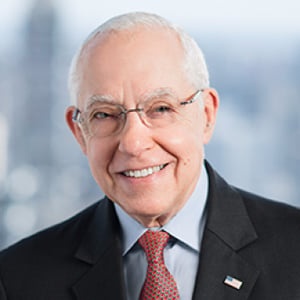
Former United States Attorney General
Michael B. Mukasey is the former Attorney General of the United States, the nation’s chief law enforcement officer. As Attorney General from November 2007 to January 2009, he oversaw the U.S. Department of Justice and advised on critical issues of domestic and international law.
From 1988 to 2006, Judge Mukasey served as a district judge in the United States District Court for the Southern District of New York, becoming Chief Judge in 2000.
From 1972 to 1976, Judge Mukasey served as an Assistant United States Attorney for the Southern District of New York, and as Chief of the Official Corruption Unit from 1975 to 1976. His practice consisted of criminal litigation on behalf of the government, including investigation and prosecution of narcotics, bank robbery, interstate theft, securities fraud, fraud on the government and bribery. From 1976 to 1987 and from 2006 to 2007 he was in private practice.
Judge Mukasey has received numerous honors, including the Federal Bar Council’s Learned Hand Medal for Excellence in Federal Jurisprudence. He served as Chairman of the Committee on Public Access to Information and Proceedings of the New York Bar Association from 1984 to 1987. He served on the Federal Courts Committee of the Association of the Bar of the City of New York from 1979 to 1982 and its Communications Law Committee from 1983 to 1986. Judge Mukasey was also a part-time lecturer at Columbia School of Law from January 1993 to May 2007, teaching trial advocacy.
He received his LL.B. from Yale Law School in 1967 and his B.A. from Columbia College in 1963.

Senior Fellow, National Review
Bestselling author Andrew C. McCarthy is a contributing editor at National Review, a senior fellow at National Review Institute, and a Fox News contributor. He is a former Chief Assistant United States Attorney in the Southern District of New York and led the terrorism prosecution against the “Blind Sheikh” (Omar Abdel Rahman) and eleven other jihadists for conducting a war of urban terrorism against the United States that included the 1993 World Trade Center bombing and a plot to bomb New York City landmarks. During is 20-year career as a prosecutor, he received numerous honors, including the Justice Department’s highest awards. Andy speaks and writes widely on law and national security, radical Islam, politics, and culture. He has testified before Congress as an expert on issues of constitutional law, counterterrorism, and law-enforcement. He is a columnist for The Hill, and his essays and book reviews appear frequently at The New Criterion. His most recent New York Times bestselling book is Ball of Collusion (Encounter Books, 2019), about the Russiagate controversy (an updated version was published in 2020). His other books include Willful Blindness (2008), The Grand Jihad (2010), Spring Fever: The Illusion of Islamic Democracy (2012), and Faithless Execution (2014). He has also written several pamphlets in the Broadside series published by Encounter Books, most recently Islam and Free Speech (2015).
Former United States Attorney General
Michael B. Mukasey is the former Attorney General of the United States, the nation’s chief law enforcement officer. As Attorney General from November 2007 to January 2009, he oversaw the U.S. Department of Justice and advised on critical issues of domestic and international law.
From 1988 to 2006, Judge Mukasey served as a district judge in the United States District Court for the Southern District of New York, becoming Chief Judge in 2000.
From 1972 to 1976, Judge Mukasey served as an Assistant United States Attorney for the Southern District of New York, and as Chief of the Official Corruption Unit from 1975 to 1976. His practice consisted of criminal litigation on behalf of the government, including investigation and prosecution of narcotics, bank robbery, interstate theft, securities fraud, fraud on the government and bribery. From 1976 to 1987 and from 2006 to 2007 he was in private practice.
Judge Mukasey has received numerous honors, including the Federal Bar Council’s Learned Hand Medal for Excellence in Federal Jurisprudence. He served as Chairman of the Committee on Public Access to Information and Proceedings of the New York Bar Association from 1984 to 1987. He served on the Federal Courts Committee of the Association of the Bar of the City of New York from 1979 to 1982 and its Communications Law Committee from 1983 to 1986. Judge Mukasey was also a part-time lecturer at Columbia School of Law from January 1993 to May 2007, teaching trial advocacy.
He received his LL.B. from Yale Law School in 1967 and his B.A. from Columbia College in 1963.
Deputy Coordinator for Countering Violent Extremism, U.S. Department of State
Christopher K. Harnisch is the Deputy Coordinator for Countering Violent Extremism. In this capacity, he is responsible for developing and implementing strategies to counter terrorist messaging and recruitment, including terrorists’ use of the Internet. He also oversees terrorist detention policy.
Prior to his appointment to the Bureau of Counterterrorism, Harnisch served as the Director for Transnational Threats and the Director for Afghanistan at the National Security Council. A Virginia native, he returned to the area following several years in Silicon Valley where he served as a Strategic Sourcing and Operations Product Development Manager at Apple. Before his time in the private sector, Harnisch worked in the public policy and defense arenas. From 2011 to 2012, he served as an Army Intelligence Officer on NATO’s counter-corruption task force in Afghanistan. Previous to that, he worked on the Critical Threats Project at the American Enterprise Institute, where he researched and wrote about al-Qa’ida’s emerging safe havens, focusing especially on those in Yemen and Somalia. He served on the staff of Vice President Dick Cheney.
Chris earned a B.A. in International Studies from Middlebury College and an MBA and M.A. in International Relations from Yale University.
He has published pieces on foreign policy in numerous publications, including The Wall Street Journal, Washington Post, and National Review Online, and he has appeared as a guest analyst on various public panels and television and radio broadcasts. Recently, he has worked on initiatives aimed at bridging the civil-military divide, including co-chairing the Veterans Summit at Yale University. He is a Term Member at the Council on Foreign Relations.
Deputy Director, Program on Extremism, George Washington University
Seamus Hughes is the Deputy Director of the Program on Extremism at George Washington University. He is an expert on terrorism, homegrown violent extremism, and countering violent extremism (CVE). Hughes has authored numerous reports for the Program including ‘ISIS in America: From Retweets to Raqqa’ and ‘The Travelers: American Jihadists in Syria and Iraq.’ He regularly provides commentary to media outlets, including the New York Times, The Washington Post, The Wall Street Journal, Los Angeles Times, The Atlantic, CNN, MSNBC, FoxNews, BBC, PBS, and CBS’ 60 Minutes. He has testified before the U.S. Congress on multiple occasions.
Hughes previously worked at the National Counterterrorism Center (NCTC), serving as a lead staffer on U.S. government efforts to implement a national CVE strategy. He regularly led engagements with Muslim American communities across the country, provided counsel to civic leaders after high-profile terror-related incidents, and met with families of individuals who joined terrorist organizations. Hughes created a groundbreaking intervention program to help steer individuals away from violence through non-law enforcement means, and worked closely with the FBI Joint Terrorism Task Force, Fusion Centers, and U.S. Attorney Offices.
Prior to NCTC, Hughes served as the Senior Counterterrorism Advisor for the U.S. Senate Homeland Security and Governmental Affairs Committee. He organized over a dozen congressional hearings on the threat of homegrown violent extremism, and led fact-finding delegations to the various European and Middle Eastern countries. He authored two reports for the Senate: “A Ticking Time Bomb: Counterterrorism Lessons from the U.S. Government’s Failure to Prevent the Fort Hood Attack” and “Zachary Chesser: A Case Study in Online Islamist Radicalization and Its Meaning for the Threat of Homegrown Terrorism.”
Hughes has authored numerous legislative bills, including sections of the 9/11 Commission Recommendations Act and the Special Agent Samuel Hicks Families of Fallen Heroes Act. He is a graduate of the University of Maryland, and a recipient of the National Security Council Outstanding Service Award and two NCTC Director’s Awards for outstanding service. He teaches classes at George Washington University and Georgetown University.
Harold Brown Chair; Director, Transnational Threats Project; and Senior Adviser, International Security Program, Center for Strategic and International Studies
Seth G. Jones holds the Harold Brown Chair, is director of the Transnational Threats Project, and is a senior adviser to the International Security Program at the Center for Strategic and International Studies (CSIS). He teaches at Johns Hopkins University’s School of Advanced International Studies (SAIS) and the Center for Homeland Defense and Security (CHDS) at the U.S. Naval Postgraduate School.
Prior to joining CSIS, Dr. Jones was the director of the International Security and Defense Policy Center at the RAND Corporation. He also served as representative for the commander, U.S. Special Operations Command, to the assistant secretary of defense for special operations. Before that, he was a plans officer and adviser to the commanding general, U.S. Special Operations Forces, in Afghanistan (Combined Forces Special Operations Component Command–Afghanistan). In 2014, Dr. Jones served on a congressionally mandated panel that reviewed the FBI’s implementation of counterterrorism recommendations contained in the 9/11 Commission Report.
Dr. Jones specializes in counterterrorism, counterinsurgency, unconventional warfare, and covert action, including a focus on al Qaeda and ISIS. He is the author of A Covert Action: Reagan, the CIA, and the Cold War Struggle in Poland (W.W. Norton, 2018), Waging Insurgent Warfare (Oxford University Press, 2016), Hunting in the Shadows: The Pursuit of al Qa'ida after 9/11 (W.W. Norton, 2012), and In the Graveyard of Empires: America’s War in Afghanistan (W.W. Norton, 2009). Dr. Jones has published articles in a range of journals, such as Foreign Affairs, Foreign Policy, and International Security, as well as newspapers and magazines like the New York Times, Washington Post, and Wall Street Journal. Dr. Jones is a graduate of Bowdoin College and received his M.A. and Ph.D. from the University of Chicago.
Margaret Thatcher Fellow, Margaret Thatcher Center for Freedom, The Heritage Foundation
Robin Simcox is the Margaret Thatcher Fellow at The Heritage Foundation’s Margaret Thatcher Center for Freedom, where he specializes in counter-terrorism and national security policy.
Simcox has testified before Congress on multiple occasions on issues related to ISIS, al-Qaeda and associated movements. He has also provided oral evidence to a committee of Parliament established to examine British intelligence policy.
Simcox’s commentary has been published in newspapers such as The Washington Post, The Wall Street Journal, Los Angeles Times, The (London) Telegraph, and The Guardian. It also has appeared in magazines and journals such as Foreign Affairs, Foreign Policy, The Atlantic, West Point’s CTC Sentinel, and The Weekly Standard. He regularly appears on a variety of broadcast and cable news outlets, including Fox News Channel, MSNBC, CNN, CBS, BBC, and Sky News.
Prior to arriving at Heritage in January 2016, Simcox was a research fellow at the Henry Jackson Society, a foreign policy think tank in London. While there, he authored several important works on the terrorist group al-Qaeda, including "Al-Qaeda in the United States," a 728-page monograph profiling every known court conviction in America linked to al-Qaeda.
In joining Heritage’s Thatcher Center for Freedom and assuming the fellowship that bears the name of the former British prime minister, he became part of the leading policy center in Washington dedicated to strengthening the Anglo-American “special relationship” as well as U.S. and British leadership of the broader transatlantic alliance. Established in 2005, the Thatcher Center is the only public policy center in the world dedicated to advancing the vision and ideals of Lady Thatcher, who died in 2013.
Robin received a master of science degree in U.S. foreign policy from the Institute for the Study of the Americas, University of London, and a bachelor of arts degree in international history from the University of Leeds. He studied for a year at the University of Newcastle, Australia.
Harold Brown Chair; Director, Transnational Threats Project; and Senior Adviser, International Security Program, Center for Strategic and International Studies
Seth G. Jones holds the Harold Brown Chair, is director of the Transnational Threats Project, and is a senior adviser to the International Security Program at the Center for Strategic and International Studies (CSIS). He teaches at Johns Hopkins University’s School of Advanced International Studies (SAIS) and the Center for Homeland Defense and Security (CHDS) at the U.S. Naval Postgraduate School.
Prior to joining CSIS, Dr. Jones was the director of the International Security and Defense Policy Center at the RAND Corporation. He also served as representative for the commander, U.S. Special Operations Command, to the assistant secretary of defense for special operations. Before that, he was a plans officer and adviser to the commanding general, U.S. Special Operations Forces, in Afghanistan (Combined Forces Special Operations Component Command–Afghanistan). In 2014, Dr. Jones served on a congressionally mandated panel that reviewed the FBI’s implementation of counterterrorism recommendations contained in the 9/11 Commission Report.
Dr. Jones specializes in counterterrorism, counterinsurgency, unconventional warfare, and covert action, including a focus on al Qaeda and ISIS. He is the author of A Covert Action: Reagan, the CIA, and the Cold War Struggle in Poland (W.W. Norton, 2018), Waging Insurgent Warfare (Oxford University Press, 2016), Hunting in the Shadows: The Pursuit of al Qa'ida after 9/11 (W.W. Norton, 2012), and In the Graveyard of Empires: America’s War in Afghanistan (W.W. Norton, 2009). Dr. Jones has published articles in a range of journals, such as Foreign Affairs, Foreign Policy, and International Security, as well as newspapers and magazines like the New York Times, Washington Post, and Wall Street Journal. Dr. Jones is a graduate of Bowdoin College and received his M.A. and Ph.D. from the University of Chicago.
Freedom Scholar, Foundation for Defense of Democracies
Dr. Michael Ledeen is freedom scholar at FDD, and is an internationally-renowned scholar on Iran, Iraq, terrorism, and international security, and a world-renowned Italianist and expert on fascism. Ledeen has served as a consultant to the National Security Council and the Departments of State and Defense, and as a special advisor to the Secretary of State.
He is the author of more than 35 books, including Field of Fight: How to Win the War Against Radical Islam and its Allies, co-authored with General Michael T. Flynn (St. Martin’s Press, 2016). His previous books include Accomplice to Evil: Iran and the War Against the West; The War Against the Terror Masters; The Iranian Time Bomb; Tocqueville on American Character; and Freedom Betrayed: How America Led a Global Democratic Revolution, Won the Cold War, and Walked Away.
Ledeen regularly appears on cable news and talk radio programs, blogs at Forbes, The Hill, and PJ Media, and contributes periodically to The Wall Street Journal. Michael holds a PhD in Modern European History and Philosophy from the University of Wisconsin, and has taught at Washington University in St. Louis and the University of Rome.

Partner, Steptoe & Johnson LLP
Stewart Baker is a partner in the law firm of Steptoe & Johnson in Washington, D.C. From 2005 to 2009, he was the first Assistant Secretary for Policy at the Department of Homeland Security. His law practice covers cybersecurity, data protection, homeland security, and travel and foreign investment regulation; he has been awarded one patent.
Mr. Baker has been General Counsel of the National Security Agency and General Counsel of the commission that investigated WMD intelligence failures prior to the Iraq war. He is the author of Skating on Stilts, a book on terrorism, cybersecurity, and other technology issues; he also hosts the weekly Cyberlaw Podcast.

ISIS Today: Prisoners, Escapees, Returnees, and Resurgent Fighters
Christopher K. Harnisch, Seamus Hughes, Seth Jones, Robin Simcox
What is the current status of ISIS worldwide? Some European countries have cancelled ISIS-travelers’ citizenship...
ISIS Today: Prisoners, Escapees, Returnees, and Resurgent Fighters
TeleforumTopics
A Covert Action: The Cold War Struggle in Poland
With the benefit of historical perspective and recently declassified documents, it is now possible to...
Book Review: A Covert Action: Reagan, the CIA, and the Cold War Struggle in Poland
Seth Jones, Michael Ledeen
In his book, A Covert Action: Reagan, the CIA, and the Cold War Struggle in...
Book Review: A Covert Action: Reagan, the CIA, and the Cold War Struggle in Poland
TeleforumPublic-Private Partnerships in Cybersecurity and Technology - Podcast
Adam R. Pearlman, Catherine B. Lotrionte, Adam Segal
The second Teleforum in our Security Partnership Series will examine the complex mechanics and ethics...
Updating the Computer Fraud and Abuse Act
Jonathan Keim
Introduction In recent years, American institutions have suffered from a seemingly endless series of high-profile...
11th Annual Barbara K. Olson Memorial Lecture
Eugene B. Meyer, Michael B. Mukasey
On September 11, 2001, at the age of 45 and at the height of her...
Skating on Stilts: Technology and Terrorism
Birminghamd, Alabama2011 James Madison Award Presentation - Prepared Remarks
Andrew McCarthy, Michael B. Mukasey
On April 25, 2011, the New York City Lawyers Chapter hosted its 25th Anniversary Dinner...