
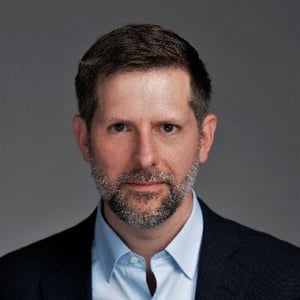
Head of AI Policy, Abundance Institute
Neil Chilson is the Head of AI Policy at the Abundance Institute. Prior to this position, he served as a Senior Research Fellow at the Center for Growth and Opportunity. Chilson is a lawyer, computer scientist, and author of the book “Getting Out of Control: Emergent Leadership in a Complex World.”
Chilson was previously the senior research fellow for Technology and Innovation at Stand Together, where he guided efforts to understand and promote the legal and cultural paradigms that best enable people to discover, innovate, and improve all our lives.
Before Stand Together, Chilson was the Chief Technologist at the Federal Trade Commission, where he focused on the economics of privacy and blockchain-related issues. Previously, he was an attorney advisor to Acting FTC Chairman Maureen K. Ohlhausen. In both roles he advised Chairman Ohlhausen and worked with staff on nearly every major technology-related case, report, workshop, or other FTC proceeding since January 2014. Neil joined the FTC from telecom firm Wilkinson Barker Knauer. Neil is frequently quoted by the press and his work has appeared in numerous news outlets, including The Wall Street Journal, The Washington Post, USAToday, and Newsweek. Neil has a J.D. from The George Washington Law School, a M.S. in computer science from University of Illinois, Urbana-Champaign, and a B.S. in computer science from Harding University.
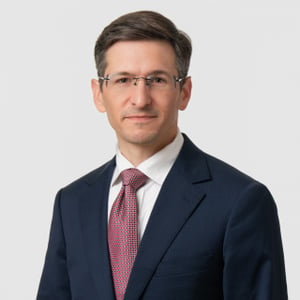
Senior Fellow, American Enterprise Institute
Zack Cooper is a senior fellow at the American Enterprise Institute, where he studies US strategy in Asia, including alliance dynamics and US-China competition. He also teaches at Princeton University, serves as chair of the board of the Open Technology Fund, and co-hosts the Net Assessment podcast.
Before joining AEI, Dr. Cooper was the senior fellow for Asian security at the Center for Strategic and International Studies. He previously worked as codirector of the Alliance for Securing Democracy and senior fellow at the German Marshall Fund of the United States and research fellow at the Center for Strategic and Budgetary Assessments. He also served on staff at the National Security Council and in the Office of the Secretary of Defense.
Dr. Cooper is the author of Tides of Fortune: The Rise and Decline of Great Militaries from Yale University Press. He has also co-authored books, reports, and articles on US strategy and alliances in Asia. His writing has appeared in academic journals and popular press, including International Security, Security Studies, Foreign Affairs, the New York Times, the Washington Post, and the Wall Street Journal, among other outlets. Dr. Cooper graduated from Princeton University with a PhD and an MA in security studies and an MPA in international relations. He received a BA in public policy from Stanford University.
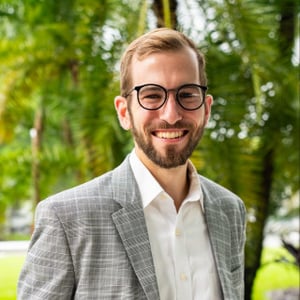
AI Innovation and Law Fellow, University of Texas School of Law
Kevin Frazier is an AI Innovation and Law Fellow with University of Texas School of Law.
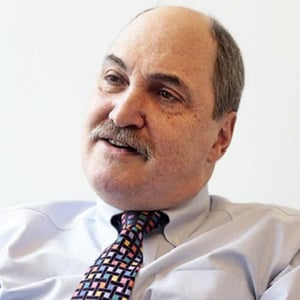
Senior Adviser (Non-resident), CSIS
James Lewis writes on technology and strategy at the Center for Strategic and International Studies (CSIS). Before joining CSIS, he was a diplomat and a member of the Senior Executive Service. Lewis has a track record of being among the first to identify new tech and security issues and devise polices to address them. He developed groundbreaking policies on cybersecurity, remote sensing, encryption, spectrum management, and high-tech exports to China, including 5G, software, and semiconductors. He also helped create the Wassenaar Arrangement. Lewis was a senior adviser for four UN Groups of Governmental Experts on Information Security, and his work on norms to build stability in cyberspace is foundational. He leads a long-running track 2 dialogue with the China Institutes of Contemporary International Relations. His current work looks at how countries innovate and at digitalization and its political, economic, and security effects. Early in his career, Lewis was a political adviser to two combatant commanders. Lewis has authored numerous publications since coming to CSIS (see the full list here). He is frequently quoted in the media, has served on several federal advisory committees, and has testified numerous times before Congress. He received his PhD from the University of Chicago.

Senior Policy Director, Americans for Responsible Innovation

President and Executive Director, Electronic Privacy Information Center
Marc Rotenberg is President and Executive Director of the Electronic Privacy Information Center (EPIC) in Washington, DC. He teaches information privacy law at Georgetown University Law Center and frequently testifies before Congress on emerging privacy and civil liberties issues. He testified before the 9-11 Commission on "Security and Liberty: Protecting Privacy, Preventing Terrorism." He has served on several national and international advisory panels, including the expert panels on Cryptography Policy and Computer Security for the OECD, the Legal Experts on Cyberspace Law for UNESCO, and the Countering Spam program of the ITU. He chairs the ABA Committee on Privacy and Information Protection. He is a founding board member and former Chair of the Public Interest Registry, which manages the .ORG domain. He is editor of "The Privacy Law Sourcebook," and co-editor of "Information Privacy Law" (Aspen Publishing 2006) and "Litigation Under the Federal Open Government Laws" (EPIC 2010). He is a graduate of Harvard College and Stanford Law School. He served as Counsel to Senator Patrick J. Leahy on the Senate Judiciary Committee after graduation from law school. He is the recipient of several awards, including the World Technology Award in Law, the American Lawyer Award for Top Lawyers Under 45, the Norbert Weiner Award for Social and Professional Responsibility, and the Vicennial medal from Georgetown University.
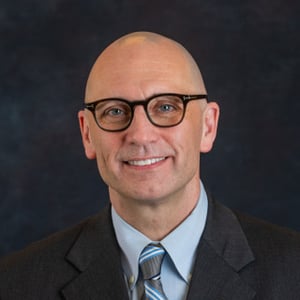
Senior Counsel for Law and Policy, Committee for Justice
Jeff is a registered patent attorney and an intellectual property and innovation policy professional with a unique combination of training and real-world experience. Jeff is also currently a PhD candidate at the University of Pittsburgh Graduate School of Public and International Affairs (GSPIA). His dissertation is entitled “An Inquiry into the Nature and Causes of American Innovation: An Austrian Economics Perspective.”
Jeff maintains an active intellectual property law practice in the life sciences space. While counseling clients and working on his dissertation and other scholarship, Jeff remains active in the policy analysis and advocacy space. He currently serves as the President of the Association for American Innovation and a member and former Chair of the Public Policy Legal Task Force (PPLTF) for the Association of University of Technology Managers (AUTM).
Jeff has a bachelor’s degree chemical and biomedical engineering with concentrations in molecular biology and fermentation technology and from Carnegie Mellon. He also has a master’s degree in industrial administration (business) from Carnegie Mellon where he concentrated on international management, marketing and finance. He earned his law degree from the Duquesne University School of Law with a focus on intellectual property law.
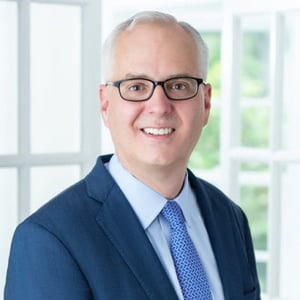
Principal, Clear IP, LLC
Joseph Matal is the Principal at Clear IP, LLC.
Joe has served as both the U.S. Patent and Trademark’s Acting Director and Acting Solicitor. As Acting Solicitor, he defended the agency in intellectual property cases before the U.S. Court of Appeals for the Federal Circuit and U.S. Supreme Court. In his role in the Solicitor’s Office, he participated in briefing almost every major case involving PTAB trials that has come before the Federal Circuit, including cases that have defined the Board’s powers and the evidence that it may consider, the content of final decisions, and the burdens and scope of motions to amend. Recent cases include Uniloc v. Hulu, Thryv v. Click-to-Call, and Aqua Products v. Matal. Previously, Joe served in senior legal roles for more than a decade for the U.S. Senate Judiciary Committee. In that capacity, he negotiated and drafted many of the key provisions of the America Invents Act.
In his roles at the USPTO, Joe briefed and argued numerous appeals of patent and trademark decisions before the Federal Circuit; oversaw the management of the USPTO and its 13,000 employees; and advised the U.S. Solicitor General’s Office in key IP cases before the Supreme Court.
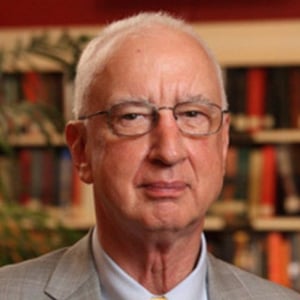
Former Chief Judge, United States Court of Appeals for the Federal Circuit
Judge Michel served for more than 22 years on the Federal Circuit, retiring on May 31, 2010. From December 25, 2004 until his retirement, he also discharged the duties of Chief Judge of this national court, serving simultaneously on the U.S. Judicial Conference -- the Judiciary's governing body -- and by appointment of the Chief Justice on its seven-judge Executive Committee.
He judged several thousand appeals and authored more than 800 opinions, one third concerning intellectual property law. Intellectual Asset Management magazine inducted him into its Hall of Fame and he was designated one of the 50 most influential leaders in intellectual property law in the world. His contributions were also recognized by lifetime achievement and similar awards by the American Intellectual Property Law Association (AIPLA); Intellectual Property Owners Education Foundation (IPO); the American Bar Association's Intellectual Property Section; Managing Intellectual Property magazine; the Sedona Conference; the Patent and Trademark Office Society (PTOS); the New York, Chicago, Philadelphia, and Los Angeles Intellectual Property Law Associations; and the William C. Connor, the Giles S. Rich, and the Richard Linn Intellectual Property American Inns of Court. In 2010 the Los Angeles IP Inn was renamed in his honor as the Paul R. Michel IP Inn.
Judge Michel received the Jefferson Medal, the Eli Whitney Award, and the Katz-Kiley Prize as well as Honorary Doctor of Law degrees from the Catholic University of America and the John Marshall Law School. He is a lifetime Member of Honore of FICPI, the international association of private practitioners of intellectual property law. Williams College granted him the Kellogg Award for "outstanding leadership in law and public service."
Judge Michel has written numerous articles on patent law and advocacy, taught related courses and master classes at George Washington University, the University of Akron, and John Marshall law schools, serving as well on their IP advisory boards and on counterpart boards at the universities of California (Berkley), Washington, and Maryland. He co-authored a casebook, Patent Litigation and Strategy (West, 1999) and an August 2010 editorial in the New York Times on strengthening the patent system to promote prosperity and create new jobs.
A frequent speaker at conferences and law schools during his judicial tenure and since, he retired from a lifetime appointment to be free to speak out on the national need for better patent policy and protection of intellectual property and the vital, unmet resource needs of the courts, the PTO, the International Trade Commission, and other IP-related agencies. He was appointed Distinguished Scholar in Residence by IPO, following his retirement. Judge Michel also consults for law firms and their clients in intellectual property litigations, conducting moot courts, mock trials, case evaluations, editing briefs, advising on strategy and providing mediation and arbitration services.
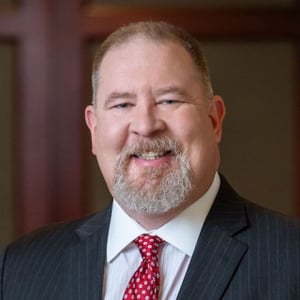
President & CEO, IPWatchdog, Inc.
Gene Quinn is a patent attorney and a leading commentator on patent law and innovation policy. Mr. Quinn has twice been named one of the top 50 most influential people in IP by Managing IP Magazine, in both 2014 and 2019. From 2017-2023, Mr. Quinn has also been recognized by IAM Magazine as one of the top 300 IP strategists in the world, and in 2021 he was recognized by IAM in their inaugural Strategy 300 Global Leaders list.
Mr. Quinn founded IPWatchdog.com in 1999, and he is currently President & CEO of IPWatchdog, Inc. According to IAM Magazine, Mr. Quinn “has reshaped the IP debate in the United States in a way that has forced policy makers to carefully consider the macroeconomic effects of IP law and its potential to drive innovation and economic activity.”
Regarded as an expert on software patentability and U.S. patent procedure, Mr. Quinn has advised inventors, entrepreneurs and start-up businesses throughout the U.S. and around the world. He consults with attorneys facing peculiar procedural issues at the Patent Office, advises investors and executives on patent law changes and pending litigation matters, and has represented patent practitioners before the Office of Enrollment & Discipline.
Mr. Quinn began his career as a litigator handling a variety of civil litigation matters, and he has been a patent attorney for nearly two decades. He has previously taught a variety of intellectual property courses at the law school level, teaching courses such as patent law, patent claim drafting, patent prosecution, copyright law, trademark law and introduction to intellectual property at Syracuse University College of Law, Temple University School of Law, The University of Toledo College of Law, the University of New Hampshire School of Law, the John Marshall Law School (Chicago) and Whittier Law School. Since 2000 Mr. Quinn has also taught the leading patent bar review course in the nation.
Mr. Quinn is admitted to practice law in New Hampshire, is a Registered Patent Attorney licensed to practice before the United States Patent Office and is also admitted to practice before the United States Court of Appeals for the Federal Circuit.
Senior Counsel for Law and Policy, Committee for Justice
Jeff is a registered patent attorney and an intellectual property and innovation policy professional with a unique combination of training and real-world experience. Jeff is also currently a PhD candidate at the University of Pittsburgh Graduate School of Public and International Affairs (GSPIA). His dissertation is entitled “An Inquiry into the Nature and Causes of American Innovation: An Austrian Economics Perspective.”
Jeff maintains an active intellectual property law practice in the life sciences space. While counseling clients and working on his dissertation and other scholarship, Jeff remains active in the policy analysis and advocacy space. He currently serves as the President of the Association for American Innovation and a member and former Chair of the Public Policy Legal Task Force (PPLTF) for the Association of University of Technology Managers (AUTM).
Jeff has a bachelor’s degree chemical and biomedical engineering with concentrations in molecular biology and fermentation technology and from Carnegie Mellon. He also has a master’s degree in industrial administration (business) from Carnegie Mellon where he concentrated on international management, marketing and finance. He earned his law degree from the Duquesne University School of Law with a focus on intellectual property law.
Principal, Clear IP, LLC
Joseph Matal is the Principal at Clear IP, LLC.
Joe has served as both the U.S. Patent and Trademark’s Acting Director and Acting Solicitor. As Acting Solicitor, he defended the agency in intellectual property cases before the U.S. Court of Appeals for the Federal Circuit and U.S. Supreme Court. In his role in the Solicitor’s Office, he participated in briefing almost every major case involving PTAB trials that has come before the Federal Circuit, including cases that have defined the Board’s powers and the evidence that it may consider, the content of final decisions, and the burdens and scope of motions to amend. Recent cases include Uniloc v. Hulu, Thryv v. Click-to-Call, and Aqua Products v. Matal. Previously, Joe served in senior legal roles for more than a decade for the U.S. Senate Judiciary Committee. In that capacity, he negotiated and drafted many of the key provisions of the America Invents Act.
In his roles at the USPTO, Joe briefed and argued numerous appeals of patent and trademark decisions before the Federal Circuit; oversaw the management of the USPTO and its 13,000 employees; and advised the U.S. Solicitor General’s Office in key IP cases before the Supreme Court.
Former Chief Judge, United States Court of Appeals for the Federal Circuit
Judge Michel served for more than 22 years on the Federal Circuit, retiring on May 31, 2010. From December 25, 2004 until his retirement, he also discharged the duties of Chief Judge of this national court, serving simultaneously on the U.S. Judicial Conference -- the Judiciary's governing body -- and by appointment of the Chief Justice on its seven-judge Executive Committee.
He judged several thousand appeals and authored more than 800 opinions, one third concerning intellectual property law. Intellectual Asset Management magazine inducted him into its Hall of Fame and he was designated one of the 50 most influential leaders in intellectual property law in the world. His contributions were also recognized by lifetime achievement and similar awards by the American Intellectual Property Law Association (AIPLA); Intellectual Property Owners Education Foundation (IPO); the American Bar Association's Intellectual Property Section; Managing Intellectual Property magazine; the Sedona Conference; the Patent and Trademark Office Society (PTOS); the New York, Chicago, Philadelphia, and Los Angeles Intellectual Property Law Associations; and the William C. Connor, the Giles S. Rich, and the Richard Linn Intellectual Property American Inns of Court. In 2010 the Los Angeles IP Inn was renamed in his honor as the Paul R. Michel IP Inn.
Judge Michel received the Jefferson Medal, the Eli Whitney Award, and the Katz-Kiley Prize as well as Honorary Doctor of Law degrees from the Catholic University of America and the John Marshall Law School. He is a lifetime Member of Honore of FICPI, the international association of private practitioners of intellectual property law. Williams College granted him the Kellogg Award for "outstanding leadership in law and public service."
Judge Michel has written numerous articles on patent law and advocacy, taught related courses and master classes at George Washington University, the University of Akron, and John Marshall law schools, serving as well on their IP advisory boards and on counterpart boards at the universities of California (Berkley), Washington, and Maryland. He co-authored a casebook, Patent Litigation and Strategy (West, 1999) and an August 2010 editorial in the New York Times on strengthening the patent system to promote prosperity and create new jobs.
A frequent speaker at conferences and law schools during his judicial tenure and since, he retired from a lifetime appointment to be free to speak out on the national need for better patent policy and protection of intellectual property and the vital, unmet resource needs of the courts, the PTO, the International Trade Commission, and other IP-related agencies. He was appointed Distinguished Scholar in Residence by IPO, following his retirement. Judge Michel also consults for law firms and their clients in intellectual property litigations, conducting moot courts, mock trials, case evaluations, editing briefs, advising on strategy and providing mediation and arbitration services.
President & CEO, IPWatchdog, Inc.
Gene Quinn is a patent attorney and a leading commentator on patent law and innovation policy. Mr. Quinn has twice been named one of the top 50 most influential people in IP by Managing IP Magazine, in both 2014 and 2019. From 2017-2023, Mr. Quinn has also been recognized by IAM Magazine as one of the top 300 IP strategists in the world, and in 2021 he was recognized by IAM in their inaugural Strategy 300 Global Leaders list.
Mr. Quinn founded IPWatchdog.com in 1999, and he is currently President & CEO of IPWatchdog, Inc. According to IAM Magazine, Mr. Quinn “has reshaped the IP debate in the United States in a way that has forced policy makers to carefully consider the macroeconomic effects of IP law and its potential to drive innovation and economic activity.”
Regarded as an expert on software patentability and U.S. patent procedure, Mr. Quinn has advised inventors, entrepreneurs and start-up businesses throughout the U.S. and around the world. He consults with attorneys facing peculiar procedural issues at the Patent Office, advises investors and executives on patent law changes and pending litigation matters, and has represented patent practitioners before the Office of Enrollment & Discipline.
Mr. Quinn began his career as a litigator handling a variety of civil litigation matters, and he has been a patent attorney for nearly two decades. He has previously taught a variety of intellectual property courses at the law school level, teaching courses such as patent law, patent claim drafting, patent prosecution, copyright law, trademark law and introduction to intellectual property at Syracuse University College of Law, Temple University School of Law, The University of Toledo College of Law, the University of New Hampshire School of Law, the John Marshall Law School (Chicago) and Whittier Law School. Since 2000 Mr. Quinn has also taught the leading patent bar review course in the nation.
Mr. Quinn is admitted to practice law in New Hampshire, is a Registered Patent Attorney licensed to practice before the United States Patent Office and is also admitted to practice before the United States Court of Appeals for the Federal Circuit.
Head of AI Policy, Abundance Institute
Neil Chilson is the Head of AI Policy at the Abundance Institute. Prior to this position, he served as a Senior Research Fellow at the Center for Growth and Opportunity. Chilson is a lawyer, computer scientist, and author of the book “Getting Out of Control: Emergent Leadership in a Complex World.”
Chilson was previously the senior research fellow for Technology and Innovation at Stand Together, where he guided efforts to understand and promote the legal and cultural paradigms that best enable people to discover, innovate, and improve all our lives.
Before Stand Together, Chilson was the Chief Technologist at the Federal Trade Commission, where he focused on the economics of privacy and blockchain-related issues. Previously, he was an attorney advisor to Acting FTC Chairman Maureen K. Ohlhausen. In both roles he advised Chairman Ohlhausen and worked with staff on nearly every major technology-related case, report, workshop, or other FTC proceeding since January 2014. Neil joined the FTC from telecom firm Wilkinson Barker Knauer. Neil is frequently quoted by the press and his work has appeared in numerous news outlets, including The Wall Street Journal, The Washington Post, USAToday, and Newsweek. Neil has a J.D. from The George Washington Law School, a M.S. in computer science from University of Illinois, Urbana-Champaign, and a B.S. in computer science from Harding University.
Senior Fellow, American Enterprise Institute
Zack Cooper is a senior fellow at the American Enterprise Institute, where he studies US strategy in Asia, including alliance dynamics and US-China competition. He also teaches at Princeton University, serves as chair of the board of the Open Technology Fund, and co-hosts the Net Assessment podcast.
Before joining AEI, Dr. Cooper was the senior fellow for Asian security at the Center for Strategic and International Studies. He previously worked as codirector of the Alliance for Securing Democracy and senior fellow at the German Marshall Fund of the United States and research fellow at the Center for Strategic and Budgetary Assessments. He also served on staff at the National Security Council and in the Office of the Secretary of Defense.
Dr. Cooper is the author of Tides of Fortune: The Rise and Decline of Great Militaries from Yale University Press. He has also co-authored books, reports, and articles on US strategy and alliances in Asia. His writing has appeared in academic journals and popular press, including International Security, Security Studies, Foreign Affairs, the New York Times, the Washington Post, and the Wall Street Journal, among other outlets. Dr. Cooper graduated from Princeton University with a PhD and an MA in security studies and an MPA in international relations. He received a BA in public policy from Stanford University.
AI Innovation and Law Fellow, University of Texas School of Law
Kevin Frazier is an AI Innovation and Law Fellow with University of Texas School of Law.
Senior Adviser (Non-resident), CSIS
James Lewis writes on technology and strategy at the Center for Strategic and International Studies (CSIS). Before joining CSIS, he was a diplomat and a member of the Senior Executive Service. Lewis has a track record of being among the first to identify new tech and security issues and devise polices to address them. He developed groundbreaking policies on cybersecurity, remote sensing, encryption, spectrum management, and high-tech exports to China, including 5G, software, and semiconductors. He also helped create the Wassenaar Arrangement. Lewis was a senior adviser for four UN Groups of Governmental Experts on Information Security, and his work on norms to build stability in cyberspace is foundational. He leads a long-running track 2 dialogue with the China Institutes of Contemporary International Relations. His current work looks at how countries innovate and at digitalization and its political, economic, and security effects. Early in his career, Lewis was a political adviser to two combatant commanders. Lewis has authored numerous publications since coming to CSIS (see the full list here). He is frequently quoted in the media, has served on several federal advisory committees, and has testified numerous times before Congress. He received his PhD from the University of Chicago.
Senior Policy Director, Americans for Responsible Innovation
President and Executive Director, Electronic Privacy Information Center
Marc Rotenberg is President and Executive Director of the Electronic Privacy Information Center (EPIC) in Washington, DC. He teaches information privacy law at Georgetown University Law Center and frequently testifies before Congress on emerging privacy and civil liberties issues. He testified before the 9-11 Commission on "Security and Liberty: Protecting Privacy, Preventing Terrorism." He has served on several national and international advisory panels, including the expert panels on Cryptography Policy and Computer Security for the OECD, the Legal Experts on Cyberspace Law for UNESCO, and the Countering Spam program of the ITU. He chairs the ABA Committee on Privacy and Information Protection. He is a founding board member and former Chair of the Public Interest Registry, which manages the .ORG domain. He is editor of "The Privacy Law Sourcebook," and co-editor of "Information Privacy Law" (Aspen Publishing 2006) and "Litigation Under the Federal Open Government Laws" (EPIC 2010). He is a graduate of Harvard College and Stanford Law School. He served as Counsel to Senator Patrick J. Leahy on the Senate Judiciary Committee after graduation from law school. He is the recipient of several awards, including the World Technology Award in Law, the American Lawyer Award for Top Lawyers Under 45, the Norbert Weiner Award for Social and Professional Responsibility, and the Vicennial medal from Georgetown University.
Senior Counsel for Law and Policy, Committee for Justice
Jeff is a registered patent attorney and an intellectual property and innovation policy professional with a unique combination of training and real-world experience. Jeff is also currently a PhD candidate at the University of Pittsburgh Graduate School of Public and International Affairs (GSPIA). His dissertation is entitled “An Inquiry into the Nature and Causes of American Innovation: An Austrian Economics Perspective.”
Jeff maintains an active intellectual property law practice in the life sciences space. While counseling clients and working on his dissertation and other scholarship, Jeff remains active in the policy analysis and advocacy space. He currently serves as the President of the Association for American Innovation and a member and former Chair of the Public Policy Legal Task Force (PPLTF) for the Association of University of Technology Managers (AUTM).
Jeff has a bachelor’s degree chemical and biomedical engineering with concentrations in molecular biology and fermentation technology and from Carnegie Mellon. He also has a master’s degree in industrial administration (business) from Carnegie Mellon where he concentrated on international management, marketing and finance. He earned his law degree from the Duquesne University School of Law with a focus on intellectual property law.
Principal, Clear IP, LLC
Joseph Matal is the Principal at Clear IP, LLC.
Joe has served as both the U.S. Patent and Trademark’s Acting Director and Acting Solicitor. As Acting Solicitor, he defended the agency in intellectual property cases before the U.S. Court of Appeals for the Federal Circuit and U.S. Supreme Court. In his role in the Solicitor’s Office, he participated in briefing almost every major case involving PTAB trials that has come before the Federal Circuit, including cases that have defined the Board’s powers and the evidence that it may consider, the content of final decisions, and the burdens and scope of motions to amend. Recent cases include Uniloc v. Hulu, Thryv v. Click-to-Call, and Aqua Products v. Matal. Previously, Joe served in senior legal roles for more than a decade for the U.S. Senate Judiciary Committee. In that capacity, he negotiated and drafted many of the key provisions of the America Invents Act.
In his roles at the USPTO, Joe briefed and argued numerous appeals of patent and trademark decisions before the Federal Circuit; oversaw the management of the USPTO and its 13,000 employees; and advised the U.S. Solicitor General’s Office in key IP cases before the Supreme Court.
Former Chief Judge, United States Court of Appeals for the Federal Circuit
Judge Michel served for more than 22 years on the Federal Circuit, retiring on May 31, 2010. From December 25, 2004 until his retirement, he also discharged the duties of Chief Judge of this national court, serving simultaneously on the U.S. Judicial Conference -- the Judiciary's governing body -- and by appointment of the Chief Justice on its seven-judge Executive Committee.
He judged several thousand appeals and authored more than 800 opinions, one third concerning intellectual property law. Intellectual Asset Management magazine inducted him into its Hall of Fame and he was designated one of the 50 most influential leaders in intellectual property law in the world. His contributions were also recognized by lifetime achievement and similar awards by the American Intellectual Property Law Association (AIPLA); Intellectual Property Owners Education Foundation (IPO); the American Bar Association's Intellectual Property Section; Managing Intellectual Property magazine; the Sedona Conference; the Patent and Trademark Office Society (PTOS); the New York, Chicago, Philadelphia, and Los Angeles Intellectual Property Law Associations; and the William C. Connor, the Giles S. Rich, and the Richard Linn Intellectual Property American Inns of Court. In 2010 the Los Angeles IP Inn was renamed in his honor as the Paul R. Michel IP Inn.
Judge Michel received the Jefferson Medal, the Eli Whitney Award, and the Katz-Kiley Prize as well as Honorary Doctor of Law degrees from the Catholic University of America and the John Marshall Law School. He is a lifetime Member of Honore of FICPI, the international association of private practitioners of intellectual property law. Williams College granted him the Kellogg Award for "outstanding leadership in law and public service."
Judge Michel has written numerous articles on patent law and advocacy, taught related courses and master classes at George Washington University, the University of Akron, and John Marshall law schools, serving as well on their IP advisory boards and on counterpart boards at the universities of California (Berkley), Washington, and Maryland. He co-authored a casebook, Patent Litigation and Strategy (West, 1999) and an August 2010 editorial in the New York Times on strengthening the patent system to promote prosperity and create new jobs.
A frequent speaker at conferences and law schools during his judicial tenure and since, he retired from a lifetime appointment to be free to speak out on the national need for better patent policy and protection of intellectual property and the vital, unmet resource needs of the courts, the PTO, the International Trade Commission, and other IP-related agencies. He was appointed Distinguished Scholar in Residence by IPO, following his retirement. Judge Michel also consults for law firms and their clients in intellectual property litigations, conducting moot courts, mock trials, case evaluations, editing briefs, advising on strategy and providing mediation and arbitration services.
President & CEO, IPWatchdog, Inc.
Gene Quinn is a patent attorney and a leading commentator on patent law and innovation policy. Mr. Quinn has twice been named one of the top 50 most influential people in IP by Managing IP Magazine, in both 2014 and 2019. From 2017-2023, Mr. Quinn has also been recognized by IAM Magazine as one of the top 300 IP strategists in the world, and in 2021 he was recognized by IAM in their inaugural Strategy 300 Global Leaders list.
Mr. Quinn founded IPWatchdog.com in 1999, and he is currently President & CEO of IPWatchdog, Inc. According to IAM Magazine, Mr. Quinn “has reshaped the IP debate in the United States in a way that has forced policy makers to carefully consider the macroeconomic effects of IP law and its potential to drive innovation and economic activity.”
Regarded as an expert on software patentability and U.S. patent procedure, Mr. Quinn has advised inventors, entrepreneurs and start-up businesses throughout the U.S. and around the world. He consults with attorneys facing peculiar procedural issues at the Patent Office, advises investors and executives on patent law changes and pending litigation matters, and has represented patent practitioners before the Office of Enrollment & Discipline.
Mr. Quinn began his career as a litigator handling a variety of civil litigation matters, and he has been a patent attorney for nearly two decades. He has previously taught a variety of intellectual property courses at the law school level, teaching courses such as patent law, patent claim drafting, patent prosecution, copyright law, trademark law and introduction to intellectual property at Syracuse University College of Law, Temple University School of Law, The University of Toledo College of Law, the University of New Hampshire School of Law, the John Marshall Law School (Chicago) and Whittier Law School. Since 2000 Mr. Quinn has also taught the leading patent bar review course in the nation.
Mr. Quinn is admitted to practice law in New Hampshire, is a Registered Patent Attorney licensed to practice before the United States Patent Office and is also admitted to practice before the United States Court of Appeals for the Federal Circuit.

Panel IV: AI, Information Warfare, and the Battle for Truth
Neil Chilson, Zack Cooper, Kevin Frazier, James Andrew Lewis, Morgan C. Plummer, Marc Rotenberg
Featuring: Dr. Zack Cooper, Senior Fellow, American Enterprise Institute Prof. Kevin Frazier, AI Innovation & Law...
Panel IV: AI, Information Warfare, and the Battle for Truth
2025 AI and National Security Symposium
Washington, DC2025 National Security and AI Symposium
Washington, DCProsecution Laches: No Good Deed Goes Unpunished!
Jeffrey E. Depp, Joseph Matal, Paul Redmond Michel, Gene Quinn
Prosecution laches is an infrequently used equitable doctrine that bars enforcement of a patent when...
Prosecution Laches: No Good Deed Goes Unpunished!
Jeffrey E. Depp, Joseph Matal, Paul Redmond Michel, Gene Quinn
Prosecution laches is an infrequently used equitable doctrine that bars enforcement of a patent when...
Prosecution Laches: No Good Deed Goes Unpunished!
Topics
Punish the Perpetrator, Not the Victim: How to Deal With Chinese Hacking
This month, the Biden Administration revealed that Chinese state actors have infiltrated at least since...
U.S. Out of Africa? Then What?
Last month, the last American troops left Niger, following withdrawal of U.S. troops in Chad...
U.S. Out of Africa? Then What?
Last month, the last American troops left Niger, following withdrawal of U.S. troops in Chad...
U.S. Out of Africa? Then What?