
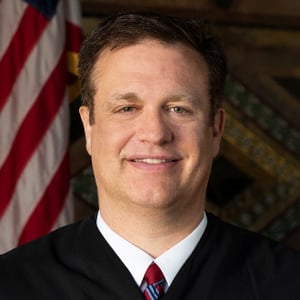
Judge, United States Court of Appeals, Ninth Circuit
Judge Nelson was confirmed to the Ninth Circuit in October 2018, as the youngest Circuit Judge to serve from Idaho and he has chambers in his hometown of Idaho Falls. Prior to his confirmation, Judge Nelson served for nine years as General Counsel of Idaho Falls-based Melaleuca, Inc., a consumer goods company. He previously worked in Washington, DC, where he served in all three branches of the federal government, including as Special Counsel for Supreme Court nominations to the Ranking Member of the Senate Judiciary Committee; Deputy General Counsel to the White House Office of Management and Budget; Deputy Assistant Attorney General in the Environment and Natural Resources Division of the United States Department of Justice; and a law clerk to Judge Henderson of the United States Court of Appeals for the D.C. Circuit. He has argued in most of the federal courts of appeals and worked on dozens of Supreme Court briefs. He started in the Washington, DC office of Sidley Austin as an appellate lawyer, after clerking for Judges Mosk and Brower of the Iran-U.S. Claims Tribunal at The Hague, and for now-Judge Tom Griffith, then-Senate Legal Counsel, during the impeachment trial of President Clinton. Judge Nelson earned his B.A. from Brigham Young University and his J.D., with honors, from BYU Law School. Judge Nelson has been a member of the Federalist Society since 1998.
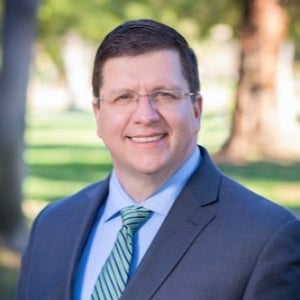
Vice President and Senior Counsel, The Becket Fund for Religious Liberty
Eric Rassbach is Vice President and Senior Counsel at the Becket Fund for Religious Liberty, where he has served since 2003. He has briefed over 90 cases at the United States Supreme Court and has led or been a part of Becket litigation teams in each of Becket’s pathbreaking victories there, including Hosanna-Tabor, Hobby Lobby, Holt v. Hobbs, Zubik v. Burwell, Agudath Israel of America v. Cuomo, and Fulton v. Philadelphia. In 2020, Eric argued Our Lady of Guadalupe School v. Morrissey-Berru to the Supreme Court, garnering a 7-2 win for his Catholic school clients. Eric has also briefed and argued cases in federal appeals courts and state supreme courts across the nation. Eric has also represented clients in appeals to the European Court of Human Rights in Strasbourg, France and in the highest courts of several other countries.
Eric believes passionately in the right of all people to the full measure of religious liberty and has represented members of almost every religious group present in the United States, including Buddhists, Christians, Hindus, Jains, Jews, Muslims, Native Americans, Santeros, and Sikhs, as well as many governmental entities targeted for accommodating religion.
Eric frequently comments on church-state issues in the media, including the New York Times, the Washington Post, the Wall Street Journal, and other major press outlets. He has published legal scholarship in the Harvard Law Review Forum, the Tennessee Law Review, the Illinois Law Review, the Cato Supreme Court Review, and other legal journals, and often speaks to law school audiences.
Before joining Becket, Eric worked at Baker Botts LLP in Houston, where he worked in international project finance. He also served as a law clerk to United States District Court Judge Lee Rosenthal in Houston, Texas.
Eric graduated from Haverford College with a degree in Comparative Literature, is a member of Fitzwilliam College, University of Cambridge, and is a graduate of Harvard Law School. Eric was a 2012-2013 Wasserstein Public Interest Fellow at Harvard Law School. He is Visiting Professor and Executive Director of The Hugh and Hazel Darling Foundation Religious Liberty Clinic at Pepperdine University Caruso School of Law in Malibu, where he leads students in litigating cases in American courts. He is also an Associated Scholar with the Centre for Religious Freedom at Jagiellonian University in Kraków, Poland. Eric is admitted in Texas, DC, California, and Ireland.
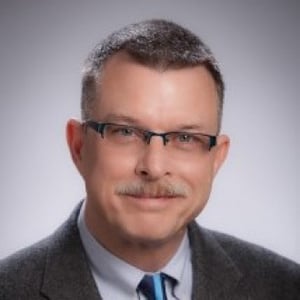
Founder and Senior Director, Institutional Religious Freedom Alliance
Stanley Carlson-Thies is the Founder and Senior Director of the Institutional Religious Freedom Alliance (IRFA), a division of the Center for Public Justice. As part of this role, he convenes the Coalition to Preserve Religious Freedom, a multi-faith alliance of social-service, education, and religious freedom organizations that advocates for the religious freedom of faith-based organizations to Congress and the federal government. In addition he is also a Senior Fellow at the Canadian think tank Cardus.
From 2009-2010 he served on a task force of President Obama’s Advisory Council on Faith-Based and Neighborhood Partnerships, helping to draft recommendations on how to clarify the church-state rules that apply to federal funding of social-service providers, and has consulted with federal departments and several states.
He served with the White House Office of Faith-Based & Community Initiatives from its inception in February 2001 until mid-May 2002. He assisted with writing “Unlevel Playing Field: Barriers to Participation by Faith-Based and Community Organizations in Federal Social Service Programs,” a report released by the White House in August 2001, and “Rallying the Armies of Compassion,” the initial blueprint for President George W. Bush’s faith and community agenda.
Previously, he was Director of Social Policy Studies for CPJ and directed CPJ’s project to track the implementation and impact of the Charitable Choice provision of the 1996 federal welfare reform law. Following his term in the White House, he returned to CPJ as the Director of Faith-based Policy Studies.
He received the William Bentley Ball Life and Religious Liberty Defense Award from the Center for Law and Religious Freedom and the Christian Legal Society in October 2004. He was named as one of 12 advocates who are “reinterpreting God and country” by the National Journal in May 2004. He holds a doctorate in political science from the University of Toronto. His dissertation is on the role of Protestants and Catholics in the development of Dutch politics in the 19th and 20th centuries. Besides the United States, he has lived in Canada, the Netherlands, and Japan, where he was born of missionary parents. He lives in Annapolis, Maryland, with his wife, Christiane. They are the proud parents of Simon.
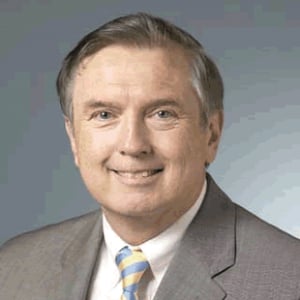
Professor of Law, University of Notre Dame Law School
Gerard V. Bradley is Professor of Law at the University of Notre Dame, where he teaches Legal Ethics and Constitutional Law. At Notre Dame he directs (with John Finnis) the Natural Law Institute and co-edits The American Journal of Jurisprudence, an international forum for legal philosophy. Bradley has been a Visiting Fellow at the Hoover Institution of Stanford University, and a Senior Fellow of the Witherspoon Institute, in Princeton, New Jersey. He served for many years as President of the Fellowship of Catholic Scholars.
Bradley received his B.A and J.D. degrees from Cornell University, graduating Summa cum laude from the law school in 1980. After serving in the Trial Division of the Manhattan District Attorney’s Office he joined the law faculty at the University of Illinois. He moved to Notre Dame in 1992. Bradley has published over one hundred scholarly articles and reviews. His most recent books are an edited collection of essays titled, Challenges to Religious Liberty in the Twenty-First Century (published by Cambridge University Press in 2012), Essays on Law, Religion, and Morality and Unquiet Americans: U.S. Catholics and the Common Good (both to be published in 2014.) He is currently working on a book about regulating obscenity in the Internet Age.

Courthouse Steps Oral Argument: Catholic Charities Bureau, Inc. v. Wisconsin Labor & Industry Review Commission
Topics
Insufficiently Supported Causal Inferences: A Response to Barak-Corren and Tebbe
In November, the Supreme Court heard arguments in Fulton v. City of Philadelphia. That case...
Topics
Religious Liberty and Nondiscrimination Norms: Is Peaceful Coexistence Possible? (Part 2)
In my first blog post discussing the U.S. Commission on Civil Rights’ new report on...
Which Religious Organizations Count as Religious? The Religious Employer Exemption of the Health Insurance Law's Contraceptives Mandate
Stanley Carlson-Thies
On August 1, 2011, the Health Resources and Service Administration issued guidelines specifying that, among...
Update: Overview of the White House Office on Faith-Based and Neighborhood Partnerships and the Council on Faith-Based and Neighborhood Partnerships
Brought to you by the Religious Liberties Practice GroupThe Federalist Society takes no position on particular...
An Overview of the White House Office on Faith-Based and Neighborhood Partnerships and the Council on Faith-Based and Neighborhood Partnerships
Brought to you by the Religious Liberties Practice GroupPresident Barack Obama announced President Bush’s White House...
New York Court of Appeals Rules on Contraception Case
Gerard V. Bradley
Seeking to advance women’s health and their overall treatment on terms equal to men, the...
Religion and the Law Symposium