
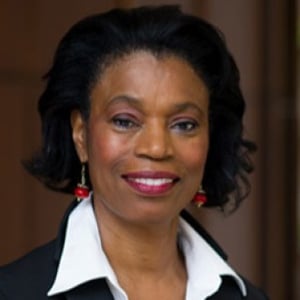
Henry R. Silverman Professor of Law and Professor of Philosophy, University of Pennsylvania Carey Law School
Anita L. Allen is the Henry R. Silverman Professor of Law and Professor of Philosophy. A graduate of Harvard Law School with a PhD from the University of Michigan in Philosophy, Allen is internationally renown as an expert on philosophical dimensions of privacy and data protection law, ethics, bioethics, legal philosophy, women’s rights, and diversity in higher education. She was Penn’s Vice Provost for Faculty from 2013-2020, and chaired the Provost's Arts Advisory Council. Allen is an elected member of the National Academy of Medicine, the American Law Institute and a fellow of the American Academy of Arts and Sciences. In 2018-19 she served as President of the Eastern Division of the American Philosiphical Association.
From 2010 to 2017, Allen served on President Obama’s Presidential Commission for the Study of Bioethical Issues. She was presented the Lifetime Achievement Award of the Electronic Privacy Information Center in 2015, and chaired its Board, 2019-2022. Allen has served on the faculty of the School of Criticism and Theory at Cornell, for which she is an advisor. A two-year term as an Associate of the Johns Hopkins Humanities Center concluded in 2018. She has been a visiting Professor at Tel Aviv University, Waseda University, Villanova, the University of Arizona, Harvard and Yale, and a Law and Public Affairs Fellow at Princeton. She was awarded an honorary Doctorate from Tilburg University (Netherlands) in 2019. She has written over a hundred articles and chapters, and her books include Unpopular Privacy: What Must We Hide (Oxford, 2011); Privacy Law and Society (Thomson/West, 2017); The New Ethics: A Guided Tour of the 21st Century Moral Landscape (Miramax/Hyperion, 2004); Why Privacy Isn’t Everything: Feminist Reflections on Personal Accountability (Rowman and Littlefield, 2003), and Uneasy Access: Privacy of Women in a Free Society (1988). Allen has given hundreds of talks all over the world and appeared on television, radio and written for major media. She currently serves on the Board of the National Constitution Center, and has served on numerous other boards and professional advisory boards, including the Pennsylvania Board of Continuing Judicial Education, the Association for Practical and Professional Ethics, the Bazelon Center for Mental Health Law, the AALS Executive Committee, the Maternity Care Coalition and the West Philadelphia Alliance for Children. She is a member of the Pennsylvania and New York bars, and formerly taught at Georgetown University Law Center for ten years and the University of Pittsburgh, after practicing briefly at Carvath, Swaine & Moore.
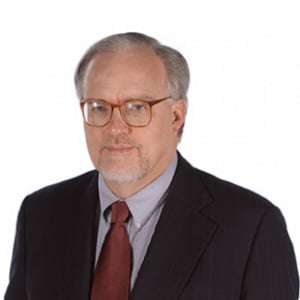
Chauncey Stillman Professor of Law, University of Michigan Law School
Carl E. Schneider, '79, the Chauncey Stillman Professor of Law and Professor of Internal Medicine, teaches courses on law and medicine, regulating research, property, law and morals, the sociology and ethics of the legal profession, and writing briefs. He holds a joint appointment in U-M’s Medical School.
A central theme in his scholarship criticizes some dominant regulatory ideas, particularly those in the law of medicine. For example, his book The Censor's Hand: The Misregulation of Human Subject Research (MIT Press, 2015), examines a regulatory system whose usefulness is widely assumed but quite unproved and argues that that system is so perversely constructed that it cannot help doing more harm than good. Another example is More Than You Wanted to Know: The Failure of Mandated Disclosure (Princeton University Press, 2014), coauthored with Omri Ben-Shahar. It explains why government-mandated disclosure may be the most adored, most used, and least successful regulatory method in our time. His The Practice of Autonomy: Patients, Doctors, and Medical Decisions (Oxford University Press, 1998), which analyzes the malign effects of making patient autonomy the regulatory summum bonum, is another example of the project.
Professor Schneider is also the coauthor of two innovative casebooks: With Marsha Garrison, he wrote The Law of Bioethics: Individual Autonomy and Social Regulation (West, 2015, 3rd edition), a pioneering casebook in what was then a new field. With Margaret F. Brinig, he wrote An Invitation to Family Law (West, 2007, 3rd edition). This casebook approaches family law conceptually: Each chapter discusses an area of family law, and each chapter introduces students to a systematic discussion of a recurring jurisprudential issue (like the problem of rules and discretion, or the legal principle of autonomy).
Professor Schneider served two terms on the President's Bioethics Council. He has been a visiting professor at Cambridge University, the University of Tokyo, Kyoto University, and the United States Air Force Academy (twice).
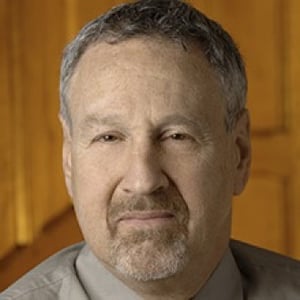
Simeon E. Baldwin Professor Emeritus of Law, Yale Law School
Peter H. Schuck is the Simeon E. Baldwin Professor Emeritus of Law and Professor (Adjunct) of Law at Yale Law School where he has held the chair since 1984. He has also served as Deputy Dean. His major fields of teaching and research are tort law; immigration, citizenship, and refugee law; groups, diversity, and law; and administrative law. His most recent books include Targeting in Social Programs: Avoiding Bad Bets, Removing Bad Apples; Meditations of a Militant Moderate: Cool Views on Hot Topics; Immigration Stories; Foundations of Administrative Law; Diversity in America: Keeping Government at a Safe Distance; and The Limits of Law: Essays on Democratic Governance. He is also co-editor, with James Q. Wilson, of Understanding America. He is a member of the American Law Institute's advisory committee for the Restatement of Torts (Third), Basic Principles, and a contributing editor to The American Lawyer. Prior to joining Yale, he was Principal Deputy Assistant Secretary for Planning and Evaluation in the U.S. Department of Health, Education, and Welfare. Professor Schuck holds a B.A. from Cornell, a J.D. from Harvard Law School, an LL.M. in International Law from N.Y.U., and an M.A. in Government from Harvard.

Senior Litigation Counsel, American Center for Law and Justice
Walter M. Weber is Senior Counsel for the ACLJ in the Washington, D.C. office. A highly regarded legal writer, Weber received his bachelor’s degree from Princeton University and his law degree from Yale Law School.
Weber emphasizes First Amendment law and has written briefs in many landmark cases at the Supreme Court including NOW v. Scheidler, Lamb’s Chapel v. Center Moriches School District and Bray v. Alexandria Women’s Health Clinic.
Weber has argued more than a dozen times in appeals before federal and state courts. Prior to joining the ACLJ, Weber served as a staff attorney with the Catholic League for Religious and Civil Rights.

Professor of Law, Dean Emerita, and Co-Director, Sports Law Track - Graduate Program in Entertainment, Arts and Sports Law LL.M., University of Miami School of Law
Patricia D. White is a Professor of Law and was the University of Miami School of Law's eleventh dean from 2009-2019. Her legal career spans over four decades as an attorney and educator. She was the first woman law school dean in Arizona and the longest serving one in the history of Arizona State University’s Sandra Day O’Connor College of Law. Her prominence in the field of legal education has led to her being recognized as one of the most influential and innovative people in legal education by National Jurist magazine in 2016, 2015, 2014, 2013 and in the 2012 ranking she was named the top woman on the list.
White chairs the ABA's Commission on the Future of Legal Education, which aims to influence dramatic changes in the legal profession over the next decade. Under White’s leadership, Miami Law has also been recognized by Pre-Law Magazine as one the “20 Most Innovative Law Schools” in 2017. Similarly, Innovation 800, published in 2017 by Cambridge University, included Miami Law as a "Leader in Learning" and one of the most innovative law schools. The London-based Financial Times, considered one of the premiere international daily newspapers with a special emphasis on business and economic news, has also tipped its hat to Miami Law’s innovation. In its “FT Special Report on Innovative Law Schools”, it ranked Miami Law as one of the most innovative law schools in the world in 2015 and 2016. Innovation accolades also came for Miami Law's specialty areas, such as the Billboard Magazine 2017 ranking of Miami Law as a top school for music law in the U.S. The Legal Services Innovation Index ranked the University of Miami Law in the top four for law schools delivering innovation and technology programs in 2017.
After becoming the dean of Miami Law in 2009, White continued her longstanding commitment to students, the transformation of legal education and public service. She transformed Miami Law’s student services program, including adding the unique Student Development Program, the AskUs Fellows initiative, Academic Achievement Program and the Office of Professionalism to name a few. She established the LawWithoutWalls program, linking students and faculty from over 30 academic institutions around the world to examine issues and develop new solutions in legal education and practice; and Legal Corps a novel fellowship program that placed new law school graduates in not for profit and public sector organizations across the nations and the globe.
Under White's leadership, the number of clinics at Miami Law more than doubled, bringing the total to 10. In 2011 Miami Law was honored by the American Bar Association Law Student Division with the Judy M. Weightman Memorial Public Interest Award, in recognition of the law school's strong commitment to public interest through the HOPE Public Interest Resource Center. She has won many awards, including the 2012 Equal Justice Leadership Award, given by Legal Services of Greater Miami for her commitment to public service, and the Judge Learned Hand Award for distinguished public service, from the Arizona chapter of the American Jewish Committee.
White received degrees in philosophy and law (B.A. 1971, J.D. 1974, M.A. 1974) from the University of Michigan. While attending law school, she was also a graduate student in philosophy and an associate editor of the law review. She began her legal practice in Washington, D.C., at Steptoe & Johnson and then moved to Caplin & Drysdale. Georgetown University Law hired White onto the faculty in 1979, and in 1988 she joined her alma mater, the University of Michigan. While at Michigan, she was of counsel to the Detroit firm Bodman, Longley & Dahling, and served for a year as tax advisor to the Economic Study Committee of Major League Baseball. In 1994, she joined the law faculty at the University of Utah, and was of counsel to Parsons, Behle & Latimer. She is a member of the bars of the District of Columbia, Michigan, and Utah, and is an elected Fellow of the American College of Tax Counsel.
During her career, White has worked in the areas of tax law, torts, bioethics, philosophy of law, and trusts and estates, and has published in prominent law and bioethics journals.
Henry R. Silverman Professor of Law and Professor of Philosophy, University of Pennsylvania Carey Law School
Anita L. Allen is the Henry R. Silverman Professor of Law and Professor of Philosophy. A graduate of Harvard Law School with a PhD from the University of Michigan in Philosophy, Allen is internationally renown as an expert on philosophical dimensions of privacy and data protection law, ethics, bioethics, legal philosophy, women’s rights, and diversity in higher education. She was Penn’s Vice Provost for Faculty from 2013-2020, and chaired the Provost's Arts Advisory Council. Allen is an elected member of the National Academy of Medicine, the American Law Institute and a fellow of the American Academy of Arts and Sciences. In 2018-19 she served as President of the Eastern Division of the American Philosiphical Association.
From 2010 to 2017, Allen served on President Obama’s Presidential Commission for the Study of Bioethical Issues. She was presented the Lifetime Achievement Award of the Electronic Privacy Information Center in 2015, and chaired its Board, 2019-2022. Allen has served on the faculty of the School of Criticism and Theory at Cornell, for which she is an advisor. A two-year term as an Associate of the Johns Hopkins Humanities Center concluded in 2018. She has been a visiting Professor at Tel Aviv University, Waseda University, Villanova, the University of Arizona, Harvard and Yale, and a Law and Public Affairs Fellow at Princeton. She was awarded an honorary Doctorate from Tilburg University (Netherlands) in 2019. She has written over a hundred articles and chapters, and her books include Unpopular Privacy: What Must We Hide (Oxford, 2011); Privacy Law and Society (Thomson/West, 2017); The New Ethics: A Guided Tour of the 21st Century Moral Landscape (Miramax/Hyperion, 2004); Why Privacy Isn’t Everything: Feminist Reflections on Personal Accountability (Rowman and Littlefield, 2003), and Uneasy Access: Privacy of Women in a Free Society (1988). Allen has given hundreds of talks all over the world and appeared on television, radio and written for major media. She currently serves on the Board of the National Constitution Center, and has served on numerous other boards and professional advisory boards, including the Pennsylvania Board of Continuing Judicial Education, the Association for Practical and Professional Ethics, the Bazelon Center for Mental Health Law, the AALS Executive Committee, the Maternity Care Coalition and the West Philadelphia Alliance for Children. She is a member of the Pennsylvania and New York bars, and formerly taught at Georgetown University Law Center for ten years and the University of Pittsburgh, after practicing briefly at Carvath, Swaine & Moore.
Chauncey Stillman Professor of Law, University of Michigan Law School
Carl E. Schneider, '79, the Chauncey Stillman Professor of Law and Professor of Internal Medicine, teaches courses on law and medicine, regulating research, property, law and morals, the sociology and ethics of the legal profession, and writing briefs. He holds a joint appointment in U-M’s Medical School.
A central theme in his scholarship criticizes some dominant regulatory ideas, particularly those in the law of medicine. For example, his book The Censor's Hand: The Misregulation of Human Subject Research (MIT Press, 2015), examines a regulatory system whose usefulness is widely assumed but quite unproved and argues that that system is so perversely constructed that it cannot help doing more harm than good. Another example is More Than You Wanted to Know: The Failure of Mandated Disclosure (Princeton University Press, 2014), coauthored with Omri Ben-Shahar. It explains why government-mandated disclosure may be the most adored, most used, and least successful regulatory method in our time. His The Practice of Autonomy: Patients, Doctors, and Medical Decisions (Oxford University Press, 1998), which analyzes the malign effects of making patient autonomy the regulatory summum bonum, is another example of the project.
Professor Schneider is also the coauthor of two innovative casebooks: With Marsha Garrison, he wrote The Law of Bioethics: Individual Autonomy and Social Regulation (West, 2015, 3rd edition), a pioneering casebook in what was then a new field. With Margaret F. Brinig, he wrote An Invitation to Family Law (West, 2007, 3rd edition). This casebook approaches family law conceptually: Each chapter discusses an area of family law, and each chapter introduces students to a systematic discussion of a recurring jurisprudential issue (like the problem of rules and discretion, or the legal principle of autonomy).
Professor Schneider served two terms on the President's Bioethics Council. He has been a visiting professor at Cambridge University, the University of Tokyo, Kyoto University, and the United States Air Force Academy (twice).
Simeon E. Baldwin Professor Emeritus of Law, Yale Law School
Peter H. Schuck is the Simeon E. Baldwin Professor Emeritus of Law and Professor (Adjunct) of Law at Yale Law School where he has held the chair since 1984. He has also served as Deputy Dean. His major fields of teaching and research are tort law; immigration, citizenship, and refugee law; groups, diversity, and law; and administrative law. His most recent books include Targeting in Social Programs: Avoiding Bad Bets, Removing Bad Apples; Meditations of a Militant Moderate: Cool Views on Hot Topics; Immigration Stories; Foundations of Administrative Law; Diversity in America: Keeping Government at a Safe Distance; and The Limits of Law: Essays on Democratic Governance. He is also co-editor, with James Q. Wilson, of Understanding America. He is a member of the American Law Institute's advisory committee for the Restatement of Torts (Third), Basic Principles, and a contributing editor to The American Lawyer. Prior to joining Yale, he was Principal Deputy Assistant Secretary for Planning and Evaluation in the U.S. Department of Health, Education, and Welfare. Professor Schuck holds a B.A. from Cornell, a J.D. from Harvard Law School, an LL.M. in International Law from N.Y.U., and an M.A. in Government from Harvard.
Senior Litigation Counsel, American Center for Law and Justice
Walter M. Weber is Senior Counsel for the ACLJ in the Washington, D.C. office. A highly regarded legal writer, Weber received his bachelor’s degree from Princeton University and his law degree from Yale Law School.
Weber emphasizes First Amendment law and has written briefs in many landmark cases at the Supreme Court including NOW v. Scheidler, Lamb’s Chapel v. Center Moriches School District and Bray v. Alexandria Women’s Health Clinic.
Weber has argued more than a dozen times in appeals before federal and state courts. Prior to joining the ACLJ, Weber served as a staff attorney with the Catholic League for Religious and Civil Rights.
Professor of Law, Dean Emerita, and Co-Director, Sports Law Track - Graduate Program in Entertainment, Arts and Sports Law LL.M., University of Miami School of Law
Patricia D. White is a Professor of Law and was the University of Miami School of Law's eleventh dean from 2009-2019. Her legal career spans over four decades as an attorney and educator. She was the first woman law school dean in Arizona and the longest serving one in the history of Arizona State University’s Sandra Day O’Connor College of Law. Her prominence in the field of legal education has led to her being recognized as one of the most influential and innovative people in legal education by National Jurist magazine in 2016, 2015, 2014, 2013 and in the 2012 ranking she was named the top woman on the list.
White chairs the ABA's Commission on the Future of Legal Education, which aims to influence dramatic changes in the legal profession over the next decade. Under White’s leadership, Miami Law has also been recognized by Pre-Law Magazine as one the “20 Most Innovative Law Schools” in 2017. Similarly, Innovation 800, published in 2017 by Cambridge University, included Miami Law as a "Leader in Learning" and one of the most innovative law schools. The London-based Financial Times, considered one of the premiere international daily newspapers with a special emphasis on business and economic news, has also tipped its hat to Miami Law’s innovation. In its “FT Special Report on Innovative Law Schools”, it ranked Miami Law as one of the most innovative law schools in the world in 2015 and 2016. Innovation accolades also came for Miami Law's specialty areas, such as the Billboard Magazine 2017 ranking of Miami Law as a top school for music law in the U.S. The Legal Services Innovation Index ranked the University of Miami Law in the top four for law schools delivering innovation and technology programs in 2017.
After becoming the dean of Miami Law in 2009, White continued her longstanding commitment to students, the transformation of legal education and public service. She transformed Miami Law’s student services program, including adding the unique Student Development Program, the AskUs Fellows initiative, Academic Achievement Program and the Office of Professionalism to name a few. She established the LawWithoutWalls program, linking students and faculty from over 30 academic institutions around the world to examine issues and develop new solutions in legal education and practice; and Legal Corps a novel fellowship program that placed new law school graduates in not for profit and public sector organizations across the nations and the globe.
Under White's leadership, the number of clinics at Miami Law more than doubled, bringing the total to 10. In 2011 Miami Law was honored by the American Bar Association Law Student Division with the Judy M. Weightman Memorial Public Interest Award, in recognition of the law school's strong commitment to public interest through the HOPE Public Interest Resource Center. She has won many awards, including the 2012 Equal Justice Leadership Award, given by Legal Services of Greater Miami for her commitment to public service, and the Judge Learned Hand Award for distinguished public service, from the Arizona chapter of the American Jewish Committee.
White received degrees in philosophy and law (B.A. 1971, J.D. 1974, M.A. 1974) from the University of Michigan. While attending law school, she was also a graduate student in philosophy and an associate editor of the law review. She began her legal practice in Washington, D.C., at Steptoe & Johnson and then moved to Caplin & Drysdale. Georgetown University Law hired White onto the faculty in 1979, and in 1988 she joined her alma mater, the University of Michigan. While at Michigan, she was of counsel to the Detroit firm Bodman, Longley & Dahling, and served for a year as tax advisor to the Economic Study Committee of Major League Baseball. In 1994, she joined the law faculty at the University of Utah, and was of counsel to Parsons, Behle & Latimer. She is a member of the bars of the District of Columbia, Michigan, and Utah, and is an elected Fellow of the American College of Tax Counsel.
During her career, White has worked in the areas of tax law, torts, bioethics, philosophy of law, and trusts and estates, and has published in prominent law and bioethics journals.
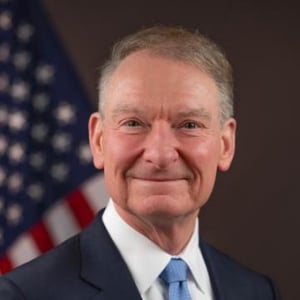
Chairman of the Securities and Exchange Commission
Paul S. Atkins was sworn into office as the 34th Chairman of the Securities and Exchange Commission on April 21, 2025, after being nominated by President Donald J. Trump on January 20, 2025, and confirmed by the U.S. Senate on April 9, 2025.
Prior to returning to the SEC, Chairman Atkins was most recently chief executive of Patomak Global Partners, a company he founded in 2009. Chairman Atkins helped lead efforts to develop best practices for the digital asset sector. He served as an independent director and non-executive chairman of the board of BATS Global Markets, Inc. from 2012 to 2015.
Chairman Atkins was appointed by President George W. Bush to serve as a Commissioner of the SEC from 2002 to 2008. During his tenure, he advocated for transparency, consistency, and the use of cost-benefit analysis at the agency. Chairman Atkins also represented the SEC at meetings of the President’s Working Group on Financial Markets and the U.S.-EU Transatlantic Economic Council. From 2009 to 2010, he was appointed a member of the Congressional Oversight Panel for the Troubled Asset Relief Program.
Before serving as an SEC Commissioner, Chairman Atkins was a consultant on securities and investment management industry matters, especially regarding issues of strategy, regulatory compliance, risk management, new product development, and organizational control.
From 1990 to 1994, Chairman Atkins served on the staff of two chairmen of the SEC, Richard C. Breeden and Arthur Levitt, ultimately as chief of staff and counselor, respectively. He received the SEC’s 1992 Law and Policy Award for work regarding corporate governance matters.
Chairman Atkins began his career as a lawyer in New York, focusing on a wide range of corporate transactions for U.S. and foreign clients, including public and private securities offerings and mergers and acquisitions. He was resident for 2½ years in his firm's Paris office and admitted as conseil juridique in France.
A member of the New York and Florida bars, Chairman Atkins received his J.D. from Vanderbilt University School of Law in 1983 and was Senior Student Writing Editor of the Vanderbilt Law Review. He received his A.B., Phi Beta Kappa, from Wofford College in 1980.
Originally from Lillington, North Carolina, Chairman Atkins grew up in Tampa, Florida. He and his wife Sarah have three sons.
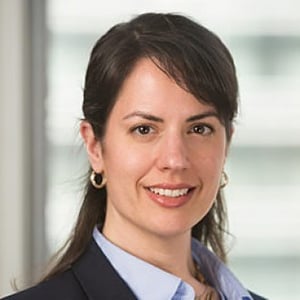
Counsel to Commissioner Hester M. Peirce, U.S. Securities and Exchange Commission
Thaya Brook Knight was associate director of financial regulation studies at the Cato Institute. She is an attorney with extensive experience in securities regulation, small business capital access, and capital markets. Before joining Cato, she co-founded and served as general counsel of CrowdCheck, a company providing due diligence and disclosure services in the online investing market. Following the recent financial crisis, she served as investigative counsel for the congressional oversight panel charged with overseeing the expenditure of Troubled Asset Relief Program funds. She also spent several years with the Washington office of the law firm WilmerHale, where her practice focused on securities litigation, securities enforcement defense, and corporate investigations.
She holds a BA from Middlebury College and a JD from the University of Michigan Law School.

Associate Director, NERA Economic Consulting
Andrew Stivers specializes in the economics of consumer protection and privacy. He has developed and conducted analysis of novel and complex questions of consumer behavior and injury related to privacy, algorithmically driven practices, and cutting-edge promotion and advertising strategies.
Dr. Stivers has provided his economic expertise to companies in the top tiers of the video/audio streaming, retail platform, gig economy, gaming, and health data industries. He has also consulted with a broad range of established and growing businesses, including in the telecommunications, payments, investment, and food and supplement industries. Dr. Stivers helps clients achieve fair outcomes that are grounded in rigorous and accessible economic analysis.
Prior to joining NERA, Dr. Stivers was a senior official in the US Federal Trade Commission’s Bureau of Economics, where he oversaw economic analysis of all consumer protection and privacy matters. He advised the Bureau of Consumer Protection and Commissioners on hundreds of regulatory and law enforcement matters during his seven-year tenure leading this work at the Commission. Dr. Stivers was directly involved in developing economic analysis and standards for evaluating novel and consequential matters.
Prior to his leadership role at the FTC, Dr. Stivers served as the Director of the Division of Public Health Informatics and Analytics at the Food and Drug Administration’s Center for Food Safety and Applied Nutrition, overseeing the Center’s statistical, epidemiological, and consumer research groups. His regulatory work for the agency included providing economic and behavioral analysis to consumer nutrition labeling initiatives. As an academic, Dr. Stivers focused his research on the regulation of information and language in the marketplace.
Dr. Stivers has written and presented on complex and wide-ranging economic topics, published economic papers, and presented keynotes and panel discussions on a variety of informational, privacy, data security, and consumer behavior topics. These include invited presentations at academic and regulator-sponsored conferences and workshops, including by the FTC and the Bank of Canada.
Henry R. Silverman Professor of Law and Professor of Philosophy, University of Pennsylvania Carey Law School
Anita L. Allen is the Henry R. Silverman Professor of Law and Professor of Philosophy. A graduate of Harvard Law School with a PhD from the University of Michigan in Philosophy, Allen is internationally renown as an expert on philosophical dimensions of privacy and data protection law, ethics, bioethics, legal philosophy, women’s rights, and diversity in higher education. She was Penn’s Vice Provost for Faculty from 2013-2020, and chaired the Provost's Arts Advisory Council. Allen is an elected member of the National Academy of Medicine, the American Law Institute and a fellow of the American Academy of Arts and Sciences. In 2018-19 she served as President of the Eastern Division of the American Philosiphical Association.
From 2010 to 2017, Allen served on President Obama’s Presidential Commission for the Study of Bioethical Issues. She was presented the Lifetime Achievement Award of the Electronic Privacy Information Center in 2015, and chaired its Board, 2019-2022. Allen has served on the faculty of the School of Criticism and Theory at Cornell, for which she is an advisor. A two-year term as an Associate of the Johns Hopkins Humanities Center concluded in 2018. She has been a visiting Professor at Tel Aviv University, Waseda University, Villanova, the University of Arizona, Harvard and Yale, and a Law and Public Affairs Fellow at Princeton. She was awarded an honorary Doctorate from Tilburg University (Netherlands) in 2019. She has written over a hundred articles and chapters, and her books include Unpopular Privacy: What Must We Hide (Oxford, 2011); Privacy Law and Society (Thomson/West, 2017); The New Ethics: A Guided Tour of the 21st Century Moral Landscape (Miramax/Hyperion, 2004); Why Privacy Isn’t Everything: Feminist Reflections on Personal Accountability (Rowman and Littlefield, 2003), and Uneasy Access: Privacy of Women in a Free Society (1988). Allen has given hundreds of talks all over the world and appeared on television, radio and written for major media. She currently serves on the Board of the National Constitution Center, and has served on numerous other boards and professional advisory boards, including the Pennsylvania Board of Continuing Judicial Education, the Association for Practical and Professional Ethics, the Bazelon Center for Mental Health Law, the AALS Executive Committee, the Maternity Care Coalition and the West Philadelphia Alliance for Children. She is a member of the Pennsylvania and New York bars, and formerly taught at Georgetown University Law Center for ten years and the University of Pittsburgh, after practicing briefly at Carvath, Swaine & Moore.
Chauncey Stillman Professor of Law, University of Michigan Law School
Carl E. Schneider, '79, the Chauncey Stillman Professor of Law and Professor of Internal Medicine, teaches courses on law and medicine, regulating research, property, law and morals, the sociology and ethics of the legal profession, and writing briefs. He holds a joint appointment in U-M’s Medical School.
A central theme in his scholarship criticizes some dominant regulatory ideas, particularly those in the law of medicine. For example, his book The Censor's Hand: The Misregulation of Human Subject Research (MIT Press, 2015), examines a regulatory system whose usefulness is widely assumed but quite unproved and argues that that system is so perversely constructed that it cannot help doing more harm than good. Another example is More Than You Wanted to Know: The Failure of Mandated Disclosure (Princeton University Press, 2014), coauthored with Omri Ben-Shahar. It explains why government-mandated disclosure may be the most adored, most used, and least successful regulatory method in our time. His The Practice of Autonomy: Patients, Doctors, and Medical Decisions (Oxford University Press, 1998), which analyzes the malign effects of making patient autonomy the regulatory summum bonum, is another example of the project.
Professor Schneider is also the coauthor of two innovative casebooks: With Marsha Garrison, he wrote The Law of Bioethics: Individual Autonomy and Social Regulation (West, 2015, 3rd edition), a pioneering casebook in what was then a new field. With Margaret F. Brinig, he wrote An Invitation to Family Law (West, 2007, 3rd edition). This casebook approaches family law conceptually: Each chapter discusses an area of family law, and each chapter introduces students to a systematic discussion of a recurring jurisprudential issue (like the problem of rules and discretion, or the legal principle of autonomy).
Professor Schneider served two terms on the President's Bioethics Council. He has been a visiting professor at Cambridge University, the University of Tokyo, Kyoto University, and the United States Air Force Academy (twice).
Simeon E. Baldwin Professor Emeritus of Law, Yale Law School
Peter H. Schuck is the Simeon E. Baldwin Professor Emeritus of Law and Professor (Adjunct) of Law at Yale Law School where he has held the chair since 1984. He has also served as Deputy Dean. His major fields of teaching and research are tort law; immigration, citizenship, and refugee law; groups, diversity, and law; and administrative law. His most recent books include Targeting in Social Programs: Avoiding Bad Bets, Removing Bad Apples; Meditations of a Militant Moderate: Cool Views on Hot Topics; Immigration Stories; Foundations of Administrative Law; Diversity in America: Keeping Government at a Safe Distance; and The Limits of Law: Essays on Democratic Governance. He is also co-editor, with James Q. Wilson, of Understanding America. He is a member of the American Law Institute's advisory committee for the Restatement of Torts (Third), Basic Principles, and a contributing editor to The American Lawyer. Prior to joining Yale, he was Principal Deputy Assistant Secretary for Planning and Evaluation in the U.S. Department of Health, Education, and Welfare. Professor Schuck holds a B.A. from Cornell, a J.D. from Harvard Law School, an LL.M. in International Law from N.Y.U., and an M.A. in Government from Harvard.
Senior Litigation Counsel, American Center for Law and Justice
Walter M. Weber is Senior Counsel for the ACLJ in the Washington, D.C. office. A highly regarded legal writer, Weber received his bachelor’s degree from Princeton University and his law degree from Yale Law School.
Weber emphasizes First Amendment law and has written briefs in many landmark cases at the Supreme Court including NOW v. Scheidler, Lamb’s Chapel v. Center Moriches School District and Bray v. Alexandria Women’s Health Clinic.
Weber has argued more than a dozen times in appeals before federal and state courts. Prior to joining the ACLJ, Weber served as a staff attorney with the Catholic League for Religious and Civil Rights.
Professor of Law, Dean Emerita, and Co-Director, Sports Law Track - Graduate Program in Entertainment, Arts and Sports Law LL.M., University of Miami School of Law
Patricia D. White is a Professor of Law and was the University of Miami School of Law's eleventh dean from 2009-2019. Her legal career spans over four decades as an attorney and educator. She was the first woman law school dean in Arizona and the longest serving one in the history of Arizona State University’s Sandra Day O’Connor College of Law. Her prominence in the field of legal education has led to her being recognized as one of the most influential and innovative people in legal education by National Jurist magazine in 2016, 2015, 2014, 2013 and in the 2012 ranking she was named the top woman on the list.
White chairs the ABA's Commission on the Future of Legal Education, which aims to influence dramatic changes in the legal profession over the next decade. Under White’s leadership, Miami Law has also been recognized by Pre-Law Magazine as one the “20 Most Innovative Law Schools” in 2017. Similarly, Innovation 800, published in 2017 by Cambridge University, included Miami Law as a "Leader in Learning" and one of the most innovative law schools. The London-based Financial Times, considered one of the premiere international daily newspapers with a special emphasis on business and economic news, has also tipped its hat to Miami Law’s innovation. In its “FT Special Report on Innovative Law Schools”, it ranked Miami Law as one of the most innovative law schools in the world in 2015 and 2016. Innovation accolades also came for Miami Law's specialty areas, such as the Billboard Magazine 2017 ranking of Miami Law as a top school for music law in the U.S. The Legal Services Innovation Index ranked the University of Miami Law in the top four for law schools delivering innovation and technology programs in 2017.
After becoming the dean of Miami Law in 2009, White continued her longstanding commitment to students, the transformation of legal education and public service. She transformed Miami Law’s student services program, including adding the unique Student Development Program, the AskUs Fellows initiative, Academic Achievement Program and the Office of Professionalism to name a few. She established the LawWithoutWalls program, linking students and faculty from over 30 academic institutions around the world to examine issues and develop new solutions in legal education and practice; and Legal Corps a novel fellowship program that placed new law school graduates in not for profit and public sector organizations across the nations and the globe.
Under White's leadership, the number of clinics at Miami Law more than doubled, bringing the total to 10. In 2011 Miami Law was honored by the American Bar Association Law Student Division with the Judy M. Weightman Memorial Public Interest Award, in recognition of the law school's strong commitment to public interest through the HOPE Public Interest Resource Center. She has won many awards, including the 2012 Equal Justice Leadership Award, given by Legal Services of Greater Miami for her commitment to public service, and the Judge Learned Hand Award for distinguished public service, from the Arizona chapter of the American Jewish Committee.
White received degrees in philosophy and law (B.A. 1971, J.D. 1974, M.A. 1974) from the University of Michigan. While attending law school, she was also a graduate student in philosophy and an associate editor of the law review. She began her legal practice in Washington, D.C., at Steptoe & Johnson and then moved to Caplin & Drysdale. Georgetown University Law hired White onto the faculty in 1979, and in 1988 she joined her alma mater, the University of Michigan. While at Michigan, she was of counsel to the Detroit firm Bodman, Longley & Dahling, and served for a year as tax advisor to the Economic Study Committee of Major League Baseball. In 1994, she joined the law faculty at the University of Utah, and was of counsel to Parsons, Behle & Latimer. She is a member of the bars of the District of Columbia, Michigan, and Utah, and is an elected Fellow of the American College of Tax Counsel.
During her career, White has worked in the areas of tax law, torts, bioethics, philosophy of law, and trusts and estates, and has published in prominent law and bioethics journals.

Panel V: Ownership of Life
Anita L. Allen, Carl E. Schneider, Peter H. Schuck, Walter M. Weber, Patricia D. White
On March 10-11, 1989, the Federalist Society's University of Michigan student chapter hosted the eighth...
Panel V: Ownership of Life
Anita L. Allen, Carl E. Schneider, Peter H. Schuck, Walter M. Weber, Patricia D. White
On March 10-11, 1989, the Federalist Society's University of Michigan student chapter hosted the eighth...
More Than You Wanted to Know: The Failure of Mandated Disclosure
Washington, District of ColumbiaPanel V: Ownership of Life
1989 National Student Symposium
Ann Arbor, MI