

Legal Scholar and Solo Practitioner
Jack received his B.A. in History from the University of Virginia in 1977, graduating with Highest Distinction. After graduating Yale Law School in 1980, he served active duty in the U.S. Army's JAG Corps, rising to the rank of Major, where he represented the United States in more than 250 cases.
He practiced for a decade as an Associate for Bradley Arant in Birmingham, Alabama. He proudly served the State of Alabama in the Office of the Attorney General, both as Deputy and Assistant Attorney General, handling complex civil and criminal litigation cases for the people of Alabama. In 2000, he won the "Best Brief Award" from the National Association of Attorneys General for his brief in a case decided by the U.S. Supreme Court, James Alexander v. Martha Sandoval – a case he won. He was Special Assistant to the Inspector General for the Corporation for National and Community Service, Visiting Legal Fellow for the Center for Judicial and Legal Studies for the Heritage Foundation, Of Counsel at Strickland Brockington Lewis, a solo practitioner, and General Counsel for Indigo Energy.
Most recently, he "re-upped" for military service, volunteering his legal services to the Georgia State Defense Force where twice each month he provided legal services for National Guardsmen who were being deployed. He wore his military uniform for the last time in October 2024.
Jack Park passed away on March 16, 2026.
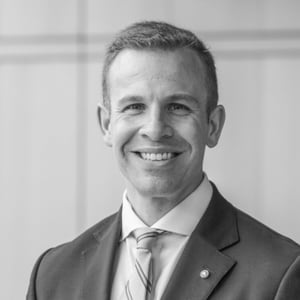
Senior Counsel, Becket Fund for Religious Liberty
William J. Haun is Senior Counsel at the Becket Fund for Religious Liberty and a Nonresident Fellow at the American Enterprise Institute (AEI). At Becket, Will litigates nationwide in defense of religious liberty for all faith traditions, particularly before the U.S. Supreme Court and in other federal and state appellate courts. His litigation includes being a member of the U.S. Supreme Court team that prevailed 9-0 for Catholic Social Services in Fulton v. City of Philadelphia, arguing before multiple federal appellate courts, federal district courts, and the Supreme Court of Texas. At AEI, Will writes and researches on constitutionalism and self-government’s prerequisites, especially the role of religion in securing and preserving freedom.
Before joining Becket and AEI, Will practiced appellate and antitrust law at two international law firms—Shearman & Sterling and Hunton & Williams. He also served as a law clerk to Judge Janice Rogers Brown of the U.S. Court of Appeals for the D.C. Circuit and Judge Claude Hilton of the U.S. District Court for the Eastern District of Virginia. Will often writes on constitutional law issues, including in the Harvard Journal of Law & Public Policy, the Catholic University Law Review, National Affairs, Law & Liberty, National Review Online, the Wall Street Journal, and the Washington Post. He also speaks on these topics, including at the Catholic University of America, Columbus School of Law, Princeton University, the University of Virginia School of Law, and the University of Chicago Law School. He received his J.D. from the Catholic University of America, cum laude, where he was a published member of the Law Review. He received his B.A. from American University in political science, cum laude. He lives in Maryland with his wife and children, where they enjoy sailing, cheering on their favorite baseball teams, and discovering the great traditions of their Catholic faith.

Associate Professor of Law, University of Baltimore School of Law
Bessler has taught at the University of Minnesota Law School and The George Washington University Law School. He clerked for U.S. Magistrate Judge John M. Mason of the District of Minnesota, and practiced law for many years in the area of civil litigation as a partner at the Minneapolis law firm of Kelly & Berens, P.A. He has written five books, four on the subject of capital punishment and one on the craft of writing. His undergraduate degree is in political science, while his master's degree is in international human rights law. His law review articles have appeared in the Indiana Law Journal, the Arkansas Law Review, the Hastings International and Comparative Law Review and elsewhere. John Bessler also teaches a capital punishment seminar as an adjunct professor at the Georgetown University Law Center.

Legal Director & General Counsel, Criminal Justice Legal Foundation
Kent S. Scheidegger has been the Legal Director of the Criminal Justice Legal Foundation since December 1986. He also served as Chairman of the Criminal Law Practice Group of the Federalist Society 2003 to 2005. His articles on criminal and constitutional law have been published in law reviews, national legal publications, and congressional reports. Legal arguments authored by Mr. Scheidegger have been cited and incorporated in several precedent-setting United States Supreme Court decisions.
After receiving a degree in physics with honors from New Mexico State University in 1976, Mr. Scheidegger served for six years in the United States Air Force as a Nuclear Research Officer. He took his law degree with distinction from the University of the Pacific, McGeorge School of Law in 1982 and practiced civil law in Northern California. He was general counsel of California Cooler, Inc. from 1984 until 1986, when he joined the Foundation.
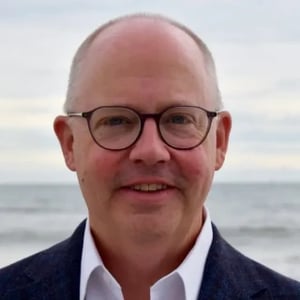
Edward Rood Eminent Scholar Chair, Professor of Law, and Senior Fellow, Hamilton Center for Classical and Civic Education, University of Florida Levin College of Law
Professor Stinneford researches, teaches, and consults about legal ethics, criminal law, criminal procedure, and constitutional law. His work has been cited by the United States Supreme Court, several state supreme courts and federal courts of appeal, and numerous scholars. It has been published in numerous scholarly journals including the Georgetown Law Journal, the Northwestern University Law Review, the Virginia Law Review, the Notre Dame Law Review, and the William & Mary Law Review. The Stanford-Yale Junior faculty forum selected one of his articles as the best paper in the category of Constitutional History, and the AALS Criminal Justice Section named another article as the best paper in its Junior Scholars Paper Competition. In the fall of 2015, he was a Visiting Scholar at the Georgetown Law Center, Center for the Constitution.
John Stinneford was the inaugural Director and serves as a Senior Fellow of the Hamilton Center for Classical and Civic Education at the University of Florida. The Hamilton Center is a new academic unit whose mission is to promote civic education and civic discourse and to foster intellectual diversity. Its core purpose is to help students develop the knowledge, habits of thought, analytical skills, and character to be citizens and leaders in a free society. It will do so through curriculum, public programming, and (in conjunction with the Florida Department of Education) teacher training. Its curriculum will focus primarily on the Western intellectual tradition and the American founding.
Before joining the Florida faculty in 2009, Stinneford clerked for the Hon. James Moran of the United States District Court for the Northern District of Illinois, served as an Assistant United States Attorney, and practiced law with Winston & Strawn in Chicago. Stinneford teaches first-year courses in Criminal Law and Constitutional Law, and upper-level courses in Professional Responsibility, Criminal Procedure, Federal Criminal Law, Law & Literature, and White Collar Crime.
Legal Director & General Counsel, Criminal Justice Legal Foundation
Kent S. Scheidegger has been the Legal Director of the Criminal Justice Legal Foundation since December 1986. He also served as Chairman of the Criminal Law Practice Group of the Federalist Society 2003 to 2005. His articles on criminal and constitutional law have been published in law reviews, national legal publications, and congressional reports. Legal arguments authored by Mr. Scheidegger have been cited and incorporated in several precedent-setting United States Supreme Court decisions.
After receiving a degree in physics with honors from New Mexico State University in 1976, Mr. Scheidegger served for six years in the United States Air Force as a Nuclear Research Officer. He took his law degree with distinction from the University of the Pacific, McGeorge School of Law in 1982 and practiced civil law in Northern California. He was general counsel of California Cooler, Inc. from 1984 until 1986, when he joined the Foundation.

At Harvard Law School, where he won the Oberman Prize for the best graduating thesis, Professor Blecker was one of only two students to publicly defend the death penalty.
Professor Blecker still espouses his carefully considered, yet almost universally unpalatable position in the academic community. Based on 13 years of interviewing convicted killers, and hundreds of hours inside maximum security prisons and on death rows, he makes a case for the death penalty as retribution, but only for the “worst of the worst” offenders.
The sole keynote speaker supporting the death penalty at major conferences and at the Association of the Bar of the City of New York, he was also the lone American advocate at an international conference in Geneva on the death penalty sponsored by Duke University Law School.
Professor Blecker frequently appears in The New York Times, on PBS, CourtTV, CNN, BBC World News, and other major media outlets.
Deputy District Attorney, Philadelphia District Attorney's Office
Ronald Eisenberg heads the Law Division of the Philadelphia District Attorney's Office. The 60 lawyers in the division handle appeals, habeas corpus and civil litigation, and legislative matters. Mr. Eisenberg has appeared at all levels of the state and federal court system, and has argued several cases in the United States Supreme Court.
Mr. Eisenberg is a member of the Pennsylvania Supreme Court Investigating Grand Jury Task Force and the Advisory Committee for the Pennsylvania Suggested Standard Criminal Jury Instructions. He has represented his office on the Pennsylvania Advisory Committee on Wrongful Convictions, was an adjunct professor at Temple University School of Law, teaching legal writing and research, and has served on the Pennsylvania Criminal Rules and Appellate Rules Committees. He is a past president and current board member of the Association of Government Attorneys in Capital Litigation, a national organization of capital prosecutors.
Mr. Eisenberg received his bachelor's degree from Haverford College in 1978 and his law degree from the University of Pennsylvania Law School in 1981.
J.D., University of Pennsylvania
B.A., Haverford College

Hurst v. Florida - Post-Decision SCOTUScast
John J. Park
On January 12, 2016, the Supreme Court decided Hurst v. Florida. The question before the...
Hurst v. Florida - Post-Argument SCOTUScast
John J. Park
On October 13, 2015, the Supreme Court heard oral argument in Hurst v. Florida. Timothy...
Capital Punishment Once Again Before the Supreme Court: Kansas v. Gleason and Kansas v. Carr - Podcast
William J. Haun
Somewhat overlooked at the end of the United States Supreme Court’s October 2014 term was...
Execution Methods and Deciding Implementation of the Death Penalty - Podcast
John Bessler, Kent Scheidegger
During oral argument in Glossip v. Gross, Justice Samuel Alito pointed to what he called "a...
Glossip v. Gross - Post-Decision SCOTUScast
Kent Scheidegger
On June 29, 2015, the Supreme Court issued its decision in Glossip v. Gross. This...
Justices Weigh in on Lethal Injection: Glossip v. Gross - Podcast
Kent Scheidegger
On June 29, with a contentious 5-4 decision in which numerous dissents and concurrences were...
Glossip v. Gross - Post-Argument SCOTUScast
John F. Stinneford
On April 29, 2015, the Supreme Court heard oral argument in Glossip v. Gross. This...
Supreme Court to Consider Oklahoma Execution Method - Podcast
Kent Scheidegger
On Wednesday, April 29, 2015, the Supreme Court heard oral arguments in Glossip v. Gross....
White v. Woodall - Post-Decision SCOTUScast
Robert Blecker
On April 23, 2014, the Supreme Court issued its decision in White v. Woodall. The...
Martel v. Clair - Post-Argument SCOTUScast
Ronald Eisenberg
On December 6, 2011, the Supreme Court heard oral argument in Martel v. Clair. The...