

Pioneers Chair in Telecommunications, Penn State University
Dr. Christopher Ali is the Pioneers Chair in Telecommunications and a full professor of telecommunications in the Bellisario College. He is also an affiliate faculty with the College of Information, Science and Technology (IST) at Penn State. He holds a Ph.D. in communication studies from the Annenberg School for Communication at the University of Pennsylvania (2013). His research interests include media and telecommunications policy and regulation, broadband policy, critical political economy, critical geography, comparative media systems, qualitative research methods, media localism, and local news.
Ali uses critical, qualitative methods to research broadband policy, planning, deployment and digital equity in the United States. Presently, he has a series of projects dedicated to “broadband stories,” where he is researching how community-based stories can influence public policy. These projects form the basis of his forthcoming book, Where the wires end: Stories from the Digital Divide to be published in Spring 2027 with the University of Chicago Press. In 2026, Dr. Ali also completed a major grant funded research project for the Center for Rural Pennsylvania analyzing how the digital divide impacts rural first responders in the Commonwealth of Pennsylvania.
Dr. Ali is the author or editor of four books: "Public Service Media’s Contribution to Society"(Nordicom, 2023, with Prof. Dr. Manuel Puppis), "Farm Fresh Broadband: The Politics of Rural Connectivity" (MIT Press, 2021), "Media Localism: The Policies of Place" (University of Illinois Press, 2017), "Echoes of Gabriel Tarde: What we know better or different 100 years later" (USC Annenberg Press, 2014, with Drs. Elihu Katz and Joohan Kim).
Based on his expertise, Ali was called to testify before the Senate Commerce Committee in 2021 on broadband funding and policy programs. He has also briefed members of the House Democrats Task Force on Rural Broadband, the New York State Blue Ribbon Commission on Re-Imagining New York, the Federal Communications Commission, and has presented before numerous state and county governments.
Dr. Ali has published over two dozen peer reviewed articles in high-ranking academic journals including, The Journal of Communication, Communication Theory, Media Culture & Society, and Telecommunications Policy. His writing has also been published in Tech Policy Press, The New York Times, The Hill, Realtor Magazine, Law & Political Economy, Digital Beat, GovTech, Zocalo Public Square, the Canadian Broadcasting Corporation, Washington Monthly, Columbia Journalism Review, and The Conversation. He is a frequent press commentator on the subjects of broadband, media policy, and local news, with interviews in the Associated Press, Hollywood Reporter, Business Insider, Washington Post, Philadelphia Inquirer, Los Angeles Times, NPR, CNET, CBC, Bloomberg, and other major national and international news outlets.
Ali presently serves as the Associate Editor of the journal Communication Law & Policy. He also sits on the advisory board of the Centre County Film Festival.
Previously, he served as the Chair of the Communication Law and Policy Division of the International Communication Association (2021-2023) and was an advisor to the Virginia Joint Committee on Technology & Science. He has also served on the Federal Communication Commission’s Communication Equity and Diversity Council Working Group and was a board member of Charlottesville Tomorrow, a non-profit news organization in Charlottesville, Virginia.
Dr. Ali has held fellowships or grants from the Center for Rural Pennsylvania (2025), the Benton Institute for Broadband and Society (2019-2020), the Global Future Council of the World Economic Forum (2018), the Center for Advanced Research in Global Communications (CARGC) at the University of Pennsylvania (2017 & 2022), the Tow Center for Digital Journalism at Columbia University (2016-2017 & 2019-2021), the University of Fribourg in Fribourg Switzerland (2015), and the Social Sciences and Humanities Research Council of Canada (2011).
Ali is an award-winning scholar, having been honored with the 2024 Bellisario Alumni Association Teaching Excellence Award, the 2025 Dean’s Excellence Award for Research & Creative Accomplishment, and the 2025 Broadband Hero Award.

Vice President and Deputy Chief Counsel, U.S. Chamber Litigation Center, U.S. Chamber of Commerce
Jennifer B. Dickey is vice president and deputy chief counsel at the U.S. Chamber Litigation Center, the litigation arm of the U.S. Chamber of Commerce. Dickey handles a variety of litigation matters for the Chamber.
Dickey joined the Chamber following her service as Acting Assistant Attorney General and Principal Deputy Assistant Attorney General in the Civil Division at the U.S. Department of Justice. She also previously served as Deputy Associate Attorney General, providing strategic oversight of the Civil Division, Civil Rights Division, and Foreign Claims Settlement Commission, as well as Special Assistant to the President and Associate Counsel to the President. In the latter capacity, she provided legal advice on a wide array of executive actions and rulemakings, civil litigation, and judicial nominations.
Dickey also practiced law at Kirkland & Ellis LLP before her government service. She was a commercial and appellate litigator, representing businesses in federal and state courts.
Earlier in her career, Dickey served as a law clerk for the Honorable Clarence Thomas of the Supreme Court of the United States and the Honorable William H. Pryor Jr. of the United States Court of Appeals for the Eleventh Circuit.
Dickey earned her law degree magna cum laude from Duke University School of Law, where she was an Executive Editor of the Duke Law Journal, and her undergraduate degree magna cum laude from Dartmouth College.
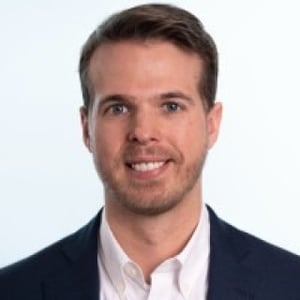
Counsel, U.S. House Energy and Commerce Committee

Partner, Wilkinson Barker Knauer, LLP
Dan leverages a deep understanding of telecommunications regulation and the broader legal landscape to help clients achieve their business goals. He provides practical and creative advice, develops persuasive policy advocacy, and represents clients in court appeals of agency matters. In an era in which courts play a larger role than ever in shaping regulation, Dan’s mix of legal depth, regulatory knowledge, and policymaking experience make him stand out.
His practice encompasses federal and state telecommunications regulation, emerging Internet issues, funding programs, online privacy frameworks, and consumer protection laws. He co-teaches a telecommunications law course at Georgetown Law School.
Prior to joining WBK, Dan spent eight years in leadership positions in the Federal Communications Commission’s Wireline Competition Bureau. There, Dan guided net neutrality and broadband infrastructure proceedings, implementation of caller ID authentication and the Robocall Mitigation Database, transaction reviews, and many other agency actions. He is especially proud of his contributions to establishing 988 as the three-digit code for the national suicide prevention hotline.
Today, courts make many of the most important decisions regarding agencies, and Dan regularly represents clients in court appeals concerning agency matters. He and the WBK team prevailed before the U.S. Supreme Court on behalf of industry associations in FCC v. Consumers’ Research, which affirmed the constitutionality of the Universal Service Fund.
Dan is a graduate of Yale University and Harvard Law School. Outside of work, Dan enjoys spending time with his kids, baking bread and cooking, playing card and board games, attempting to play sports, and science fiction/fantasy.

Founding Partner, Lodestar Law and Economics PLLC
Josh is the founder of Lodestar Law and Economics, PLLC. On January 1, 2013, the U.S. Senate unanimously confirmed Wright as a Commissioner of the Federal Trade Commission (FTC). He is a leading scholar in antitrust law, economics, intellectual property, regulation, and consumer protection, and has published more than 100 articles and book chapters, co-authored a leading antitrust casebook, and edited several book volumes focusing on these issues. Commentators have recognized Wright as “widely considered his generation’s greatest mind on antitrust law,” and his academic work ranks him as one of the most cited antitrust academics in the world. Wright was also awarded the Paul M. Bator Award by the Federalist Society in 2014 to “an academic who demonstrated excellence in legal scholarship, a commitment to teaching, a concern for students, and who has made a significant public impact.” Wright also served as the Executive Director of the Global Antitrust Institute, the world’s premiere academic institute focused upon antitrust education for judges and regulators and has taught hundreds of judges and thousands of regulators from dozens of countries.
Wright’s practice focuses upon helping clients solve complex competition, consumer protection, and regulatory problems by providing legal and economic analysis, strategic advice and counseling, and economic expert testimony.

Director of Policy Studies & Senior Fellow, The Free State Foundation
Seth L. Cooper is Director of Policy Studies & Senior Fellow at The Free State Foundation. His work on federal communications and technology policy at the Free State Foundation began in 2009.
With Randolph May, Mr. Cooper is the co-author of Modernizing Copyright Law for the Digital Age: Constitutional Foundations for Reform (2020) and Constitutional Foundations of Intellectual Property: A Natural Rights Perspective (2015), both published by Carolina Academic Press. Along with Mr. May, Mr. Cooper also co-authored A Reader on Net Neutrality and Restoring Internet Freedom (2018) and #CommActUpdate: A Communications Law Fit for the Digital Age (2017), both published by Free State Foundation Press. He previously contributed to two chapters in Communications Law and Policy in the Digital Age (2012), published by Carolina Academic Press. Mr. Cooper's work has also appeared in such publications as CommLaw Conspectus, the San Jose Mercury News, Forbes.com, the Des Moines Register, the Baltimore Sun, the Washington Examiner, and the Washington Times.
Mr. Cooper previously served as Director to the Telecommunications and Information Technology Task Force at the American Legislative Exchange Council (ALEC). Mr. Cooper served as judicial clerk to the Honorable James Johnson at the Washington State Supreme Court. His co-writings about the Washington Supreme Court have appeared in the Gonzaga Law Review and in Federalist Society publications. He has worked in law and policy staff positions at the Washington State Senate and at the Discovery Institute's Center for Science & Culture. Mr. Cooper is a 2009 Lincoln Fellow at the Claremont Institute. He also has worked in private practice in the State of Washington, handling civil legal matters involving personal injuries, small business, contracts, and wills, trusts, and estates.
Mr. Cooper earned his B.A. degree in Political Science from Pacific Lutheran University and received his J.D. from Seattle University School of Law.
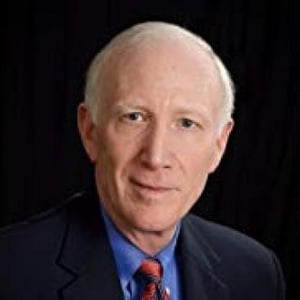
President, The Free State Foundation
Randolph J. May is Founder and President of The Free State Foundation. The Free State Foundation is an independent, non-profit free market-oriented think tank founded in 2006.
From October 1999-May 2006, May was a Senior Fellow and Director of Communications Policy Studies at The Progress & Freedom Foundation, a Washington, DC-based think tank. Prior to joining PFF, he practiced communications, administrative, and regulatory law as a partner at major national law firms. From 1978 to 1981, May served as Assistant General Counsel and Associate General Counsel at the Federal Communication Commission.
May has held numerous leadership positions in bar associations. He is a past Chair of the American Bar Association’s Section of Administrative Law and Regulatory Practice. He is a Fellow of the National Academy of Public Administration. Mr. May also has served as a Public Member of the Administrative Conference of the United States and currently is a Senior Fellow at ACUS.
Mr. May has published more than two hundred articles and essays on communications, administrative and constitutional law topics. He is author of A Call for a Radical New Communications Policy: Proposals for Free Market Reform, and co-author of #CommActUpdate: A Communications Law Fit for the Digital Age and The Constitutional Foundations of Intellectual Property. Mr. May is editor of two books, Communications Law and Policy in the Digital Age: The Next Five Years and New Directions in Communications Policy. In addition, he is the co-editor of two other books, Net Neutrality or Net Neutering: Should Broadband Internet Services Be Regulated? and Communications Deregulation and FCC Reform. In the past, Mr. May has written regular columns on legal and regulatory affairs for Legal Times and the National Law Journal, leading national legal periodicals.
He received his A.B. from Duke University and his J.D. from Duke Law School, where he serves as a member of the Board of Visitors.
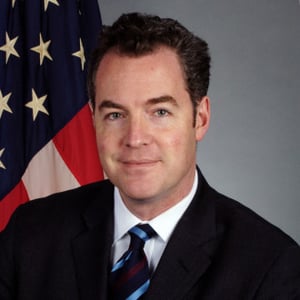
President and Founder, JKC Consulting LLC
John Kneuer is the President and Founder of JKC Consulting LLC. He sits on multiple public and private company boards.
Prior to starting Kneuer LLC, Mr. Kneuer served as the Assistant Secretary of Commerce for Communications and Information. In this capacity Mr. Kneuer was the principal advisor to the President of the United States on telecommunications policy and the Administrator of the National Telecommunications and Information Administration ("NTIA").In addition to representing the Executive Branch in domestic and international telecommunications and information policy activities, NTIA also manages the federal use of spectrum; performs cutting edge telecommunications research and engineering, including resolving technical telecommunications issues for the federal government and private sector; and administers infrastructure and public telecommunications facilities grants.
Prior to his service at NTIA, Mr. Kneuer served as a Senior Associate at the law firm of Piper Rudnick in Washington, D.C., providing regulatory and legislative representation to corporate clients in the telecommunications, defense, and transportation industries. Earlier in his career, Mr. Kneuer served as the Executive Director for Government Relations at the Industrial Telecommunications Association, and prior to that served as an Attorney-Advisor in the Commercial Wireless Division of the Federal Communications Commission's Wireless Bureau. Mr. Kneuer received B.A. and J.D. degrees from the Catholic University of America.

Senior Policy Director, Mobile Future
Rachael Bender is Senior Policy Director for Mobile Future, where she focuses on issues involving wireless technology, broadband, and spectrum. Prior to joining Mobile Future in 2011, Ms. Bender was a law clerk in the Department of Regulatory Affairs at CTIA – The Wireless Association. Ms. Bender graduated from the University of Maryland with a B.A. in Government & Politics, and from the Catholic University of America Columbus School of Law with a J.D. and certificate from the Institute for Communications Law Studies. During law school, she served as president of the Communications Law Student Association and competed in the National Telecommunications Moot Court Competition, for which she also served as Vice Chancellor during her third year. She is a member of the Pennsylvania and New Jersey Bars.
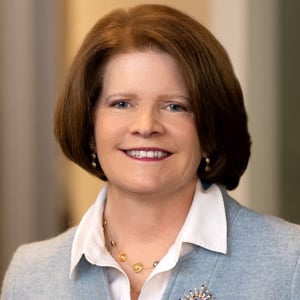
Partner, Antitrust and Competition, Wilson Sonsini Goodrich & Rosati
Maureen Ohlhausen is a partner in the Washington, D.C., office of Wilson Sonsini Goodrich & Rosati, where she advises industry-leading clients on complex antitrust and litigation matters, with a focus on high-profile cases. Sought after for her depth of experience on antitrust and Federal Trade Commission (FTC)-related issues, Maureen is known for her relationships with officials in the U.S. and abroad.
After finishing law school and clerking at the U.S. Court of Appeals for the D.C. Circuit, Maureen joined the FTC in 1997. She held a series of roles at the agency over the next 12 years, rising to the position of Director of the FTC Office of Policy Planning, where she led the agency’s work on e-commerce and headed the FTC’s Internet Access Task Force, which produced an influential report analyzing competition and consumer protection legal issues in the broadband and internet sectors. She then went into private practice at a leading telecommunications law firm, where she headed the FTC practice group.
In 2012, Maureen was confirmed by the Senate as a Commissioner of the FTC and was appointed Acting Chairman in January 2017, a role she held until May 2018. As Acting Chairman, Maureen directed all aspects of the agency’s antitrust work, including merger review, conduct enforcement, and all consumer protection enforcement, with an emphasis on privacy and technology issues. Under her leadership, the FTC won several influential merger challenges in court and reached a number of key digital privacy settlements.
To date, Maureen is the only FTC Commissioner to have received the Robert Pitofsky Lifetime Achievement Award in recognition of her contributions to the FTC.
Following the end of her term at the FTC, and immediately prior to joining Wilson Sonsini, Maureen was chair of the global antitrust and competition practice at Baker Botts, based in that firm’s Washington, D.C., office.
A recognized thought leader, Maureen is a frequent author and speaker, and is often quoted by leading print and broadcast media on antitrust, FTC, and privacy and data security matters. She has published dozens of articles on antitrust, privacy, intellectual property, regulation, FTC litigation, telecommunications, and international law issues in prestigious publications. During her tenure at the FTC and in private practice, she testified more than two dozen times before Congress, including before the Senate Commerce Committee and the House Energy and Commerce Antitrust Sub-Committee. She also testified before the Antitrust Modernization Commission.
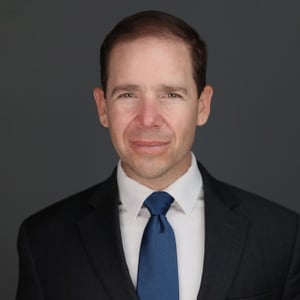
Founder and CEO, Lexpat Global Services
Adam Pearlman is the Founder and Chief Executive Officer of Lexpat Global Services. He is a National Security Law expert and a proven senior leader with experience across the U.S. Departments of Justice, Defense, and State, in the White House, and with the U.S. Federal Judiciary.
Before founding Lexpat, Mr. Pearlman served as the Senior Advisor for Legal Policy in the State Department’s Bureau of Counterterrorism. There, he counseled senior officials on matters covering the entire spectrum of programs and operations to counter terrorism and violent extremism. While participating in sensitive diplomatic engagements and helping to coordinate military operations, he also advised in the development of sanctions policy and initiatives to build legal and operational capacity in partner nations. Mr. Pearlman also managed the Bureau’s participation in federal litigation and led U.S. delegations in multilateral forums concerning criminal justice and rule of law. Separately, Mr. Pearlman supported the State Department’s Bureau of International Narcotics and Law Enforcement Affairs (INL) as the contracted Senior Justice and Rule of Law Advisor in Cabo Verde, Africa. There he was the chief implementer of a Foreign Assistance program that grew eight-fold during his tenure, building host nation capacity across the law enforcement, justice sector, rule of law, anti-money laundering, and corrections disciplines.
A former Associate Deputy General Counsel of the Department of Defense, Mr. Pearlman was agency counsel for complex civil and criminal national security matters in federal and military courts. He also led the Supreme Court and appellate unit of the team dedicated to litigating classified counterterrorism cases. His earlier service in the Department of Justice spanned four litigating divisions and the Office of the Deputy Attorney General. His diverse experience included reviewing complex international transactions and mergers, and advising on immigration removal proceedings, human rights abuses, and terrorist financing investigations. Mr. Pearlman also served with distinction in Iraq as an early advisor to the Iraqi High Tribunal’s prosecution of Saddam Hussein. He was a law clerk for The Honorable Royce C. Lamberth of the U.S. District Court for the District of Columbia, and during law school interned in the White House Counsel’s Office.
Mr. Pearlman is a Senior Fellow at the National Security Institute at George Mason University’s Antonin Scalia Law School, a member of the American Bar Association’s Advisory Committee on Law and National Security, and the Editor-in-Chief of the U.S. Intelligence Community Law Sourcebook. Previously, he has been a Term Member of the Council on Foreign Relations, National Security Fellow at the Foundation for Defense of Democracies, member of the ABA’s Africa Law Initiative Council and of the Center for Strategic & International Studies’ (CSIS) Project on Nuclear Issues, vice chairman of the ABA Section of International Law’s committees on national security, and aerospace and defense, and a liaison to the Board of Directors of the ABA’s Rule of Law Initiative. He has published articles in the Harvard National Security Journal, Stanford Law & Policy Review, Intelligence & National Security, The Foreign Service Journal, Lawfare, and many other outlets.
Mr. Pearlman earned his B.A., with honors, from UCLA, and his J.D., with honors, from The George Washington University Law School, where he was a member of the International Law Review. He also earned a Master of Science of Strategic Intelligence degree from the National Intelligence University, where he was the inaugural recipient of the Kornblum Award for national security law and ethics. Mr. Pearlman is a Certified Financial Crime Specialist and holds certificates in international human rights law from the University of Oxford and in anti-corruption law from American University’s Washington College of Law. He is admitted to the State Bars of California and Virginia, as well as to the Bar of the United States Supreme Court. He speaks and reads Portuguese at the intermediate level.

Litigation Update: Minnesota Telecom Alliance v. FCC
Net Neutrality Meets Regulatory Economics 101
Joshua D. Wright
Note from the Editor: This article reproduces then-Commissioner Joshua D. Wright's remarks at the Federalist...
FCC Preemption of State Restrictions on Government-owned Broadband Networks: An Affront to Federalism
Seth L. Cooper, Randolph May
Note from the Editor: This article is about the Federal Communications Commission’s Order preempting state...
Government Must Take Prompt, Decisive Action as Spectrum Deficit Looms for American Consumers
John Kneuer, Rachael M. Bender
Note from the Editor: This article is a discussion about the allocation of spectrum. As...
Net Neutrality vs. Net Reality: Why an Evidence-Based Approach to Enforcement, And Not More Regulation, Could Protect Innovation on the Web
Maureen K. Ohlhausen
Related Links: Senate Committee on Commerce, Science, and Transportation, Hearing on “Network Neutrality” (testimony of...
Federal Cybersecurity Programs
Adam R. Pearlman
Brought to you by the International & National Security Law Practice GroupThe Federalist Society takes no position on...