
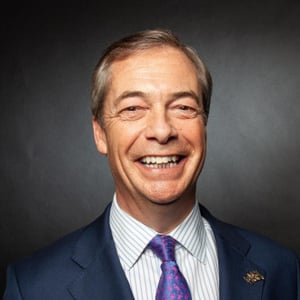
Former Member of the European Parliament, South East England Constituency
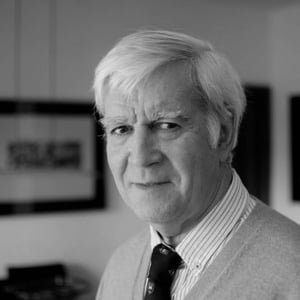
President, Congress of Catalan Culture Foundation
Michael Strubell was born in 1949 in Oxford (UK). His father was English and his mother was and still is Catalan. They met during her family´s exile in England following the Spanish Civil War.
He has a degree in Psychology and Physiology (PPP) from Oxford University, an M.Sc. in Psychology of Education from the Institute of Education, London University, and a degree in Psychology from the Universitat Autònoma de Barcelona, where he also received a Diploma in Advanced Studies.
His main fields of research have been language policy and planning and related topics, especially in the field of European minority languages.
He taught at international schools for eight years, before moving to Barcelona to work for the restored Catalan government (1980 to 1999), where he held several posts in the language planning agency, devoted to the promotion and recovery of Catalan. He is a member (and former secretary) of the Consell Social de la Llengua Catalana.
From 1999 to his retirement in 2014 he lectured at the UOC (Universitat Oberta de Catalunya) in Barcelona in language planning and sociolinguistics. He was deputy director of the Estudis d'Humanitats i Filologia, and from 2001 to 2004 he was the director of the Humanities degree programme. He was a co-author of the White Paper on the Humanities degree (2005) written for ANECA, Spain’s Universities quality agency. He was executive Secretary and later Director of the Linguamón-UOC Chair in Multilingualism (2009-2014).
He is author (or co-author) of dozens of academic papers, and of eight books, as well as several Reports for European institutions. He has sat on the editorial boards of four academic journals in the fields of language policy and sociolinguistics.
He has been a consultant for the Council of Europe and the Organisation for Security and Cooperation in Europe, for language-policy-related missions to Kazakhstan, Estonia, Latvia, Croatia, the Russian Federation and other countries. He helped draft several sets of “Recommendations” on the rights of National Minorities, for the OSCE, and coordinated half a dozen European research projects.
Outside the academic world he is a board member of several private foundations in the fields of language, culture and the handicapped.
Without ever being a member of a political party, he has been actively involved in the Catalan independence movement. He chaired Catalunya 2003, a political association calling for greater self-government (2002 - 2005). Since 2007 he has been a member of anotherplatform, Sobirania i Progrés, promoting the democratic path towards the freedom of the Catalan people. He was one of the founders, in 2009, of the Assemblea Nacional Catalana, a grassroots organisation working for Catalonia's independence. It grew rapidly to over 30,000 members and, since 2012, has organised historic rallies and marches, particularly on Catalonia’s National Day (September 11) each year.
He is married, has two sons and a daughter, and his main hobbies are mushroom hunting, listening to classical music and hill-walking. He lives with his wife between Barcelona and Palamós (on the Costa Brava).
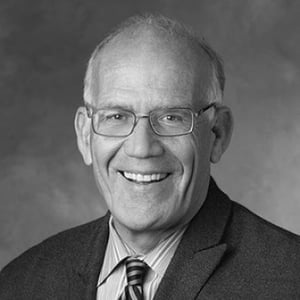
Martin and Illie Anderson Senior Fellow, Hoover Institution
Victor Davis Hanson is the Martin and Illie Anderson Senior Fellow at the Hoover Institution; his focus is classics and military history.
Hanson was a National Endowment for the Humanities fellow at the Center for Advanced Studies in the Behavioral Sciences, Stanford, California (1992–93), a visiting professor of classics at Stanford University (1991–92), the annual Wayne and Marcia Buske Distinguished Visiting Fellow in History at Hillsdale College (2004–), the Visiting Shifron Professor of Military History at the US Naval Academy (2002–3),and the William Simon Visiting Professor of Public Policy at Pepperdine University (2010).
In 1991 he was awarded an American Philological Association Excellence in Teaching Award. He received the Eric Breindel Award for Excellence in Opinion Journalism (2002), presented the Manhattan's Institute's Wriston Lecture (2004), and was awarded the National Humanities Medal (2007) and the Bradley Prize (2008).
Hanson is the author of hundreds of articles, book reviews, and newspaper editorials on Greek, agrarian, and military history and essays on contemporary culture. He has written or edited twenty-four books, the latest of which is The Case for Trump (Basic Books, 2019). His other books include The Second World Wars (Basic Books, 2017); The Savior Generals: How Five Great Commanders Saved Wars That Were Lost - from Ancient Greece to Iraq (Bloomsbury 2013); The End of Sparta (Bloomsbury, 2011); The Father of Us All: War and History, Ancient and Modern (Bloomsbury, 2010); Makers of Ancient Strategy: From the Persian Wars to the Fall of Rome (ed.) (Princeton, 2010); The Other Greeks (California, 1998); The Soul of Battle (Free Press, 1999); Carnage and Culture (Doubleday, 2001); Ripples of Battle (Doubleday, 2003); A War Like No Other (Random House, 2005); The Western Way of War (Alfred Knopf, 1989; 2nd paperback ed., University of California Press, 2000); The Wars of the Ancient Greeks (Cassell, 1999; paperback ed., 2001); and Mexifornia: A State of Becoming (Encounter, 2003), as well as two books on family farming, Fields without Dreams (Free Press, 1995) and The Land Was Everything (Free Press, 1998). Currently, he is a syndicated columnist for Tribune Media Services and a weekly columnist for the National Review Online.
Hanson received a BA in classics at the University of California, Santa Cruz (1975), was a fellow at the American School of Classical Studies, Athens (1977–78), and received his PhD in classics from Stanford University (1980).
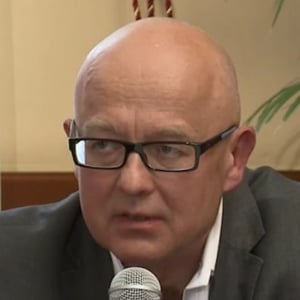
Professor, Jagiellonian University
Prof. Bryk is the director of the Institute of American Studies, Krakow Academy as well as a professor of constitutional law and history, political philosophy at the Krakow Academy and the Jagiellonian University in Krakow. He is also a visiting professor at such institutions as: Harvard University, Marquette University, Amherst College, University of New Hampshire, Institute of the European Studies, Vienna.
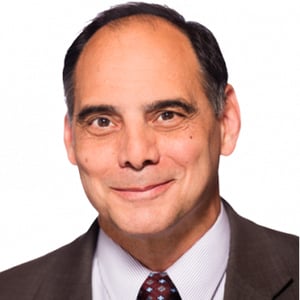
Vice President, Kathryn and Shelby Cullom Davis Institute for National Security and Foreign Policy, and the E. W. Richardson Fellow, The Heritage Foundation
James Jay Carafano, a leading expert in national security and foreign policy challenges, is the vice president of Heritage's Kathryn and Shelby Cullom Davis Institute for National Security and Foreign Policy and the E. W. Richardson Fellow.
Carafano is an accomplished historian and teacher as well as a prolific writer and researcher. His most recent publication is an e-book, “Surviving the End”, which addresses emergency preparedness. He also authored “Wiki at War: Conflict in a Socially Networked World” (Texas A&M University Press, 2012), a survey of the revolutionary impact of the Internet age on national security. He was selected from thousands to speak on cyber warfare at the 2014 South by Southwest (SXSW) Interactive Conference in Austin, Texas, the nation’s premier tech and social media conference.
Before assuming responsibility for Heritage’s entire defense and foreign policy team in December 2012, Carafano had served as deputy director of the Davis Institute as well as director of its Douglas and Sarah Allison Center for Foreign Policy Studies since 2009.
His recent research has focused on developing the national security required to secure the long-term interests of the United States -- protecting the public, providing for economic growth and preserving civil liberties.
He is editor of a book series, The Changing Face of War, which examines how emerging political, social, economic and cultural trends will affect the nature of armed conflict. From 2012 to 2014, he served on the Homeland Security Advisory Council convened by the secretary of the U.S. Department of Homeland Security.
Carafano, a 25-year Army veteran with a master’s and doctorate from Georgetown University, joined Heritage in 2003 as a senior research fellow in homeland security and missile defense. He worked with Kim R. Holmes, his predecessor as vice president and director of Davis Institute, to produce Heritage’s groundbreaking documentary film “33 Minutes: Protecting America in the New Missile Age.”
Carafano now directs Heritage's team of foreign and defense policy experts in three centers on the front lines of international affairs: the Allison Center, the Asian Studies Center, the Margaret Thatcher Center for Freedom, and the Center for National Defense.
Carafano also is president of a nonprofit organization, Esprit de Corps, which educates the public about veteran affairs. In this capacity he co-produced and co-wrote the documentary “Veteran Nation,” an official selection of the 2013 G.I. Film Festival.
Before coming to Heritage, Carafano was a senior fellow at the Center for Strategic and Budgetary Assessments, a Washington policy institute dedicated to defense issues.
In his Army career, Carafano rose to the rank of lieutenant colonel. He served in Europe, Korea and the United States. His assignments included head speechwriter for the Army Chief of Staff, the service's highest-ranking officer. Before retiring, Carafano was executive editor of Joint Force Quarterly, the Defense Department's premiere professional military journal.
A graduate of West Point, Carafano holds a master's degree and a doctorate from Georgetown University as well as a master's degree in strategy from the U.S. Army War College.
He is an adjunct professor at Georgetown University and serves as a visiting professor at National Defense University. He currently sits on the Board of Advisors for Daniel Morgan Academy. He previously served as an assistant professor at the U.S. Military Academy in West Point, N.Y., and as director of military studies at the Army's Center of Military History. He taught at Mount Saint Mary College in New York and was a fleet professor at the U.S. Naval War College.
He is the co-author with Paul Rosenzweig of Winning the Long War: Lessons from the Cold War for Defeating Terrorism and Preserving Freedom (2005). The authors, first to coin the term “the long war,” argued that a successful strategy requires a balance of prudent military and security measures, continued economic growth, zealous protection of civil liberties and prevailing in the “war of ideas” against terrorist ideologies.
Carafano also co-authored a textbook, Homeland Security (McGraw-Hill, second edition 2012), designed as a practical introduction to everyday life in the era of terrorism. The textbook addresses such key details as the roles of first responders and volunteers, family preparedness techniques and in-depth looks at weapons of mass destruction.
His other works include Private Sector/Public Wars: Contracting in Combat--Iraq, Afghanistan and Future Conflicts (2008); G.I. Ingenuity: Improvisation, Technology and Winning World War II (2006); Waltzing Into the Cold War (2002); and After D-Day (2000), a Military Book Club main selection.
As an expert on foreign affairs, defense, intelligence and homeland security issues, Carafano has testified many times before Congress.
He is a regular guest analyst for the major U.S. network and cable television news organizations, from ABC to Fox to MSNBC to PBS, as well as such outlets as National Public Radio, Pajamas TV, Voice of America and the History Channel. From SkyNews to Al Jazeera, he also has appeared on TV news programs originating in Australia, Austria, Canada, China, Estonia, France, Great Britain, Greece, Hong Kong, Ireland, Iran, Japan, Norway, Poland, Portugal, Russia, Spain, Sweden and Vietnam.
Carafano’s op-ed columns and commentary are published widely, including the Baltimore Sun, Boston Globe, New York Post, Philadelphia Inquirer, USA Today and Washington Times in addition to Forbes.
He served on the board of trustees of the Marine Corps University Foundation and advisory boards for the West Point Center of Oral History, the Hamilton Society, the Spirit of America, and the Operation Renewed Hope Foundation, which serves homeless veterans. He formerly was a senior fellow at George Washington University's Homeland Security Policy Institute. He also previously served on the congressionally-mandated Advisory Panel on Department of Defense Capabilities for Support of Civil Authorities, the National Academy's Board on Army Science and Technology and the Department of the Army Historical Advisory Committee.
In 2005, he received Heritage's prestigious W. Glenn and Rita Ricardo Campbell Award. The honor goes to the staff member determined to have made “an outstanding contribution to the analysis and promotion of the free society.”
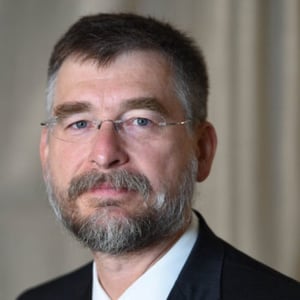
Associate Professor, Catholic University of America
Jakub Grygiel is an associate professor at the Catholic University of America (Washington, DC). In 2017-2018 he was a senior advisor to the Secretary of State in the Office of Policy Planning working on European affairs. Previously, he was a Senior Fellow at the Center for European Policy Analysis and on the faculty of SAIS-Johns Hopkins University in Washington DC. He is the author of Return of the Barbarians (Cambridge University Press, 2018), Great Powers and Geopolitical Change (JHU Press, 2006), and co-author with Wess Mitchell of The Unquiet Frontier (Princeton University Press, 2016). His writings on international relations and security studies have appeared in Foreign Affairs, The American Interest, Security Studies, Journal of Strategic Studies, Orbis, Commentary, Parameters, as well as several U.S. and foreign newspapers. He earned a Ph.D., M.A. and an MPA from Princeton University, and a BSFS Summa Cum Laude from Georgetown University.
Professor, Jagiellonian University
Prof. Bryk is the director of the Institute of American Studies, Krakow Academy as well as a professor of constitutional law and history, political philosophy at the Krakow Academy and the Jagiellonian University in Krakow. He is also a visiting professor at such institutions as: Harvard University, Marquette University, Amherst College, University of New Hampshire, Institute of the European Studies, Vienna.
Vice President, Kathryn and Shelby Cullom Davis Institute for National Security and Foreign Policy, and the E. W. Richardson Fellow, The Heritage Foundation
James Jay Carafano, a leading expert in national security and foreign policy challenges, is the vice president of Heritage's Kathryn and Shelby Cullom Davis Institute for National Security and Foreign Policy and the E. W. Richardson Fellow.
Carafano is an accomplished historian and teacher as well as a prolific writer and researcher. His most recent publication is an e-book, “Surviving the End”, which addresses emergency preparedness. He also authored “Wiki at War: Conflict in a Socially Networked World” (Texas A&M University Press, 2012), a survey of the revolutionary impact of the Internet age on national security. He was selected from thousands to speak on cyber warfare at the 2014 South by Southwest (SXSW) Interactive Conference in Austin, Texas, the nation’s premier tech and social media conference.
Before assuming responsibility for Heritage’s entire defense and foreign policy team in December 2012, Carafano had served as deputy director of the Davis Institute as well as director of its Douglas and Sarah Allison Center for Foreign Policy Studies since 2009.
His recent research has focused on developing the national security required to secure the long-term interests of the United States -- protecting the public, providing for economic growth and preserving civil liberties.
He is editor of a book series, The Changing Face of War, which examines how emerging political, social, economic and cultural trends will affect the nature of armed conflict. From 2012 to 2014, he served on the Homeland Security Advisory Council convened by the secretary of the U.S. Department of Homeland Security.
Carafano, a 25-year Army veteran with a master’s and doctorate from Georgetown University, joined Heritage in 2003 as a senior research fellow in homeland security and missile defense. He worked with Kim R. Holmes, his predecessor as vice president and director of Davis Institute, to produce Heritage’s groundbreaking documentary film “33 Minutes: Protecting America in the New Missile Age.”
Carafano now directs Heritage's team of foreign and defense policy experts in three centers on the front lines of international affairs: the Allison Center, the Asian Studies Center, the Margaret Thatcher Center for Freedom, and the Center for National Defense.
Carafano also is president of a nonprofit organization, Esprit de Corps, which educates the public about veteran affairs. In this capacity he co-produced and co-wrote the documentary “Veteran Nation,” an official selection of the 2013 G.I. Film Festival.
Before coming to Heritage, Carafano was a senior fellow at the Center for Strategic and Budgetary Assessments, a Washington policy institute dedicated to defense issues.
In his Army career, Carafano rose to the rank of lieutenant colonel. He served in Europe, Korea and the United States. His assignments included head speechwriter for the Army Chief of Staff, the service's highest-ranking officer. Before retiring, Carafano was executive editor of Joint Force Quarterly, the Defense Department's premiere professional military journal.
A graduate of West Point, Carafano holds a master's degree and a doctorate from Georgetown University as well as a master's degree in strategy from the U.S. Army War College.
He is an adjunct professor at Georgetown University and serves as a visiting professor at National Defense University. He currently sits on the Board of Advisors for Daniel Morgan Academy. He previously served as an assistant professor at the U.S. Military Academy in West Point, N.Y., and as director of military studies at the Army's Center of Military History. He taught at Mount Saint Mary College in New York and was a fleet professor at the U.S. Naval War College.
He is the co-author with Paul Rosenzweig of Winning the Long War: Lessons from the Cold War for Defeating Terrorism and Preserving Freedom (2005). The authors, first to coin the term “the long war,” argued that a successful strategy requires a balance of prudent military and security measures, continued economic growth, zealous protection of civil liberties and prevailing in the “war of ideas” against terrorist ideologies.
Carafano also co-authored a textbook, Homeland Security (McGraw-Hill, second edition 2012), designed as a practical introduction to everyday life in the era of terrorism. The textbook addresses such key details as the roles of first responders and volunteers, family preparedness techniques and in-depth looks at weapons of mass destruction.
His other works include Private Sector/Public Wars: Contracting in Combat--Iraq, Afghanistan and Future Conflicts (2008); G.I. Ingenuity: Improvisation, Technology and Winning World War II (2006); Waltzing Into the Cold War (2002); and After D-Day (2000), a Military Book Club main selection.
As an expert on foreign affairs, defense, intelligence and homeland security issues, Carafano has testified many times before Congress.
He is a regular guest analyst for the major U.S. network and cable television news organizations, from ABC to Fox to MSNBC to PBS, as well as such outlets as National Public Radio, Pajamas TV, Voice of America and the History Channel. From SkyNews to Al Jazeera, he also has appeared on TV news programs originating in Australia, Austria, Canada, China, Estonia, France, Great Britain, Greece, Hong Kong, Ireland, Iran, Japan, Norway, Poland, Portugal, Russia, Spain, Sweden and Vietnam.
Carafano’s op-ed columns and commentary are published widely, including the Baltimore Sun, Boston Globe, New York Post, Philadelphia Inquirer, USA Today and Washington Times in addition to Forbes.
He served on the board of trustees of the Marine Corps University Foundation and advisory boards for the West Point Center of Oral History, the Hamilton Society, the Spirit of America, and the Operation Renewed Hope Foundation, which serves homeless veterans. He formerly was a senior fellow at George Washington University's Homeland Security Policy Institute. He also previously served on the congressionally-mandated Advisory Panel on Department of Defense Capabilities for Support of Civil Authorities, the National Academy's Board on Army Science and Technology and the Department of the Army Historical Advisory Committee.
In 2005, he received Heritage's prestigious W. Glenn and Rita Ricardo Campbell Award. The honor goes to the staff member determined to have made “an outstanding contribution to the analysis and promotion of the free society.”
Associate Professor, Catholic University of America
Jakub Grygiel is an associate professor at the Catholic University of America (Washington, DC). In 2017-2018 he was a senior advisor to the Secretary of State in the Office of Policy Planning working on European affairs. Previously, he was a Senior Fellow at the Center for European Policy Analysis and on the faculty of SAIS-Johns Hopkins University in Washington DC. He is the author of Return of the Barbarians (Cambridge University Press, 2018), Great Powers and Geopolitical Change (JHU Press, 2006), and co-author with Wess Mitchell of The Unquiet Frontier (Princeton University Press, 2016). His writings on international relations and security studies have appeared in Foreign Affairs, The American Interest, Security Studies, Journal of Strategic Studies, Orbis, Commentary, Parameters, as well as several U.S. and foreign newspapers. He earned a Ph.D., M.A. and an MPA from Princeton University, and a BSFS Summa Cum Laude from Georgetown University.

Secession: Sovereignty & Nationalism [POLICYbrief]
Nigel Farage, Michael Strubell, Victor Davis Hanson
With over two dozen active separatist movements in Europe alone, the concepts of sovereignty and...
Poland: Renegade or Exemplar?
Andrzej Bryk, James Jay Carafano, Jakub Grygiel
Poland holds a position of economic, strategic, and political importance in Europe. While some former...
Poland: Renegade or Exemplar?
TeleforumBrexit and Parallel Issues for American Federalism