
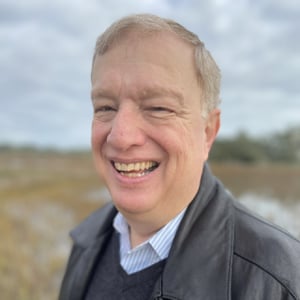
Distinguished Professor of History, Professor of Political Science and European Studies, Director of Undergraduate Studies, Vanderbilt University
Thomas Alan Schwartz is a historian of the foreign relations of the United States, with related interests in American politics, the history of international relations, Modern European history, and biography. His most recent book is Henry Kissinger and American Power: A Political Biography (Hill and Wang, 2020). The book has received considerable notice and acclaim. Harvard’s University’s Charles Maier has written: "Thomas Schwartz's superbly researched political biography reveals the brilliance, self-serving ego, and vulnerability of America's most remarkable diplomat in the twentieth century, even as it provides a history of U.S. engagement in global politics as it moved beyond bipolarity." Earlier in his career, Schwartz was the author of America’s Germany: John J. McCloy and the Federal Republic of Germany (Harvard, 1991), which was translated into German, Die Atlantik Brücke (Ullstein, 1992). This book received the Stuart Bernath Book Prize of the Society of American Foreign Relations, and the Harry S. Truman Book Award, given by the Truman Presidential Library. He is also the author of Lyndon Johnson and Europe: In the Shadow of Vietnam (Harvard, 2003), which examined the Johnson Administration’s policy toward Europe and assessed the impact of the war in Vietnam on its other foreign policy objectives. He is the co-editor with Matthias Schulz of The Strained Alliance: U.S.-European Relations from Nixon to Carter, (Cambridge University Press, 2009).
Professor Schwartz has held fellowships from the Social Science Research Council, the German Historical Society, the Norwegian Nobel Institute, the Woodrow Wilson International Center for Scholars, and the Center for the Study of European Integration. He has served as President of the Society of Historians of American Foreign Relations. He served on the United States Department of State’s Historical Advisory Committee as the representative of the Organization of American Historians from 2005-2008. Professor Schwartz received The Madison Sarratt Prize for Excellence in Undergraduate Teaching on April 3, 2013 at the Spring Faculty Assembly, Vanderbilt University. In 2008 Professor Schwartz received the Annual Alumni Education Award from the Vanderbilt Alumni Association. Schwartz is the recipient of the 2008 Book Award by Chi Chapter of the Kappa Alpha Order. This award is given to a faculty member who has been particularly influential in the lives and education of members of KAO. Professor Schwartz presented, "The Arab Spring: Revolution in the Middle East," on April 19, 2011, as part of the Samuel L. Shannon Distinguished Lecture Series at Tennessee State University. Professor Schwartz has also presented lectures for the OAH Distinguished Lecturers Program.
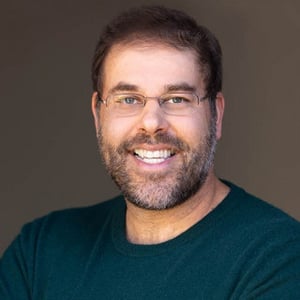
Mack Brown Distinguished Chair for Leadership in Global Affairs; Professor of Public Affairs and History, University of Texas
Jeremi Suri holds the Mack Brown Distinguished Chair for Leadership in Global Affairs at The University of Texas at Austin. He is a professor in the University's Department of History and the LBJ School of Public Affairs. Dr. Suri is the author and editor of eleven books on contemporary politics and foreign policy, most recently Civil War By Other Means: America's Long and Unfinished Fight for Democracy. His other books include The Impossible Presidency: The Rise and Fall of America's Highest Office; Henry Kissinger and the American Century; Liberty's Surest Guardian: American Nation-Building from the Founders to Obama; and Foreign Policy Breakthroughs: Cases in Successful Diplomacy (with Robert Hutchings).
Dr. Suri writes for major newspapers and magazines including the New York Times, Washington Post, Los Angeles Times, New York Daily News, Dallas Morning News, Houston Chronicle, Boston Globe, The Atlantic, Foreign Policy, Foreign Affairs, Fortune, The American Prospect and Wired — as well as for various online sites and blogs. He is a popular public lecturer, and appears frequently on radio and television.
Dr. Suri teaches courses on strategy and decision-making, leadership, globalization, international relations and modern history. He teaches graduate and undergraduate courses, and he teaches and serves as academic director for the Executive Master in Public Leadership program (EMPL) at LBJ. His research and teaching have received numerous prizes. In 2007 Smithsonian magazine named him one of America's "Top Young Innovators" in the arts and sciences. In 2018 he received the Pro Bene Meritis Award for Contributions to the Liberal Arts. In the same year also received the President’s Associates Teaching Excellence Award from the University of Texas at Austin.

Emanuel S. Heller Professor of Law, University of California at Berkeley; Thomas Smith Senior Research Fellow, The Civitas Institute, University of Texas at Austin
John Yoo is the Emanuel Heller Professor of Law at the University of California at Berkeley. He is also the Thomas Smith Senior Research Fellow, Civitas Institute, at the University of Texas at Austin. He is also a Nonresident Senior Fellow at the American Enterprise Institute.
His most recent book, The Politically Incorrect Guide to the Supreme Court, co-authored with Robert Delahunty, was published in 2023. Professor Yoo’s other books include Defender-in-Chief: Trump’s Fight for Presidential Power; Striking Power: How Cyber, Robots, and Space Weapons Change the Rules for War; Point of Attack: Preventive War, International Law, and Global Welfare; and Crisis and Command: A History of Executive Power from George Washington to George Bush.
He is a co-author of volumes 1 and 2 of R. Rossum, G. Tarr, V. Munoz & J. Yoo American Constitution Law (Routledge, 2026), and a co-editor of the eight-volume series on the 250th anniversary of the American Revolution, We Hold These Truths, with Yuval Levin and Adam White of the American Enterprise Institute.
Professor Yoo has published more than 100 articles in academic journals on subjects including national security, constitutional law, international law, and the Supreme Court. He also regularly contributes to the editorial pages of the Wall Street Journal, New York Times, Washington Post, Los Angeles Times, and National Review, among others.
Professor Yoo has served in all three branches of government. He was an official in the U.S. Department of Justice, where he worked on national security and terrorism issues after the 9/11 attacks. He served as general counsel of the U.S. Senate Judiciary Committee. He has been a law clerk for Supreme Court Justice Clarence Thomas and federal appeals Judge Laurence Silberman. He has been a visiting professor at the University of Texas at Austin’s School of Civic Leadership, Seoul National University, the Interdisciplinary Center Herzliya, Keio University, Trento University, the University of Chicago, and the Free University of Amsterdam.
Professor Yoo supervises the Public Law and Policy Program and the California Constitution Center. He also serves on the boards of Founding Forward, the Washington Legal Foundation, the Pacific Legal Foundation, the Ulysses Grant Institute, the Federalist Society’s Separation of Powers and Federalism Division, the Universidad Cientifica del Sur Law School, and the Asia-Pacific Law Institute at Seoul National University. He is a winner of the Federalist Society’s Paul Bator award and the Heritage Foundation’s Edwin Meese III Originalism Lectureship.
Professor Yoo graduated from Yale Law School and summa cum laude from Harvard College.
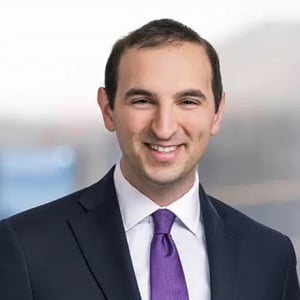
Associate, Covington & Burling LLP
Eli Nachmany is an associate at Covington & Burling LLP in the Washington, DC, office. He clerked for Judge Steven J. Menashi of the U.S. Court of Appeals for the Second Circuit. Eli graduated magna cum laude from Harvard Law School, where he was Editor-in-Chief of the Harvard Journal of Law & Public Policy. Prior to law school, Eli served as the speechwriter to the U.S. Secretary of the Interior and as a domestic policy aide in the White House Office of American Innovation. He graduated summa cum laude from New York University with a B.S. in Sports Management. Eli’s scholarship on administrative law and executive power has appeared in the BYU Law Review, George Mason Law Review, Wake Forest Law Review, and Yale Law Journal Forum.

David McIntosh is a leader for the principles of limited constitutional government and individual freedom. He is president of the Club for Growth, the leading advocate for economic liberty.
Former Congressman David McIntosh represented Indiana's 2nd Congressional District in the United States Congress from 1995-2001. As a Freshman, David chaired the Subcommittee on Regulatory Relief. He passed the Congressional Review Act and held extensive oversight and field hearings to build a record of public support for regulatory relief initiatives in energy, biotechnology, pharmaceutical, healthcare, transportation and technology sectors. Another issue that he championed was the elimination of the marriage penalty in the Federal Tax Code.
David served during the Reagan administration as special assistant to Attorney General Edwin Meese III, and as special assistant to President Reagan for Domestic Affairs. During the first Bush administration, he served as executive director of the President's Council on Competitiveness and assistant to the Vice President. The Competitiveness Council coordinated the cost/benefit review of major regulations and promoted legal reform measures.
David is a co-founder of the Federalist Society for Law and Public Policy and serves on the Board of Directors. He remains active with several free market and conservative think tanks and grassroots organizations. David has also had stints at the Hudson Institute and as a Professor of Economics at Ball State School of Business.
Prior to the Club for Growth, David was a partner at Mayer Brown, LLP in Washington, DC.
David graduated from the University of Chicago Law School in 1983, and Yale University, BA, cum laude, in 1980. He and his wife, Ruthie, are the proud parents of Ellie age 17 and Davey age 13.

Founding Partner, Boyden Gray & Associates
Ambassador C. Boyden Gray is the founding partner of Boyden Gray & Associates, a law and strategy firm in Washington, D.C., focused on constitutional and regulatory issues.
Mr. Gray worked in the White House for twelve years, first as counsel to the Vice President during the Reagan administration and then as White House Counsel to President George H.W. Bush. In the Reagan administration, he was Counsel to the Presidential Task Force on Regulatory Relief, for which he wrote the original Executive Order 12291 requiring cost-benefit analysis and White House review of regulations (later renumbered as current EO 12866). In the George H.W. Bush Administration, Mr. Gray was in charge of judicial selection and was also instrumental in the enactment of the Clean Air Act Amendments of 1990, the Energy Policy Act of 1992, and a cap-and-trade system for acid rain emissions. In 1993, he received the Presidential Citizens Medal. Under President George W. Bush, Mr. Gray was U.S. Ambassador to the European Union and U.S. Special Envoy to Europe for Eurasian Energy.
Mr. Gray practiced law for 25 years at the law firm of Wilmer, Cutler & Pickering and was chairman of the Administrative Law and Regulatory Practice Section of the American Bar Association from 2000 to 2002. Early in his career, Mr. Gray helped to develop the Business Roundtable and served as its first counsel. He is an adjunct professor at Antonin Scalia Law School and a former adjunct professor at NYU Law School (teaching energy and environmental law). Mr. Gray is on the Board of Directors of the Atlantic Council, the Federalist Society, Reason Foundation, and the Trust for the National Mall.
Mr. Gray earned his A.B. magna cum laude from Harvard, where he was an editor of the Crimson, and his J.D. with high honors from the University of North Carolina at Chapel Hill, where he was editor-in-chief of the Law Review. Mr. Gray served in the United States Marine Corps, and after law school, he clerked for Earl Warren, Chief Justice of the United States Supreme Court.
Partner, Sullivan & Cromwell LLP
Eric Kadel is engaged in a wide variety of corporate, transactional and regulatory matters. He is a member of the Firm’s Corporate and Finance, Financial Services, Investment Management, Alternative Investment Management, Cybersecurity, and Commodities, Futures and Derivatives Groups. With regard to financings, Mr. Kadel regularly represents participants in capital markets transactions, and dealers and end users in connection with structuring and documenting a wide variety of swaps and other derivatives, including equity, credit default and commodity swaps, options and forwards. Mr. Kadel’s work in the investment management area includes advising public and private investment companies and investment advisers on a wide variety of transactional, regulatory, compliance and other matters, including registration and regulation. Mr. Kadel also advises clients of the Firm regarding developments in the laws regulating the financial services industry and on cybersecurity issues. Mr. Kadel is currently an adjunct professor at George Washington University Law School.
In addition, Mr. Kadel is one of the principal partners in the Firm’s International Trade and Investment practice. He counsels and represents clients on questions about U.S. economic sanctions, including those administered by the Treasury Department’s Office of Foreign Assets Control (“OFAC”), United States antiboycott requirements under the Export Administration Regulations administered and enforced by the Commerce Department’s Office of Antiboycott Compliance within the Bureau of Industry and Security, Bank Secrecy Act/anti‐money laundering laws and the U.S. Foreign Corrupt Practices Act (“FCPA”). Mr. Kadel’s practice includes analysis of proposed transactions and business relationships; due diligence and design and review of compliance procedures and strategies; and internal investigations, voluntary disclosures and government enforcement actions. Mr. Kadel also regularly advises clients regarding questions arising under Exon-Florio and the transaction review process administered by the Committee on Foreign Investment in the United States (“CFIUS”), and has represented clients before CFIUS on many national security reviews.
Walter L. Brown Professor of Law, University of Virginia School of Law
John Norton Moore, who joined the faculty in 1966, is an authority on international law, national security law and the law of the sea. He also teaches advanced topics in national security law and the rule of law. Moore taught the first course in the country on national security law and conceived and co-authored the first casebook on the subject. From 1991-93, during the Gulf War and its aftermath, Moore was the principal legal adviser to the Ambassador of Kuwait to the United States and to the Kuwait delegation to the U.N. Iraq-Kuwait Boundary Demarcation Commission.
From 1985 to 1991, he chaired the board of directors of the U.S. Institute of Peace, one of six presidential appointments he has held. From 1973 to 1976, he was chair of the National Security Council Interagency Task Force on the Law of the Sea and ambassador and deputy special representative of the president to the law of the sea conference. Previously he served as the counselor on international law to the State Department. With the deputy attorney general of the United States, he was co-chair in March 1990 of the U.S.-USSR talks in Moscow and Leningrad on the rule of law. As a consultant to the Arms Control and Disarmament Agency, he was honored by the director for his work on the ABM Treaty Interpretation Project. He has been a frequent witness before congressional committees on maritime policy, legal aspects of foreign policy, national security, war and treaty powers, and democracy and human rights. He has been a fellow of the Woodrow Wilson International Center for Scholars at the Smithsonian Institution.
Moore is a member of advisory and editorial boards for nine journals and numerous professional organizations, and he has published many articles on oceans policy, national security and international law.

Professor Emeritus of Law, Antonin Scalia Law School, George Mason University
Jeremy A. Rabkin is a Professor Emeritus of Law at the Antonin Scalia Law School, George Mason University. Before joining the faculty in June 2007, he was for over two decades a professor in the Department of Government at Cornell University. Professor Rabkin serves on the board of directors of the Center for Individual Rights, a public interest law firm based in Washington, D.C. Previously he was a board member of the U.S. Institute of Peace and the board of academic advisors of the American Enterprise Institute.
Professor Rabkin’s books include Law Without Nations? (Princeton University Press, 2005). He authored “If You Need a Friend, Don’t Call a Cosmopolitan,” a chapter in Varieties of Sovereignty and Citizenship (Sigal R. Ben-Porath & Rogers M. Smith eds., University of Pennsylvania Press, 2012). His articles have appeared in major law reviews and political science journals and his journalistic contributions in a range of magazines and newspapers, including the Washington Post and the Wall Street Journal.

Henry Kissinger and International Law
Thomas Alan Schwartz, Jeremi Suri, John C. Yoo
On November 29, 2023, Henry Kissinger died at the age of 100. The former US...
Empowering the “Honest Broker”: Lessons Learned from the National Security Council Under President Donald J. Trump
Eli Nachmany
On September 18, 2019, Robert O’Brien took over as President Donald J. Trump’s National Security...
Andrew Card Address Before The Federalist Society at the 2003 National Lawyers Convention
Andrew Card, David M. McIntosh, C. Boyden Gray
Address by Hon. Andrew Card, White House Chief of StaffIntroductions by Hon. David McIntosh, Federalist...
Showcase Roundtable III: What Should Shape A President's Perspective on Foreign Policy?
2000 National Lawyers Convention
Washington, DC