
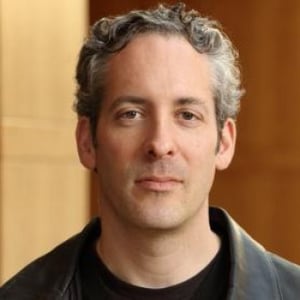
Justice Thurgood Marshall Distinguished Professor of Law, University of Virginia School of Law
Brandon L. Garrett joined the law faculty in 2005. His research and teaching interests include criminal procedure, wrongful convictions, habeas corpus, corporate crime, scientific evidence, civil rights, civil procedure and constitutional law. Garrett’s recent research includes studies of DNA exonerations and organizational prosecutions. The research web pages below provide data related to those studies.
Garrett’s recent book examining corporate prosecutions, titled “Too Big to Jail: How Prosecutors Compromise with Corporations,” was published by Harvard University Press in Fall 2014. Translations are forthcoming in Spain and Taiwan. A new book titled “End of its Rope: How Killing the Death Penalty Can Revive Criminal Justice,” examining the implications of the decline of the death penalty, is forthcoming in Fall 2017 from Harvard University Press. In 2011, Harvard University Press published Garrett’s book, "Convicting the Innocent: Where Criminal Prosecutions Go Wrong," examining the cases of the first 250 people to be exonerated by DNA testing. That book was the subject of a symposium issue in New England Law Review, and received an A.B.A. Silver Gavel Award, Honorable Mention, and a Constitutional Commentary Award. It was translated for editions in China, Japan and Taiwan. In 2013, Foundation Press published Garrett’s casebook, “Federal Habeas Corpus: Executive Detention and Post-Conviction Litigation,” co-authored with Lee Kovarsky. Garrett’s work has been widely cited by courts, including the U.S. Supreme Court, lower federal courts, state supreme courts, and courts in other countries, such as the Supreme Courts of Canada and Israel. Garrett also frequently speaks about criminal justice matters before legislative and policymaking bodies, groups of practicing lawyers, law enforcement, and to local and national media.
Garrett attended Columbia Law School, where he was an articles editor of the Columbia Law Review and a Kent Scholar. After graduating, he clerked for the Hon. Pierre N. Leval of the U.S. Court of Appeals for the Second Circuit. He then worked as an associate at Neufeld, Scheck & Brustin LLP in New York City.
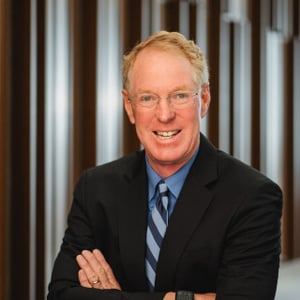
Ronald N. Boyce Presidential Professor of Criminal Law and University Distinguished Professor of Law, The University of Utah College of Law
Paul G. Cassell is an internationally recognized legal scholar on criminal and civil justice, crime victims' rights, constitutional law, evidence, judicial process, and other legal issues. Cassell received a B.A. (1981) and a J.D. (1984) from Stanford University, where he graduated Order of the Coif and was President of the Stanford Law Review. He clerked for then-Judge Antonin Scalia when Scalia was on the U.S. Court of Appeals for the D.C. Circuit (1984-85) and for Chief Justice Warren Burger of the United States Supreme Court (1985-86). Cassell then served as an Associate Deputy Attorney General with the U.S. Justice Department (1986-88) and as an Assistant U.S. Attorney for the Eastern District of Virginia (1988 to 1991). Cassell joined the faculty at the College of Law in 1992, where he taught full-time until he was sworn in as a U.S. District Court Judge for the District of Utah in July 2002. In November 2007, he resigned his judgeship to return full-time to the College of Law to teach, write, and litigate concerning issues relating to crime victims' rights and criminal and civil justice reform. Professor Cassell has also published numerous law review articles in journals such as the Stanford Law Review, the Michigan Law Review, the Harvard Journal of Law and Public Policy, and the Journal of Criminal Law and Criminology. He is a co-author of the nation's only law school textbook on crime victims' rights, Victims in Criminal Procedure (various editions, most recently in its fifth edition published in 2025). Professor Cassell has argued pro bono cases relating to criminal procedure and crime victims' rights before the United States Supreme Court, the 2nd, 4th, 5th, 6th, 7th, 8th, 9th, 10th, 11th, and D.C. Circuits (including the 5th and 11th Circuits en banc), several U.S. District Courts, the Utah Supreme Court, and the Arizona Supreme Court. In 2020, Cassell received the Ronald Wilson Reagan Public Policy Award - National Crime Victims' Service Award from the U.S. Department of Justice. Cassell is a member of the American Law Institute, a fellow of the American Bar Foundation, and an inaugural member of the Council on Criminal Justice. He is also an occasional blogger at The Volokh Conspiracy.

Amelia D. Lewis Professor of Constitutional and Criminal Law, Sandra Day O'Connor College of Law at Arizona State University
Erik Luna is the Amelia D. Lewis Professor of Constitutional and Criminal Law in the Sandra Day O'Connor College of Law at Arizona State University.
Professor Luna teaches and writes primarily in the areas of criminal law and criminal procedure. Luna has received two Fulbright awards. In 2000, he served as the senior Fulbright Scholar to New Zealand at Victoria University Law School (Wellington, NZ). In 2016-17, he was the Fulbright Distinguished Chair at the University of Birmingham (Birmingham, UK). Luna has also been a visiting scholar with the Max Planck Institute for Foreign and International Criminal Law (Freiburg, DE), a visiting professor with the Cuban Society of Penal Sciences (Havana, CU), a visiting professional in the Office of the Prosecutor of the International Criminal Court (The Hague, NL), and a research fellow with the Alexander von Humboldt Foundation (Bonn, DE). Prior to coming to ASU, Luna was the Sydney & Frances Lewis Professor of Law at Washington and Lee University, and before that, he was the Hugh B. Brown Chair in Law at the University of Utah. Luna is a member of the American Law Institute and an adjunct scholar with the Cato Institute. He graduated summa cum laude from the University of Southern California and received his J.D. with honors from Stanford Law School. Upon graduation, Luna was a prosecutor in the San Diego District Attorney’s Office and a fellow and lecturer at the University of Chicago Law School.
Professor of History, Brooklyn College and the CUNY Graduate Center
KC Johnson is professor of history at Brooklyn College and the CUNY Graduate Center, where he has taught since 1999. He has written 13 books on topics in U.S. political history, U.S. foreign policy, and legal and policy debates surrounding campus due process and civil liberties. His Duke lacrosse case blog, Durham-in-Wonderland, was named ABA Journal’s Best Ethics Blog in 2007; and he continues to blog on higher-ed matters at the blog Minding the Campus.
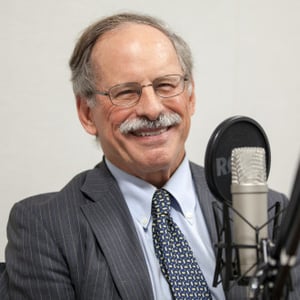
Freelance Journalist and Author
Stuart Taylor, Jr. is a Washington writer focusing on legal and policy issues and a National Journal contributing editor. He occasionally practices law.
Taylor has coauthored three books. All have been acclaimed by commentators across the ideological spectrum. In January 2017, KC Johnson and Taylor authored The Campus Rape Frenzy: The Attack on Due Process at America's Universities. In 2012, Richard Sander and Taylor authored Mismatch: How Affirmative Action Hurts Students It's Intended to Help, and Why Universities Won't Admit It. In 2007, Taylor and Johnson authored Until Proven Innocent: Political Correctness and the Shameful Injustices of the Duke Lacrosse Rape Fraud. Sander and Taylor have also filed amicus briefs in Supreme Court cases involving admissions preferences.
Since 1980, Taylor has done reporting and commentary about issues ranging from the biggest Supreme Court cases to race, voting rights, mindlessly excessive criminal penalties, guilt-presuming campus rape processes, journalistic bias, the death penalty, war powers, gerrymandering, guns, polarization, civil liberties, national security, torture, campaign finance, education, impeachment, and other issues. He has often been called one of the nation's best legal journalists and is known for challenging both liberal and conservative conventional wisdom.
Taylor was a reporter for The New York Times from 1980-1988, covering legal affairs and then the Supreme Court. He wrote commentaries and long features for The American Lawyer, Legal Times and their affiliates from 1989-1997, and for National Journal and Newsweek from 1998 through 2010. He has written (less often) on a freelance basis for numerous publications since 2010. He has written op-eds for The Washington Post, The New York Times, The Wall Street Journal, The Los Angeles Times, USA Today, and The New York Daily News and longer commentaries for RealClearPolitics, The Atlantic, The New Republic, the (late) Weekly Standard, National Review, Slate, The Daily Beast, Harper’s, Reader’s Digest, Time and other magazines. He has been interviewed on all major television and radio networks. He taught “Law and the News Media” at Stanford Law School in 2011 and 2012 and practices law on occasion.
Taylor graduated from Princeton University in 1970 with an A.B. in History. After working as a reporter for the Baltimore Evening Sun and Sun from 1971-1974, he moved to Harvard Law School, was a Harvard Law Review note editor, and graduated in 1977 at the top of his class, with high honors. He also won a Frederick Sheldon Traveling Fellowship and traveled around the world in 1977-1978 while studying freedom of the press in the United Kingdom and Kenya.
Taylor practiced law with Wilmer, Cutler & Pickering, in Washington, D.C., from 1977-1980 before returning to journalism in 1980 by joining the Washington Bureau of The New York Times.
Taylor's journalism honors include the 2009 Northern California Innocence Project Media Award for his work on the Duke lacrosse rape fraud; a 2002 National Headliner Award for best special magazine column on one subject; and a share of The American Lawyer’s National Magazine Award for a March 1990 special issue on the drug war. He was a National Magazine Award finalist in 1993 and 1997 and was nominated by The New York Times for a Pulitzer Prize in 1988.
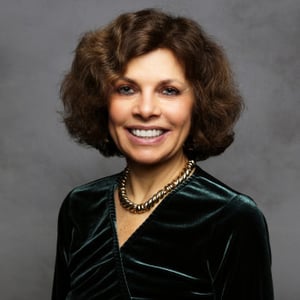
John Marshall Harlan II Professor of Law Emerita, New York Law School; Former President, American Civil Liberties Union
Nadine Strossen, New York Law School Professor Emerita and Senior Fellow at FIRE (the Foundation for Individual Rights and Expression), was national President of the American Civil Liberties Union from 1991 to 2008. An internationally acclaimed free speech scholar and advocate, who regularly addresses diverse audiences and provides media commentary around the world, Strossen is also the Host and Project Consultant for Free To Speak, a 3-hour documentary film series distributed on public television in 2023. Her books about free speech include: Free Speech: What Everyone Needs to Know® (Oxford University Press 2023); HATE: Why We Should Resist It with Free Speech, Not Censorship (Oxford University Press 2018); and Defending Pornography: Free Speech, Sex, and the Fight for Women’s Rights (Scribner 1995), which was republished with a new Preface in 2024 as part of the NYU Classics Series. Her many honors and awards include the National Coalition Against Censorship’s Judy Blume Lifetime Achievement Award for Free Speech. She serves on the Advisory Boards of several organizations that do free speech work, including: ACLU, Academic Freedom Alliance, Foundation Against Intolerance and Racism (FAIR), Heterodox Academy, National Coalition Against Censorship, and the University of Austin.
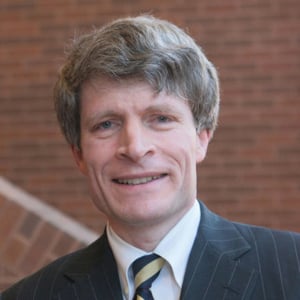
S. Walter Richey Professor of Corporate Law, University of Minnesota Law School
Professor Richard W. Painter received his B.A., summa cum laude, in history from Harvard University and his J.D. from Yale University, where he was an editor of the Yale Journal on Regulation. Following law school, he clerked for Judge John T. Noonan Jr., of the United States Court of Appeals for the Ninth Circuit and later practiced at Sullivan & Cromwell in New York City and Finn Dixon & Herling in Stamford, Connecticut.
He has served as a tenured member of the law faculty at the University of Oregon School of Law and the University of Illinois College of Law, where he was the Guy Raymond and Mildred Van Voorhis Jones Professor of Law from 2002 to 2005.
From February 2005 to July 2007, he was Associate Counsel to the President in the White House Counsel's office, serving as the chief ethics lawyer for the President, White House employees and senior nominees to Senate-confirmed positions in the Executive Branch. He is a member of the American Law Institute and is an advisor for the new ALI Principles of Government Ethics. He has also been active in the Professional Responsibility Section of the American Bar Association.
Professor Painter has also been active in law reform efforts aimed at deterring securities fraud and improving ethics of corporate managers and lawyers. A key provision of the Sarbanes-Oxley Act of 2002 requiring the SEC to issue rules of professional responsibility for securities lawyers was based on earlier proposals Professor Painter made in law review articles and to the ABA and the SEC. He has given dozens of lectures on the Sarbanes-Oxley Act to law schools, bar associations, and learned societies, such as the American Academy of Arts and Sciences. Professor Painter has on four separate occasions provided invited testimony before committees of the U.S. House of Representatives or the U.S. Senate on securities litigation and/or the role of attorneys in corporate governance.
His book, Getting the Government America Deserves: How Ethics Reform Can Make a Difference, was published by Oxford University Press in January 2009. He has written op-eds on government ethics for various publications including the New York Times, the Washington Post and the Los Angeles Times, and he has been interviewed several times on government ethics and corporate ethics by national news organizations, including appearances on Lawrence O'Donnell (MSNBC), Anderson Cooper 360 (CNN), CNN News, Fox News, National Public Radio All Things Considered, and Minnesota Public Radio News. In 2011, he testified before the U.S. House Government Oversight Committee on partisan political activity by government officials and reform of the Hatch Act. Professor Painter has also given expert testimony in cases involving securities transactions and the professional responsibility of lawyers. He testified as a defense witness in SEC. v. The Reserve Money Market Fund (SDNY, November 2012), a jury trial of an SEC enforcement action against the founders of the world's oldest money market fund that ended with a defense verdict on all of the fraud counts.
Professor Painter is the author of two casebooks: Securities Litigation and Enforcement (with Margaret Sachs and Donna Nagy; West 2003; Second Edition, 2007; Third Edition 2011) and Professional and Personal Responsibilities of the Lawyer (with Judge John T. Noonan Jr.; Foundation 1997; Second Edition, 2001; Third Edition 2011). He has written dozens of articles, book reviews, and essays, including a series of papers and a forthcoming book with Minnesota colleague Claire Hill on the personal responsibility of investment bankers.
Partner, Gibson Dunn
Thomas H. Dupree, Jr. is a partner in the Washington, DC office of Gibson, Dunn & Crutcher. He is a member of the firm's litigation department and its Appellate and Constitutional Law practice group, and serves as the hiring partner for the DC office.
Mr. Dupree is an experienced trial and appellate advocate. He has argued more than 70 appeals in the federal courts, including in all thirteen circuits as well as the United States Supreme Court. He has represented clients throughout the country in a wide variety of trial and appellate matters, including cases involving punitive damages, class actions, product liability, arbitration, intellectual property, employment, and constitutional challenges to federal and state statutes.
In 2007, Mr. Dupree was appointed Deputy Assistant Attorney General. He served in the Civil Division at the U.S. Department of Justice from 2007 to 2009, ultimately becoming the Principal Deputy Assistant Attorney General. In that capacity, he served as the division's second-in-command, overseeing the more than 900 lawyers in the Civil Appellate, Commercial, Federal Programs and Torts branches, as well as the Office of Immigration Litigation and the Office of Consumer Litigation. Mr. Dupree was responsible for managing many of the government's most significant cases involving regulatory, commercial, constitutional and national security matters on behalf of virtually all of the federal agencies, the White House, and senior federal officials. Before being named the division's top deputy, Mr. Dupree ran its largest litigating branch, managing a staff of 280 lawyers.
Chambers and Partners named Mr. Dupree one of the leading appellate lawyers in the United States in 2012, 2013, 2014, 2015, and 2016. He received similar honors in 2010, when he was ranked as one of the top ten appellate litigators under age 40 by Law360. In 2009, the National Law Journal and Legal Times selected him as one of the top 40 lawyers under 40 in Washington, DC, as did Washingtonian magazine in 2006. Based on surveys of hundreds of corporate counsel, Mr. Dupree was named a "Client Service All-Star" by BTI Consulting Group in a 2013 report for his "overall legal prowess" and his "ability to deliver a plan of action that yields results."
Legal Times has called Mr. Dupree "no stranger to high-profile work." Among other things, he played a substantial role in the successful representation of George W. Bush before the United States Supreme Court in Bush v. Gore, and represented New England Patriots quarterback Tom Brady in challenging his "Deflategate" suspension.
In 2014, Mr. Dupree argued and won, by a unanimous 9-0 vote, a landmark personal jurisdiction case in the United States Supreme Court, Daimler AG v. Bauman. For this achievement, American Lawyer magazine named him Litigator of the Week, noting that he "won over both the liberal and conservative wings of the court."
Other matters Mr. Dupree has handled include:
Mr. Dupree appears frequently on national television as a legal analyst. He is a regular guest on Fox News Channel, and has appeared on "The O'Reilly Factor" and "The Kelly File," as well as on CNN's "Situation Room" and C-Span's "America & The Courts," among other programs. He has also been quoted in numerous print publications, including the New York Times, the Wall Street Journal, the Washington Post, the Los Angeles Times and many others, discussing legal issues and developments. Mr. Dupree has also testified before Congress on constitutional and separation-of-powers issues, including the President's authority to act through executive order.
Mr. Dupree graduated cum laude from Williams College, and with Honors from the University of Chicago Law School, where he served as an Editor of the University of Chicago Law Review. After law school, he clerked for the Honorable Jerry E. Smith of the United States Court of Appeals for the Fifth Circuit.
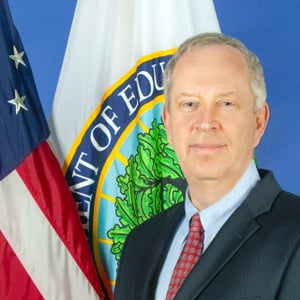
Senior Counselor and Director of Oversight and Investigations, America First Legal Foundation, Cause of Action
Reed D. Rubinstein is Senior Counselor and Director of Oversight and Investigations for the America First Legal Foundation. He has extensive constitutional, administrative, and complex commercial trial and appellate experience, including Executive Branch and Congressional oversight, investigations, and enforcement.
Reed joined the Trump Campaign legal team in February 2016, supported Treasury, DHS, and DOD operations during the Presidential Transition, and entered Federal service in January 2017. As Deputy Associate Attorney General, U.S. Department of Education General Counsel (acting and delegated), and Senior Advisor to the Secretary of the Treasury, Reed fought to protect free speech, religious liberty, and civil rights; combat anti-Semitism; expose Obama/Biden support for the Iranian regime; and defend the Trump Administration against Congressional overreach and leftist lawfare. He played a material role in many Trump Administration actions and Executive Orders and between June 2019 and January 2021, initiated and led twenty-seven civil investigations of U.S. universities for colluding with the Chinese Communist Party, violating foreign money disclosure laws, misrepresenting free speech policies, failing to provide balance in Middle Eastern studies, making false non-discrimination assurances (the Princeton investigation), and consumer fraud.
Reed is a graduate of the University of Michigan Law School and has practiced law since 1985. A former AmLaw 10 shareholder, he spent thirty years in the private practice of law representing manufacturing and retail corporations, financial institutions, trade associations, and individuals in a wide range of matters. Notably, he represented the victims of the Fort Hood terrorist attack, overcoming the Obama Administration, the Pentagon, and House Speaker John Boehner to win them Purple Hearts and medical benefits.

Criminal Justice Reform Discussion
Brandon Garrett, Paul G. Cassell, Erik Luna
Criminal justice reform has been a hot political topic for several years now, bringing together...
The Campus Rape Frenzy: The Attack on Due Process at America's Universities by Professor KC Johnson and Stuart Taylor
KC Johnson, Stuart S. Taylor, Nadine Strossen
In recent years, our nation’s college campuses have been portrayed as awash in a violent...
Sanctioning (Government) Lawyers - Podcast
Richard W. Painter, Thomas H. Dupree
On May 19, 2016, the United States District Court for the Southern District of Texas...
Case Study in Government Overreach?: The LabMD Case - Podcast
Reed D. Rubinstein
On November 13, 2015, the Federal Trade Commission's Chief Administrative Law Judge, D. Michael Chappell,...