

Judicial Law Clerk, U.S. District Court for the Southern District of Florida
Nitin is a recent graduate of Cornell Law School. Before his time in Ithaca, he majored in International Studies and Political Science at Johns Hopkins University and focused on power competition in South Asia during his graduate studies at the University of Oxford.

Associate Dean for Research Helen Strong Curry Chair in International Law Director, Cecil D. Branstetter Litigation & Dispute Resolution Program, Vanderbilt Law School
Ingrid Wuerth is a leading scholar of foreign affairs, public international law and transnational litigation. She joined Vanderbilt’s law faculty in 2007, was appointed director of the International Legal Studies Program in 2009, and was appointed director of the Branstetter Litigation & Dispute Resolution Program in 2018. She was named to the newly endowed Helen Strong Curry Chair in International Law in 2015. Professor Wuerth has served on the board of editors of the American Journal of International Law and on the State Department’s Advisory Committee on Public International Law. She is a member of the American Law Institute and was named as a Reporter for the Restatement (Fourth) of the Foreign Relations Law of the United States. She has received numerous honors and fellowships, including the Morehead Scholarship at the University of North Carolina at Chapel Hill, a Fulbright Senior Scholar award, the German Chancellor's Fellowship, election to the German Society of International Law, election to the Order of the Coif and many teaching awards. She clerked for Judge Jan E. DuBois in the Eastern District of Pennsylvania and for Judge Jane Roth on the U.S. Court of Appeals for the Third Circuit. The class of 2018 elected Professor Wuerth to give the commencement address. She is a contributing editor at Lawfare.
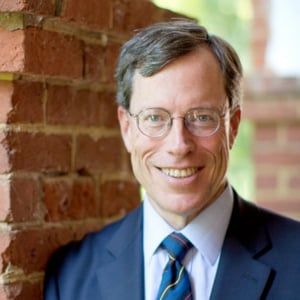
White Burkett Miller Professor of History and J. Wilson Newman Professor of Governance, University of Virginia
Philip Zelikow is the White Burkett Miller Professor of History and J. Wilson Newman Professor of Governance at the University of Virginia, where he has also served as dean of the Graduate School and director of the Miller Center of Public Affairs. His scholarly work has focused on critical episodes in American and world history.
He was a trial and appellate lawyer and then a career diplomat before taking academic positions at Harvard, then Virginia. Before and during his academic career, he has served at all levels of American government. His federal service during five administrations has included positions in the White House, State Department, and the Pentagon. His last full-time government position was as the Counselor of the Department of State, a deputy to Secretary Condoleezza Rice.
He directed a small and short-lived federal agency, the 9/11 Commission. He also directed an earlier bipartisan commission on election reform, chaired by former Presidents Carter and Ford, that led to successful passage of the Help America Vote Act of 2002. More recently he was managing director of “Rework America,” a landmark project on American economic opportunity in the digital age, organized by the Markle Foundation.
He is one of the few individuals ever to serve on the President’s Intelligence Advisory Boards for presidents of both parties, in the administrations of George W. Bush and Barack Obama. He has also been a member of the Defense Policy Board for Defense Secretary Ashton Carter and a member of the board of the Bill and Melinda Gates Foundation.
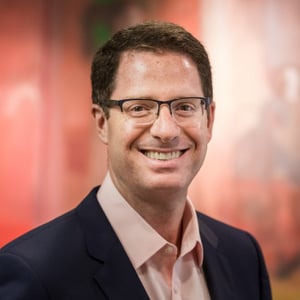
Partner, O’Melveny & Myers
Brian P. Brooks is the Managing Partner of Valor Capital Group. He has served as CEO of the Bitfury Group and CEO of digital asset exchange and marketplace Binance.US.
Mr. Brooks became Acting Comptroller of the Currency upon the resignation of the 31st Comptroller of the Currency Joseph M. Otting as a result of his designation as First Deputy Comptroller by Treasury Secretary Steven T. Mnuchin pursuant to his authority under 12 USC § 4.
As Acting Comptroller of the Currency, Mr. Brooks was the administrator of the federal banking system and chief officer of the Office of the Comptroller of the Currency (OCC). The OCC supervises nearly 1,200 national banks, federal savings associations, and federal branches and agencies of foreign banks that conduct approximately 70% of all banking business in the United States. The mission of the OCC is to ensure that national banks and federal savings associations operate in a safe and sound manner, provide fair access to financial services, treat customers fairly, and comply with applicable laws and regulations.
The Comptroller also serves as a director of the Federal Deposit Insurance Corporation and a member of the Financial Stability Oversight Council and the Federal Financial Institutions Examination Council.
Prior to becoming Acting Comptroller, Mr. Brooks served as Senior Deputy Comptroller and Chief Operating Officer. In this role, he oversaw OCC bank supervision, bank supervision policy, economics, supervisory system and analytical support, systemic risk identification support and specialty supervision, and innovation. He also served as a member of the OCC's Executive Committee and was the Chair of the Technology and Systems Subcommittee, since joining the agency in April 2020.
Prior to joining the OCC, Mr. Brooks served as Chief Legal Officer of Coinbase Global, Inc., where he headed the legal, compliance, audit, investigations, and government relations functions for the company, which served 20 million customers. He held this position since September 2018.
From 2014-2018, Mr. Brooks served as Executive Vice President, General Counsel, and Corporate Secretary of the $3.2 trillion Fannie Mae. Prior to joining Fannie Mae, he served as a Vice Chairman of OneWest Bank, N.A., from 2011 to 2014. Prior to joining OneWest, he served managing partner of the Washington, D.C. office of the global law firm O'Melveny & Myers LLP, where he also served as chair of the firm's financial services practice group. Prior to joining the OCC, Mr. Brooks also served on the Boards of Directors of Avant, Inc. and Fannie Mae, and also served as an advisor to a number of technology startups.
Mr. Brooks holds a bachelor’s degree from Harvard University in government and a law degree from the University of Chicago.
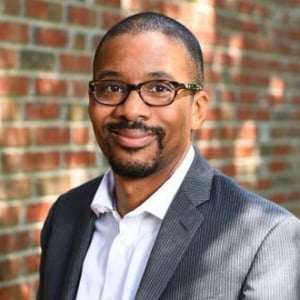
Agnes Williams Sesquicentennial Professor of Financial Technology, Georgetown Law
Chris Brummer is the Agnes Williams Sesquicentennial Professor of Financial Technology at Georgetown University Law Center and the Faculty Director of Georgetown’s Institute of International Economic Law. As a professor, advisor, board member and advocate, Chris has lent his expertise to policymakers, founders, startups, and nonprofits around the world grappling with some of the most challenging puzzles facing innovation, regulation, and inclusion. His work has been featured in The New York Times, CNN, Marketwatch, Fast Company, The Wall Street Journal, Bloomberg, Yahoo Money, Roll Call, Cointelegraph, and Coin Desk, among others.
Chris’s public service and volunteer work extend across government. In addition to serving as a member of the Commodity Futures Trading Commission’s Subcommittee on Virtual Currencies and the Consultative Working Group for the European Securities and Markets Authority’s Financial Innovation Standing Committee, Chris has served as a member of the National Adjudicatory Council of FINRA. Most recently, he served as a member of the Biden-Harris Transition team, assisting in leading work streams relating to financial technology, racial equity and systemic risk for the Treasury ART. He is currently the Co-Chair of CNAS Task Force on FinTech, Crypto, and National Security.
A frequent speaker and lecturer, Chris was asked to deliver the keynote speech for the SEC’s Black History celebration in 2021, FinCEN’s Black History celebration in 2022, and the Office of the Comptroller of the Currency’s celebration in 2023.
Chris graduated summa cum laude from Washington University in St. Louis, holds a J.D. with honors from Columbia Law School and a Ph.D. from the University of Chicago. He is the author or editor of several books, including Cryptoassets: Legal, Regulatory and Monetary Perspectives and Fintech Law in a Nutshell.
Chris is the host of CQ Roll Call’s Fintech Beat podcast, and founder of Washington DC’s Fintech Week, an annual free event for the public.
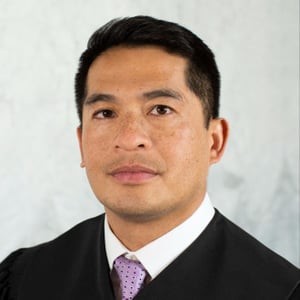
Judge, United States Court of Appeals, Ninth Circuit
Patrick J. Bumatay was confirmed as a U.S. Circuit Judge for the U.S. Court of Appeals for the Ninth Circuit in December 2019. He is based in San Diego, California.
Prior to his appointment, Judge Bumatay served as an Assistant United States Attorney in the U.S. Attorney’s Office for the Southern District of California, where he was a member of the Appellate and Narcotics Sections. He also served as a Counselor to the Attorney General on criminal law issues, including on national opioid strategy and combating transnational organized crime.
Judge Bumatay has also worked in the Office of the Deputy Attorney General, the Office of the Associate Attorney General, and the Office of Legal Policy at the U.S. Department of Justice. Judge Bumatay has twice received the Attorney General’s Distinguished Service Award.
Judge Bumatay previously worked as an associate at Morvillo, Abramowitz, Grand, Iason, and Bohrer in New York, New York. Judge Bumatay clerked for the Honorable Timothy M. Tymkovich of the U.S. Court of Appeals for the Tenth Circuit and the Honorable Sandra L. Townes of the U.S. District Court for the Eastern District of New York. Judge Bumatay earned his B.A., cum laude, from Yale University and his J.D. from Harvard Law School.
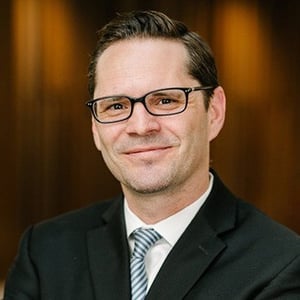
John J. Flynn Endowed Professor of Law, University of Utah S.J. Quinney College of Law
Christopher Peterson is the John J. Flynn Endowed Professor of Law at the University of Utah's S.J. Quinney College of Law. He previously served as a Special Advisor in the Office of the Director at the United States Consumer Financial Protection Bureau, as a Special Advisor in the Office of Legal Policy for Personnel and Readiness in the United States Department of Defense, and as Senior Counsel for Enforcement Policy and Strategy in the Consumer Financial Protection Bureau's Office of Enforcement. Professor Peterson has written dozens of scholarly articles and published three books on consumer finance. He has frequently testified in Congressional hearings and has presented his research to the Federal Deposit Insurance Corporation, the Federal Reserve Board of Governors, and at the White House in both Democratic and Republican administrations. He is a fellow of the American College of Consumer Financial Services Lawyers, the American Bar Association's Consumer Financial Services Committee, and serves on the community advisory board of the American Fintech Council. Professor Peterson is a recipient of the National Association of Consumer Agency Administrators’ Consumer Advocate of the Year award and the Pentagon’s Office of the Secretary of Defense Award for Excellence.

Senior Fellow, Arthur F. Burns Fellow in Financial Policy Studies, American Enterprise Institute
Peter J. Wallison holds the Arthur F. Burns Chair in Financial Policy Studies and is co-director of AEI’s program on Financial Policy Studies. Prior to joining AEI, he practiced banking, corporate and financial law at Gibson, Dunn & Crutcher in Washington, D.C., and New York. Mr. Wallison has held a number of government positions. From June 1981 to January 1985, he was General Counsel of the United States Treasury Department, where he had a significant role in the development of the Reagan Administration's proposals for deregulation in the financial services industry. During 1986 and 1987, Mr. Wallison was White House counsel to President Ronald Reagan, and between 1972 and 1976, he served first as Special Assistant to New York's Gov. Nelson A. Rockefeller and, subsequently, as counsel to Mr. Rockefeller as vice president of the United States.
Mr. Wallison was admitted to practice before the courts of New York and the District of Columbia, and is retired from practice in New York. He continues to be a member of the District of Columbia Bar Association. He received his undergraduate degree from Harvard College in 1963 and law degree from Harvard Law School in 1966.
Mr. Wallison is the author of Ronald Reagan: The Power of Conviction and the Success of His Presidency, published in December 2002 by Westview Press. On campaign finance, he is the author (with Joel Gora) of Better Parties, Better Government, (AEI Press 2009). On financial or regulatory matters, he is the author of Back From the Brink, a proposal for a private deposit insurance system, and co-author of Nationalizing Mortgage Risk: The Growth of Fannie Mae and Freddie Mac; The GAAP Gap: Corporate Disclosure in the Internet Age; Competitive Equity: A Better Way to Organize Mutual Funds; Bad History, Worse Policy: How a False Narrative about the Financial Crisis Led to the Dodd-Frank Act (AEI Press 2013); and Hidden In Plain Sight: What Caused the World’s Worst Financial Crisis and Why it Could Happen Again (Encounter Books 2015). His most recent book is Judicial Fortitude: The Last Chance to Rein in the Administrative State, published by Encounter Books in October 2018.
He testifies frequently before committees of Congress, and is a frequent contributor to the op-ed pages of the Wall Street Journal and other print and online journals. He has also been a speaker at many conferences on financial services, housing, the causes of the financial crisis, the Dodd-Frank Act, accounting, and corporate governance, and was a member of the Shadow Financial Regulatory Committee between 1995 and 2015. He was a member of the SEC Advisory Committee on Improvements to Financial Reporting (2008), co-Chair of the Pew Financial Reform Task Force (2009), and a member of the congressionally- appointed Financial Crisis Inquiry Commission (2009-2011). In May 2011, for his work in financial policy, Mr. Wallison received an honorary doctorate in Humane Letters from the University of Colorado.

Wayne A. Abernathy, Wild Bells
Wayne A. Abernathy is a former U.S. Treasury Assistant Secretary for Financial Institutions under President George W. Bush, receiving the Alexander Hamilton Award in recognition of his service. In that office he was also a member of the Board of Directors of the Securities Investor Protection Corporation. Prior to his work at the Treasury, Mr. Abernathy served as Staff Director of the Senate Banking Committee, under Chairman Phil Gramm.
Following his service at the Treasury, Mr. Abernathy worked for 15 years on the staff of the American Bankers Association, as Executive Vice President for Financial Institutions Policy and Regulatory Affairs.
Previous experience with the Senate Banking Committee includes serving as Staff Director of the Subcommittee on Securities during 1995-1998. From 1989 until 1994, Mr. Abernathy was a Republican economist for the committee. He previously worked as a senior legislative assistant for Senator Gramm during 1987-1989 and as an economist for the Banking Committee’s Subcommittee on International Finance and Monetary Policy during 1981-1986, under Chairman Jake Garn.
Mr. Abernathy earned his bachelor’s degree in International Studies from The Johns Hopkins University in 1978. In 1980, he received a master’s degree in International Studies from the School of Advanced International Studies of The Johns Hopkins University.

Partner, Davis Polk & Wardwell LLP
Mr. Douglas is a partner in Davis Polk’s Financial Institutions Group, heading the firm’s bank regulatory practice and focusing on bank restructuring and resolutions and other issues arising from the current banking and financial crisis. He has been involved in some of the most difficult and sensitive matters during the crisis, including advising the boards of directors of Indymac and Bank United, counseling Citigroup with respect to FDIC matters, advising various parties on the fallout from the failure of Washington Mutual and advising various private equity firms on proposed investments in troubled or failed banks.
Mr. Douglas was appointed General Counsel of the Federal Deposit Insurance Corporation in 1987 and continued in that capacity through 1989. This was a period of unprecedented stress on the financial system, and he was involved in the major bank failures and restructurings of the late 1980s, participated in the landmark Financial Institutions Regulatory Reform and Restructuring Act of 1989 and assisted in the organization of the Resolution Trust Corporation.
Mr. Douglas is regarded as one of the leading bank insolvency lawyers in the nation.


Frozen Funds: Assessing Claims on Russian Central Bank Assets
Nitin R. Nainani, Ingrid (Wuerth) Brunk, Phillip D. Zelikow
The ongoing war in Ukraine has sparked discussions within the Group of Seven (G-7) about...
Hyperextension? Federal Financial Agencies & Cryptocurrency Regulation
Brian P. Brooks, Chris Brummer, Patrick J. Bumatay, Caitlin Long, Christopher L. Peterson
In recent years federal executive branch agencies have enacted a “whole of government” approach to...
A Conversation on Proposed Systemic Risk Regulation
Peter J. Wallison, Wayne A. Abernathy, John L. Douglas
On March 26, 2009, Treasury Secretary Timothy Geithner outlined the administration’s plan to regulate the...