
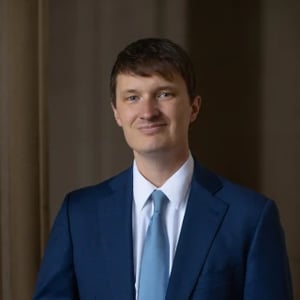
Partner, Boyden Gray PLLC
Trent McCotter is a partner with Boyden Gray PLLC. He previously served as Deputy Associate Attorney General of the United States and as an Assistant U.S. Attorney.
Mr. McCotter maintains an extensive appellate practice. He has considerable experience identifying and briefing cases that draw the Supreme Court’s attention, having persuaded the Court to grant certiorari in numerous cases raising issues of sovereignty, constitutional rights, due process, and criminal law. He has authored and submitted over 60 briefs at the Court.
He has also personally argued more than fifteen federal appeals across the Second, Fourth, Fifth, Sixth, Ninth, Eleventh, Federal, and D.C. Circuits—including once arguing three separate appeals in just four days. He has also twice argued before the 17-judge en banc Fifth Circuit. He has been counsel in over 50 other appeals raising matters from FOIA and the APA to constitutional rights and statutory construction.
As Deputy Associate Attorney General, Mr. McCotter oversaw DOJ’s Civil Appellate and Federal Programs branches, which are responsible for defending nearly all major litigation against the federal government. During his three years as a federal trial attorney in the Eastern District of Virginia’s “Rocket Docket,” Mr. McCotter won the Attorney General’s Award for Distinguished Service.
During his DOJ tenures, Mr. McCotter also assisted with the confirmations of two Supreme Court justices and over a dozen lower-court judges.
Mr. McCotter served as an inaugural clerk to the Hon. Steven J. Menashi on the U.S. Court of Appeals for the Second Circuit and also clerked for the Hon. R. Lanier Anderson III on the U.S. Court of Appeals for the Eleventh Circuit.

Professor of Law, Antonin Scalia Law School, George Mason University
ILYA SOMIN is Professor of Law at George Mason University and the B. Kenneth Simon Chair in Constitutional Studies at the Cato Institute. His research focuses on constitutional law, property law, democratic theory, federalism, and migration rights. He is the author of Free to Move: Foot Voting, Migration, and Political Freedom (Oxford University Press, revised and expanded edition, 2022), Democracy and Political Ignorance: Why Smaller Government is Smarter (Stanford University Press, revised and expanded second edition, 2016), and The Grasping Hand: Kelo v. City of New London and the Limits of Eminent Domain (University of Chicago Press, 2015, rev. paperback ed., 2016), coauthor of A Conspiracy Against Obamacare: The Volokh Conspiracy and the Health Care Case (Palgrave Macmillan, 2013), and co-editor of Eminent Domain: A Comparative Perspective (Cambridge University Press, 2017). Democracy and Political Ignorance has been translated into Italian and Japanese.
Somin’s work has appeared in numerous scholarly journals, including the Yale Law Journal, Stanford Law Review, Northwestern University Law Review, Georgetown Law Journal, Critical Review, and others. Somin has also published articles in a variety of popular press outlets, including the New York Times, Washington Post, Wall Street Journal, Los Angeles Times, CNN, NBC, The Atlantic, USA Today, Boston Globe, US News and World Report, South China Morning Post, National Law Journal and Reason. He has been quoted or interviewed by the New York Times, Washington Post, Wall Street Journal, Time, Newsweek, The Economist, the Christian Science Monitor, the Financial Times, The Guardian, the Associated Press, CBS, MSNBC, NPR, BBC, Reuters, the Canadian Broadcasting Corporation, the Australian Broadcasting Corporation, Radio Free Europe/Radio Liberty, Al Jazeera, and the Voice of America, among other media.
Somin’s writings have been cited in decisions by the United States Supreme Court, multiple state supreme courts and lower federal courts, and the Supreme Court of Israel. He is co-counsel for the plaintiffs in VOS Selections, Inc. v. Trump, a case challenging the constitutionality of President Trump’s “Liberation Day” tariffs. Somin has testified on the use of drones for targeted killing in the War on Terror before the US Senate Judiciary Subcommittee on the Constitution, Civil Rights, and Human Rights. In 2009, he testified on property rights issues at the United States Senate Judiciary Committee confirmation hearings for Supreme Court Justice Sonia Sotomayor. Somin writes regularly for the popular Volokh Conspiracy law and politics blog, now affiliated with Reason magazine (previously affiliated with the Washington Post from 2014 to 2017). From 2006 to 2013, he served as Co-Editor of the Supreme Court Economic Review, one of the country’s top-rated law and economics journals.
Somin has served as a visiting professor at the University of Pennsylvania Law School. He has also been a visiting professor or scholar at the Georgetown University Law Center, the University of Hamburg, Germany, the University of Torcuato Di Tella in Buenos Aires, Argentina, Uriel Reichman University in Israel, and Zhengzhou University in China. He is a University Affiliate of the Schar School of Policy and Government at George Mason University, and an affiliated faculty member of the George Mason University Institute for Immigration Research. Before joining the faculty at George Mason, Somin was the John M. Olin Fellow in Law at Northwestern University Law School in 2002-2003. In 2001-2002, he clerked for the Hon. Judge Jerry E. Smith of the U.S. Court of Appeals for the Fifth Circuit. Professor Somin earned his B.A., Summa Cum Laude, at Amherst College, M.A. in Political Science from Harvard University, and J.D. from Yale Law School.
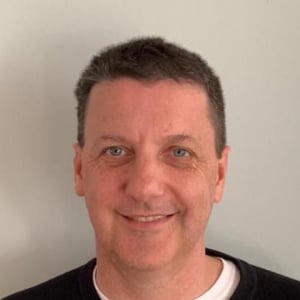
William Henry Glasson Distinguished Professor of Economics, Duke University
Peter Arcidiacono is the William Henry Glasson Professor of Economics at Duke University. He received his PhD from the University of Wisconsin-Madison in 1999 and has taught at Duke University ever since. He is a fellow of the Econometric Society, the International Association of Applied Econometricians, and a senior fellow at the Manhattan Institute. He is best known for his work in three areas: college major choice, affirmative action in higher education, and structural estimation of dynamic discrete choice models. He served as an expert witness for the plaintiffs in the Supreme Court cases SFFA v. Harvard and SFFA v. UNC, examining the role race played in the admissions process at both institutions.

University Professor of Law and Executive Director, Liberty & Law Center, Antonin Scalia Law School, George Mason University
David Bernstein holds a University Professorship chair at the Antonin Scalia Law School, where he has been teaching since 1995. He has also been a visiting professor at the University of Michigan, Georgetown University, William & Mary, Brooklyn Law School, the University of Turin, and Hebrew University. Professor Bernstein teaches Constitutional Law, Evidence, and Products Liability.
A prolific author, Professor Bernstein often challenges the conventional wisdom with prodigious research and sharp, original analysis. He is the author of five books, and coauthor of two more. Professor Bernstein’s book Rehabilitating Lochner was praised across the political spectrum as “intellectual history in its highest form,” a “fresh perspective and a cogent analysis,” “delightful and informative,” “sharp and iconoclastic,” and “a terrific work of historical revisionism.” Columnist George Will praised Bernstein’s most recent book, Classified, The Untold Story of Racial Classification in America, as “perhaps the most consequential American book of 2022.”
Professor Bernstein has also written dozens of articles and essays published in major law reviews, including the California Law Review, Columbia Law Review, Michigan Law Review, and Yale Law Journal. An article he coauthored, Defending Daubert: It’s Time to Amend Federal Rule of Evidence 702, directly inspired a pending amendment to Rule 702.
Professor Bernstein blogs at the Instapundit.com, the Times of Israel, and the Volokh Conspiracy. He is a graduate of the Yale Law School, where he was senior editor of the Yale Law Journal and a John M. Olin Fellow in Law, Economics, and Public Policy.

Judge, United States Court of Appeals, Eleventh Circuit
On March 20, 2018, Judge Elizabeth L. Branch (Lisa) was sworn in as a United States Circuit Judge for the Eleventh Circuit.
Judge Branch attended and graduated from Davidson College in North Carolina (B.A., cum laude, 1990), and Emory University School of Law (J.D., with distinction, 1994).
After graduating from law school, Judge Branch served as a federal law clerk to The Honorable J. Owen Forrester of the U.S. District Court for the Northern District of Georgia from 1994 to 1996. Following her clerkship, Judge Branch joined the litigation department of Smith, Gambrell & Russell, LLP in Atlanta as an associate and then a partner.
From 2004 to 2008, Judge Branch was a senior official in the Administration of President George W. Bush in Washington, D.C. She served first as the Associate General Counsel for Rules and Legislation at the U.S. Department of Homeland Security and then as the Counselor to the Administrator of the Office of Information and Regulatory Affairs at the U. S. Office of Management and Budget.
She returned to Smith Gambrell in 2008 as a litigation partner. Judge Branch then was appointed to the Court of Appeals of Georgia by Governor Nathan Deal, taking office on September 4, 2012, where she served until March 19, 2018.
Judge Branch is a member of the Board of Advisors of the Atlanta Lawyers Chapter for the Federalist Society for Law and Public Policy Studies.
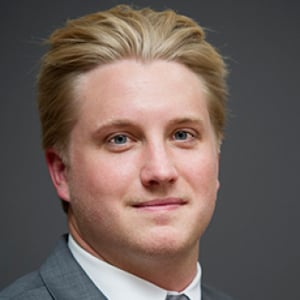
Professor of Law, Northwestern University
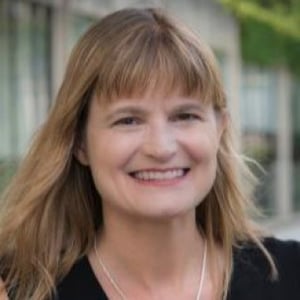
Julius Kreeger Professor of Law & Criminology, University of Chicago Law School
Sonja Starr joined the University of Chicago law faculty after eleven years teaching at the University of Michigan, where she was the Henry M. Butzel Professor of Law. She previously taught at the University of Maryland and Harvard Law School after graduating from Yale Law. She also clerked for Judges Merrick Garland of the DC Circuit and Mohamed Shahabuddeen of the International Criminal Tribunals for Rwanda and the Former Yugoslavia.
Professor Starr's research focuses on the criminal justice system and on discrimination and disparity (in the criminal process and in other contexts, including employment, education, and health care). Her research blends quantitative empirical work with more traditional legal scholarship. Topics include the use of predictive algorithms in sentencing and bail, legal and empirical analyses of statistical discrimination, racialized medical algorithms, educational diversity and race-conscious policymaking, racial and other disparities in prosecution and sentencing, policies designed to expand employment opportunities for people with criminal records, and how neighborhoods affect employment discrimination patterns. Professor Starr’s work has appeared in, for example, the Quarterly Journal of Economics, the Journal of Political Economy, the Yale Law Journal, and the Stanford and Harvard Law Reviews. She has been the Law and Economics Section Chair of the American Association of Law Schools, a past co-president of the Society for Empirical Legal Studies, and a board member of the American Law and Economics Association. She teaches Criminal Law, the Constitutional Law Workshop, Race and Criminal Justice Policy, and Collateral Consequences of Criminal Convictions.

Judge, United States Court of Appeals, Ninth Circuit
Patrick J. Bumatay was confirmed as a U.S. Circuit Judge for the U.S. Court of Appeals for the Ninth Circuit in December 2019. He is based in San Diego, California.
Prior to his appointment, Judge Bumatay served as an Assistant United States Attorney in the U.S. Attorney’s Office for the Southern District of California, where he was a member of the Appellate and Narcotics Sections. He also served as a Counselor to the Attorney General on criminal law issues, including on national opioid strategy and combating transnational organized crime.
Judge Bumatay has also worked in the Office of the Deputy Attorney General, the Office of the Associate Attorney General, and the Office of Legal Policy at the U.S. Department of Justice. Judge Bumatay has twice received the Attorney General’s Distinguished Service Award.
Judge Bumatay previously worked as an associate at Morvillo, Abramowitz, Grand, Iason, and Bohrer in New York, New York. Judge Bumatay clerked for the Honorable Timothy M. Tymkovich of the U.S. Court of Appeals for the Tenth Circuit and the Honorable Sandra L. Townes of the U.S. District Court for the Eastern District of New York. Judge Bumatay earned his B.A., cum laude, from Yale University and his J.D. from Harvard Law School.
Dean, Widener University Commonwealth Law School
André Douglas Pond Cummings is the incoming Dean of Widener University Commonwealth Law School. Dean cummings currently serves as associate dean for faculty development and the Charles C. Baum distinguished professor of law at the University of Arkansas at Little Rock’s William H. Bowen School of Law. During his time at the Bowen School of Law, cummings served for five years on the university Diversity Counsel and three years on the chancellor’s race and ethnicity advisory committee. Prior to joining the Bowen School of Law, cummings taught at the West Virginia University College of Law and clerked for Associate Chief Justice Christine M. Durham of the Utah Supreme Court and Chief Judge Joseph W. Hatchett of the United States Court of Appeals for the Eleventh Circuit. Dean cummings is a graduate of Brigham Young University and Howard University School of Law.

Vice President of Domestic and Economic Policy, The Heritage Foundation
Roger Severino is Vice President of Economic and Domestic Policy, and the Joseph C. and Elizabeth A. Anderlik Fellow at The Heritage Foundation.
Severino is a national authority on civil rights, conscience and religious freedom, the administrative state, and information privacy, particularly as applied to health care law and policy. Find his tweets at @RogerSeverino_.
Severino spearheaded the HHS Accountability Project while a Senior Fellow at EPPC from 2021 to 2023. Previously, Severino was Director of HHS’ Office for Civil Rights, where he led a team of over 250 staff enforcing our nation’s civil rights, conscience and religious freedom, and health information privacy laws. He served from 2017 to 2021 and was the longest-serving OCR director of the past three decades.
Prior to joining HHS, Severino served for two years as Director of the DeVos Center for Religion and Civil Society at Heritage, advocating for life, family, and religious-freedom policies. Before that, he was a trial attorney for seven years at the U.S. Department of Justice’s Civil Rights Division where he enforced the Fair Housing Act and the Civil Rights Act of 1964. Severino started his legal career at the Becket Fund for Religious Liberty, where he was Legal Counsel and Chief Operations Officer and defended the rights of people of all faiths under federal and international law.
Severino has been profiled in The New York Times, The Atlantic, The Wall Street Journal, and The Hill and has appeared on Fox News, CNN, MSNBC, NPR, and PBS, among others. In 2020, The New York Times dubbed him and his wife Carrie, “a conservative power couple” to be reckoned with.
Severino holds a JD from Harvard Law School, a master’s degree in public policy, with highest distinction, from Carnegie Mellon University, and a bachelor’s degree in business from the University of Southern California. He was appointed by President Trump to the Administrative Conference of the United States and is a member of the District of Columbia and the Commonwealth of Virginia bars.
As OCR director, Severino founded the federal government’s first division dedicated exclusively to conscience and religious freedom compliance and enforcement. He enforced the Weldon Amendment for the first time against a state (California) after it coerced families and religious organizations into paying for abortion insurance coverage, leading to a $200 million federal funding disallowance. He also enforced laws protecting pro-life pregnancy resource centers from discrimination by states hostile to their message and enforced laws prohibiting forced participation in abortions by medical professionals.
With respect to civil rights, Severino protected older persons and people with disabilities from being denied life-saving care due to discriminatory “quality of life” judgments, especially during the COVID-19 pandemic. He also achieved a landmark sexual harassment resolution with Michigan State University in the wake of the Larry Nassar sexual assault scandal and protected the rights of non-English speakers to have equal access to health and human services.
In the area of health privacy, he secured the largest HIPAA monetary settlement in history and achieved the largest number of enforcement resolutions both in a single year and across four years. He also facilitated the transformational use of Skype, Zoom, and Facetime for delivery of telehealth during the COVID-19 pandemic and beyond.
His regulatory reform activities resulted in a comprehensive conscience protection regulation and proposed a life-affirming disability rights regulation. He achieved regulatory savings of $3.6 billion in health care industry costs over five years and identified and proposed an additional $3.2 billion in cost savings from the repeal of ineffective and unnecessary regulatory burdens.
Severino is a Spanish speaker who teaches salsa and west coast swing in his spare time.
General Counsel, Saronic Technologies
Tobi Young is the General Counsel of Saronic Technologies. Her responsibilities include managing global legal affairs, regulatory compliance, litigation, risk management, and government security, and corporate governance.
Tobi brings over 20 years of experience with sophisticated legal, regulatory, and compliance issues through leadership roles in all three branches of the federal government and in Fortune 500 companies. Among other governmental positions, she has been an attorney in the U.S. Department of Justice and in the Office of the White House Counsel; a law clerk to U.S. Supreme Court Justice Neil M. Gorsuch; and a press secretary for Congressman J.C. Watts. Tobi also currently serves as the Chair of the Nominating and Governance Committee on the Halliburton Board of Directors (NYSE: HAL).
Tobi grew up in Oklahoma and is a proud member of the Chickasaw Nation. She recently became the youngest inductee into the Chickasaw Hall of Fame. Tobi now lives in Austin with her husband Evan, a Justice on the Texas Supreme Court, and their daughter Romilly.
University Professor of Law and Executive Director, Liberty & Law Center, Antonin Scalia Law School, George Mason University
David Bernstein holds a University Professorship chair at the Antonin Scalia Law School, where he has been teaching since 1995. He has also been a visiting professor at the University of Michigan, Georgetown University, William & Mary, Brooklyn Law School, the University of Turin, and Hebrew University. Professor Bernstein teaches Constitutional Law, Evidence, and Products Liability.
A prolific author, Professor Bernstein often challenges the conventional wisdom with prodigious research and sharp, original analysis. He is the author of five books, and coauthor of two more. Professor Bernstein’s book Rehabilitating Lochner was praised across the political spectrum as “intellectual history in its highest form,” a “fresh perspective and a cogent analysis,” “delightful and informative,” “sharp and iconoclastic,” and “a terrific work of historical revisionism.” Columnist George Will praised Bernstein’s most recent book, Classified, The Untold Story of Racial Classification in America, as “perhaps the most consequential American book of 2022.”
Professor Bernstein has also written dozens of articles and essays published in major law reviews, including the California Law Review, Columbia Law Review, Michigan Law Review, and Yale Law Journal. An article he coauthored, Defending Daubert: It’s Time to Amend Federal Rule of Evidence 702, directly inspired a pending amendment to Rule 702.
Professor Bernstein blogs at the Instapundit.com, the Times of Israel, and the Volokh Conspiracy. He is a graduate of the Yale Law School, where he was senior editor of the Yale Law Journal and a John M. Olin Fellow in Law, Economics, and Public Policy.

Thomas M. Siebel Senior Fellow, The Hoover Institution, Stanford University; Gary T. Schwartz Distinguished Professor of Law Emeritus, UCLA School of Law
Eugene Volokh is the Thomas M. Siebel Senior Fellow at the Hoover Institution (Stanford), as well as the Gary T. Schwartz Distinguished Professor of Law Emeritus and Distinguished Research Professor at UCLA School of Law. He recently retired from teaching at UCLA, after 30 years there, and is now focusing on research.
Volokh is the author of the textbooks The First Amendment and Related Statutes (8th ed. 2023), and Academic Legal Writing (5th ed. 2016), as well as over 100 academic law journal articles, mostly on First Amendment law. He is a member of The American Law Institute; the editor-in-chief of the Journal of Free Speech Law; and the creator and coauthor of The Volokh Conspiracy, a leading legal blog founded in 2002 (hosted at the Washington Post from 2014 to 2017 and now at Reason Magazine).

Milton R. Underwood Chair in Free Enterprise, Vanderbilt University Law School
Brian Fitzpatrick is the Milton R. Underwood Chair in Free Enterprise and Professor of Law at Vanderbilt Law School, where his research focuses on class action litigation, federal courts, judicial selection, and constitutional law. He is best known for his empirical studies of class action settlements as well as his book The Conservative Case for Class Actions (University of Chicago Press, 2019). Professor Fitzpatrick joined Vanderbilt's law faculty in 2007 after serving as the John M. Olin Fellow at New York University School of Law. He graduated first in his class from Harvard Law School and went on to clerk for Judge Diarmuid O'Scannlain on the U.S. Court of Appeals for the Ninth Circuit and Justice Antonin Scalia on the U.S. Supreme Court. After his clerkships, Professor Fitzpatrick practiced commercial and appellate litigation for several years at Sidley Austin in Washington, D.C., and served as Special Counsel for Supreme Court Nominations to U.S. Senator John Cornyn. Before earning his law degree, Fitzpatrick graduated summa cum laude with a bachelor's of science in chemical engineering from the University of Notre Dame. He has received the Hall-Hartman Outstanding Professor Award, which recognizes excellence in classroom teaching, for his Civil Procedure and Federal Courts courses.
Director of Housing Policy and the American Identity Project, Progressive Policy Institute
Richard D. Kahlenberg is the Director of Housing Policy at the Progressive Policy Institute, and the Director of the American Identity Project, where he is working on to strengthen American identity through public education. The author or editor of seventeen books, he has expertise in education, civil rights, and equal opportunity. Kahlenberg has been called “the intellectual father of the economic integration movement” in K–12 schooling and “arguably the nation’s chief proponent of class-based affirmative action in higher education admissions.” He is also an authority on teachers’ unions, charter schools, community colleges, housing segregation, and labor organizing.
Kahlenberg’s articles have been published in the New York Times, the Washington Post, the Wall Street Journal, The New Republic, and elsewhere. He has appeared on ABC, CBS, CNN, FOX, C-SPAN, MSNBC, and NPR.
Previously, Kahlenberg was a senior fellow at The Century Foundation. a fellow at the Center for National Policy, a visiting associate professor of constitutional law at George Washington University, and a legislative assistant to Senator Charles S. Robb (D-VA). He also serves on the advisory board of the Pell Institute, and the Albert Shanker Institute, and as a professorial lecturer at George Washington University’s Trachtenberg School of Public Policy and Public Administration. In addition, he is the winner of the William A. Kaplin Award for Excellence in Higher Education Law and Policy Scholarship. Reflecting on Kahlenberg’s work on higher education, William G. Bowen and Michael S. McPherson wrote that he “deserves more credit than anyone else for arguing vigorously and relentlessly for stronger efforts to address disparities by socioeconomic status.” He graduated from Harvard College and Harvard Law School and was a rotary scholar at the University of Nairobi School of Journalism.
Executive Director & Secretary, American Civil Rights Project
Dan Morenoff is the executive director at the American Civil Rights Project and an adjunct fellow at the Manhattan Institute.
His work focuses on protecting and, where necessary, restoring the primacy of all Americans' shared civil rights against the identitarian alternative.
Before practicing law, Morenoff served on the legislative staff of Sen. Phil Gramm (R-TX). Morenoff holds a B.A. from Columbia College of Columbia University in the City of New York and a J.D. from the University of Chicago Law School. He has also served as an officer or director of several community organizations in Dallas, Texas.
Julius Kreeger Professor of Law & Criminology, University of Chicago Law School
Sonja Starr joined the University of Chicago law faculty after eleven years teaching at the University of Michigan, where she was the Henry M. Butzel Professor of Law. She previously taught at the University of Maryland and Harvard Law School after graduating from Yale Law. She also clerked for Judges Merrick Garland of the DC Circuit and Mohamed Shahabuddeen of the International Criminal Tribunals for Rwanda and the Former Yugoslavia.
Professor Starr's research focuses on the criminal justice system and on discrimination and disparity (in the criminal process and in other contexts, including employment, education, and health care). Her research blends quantitative empirical work with more traditional legal scholarship. Topics include the use of predictive algorithms in sentencing and bail, legal and empirical analyses of statistical discrimination, racialized medical algorithms, educational diversity and race-conscious policymaking, racial and other disparities in prosecution and sentencing, policies designed to expand employment opportunities for people with criminal records, and how neighborhoods affect employment discrimination patterns. Professor Starr’s work has appeared in, for example, the Quarterly Journal of Economics, the Journal of Political Economy, the Yale Law Journal, and the Stanford and Harvard Law Reviews. She has been the Law and Economics Section Chair of the American Association of Law Schools, a past co-president of the Society for Empirical Legal Studies, and a board member of the American Law and Economics Association. She teaches Criminal Law, the Constitutional Law Workshop, Race and Criminal Justice Policy, and Collateral Consequences of Criminal Convictions.
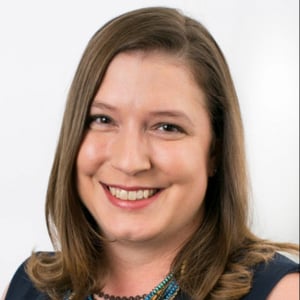
Attorney, Pacific Legal Foundation
Erin Wilcox joined PLF in 2018 and works primarily from Austin, Texas. She litigates cases around the country to secure the inalienable rights of all Americans to live responsibly and productively in their pursuit of happiness.
After graduating from law school, Erin defended the individual rights of employees as a litigator for the National Right to Work Legal Defense Foundation, was an attorney-advisor for the D.C. Public Employee Relations Board, and most recently fought for liberty in the Lone Star State as an attorney with the Texas Public Policy Foundation. During law school, Erin clerked at the Institute for Justice and was a Charles Koch Summer Fellow.
A native Texan, Erin ventured east after high school to earn a B.A. in history and political science from Wake Forest University and a J.D. from the Wake Forest University School of Law. In addition to liberty, Erin’s loves include college football, Texas barbecue, and a well-made Old Fashioned.
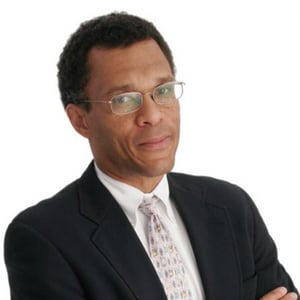
Raymond & Miriam Ehrlich Chair in US Constitutional Law, University of Florida Levin College of Law
Tracey Maclin is Professor of Law and Raymond & Miriam Ehrlich Eminent Scholar Chair. Prior to joining the University of Florida faculty, he was a professor of law and Joseph Lipsitt Faculty Research Scholar at Boston University School of Law. He has also taught at Cornell Law School, Harvard Law School and the University of Kentucky College of Law. Before entering law teaching, Professor Maclin served as a law clerk to Judge Boyce F. Martin, Jr. of the United States Court of Appeals for the Sixth Circuit and worked at Cahill, Gordon & Reindel.
Professor Maclin teaches courses in Constitutional Law and Constitutional Criminal Procedure. He also teaches a seminar on the Supreme Court’s cases in criminal procedure, criminal law, habeas corpus and the death penalty. His scholarship focuses on the Fourth Amendment and the Self-Incrimination Clause of the Fifth Amendment. He has published many law review articles and book chapters on constitutional criminal procedure topics. He is the author of The Supreme Court and the Fourth Amendment’s Exclusionary Rule (Oxford University Press 2013). In addition to his legal scholarship, Professor Maclin has authored over a dozen amicus curiae briefs and served as counsel of record for the American Civil Liberties Union, the National Association of Criminal Defense Lawyers and the Cato Institute in Fourth Amendment cases in the United States Supreme Court.
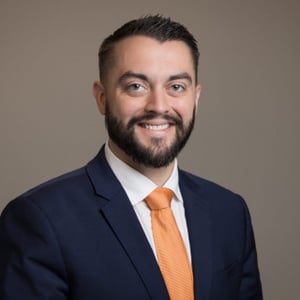
Partner, Consovoy McCarthy PLLC
Mr. Norris helps clients win important questions of federal law in trial and appellate courts across the country. He has represented prominent nonprofits, many States, the Republican Party, and the former President of the United States. He has argued in eight of the twelve federal circuits and twice at the U.S. Supreme Court, including the landmark case Students for Fair Admissions v. Harvard.
Mr. Norris is barred in Tennessee and Virginia, and is an elected member of the American Law Institute. Mr. Norris lives with his family in Knoxville, Tennessee.
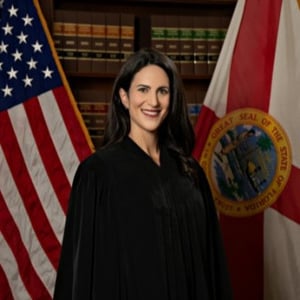
Justice, Florida Supreme Court
On May 23, 2023, Governor Ron DeSantis appointed Justice Meredith L. Sasso to be the 93rd justice of the Supreme Court of Florida.
Justice Sasso was raised in Tallahassee. She received her undergraduate degree from the University of Florida in 2005 and her law degree from the University of Florida in 2008, where she was a member of the Justice Campbell Thornal Moot Court Board. She began her career in private practice, representing clients in large loss general liability, auto negligence, and complex commercial claims in state and federal courts at trial and on appeal. She also served as guardian ad litem, representing abused or neglected children.
In August 2016, Justice Sasso joined the Office of the General Counsel to Governor Rick Scott, serving as Chief Deputy General Counsel. In this role, she represented the Governor in litigation before the Florida Supreme Court, the First District Court of Appeal, and state and federal trial courts, among other duties. In January 2019, Governor Rick Scott appointed her to the Fifth District Court of Appeal. Governor Ron DeSantis recommissioned her to the newly created Sixth District Court of Appeal on January 1, 2023, where she was elected by her colleagues to serve as its first Chief Judge.
She is an appointed member of the Florida Bar Appellate Court Rules Committee. She is also a member of the American Enterprise Institute Leadership Network and the Federalist Society.
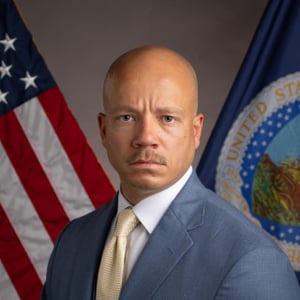
Assistant Secretary for Civil Rights, U.S. Department of Agriculture
Devon Westhill is the Assistant Secretary for Civil Rights at the U.S. Department of Agriculture. The U.S. Senate confirmed President Donald Trump’s nomination of Westhill on October 7, 2025.
Westhill returns to the USDA where he previously headed the civil rights office as Deputy Assistant Secretary in President Trump’s first term. His previous government appointments also include service at the U.S. Department of Labor, liaison to the Administrative Conference of the U.S., and liaison to the White House Initiative on Historically Black Colleges and Universities. Prior to returning to government service, Westhill was President and General Counsel of a nonprofit civil rights organization.
Westhill has testified on civil rights matters before Congress, federal agencies, and as an expert witness in federal court. He has spoken hundreds of times at college campuses, conferences, and on radio and TV programs, and he is frequently quoted in print publications, and his writing has appeared in numerous national outlets. A U.S. Navy veteran, Westhill earned his BA from the University of North Carolina at Chapel Hill and his JD from the University of Florida.
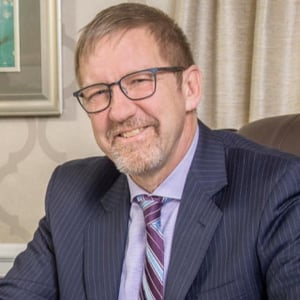
Partner, Allen Harris Law
Michael Thad Allen began his legal career with a unique perspective: after earning a Ph.D. in History and Sociology from the University of Pennsylvania, he spent over a decade in academia as a professor of History. There, he witnessed firsthand how university procedures often fall short of constitutional and procedural fairness—especially in disciplinary matters.
Guided by a passion for individual rights and due process, he earned his J.D. from Yale Law School in 2010 and clerked for the late Hon. Ralph D. Gants, then Justice and later Chief Justice of the Massachusetts Supreme Judicial Court.
Today, Michael is a partner at Allen Harris PLLC, a firm devoted to Title IX and campus misconduct defense. He represents students, faculty, and academic professionals in disciplinary investigations, misconduct hearings, faculty disputes, and related litigation. His cases frequently involve claims of sexual misconduct, retaliation, or speech-related infractions—often in highly charged environments where reputational, academic, and constitutional stakes are high.
Before co-founding Allen Harris PLLC, Michael practiced complex civil litigation at a national firm, handling matters including patent disputes, product liability, and institutional defense in historical claims of sex abuse cases.
With his combined experience in academia and litigation, Michael offers rare insight into the procedural shortcomings of campus disciplinary systems. He focuses on defending individual rights—particularly where university policies intersect with constitutional protections such as due process, free speech, and academic freedom. His work brings legal precision and institutional understanding to high-stakes matters affecting students and faculty across the country.
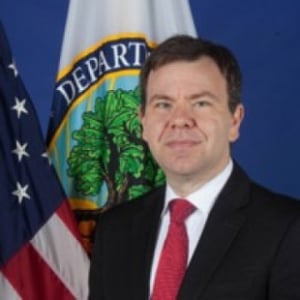
General Counsel, Mountain States Legal Foundation
William E. Trachman is General Counsel for Mountain States Legal Foundation, where he protects the rights of individuals to live freely and securely under the U.S. Constitution. Previously, he was appointed to serve in the Department of Education as Deputy Assistant Secretary in the Office for Civil Rights. Prior to his appointment, he served as General Counsel to the Douglas County School District, where he helped litigate the fight for school choice in the school district. Presently, Mr. Trachman serves as Chair of the Colorado Federalist Society and the Vice Chair of the U.S. Commission on Civil Rights’ Colorado Advisory Board. He previously taught as an Adjunct Professor at the University of Denver, Sturm College of Law. He attended U.C. Berkeley for both undergraduate and law school, and then clerked for the Honorable Harris Hartz on the 10th Circuit Court of Appeals. Mr. Trachman is licensed in Colorado, California, and Washington, D.C.

Sterling Professor of Law and Political Science, Yale Law School
Akhil Reed Amar is Sterling Professor of Law and Political Science at Yale University, where he teaches constitutional law in both Yale College and Yale Law School. After graduating from Yale College, summa cum laude, in 1980 and from Yale Law School in 1984, and clerking for Judge (later Justice) Stephen Breyer, Amar joined the Yale faculty in 1985 at the age of 26. He is Yale’s only living professor to have won the University’s unofficial triple crown — the Sterling Chair for scholarship, the DeVane Medal for teaching, and the Lamar Award for alumni service.
Amar’s work has won awards from both the American Bar Association and the Federalist Society, and he has been cited by Supreme Court justices across the spectrum in more than 50 cases — tops among scholars under age 70. According to both Fred Shapiro’s landmark 2021 study of lifetime scholarly citations and Heinonline’s most recent tabulation of lifetime law-review citations, Amar is America’s second most-cited legal scholar still under age 70. He is a member of the American Academy of Arts and Sciences and has written widely for popular publications, including The New York Times, The Washington Post, The Wall Street Journal, Time, and The Atlantic. He was an informal consultant to the popular TV show The West Wing and his scholarship has been showcased on many broadcasts, including The Colbert Report, Morning Joe, AC360, Velshi, Fox News @ Night with Shannon Bream, Fareed Zakaria GPS, Erin Burnett Outfront, and Constitution USA with Peter Sagal.
He is the author of more than a hundred law review articles and several books, including The Bill of Rights (1998 — winner of the Yale University Press Governors’ Award), America’s Constitution (2005 — winner of the ABA’s Silver Gavel Award), America’s Unwritten Constitution (2012 — named one of the year’s 100 best nonfiction books by The Washington Post), and The Constitution Today (2016 — named one of the year’s top ten nonfiction books by Time magazine). The first volume of his ambitious trilogy on American constitutional history from the Founding to the present, The Words That Made Us: America’s Constitutional Conversation, 1760-1840, came out in May 2021. The second volume, Born Equal: Remaking America’s Constitution, 1840-1920, will be published in September 2025 and is already available for pre-order. All together, his nonfiction books have won two starred reviews from Publishers Weekly and three starred reviews from Kirkus—tops, it is believed, among legal scholars under age 70. Together with Vikram David Amar (YLS ’88), he has a bi-weekly column on the Supreme Court on the distinguished website SCOTUSblog. Along with Andy Lipka, he co-hosts a popular and free weekly podcast, Amarica’s Constitution, whose listeners are eligible for CLE credit in most American jurisdictions. A wide assortment of his articles and op-eds and video links to many of his public lectures and free online courses may be found at akhilamar.com.

Senior Scholar, Manhattan Institute; Professor of Law Emerita, University of San Diego
Gail Heriot is a Senior Scholar at the Manhattan Institute, a Professor of Law Emerita at the University of San Diego and the Chairman of the Board of the American Civil Rights Project. She served on the U.S. Commission on Civil Rights for 18 years. Her new book is entitled “Why We Walk on Eggshells: How Our Civil Rights Laws Stifle Our Public Discourse.”
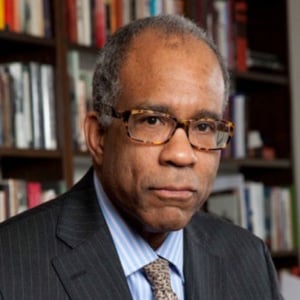
Michael R. Klein Professor of Law, Harvard Law School
Randall Kennedy is Michael R. Klein Professor at Harvard Law School where he teaches courses on contracts, criminal law, and the regulation of race relations. He was born in Columbia, South Carolina. For his education he attended St. Albans School, Princeton University, Oxford University, and Yale Law School. He served as a law clerk for Judge J. Skelly Wright of the United States Court of Appeals and for Justice Thurgood Marshall of the United States Supreme Court. He is a member of the bar of the District of Columbia and the Supreme Court of the United States. Awarded the 1998 Robert F. Kennedy Book Award for Race, Crime, and the Law, Mr Kennedy writes for a wide range of scholarly and general interest publications. His other books are For Discrimination: Race, Affirmative Action, and the Law (2013), The Persistence of the Color Line: Racial Politics and the Obama Presidency (2011), Sellout: The Politics of Racial Betrayal (2008), Interracial Intimacies: Sex, Marriage, Identity, and Adoption (2003), and Nigger: The Strange Career of a Troublesome Word (2002). A member of the American Law Institute, the American Academy of Arts and Sciences, and the American Philosophical Association, Mr. Kennedy is also a Trustee emeritus of Princeton University.

Deputy Secretary of Agriculture, U.S. Department of Agriculture
Judge Stephen Alexander Vaden was appointed as the Deputy Secretary of the U.S. Department of Agriculture on July 7, 2025. Alongside Secretary Brooke L. Rollins, Deputy Secretary Vaden leads the Department’s operations and implements policies that support America’s food and farm systems. A native of Union City, Tennessee, Deputy Secretary Vaden brings expertise in agricultural policy, law, and rural development. Previously, he served as a judge on the U.S. Court of International Trade and as General Counsel of USDA. Throughout Deputy Secretary Vaden’s time as General Counsel, he led successful Supreme Court litigation, advanced regulatory reform, and supported the implementation of the 2018 Farm Bill. He is a graduate of Yale Law School and Vanderbilt University. A public servant with strong agricultural roots, Deputy Secretary Vaden is committed to revitalizing rural America and ensuring an abundant, affordable, and safe U.S. food supply.
Assistant Secretary for Civil Rights, U.S. Department of Agriculture
Devon Westhill is the Assistant Secretary for Civil Rights at the U.S. Department of Agriculture. The U.S. Senate confirmed President Donald Trump’s nomination of Westhill on October 7, 2025.
Westhill returns to the USDA where he previously headed the civil rights office as Deputy Assistant Secretary in President Trump’s first term. His previous government appointments also include service at the U.S. Department of Labor, liaison to the Administrative Conference of the U.S., and liaison to the White House Initiative on Historically Black Colleges and Universities. Prior to returning to government service, Westhill was President and General Counsel of a nonprofit civil rights organization.
Westhill has testified on civil rights matters before Congress, federal agencies, and as an expert witness in federal court. He has spoken hundreds of times at college campuses, conferences, and on radio and TV programs, and he is frequently quoted in print publications, and his writing has appeared in numerous national outlets. A U.S. Navy veteran, Westhill earned his BA from the University of North Carolina at Chapel Hill and his JD from the University of Florida.

Judge, United States Court of Appeals, Sixth Circuit
Amul R. Thapar serves as a judge on the United States Court of Appeals for the Sixth Circuit. His judicial career began in 2007 when President George W. Bush nominated him to serve on the Eastern District of Kentucky, making him the first South Asian Article III judge in American history. In 2017, he became President Donald J. Trump’s first appellate court nominee.
Before joining the bench, Judge Thapar served as the United States Attorney for the Eastern District of Kentucky. While United States Attorney, Judge Thapar worked on the Attorney General’s Advisory Committee (“AGAC”) and chaired the AGAC’s Controlled Substances and Asset Forfeiture subcommittee. He also served on the Terrorism and National Security subcommittee, the Violent Crime subcommittee, and the Child Exploitation working group.
Judge Thapar has worked in private practice, at Williams & Connolly in Washington, D.C., and Squire, Sanders & Dempsey in Cincinnati, Ohio. He also served as an Assistant United States Attorney in both the Southern District of Ohio and the District of Columbia.
Judge Thapar received his undergraduate degree from Boston College and his law degree from the University of California, Berkeley. After graduating, Judge Thapar worked as a law clerk to the Honorable S. Arthur Spiegel of the United States District Court for the Southern District of Ohio, and the Honorable Nathaniel R. Jones of the United States Court of Appeals for the Sixth Circuit.
Judge Thapar has also published in the Yale Law Journal, Michigan Law Review, and Catholic University Law Review. He teaches courses on originalism, the Federalists and Anti-Federalists, and legal writing at Notre Dame Law School, the University of Virginia School of Law, and Vanderbilt Law School.

Executive Vice President, The Federalist Society
Dean Reuter is Executive Vice President at the Federalist Society for Law and Public Policy Studies. He has served in two federal government agency Offices of the Inspector General, as Counsel to the Inspector General and Deputy Inspector General, responsible for policing the use of federal funds granted and contracted through those agencies. As such, he helped conduct and oversee criminal investigations across the country. He is the principal author of the non-fiction book, The Hidden Nazi: The Untold Story of America's Deal with the Devil, and editor of Liberty’s Nemesis: The Unchecked Expansion of the State and Confronting Terror: 9/11 and the Future of American National Security. He was appointed by the President and served as Vice-Chairman of the Board of Directors of the Corporation for National and Community Service, and recently served as an appointee on the U.S. Commission on Presidential Scholars. He is a graduate of Hood College (BA with Honors) and the University of Maryland School of Law.

Daniel Webster Debate Series: Does the Fourteenth Amendment Guarantee Birthright Citizenship to All?
Trent McCotter, Ilya Somin
The Federalist Society's Georgetown Law Chapter'sDaniel Webster Debate Series presents Daniel Webster Debate Series:Does...
Showcase Panel IV: Race in the Law After SFFA
Peter Arcidiacono, David Bernstein, Lisa Branch, Kyle Rozema, Sonja B. Starr
Students for Fair Admission v. Harvard was the most important decision on affirmative action in...
Litigation Practice Group: Diversity and Modern Litigation
Patrick J. Bumatay, andré douglas pond cummings, Roger Severino, Tobi Young
CLE credit for this event is available at On-Demand CLE. In recent years, the legal profession...
Explainer Episode 75 - Defining the Term "Equity" from a Legal and Historical Standpoint
In this episode, experts GianCarlo Canaparo and Mike Gonzalez provide a legal and historical interpretation of the...
Explainer 69 - Discussing the Anti-Semitism Awareness Act
David Bernstein, Eugene Volokh
In this episode of the Fourth Branch Explainer podcast, Prof. Eugene Volokh, from UCLA Law School,...
Discrimination By Proxy?: Arlington Heights Cases in the Post Students for Fair Admissions Era
Brian T. Fitzpatrick, Richard D. Kahlenberg, Dan Morenoff, Sonja B. Starr, Erin Wilcox
In the consolidated Students for Fair Admissions cases, the Supreme Court held unlawful the use of race...
Panel III: Race in Admissions: How SFFA v. Harvard and SFFA v. UNC are Changing Higher Education and the Legal Profession
Tracey Maclin, Cameron T. Norris, Meredith Sasso, Devon Westhill
The panel will discuss how these decisions are transforming the admissions process in higher education...
Litigation Update: De Piero v. Pennsylvania State University: DEI & Hostile Work Environments Under Title VII
Michael Thad Allen, William E. Trachman
Professor Zack De Piero was an English professor at the Pennsylvania State University Abington campus...
SFFA and Beyond
Akhil Reed Amar, Gail L. Heriot, Randall Kennedy, Stephen Alexander Vaden, Devon Westhill
This year the Supreme Court issued its long-awaited decision in Students for Fair Admissions Inc....
Talks With Authors: Judge Amul Thapar on "The People's Justice"
Amul R. Thapar, Dean Reuter
On June 20, Judge Amul Thapar of the Sixth Circuit published "The People's Justice," in...