
Distinguished McKnight University Professor, University of Minnesota Law School
Professor Alexandra B. Klass teaches and writes in the areas of energy law, environmental law, natural resources law, tort law, and property law. Her recent scholarly work, published in many of the nation’s leading law journals, addresses regulatory challenges to integrating more renewable energy into the nation’s electric transmission grid, oil and gas transportation infrastructure, and eminent domain issues surrounding interstate electric transmission lines and oil and gas pipelines. She is a co-author of The Practice and Policy of Environmental Law (Foundation Press, 3d ed. 2014) and a co-author of Energy Law and Policy (West Academic Publishing 2015). Professor Klass was named the Stanley V. Kinyon Teacher of the Year for 2009-2010, and she served as Associate Dean for Academic Affairs from 2010-2012. She was a Visiting Professor of Law at Harvard Law School in 2015. She is a Distinguished McKnight University Professor and in prior years was the Julius E. Davis Professor of Law and the Solly Robins Distinguished Research Fellow.
Prior to her teaching career, Professor Klass was a partner at Dorsey & Whitney LLP in Minneapolis, where she specialized in environmental law, natural resources, and land use cases. During her years in private practice from 1993-2004, she handled cases in federal and state trial and appellate courts involving contaminated property, wetlands, environmental review, mining, environmental rights, zoning, eminent domain, and environmental torts. She continues to represent clients pro bono in cases involving environmental, natural resources, and energy law matters. She clerked for the Honorable Barbara B. Crabb, Chief Judge of the U.S. District Court for the Western District of Wisconsin from 1992-1993.
Professor Klass has served in leadership positions in state and national bar organizations. She is currently on the Board of Directors of the Minnesota Center for Environmental Advocacy. She was a member of the Governing Council of the Environmental and Natural Resources Section of the Minnesota State Bar Association from 2005-2013, was a member of the Board of Directors of the Minnesota Chapter of the Federal Bar Association from 2001-2011, and served as co-chair of the Environmental Law Section of the Hennepin County Bar Association from 2000-2006. She is a Member Scholar at the Center for Progressive Reform, and a Resident Fellow at the University of Minnesota’s Institute on the Environment.

Professor of Law, Antonin Scalia Law School, George Mason University
ILYA SOMIN is Professor of Law at George Mason University and the B. Kenneth Simon Chair in Constitutional Studies at the Cato Institute. His research focuses on constitutional law, property law, democratic theory, federalism, and migration rights. He is the author of Free to Move: Foot Voting, Migration, and Political Freedom (Oxford University Press, revised and expanded edition, 2022), Democracy and Political Ignorance: Why Smaller Government is Smarter (Stanford University Press, revised and expanded second edition, 2016), and The Grasping Hand: Kelo v. City of New London and the Limits of Eminent Domain (University of Chicago Press, 2015, rev. paperback ed., 2016), coauthor of A Conspiracy Against Obamacare: The Volokh Conspiracy and the Health Care Case (Palgrave Macmillan, 2013), and co-editor of Eminent Domain: A Comparative Perspective (Cambridge University Press, 2017). Democracy and Political Ignorance has been translated into Italian and Japanese.
Somin’s work has appeared in numerous scholarly journals, including the Yale Law Journal, Stanford Law Review, Northwestern University Law Review, Georgetown Law Journal, Critical Review, and others. Somin has also published articles in a variety of popular press outlets, including the New York Times, Washington Post, Wall Street Journal, Los Angeles Times, CNN, NBC, The Atlantic, USA Today, Boston Globe, US News and World Report, South China Morning Post, National Law Journal and Reason. He has been quoted or interviewed by the New York Times, Washington Post, Wall Street Journal, Time, Newsweek, The Economist, the Christian Science Monitor, the Financial Times, The Guardian, the Associated Press, CBS, MSNBC, NPR, BBC, Reuters, the Canadian Broadcasting Corporation, the Australian Broadcasting Corporation, Radio Free Europe/Radio Liberty, Al Jazeera, and the Voice of America, among other media.
Somin’s writings have been cited in decisions by the United States Supreme Court, multiple state supreme courts and lower federal courts, and the Supreme Court of Israel. He is co-counsel for the plaintiffs in VOS Selections, Inc. v. Trump, a case challenging the constitutionality of President Trump’s “Liberation Day” tariffs. Somin has testified on the use of drones for targeted killing in the War on Terror before the US Senate Judiciary Subcommittee on the Constitution, Civil Rights, and Human Rights. In 2009, he testified on property rights issues at the United States Senate Judiciary Committee confirmation hearings for Supreme Court Justice Sonia Sotomayor. Somin writes regularly for the popular Volokh Conspiracy law and politics blog, now affiliated with Reason magazine (previously affiliated with the Washington Post from 2014 to 2017). From 2006 to 2013, he served as Co-Editor of the Supreme Court Economic Review, one of the country’s top-rated law and economics journals.
Somin has served as a visiting professor at the University of Pennsylvania Law School. He has also been a visiting professor or scholar at the Georgetown University Law Center, the University of Hamburg, Germany, the University of Torcuato Di Tella in Buenos Aires, Argentina, Uriel Reichman University in Israel, and Zhengzhou University in China. He is a University Affiliate of the Schar School of Policy and Government at George Mason University, and an affiliated faculty member of the George Mason University Institute for Immigration Research. Before joining the faculty at George Mason, Somin was the John M. Olin Fellow in Law at Northwestern University Law School in 2002-2003. In 2001-2002, he clerked for the Hon. Judge Jerry E. Smith of the U.S. Court of Appeals for the Fifth Circuit. Professor Somin earned his B.A., Summa Cum Laude, at Amherst College, M.A. in Political Science from Harvard University, and J.D. from Yale Law School.
Founding Member, Flachsbart & Greenspoon
Robert Greenspoon is a founding member of Flachsbart & Greenspoon, LLC. He is a registered patent attorney who concentrates his practice on the trial and appeal of patent cases and other complex litigation. He often leads the charge to advance important sweeping policy issues favoring rights holders. He received his undergraduate science degree in physics from the University of Chicago and his law degree from the University of Michigan. He is also a former federal district court law clerk.
In patent cases, Mr. Greenspoon represents both licensing businesses and operating companies, and both rights holders and accused infringers. He has argued and won numerous cases before the U.S. Court of Appeals for the Federal Circuit, among others. One of his most recent appellate wins came in 2015, when the Eighth Circuit reinstated his client’s case against a bank, remanding to allow a determination of whether it should be held accountable for aiding and abetting a $190 million Ponzi scheme. In January 2016, Mr. Greenspoon also presented his client’s petition to the Supreme Court in Cooper v. Lee, No. 15-955, seeking to hold America Invents Act reviews unconstitutional on Article III separation of powers grounds. This position has attracted numerous “friends of the court” rallying in support from affected businesses, inventor non-profit groups and academia. The Supreme Court will likely determine whether to hear the case in the fall.
Mr. Greenspoon is also a past board member of the United Inventors Association of the United States of America.

Professor of Law, Antonin Scalia Law School, George Mason University
Adam Mossoff is Professor of Law at Antonin Scalia Law School, George Mason University. He has published extensively on why patents, copyrights, and other intellectual property rights have been—and should be—legally secured to innovators and creators as property rights. His scholarship has been relied on by the United States Supreme Court, by lower federal courts, and by U.S. federal agencies. He has been invited to testify numerous times before the U.S. Senate and the House of Representatives on intellectual property legislation. His writings on intellectual property policy have also appeared in the Wall Street Journal, New York Times, Forbes, Investors Business Daily, and in other media outlets. His journal articles can be downloaded here.
Professor Mossoff is a longstanding member of the Executive Committee of the Intellectual Property Practice Group of the Federalist Society, on which he served as Chairperson from 2016-2018, and he is Chair of the Intellectual Property Working Group of the Regulatory Transparency Project of the Federalist Society. He is a Senior Fellow and Chair of the Forum for Intellectual Property at the Hudson Institute, a Visiting Intellectual Property Fellow at the Heritage Foundation, and a member of the Board of Directors of the Center for Intellectual Property Understanding. He is a member of the Intellectual Property Rights Policy Committee of ANSI and he has served as Chair and Vice-Chair of the Intellectual Property Committee of the IEEE-USA, on which he remains a member in good standing.
Partner, Goldstein & Russell, P.C.
Tejinder Singh has represented parties and amici before the Supreme Court and lower courts. His matters have involved a broad range of subject areas, including constitutional law, the enforcement of arbitration awards, civil rights, criminal defense, financial regulation, and gambling law. In 2014, Tejinder argued and won the Supreme Court case Lane v. Franks, establishing that the First Amendment protects the subpoenaed testimony of public employees. He was named to the National Law Journal's D.C. Rising Stars list. A regular contributor to the SCOTUSblog, Tejinder also makes frequent television and radio appearances to discuss developments at the Court. Tejinder is an instructor in the Harvard Supreme Court Litigation Clinic.
Partner, Crowell & Moring LLP, Crowell & Moring LLP
Trevor K. Copeland is a partner in the law firm of Crowell & Moring LLP (formerly Brinks Gilson & Lione PC).
His patent prosecution experience includes work on medical devices, sunglasses, footwear, sprinklers and irrigation equipment, decorative statuary and water gardens, biotechnology and general mechanical arts. He works closely with clients having products in these areas to develop intellectual property acquisition and management strategies, as well as to protect new ideas and products while respecting the rights of others.
Mr. Copeland's further practice includes design protection, whereby clients are able to protect the unique and valuable ornamental designs of their products using patent, copyright, and/or trademark. He has also litigated utility patents on clients' behalf, and has worked on preliminary injunction lawsuits for both design and utility patents, including winning a preliminary injunction against a foreign company preparing to launch an infringing laser-level device with a suction base.
Mr. Copeland has former experience as a high school biology and chemistry teacher, and as a visiting scientist with a Fungal Biochemistry and Molecular Genetics Laboratory Group.

Partner, BakerHostetler, Adjunct Fellow, The Manhattan Institute
Andrew Grossman leads BakerHostetler’s Appellate and Major Motion team. He has appeared before the U.S. Supreme Court, nearly all the federal courts of appeals, as well as some state appellate courts, litigating high-profile and complex commercial, administrative and constitutional issues.
Andrew works with practice groups across BakerHostetler to identify and tackle complex issues, advise on administrative law and strategy, tee up issues for appeal and tackle appeals. He has developed and implemented litigation and administrative strategies for clients in several fields and industries.
In addition to his practice, Andrew advises members of Congress on matters of constitutional and administrative law, having testified more than a dozen times before the House and Senate Judiciary Committees. He has been a frequent legal commentator on radio and television, having appeared on Fox News, CNN, MSNBC, CNBC, NPR and its affiliates, CBN and elsewhere. His legal commentary has also appeared in dozens of magazines and newspapers, including The Wall Street Journal, USA Today, The Washington Post, The Washington Times and many others.
Andrew is a Senior Legal Fellow at the Buckeye Institute, an Adjunct Fellow the Manhattan Institute and a member of the leadership of the Federalist Society. He previously served as an adjunct scholar at the Cato Institute’s Robert A. Levy Center for Constitutional Studies and a legal fellow at the Heritage Foundation’s Meese Center for Legal and Judicial Studies. He clerked for Judge Edith H. Jones on the U.S. Court of Appeals for the Fifth Circuit.
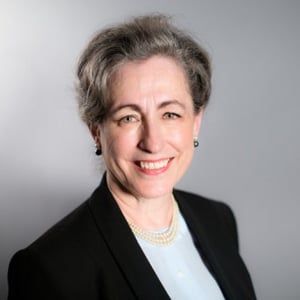
Senior Litigation Counsel, New Civil Liberties Alliance
Peggy Little, Senior Counsel at New Civil Liberties Alliance, a new public interest law firm challenging the administrative state founded in 2017 by Professor Philip Hamburger, has over three decades of experience as a trial and appellate litigator in complex, high-stakes regulatory, mass-tort, class-action, products liability, securities, commercial and civil rights litigation representing individuals and high-profile litigants including Fortune 50 companies, financial institutions, public companies, and universities in state and federal courts, including the United States Supreme Court.
Peggy is a graduate of Yale College and Yale Law School, where she was awarded the Potter Stewart Prize. She was a law clerk to the Hon. Ralph K. Winter on the U.S. Court of Appeals for the Second Circuit. Prior to starting her own trial and appellate law firm in 1997, where she was appellate consulting counsel to the New Haven firefighters in Ricci v.DeStefano, a landmark 2009 United States Supreme Court decision, Peggy was a partner at Tyler, Cooper & Alcorn in New Haven, Connecticut. From 2004 to early 2018, Peggy directed, part-time, the Federalist Society Pro Bono Center.
Peggy has participated in many national conferences and symposia addressing issues of current importance in constitutional law – specifically state and federal constitutional questions regarding the separation of powers and the first amendment – and regularly speaks, blogs and publishes on the topic of the unconstitutional exercise of governmental power. In May of 2017, she presented her paper, Pirates at the Parchment Gates, to a conference of state and federal judges at the Law and Economics Center at the Antonin Scalia Law School. Her work has been published by law reviews, legal publications, the Federalist Society, the Wall Street Journal, Law and Liberty and the Manhattan Institute.
Recent publications include: How the SEC silences its critics, The SEC should listen to Sen. Cotton, Lucia v. SEC, Opening Salvos in the Opioid Litigation Wars, Straight Dope on the Opioid Crisis

Freelance Writer and Author
Charles Slack is a freelance writer and the author of Liberty's First Crisis: Adams, Jefferson, and the Misfits Who Saved Free Speech, Hetty, Noble Obsession: Charles Goodyear, Thomas Hancock, and the Race to Unlock the Greatest Industrial Secret of the Nineteenth Century, and Blue Fairways: Three Months, Sixty Courses, No Mulligans. He was previously a reporter with the Richmond Times-Dispatch. Mr. Slack lives in Connecticut with his wife, two daughters, and a mischievous beagle.
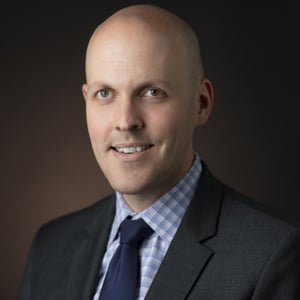
Partner, Barr & Klein PLLC
Steve Klein, a partner at Barr & Klein PLLC, is an experienced free speech attorney who has successfully fought for the First Amendment rights of his clients against local, state and federal regulators. As a lobbyist, Steve’s advocacy has led to the successful amendment of state laws to respect political engagement and prevented the enactment of laws that burden it. Steve has published articles in several legal journals, and his commentary has appeared in The Wall Street Journal, The Washington Times, The Detroit News, and other outlets. Steve earned a bachelors degree in politics at Hillsdale College and a law degree from Ave Maria School of Law, where he served as Managing Editor of the Ave Maria Law Review. He is licensed to practice law in the District of Columbia, Illinois and Michigan.

Pipeline Takings: When Can Your Property Be Taken? - Podcast
Alexandra Klass, Ilya Somin
The use of eminent domain to condemn property for pipelines has become an increasingly controversial...
Constitutional Challenges to the America Invents Act - Podcast
Robert P. Greenspoon, Adam Mossoff, Tejinder Singh, Trevor K. Copeland
The America Invents Act (AIA) significantly affects the Constitutional separation of powers by creating a...
The Climate Change Investigations – Fair Regulation of Markets or Executive Overreach that Chills Free Speech? - Podcast
Andrew Grossman, Margaret A. Little
Climate change activists have for the past year been urging the Department of Justice and...
WOTUS comes to SCOTUS: U.S. Army Corps of Engineers v. Hawkes Company Decided - Podcast
On Monday, May 31 the United States Supreme Court issued an 8-0 opinion in U.S. Army...
Liberty's First Crisis: Adams, Jefferson, and the Misfits Who Saved Free Speech - Podcast
Charles Slack, Stephen R. Klein
When the United States government passed the Bill of Rights in 1791, its uncompromising protection...