

Chief Policy Counsel, Council on Criminal Justice and Senior Advisor, Right on Crime
Marc A. Levin is the Chief Policy Counsel for the Council on Criminal Justice (counciloncj.org) and Senior Advisor for Right on Crime.
An attorney and accomplished author on legal and public policy issues, Marc began the Foundation’s criminal justice program in 2005. This work contributed to nationally praised policy changes that have been followed by dramatic declines in crime and incarceration in Texas. Building on this success, in 2010, Levin developed the concept for the Right on Crime initiative, a TPPF project in partnership with Prison Fellowship and the American Conservative Union Foundation. Right on Crime has become the national clearinghouse for conservative criminal justice reforms and has contributed to the adoption of policies in dozens of states that fight crime, support victims, and protect taxpayers.
In 2014, Levin was named one of the “Politico 50” in the magazine’s annual “list of thinkers, doers, and dreamers who really matter in this age of gridlock and dysfunction.”
Marc has testified on criminal justice policy on four occasions before Congress and has testified before legislatures in states including Texas, Nevada, Kansas, Wisconsin, and California. He also has met personally with leaders such as U.S. Presidents, Speakers of the House, and the Justice Commtitee of the United Kingdom Parliament to share his ideas on criminal justice reform. In 2007, he was honored in a resolution unanimously passed by the Texas House of Representatives that stated, “Mr. Levin’s intellect is unparalleled and his research is impeccable.”
Since 2005, Marc has published dozens of policy papers on topics such as sentencing, probation, parole, reentry, and overcriminalization which are available on the TPPF website. Levin’s articles on law and public policy have been featured in publications such as the Wall Street Journal, USA Today, Texas Review of Law & Politics, National Law Journal, New York Daily News, Jerusalem Post, Toronto Star, Atlanta Journal-Constitution, Philadelphia Inquirer, San Francisco Chronicle, Washington Times, Los Angeles Daily Journal, Charlotte Observer, Dallas Morning News, Houston Chronicle, Austin American-Statesman, San Antonio Express-News and Reason Magazine.
In 1999, Marc graduated with honors from the University of Texas with a B.A. in Plan II Honors and Government. In 2002, Marc received his J.D. with honors from the University of Texas School of Law. Marc was a Charles G. Koch Summer Fellow in 1996. He served as a law clerk to Judge Will Garwood on the U.S. Court of Appeals for the Fifth Circuit and Staff Attorney at the Texas Supreme Court.

Vice President, Edwin Meese III Institute for the Rule of Law, Advancing American Freedom
John G. Malcolm oversees Advancing American Freedom’s work to increase understanding of the Constitution and the rule of law as Vice President of the organization’s Edwin Meese III Institute for the Rule of Law. Malcolm brings to the challenge a wealth of legal expertise and experience in both the public and private sectors.
Prior to joining Advancing American Freedom in 2025, Malcolm was the Vice President of the Institute for Constitutional Government and the Director of the Meese Center for Legal and Judicial Studies at the Heritage Foundation. Prior to joining Heritage in 2012, Malcolm was general counsel at the U.S. Commission on International Religious Freedom, as well as a distinguished practitioner in residence at Pepperdine Law School. From 2004 to 2009, Malcolm was executive vice president and director of worldwide anti-piracy operations for the Motion Picture Association.
Malcolm served as a deputy assistant attorney general in the Department of Justice’s Criminal Division from 2001 to 2004, where he oversaw sections on computer crime and intellectual property, domestic security, child exploitation and obscenity, and special investigations. Immediately prior to that, he was a founding partner in the Atlanta law firm of Malcolm & Schroeder, LLP.
From 1990 to 1997, Malcolm was an assistant U.S. attorney in Atlanta, assigned to the fraud and public corruption section, and also an associate independent counsel, investigating fraud and abuse in the Department of Housing and Urban Development. He was honored with the Director’s Award for Superior Performance for his work in connection with the successful prosecution of Walter Leroy Moody Jr., who assassinated an 11th Circuit judge and the head of the Savannah chapter of the NAACP.
A graduate of Harvard Law School and Columbia College, Malcolm began his career as a law clerk to a federal district court judge and a federal appellate court judge, and as an associate at the Atlanta-based law firm of Sutherland, Asbill & Brennan (new Eversheds Sutherland).
Malcolm, who resides in Washington, D.C., serves on the Board of Trustees of the Washington National Opera and is a Senate-confirmed member of the Board of Directors of the Legal Services Corporation, the largest funder of civil legal aid in the United States.

Founder & President, Due Process Institute
Shana founded the Due Process Institute because, after years of first-hand defense work and criminal legal reform advocacy, she became convinced that the Constitution needed and deserved its own lobbying firm--particularly in the area of procedural due process rights.
With 20 years of project management, lobbying, legal defense, and teaching experience, Shana's goal is to achieve meaningful solutions to as many of these problems, in the shortest amount of time possible, for the betterment of as many people as possible, as well as to prevent any of it from getting worse on her watch.
Chancellor’s Professor of Law, UC Irvine School of Law
Professor Simons is a leading scholar of tort law, criminal law, and law and philosophy and Co-director of the Center for Legal Philosophy. He has served since 2014 as Chief Reporter for the American Law Institute’s Restatement Third of Torts: Intentional Torts to Persons. In January 2019, he was the recipient of the 2019 William L. Prosser Award by the Association of American Law Schools Section on Torts and Compensation Systems, which recognizes “outstanding contributions of law teachers in scholarship, teaching and service” related to tort law and compensation systems.
Professor Simons has published influential scholarship concerning consent, assumption of risk and contributory negligence; the nature and role of mental states in criminal, tort and constitutional law; and negligence as a moral and legal concept. He has also explored such topics as bias crimes, corrective justice, the logic of egalitarian norms, mistake and impossibility in criminal law, and strict criminal liability.
Before joining UC Irvine School of Law, Prof. Simons was Professor of Law and The Honorable Frank R. Kenison Distinguished Scholar in Law at Boston University School of Law. He was a law clerk to U.S. Supreme Court Justice Thurgood Marshall and to Judge James L. Oakes, U.S. Court of Appeals for the Second Circuit. Prof. Simons also worked as an associate at Goodwin, Procter & Hoar in Boston, in the field of civil litigation. He received his J.D. from Michigan Law School, magna cum laude, and graduated from Yale University, summa cum laude, with a B.A. in philosophy.
Professor of Law and Former President and Dean, South Texas College of Law Houston
Michael F. Barry was the 11th president and dean of Houston’s oldest law school, South Texas College of Law Houston.
For more than two decades, he has provided confident leadership, innovative strategies, actionable recommendations, and practical management to Fortune 200 clients, in higher education, and in community service.
Barry joined South Texas in fall 2019 after serving as assistant dean and practitioner in residence at St. Mary’s University School of Law in San Antonio, Texas. Among his responsibilities were developing new programs; increasing outreach to partners, donors, employers, and alumni; supporting and fundraising for initiatives that benefited St. Mary’s University and its students and alumni; managing law school operations to support faculty and student needs; and developing and teaching courses and extracurricular programs. Bringing business acumen, budgeting, change management, and leadership skills from his years in legal practice and in business, Barry initially designed St. Mary’s University School of Law’s comprehensive Law Success academic support program, became a leader in using data to support student success, and directed operations and budget for the School of Law. An engaged teacher, Barry excels at bringing real-world experiences into the legal classroom.

Judge, United States Court of Appeals, Ninth Circuit
Judge Carlos Bea serves as a judge on the United States Court of Appeals for the Ninth Circuit. He received his Bachelor's Degree from Stanford University in 1956 and his J.D. from Stanford Law School in 1958. Judge Bea was born in San Sebastian, Spain, and immigrated with his family to Cuba in 1939. In 1952, he represented Cuba on the Cuban National basketball team in the Helsinki Olympics. Judge Bea became a naturalized citizen of the United States in 1958. He engaged in private practice in San Francisco, principally in the area of civil trials (jury and non-jury), from 1959-75 at Dunne, Phelps & Mills and from 1975-90 at Carlos Bea, A Law Corporation. He taught courses in civil litigation advocacy at Hastings College of Law and Stanford Law School. From 1990 to 2003, Judge Bea served as a judge of the San Francisco Superior Court. He was nominated by President George W. Bush to the United States Court of Appeals for the Ninth Circuit and was confirmed in 2003.
Judge Bea and his wife Louise reside in San Francisco, where they raised their four sons, Sebastian, Alexander, Nicholas, and Dominic.
Dean and Harold H. Greene Professor of Law, George Washington University
Dean Matthew joined GW Law in August 2020, to become the first woman to lead the law school as dean in the school’s 158-year history.
Prior to her tenure at UVA, she served as professor of law, vice dean and associate dean of academic affairs at the University of Colorado Law School, where she co-founded and directed The Colorado Health Equity Project, an incubator for medical-legal partnerships that removed legal barriers to good health for underrepresented patients.
Dean Matthew has once again founded her third research organization – a new research institute at GW. She is the founder and inaugural faculty director of GW’s newly chartered Equity Institute, an interdisciplinary research hub dedicated to addressing racial, ethnic, and socioeconomic injustice in the United States and globally.
Managing Director, Accreditation and Legal Education, ABA
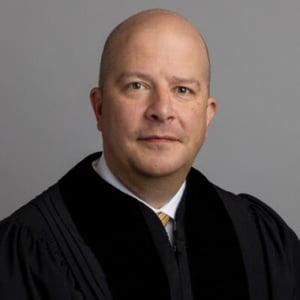
Chief Justice, Supreme Court of Georgia
Chief Justice Nels Peterson was appointed to the Georgia Supreme Court in 2016, and was elected to full six-year terms in 2018 and 2024. He previously served in a variety of other roles in Georgia state government, including as judge on the Georgia Court of Appeals, general counsel for the University System of Georgia, Georgia’s first solicitor general in the Attorney General’s Office, and executive counsel to the Governor.
Before entering state government, Nels practiced at King & Spalding LLP in Atlanta and clerked for Chief Judge William H. Pryor Jr. of the United States Court of Appeals for the Eleventh Circuit. He is a graduate of Kennesaw State University and Harvard Law School. Nels and his wife Jennifer have two children and live in Cobb County, where they teach adult Sunday school at Johnson Ferry Baptist Church.

President, U.S. Chamber of Commerce Institute for Legal Reform
Harold H. Kim was elected president of the U.S. Chamber Institute for Legal Reform (ILR) in December 2019, after nearly 12 years of holding a senior leadership position within ILR. Under Kim, the Institute will continue to be a comprehensive, multifaceted global legal reform campaign with cutting-edge advocacy, research, communications, and voter education initiatives.
Kim is responsible for providing strategy, policy guidance, programmatic management, and leadership for ILR’s comprehensive program aimed at improving the nation’s litigation climate.
Before joining ILR, Kim was special assistant to the president in the White House Office of Legislative Affairs. There he served as former President George W. Bush’s liaison to the Senate on matters involving national security, the judiciary, civil justice reform, intellectual property, and criminal law enforcement. During his tenure, he helped win confirmation for several of President Bush’s judicial and executive nominees and worked closely with Congress to advance the administration’s policy priorities.
From 2003 to 2007, Kim served as counsel to the Senate Judiciary Committee, deputy chief counsel to the late ranking member Arlen Specter, and senior committee counsel for then-Chairman Orrin Hatch. During the passage of the 2005 Class Action Fairness Act, Kim was the committee’s chief civil counsel and advised Republican members during the bill’s committee markup and Senate floor action. He also advised committee members in the areas of asbestos, class action, medical malpractice, and bankruptcy litigation reform.
Prior to government service, Kim was a senior litigation associate at the Washington, D.C.-based law firm of Patton Boggs, LLP.
Kim is an elected member of the American Law Institute and the International Association of Defense Counsel. He is a graduate of the University of California, Irvine, and earned a J.D. from The Catholic University of America.
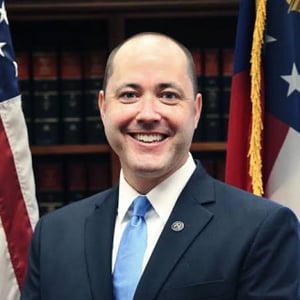
Attorney General, State of Georgia
Christopher M. Carr was appointed by Governor Nathan Deal and sworn into office as Georgia's 54th Attorney General on November 1, 2016. On November 6, 2018, Carr was elected by the people of Georgia to serve a full four-year term.
As Attorney General, Carr believes he has no more solemn duty than to protect and defend the Constitution of the United States, the Constitution and laws of the State of Georgia and the interests of the people of the State of Georgia. He also believes that his office must play a significant role in protecting Georgians. Since taking office in 2016, Carr has made it a priority to combat opioid misuse, gang violence, human trafficking, elder abuse and consumer fraud. He established and leads the Statewide Opioid Task Force – which now has more than 400 members – and the Georgia Anti-Gang Network – which is focused on strengthening multi-jurisdictional investigations and prosecutions. To help prevent our older, at-risk adults from falling victim to scams, Carr created the Georgia Consumer Protection Guide for Older Adults, and he works every day to make sure older, at-risk adults and all consumers are protected from exploitation in any form. Carr is also a champion for the state’s Sunshine Laws, working each day to ensure that government operates openly and transparently. In 2019, he announced the creation of the state's first-ever Human Trafficking Prosecution Unit at the Department of Law. Under his leadership, the unit will work with statewide partners to aggressively combat buyers and traffickers.
Carr appoints all members of the Georgia Consumer Advisory Board and is a member of the Georgia Board of Homeland Security. He served on Georgia’s Judicial Nominating Commission, the body charged with recommending candidates to the Governor to fill judicial vacancies, from 2011 through 2018, and the Executive Committee for the Georgia Older Adults Cabinet from 2016 - 2018. A dedicated member of the National Association of Attorneys General, Carr currently serves on the Human Trafficking, Substance Abuse and Presidential Initiative Committees (focused on elder abuse in 2017-18 and natural disasters in 2018-19) where he collaborates with his colleagues to shape the association's policies in these respective areas.
Carr previously served as Commissioner of the Georgia Department of Economic Development (GDEcD) under Governor Deal from November 2013 to November 2016. As Commissioner, Carr led the state agency responsible for creating jobs and investment in Georgia through business recruitment, retention and expansion, international trade and tourism, as well as the arts, film and music industries. During Carr's three-year tenure at GDEcD, the state of Georgia was recognized as the top state in the nation in which to do business for three consecutive years. In addition, GDEcD helped facilitate 1,069 projects across the state that represent approximately $14.4 billion in investment and the creation of more than 84,000 jobs. In 2015, GDEcD was recognized as the top economic development agency in the country.
Prior to joining GDEcD, Carr was Chief of Staff for U.S. Senator Johnny Isakson for six years. During his time in Washington, Carr advised the Senator on federal legislation, numerous judicial nominees for the U.S. Supreme Court and lower federal courts in Georgia and across the country.
Carr began his career with Georgia Pacific, then practiced law with Alston & Bird LLP in Atlanta and later served as Vice President and General Counsel for the Georgia Public Policy Foundation.
A graduate from the University of Georgia’s Terry College of Business and Lumpkin School of Law, Carr is admitted to practice law in Georgia.
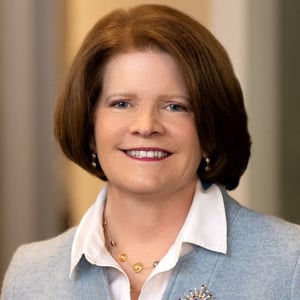
Partner, Antitrust and Competition, Wilson Sonsini Goodrich & Rosati
Maureen Ohlhausen is a partner in the Washington, D.C., office of Wilson Sonsini Goodrich & Rosati, where she advises industry-leading clients on complex antitrust and litigation matters, with a focus on high-profile cases. Sought after for her depth of experience on antitrust and Federal Trade Commission (FTC)-related issues, Maureen is known for her relationships with officials in the U.S. and abroad.
After finishing law school and clerking at the U.S. Court of Appeals for the D.C. Circuit, Maureen joined the FTC in 1997. She held a series of roles at the agency over the next 12 years, rising to the position of Director of the FTC Office of Policy Planning, where she led the agency’s work on e-commerce and headed the FTC’s Internet Access Task Force, which produced an influential report analyzing competition and consumer protection legal issues in the broadband and internet sectors. She then went into private practice at a leading telecommunications law firm, where she headed the FTC practice group.
In 2012, Maureen was confirmed by the Senate as a Commissioner of the FTC and was appointed Acting Chairman in January 2017, a role she held until May 2018. As Acting Chairman, Maureen directed all aspects of the agency’s antitrust work, including merger review, conduct enforcement, and all consumer protection enforcement, with an emphasis on privacy and technology issues. Under her leadership, the FTC won several influential merger challenges in court and reached a number of key digital privacy settlements.
To date, Maureen is the only FTC Commissioner to have received the Robert Pitofsky Lifetime Achievement Award in recognition of her contributions to the FTC.
Following the end of her term at the FTC, and immediately prior to joining Wilson Sonsini, Maureen was chair of the global antitrust and competition practice at Baker Botts, based in that firm’s Washington, D.C., office.
A recognized thought leader, Maureen is a frequent author and speaker, and is often quoted by leading print and broadcast media on antitrust, FTC, and privacy and data security matters. She has published dozens of articles on antitrust, privacy, intellectual property, regulation, FTC litigation, telecommunications, and international law issues in prestigious publications. During her tenure at the FTC and in private practice, she testified more than two dozen times before Congress, including before the Senate Commerce Committee and the House Energy and Commerce Antitrust Sub-Committee. She also testified before the Antitrust Modernization Commission.

Discussing Attempts to Address Federal Overcriminalization
Marc Levin, John G. Malcolm, Shana O’Toole, Kenneth W. Simons
A recent executive order entitled “Fighting Overcriminalization in Federal Regulations” and two congressional proposals: the...
Professional Responsibility: Oversight or Micromanagement? The ABA & Law Schools
Michael F. Barry, Carlos T. Bea, Dayna Bowen Matthew, Jennifer Rosato Perea, Nels S.D. Peterson
In 2022, the ABA updated its Standard 303, Curriculum which relates to “cross-cultural competency” and...
COVID Liability Issues
Harold H. Kim, Christopher M. Carr
COVID-19 has changed life as we know it in innumerable ways. But what can we...
Federal Trade Commissioner Maureen Ohlhausen on the FTC and Advertising Substantiation - Podcast
Maureen K. Ohlhausen
One of the Federal Trade Commission’s key duties is to protect consumers from deceptive advertising....
Worker Centers: Charities or Labor Organizations Masquerading as Charities?—and the Impact of an IRS
Heidi Abegg
Note from the Editor: This article is a discussion about worker centers and their status...