
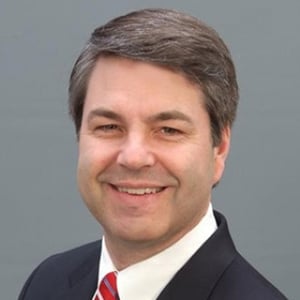
Partner and Co-Chair, Public Policy Group, Shook Hardy & Bacon LLP
Mark Behrens co-chairs Shook's Washington, DC-based Public Policy Practice Group and is a leading national expert on civil justice issues with over thirty years of experience. A substantial part of his practice is working to improve the civil litigation environment through state and federal legislation; in the courts through amicus curiae briefs; through legal scholarship and judicial education; and in the court of public opinion.
Mark is actively involved in civil justice reform efforts at the federal and state levels. He has testified before the U.S. Congress and most state legislatures on behalf of business and civil justice organizations. Mark also has an active amicus brief practice specializing in tort liability and civil justice issues. He has authored or co-authored over 150 amicus briefs in cases before the United States Supreme Court and federal and state appellate courts on behalf of business, civil justice, and defense lawyer organizations. In addition, Mark routinely files comments on behalf of business, civil justice, and defense lawyer organizations regarding potential changes to federal and state court rules. He chairs the International Association of Defense Counsel’s (IADC) Civil Justice Response Committee and serves on the Board of Directors of Lawyers for Civil Justice (LCJ).
Mark is a member of the American Law Institute (ALI). He received his J.D. in 1990 from Vanderbilt University Law School, where he was a member of the Vanderbilt Law Review. He received his B.A. in economics from the University of Wisconsin in 1987.
Professor of Law, Yeshiva University Benjamin N. Cardozo School of Law
Professor Brickman teaches Contracts, Professional Responsibility, and Land Use, among other courses. His areas of expertise include legal ethics, contingency fees, mass torts, and asbestos litigation. His writings on these and other subjects are widely cited and he is frequently quoted in the press.
Assistant Professor of Law, University of Michigan Law School
Prof. Kate Andrias teaches and writes in the areas of constitutional and administrative law, labor law, and the law of democracy. Prof. Andrias previously served as Special Assistant and Associate Counsel to the President of the United States, and as Chief of Staff of the White House Counsel's Office. While in the White House, she focused on constitutional and administrative law issues and on domestic policy, including labor and immigration. Prior to joining the Obama Administration, Prof. Andrias was an attorney in the Washington, D.C., office of Perkins Coie LLP, where she practiced in the political law and appellate litigation groups. In addition, she clerked for Justice Ruth Bader Ginsburg of the U.S. Supreme Court and Judge Stephen Reinhardt of the U.S. Court of Appeals for the Ninth Circuit, and taught American Constitutional Law as a visiting professor at L'Institut d'Études Politiques (Sciences Po) in Paris. Prof. Andrias graduated from Yale Law School, where she served on the Yale Law Journal and as a Coker Fellow. Prior to law school, Prof. Andrias worked as a union organizer.
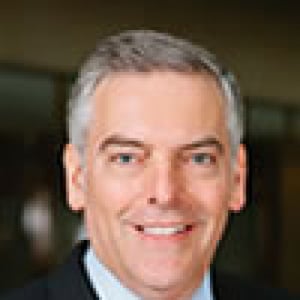
Partner, Cohen Milstein Sellers & Toll PLLC
Matt Axelrod, a Partner at the Firm, joined Cohen Milstein at the beginning of 2014. His practice is focused on holding entities accountable for corporate malfeasance and spans a number of the Firm’s practice groups, including the Antitrust Group, the Whistleblower/False Claims Act Group, and the Public Client Group. He is one of the firm’s senior trial lawyers, having tried nearly twenty cases to verdict in federal court.
Prior to joining the firm, Mr. Axelrod worked for more than a decade at the United States Department of Justice (“DOJ”), where he served as both a federal prosecutor in Miami and then as one of DOJ’s highest-ranking career officials in Washington, D.C.
From March 2011 until December 2013, Mr. Axelrod served as Associate Deputy Attorney General in the Office of the Deputy Attorney General, where he advised the Deputy Attorney General and Attorney General on DOJ’s most significant white collar criminal matters and False Claims Act investigations, and oversaw the work of DOJ’s Criminal Division, Tax Division, FBI, ATF, and U.S. Attorneys’ Offices. He was also responsible for managing DOJ’s efforts to combat healthcare fraud, and served as DOJ’s primary liaison to the U.S. Department of Health and Human Services on healthcare fraud matters.
Professor of Law, Benjamin N. Cardozo School of Law
Professor Bierschbach's scholarship focuses on the procedural and institutional structure of criminal justice and its relationship to the substantive and regulatory concerns of the criminal law. He teaches courses in administrative law, corporations, and criminal law, and his work often touches on points of overlap between those fields. His articles have been published in a number of top law reviews, including the flagship journals of Yale, Pennsylvania, Minnesota, Michigan, Georgetown, and Virginia.
Before joining Cardozo's full-time faculty in 2005, Professor Bierschbach served as a Bristow Fellow in the U.S. Department of Justice's Office of the Solicitor General, an Attorney-Advisor in its Office of Legal Counsel, and a law clerk to D.C. Circuit Judge A. Raymond Randolph and U.S. Supreme Court Justice Sandra Day O'Connor. He has also done multiple stints in private practice and has held various leadership roles in the ABA's Criminal Justice and Administrative Law & Regulatory Practice Sections.
He received his J.D. from the University of Michigan Law School, where he was an articles editor of the Michigan Law Review and the winner of both the Daniel H. Grady Prize (for graduating first in his class) and the Henry M. Bates Award (the law school’s highest honor).
Cardozo students voted Professor Bierschbach "best professor" in 2013.
Director, Center for Legal Policy, Manhattan Institute for Policy Research
James R. Copland is a senior fellow at the Manhattan Institute and director of Legal Policy. In those roles, he develops and communicates novel, sound ideas on how to improve America’s civil- and criminal-justice systems. His forthcoming book, The Unelected: How an Unaccountable Elite is Governing America (Encounter Books) will be released on September 8, 2020. He has testified before Congress as well as state and municipal legislatures; and has authored many policy briefs, book chapters, articles and opinion pieces in a variety of publications, including the Harvard Business Law Review and Yale Journal on Regulation, the Wall Street Journal, National Law Journal, and USA Today. Copland speaks regularly on civil- and criminal-justice issues; has made hundreds of media appearances in such outlets as PBS, Fox News, MSNBC, CNBC, Fox Business, Bloomberg, C-Span, and NPR; and is frequently cited in news articles in the New York Times, Washington Post, The Economist, and Forbes. In 2011 and 2012, he was named to the National Association of Corporate Directors “Directorship 100” list, which designates the individuals most influential over U.S. corporate governance.
Prior to joining MI, Copland was a management consultant with McKinsey and Company in New York. Earlier, he was a law clerk for Ralph K. Winter on the U.S. Court of Appeals for the Second Circuit. Copland has been a director of two privately held manufacturing companies since 1997 and has served on many public and nonprofit boards. He holds a J.D. and an M.B.A. from Yale, where he was an Olin Fellow in Law and Economics; an M.Sc. in the politics of the world economy from the London School of Economics; and a B.A. in economics from the University of North Carolina at Chapel Hill, where he was a Morehead Scholar.
University of Maryland School of Law and President, Center for Progressive Reform
Rena Steinzor is a Professor at the University of Maryland School of Law and teaches an environmental survey course, as well as offerings in risk assessment, critical issues in law and science, legal methods, contracts, and an introduction to the administrative system. During the course of her academic career, Professor Steinzor has written extensively on efforts to reinvent environmental regulation in the United States, the use and misuse of science in environmental policy making, and the devolution of legal and administrative authority to the states.
Professor Steinzor edited the book A New Progressive Agenda for Public Health and the Environment (Carolina Academic Press 2005) with Professor Christopher Schroeder of the Duke Law School. The book proposes an alternative set of values and principles that should guide efforts to reform environmental law. She worked with Professor Wendy Wagner of the University of Texas School of Law, to edit a book of essays by prominent academics entitled Rescuing Science from Politics (Cambridge University Press, 2005) writing an introduction and conclusion summarizing the issues and recommendations suggested by the book. Professor Steinzor's book entitled Mother Earth and Uncle Sam: How Pollution and Hollow Government Hurt Our Kids was published by the University of Texas Press in the fall of 2007.
Professor Steinzor is the president of the Center for Progressive Reform (CPR) (http://www.progressivereform.org/), a think tank comprised of some 52 member scholars from universities across the United States. CPR is committed to developing and sharing knowledge and information, with the ultimate aim of preserving the fundamental value of the life and health of human beings and the natural environment. One component of CPR's mission is to circulate academic papers, studies, and other analyses that promote public policy based on the multiple social values that motivated the enactment of our nation's health, safety and environmental laws. CPR seeks to inform the public about scholarship that envisions government as an arena where members of society choose and preserve their collective values. CPR rejects the idea that government's only function is to increase the economic efficiency of private markets.
Before joining the law school faculty, Professor Steinzor was the partner in charge of the environmental practice at Spiegel & McDiarmid, a Washington D.C. Law firm specializing in the representation of state and local government entities in the energy and environmental areas. Prior to joining the firm, Professor Steinzor was counsel to the Subcommittee on Commerce, Transportation & Tourism of the House Energy & Commerce Committee, which was then chaired by James J. Florio (D-N.J.). She advised the Subcommittee during its consideration of the Superfund Amendments and Reauthorization Act of 1986 and the Asbestos Hazard Emergency Response Act of 1986. She also served as an attorney advisor to Commissioner Patricia P. Bailey of the Federal Trade Commission and worked as a consumer protection attorney at the FTC in various staff positions.
Attorney, Klein O'Neill & Singh LLP
Mr. Klein is a registered patent attorney with over thirty years of experience in patent and trademark prosecution, licensing, opinion work, and litigation. Mr. Klein has written and prosecuted hundreds of patents in a wide variety of technologies. He has been engaged extensively in validity and infringement opinions, and he has experience in the litigation of all aspects of IP: Patents, trademarks, copyrights, and trade secrets.
Mr. Klein has served clients throughout the United States, as well as Europe, Taiwan, and Australia. Clients include start-up companies, and corporations of all sizes, including Fortune 500® companies.
Mr. Klein is now also an Adjunct Professor of Law at Chapman University Law School.
Albert E. Cinelli Enterprise Professor of Law, Columbia Law School
Law clerk to Judge Joseph T. Sneed, U.S. Court of Appeals for the Ninth Circuit (1985-1986) and Justice Lewis F. Powell, Jr. of the U.S. Supreme Court (1986-1987). Practiced real estate and transactional law in Houston, Texas (1987-1991). Worked for the Justice Department as an Assistant for the Solicitor General of the United States, (1991-1994).
Joined the Columbia faculty on July 1, 2007 after holding tenured positions at the University of Michigan, University of Texas, and the Washington University School of Law. A nationally renowned scholar in the areas of secured credit, payment systems, and intellectual property, he has authored dozens of law review articles in leading law reviews, as well as pathbreaking casebooks on Payment Systems and Electronic Commerce.
He is a member of the American Law Institute, a conferee of the National Bankruptcy Conference, and a frequent visiting scholar at Federal Reserve Banks.
Professor of Law, Brooklyn Law School
Professor Mulligan teaches Internet law, intellectual property law, and trusts & estates. Her research addresses efforts to adapt intellectual property law for the digital age, the relationship between law and technology, and theories of constitutional interpretation. Recently, she has written about the Internet of Things, robot punishment, and early translations of the Constitution.
While at Brooklyn, Professor Mulligan researched as a visiting scholar at the Georgetown Center for the Constitution and taught as a visiting associate professor at Yale Law School. Previously, she taught at the University of Georgia and was a postdoctoral associate and lecturer in law at the Information Society Project at Yale Law School. Her scholarship has been published in a variety of journals and law reviews, including Georgia Law Review, SMU Law Review, and Constitutional Commentary.
Professor Mulligan earned her bachelor’s degree cum laude and her law degree cum laude from Harvard University, where she worked as a production and article editor for the Harvard Journal of Law & Technology. Before entering academia, she served as a law clerk for Judge Charles F. Lettow of the U.S. Court of Federal Claims.
Associate Professor, Boston College Law School
David Olson is an associate professor and the Faculty Director of the Program on Innovation and Entrepreneurship. He teaches patent law, intellectual property law, antitrust law, and various seminars. His research and writing primarily focus on patents, copyrights, antitrust, and incentives for innovation and competition. Since joining BC Law in 2007, he has been recognized for his teaching excellence and contributions. In 2011, he received the Business & Law Society Faculty Award for Achievement in Business & Law. In 2012, he received the Professor Emil Slizewski Award for Faculty Excellence. For one semester in 2015, Olson served as a visiting professor at Pontifical Catholic University, Rio de Janeiro, Brazil, where he conducted research and taught a course on intellectual property.
Olson has published scholarly articles on patent law, copyright law, antitrust, music licensing, and first amendment copyright issues. His writing has been cited in Supreme Court and other legal opinions. He has testified before the U.S. Congress on matters of drug patents, FDA regulation, and antitrust.
The media frequently seeks Olson’s insights and opinions. He has been quoted in the Wall Street Journal, Associated Press, and Reuters, among others. He has appeared as a guest panelist on WBUR’s Radio Boston, WAMU's Kojo Namdi Show, and Public Radio Canada. His op-eds have appeared in the Chicago Tribune, Washington Times, and The Hill.
Olson came to Boston College from Stanford Law School's Center for Internet and Society, where he conducted research on patent law and litigated copyright fair use impact cases. Before entering academia, Olson practiced law as a patent litigator. He clerked for Judge Jerry Smith of the U.S. Court of Appeals for the Fifth Circuit.
Lecturer in Law; Executive Director, Public Patent Foundation, Cardozo School of Law
Daniel B. Ravicher is a Lecturer in Law at Benjamin N. Cardozo School of Law and Executive Director of the Public Patent Foundation (“PUBPAT”). Labeled a modern day 'Robin Hood' by Science, named one of "The 50 Most Influential People in IP" by Managing Intellectual Property, and awarded anEchoing Green Fellowship for social entrepreneurship, Professor Ravicher is a registered patent attorney who writes and speaks frequently on patent law and policy, including testifying as an invited witness before Congress on the topic of patent reform. Professor Ravicher writes about patent policy issues for the Huffington Post and patent related corporate valuations issues for Seeking Alpha and through the Ravicher Reports. He is on Twitter@danravicher.
Professor Ravicher received his law degree from the University of Virginia School of Law, where he was the Franklin O'Blechman Scholar of his class, a Mortimer Caplin Public Service Award recipient and an Editor of the Virginia Journal of Law and Technology, and his bachelors degree in materials science magna cum laude with University Honors from the University of South Florida. He is admitted to the United States Supreme Court, the Courts of Appeals for the Federal, 2nd and 11th Circuits, the District Courts for the Southern and Eastern Districts of New York, the State of New York, and the United States Patent and Trademark Office.
Associate Professor of Law, University of Baltimore School of Law
Professor of Law, Benjamin N. Cardozo School of Law, Yeshiva University
Before coming to Cardozo, Professor Sebok was the Centennial Professor of Law and the associate dean for research at Brooklyn Law School, where he taught for 15 years. In 2005-06, Professor Sebok was a Fellow in the Program in Law and Public Affairs at Princeton University, and in 1999 he was a Fellow at the American Academy in Berlin. After completing law school, he clerked for Chief Judge Edward N. Cahn of the US District Court for the Eastern District of Pennsylvania. He has authored numerous articles about mass restitution litigation, including lawsuits involving tobacco, handguns, and slavery reparations. Professor Sebok has also written extensively on the differences between the European and American tort systems, and is currently writing a book with Mauro Bussani of the University of Trieste on comparative tort law that will be published by Oxford University Press. Sebok is the author of Legal Positivism in American Jurisprudence, articles and essays on jurisprudence, and is the coeditor ofThe Philosophy of Law: A Collection of Essays. His casebook, Tort Law: Responsibilities and Redress, which he coauthored with John Goldberg and Benjamin Zipursky, is used at several leading law schools. Professor Sebok is frequently quoted in the national media on timely legal issues, such as the September 11 Victim Compensation Fund. He is a regular columnist forFindlaw, a popular legal Web site.
Assistant Professor of Law, University of Michigan Law School
Prof. Kate Andrias teaches and writes in the areas of constitutional and administrative law, labor law, and the law of democracy. Prof. Andrias previously served as Special Assistant and Associate Counsel to the President of the United States, and as Chief of Staff of the White House Counsel's Office. While in the White House, she focused on constitutional and administrative law issues and on domestic policy, including labor and immigration. Prior to joining the Obama Administration, Prof. Andrias was an attorney in the Washington, D.C., office of Perkins Coie LLP, where she practiced in the political law and appellate litigation groups. In addition, she clerked for Justice Ruth Bader Ginsburg of the U.S. Supreme Court and Judge Stephen Reinhardt of the U.S. Court of Appeals for the Ninth Circuit, and taught American Constitutional Law as a visiting professor at L'Institut d'Études Politiques (Sciences Po) in Paris. Prof. Andrias graduated from Yale Law School, where she served on the Yale Law Journal and as a Coker Fellow. Prior to law school, Prof. Andrias worked as a union organizer.
Partner, Cohen Milstein Sellers & Toll PLLC
Matt Axelrod, a Partner at the Firm, joined Cohen Milstein at the beginning of 2014. His practice is focused on holding entities accountable for corporate malfeasance and spans a number of the Firm’s practice groups, including the Antitrust Group, the Whistleblower/False Claims Act Group, and the Public Client Group. He is one of the firm’s senior trial lawyers, having tried nearly twenty cases to verdict in federal court.
Prior to joining the firm, Mr. Axelrod worked for more than a decade at the United States Department of Justice (“DOJ”), where he served as both a federal prosecutor in Miami and then as one of DOJ’s highest-ranking career officials in Washington, D.C.
From March 2011 until December 2013, Mr. Axelrod served as Associate Deputy Attorney General in the Office of the Deputy Attorney General, where he advised the Deputy Attorney General and Attorney General on DOJ’s most significant white collar criminal matters and False Claims Act investigations, and oversaw the work of DOJ’s Criminal Division, Tax Division, FBI, ATF, and U.S. Attorneys’ Offices. He was also responsible for managing DOJ’s efforts to combat healthcare fraud, and served as DOJ’s primary liaison to the U.S. Department of Health and Human Services on healthcare fraud matters.
Professor of Law, Benjamin N. Cardozo School of Law
Professor Bierschbach's scholarship focuses on the procedural and institutional structure of criminal justice and its relationship to the substantive and regulatory concerns of the criminal law. He teaches courses in administrative law, corporations, and criminal law, and his work often touches on points of overlap between those fields. His articles have been published in a number of top law reviews, including the flagship journals of Yale, Pennsylvania, Minnesota, Michigan, Georgetown, and Virginia.
Before joining Cardozo's full-time faculty in 2005, Professor Bierschbach served as a Bristow Fellow in the U.S. Department of Justice's Office of the Solicitor General, an Attorney-Advisor in its Office of Legal Counsel, and a law clerk to D.C. Circuit Judge A. Raymond Randolph and U.S. Supreme Court Justice Sandra Day O'Connor. He has also done multiple stints in private practice and has held various leadership roles in the ABA's Criminal Justice and Administrative Law & Regulatory Practice Sections.
He received his J.D. from the University of Michigan Law School, where he was an articles editor of the Michigan Law Review and the winner of both the Daniel H. Grady Prize (for graduating first in his class) and the Henry M. Bates Award (the law school’s highest honor).
Cardozo students voted Professor Bierschbach "best professor" in 2013.
Director, Center for Legal Policy, Manhattan Institute for Policy Research
James R. Copland is a senior fellow at the Manhattan Institute and director of Legal Policy. In those roles, he develops and communicates novel, sound ideas on how to improve America’s civil- and criminal-justice systems. His forthcoming book, The Unelected: How an Unaccountable Elite is Governing America (Encounter Books) will be released on September 8, 2020. He has testified before Congress as well as state and municipal legislatures; and has authored many policy briefs, book chapters, articles and opinion pieces in a variety of publications, including the Harvard Business Law Review and Yale Journal on Regulation, the Wall Street Journal, National Law Journal, and USA Today. Copland speaks regularly on civil- and criminal-justice issues; has made hundreds of media appearances in such outlets as PBS, Fox News, MSNBC, CNBC, Fox Business, Bloomberg, C-Span, and NPR; and is frequently cited in news articles in the New York Times, Washington Post, The Economist, and Forbes. In 2011 and 2012, he was named to the National Association of Corporate Directors “Directorship 100” list, which designates the individuals most influential over U.S. corporate governance.
Prior to joining MI, Copland was a management consultant with McKinsey and Company in New York. Earlier, he was a law clerk for Ralph K. Winter on the U.S. Court of Appeals for the Second Circuit. Copland has been a director of two privately held manufacturing companies since 1997 and has served on many public and nonprofit boards. He holds a J.D. and an M.B.A. from Yale, where he was an Olin Fellow in Law and Economics; an M.Sc. in the politics of the world economy from the London School of Economics; and a B.A. in economics from the University of North Carolina at Chapel Hill, where he was a Morehead Scholar.
University of Maryland School of Law and President, Center for Progressive Reform
Rena Steinzor is a Professor at the University of Maryland School of Law and teaches an environmental survey course, as well as offerings in risk assessment, critical issues in law and science, legal methods, contracts, and an introduction to the administrative system. During the course of her academic career, Professor Steinzor has written extensively on efforts to reinvent environmental regulation in the United States, the use and misuse of science in environmental policy making, and the devolution of legal and administrative authority to the states.
Professor Steinzor edited the book A New Progressive Agenda for Public Health and the Environment (Carolina Academic Press 2005) with Professor Christopher Schroeder of the Duke Law School. The book proposes an alternative set of values and principles that should guide efforts to reform environmental law. She worked with Professor Wendy Wagner of the University of Texas School of Law, to edit a book of essays by prominent academics entitled Rescuing Science from Politics (Cambridge University Press, 2005) writing an introduction and conclusion summarizing the issues and recommendations suggested by the book. Professor Steinzor's book entitled Mother Earth and Uncle Sam: How Pollution and Hollow Government Hurt Our Kids was published by the University of Texas Press in the fall of 2007.
Professor Steinzor is the president of the Center for Progressive Reform (CPR) (http://www.progressivereform.org/), a think tank comprised of some 52 member scholars from universities across the United States. CPR is committed to developing and sharing knowledge and information, with the ultimate aim of preserving the fundamental value of the life and health of human beings and the natural environment. One component of CPR's mission is to circulate academic papers, studies, and other analyses that promote public policy based on the multiple social values that motivated the enactment of our nation's health, safety and environmental laws. CPR seeks to inform the public about scholarship that envisions government as an arena where members of society choose and preserve their collective values. CPR rejects the idea that government's only function is to increase the economic efficiency of private markets.
Before joining the law school faculty, Professor Steinzor was the partner in charge of the environmental practice at Spiegel & McDiarmid, a Washington D.C. Law firm specializing in the representation of state and local government entities in the energy and environmental areas. Prior to joining the firm, Professor Steinzor was counsel to the Subcommittee on Commerce, Transportation & Tourism of the House Energy & Commerce Committee, which was then chaired by James J. Florio (D-N.J.). She advised the Subcommittee during its consideration of the Superfund Amendments and Reauthorization Act of 1986 and the Asbestos Hazard Emergency Response Act of 1986. She also served as an attorney advisor to Commissioner Patricia P. Bailey of the Federal Trade Commission and worked as a consumer protection attorney at the FTC in various staff positions.
Assistant Professor of Law, University of Michigan Law School
Prof. Kate Andrias teaches and writes in the areas of constitutional and administrative law, labor law, and the law of democracy. Prof. Andrias previously served as Special Assistant and Associate Counsel to the President of the United States, and as Chief of Staff of the White House Counsel's Office. While in the White House, she focused on constitutional and administrative law issues and on domestic policy, including labor and immigration. Prior to joining the Obama Administration, Prof. Andrias was an attorney in the Washington, D.C., office of Perkins Coie LLP, where she practiced in the political law and appellate litigation groups. In addition, she clerked for Justice Ruth Bader Ginsburg of the U.S. Supreme Court and Judge Stephen Reinhardt of the U.S. Court of Appeals for the Ninth Circuit, and taught American Constitutional Law as a visiting professor at L'Institut d'Études Politiques (Sciences Po) in Paris. Prof. Andrias graduated from Yale Law School, where she served on the Yale Law Journal and as a Coker Fellow. Prior to law school, Prof. Andrias worked as a union organizer.
Partner, Cohen Milstein Sellers & Toll PLLC
Matt Axelrod, a Partner at the Firm, joined Cohen Milstein at the beginning of 2014. His practice is focused on holding entities accountable for corporate malfeasance and spans a number of the Firm’s practice groups, including the Antitrust Group, the Whistleblower/False Claims Act Group, and the Public Client Group. He is one of the firm’s senior trial lawyers, having tried nearly twenty cases to verdict in federal court.
Prior to joining the firm, Mr. Axelrod worked for more than a decade at the United States Department of Justice (“DOJ”), where he served as both a federal prosecutor in Miami and then as one of DOJ’s highest-ranking career officials in Washington, D.C.
From March 2011 until December 2013, Mr. Axelrod served as Associate Deputy Attorney General in the Office of the Deputy Attorney General, where he advised the Deputy Attorney General and Attorney General on DOJ’s most significant white collar criminal matters and False Claims Act investigations, and oversaw the work of DOJ’s Criminal Division, Tax Division, FBI, ATF, and U.S. Attorneys’ Offices. He was also responsible for managing DOJ’s efforts to combat healthcare fraud, and served as DOJ’s primary liaison to the U.S. Department of Health and Human Services on healthcare fraud matters.
Professor of Law, Benjamin N. Cardozo School of Law
Professor Bierschbach's scholarship focuses on the procedural and institutional structure of criminal justice and its relationship to the substantive and regulatory concerns of the criminal law. He teaches courses in administrative law, corporations, and criminal law, and his work often touches on points of overlap between those fields. His articles have been published in a number of top law reviews, including the flagship journals of Yale, Pennsylvania, Minnesota, Michigan, Georgetown, and Virginia.
Before joining Cardozo's full-time faculty in 2005, Professor Bierschbach served as a Bristow Fellow in the U.S. Department of Justice's Office of the Solicitor General, an Attorney-Advisor in its Office of Legal Counsel, and a law clerk to D.C. Circuit Judge A. Raymond Randolph and U.S. Supreme Court Justice Sandra Day O'Connor. He has also done multiple stints in private practice and has held various leadership roles in the ABA's Criminal Justice and Administrative Law & Regulatory Practice Sections.
He received his J.D. from the University of Michigan Law School, where he was an articles editor of the Michigan Law Review and the winner of both the Daniel H. Grady Prize (for graduating first in his class) and the Henry M. Bates Award (the law school’s highest honor).
Cardozo students voted Professor Bierschbach "best professor" in 2013.
Director, Center for Legal Policy, Manhattan Institute for Policy Research
James R. Copland is a senior fellow at the Manhattan Institute and director of Legal Policy. In those roles, he develops and communicates novel, sound ideas on how to improve America’s civil- and criminal-justice systems. His forthcoming book, The Unelected: How an Unaccountable Elite is Governing America (Encounter Books) will be released on September 8, 2020. He has testified before Congress as well as state and municipal legislatures; and has authored many policy briefs, book chapters, articles and opinion pieces in a variety of publications, including the Harvard Business Law Review and Yale Journal on Regulation, the Wall Street Journal, National Law Journal, and USA Today. Copland speaks regularly on civil- and criminal-justice issues; has made hundreds of media appearances in such outlets as PBS, Fox News, MSNBC, CNBC, Fox Business, Bloomberg, C-Span, and NPR; and is frequently cited in news articles in the New York Times, Washington Post, The Economist, and Forbes. In 2011 and 2012, he was named to the National Association of Corporate Directors “Directorship 100” list, which designates the individuals most influential over U.S. corporate governance.
Prior to joining MI, Copland was a management consultant with McKinsey and Company in New York. Earlier, he was a law clerk for Ralph K. Winter on the U.S. Court of Appeals for the Second Circuit. Copland has been a director of two privately held manufacturing companies since 1997 and has served on many public and nonprofit boards. He holds a J.D. and an M.B.A. from Yale, where he was an Olin Fellow in Law and Economics; an M.Sc. in the politics of the world economy from the London School of Economics; and a B.A. in economics from the University of North Carolina at Chapel Hill, where he was a Morehead Scholar.
University of Maryland School of Law and President, Center for Progressive Reform
Rena Steinzor is a Professor at the University of Maryland School of Law and teaches an environmental survey course, as well as offerings in risk assessment, critical issues in law and science, legal methods, contracts, and an introduction to the administrative system. During the course of her academic career, Professor Steinzor has written extensively on efforts to reinvent environmental regulation in the United States, the use and misuse of science in environmental policy making, and the devolution of legal and administrative authority to the states.
Professor Steinzor edited the book A New Progressive Agenda for Public Health and the Environment (Carolina Academic Press 2005) with Professor Christopher Schroeder of the Duke Law School. The book proposes an alternative set of values and principles that should guide efforts to reform environmental law. She worked with Professor Wendy Wagner of the University of Texas School of Law, to edit a book of essays by prominent academics entitled Rescuing Science from Politics (Cambridge University Press, 2005) writing an introduction and conclusion summarizing the issues and recommendations suggested by the book. Professor Steinzor's book entitled Mother Earth and Uncle Sam: How Pollution and Hollow Government Hurt Our Kids was published by the University of Texas Press in the fall of 2007.
Professor Steinzor is the president of the Center for Progressive Reform (CPR) (http://www.progressivereform.org/), a think tank comprised of some 52 member scholars from universities across the United States. CPR is committed to developing and sharing knowledge and information, with the ultimate aim of preserving the fundamental value of the life and health of human beings and the natural environment. One component of CPR's mission is to circulate academic papers, studies, and other analyses that promote public policy based on the multiple social values that motivated the enactment of our nation's health, safety and environmental laws. CPR seeks to inform the public about scholarship that envisions government as an arena where members of society choose and preserve their collective values. CPR rejects the idea that government's only function is to increase the economic efficiency of private markets.
Before joining the law school faculty, Professor Steinzor was the partner in charge of the environmental practice at Spiegel & McDiarmid, a Washington D.C. Law firm specializing in the representation of state and local government entities in the energy and environmental areas. Prior to joining the firm, Professor Steinzor was counsel to the Subcommittee on Commerce, Transportation & Tourism of the House Energy & Commerce Committee, which was then chaired by James J. Florio (D-N.J.). She advised the Subcommittee during its consideration of the Superfund Amendments and Reauthorization Act of 1986 and the Asbestos Hazard Emergency Response Act of 1986. She also served as an attorney advisor to Commissioner Patricia P. Bailey of the Federal Trade Commission and worked as a consumer protection attorney at the FTC in various staff positions.
Professor of Law, Yeshiva University Benjamin N. Cardozo School of Law
Professor Brickman teaches Contracts, Professional Responsibility, and Land Use, among other courses. His areas of expertise include legal ethics, contingency fees, mass torts, and asbestos litigation. His writings on these and other subjects are widely cited and he is frequently quoted in the press.
Simeon E. Baldwin Professor Emeritus of Law, Yale Law School
Peter H. Schuck is the Simeon E. Baldwin Professor Emeritus of Law and Professor (Adjunct) of Law at Yale Law School where he has held the chair since 1984. He has also served as Deputy Dean. His major fields of teaching and research are tort law; immigration, citizenship, and refugee law; groups, diversity, and law; and administrative law. His most recent books include Targeting in Social Programs: Avoiding Bad Bets, Removing Bad Apples; Meditations of a Militant Moderate: Cool Views on Hot Topics; Immigration Stories; Foundations of Administrative Law; Diversity in America: Keeping Government at a Safe Distance; and The Limits of Law: Essays on Democratic Governance. He is also co-editor, with James Q. Wilson, of Understanding America. He is a member of the American Law Institute's advisory committee for the Restatement of Torts (Third), Basic Principles, and a contributing editor to The American Lawyer. Prior to joining Yale, he was Principal Deputy Assistant Secretary for Planning and Evaluation in the U.S. Department of Health, Education, and Welfare. Professor Schuck holds a B.A. from Cornell, a J.D. from Harvard Law School, an LL.M. in International Law from N.Y.U., and an M.A. in Government from Harvard.
Professor of Law, Yeshiva University Benjamin N. Cardozo School of Law
Professor Brickman teaches Contracts, Professional Responsibility, and Land Use, among other courses. His areas of expertise include legal ethics, contingency fees, mass torts, and asbestos litigation. His writings on these and other subjects are widely cited and he is frequently quoted in the press.
Milton R. Underwood Chair in Free Enterprise, Vanderbilt University Law School
Brian Fitzpatrick is the Milton R. Underwood Chair in Free Enterprise and Professor of Law at Vanderbilt Law School, where his research focuses on class action litigation, federal courts, judicial selection, and constitutional law. He is best known for his empirical studies of class action settlements as well as his book The Conservative Case for Class Actions (University of Chicago Press, 2019). Professor Fitzpatrick joined Vanderbilt's law faculty in 2007 after serving as the John M. Olin Fellow at New York University School of Law. He graduated first in his class from Harvard Law School and went on to clerk for Judge Diarmuid O'Scannlain on the U.S. Court of Appeals for the Ninth Circuit and Justice Antonin Scalia on the U.S. Supreme Court. After his clerkships, Professor Fitzpatrick practiced commercial and appellate litigation for several years at Sidley Austin in Washington, D.C., and served as Special Counsel for Supreme Court Nominations to U.S. Senator John Cornyn. Before earning his law degree, Fitzpatrick graduated summa cum laude with a bachelor's of science in chemical engineering from the University of Notre Dame. He has received the Hall-Hartman Outstanding Professor Award, which recognizes excellence in classroom teaching, for his Civil Procedure and Federal Courts courses.
Director of Litigation and Senior Attorney, Hamilton Lincoln Law Institute
Theodore H. Frank is director at the Hamilton Lincoln Law Institute and the Center for Class Action Fairness. Frank founded and ran CCAF as a non-profit, public interest law firm in 2009.
Frank has won several landmark appeals and tens of millions of dollars for consumers and other plaintiffs through his class action work. Adam Liptak of The New York Times calls Frank “the leading critic of abusive class action settlements” and the American Lawyer Litigation Daily referred to him as “the indefatigable scourge of underwhelming class action settlements.”
Previously, Frank clerked for the Honorable Frank H. Easterbrook on the Seventh Circuit Court of Appeals, and was a litigator at firms in Washington and Los Angeles and a resident fellow at the American Enterprise Institute. Frank is a frequent public speaker and has testified before Congress multiple times on legal issues. He has been profiled by The Wall Street Journal, Forbes, GQ, and the ABA Journal, among other publications.
In 2008, Frank was elected to membership in the American Law Institute. He also serves on the Executive Committee of the Federalist Society Litigation Practice Group. Frank graduated from The University of Chicago Law School in 1994 with high honors and as a member of the Order of the Coif and the Law Review. He is a member of the District of Columbia Bar and the state bars of California and Illinois.
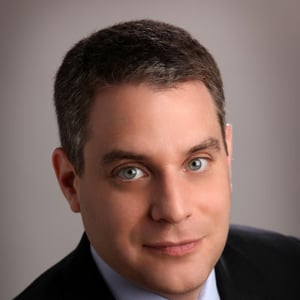
Partner, Drinker Biddle & Reath LLP
Jeff Jacobson defends consumer, privacy and securities class actions, and represents media, technology and other companies in general commercial litigation. With nearly two decades in private practice and several years of experience at the highest levels of the New Jersey Attorney General’s Office, Mr. Jacobson assists his clients to resolve and minimize the reputational damage and business interruptions that can arise from litigation, particularly costly class actions. In addition, Mr. Jacobson has considerable and proven skills in managing the electronic discovery challenges presented by complex litigation and investigative matters.
During his tenure as director of the New Jersey Division of Law and chief counsel to the New Jersey Attorney General (2014-16), Mr. Jacobson oversaw law enforcement investigations involving consumer protection and data privacy, chaired the Attorney General’s Cyber Working Group, and oversaw more than 500 lawyers who represented all agencies of state government in defensive and affirmative litigation. Throughout his tenure, Jeff personally handled some of the state’s highest profile cases in state and federal court.
Because Mr. Jacobson has chaired both the prosecution and defense of major consumer fraud and privacy litigation, he is able to provide his clients with the benefit of a truly multifaceted and strategic perspective regarding even the highest-stakes claims. Mr. Jacobson has successfully defended consumer fraud and privacy-related class actions for media, electronics and consumer products companies, as well as securities class actions for U.S.-based and foreign private issuers in federal and state trial and appellate courts.
Class actions can be both costly and disruptive, so Mr. Jacobson strives to resolve such matters in his client’s favor as quickly and inexpensively as possible. This may mean moving the court to deny class certification at the earliest stage of a case, seeking quick summary judgment on key issues underlying the class motion, or devising a settlement that costs less than litigating the case. In matters requiring extensive discovery, Mr. Jacobson focuses on avoiding unnecessary tasks and minimizing vendor costs.
Mr. Jacobson has been selected to the Data Protection and Privacy and Securities Litigation lists by US Legal 500, a Legalease Publication. A description of the selection methodology can be found at www.legal500.com/assets/pages/about-us/how-it-works.html#rank. He has also been recognized as a Securities Litigation “Star” in the IFLR Benchmark Litigation Guide. A description of the selection methodology can be found at www.benchmarklitigation.com/general/research. (No aspect of these advertisements have been approved by the Supreme Court of New Jersey.)
Mr. Jacobson has written extensively on class action defense and e-discovery strategies for the New York Law Journal, Class Action Litigation Report, Product Liability Law 360, and other publications. He is also a member of the advisory board of the Association of Certified E-Discovery Specialists, and served on a New Jersey Supreme Court task force to assess attorney ethics issues arising from metadata in electronic documents.

Associate Justice, Supreme Court of the United States
Associate Justice Brett Kavanaugh was born in Washington, D.C., on February 12, 1965. He married Ashley Estes in 2004, and they have two daughters - Margaret and Liza. He received a B.A. from Yale College in 1987 and a J.D. from Yale Law School in 1990. He served as a law clerk for Judge Walter Stapleton of the U.S. Court of Appeals for the Third Circuit from 1990-1991, for Judge Alex Kozinski of the U.S. Court of Appeals for the Ninth Circuit from 1991-1992, and for Justice Anthony M. Kennedy of the U.S. Supreme Court during the 1993 Term. In 1992-1993, he was an attorney in the Office of the Solicitor General of the United States. From 1994 to 1997 and for a period in 1998, he was Associate Counsel in the Office of Independent Counsel. He was a partner at a Washington, D.C., law firm from 1997 to 1998 and again from 1999 to 2001. From 2001 to 2003, he was Associate Counsel and then Senior Associate Counsel to President George W. Bush. From 2003 to 2006, he was Assistant to the President and Staff Secretary for President Bush. He was appointed a Judge of the United States Court of Appeals for the District of Columbia Circuit in 2006. President Donald J. Trump nominated him as an Associate Justice of the Supreme Court, and he took his seat on October 6, 2018.
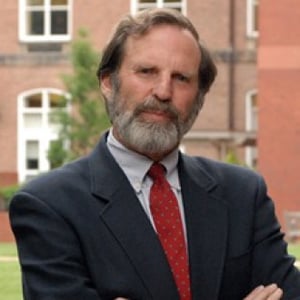
Adjunct Professor, George Washington University Law School
Professor of Law, Yeshiva University Benjamin N. Cardozo School of Law
Professor Brickman teaches Contracts, Professional Responsibility, and Land Use, among other courses. His areas of expertise include legal ethics, contingency fees, mass torts, and asbestos litigation. His writings on these and other subjects are widely cited and he is frequently quoted in the press.
Milton R. Underwood Chair in Free Enterprise, Vanderbilt University Law School
Brian Fitzpatrick is the Milton R. Underwood Chair in Free Enterprise and Professor of Law at Vanderbilt Law School, where his research focuses on class action litigation, federal courts, judicial selection, and constitutional law. He is best known for his empirical studies of class action settlements as well as his book The Conservative Case for Class Actions (University of Chicago Press, 2019). Professor Fitzpatrick joined Vanderbilt's law faculty in 2007 after serving as the John M. Olin Fellow at New York University School of Law. He graduated first in his class from Harvard Law School and went on to clerk for Judge Diarmuid O'Scannlain on the U.S. Court of Appeals for the Ninth Circuit and Justice Antonin Scalia on the U.S. Supreme Court. After his clerkships, Professor Fitzpatrick practiced commercial and appellate litigation for several years at Sidley Austin in Washington, D.C., and served as Special Counsel for Supreme Court Nominations to U.S. Senator John Cornyn. Before earning his law degree, Fitzpatrick graduated summa cum laude with a bachelor's of science in chemical engineering from the University of Notre Dame. He has received the Hall-Hartman Outstanding Professor Award, which recognizes excellence in classroom teaching, for his Civil Procedure and Federal Courts courses.
Director of Litigation and Senior Attorney, Hamilton Lincoln Law Institute
Theodore H. Frank is director at the Hamilton Lincoln Law Institute and the Center for Class Action Fairness. Frank founded and ran CCAF as a non-profit, public interest law firm in 2009.
Frank has won several landmark appeals and tens of millions of dollars for consumers and other plaintiffs through his class action work. Adam Liptak of The New York Times calls Frank “the leading critic of abusive class action settlements” and the American Lawyer Litigation Daily referred to him as “the indefatigable scourge of underwhelming class action settlements.”
Previously, Frank clerked for the Honorable Frank H. Easterbrook on the Seventh Circuit Court of Appeals, and was a litigator at firms in Washington and Los Angeles and a resident fellow at the American Enterprise Institute. Frank is a frequent public speaker and has testified before Congress multiple times on legal issues. He has been profiled by The Wall Street Journal, Forbes, GQ, and the ABA Journal, among other publications.
In 2008, Frank was elected to membership in the American Law Institute. He also serves on the Executive Committee of the Federalist Society Litigation Practice Group. Frank graduated from The University of Chicago Law School in 1994 with high honors and as a member of the Order of the Coif and the Law Review. He is a member of the District of Columbia Bar and the state bars of California and Illinois.
Partner, Drinker Biddle & Reath LLP
Jeff Jacobson defends consumer, privacy and securities class actions, and represents media, technology and other companies in general commercial litigation. With nearly two decades in private practice and several years of experience at the highest levels of the New Jersey Attorney General’s Office, Mr. Jacobson assists his clients to resolve and minimize the reputational damage and business interruptions that can arise from litigation, particularly costly class actions. In addition, Mr. Jacobson has considerable and proven skills in managing the electronic discovery challenges presented by complex litigation and investigative matters.
During his tenure as director of the New Jersey Division of Law and chief counsel to the New Jersey Attorney General (2014-16), Mr. Jacobson oversaw law enforcement investigations involving consumer protection and data privacy, chaired the Attorney General’s Cyber Working Group, and oversaw more than 500 lawyers who represented all agencies of state government in defensive and affirmative litigation. Throughout his tenure, Jeff personally handled some of the state’s highest profile cases in state and federal court.
Because Mr. Jacobson has chaired both the prosecution and defense of major consumer fraud and privacy litigation, he is able to provide his clients with the benefit of a truly multifaceted and strategic perspective regarding even the highest-stakes claims. Mr. Jacobson has successfully defended consumer fraud and privacy-related class actions for media, electronics and consumer products companies, as well as securities class actions for U.S.-based and foreign private issuers in federal and state trial and appellate courts.
Class actions can be both costly and disruptive, so Mr. Jacobson strives to resolve such matters in his client’s favor as quickly and inexpensively as possible. This may mean moving the court to deny class certification at the earliest stage of a case, seeking quick summary judgment on key issues underlying the class motion, or devising a settlement that costs less than litigating the case. In matters requiring extensive discovery, Mr. Jacobson focuses on avoiding unnecessary tasks and minimizing vendor costs.
Mr. Jacobson has been selected to the Data Protection and Privacy and Securities Litigation lists by US Legal 500, a Legalease Publication. A description of the selection methodology can be found at www.legal500.com/assets/pages/about-us/how-it-works.html#rank. He has also been recognized as a Securities Litigation “Star” in the IFLR Benchmark Litigation Guide. A description of the selection methodology can be found at www.benchmarklitigation.com/general/research. (No aspect of these advertisements have been approved by the Supreme Court of New Jersey.)
Mr. Jacobson has written extensively on class action defense and e-discovery strategies for the New York Law Journal, Class Action Litigation Report, Product Liability Law 360, and other publications. He is also a member of the advisory board of the Association of Certified E-Discovery Specialists, and served on a New Jersey Supreme Court task force to assess attorney ethics issues arising from metadata in electronic documents.
Associate Justice, Supreme Court of the United States
Associate Justice Brett Kavanaugh was born in Washington, D.C., on February 12, 1965. He married Ashley Estes in 2004, and they have two daughters - Margaret and Liza. He received a B.A. from Yale College in 1987 and a J.D. from Yale Law School in 1990. He served as a law clerk for Judge Walter Stapleton of the U.S. Court of Appeals for the Third Circuit from 1990-1991, for Judge Alex Kozinski of the U.S. Court of Appeals for the Ninth Circuit from 1991-1992, and for Justice Anthony M. Kennedy of the U.S. Supreme Court during the 1993 Term. In 1992-1993, he was an attorney in the Office of the Solicitor General of the United States. From 1994 to 1997 and for a period in 1998, he was Associate Counsel in the Office of Independent Counsel. He was a partner at a Washington, D.C., law firm from 1997 to 1998 and again from 1999 to 2001. From 2001 to 2003, he was Associate Counsel and then Senior Associate Counsel to President George W. Bush. From 2003 to 2006, he was Assistant to the President and Staff Secretary for President Bush. He was appointed a Judge of the United States Court of Appeals for the District of Columbia Circuit in 2006. President Donald J. Trump nominated him as an Associate Justice of the Supreme Court, and he took his seat on October 6, 2018.
Adjunct Professor, George Washington University Law School

Mesothelioma Litigation
TeleforumConservative & Libertarian Legal Scholarship: Contracts
[Return to Table of Contents] III. Contracts Foundational Materials Useful collections of readings on contract law...
Panel II: Agency Enforcement and Prosecution of Regulatory Crimes
Kate Andrias, Matthew S. Axelrod, Richard Bierschbach, James R. Copland, Rena I. Steinzor
The Administrative Conference, together with The Federalist Society, the American Bar Association's Criminal Justice and...
Panel II: Agency Enforcement and Prosecution of Regulatory Crimes
Kate Andrias, Matthew S. Axelrod, Richard Bierschbach, James R. Copland, Rena I. Steinzor
The Administrative Conference, together with The Federalist Society, the American Bar Association's Criminal Justice and...
Panel II: Agency Enforcement and Prosecution of Regulatory Crimes
Criminal Law and the Administrative State
Washington, DCThe Supreme Court and Patentable Subject Matter: Can Prometheus be Bound?
Intellectual Property Practice Group Teleforum
Lawyer Barons: What Their Contingency Fees Really Cost America - Faculty Book Podcast
Lester Brickman, Peter H. Schuck
Lawyer Barons exposes the high but unseen cost of litigation driven by contingency fees, a method...
Failures of American Civil Justice in an International Perspective
Litigation: Attorneys Fees in Class Actions
Lester Brickman, Brian T. Fitzpatrick, Theodore "Ted" Frank, Jeffrey S. Jacobson, Brett M. Kavanaugh, Alan B. Morrison
The Litigation Practice Group hosted this panel on "Attorneys Fees in Class Actions" on Thursday,...
Litigation: Attorneys Fees in Class Actions
Lester Brickman, Brian T. Fitzpatrick, Theodore "Ted" Frank, Jeffrey S. Jacobson, Brett M. Kavanaugh, Alan B. Morrison
The Litigation Practice Group hosted this panel on "Attorneys Fees in Class Actions" on Thursday,...