
Former Vice President & Director, External Relations, The Federalist Society for Law and Public Policy Studies
Jonathan Bunch is the former Vice President and Director of External Relations for the Federalist Society for Law and Public Policy Studies. Jonathan was responsible for a broad range of strategic, programming, and media relations decisions that were integral to the Society's mission. In addition to his work for the Society, Jonathan regularly advised other organizations and public officials on matters of legal policy and judicial selection. Before joining the Society, Jonathan ran a 501c4 in Missouri, where he had served on the staff of Missouri Governor Matt Blunt and as a law clerk for The Honorable Stephen N. Limbaugh Jr. on the Supreme Court of Missouri. Jonathan is a graduate of John Brown University and the University of Missouri School of Law. He lives in Northern Virginia with his wife, Amanda, and their four children.
Senior Fellow, Hudson Institute
Paul Marshall is a Senior Fellow at the Hudson Institute's Center for Religious Freedom and the author and editor of more than twenty books on religion and politics, especially religious freedom, including more recently, Blind Spot: When Journalists Don't Get Religion (2009), Religious Freedom in the World (2008), Radical Islam's Rules: The Worldwide Spread of Extreme Sharia Law (2005), The Rise of Hindu Extremism (2003), Islam at the Crossroads (2002), God and the Constitution (2002), The Talibanization of Nigeria (2002), Massacre at the Millennium (2001), Religious Freedom in the World (2000), Egypt's Endangered Christians (1999), Just Politics(1998), Heaven Is Not My Home (1998), A Kind of Life Imposed on Man (1996), and the best-selling, award-winning survey of religious persecution worldwide Their Blood Cries Out (1997).
He is the author of several hundred articles, and his writings have been translated into Russian, German, French, Dutch, Spanish, Portuguese, Norwegian, Danish, Albanian, Japanese, Malay, Korean, Arabic, Farsi, and Chinese. He is in frequent demand for lectures and media appearances, including interviews on ABC Evening News; CNN; PBS; Fox; the British, Australian, Canadian, South African, and Japanese Broadcasting Corporations; and Al Jazeera. His work has been published in, or is the subject of, articles in the New York Times, Wall St. Journal, Washington Post, Los Angeles Times, Washington Times, Boston Globe, Dallas Morning News, Christian Science Monitor, First Things, New Republic, Weekly Standard, Reader's Digest, and many other newspapers and magazines.
Director, Center for Religious Freedom, Hudson Institute
An international human-rights lawyer for over thirty years, Nina Shea joined Hudson Institute as a Senior Fellow in November 2006, where she directs the Center for Religious Freedom. Shea works extensively for the advancement of individual religious freedom and other human rights in U.S. foreign policy as it confronts an ascendant Islamic extremism, as well as nationalist and remnant communist regimes. She undertakes scholarship and advocacy in defense of those persecuted for their religious beliefs and identities and on behalf of diplomatic measures to end religious repression and violence abroad, whether from state actors or extremist groups.
Ms. Shea was appointed by the U.S. House of Representatives to serve seven terms as a Commissioner on the U.S. Commission on International Religious Freedom (June 1999 - March 2012). During the Soviet era, Shea’s first client before the United Nations was Soviet Nobel Peace Laureate Andrei Sakharov. Since then, she has been appointed as a U.S. delegate to the United Nation's main human rights body by both Republican and Democratic administrations. She also served as a member of the Clinton administration's Advisory Committee on Religious Freedom Abroad. In 2009, she was appointed to serve as a member of the U.S. National Commission to UNESCO.
Ms. Shea played a leading role in building grassroot support for the adoption of the International Religious Freedom Act (1998). For seven years ending in 2005, she helped organize and lead a coalition of churches and religious groups that worked to end a religious war against non-Muslims and dissident Muslims in southern Sudan. In 2014, she initiated and helped lead a coalition of hundreds of prominent American religious leaders to issue The Pledge of Solidarity for Persecuted Iraqi, Syrian and Egyptian Christians and Other Minorities, which was released by a bi-partisan Congressional panel on May 7. In summer 2014, she met with Pope Francis to discuss the persecution of Christians in the Middle East.
At Hudson, she has organized conferences for Nigerian schoolgirls and others who survived Boko Haram attacks, Christian converts formerly imprisoned in Iran, Coptic bishops from Egypt, Catholic bishops from China and the Gulf, Muslim scholars, and many others. Ms. Shea advocates in the nation's capital on behalf of a broad range of persecuted religious minorities around the world; and, for such work, was honored by the Ahmadiyya Muslim Community USA with the Community's inaugural "Ahmadiyya Muslim Humanitarian Award."
She has authored and/or edited four widely-acclaimed reports on Saudi state educational materials that promote extremist views and in 2011 had an opportunity to travel to Saudi Arabia and speak directly about her findings with the Ministers of Education, Justice and Islamic Affairs. Her reports include: Ten Years On: Saudi Arabia's Textbooks Still Promote Religious Violence (2011), Update: Saudi Arabia's Curriculum of Intolerance (2008), Saudi Arabia's Curriculum of Intolerance (2006), and Saudi Publications on Hate Ideology Invade American Mosques (2005), all of which translated and analyzed Saudi governmental publications that teach hatred and violence against the religious "other."
She is the co-author of Silenced: How Apostasy & Blasphemy Codes are Choking Freedom Worldwide, with a Foreword by Kyai Haji Abdurrahman Wahid, the former President of Indonesia and head of Nahdlatul Ulama, the world's largest Muslim organization (Oxford University Press, 2011). Her most recent book, which she also co-authored, is Persecuted: The Global Assault on Christians (Thomas Nelson Publishers, 2013). She regularly presents testimony before Congress, delivers public lectures, organizes briefings and conferences, and writes frequently on religious freedom issues. Her writings have appeared in the Wall Street Journal, Washington Post, CQ Researcher, Weekly Standard, National Review Online, CNN, Fox, The Daily Beast, HuffingtonPost, and RealClearWorld, among others.
For the ten years prior to joining Hudson, Ms. Shea worked at Freedom House, where she directed the Center for Religious Freedom, an entity which she had helped found in 1986 as the Puebla Institute.
She is a member of the bar of the District of Columbia. She is a graduate of Smith College, and American University's Washington College of Law.
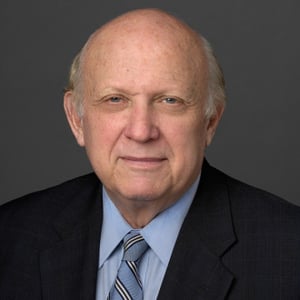
Senior Counsel, Cahill Gordon & Reindel LLP
Floyd Abrams is Senior Counsel in Cahill Gordon & Reindel LLP's litigation practice group.
Floyd has a national trial and appellate practice and extensive experience in high-visibility matters, often involving First Amendment, securities litigation, intellectual property, public policy and regulatory issues. He has argued frequently in the Supreme Court in cases raising issues as diverse as the scope of the First Amendment, the interpretation of ERISA, the nature of broadcast regulation, the impact of copyright law and the continuing viability of the Miranda rule. Most recently, Floyd prevailed in his argument before the Supreme Court on behalf of Senator Mitch McConnell as amicus curiae, defending the rights of corporations and unions to speak publicly about politics and elections in Citizens United v. Federal Election Commission. Floyd's clients have included The McGraw-Hill Companies in a large number of litigations around the country involving claims against its subsidiary, Standard & Poor’s Financial Services LLC, The New York Times in the Pentagon Papers case and others, ABC, NBC, CBS, CNN, Time Magazine, Business Week, The Nation, Reader's Digest, Hearst, AIG, and others in trials, appeals and investigations.
Floyd has represented Standard & Poor’s in litigations about its ratings; he defended the Brooklyn Museum of Art in its legal battles with Mayor Rudolph Giuliani; he represented two of the nation’s largest insurers in litigation under Section 17200 in California and he has frequently testified before congressional committees and prepared clients to do so. In 1998, he represented CNN in investigating and issuing a report on its broadcast accusing the United States of using nerve gas on a military mission in Laos in 1970, and again in 1999 in seeking to persuade the United States Senate to permit the public to view its deliberations as it determined whether or not to convict President Clinton of alleged high crimes and misdemeanors. He represented Nina Totenberg and National Public Radio in the 1992 "leak" investigation conducted by the United States Senate arising out of the confirmation hearing of Justice Clarence Thomas and, in 2004 and 2005, Judith Miller and Matthew Cooper in their efforts to avoid revealing their confidential sources.
In 2006, Floyd was elected to the American Academy of Arts & Sciences, an independent research center that conducts multidisciplinary studies of complex and emerging problems advanced by its 4,600 elected members, who are leaders in the academic disciplines, the arts, business and public affairs from around the world. In 2015, Floyd was honored by Yale Law School with its prestigious Award of Merit. Also in 2015, Floyd received the Walter Cronkite Freedom of Information Award presented by the Connecticut Foundation for Open Government. In 2011, Floyd was awarded the CUNY Graduate School of Journalism's Lifetime Achievement Award. In 1998, Floyd was the recipient of the William J. Brennan, Jr. Award for outstanding contribution to public discourse; the Learned Hand Award of the American Jewish Committee; and the Thurgood Marshall Award of the Association of the Bar of the City of New York. In November, 1999, he received the William J. Brennan, Jr. award of the Libel Defense Resource Center. Floyd was awarded, in 1997, the Milton S. Gould Award for outstanding appellate advocacy by the Office of the Appellate Defender in New York. Previously he had been awarded the Ross Essay Prize of the American Bar Association for his study of the Ninth Amendment of the United States Constitution. He has also received awards from, among others, the American Jewish Congress, Catholic University, the New York and Philadelphia Chapters of the Society of Professional Journalists, Sigma Delta Chi, the New York Civil Liberties Union, the Association for Education in Journalism and Mass Communication, and the National Broadcast Editorial Association.
In November, 2011, Yale Law School announced the formation of The Floyd Abrams Institute for Freedom of Expression, whose mission is to promote free speech, scholarship and law reform on emerging questions concerning traditional and new media. Developed in cooperation with Floyd, the Institute includes a clinic for Yale Law students to engage in litigation, draft model legislation, and advise lawmakers and policy makers on issues of media freedom and informational access.
The American Bar Association awarded Floyd its Certificate of Merit for his article published in The New York Times Magazine entitled "The New Effort to Control Information," which was described by the ABA as a "noteworthy contribution to public understanding of the American system of law and justice."
Described by Senator Daniel Patrick Moynihan as "the most significant First Amendment lawyer of our age," Floyd is top-ranked by Chambers USA. He is listed in Who’s Who Legal, Who’s Who in American Law, and has been awarded with Lifetime Achievement Awards by The New York Law Journal and The American Lawyer (2013).
Floyd, who served as chairman of Mayor Edward Koch's Committee on Appointments, New York City, served as the Chairman of the New York State Zenger Commemoration Planning Committee. Previously, he served as the Chairman of the Communications Committee of the Association of the Bar of the City of New York, as well as Chairman of the Committee on Freedom of Speech and of the Press of the Individual Rights Section of the American Bar Association and of the Committee on Freedom of Expression of the Litigation Section of the American Bar Association.
He has appeared frequently on television on Nightline, the News Hour with Jim Lehrer, Charlie Rose and other programs and has published articles and reviews in The New York Times, The Washington Post, The Yale Law Journal, The Harvard Law Review, and elsewhere.
Floyd served on the Technology and Privacy Advisory Committee of the U.S. Department of Defense in 2003-4 and as the Chair of the New York State Commission on Public Access to Court Records in 2004.
For fifteen years, Floyd was the William J. Brennan, Jr. Visiting Professor of First Amendment Law at the Columbia Graduate School of Journalism. He has, as well, been a Visiting Lecturer at Yale Law School and Columbia Law School and he is author of Friend of the Court: On the Front Lines with the First Amendment, published by Yale University Press (2013) and Speaking Freely: Trials of the First Amendment, published by Viking Press (2005).
Senior Fellow, Hudson Institute
Gabriel Schoenfeld is a Senior Fellow at the Hudson Institute in Washington, DC, and a Resident Scholar at the Witherspoon Institute in Princeton, New Jersey. His essays on national security and modern history have appeared in leading publications, including the New York Times, Wall Street Journal, Los Angeles Times, Washington Post, Weekly Standard, New Republic, Atlantic, National Interest, Bulletin of the Atomic Scientists, and Commentary, where from 1994 to 2008 he was Senior Editor. His previous book, The Return of Anti-Semitism, was published by Encounter in 2004.
Before joining Commentary, Schoenfeld was a Senior Fellow at the Center for Strategic and International Studies in Washington, DC, where he founded the research bulletin Soviet Prospects. Schoenfeld was an IREX Scholar at Moscow State University, holds a PhD from Harvard University’s Department of Government, and is a United States Chess Federation master. The father of three daughters, he lives in New York City.
Attorney, Kobre & Kim LLP
Eric Snyder is an experienced trial lawyer and investigator who has handled numerous high-profile cases. Prior to joining Kobre & Kim LLP, Mr. Snyder served in the U.S. Department of Justice for more than a decade; as a Trial Attorney in the Criminal Division at the U.S. Department of Justice in Washington DC, and as an Assistant U.S. Attorney at the U.S. Attorney's Office for the Southern District of New York. Mr. Snyder also served as an Assistant District Attorney in the New York County District Attorney's Office. His practice focuses on white-collar criminal defense, internal investigations, regulatory enforcement and business litigation matters.
Prior to joining Kobre & Kim LLP, Mr. Snyder served as an Assistant U.S. Attorney at the U.S. Attorney's Office for the Southern District of New York in the Terrorism & National Security, Organized Crime and International Narcotics Trafficking Units.
Mr. Snyder also practiced as a Trial Attorney in the Criminal Division, Narcotic and Dangerous Drug Section at the U.S. Department of Justice.
Before his time at the U.S. Attorney's Office, Mr. Snyder served as an Assistant District Attorney at the New York County District Attorney's Office.

Founder and Executive Director, National Security Institute; Assistant Professor of Law, Antonin Scalia Law School, George Mason University
Jamil N. Jaffer is the Founder and Executive Director of the National Security Institute at the Antonin Scalia Law School at George Mason University where he also serves as an Assistant Professor of Law, Director of the National Security Law and Policy Program, and Director of the Cyber, Intelligence, and National Security LLM Program. Jamil also teaches classes on counterterrorism, intelligence, surveillance, cybersecurity, and other national security matters, as well as a summer course held abroad with U.S. Supreme Court Justice Neil M. Gorsuch. Jamil is also affiliated with Stanford University’s Center for International Security and Cooperation and previously served as a Visiting Fellow at the Hoover Institution from 2016 to 2019.
Jamil is also a Venture Partner with Paladin Capital Group, where he assists the firm with investments across the full range of its themes and theses, including a focus on dual-use national security technologies. Jamil also serves on the board of directors of RangeForce, a cybersecurity training and readiness platform startup and Tozny, a digital identity startup, and on the advisory boards of U.S. Strategic Metals, North America’s largest primary producer of cobalt, a critical mineral used in EV batteries, aerospace, and other national security applications; and Constella Intelligence, a deep and dark web intelligence startup. Jamil also serves as an advisor to Beacon Global Strategies, a strategic advisory firm and Duco, a technology platform startup that connects corporations with geopolitical and international business experts. Jamil is also the managing director of Trigraph Caveat Capital, a private investment vehicle.
Among other things, Jamil currently serves on the Board of Directors for the Greater Washington Board of Trade, the Board of Advisors for the Global Cyber Alliance, and the Advisory Board of the Foundation for the Defense of Democracies’ Center on Cyber and Tech Innovation, the Executive Committee of the Reagan Institute Strategy Group. Jamil is also a Fellow at the Academy for Judaic, Christian, and Islamic Studies, an advisor to the Concordia Summit, and is a member of the Board of Directors for the Center for Intelligence Policy, the Board of Directors of Speech First, and the Executive Committee of the International Law and National Security Practice Group of the Federalist Society.
Immediately prior to his current positions, from 2015-2021, Jamil served as a senior business leader at IronNet Cybersecurity, helping take the company from a bootstrapped first-year technology products startup through two rounds of venture capital fundraising, growing from 40 employees to over 300, and through its listing on New York Stock Exchange. In his role as IronNet's Senior Vice President for Strategy, Partnerships & Corporate Development, Jamil worked directly for the co-CEOs of the company, Gen (ret.) Keith B. Alexander, the former Director of the National Security Agency and Founding Commander of U.S. Cyber Command, and Bill Welch, the former COO of Zscaler and Duo; in that role, Jamil led all of the company’s strategic and technology partnership efforts, including developing go-to-market and technology integration plans with some of the largest cloud platforms and cybersecurity companies in the market, evaluating potential acquisition targets, and developing overall corporate strategy and thought leadership around collective security and collaborative defense in the cyber arena.
Prior to his time at IronNet, Jamil served on the leadership team of the Senate Foreign Relations Committee as Chief Counsel and Senior Advisor under Chairman Bob Corker (R-TN), where he worked on key national security and foreign policy issues, including leading the drafting of the proposed Authorization for the Use of Military Force against ISIS in 2014 and 2015, the AUMF against Syria in 2013, and revisions to the 9/11 AUMF against al Qaeda. Jamil was also the lead architect of the Iran Nuclear Agreement Review Act and two sanctions laws against Russia for its first intervention in Ukraine.
Prior to joining SFRC, Jamil served as Senior Counsel to the House Permanent Select Committee on Intelligence under Chairman Mike Rogers (R-MI) where he led the committee’s oversight of NSA surveillance, NRO intelligence issues, and NGA analytic and collection matters, as well as intelligence community-wide counterterrorism issues. Jamil was also the lead architect of the Cyber Intelligence Sharing and Protection Act, the nation’s first cyber threat intelligence sharing legislation that was signed into law in 2015.
In the Bush Administration, Jamil served in the White House as an Associate Counsel to the President, handling Defense Department, State Department, and intelligence community matters, and serving as one of the White House Counsel’s primary representatives to the National Security Council Deputies Committee.
Prior to the White House, Jamil served on the leadership team of the Justice Department’s National Security Division as Counsel to the Assistant Attorney General for National Security, where he focused on counterterrorism and intelligence matters. At NSD, Jamil helped lead the division’s work on In re: Directives, the first ever two-party litigated matter in the FISA Court and the second case before the FISA Court of Review in its 30-year history. Jamil also led NSD’s efforts on the President’s Comprehensive National Cybersecurity Initiative (CNCI), including the drafting of NSPD-54/HSPD-23, and related classified matters, and advised the National Security Agency (NSA) and U.S. Cyber Command’s predecessor organization, the Joint Function Component Command for Network Warfare (JFCC-NW), on matters related to cyber intelligence collection and offensive cyber activities. For his work on these matters, Jamil was awarded the Assistant Attorney General’s Award for Special Initiative and was among the group of lawyers awarded the Director of National Intelligence’s 2008 Legal Award (Team of the Year – Cyber Legal).
Jamil also served in other positions in the Justice Department, including in the Office of Legal Policy, where he worked on the confirmations of Chief Justice John G. Roberts, Jr. and Justice Samuel A. Alito, Jr. to the United States Supreme Court.
Jamil also served as a lawyer in private practice at Kellogg Huber, a Washington, DC-based litigation boutique, as a policy advisor to Congressman Bob Goodlatte (R-VA), and as a staff member or senior advisor on a number of political campaigns, including two presidential campaigns and a presidential transition team. While in law school, Jamil was a member of the University of Chicago Law Review, managing editor of the Chicago Journal of International Law, and National Symposium Editor of the Harvard Journal of Law & Public Policy. Following law school, Jamil served as a law clerk to Judge Edith H. Jones of the United States Court of Appeals for the Fifth Circuit and, later in his career, as a law clerk to then-Judge Neil M. Gorsuch when he first joined the United States Court of Appeals for the Tenth Circuit as well as a law clerk to Justice Neil Gorsuch when he joined the U.S. Supreme Court.
Jamil has published multiple op-eds and academic articles on national security, foreign policy, cybersecurity, counterterrorism, encryption, and intelligence matters, and is the co-author of a book chapter with former NSA Director Gen. (Ret.) Keith B. Alexander on national security and the press in National Security, Leaks, and the Freedom of the Press: The Pentagon Papers Fifty Years On (2021) and a book chapter with former CIA Director Gen. (ret.) Mike Hayden on ISIS, al Qaeda, and other international terrorist groups in Choosing to Lead: American Foreign Policy for a Disordered World (2015). Jamil has also written book chapters on cybersecurity and surveillance, as well as op-eds and policy papers with former Attorney General Michael B. Mukasey, former National Counterterrorism Center Director Matt Olsen, and Congressman Mike Waltz (R-FL), among others.
Jamil has previously taught graduate-level courses in intelligence law and policy at George Washington University’s Elliott School of International Affairs and the National Intelligence University, served an outside advisor to the Cyberspace Solarium Commission, and has recently testified before committees of the U.S. Senate and House of Representatives on China, cybersecurity, counterterrorism, and other national security matters. Jamil has also recently appeared on a range of national television and radio outlets including CNN, Fox News, Fox Business, MSNBC, Bloomberg, PBS, Voice of America, and National Public Radio, and in various print and online publications, including the Wall Street Journal, New York Times, and the Washington Post on a range of national security matters including cybersecurity, counterterrorism, surveillance, encryption, privacy, and foreign policy issues.
Jamil holds degrees from UCLA (BA, cum laude), the University of Chicago Law School (JD, with honors), and the United States Naval War College (MA, with distinction).

Founding Partner, Cooper & Kirk PLLC
Charles J. Cooper is a founding member and the chairman of Cooper & Kirk, PLLC, “one of the Nation’s leading litigation boutiques” (Above The Law 2017). The National Law Journal recently wrote that Mr. Cooper’s “brilliant legal career has so far spanned five decades and thrust Cooper into the spotlight in some of the most historic moments of the country’s modern history.” He has argued nine cases before the United States Supreme Court and scores of appeals before each of the 13 federal courts of appeals and several state supreme courts. He has been lead trial counsel in numerous complex, weeks-long trials in federal courts throughout the country. Named by the National Law Journal as one of the 10 best litigators in Washington D.C., Mr. Cooper’s work has been reported in numerous press accounts, and he has been called a “powerhouse attorney” (Fortune 2015), “a hard-nosed litigator” (Washington Post 2017), and “one of the country’s most in-demand civil litigators and a Washington legal institution unto himself” (The American Spectator 2014).
After graduating from the University of Alabama School of Law in 1977, where he ranked first in his class and served as Editor-in-Chief of the Alabama Law Review, Mr. Cooper began his career as a law clerk to Judge Paul Roney on the Fifth Circuit Court of Appeals and to Justice William H. Rehnquist in 1978–79. He then practiced law in Atlanta for two years before joining the Civil Rights Division of the U.S. Department of Justice, where he served as the Deputy Assistant Attorney General in charge of, among other things, appellate matters. In 1985 President Reagan appointed him to the position of Assistant Attorney General for the Office of Legal Counsel, which is the office responsible for providing legal opinions and advice to the White House, the Attorney General, and Executive Branch departments and agencies on issues covering the full spectrum of federal constitutional, statutory, and regulatory law.
In 1988 he returned to private practice as a litigation partner in the Washington, D.C. office of McGuireWoods. From 1990 until the founding of Cooper & Kirk in 1996, he was a partner at Shaw Pittman (now Pillsbury Winthrop Shaw Pittman), where he headed the firm’s Constitutional and Government Litigation Group.
Mr. Cooper has represented a wide range of public and private clients in highly complex constitutional, civil rights, antitrust, healthcare, banking, intellectual property, elections, campaign finance, administrative, commercial, and government contract cases. He has led trial teams in cases that have won judgments and settlements valued in the billions of dollars and that have established ground-breaking constitutional precedents.
Much of Mr. Cooper’s practice has involved representing high-profile clients in nationally prominent matters, including: the State of Florida in a First Amendment suit brought by the Disney Company concerning its autonomous regulatory authority over its Disney World property; the Commonwealth of Virginia in a suit seeking to enjoin the removal of noncitizens from its voter rolls; 38 members of the Duke Lacrosse team falsely accused of rape by officials of Duke University and the City of Durham; Harper Lee in a copyright dispute with the heirs of Gregory Peck; high-ranking former government officials such as former Attorneys General John Ashcroft, Jeff Sessions, and William Barr, and Ambassador John Bolton; several Governors and United States Senators; over 100 Members of Congress; and many state, territorial, and local government bodies and officials. He has also represented and advised government officials and public figures in connection with sensitive private issues that needed to be, and were, resolved discreetly without becoming matters of public record.
In 1998 Chief Justice Rehnquist appointed Mr. Cooper to the Standing Committee on Rules of Practice and Procedure of the Judicial Conference of the United States, where he served for three terms. He also served as a Public Member, appointed by President George H.W. Bush, of the National Commission on Judicial Discipline and Removal. He is a member of numerous professional associations, including the American Law Institute (since 1993) and the American Academy of Appellate Lawyers (since 1996). He is also an active member of the Federalist Society and the Republican National Lawyers Association, which in 2010 named him Republican Lawyer of the Year and in 2016 honored him with its Edwin Meese III Award.
Mr. Cooper has published scores of articles and spoken extensively on constitutional and legal policy topics. He has appeared before congressional committees on 26 occasions, testifying as an expert on a wide variety of legal issues, including the Chevron doctrine of judicial deference to administrative agencies, the diversity of citizenship jurisdiction of federal courts, statehood bills for Puerto Rico and the District of Columbia, and the impeachment of President Clinton.
United States Representative, United States House of Representatives
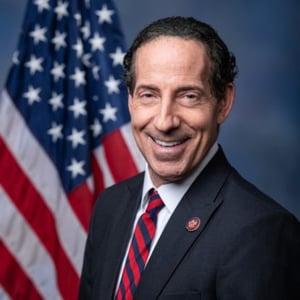
Congressman Jamie Raskin proudly represents Maryland’s 8th Congressional District in the U.S. House of Representatives. The district includes Montgomery, Carroll, and Frederick Counties. Congressman Raskin was sworn into his second Term at the start of the 116th Congress on January 3, 2019.
Congressman Raskin is a returning Member of the House Judiciary Committee, the Committee on Oversight and Reform, and the Committee on House Administration. This Congress, he joined the House Committee on Rules and now Chairs the Rules Subcommittee on Expedited Procedures. Raskin is Vice Chair of the House Administration Committee, Chair of the Oversight Subcommittee on Civil Rights and Civil Liberties, and Vice Chair of the Judiciary Subcommittee on the Constitution. Raskin is the Caucus Leadership Representative for the 116th Congress, a role in which he represents Junior Members of the Caucus (those who have served five or less Terms) at the leadership table. He was also appointed to serve as a Senior Whip for the 116th Congress.
Prior to his time in Congress, Raskin was a three-term State Senator in Maryland, where he also served as the Senate Majority Whip. He earned a reputation for building coalitions in Annapolis to deliver a series of landmark legislative accomplishments. He was also a professor of constitutional law at American University’s Washington College of Law for more than 25 years. He authored several books, including the Washington Post best-seller Overruling Democracy: The Supreme Court versus the American People and the highly-acclaimed We the Students: Supreme Court Cases For and About America’s Students, which has sold more than 50,000 copies.
Congressman Raskin is a graduate of Harvard College and Harvard Law School. He and his wife, Sarah Bloom Raskin, live in Takoma Park with their dogs, Potter and Toby. They have three grown children: Tabitha, Tommy, and Hannah.
Legal Director & Chief Legislative Counsel, Human Rights Campaign
Lara Schwartz joined the Human Rights Campaign as senior counsel in 2002. Schwartz advocates against discriminatory constitutional amendments such as the "Federal Marriage Amendment." She promotes legislation on tax, benefits and other issues that affect the everyday lives of gay, lesbian, bisexual and transgender people and their families, as well as legislation to prevent bias motivated violence. Schwartz works on matters affecting the judiciary, including judicial nominations and opposition to measures that threaten judicial independence. Before joining HRC, Schwartz was associated with the law firm of Gilbert, Heintz & Randolph LLP, where she focused on legislative redistricting, voting rights, insurance litigation and fair housing. Before that, she was with the law firm of Skadden, Arps, Slate, Meagher, & Flom, where her practice included defending Securities and Exchange Commission investigations and representing companies in rulemaking proceedings. Before going into private practice, Schwartz served as a law clerk to the Hon. Ronald Lee Gilman on the U.S. Court of Appeals for the 6th Circuit. A graduate of Harvard Law School and Brown University, she is admitted to the bars of Maryland and Washington, D.C.
Freelance Journalist and Author
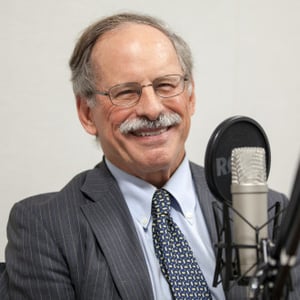
Stuart Taylor, Jr. is a Washington writer focusing on legal and policy issues and a National Journal contributing editor. He occasionally practices law.
Taylor has coauthored three books. All have been acclaimed by commentators across the ideological spectrum. In January 2017, KC Johnson and Taylor authored The Campus Rape Frenzy: The Attack on Due Process at America's Universities. In 2012, Richard Sander and Taylor authored Mismatch: How Affirmative Action Hurts Students It's Intended to Help, and Why Universities Won't Admit It. In 2007, Taylor and Johnson authored Until Proven Innocent: Political Correctness and the Shameful Injustices of the Duke Lacrosse Rape Fraud. Sander and Taylor have also filed amicus briefs in Supreme Court cases involving admissions preferences.
Since 1980, Taylor has done reporting and commentary about issues ranging from the biggest Supreme Court cases to race, voting rights, mindlessly excessive criminal penalties, guilt-presuming campus rape processes, journalistic bias, the death penalty, war powers, gerrymandering, guns, polarization, civil liberties, national security, torture, campaign finance, education, impeachment, and other issues. He has often been called one of the nation's best legal journalists and is known for challenging both liberal and conservative conventional wisdom.
Taylor was a reporter for The New York Times from 1980-1988, covering legal affairs and then the Supreme Court. He wrote commentaries and long features for The American Lawyer, Legal Times and their affiliates from 1989-1997, and for National Journal and Newsweek from 1998 through 2010. He has written (less often) on a freelance basis for numerous publications since 2010. He has written op-eds for The Washington Post, The New York Times, The Wall Street Journal, The Los Angeles Times, USA Today, and The New York Daily News and longer commentaries for RealClearPolitics, The Atlantic, The New Republic, the (late) Weekly Standard, National Review, Slate, The Daily Beast, Harper’s, Reader’s Digest, Time and other magazines. He has been interviewed on all major television and radio networks. He taught “Law and the News Media” at Stanford Law School in 2011 and 2012 and practices law on occasion.
Taylor graduated from Princeton University in 1970 with an A.B. in History. After working as a reporter for the Baltimore Evening Sun and Sun from 1971-1974, he moved to Harvard Law School, was a Harvard Law Review note editor, and graduated in 1977 at the top of his class, with high honors. He also won a Frederick Sheldon Traveling Fellowship and traveled around the world in 1977-1978 while studying freedom of the press in the United Kingdom and Kenya.
Taylor practiced law with Wilmer, Cutler & Pickering, in Washington, D.C., from 1977-1980 before returning to journalism in 1980 by joining the Washington Bureau of The New York Times.
Taylor's journalism honors include the 2009 Northern California Innocence Project Media Award for his work on the Duke lacrosse rape fraud; a 2002 National Headliner Award for best special magazine column on one subject; and a share of The American Lawyer’s National Magazine Award for a March 1990 special issue on the drug war. He was a National Magazine Award finalist in 1993 and 1997 and was nominated by The New York Times for a Pulitzer Prize in 1988.

Professor Emeritus, Paul M. Hebert Law Center, Louisiana State University
In memoriam
Dr. John Baker is Professor Emeritus of Law, and previously the Dale E. Bennett Professor of Law, at Louisiana State University Law School. He is currently Visiting Professor at Peking University School of Transnational Law (via Zoom) and has been Visiting Professor at The Center for the Constitution, Georgetown Law School (2013-2020). He has also been a Visiting Fellow at Oriel College, the University of Oxford (2012-2014) and taught at Blackfriars Hall, Oxford in 2014. Dr. Baker has also been an adjunct Fellow at the Heritage Foundation (Spring, 2008) and a Distinguished Scholar at the Catholic University of America Law School (2011-12). He has taught at Tulane Law School, George Mason Law School, Pepperdine Law School, New York Law School, Hong Kong University, and the University of Dallas, School of Management and also taught and/or lectured in 17 foreign countries. Notable among his foreign visits are the
following: Visiting Professor at the University of Lyon III (France) (1999-2011); Visiting Professor at the Universidad de los Andes, Chile (2012), as a Fulbright Specialist (2006); and a Fulbright Scholar at various universities in the Philippines. Dr. Baker received his J.D., with honors, from the University of Michigan Law School and his B.A., magna cum laude, from the University of Dallas. He also earned a Ph.D. in Political Thought from the University of London. Baker has taught over a dozen different subjects, mostly courses in public law. His main areas of interest are Constitutional Law (particularly federalism and separation of powers), Criminal Law, Anti-Terrorism Law, International Law, Health Care Law, Mediation, and Comparative Law.
In addition to law review articles and book chapters, Dr. Baker’s academic publications include Hall's Criminal Law: Cases and Materials (with Benson, Force and George; 5th ed. Michie, 1993); An Introduction to the Law of the United States (ed. with Levasseur; University Press of America, 1992). He has also published on Forbes.com, FoxNews.com, in The Washington Times, and a number of times in The Wall Street Journal. He argues in federal court, including two oral arguments in the U.S. Supreme Court. For many years, he co-taught courses for the Federalist Society on separation of powers with the late Supreme Court Justice Antonin Scalia. In September 2016, he co-taught a Supreme Court seminar in China with Justice Samuel Alito. Following law school, he served as a law clerk in federal district court and as an assistant district attorney in New Orleans before joining LSU in 1975. While a professor, he has been as a consultant to USAID, USIA (since rolled into the State Department), the Justice Department, the U.S. Senate Judiciary Subcommittee on Separation of Powers, and the Office of Planning in the White House. He served on an ABA Task Force which issued the report, The Federalization of Crime (1998) and later as a consultant to the “Bi-Partisan Task Force on the Over- federalization of Crime” (2012-2014) created by the U.S. House Judiciary Subcommittee on Crime. Dr. Baker was a co-founder of the first iteration (1995) of Stratfor Inc., a global intelligence agency. He co-authored its first book: The Intelligence Edge (with Friedman, Friedman and Chapman; Crown Books/Random House 1997). In 2022, he began a short, weekly video podcast available on YouTube and Rumble, The Baker Brief.

Former President & CEO, The Federalist Society for Law and Public Policy Studies
Eugene B. Meyer, former President and CEO of the Federalist Society, has served as Executive Director, CEO, and/or President of the organization for more than 40 years. He is responsible for shepherding the organization from a small group of law students to a community of 90,000 lawyers, law students, academics, judges, and others interested in the rule of law. The Society now includes a Student Chapter at nearly every ABA-accredited law school in the country and Lawyers Chapters in 220 major cities across the nation. Gene earned his B.A. in history at Yale in 1975 and his M.A. in political science from the London School of Economics in 1976. Gene currently serves on the boards of the U.S. Chess Center, the Holman Foundation, the Sarah Scaife Foundation, and the advisory board of the Adam Smith Society. He holds the title of International Chess Master.
Former Judge, U.S. Court of Appeals, DC Circuit
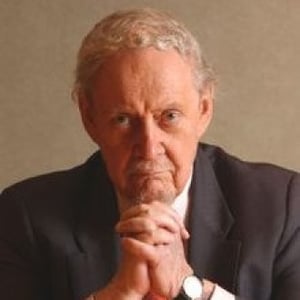
Robert Heron Bork served as Solicitor General, acting Attorney General, and judge for the United States Court of Appeals for the District of Columbia Circuit. Judge Bork passed away in December 2012.
Tribute to Judge Robert Bork by John McGinnis - Event Audio/Video
Celebration of the Life of Robert Heron Bork 1927-2012
Judge Robert H. Bork: His Life and Legacy - Practice Group Podcast
A Conference Discussing the Contributions of Judge Robert H. Bork - June 26, 2007
Senior Research Scholar in Law, Yale Law School
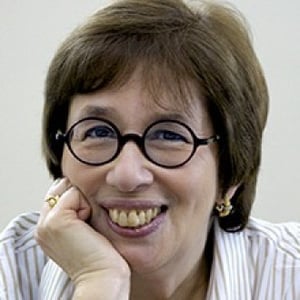
Linda Greenhouse is Senior Research Scholar in Law at Yale Law School. She covered the Supreme Court for The New York Times between 1978 and 2008 and writes a biweekly op-ed column on law as a contributing columnist. Ms. Greenhouse received several major journalism awards during her 40-year career at the Times, including the Pulitzer Prize (1998) and the Goldsmith Career Award for Excellence in Journalism from Harvard University’s Kennedy School (2004). In 2002, the American Political Science Association gave her its Carey McWilliams Award for “a major journalistic contribution to our understanding of politics.” Her books include a biography of Justice Harry A. Blackmun, Becoming Justice Blackmun; Before Roe v. Wade: Voices That Shaped the Abortion Debate Before the Supreme Court's Ruling (with Reva B. Siegel); The U.S. Supreme Court, A Very Short Introduction, published by Oxford University Press in 2012; and The Burger Court and the Rise of the Judicial Right, with Michael J. Graetz, published in 2016. Her latest book is Just a Journalist: Reflections on the Press, Life, and the Spaces Between, published by Harvard University Press in 2017. In her extracurricular life, Ms. Greenhouse is president of the American Philosophical Society, the country's oldest learned society, which in 2005 awarded her its Henry Allen Moe Prize for writing in jurisprudence and the humanities. She also serves on the council of the American Academy of Arts and Sciences, the national Senate of Phi Beta Kappa, and is one of two non-lawyer honorary members elected to the American Law Institute, which in 2002 awarded her its Henry J. Friendly Medal. She has been awarded thirteen honorary degrees. She is a 1968 graduate of Radcliffe College (Harvard) and earned a Master of Studies in Law degree from Yale Law School (1978), which she attended on a Ford Foundation fellowship. She is married to Eugene R. Fidell, Florence Rogatz Lecturer in Law at Yale. Their daughter, Hannah, is a filmmaker in Los Angeles.

Silenced: How Apostasy and Blasphemy Codes are Choking Freedom Worldwide - An Overview by the Authors
Jonathan Bunch, Paul Marshall, Nina Shea
The 1989 fatwa against Salman Rushdie and the deadly 2006 Danish cartoon riots brought worldwide...
Wikileaks: Frontier Journalism or Underminer of Liberty and Security?
Floyd Abrams, Gabriel Schoenfeld, Eric Snyder, Jamil N. Jaffer
A Federalist Society panel of free speech and national security experts discusses what, if anything,...
Supreme Court Politics: A Retrospective on the Bork Nomination
Gay Marriage and the Role of the Judiciary
Charles J. Cooper, Maggie Gallagher, Jamin Ben Raskin, Lara Schwartz, Stuart S. Taylor
On May 15, 2008, the California Supreme Court decided In re Marriage Cases. In a...
Panel Discussion on Contract Rights -- Secured Transactions
Emil Arca, John S. Baker, Wade Channell, Dale B. Furnish
The Federalist Society presented this panel at Part 1 of the 2007 U.S. Security, Trade,...
2003 Barbara K. Olson Memorial Lecture - Transcript
Eugene B. Meyer, Robert H. Bork
Address by Robert H. Bork, Senior Fellow, American Enterprise Instituteand Co-Chairman, Federalist Society Board of...