
Class of 1965 Associate Professor of Financial Regulation, Associate Professor of Legal Studies & Business Ethics, The Wharton School of the University of Pennsylvania
Peter Conti-Brown is an assistant professor of legal studies and business ethics at The Wharton School of the University of Pennsylvania. A financial historian and a legal scholar, Professor Conti-Brown studies central banking, financial regulation, and public finance, with a particular focus on the history and policies of the US Federal Reserve System. He is author of the book The Power and Independence of the Federal Reserve (Princeton University Press 2016), the editor of two other books, and author or co-author of a dozen articles on central banking, financial regulation, and bank corporate governance. He has been widely quoted in print and online media on central banking and has testified before the US Senate Banking Committee on reforming the Federal Reserve. He holds degrees from Harvard College, Stanford Law School, and Princeton University’s Department of History. He is currently at work on a single-volume, comprehensive history of the US Federal Reserve.
Professor Conti-Brown is married and the father of two children.
Partner, Boyden Gray PLLC
Trent McCotter is a partner with Boyden Gray PLLC. He previously served as Deputy Associate Attorney General of the United States and as an Assistant U.S. Attorney.
Mr. McCotter maintains an extensive appellate practice. He has considerable experience identifying and briefing cases that draw the Supreme Court’s attention, having persuaded the Court to grant certiorari in numerous cases raising issues of sovereignty, constitutional rights, due process, and criminal law. He has authored and submitted over 60 briefs at the Court.
He has also personally argued more than fifteen federal appeals across the Second, Fourth, Fifth, Sixth, Ninth, Eleventh, Federal, and D.C. Circuits—including once arguing three separate appeals in just four days. He has also twice argued before the 17-judge en banc Fifth Circuit. He has been counsel in over 50 other appeals raising matters from FOIA and the APA to constitutional rights and statutory construction.
As Deputy Associate Attorney General, Mr. McCotter oversaw DOJ’s Civil Appellate and Federal Programs branches, which are responsible for defending nearly all major litigation against the federal government. During his three years as a federal trial attorney in the Eastern District of Virginia’s “Rocket Docket,” Mr. McCotter won the Attorney General’s Award for Distinguished Service.
During his DOJ tenures, Mr. McCotter also assisted with the confirmations of two Supreme Court justices and over a dozen lower-court judges.
Mr. McCotter served as an inaugural clerk to the Hon. Steven J. Menashi on the U.S. Court of Appeals for the Second Circuit and also clerked for the Hon. R. Lanier Anderson III on the U.S. Court of Appeals for the Eleventh Circuit.
Senior Fellow, Bank Policy Institute
Jeremy Newell is a senior fellow at the Bank Policy Institute and recognized expert in banking law and financial services regulatory policy matters. As a former partner at Covington & Burling, Federal Reserve attorney and supervisor, and general counsel at both the Bank Policy Institute and The Clearing House Association, Jeremy has spent his career helping banks and other financial institutions to understand and navigate a rapidly-evolving regulatory environment and address complex and high-stakes legal and policy challenges. He is also a frequent speaker, writer, and teacher on U.S. bank regulation and the international framework for financial institutions.
Chairman & Co-Founder, Cynosure Group
Randal Quarles is Chairman and co-founder of The Cynosure Group. Before founding Cynosure, Mr. Quarles was a long-time partner of the Carlyle Group, where he began the firm’s program of investments in the financial services industry during the 2008 financial crisis.
From October 2017 through October 2021, Mr. Quarles was Vice Chairman of the Federal Reserve System, serving as the system’s first Vice Chairman for Supervision, charged specifically with ensuring stability of the financial sector. He also served as the Chairman of the Financial Stability Board (“FSB”) from December 2018 until December 2021; a global body established after the Great Financial Crisis to coordinate international efforts to enhance financial stability. In both positions, he played a key role in crafting the US and international response to the economic and financial dislocations of COVID-19, successfully preventing widespread global disruption of the financial system. As FSB Chairman, he was a regular delegate to the finance ministers’ meetings of the G-7 and G20 Groups of nations and to the Summit meetings of the G20. As Fed Vice Chair, he was a permanent member of the Federal Open Market Committee, the body that sets monetary policy for the United States.
Earlier in his career, Mr. Quarles was Under Secretary of the U.S. Treasury, where he led the Department’s activities in financial sector and capital markets policy, including coordination of the President’s Working Group on Financial Markets.
Before serving as Under Secretary, Mr. Quarles was Assistant Secretary of the Treasury for International Affairs, where he had a key role in response to several international crises. Mr. Quarles was also the U.S. Executive Director of the International Monetary Fund, a member of the Air Transportation Stabilization Board, and board representative for the Pension Benefit Guaranty Corporation. In earlier public service, he was an integral member of the Treasury team in the George H. W. Bush Administration that developed the governmental response to the savings and loan crisis.
Between his tours of duty in public service, Mr. Quarles was a partner with the law firm of Davis Polk & Wardwell, working at various times in both the New York and London offices, where he was co-head of the firm’s financial institutions practice and advised on transactions that included a number of the largest financial sector mergers ever completed.
Mr. Quarles received an A.B. summa cum laude in philosophy and economics from Columbia in 1981 and a J.D. from the Yale Law School in 1984.
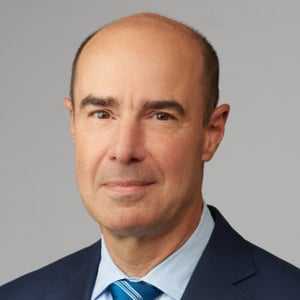
Partner, Gibson, Dunn & Crutcher, and Former United States Secretary of Labor
Eugene Scalia is a partner in the Washington, D.C. office of Gibson, Dunn & Crutcher, co-chair of the firm’s Administrative Law and Regulatory Practice Group, and a senior member of the firm’s Labor and Employment Practice Group and Financial Institutions Practice Group. He returned to the firm after serving as U.S. Secretary of Labor from September 2019 to January 2021.
Mr. Scalia has a nationally-prominent practice in two areas: Labor and employment law, and advice and litigation regarding the regulatory obligations of federal administrative agencies. He also has extensive appellate experience. Federal regulatory actions he has challenged include the SEC’s “proxy access” rule; the CFTC’s “position limits’” rule; MetLife’s designation as “too big to fail” by the Financial Services Oversight Council; the Labor Department’s “fiduciary” rule; and OSHA’s “cooperative compliance program.”
As Labor Secretary, Mr. Scalia engaged at the highest level with national employment policy and matters affecting the financial services industry and international trade, overseeing the enforcement and administration of more than 180 federal employment laws covering more than 150 million workers and 10 million workplaces. He also served as Chair of the Board of Directors of the Pension Benefit Guaranty Corporation and as a member of the White House Coronavirus Task Force. He was closely involved in the drafting and implementation of the CARES Act and other coronavirus-related legislation. Laws administered by the Labor Department also include the workplace safety requirements of OSHA and the Mine Safety and Health Administration, federal minimum wage and overtime protections, the anti-discrimination requirements applicable to federal contractors, and ERISA’s protection of the more than $11 trillion held in employee retirement plans and health plans.
Mr. Scalia served from 2002 to 2003 as Solicitor of the U.S. Department of Labor, with responsibility for all Labor Department litigation and legal advice on rulemakings and administrative law. He is the only person to have served as both Solicitor and Secretary of Labor.
He also served at the U.S. Department of Justice as a Special Assistant to the Attorney General, receiving the Department’s Edmund J. Randolph Award in 1993.
In private practice, Mr. Scalia has represented employers in high-profile matters under the National Labor Relations Act and in class actions and collective actions under Title VII, the Americans with Disabilities Act, the Age Discrimination in Employment Act, ERISA, and federal and state wage hour laws. He has extensive experience in federal district court, the courts of appeals, and in the arbitration of employment disputes. He has been a leading authority on “whistleblower” investigations and litigation since the 2002 enactment of the Sarbanes-Oxley Act. Mr. Scalia also counsels employers on reductions-in-force and the proper conduct of harassment and discrimination investigations. He has provided pro bono representation to workers in discrimination matters, wrongful separation disputes, and other matters.
Mr. Scalia is a Senior Fellow of the Administrative Conference of the United States, a federal agency that makes recommendations to Congress and the Executive Branch on ways to improve the administrative process. He is the author of more than 30 articles and papers on labor and employment law, administrative law, and other subjects. Among other accolades, he has been named an “Employment MVP,” a “Securities MVP,” and an “Appellate MVP” by Law360. The National Law Journal recognized Mr. Scalia as a “Visionary” for his litigation against financial regulatory agencies, and the Nation magazine has called him a “fearsome litigator.” He has been a Lecturer in labor and employment law at the University of Chicago Law School.
Mr. Scalia graduated cum laude from the University of Chicago Law School, where he was editor-in-chief of the Law Review. He graduated With Distinction from the University of Virginia in 1985 and was a speechwriter for Education Secretary William J. Bennett before attending law school. Mr. Scalia and his wife Trish have seven children.
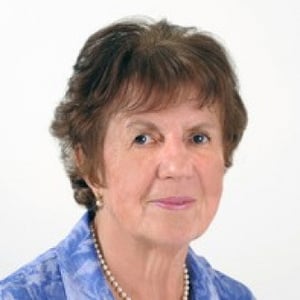
Senior Adviser, Crito Capital
Dr. Oonagh McDonald, CBE is currently a senior adviser to Crito Capital, a private placement company based in New York.
A former British Member of Parliament, she became an international expert in financial regulation, after losing her seat in the General Election, 1987. She worked with the Asian Development Bank, advising regulatory authorities in a number of countries, including Sri Lanka and Indonesia. More recently, she has worked with USAID in Ukraine and Moldova. She has served as a non-executive director on the board of both financial services companies and regulatory authorities. In 1998, she was awarded the CBE (Commander of the British Empire), a national honor by the Queen for her work in financial regulation.
She is the author of numerous articles and seven books, of which the most recent are: “Holding bankers to account: A decade of market manipulation, regulatory failures and regulatory reforms” (Manchester University Press, 2019) and “Cryptocurrencies: Money, Trust and Regulation” (Agenda Publishing, 2021).
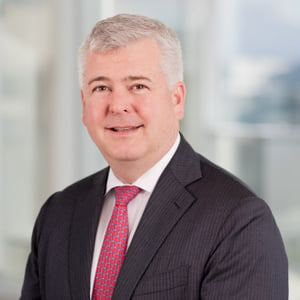
Partner and Deputy Chair, Securities Department, WilmerHale
Daniel Gallagher advises corporate boards and management on the full range of legal and strategic issues they face, and counsels financial services and accounting firms in investigations, regulatory proceedings and policy matters. Mr. Gallagher brings to his practice an unparalleled breadth of experience from having served not only in senior positions at the Securities and Exchange Commission but also as the chief legal officer of a global, S&P 500 corporation and general counsel of a broker-dealer.
Mr. Gallagher has extensive experience in the public and private sectors, navigating regulatory matters, financial markets, corporate legal affairs and governance, and fintech issues, including the regulatory and policy issues arising from new technology.
Mr. Gallagher previously served as the chief legal officer at Mylan N.V., a leading global pharmaceutical company; as the president of a financial services consulting firm; and as an SEC Commissioner. As an SEC Commissioner, Mr. Gallagher championed corporate governance reform, advocated for a comprehensive holistic review of equity market structural issues, and encouraged greatly improving the commission’s fixed income market expertise.
Mr. Gallagher also served on SEC staff in various senior roles, including as the deputy director and co-acting director of the Division of Trading and Markets, where he was on the front lines of the agency’s response to the financial crisis, including representing the commission in the Lehman Brothers liquidation. He was also a counsel to former SEC Commissioner Paul Atkins and to former Chairman Christopher Cox, working on matters involving the Division of Enforcement and the Division of Trading and Markets.
Earlier in his career, Mr. Gallagher was the senior vice president and general counsel of a global provider of financial services technology, where he managed all legal and regulatory matters. He first joined WilmerHale in 1993 as an associate in the firm’s Securities Department.

Chairman of the Securities and Exchange Commission
Paul S. Atkins was sworn into office as the 34th Chairman of the Securities and Exchange Commission on April 21, 2025, after being nominated by President Donald J. Trump on January 20, 2025, and confirmed by the U.S. Senate on April 9, 2025.
Prior to returning to the SEC, Chairman Atkins was most recently chief executive of Patomak Global Partners, a company he founded in 2009. Chairman Atkins helped lead efforts to develop best practices for the digital asset sector. He served as an independent director and non-executive chairman of the board of BATS Global Markets, Inc. from 2012 to 2015.
Chairman Atkins was appointed by President George W. Bush to serve as a Commissioner of the SEC from 2002 to 2008. During his tenure, he advocated for transparency, consistency, and the use of cost-benefit analysis at the agency. Chairman Atkins also represented the SEC at meetings of the President’s Working Group on Financial Markets and the U.S.-EU Transatlantic Economic Council. From 2009 to 2010, he was appointed a member of the Congressional Oversight Panel for the Troubled Asset Relief Program.
Before serving as an SEC Commissioner, Chairman Atkins was a consultant on securities and investment management industry matters, especially regarding issues of strategy, regulatory compliance, risk management, new product development, and organizational control.
From 1990 to 1994, Chairman Atkins served on the staff of two chairmen of the SEC, Richard C. Breeden and Arthur Levitt, ultimately as chief of staff and counselor, respectively. He received the SEC’s 1992 Law and Policy Award for work regarding corporate governance matters.
Chairman Atkins began his career as a lawyer in New York, focusing on a wide range of corporate transactions for U.S. and foreign clients, including public and private securities offerings and mergers and acquisitions. He was resident for 2½ years in his firm's Paris office and admitted as conseil juridique in France.
A member of the New York and Florida bars, Chairman Atkins received his J.D. from Vanderbilt University School of Law in 1983 and was Senior Student Writing Editor of the Vanderbilt Law Review. He received his A.B., Phi Beta Kappa, from Wofford College in 1980.
Originally from Lillington, North Carolina, Chairman Atkins grew up in Tampa, Florida. He and his wife Sarah have three sons.
Partner, Davis Polk & Wardwell LLP
Mr. Guynn is head of Davis Polk’s Financial Institutions Group. He has been recognized as a thought-leader on financial regulatory reform and as one of the most widely consulted U.S. legal advisers during the financial crisis. See “In the Red Zone,”The American Lawyer, January 2009 and “For Davis Polk, Dodd-Frank Pays,” The American Lawyer, December 2010.
He has advised the Securities Industry and Financial Markets Association (SIFMA), the principal trade organization for U.S. banks, securities firms and asset managers, all of the U.S.’s six-largest banks and several foreign banks on the Dodd-Frank Act and its regulatory implementation.
His practice focuses on providing strategic bank and regulatory and enforcement advice and advising on M&A and capital markets transactions when the target or issuer is a banking organization or other financial institution. He also advises on bank failures and recapitalizations, corporate governance and internal controls, cross-border collateral transactions, credit risk management, securities settlement systems and payment systems.
Regulatory Counsel, Institute of International Finance
David’s career in law and global finance and his worldwide travel have given him global financial and investment perspectives that are invaluable to Reynolds Group. He is highly regarded by foreign governments, international law firms, financial regulatory agencies and international financial institutions for his significant contributions on matters ranging from cross-border regulation and accounting to dematerialized clearing and settlement and anti-money laundering principles. Prior to joining the Institute of International Finance, Inc. David was a lawyer in international practice with major financial institutions. As Managing Director and Resident Counsel for J.P. Morgan’s Private Client Group, David spearheaded the legal work for a single investment services platform for the bank’s most substantial private clients. He also helped to initiate the Wolfsberg Anti-Money Laundering Principles, which are observed by the world’s major private banks. Before that David was Resident Counsel of J.P. Morgan in Brussels, as operator of Euroclear, the largest clearance and settlement system for internationally traded securities. David began his career at Davis Polk & Wardwell, in their international banking and corporate practice in New York and Paris. David graduated Magna Cum Laude from Harvard Law School where he was on the Law Review; he also has an A.M. in Modern European History from Harvard University. David received a B.A. Summa Cum Laude from Pomona College, where he was also a Lockheed Leadership Fund Scholar.
S. Samuel Arsht Professor of Corporate Law, University of Pennsylvania Law School
David Skeel is the Caryl Louise Boies Visiting Professor of Law at New York University, and the S. Samuel Arsht Professor of Corporate Law at the University of Pennsylvania. He is the author of The New Financial Deal: Understanding the Dodd-Frank Act and its (Unintended) Consequences (Wiley, 2011); Icarus in the Boardroom: The Fundamental Flaws in Corporate America and Where They Came From (Oxford University Press, 2005); Debt’s Dominion: A History of Bankruptcy Law in America (Princeton University Press, 2001); and numerous articles on bankruptcy, corporate law, financial regulation, Christianity and law, and other topics. Professor Skeel has also written commentaries for the New York Times, Wall Street Journal, Books & Culture, The Weekly Standard, and other publications.
Partner, Davis Polk & Wardwell LLP
Mr. Douglas is a partner in Davis Polk’s Financial Institutions Group, heading the firm’s bank regulatory practice and focusing on bank restructuring and resolutions and other issues arising from the current banking and financial crisis. He has been involved in some of the most difficult and sensitive matters during the crisis, including advising the boards of directors of Indymac and Bank United, counseling Citigroup with respect to FDIC matters, advising various parties on the fallout from the failure of Washington Mutual and advising various private equity firms on proposed investments in troubled or failed banks.
Mr. Douglas was appointed General Counsel of the Federal Deposit Insurance Corporation in 1987 and continued in that capacity through 1989. This was a period of unprecedented stress on the financial system, and he was involved in the major bank failures and restructurings of the late 1980s, participated in the landmark Financial Institutions Regulatory Reform and Restructuring Act of 1989 and assisted in the organization of the Resolution Trust Corporation.
Mr. Douglas is regarded as one of the leading bank insolvency lawyers in the nation.
Retired, Winston & Strawn LLP
Jerry Loeser is of counsel in the Chicago office of Winston & Strawn, and his practice focuses on banking regulation. He has extensive experience in counseling financial services clients on, among other things, bank acquisitions, privacy, financial modernization, the USA PATRIOT Act, Basel II and III, lending limits, capital, trust, affiliate transactions, and Federal Reserve, OCC, FDIC, and CFPB regulations.
Prior to working at large corporate law firms, Jerry was chief regulatory and compliance counsel for Comerica Bank, where he also served as senior vice president and deputy general counsel and as general counsel of its retail bank division. Before that, he served as chief regulatory in-house counsel at Wells Fargo & Co. Jerry began his legal career advising the Board of Governors of the Federal Reserve System in Washington, D.C.
Wayne A. Abernathy, Wild Bells
Wayne A. Abernathy is a former U.S. Treasury Assistant Secretary for Financial Institutions under President George W. Bush, receiving the Alexander Hamilton Award in recognition of his service. In that office he was also a member of the Board of Directors of the Securities Investor Protection Corporation. Prior to his work at the Treasury, Mr. Abernathy served as Staff Director of the Senate Banking Committee, under Chairman Phil Gramm.
Following his service at the Treasury, Mr. Abernathy worked for 15 years on the staff of the American Bankers Association, as Executive Vice President for Financial Institutions Policy and Regulatory Affairs.
Previous experience with the Senate Banking Committee includes serving as Staff Director of the Subcommittee on Securities during 1995-1998. From 1989 until 1994, Mr. Abernathy was a Republican economist for the committee. He previously worked as a senior legislative assistant for Senator Gramm during 1987-1989 and as an economist for the Banking Committee’s Subcommittee on International Finance and Monetary Policy during 1981-1986, under Chairman Jake Garn.
Mr. Abernathy earned his bachelor’s degree in International Studies from The Johns Hopkins University in 1978. In 1980, he received a master’s degree in International Studies from the School of Advanced International Studies of The Johns Hopkins University.
Managing Parter, Federal Financial Analytics
Principal, Ely & Company, Inc.
Bert Ely has specialized in deposit insurance and banking structure issues since 1981. In 1986, he became an early predictor of the S&L crisis and a taxpayer bailout of the FSLIC. In 1991, he was the first person to correctly predict the non-crisis in commercial banking; in 1992, he predicted an eventual taxpayer bailout of the Japanese banking system.
Bert continuously monitors conditions in the banking and S&L industries, monetary policy, and the growing federalization of credit risk. He has helped to draft legislation to enact the cross-guarantee concept for privatizing banking regulation and its related deposit insurance and systemic risks. He has testified on numerous occasions before congressional committees on banking issues and he often speaks on these matters to bankers and others.
Bert first established his consulting practice in 1972. Before that, he was the chief financial officer of a public company, a consultant with Touche, Ross & Company, and an auditor with Ernst & Ernst. He received his MBA from the Harvard Business School in 1968 and his Bachelor's degree in economics in 1964 from Case Western Reserve University.
Senior Fellow, Arthur F. Burns Fellow in Financial Policy Studies, American Enterprise Institute
Peter J. Wallison holds the Arthur F. Burns Chair in Financial Policy Studies and is co-director of AEI’s program on Financial Policy Studies. Prior to joining AEI, he practiced banking, corporate and financial law at Gibson, Dunn & Crutcher in Washington, D.C., and New York. Mr. Wallison has held a number of government positions. From June 1981 to January 1985, he was General Counsel of the United States Treasury Department, where he had a significant role in the development of the Reagan Administration's proposals for deregulation in the financial services industry. During 1986 and 1987, Mr. Wallison was White House counsel to President Ronald Reagan, and between 1972 and 1976, he served first as Special Assistant to New York's Gov. Nelson A. Rockefeller and, subsequently, as counsel to Mr. Rockefeller as vice president of the United States.
Mr. Wallison was admitted to practice before the courts of New York and the District of Columbia, and is retired from practice in New York. He continues to be a member of the District of Columbia Bar Association. He received his undergraduate degree from Harvard College in 1963 and law degree from Harvard Law School in 1966.
Mr. Wallison is the author of Ronald Reagan: The Power of Conviction and the Success of His Presidency, published in December 2002 by Westview Press. On campaign finance, he is the author (with Joel Gora) of Better Parties, Better Government, (AEI Press 2009). On financial or regulatory matters, he is the author of Back From the Brink, a proposal for a private deposit insurance system, and co-author of Nationalizing Mortgage Risk: The Growth of Fannie Mae and Freddie Mac; The GAAP Gap: Corporate Disclosure in the Internet Age; Competitive Equity: A Better Way to Organize Mutual Funds; Bad History, Worse Policy: How a False Narrative about the Financial Crisis Led to the Dodd-Frank Act (AEI Press 2013); and Hidden In Plain Sight: What Caused the World’s Worst Financial Crisis and Why it Could Happen Again (Encounter Books 2015). His most recent book is Judicial Fortitude: The Last Chance to Rein in the Administrative State, published by Encounter Books in October 2018.
He testifies frequently before committees of Congress, and is a frequent contributor to the op-ed pages of the Wall Street Journal and other print and online journals. He has also been a speaker at many conferences on financial services, housing, the causes of the financial crisis, the Dodd-Frank Act, accounting, and corporate governance, and was a member of the Shadow Financial Regulatory Committee between 1995 and 2015. He was a member of the SEC Advisory Committee on Improvements to Financial Reporting (2008), co-Chair of the Pew Financial Reform Task Force (2009), and a member of the congressionally- appointed Financial Crisis Inquiry Commission (2009-2011). In May 2011, for his work in financial policy, Mr. Wallison received an honorary doctorate in Humane Letters from the University of Colorado.
Senior Attorney, Institute for Free Speech
Charles “Chip” Miller joined the Institute for Free Speech as a Senior Attorney in May 2023, where he has handled cases in the 1st, 5th, and 10th Circuits, District Courts in Maine, Iowa, Kansas, Ohio, Texas and Utah, and State Supreme Courts in Alaska and Connecticut, as well as amicus briefs in SCOTUS and the First Circuit. At IFS, Miller's work focuses on Campaign Finance, Donor Privacy, Political Speech and Freedom of the Press. Miller previously served as Ohio’s Deputy Attorney General, where he directed major litigation. Before joining the state AG’s office as General Counsel, he served as a judge for the First Appellate District of Ohio and had also served as a “visiting judge” on the Ohio Supreme Court. Prior to entering public service, Miller spent over 10 years at Keating, Muething & Klekamp, PLL as a litigation partner arguing cases before the Sixth Circuit and the Ohio Supreme Court.
Miller has extensive litigation and appellate experience and has spearheaded important regulatory matters. His previous work includes advancing innovative protections of free expression and competition in the digital sphere.
Miller is a graduate of Boston University College of Law and clerked for Justice Maureen O’Connor at the Ohio Supreme Court. Among other honors, Miller was selected to represent Boston University at the National First Amendment Moot Court.

Navigating the Capital Adequacy Rule: Legal and Policy Perspectives
Peter Conti-Brown, Trent McCotter, Jeremy Newell, Randal K. Quarles, Eugene Scalia
Registration to attend this event in person is now closed. Join us on April 10, 2024,...
Crypto International [The FedSoc Films Podcast]
Oonagh Ann McDonald
In this episode of the FedSoc Films Podcast, we spoke with Oonagh McDonald, senior adviser...
Topics
Federal Reserve at the Margin
Should you borrow money in order to invest it? Good question. Talk with your financial advisor. Do not...
A Conversation with SEC Commissioners Daniel Gallagher and Paul Atkins - Podcast
Daniel M. Gallagher, Paul S. Atkins
Securities and Exchange Commissioner Daniel Gallagher and former Commissioner Paul Atkins joined us on a...
Solving the "Too Big to Fail" Problem: Resolution Authority vs. Chapter 14 - Podcast
Randall D. Guynn, David Schraa, David Skeel, John L. Douglas
With the passage of Dodd-Frank, Congress and the administration are proudly announcing the end of...
Changing Landscape: Thrift Holding Companies and Their New Regulator
Julius L. Loeser
The Dodd-Frank Act, effective July 21, 2011, eliminated the Office of Thrift Supervision (“OTS”) and...
The Ideal Basel
Wayne A. Abernathy, Keith R. Fisher, Karen Shaw Petrou, Michael Roster, Charles Taylor
What are the alternatives for resolving the multiple Basel imbroglios? How can any potential adverse...
A Basel Backgrounder
Bert Ely, George E. French, Peter J. Wallison, Gary Wilhite, Charles M. Miller
Is an international bank capital standard constitutional in the U.S. without Senate ratification as if...
Basel II Moves Global Banking Toward Self-Regulation
Charles M. Miller
The Basel II Capital Accord is designed to improve the international flow of capital while...