
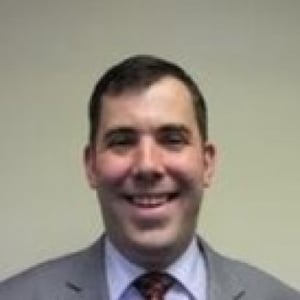
Transfer Pricing Senior Associate, PricewaterhouseCoopers LLP

Professor of Law, Maurer School of Law, Indiana University of Bloomington
Professor David Gamage is a scholar of tax law and policy and also of health law and policy. He has written extensively on tax and budget policy at both the U.S. state and federal levels, as well as on tax theory, fiscal federalism, and the intersections between taxation and health care. Professor Gamage consistently ranks in the top five of the SSRN Tax Professor Rankings.
Gamage has authored or coauthored over fifty scholarly articles and essays. His scholarship has appeared in a range of journals, including the peer-edited Tax Law Review and Public Finance Review, and the flagship law reviews of the University of Chicago, the University of California, and Northwestern Law Schools. His casebook, Taxation: Law, Planning, and Policy, is published by Carolina Academic Press.
From 2010 through 2012, Gamage served as special counsel to the U.S. Department of the Treasury, Office of Tax Policy. In that position, he administered the individual income tax portfolio of the Treasury Department's Tax Legislative Counsel, and he oversaw the drafting of all individual income tax regulations and executive branch initiatives related to the individual income tax. Gamage's position primarily involved the drafting and implementation of tax provisions of the Affordable Care Act ("Obamacare"). Since returning to academia in 2012, Gamage has served on a tax reform commission for the state of California and has regularly advised other state and federal policymakers on tax and health policy.
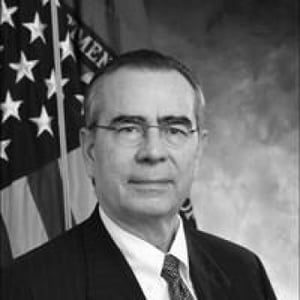
Senior Policy Advisor, PwC
L.G. “Chip” Harter: L.G. "Chip" Harter is a senior policy advisor to PwC. He served the Department of the Treasury as Deputy Assistant Secretary of Tax Policy for International Tax Affairs from September 2017 through November 2020. As Deputy Assistant Secretary for International Tax Affairs, Mr. Harter was responsible for all international tax matters at Treasury. He played a central role in representing the Treasury in the legislative process for the Tax Cuts and Jobs Act (TCJA), which was signed into law in December 2017. Mr. Harter then led the development and issuance of an integrated set of regulations to implement the new international provisions of the TCJA, including regulations to implement the Global Intangible Low Tax Income (GILTI) regime, the Base Erosion Anti-Avoidance Tax (BEAT), and the Foreign Derived Intangible Income (FDII) regime.
Mr. Harter also represented the United States in tax negotiations at the Organisation for Economic Cooperation and Development (OECD). At the OECD, he led the efforts to revise long-standing international tax rules that provide for the allocation of taxing rights over multinational businesses, representing the United States in negotiations over the designs of the Pillar 1 and Pillar 2 proposals.
In recognition of these services, Mr. Harter was awarded the Treasury Medal. Prior to joining the Treasury, Mr. Harter served for 18 years as a principal in the Washington National Tax Service of PwC. Prior to joining PwC, Mr. Harter served 18 years, first as an associate and then as a partner, with the international law firm of Baker& McKenzie. He is a member of the District of Columbia Bar.
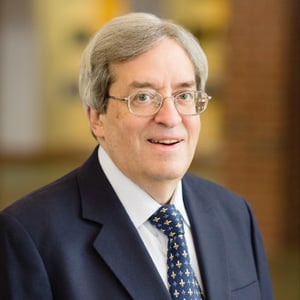
Guy Raymond Jones Chair in Law, University of Illinois
Professor Richard Kaplan, the Guy Raymond Jones Chair in Law, graduated from Indiana University with highest honors and earned his law degree from Yale University. He practiced law in Houston with Baker & Botts, specializing in U.S. tax consequences of international transactions, before joining the faculty in 1979. An internationally recognized expert on U.S. taxation and tax policy, he has lectured in these areas on three continents, testified before the U.S. Congress on several occasions, and written innovative course books on income taxation and international taxation.
Professor Kaplan developed one of the first law school courses on elder law, an emerging specialty dealing with the legal implications of extended life, and is the co-author of Elder Law in a Nutshell (7th ed. 2019). He has served as faculty advisor for the Elder Law Journal since its inception in 1992. He has also been recognized with the Outstanding Professor in the College of Law several times and has received the Campus Award for Excellence in Graduate and Professional Teaching at the University of Illinois. Professor Kaplan is a fellow of the Employee Benefits Research Institute and a member of the National Academy of Social Insurance.

Mizuho Financial Group Professor of Finance, Harvard Business Sc, Harvard Law School
Mihir A. Desai is the Mizuho Financial Group Professor of Finance at Harvard Business School and a Professor of Law at Harvard Law School. He received his Ph.D. in political economy from Harvard University; his MBA as a Baker Scholar from Harvard Business School; and a bachelor's degree in history and economics from Brown University. In 1994, he was a Fulbright Scholar to India.
Professor Desai's areas of expertise include tax policy, international finance, and corporate finance. His academic publications have appeared in leading economics, finance, and law journals. His work has emphasized the appropriate design of tax policy in a globalized setting, the links between corporate governance and taxation, and the internal capital markets of multinational firms. His research has been cited in The Economist, BusinessWeek, The New York Times, and several other publications. He is a Research Associate in the National Bureau of Economic Research's Public Economics and Corporate Finance Programs, and served as the co-director of the NBER's India program.
His general interest publications include opinion pieces on varied topics, including tax policy and the effects of globalization on domestic welfare, in The Washington Post, The Wall Street Journal, Tax Notes and The New York Times. He has also written for practitioners in the Harvard Business Review on the role of the Global CFO, on how to reform the U.S. tax system, and how changing incentive systems have contributed to the degradation of American competitiveness. He has testified several times to Congressional bodies, including most recently to the Senate Finance Committee on corporate tax reform and inversions.
Professor Desai has taught extensively as an award-winning teacher at HBS and at Harvard University. As a second-year professor teaching finance in the required curriculum, he received the Student Association Award for teaching excellence from the HBS Class of 2001. He subsequently built a second-year elective on International Financial Management, and his many cases on international finance are collected in a casebook published by John Wiley and are taught around the world. Since 1999, he has co-taught Public Economics (EC 1410) at Harvard College. He has also taught seminars and classes on tax policy at Harvard Law School, NYU Law School, and Columbia Law School. Most recently, Professor Desai has been active in delivering various executive education programs at HBS, including the General Managers Program (GMP), on campus and around the world. In 2011, Professor Desai launched, with Professor Joe Lassiter, the first offering at HBS for Harvard undergraduates, Innovation and Entrepreneurship, that is also included as part of the General Education curriculum at Harvard College. In the fall of 2014, Professor Desai began teaching Taxation at Harvard Law School.
From 2008 to 2011, Professor Desai led HBS's doctoral programs, which include the DBA and joint programs with the Graduate School of Arts and Sciences. In that role, he led the restructuring of various programs and initiated a terminal master's program. From 2010 to 2014, Professor Desai was the Senior Associate Dean for Planning and University Affairs, where he was part of the senior management team of the Business School focused on integration with the rest of the University. Specifically, he has launched a program for Harvard undergraduates to collaborate on research with HBS professors (PRIMO), led the course for undergraduates described above, helped launch the Harvard Innovation Lab, worked on campus planning efforts including the design of Tata Hall and served on the newly created Harvard Libraries Board.
His professional experiences include working at CS First Boston (1989-1991), McKinsey & Co. (1992), and advising a number of firms and governmental organizations. He is also on the Advisory Board of the International Tax Policy Forum and the Centre for Business Taxation at Oxford University.
Senior Lecturer on Law, Harvard Law School
Stephen E. Shay is a Senior Lecturer at Harvard Law School.
Before joining the Harvard Law School faculty as a Professor of Practice in 2011, Mr. Shay was Deputy Assistant Secretary for International Tax Affairs in the United States Department of the Treasury. Prior to re-joining the Treasury Department in 2009, Mr. Shay was a tax partner for 22 years with Ropes & Gray, LLP. Mr. Shay served in the Office of International Tax Counsel at the Department of the Treasury, including as International Tax Counsel, from 1982 to 1987, during which Mr. Shay actively participated in the development and enactment of international provisions in the Tax Reform Act of 1986.
Mr. Shay has published scholarly and practice articles relating to international taxation, and testified for law reform before Congressional tax-writing committees. He has had extensive practice experience in the international tax area and while in active practice was recognized as a leading practitioner in Chambers Global: The World's Leading Lawyers, Chambers USA: America's Leading Lawyers, The Best Lawyers in America, Euromoney's Guide to The World's Leading Tax Advisers and Euromoney's, Guide to The Best of the Best. Mr. Shay discloses certain related interests and activities not connected with his position at Harvard Law School on the Harvard Law School website.
Mr. Shay is President of the American Tax Policy Institute Board of Trustees and is the IBFD Professor in Residence for 2015. Mr. Shay serves on the Executive Committee of the New York State Bar Association Tax Section and has been active in the American Bar Association Tax Section as a Council Director and Chair of the Committee on Foreign Activities of U.S. Taxpayers, in the American Law Institute as an Associate Reporter and in the Taxes Committee of the International Bar Association. Mr. Shay is a 1972 graduate of Wesleyan University, and he earned his J.D. and his M.B.A. from Columbia University in 1976.

Making Sense of Significant Potential Tax Reforms: From Global Minimums to Personal Estates
Richard Benson, David Gamage, L.G. "Chip" Harter, Richard L. Kaplan
A sharply divided Congress is facing significant challenges in order to raise revenue and meet...
Corporate Inversions: Tax Dodge, or Symptom of the Tax Code? - Podcast
Mihir A. Desai, Stephen E. Shay
Corporate inversions are transactions, such as mergers or acquisitions, that involve a U.S. and foreign...