

Kaplan Johnson Abate & Bird
Cassie Chambers Armstrong focuses her practice on litigation. She has significant courtroom experience; prior to joining the firm, she was the lead attorney on multiple trials. She has worked on class actions, appeals, and other complex litigation.
Previously, she was a Skadden Fellow at a Kentucky nonprofit, where she formulated and implemented impact litigation strategies.
Her graduate degrees in Public Health and Public Management give her a unique perspective on the intersection between health care, government, and law.
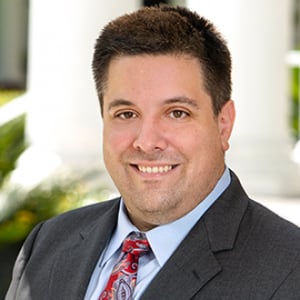
Sheila M. McDevitt Professor of Law and Faculty Director of the Election Law Center, Florida State University College of Law
Professor Morley joined FSU Law in 2018, and teaches and writes in the areas of election law, constitutional law, remedies, and the federal courts. He is best known for his work on election emergencies and post-election litigation, nationwide and other defendant-oriented injunctions, the jurisdiction of the federal courts and their equitable powers more generally. He has testified before congressional committees, made presentations to election officials for the U.S. Election Assistance Commission and participated in bipartisan blue-ribbon groups to develop election reforms. The governor of Florida also appointed Professor Morley to the Criminal Punishment Code Task Force, to propose potential revisions to the legislature.
The U.S. Supreme Court has cited several of his articles, and he was counsel of record for the successful Petitioner in a landmark campaign finance case. Professor Morley has appeared on C-SPAN, Court TV, Fox News and numerous local news programs, and has been quoted in the Washington Post, Los Angeles Times, Roll Call, Politico, U.S. News and World Report, and a wide range of other national publications. His work has been published in many of the nation’s top law reviews, including the Georgetown Law Journal, Northwestern University Law Review, Boston University Law Review and Emory Law Journal.
Before joining FSU Law, Professor Morley was a Climenko Fellow and Lecturer in Law at Harvard Law School. Prior to his experience in academia, he served in government as special assistant to the General Counsel of the Army at the Pentagon, as well as a law clerk for Judge Gerald B. Tjoflat of the U.S. Court of Appeals for the Eleventh Circuit. During his tenure with the Army General Counsel’s office, he was awarded the Meritorious Civilian Service Award and the Army Staff Lapel Pin. He also worked as an associate at Williams & Connolly LLP and the Supreme Court & Appellate group of Winston & Strawn, LLP, both in Washington, D.C.
Professor Morley earned his J.D. from Yale Law School in 2003, where he was a senior editor on the Yale Law Journal; served on the moot court board; and received the Thurman Arnold Prize for Best Oralist in the Morris Tyler Moot Court of Appeals.

Member, Stoll Keenon Ogden PLLC
John is a Member in Stoll Keenon Ogden’s Louisville office and has been with the firm since 2007. He has a track record of success in Labor and Employment Law spanning 35 years, and is honored to serve as Chair of the Kentucky State Labor Relations Board, which resolves disputes between public employers and their labor organizations.
He is responsible for creating binding legal precedent entitling employers to secure indemnity from other parties in harassment or retaliation cases. He has also established legal precedent holding that the claim for intentional infliction of emotional distress is preempted by statute. In a class discrimination case, he prevailed in challenging a claim brought by the federal government that women were categorically excluded from coal mining jobs.
For his many accomplishments, John has been distinguished with multiple local, state and national recognitions, including more than eight consecutive years of being listed in the Best Lawyers in America® peer-review publication.
Labor, Employment & Employee Benefits: John’s extensive experience encompasses the full breadth of employment law, including traditional labor law, claims of harassment and retaliation, breach of contract disputes and enforcement of trade secrets.
Appellate: Once a trial court decision has been made, John is fully prepared to take cases to court at the state or federal level as necessary to obtain a satisfactory resolution. He has obtained favorable verdicts for both appellants and appellees.

Judge, United States Court of Appeals, Sixth Circuit
Amul R. Thapar serves as a judge on the United States Court of Appeals for the Sixth Circuit. His judicial career began in 2007 when President George W. Bush nominated him to serve on the Eastern District of Kentucky, making him the first South Asian Article III judge in American history. In 2017, he became President Donald J. Trump’s first appellate court nominee.
Before joining the bench, Judge Thapar served as the United States Attorney for the Eastern District of Kentucky. While United States Attorney, Judge Thapar worked on the Attorney General’s Advisory Committee (“AGAC”) and chaired the AGAC’s Controlled Substances and Asset Forfeiture subcommittee. He also served on the Terrorism and National Security subcommittee, the Violent Crime subcommittee, and the Child Exploitation working group.
Judge Thapar has worked in private practice, at Williams & Connolly in Washington, D.C., and Squire, Sanders & Dempsey in Cincinnati, Ohio. He also served as an Assistant United States Attorney in both the Southern District of Ohio and the District of Columbia.
Judge Thapar received his undergraduate degree from Boston College and his law degree from the University of California, Berkeley. After graduating, Judge Thapar worked as a law clerk to the Honorable S. Arthur Spiegel of the United States District Court for the Southern District of Ohio, and the Honorable Nathaniel R. Jones of the United States Court of Appeals for the Sixth Circuit.
Judge Thapar has also published in the Yale Law Journal, Michigan Law Review, and Catholic University Law Review. He teaches courses on originalism, the Federalists and Anti-Federalists, and legal writing at Notre Dame Law School, the University of Virginia School of Law, and Vanderbilt Law School.
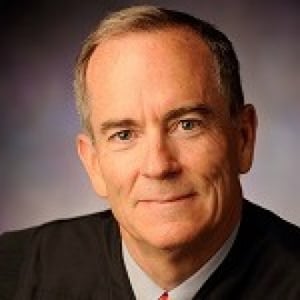
Former Justice, Supreme Court of Kentucky
Laurance B. VanMeter, of Lexington, Kentucky, served on the Kentucky Supreme Court from 2017 to 2025 where he was just the third Justice to have served at all four levels of the Kentucky unified court system. His fellow justices elected him as Chief Justice of Kentucky beginning in January 2023. His term ended in January 2025 following his decision not to seek a second term on the Court.
Before his election to the Supreme Court, Chief Justice VanMeter served thirteen years as a Judge of the Kentucky Court of Appeals, having been first elected in November 2003. He also served as a Fayette Circuit Court judge and as a Fayette District Court judge.
Prior to his judicial service, he was a partner in the Kentucky firm of Stoll, Keenon & Park where his practice included business organization and planning, estate planning, real estate, and taxation, largely with the equine industry. Chief Justice VanMeter served on or chaired various committees within the Kentucky judicial branch: Evidence Rules Review Commission, Civil Rules Committee, Kentucky Bar Association’s Continuing Legal Education Commission, Kentucky Office of Bar Admissions, Board of Trustees of the Kentucky Judicial Form Retirement Systems, Ethics Committee of the Kentucky Judiciary, and Judicial Conduct Commission. In addition, he served as the Court of Appeals’ acting Chief Judge, and as its Chief Judge Pro Tempore.
He earned an undergraduate degree from Vanderbilt University with a major in history in 1980, and his J.D. from the University of Kentucky College of Law in 1983. More recently, he earned an LL.M. degree, May 2020, from Duke University School of Law and, in July 2020, was elected to The American Law Institute. In 2024, Chief Justice VanMeter received the Kentucky Bar Association’s Distinguished Judge Award and his college fraternity’s Award for Distinguished Public Service. He was appointed to the Uniform Law Commission in May 2025.

Professor of Political Science, University of Pittsburgh
Chris W. Bonneau is Professor of Political Science at the University of Pittsburgh, where he has been since 2002. His research is primarily in the areas of judicial selection (specifically, judicial elections) and judicial decisionmaking. Professor Bonneau’s work has been supported by the National Science Foundation and he has published numerous articles, including in the American Journal of Political Science and Journal of Politics. He is also the coauthor of three books: Strategic Behavior and Policy Choice on the U.S. Supreme Court (2005), In Defense of Judicial Elections (2009), and the award-winning Voters’ Verdicts: Citizens, Campaigns, and Institutions in State Supreme Court Elections (2015).
Professor Bonneau teaches undergraduate classes in constitutional law, judicial politics, and research methods, as well as graduate classes in judicial politics and research design.
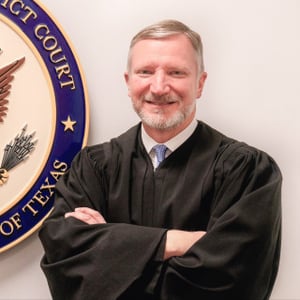
United States District Court, Southern District of Texas
Prior to joining TXSE, Jeff served as acting general counsel of Charles Schwab and led its Office of Legislative and Regulatory Affairs in Washington, D.C. for the past two decades, managing the company's response to public policy initiatives and advocating for policies that aid individual investors. He has over four decades of securities markets experience, starting his career as an options trader at the Philadelphia Stock Exchange, then founding his own trading firm, and later serving on the exchange's Board of Governors. He also served as senior counsel in the Division of Market Regulation at the U.S. Securities and Exchange Commission. Jeff's additional experience in the securities industry includes serving as vice president for regulation and general counsel at the Cincinnati Stock Exchange and as chairman of the Operating Committee of the National Market System Plan governing Nasdaq securities. Jeff holds degrees from the Wharton School of the University of Pennsylvania and Ohio Northern School of Law.

Milton R. Underwood Chair in Free Enterprise, Vanderbilt University Law School
Brian Fitzpatrick is the Milton R. Underwood Chair in Free Enterprise and Professor of Law at Vanderbilt Law School, where his research focuses on class action litigation, federal courts, judicial selection, and constitutional law. He is best known for his empirical studies of class action settlements as well as his book The Conservative Case for Class Actions (University of Chicago Press, 2019). Professor Fitzpatrick joined Vanderbilt's law faculty in 2007 after serving as the John M. Olin Fellow at New York University School of Law. He graduated first in his class from Harvard Law School and went on to clerk for Judge Diarmuid O'Scannlain on the U.S. Court of Appeals for the Ninth Circuit and Justice Antonin Scalia on the U.S. Supreme Court. After his clerkships, Professor Fitzpatrick practiced commercial and appellate litigation for several years at Sidley Austin in Washington, D.C., and served as Special Counsel for Supreme Court Nominations to U.S. Senator John Cornyn. Before earning his law degree, Fitzpatrick graduated summa cum laude with a bachelor's of science in chemical engineering from the University of Notre Dame. He has received the Hall-Hartman Outstanding Professor Award, which recognizes excellence in classroom teaching, for his Civil Procedure and Federal Courts courses.

Partner, Jackson Walker
Arthur offers clients a winning combination of trial and appellate experience gained as a federal prosecutor and more than 20 years of experience in handling patent, copyright, trademark, and trade secrets litigation.
While his practice concentrates on intellectual property litigation, Arthur also has significant experience in internal investigations, False Claims Act suits, partnership and breach of fiduciary duty, breach of contract, and employment litigation. Arthur also has represented clients testifying before Congressional committees.
Arthur writes and speaks frequently on topics ranging from the case against Boston bomber Dzhokhar Tsarnaev to patent litigation reform.
Prior to joining Michael Best, Arthur served as an Assistant United States Attorney in the Southern District of New York, where he was the lead prosecutor in criminal trials, including federal intellectual property crimes. He also argued numerous appeals.
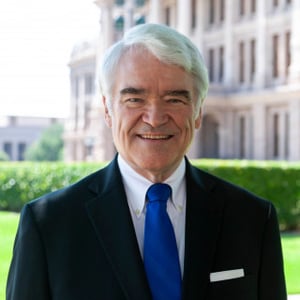
Chief Justice, Texas Supreme Court
Nathan L. Hecht is the 27th Chief Justice of the Supreme Court of Texas. He has been elected to the Court six times, first in 1988 as a Justice, and most recently in 2014 as Chief Justice. He is the longest-serving Member of the Court in Texas history and the senior Texas appellate judge in active service. Throughout his service on the Court, Chief Justice Hecht has overseen revisions to the rules of administration, practice, and procedure in Texas courts, and was appointed by the Chief Justice of the United States to the federal Advisory Committee on Civil Rules. Chief Justice Hecht is also active in the Court's efforts to assure that Texans living below the poverty level, as well as others with limited means, have access to basic civil legal services.
Chief Justice Hecht was appointed to the district court in 1981 and was elected to the court of appeals in 1986. Before taking the bench, he was a partner in the Locke firm in Dallas. Chief Justice Hecht holds a B.A. degree with honors in philosophy from Yale University, and a J.D. degree cum laude from the SMU School of Law, where he was a Hatton W. Sumners Scholar. He clerked for Judge Roger Robb on the U.S. Court of Appeals for the District of Columbia Circuit and was a Lieutenant in the U.S. Navy Reserve Judge Advocate General Corps.
Chief Justice Hecht is First Vice President of the national Conference of Chief Justices. He is a Life Member of the American Law Institute and a member of Council. He is also a member of the Texas Philosophical Society.
His current term ends December 31, 2020.
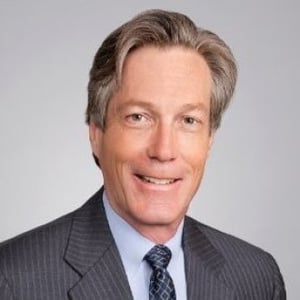
General Counsel, Texans for Lawsuit Reform
Lee Parsley has worked with TLR since 2002, and now serves as its general counsel. Lee leads a team of attorneys who help identify and research solutions to the challenges facing Texas’ legal system. Lee’s background in civil and appellate law has given him firsthand experience in navigating Texas’ courts. His experience in the legislative process helps TLR engage with lawmakers and stakeholders to ensure Texas is passing principled laws for a fair and efficient legal system.
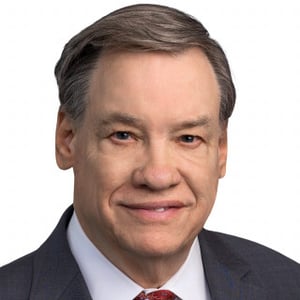
Partner, Baker Botts L.L.P.
Thomas R. Phillips is a partner in the Austin office of Baker Botts L.L.P.,
concentrating in general litigation, including appellate, trial strategy, and alternate
dispute resolution. He was appointed and then elected Chief Justice of the Supreme
Court of Texas in 1988, being one of the first four Republicans (along with Kent Hance,
Eugene Cook, and Bathan Hecht) to win a down-ballot statewide race since
Reconstruction. He was re-elected in 1990, 1996, and 2002 before leaving the Court in
2004.
While in office, Phillips served as president of the Conference of Chief Justices in
1997-98 and as a member of the Federal-State Relations Committee of the
Administrative Conference of the United States and the Institutions of Democracy
Judicial Branch Commission of the Annenberg Public Policy Center. After returning to
private life, he served on the Carter-Baker Commission on Federal Election Reform, the
Texas Historical Commission, the Texas State Historical Society, and the Judicial
Districts Board.
A native of Dallas, Phillips earned a B.A. from Baylor University in 1971 and a
J.D. from Harvard Law School in 1974. He has been awarded honorary doctoral
degrees from St. Edward’s University and Texas Tech University. Prior to becoming
Chief Justice, he practiced law in Houston and served as judge of the 280th District
Court in Harris County. Texas.
He resides with his wife, Dr. Lyn B. Phillips, in a historic home in Bastrop.

Partner, Gibson Dunn & Crutcher
Jason C. Schwartz is a litigation partner in the Washington, D.C. office of Gibson Dunn, co-chair of the Labor & Employment Practice Group, General Counsel of the law firm and a member of the firm’s Executive Committee. Jason was recognized as an MVP in employment law five times, awarded by Law360 to “attorneys whose achievements in major litigation or transactions have set a new standard for accomplishment in corporate law.” Law360 referred to Jason as “an expert dismantler of worker class actions.”
Jason is ranked in Band 1 in Labor & Employment by Chambers USA, which stated, “He is a whip-smart, results-oriented and zealous advocate who is really committed to the client. His judgment is impeccable.” According to Chambers USA, “[c]lients note: He’s an excellent litigator with a good sense of the client’s needs in a business environment. He’s just a pleasure to work with. He’s disciplined, a great writer and gets great results.” Jason has been recognized as a Top 20 Labor & Employment Litigator in the U.S. by Benchmark Litigation; on the Top 100 list of the Nation’s Most Powerful Employment Attorneys by Human Resource Executive magazine; as a Top Lawyer in Employment Defense by Washingtonian Magazine; as a Leading Lawyer in Labor & Employment Disputes by The Legal 500 US; by Lawdragon 500 Leading Corporate Employment Lawyers for Labor & Employment (Litigation); in The Best Lawyers in America in the Employment Law-Management category; as a Super Lawyer by Washington, D.C. Super Lawyers; and as an Am Law Litigation Daily “Litigator of the Week” for his win in an independent contractor misclassification/wage-and-hour class action. He is a Fellow of the College of Labor & Employment Lawyers.
The practice group Jason co-leads was named by The American Lawyer as the Labor & Employment Litigation Department of the Year in its most recent competition. The American Lawyer noted, “with novel labor and employment issues swirling, Gibson Dunn’s litigators set standards and settle the law,” and that a case “typical for Gibson Dunn’s labor and employment team” is “high-profile,” “cutting-edge,” and “a victory.” The group was also recognized ten times as a Law360 Employment Practice Group of the Year and won The National Law Journal’s D.C. Labor & Employment Litigation Department of the Year competition for the last seven years in a row.
Jason’s practice includes sensitive workplace investigations, high-profile trade secret and non-compete matters, wage-hour and discrimination class actions, Sarbanes-Oxley and other whistleblower protection claims, executive and other significant employment disputes, labor union controversies, and workplace safety litigation.
Recent representative matters include:
Jason has also successfully tried several sensitive whistleblower matters for major national employers, and he prevailed in a precedent-setting Labor Department appeal of one of the first Sarbanes-Oxley whistleblower cases to proceed to trial. He prevailed for Enterprise Rent-A-Car in a case of first impression in which the U.S. Court of Appeals for the Third Circuit created a new joint employer test (the Enterprise test) and affirmed summary judgment for a parent corporation in a series of wage-hour class actions, defeating the plaintiffs’ effort to form a nationwide class (In re Enterprise Rent-A-Car Wage & Hour Employment Practices Litig. (3rd Cir. 2012)). In another case of first impression, he successfully argued in the Utah Supreme Court against the recognition of a tort for spoliation of evidence. In addition, he served as lead trial counsel for a retailer in a highly-publicized OSHA enforcement action relating to crowd control at a day-after-Thanksgiving sale.
Jason also has significant experience in administrative law and rulemakings. He served as counsel to the Fair Labor Standards Reform Coalition, and he played a leading role in preparing comments on behalf of the business community relating to the U.S. Department of Labor’s overtime exemption regulations.
Jason served for many years as the Secretary of the Retail Litigation Center, and he testified before Congress regarding OSHA enforcement programs on behalf of the U.S. Chamber. He frequently speaks and writes on employment law and trade secret related topics. He is the co-author of the treatise Whistleblower Law: A Practitioner’s Guide, published by American Lawyer Media/Law Journal Press, and he previously authored the annual “Trade Secrets Litigation Round-Up” published by Bloomberg BNA.
Jason earned his law degree magna cum laude from Georgetown University Law Center, where he was elected to the Order of the Coif and received the George Brent Mickum III Prize and the Charles A. Keigwin Award for the best academic record in first year courses. From 1995 to 1996, he worked as a Legislative Assistant to Congressman Jon D. Fox. Jason received a B.A. degree in international affairs cum laude in 1994 from The George Washington University.
Jason is admitted to practice in the District of Columbia, Virginia and Maryland, as well as in numerous federal courts. He served for many years as an officer and board member of the Charles E. Smith Jewish Day School, currently serves as a member of the Washington Lawyers Committee of the U.S. Holocaust Memorial Museum, and provides pro bono employment counsel to numerous community organizations.
Partner, Gibson Dunn & Crutcher
Douglas R. Cox is a partner in the Washington, D.C. office of Gibson, Dunn & Crutcher and Vice-Chair of the firm's Crisis Management Practice Group. He practices in the areas of constitutional and general commercial litigation, appellate law, and governmental matters.
Mr. Cox has represented numerous clients in litigation before federal and state trial and appellate courts. He played a principal role in the firm's successful representation of the prevailing candidate before the Supreme Court of the United States in Bush v. Palm Beach County Canvassing Board and Bush v. Gore, stemming from the 2000 presidential election, and in other cases before the Supreme Court involving equal protection, voting rights and election law, the scope of the jury trial right under the Seventh Amendment, and other constitutional and statutory issues.
Mr. Cox successfully represented the National Association of Securities Dealers ("NASD") in a series of trial and appellate matters, including DL Capital Group, LLC v. Nasdaq Stock Market, Inc., 409 F.3d 93 (2d Cir. 2005) and Sparta Surgical Corp. v. NASD, 159 F.3d 1209 (9th Cir. 1998).
Mr. Cox frequently represents accounting firms in a variety of matters, including matters involving the SEC and PCAOB. He also has substantial experience representing clients before congressional investigating committees.
Mr. Cox previously served for five years during the Reagan and Bush Administrations in the Justice Department's Office of Legal Counsel, becoming Principal Deputy Assistant Attorney General during the Bush Administration. In that Office, he provided legal advice to Executive Branch departments; resolved legal disputes on behalf of the Attorney General between Executive Branch departments; prepared formal opinions of the Attorney General; drafted and issued opinions on legal issues of importance to the Executive Branch; and advised Congress as to the constitutionality of pending legislation.
From 1981 through 1987, Mr. Cox practiced in New York City with a national firm, representing major corporations in state and federal courts. His practice focused on intellectual property, securities, and international tax litigation.
Mr. Cox received his law degree, cum laude, from Harvard Law School in 1980, where he served as Editor-in-Chief of the Harvard Journal of Law and Public Policy from 1979-1980. He received his undergraduate degree in history, magna cum laude, from Princeton University in 1977. He attended Oxford University on a Knox Scholarship in 1980-1981.
In 2005, Chief Justice Rehnquist appointed Mr. Cox to serve as a member of the Judicial Conference Standing Committee on Rules of Practice and Procedure. In 2008 he was reappointed by Chief Justice Roberts.
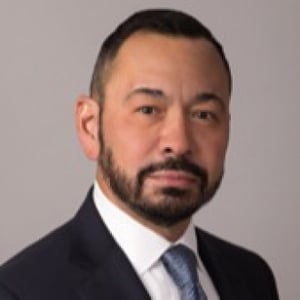
Partner, Gibson Dunn & Crutcher LLP
Miguel A. Estrada is a partner in the Washington, D.C. office of Gibson, Dunn & Crutcher.
Mr. Estrada has represented clients before federal and state courts throughout the country in a broad range of matters. He has argued 24 cases before the United States Supreme Court, and briefed many others. He has also argued dozens of appeals in the lower federal courts.
Best Lawyers® recognized Mr. Estrada as a 2020 Lawyer of the Year in Intellectual Property Litigation and as a Lawyer of the Year in Appellate Practice. He has been recognized by Benchmark Litigation as a 2020 U.S. Appellate Litigation “Star”. In 2014, The American Lawyer named Mr. Estrada a “Litigator of the Year,” praising his “brains and tenacity” and noting he is the lawyer to call for “a tough, potentially unwinnable case.” From 2014-2021, Chambers & Partners has named him as one of a handful of attorneys that it ranked in the top tier among the nation’s leading appellate lawyers. Chambers & Partners noted that “clients are impressed by his intellect and ability, with one saying, ‘His papers are just blindingly clear in what they say and devastating in how they marshal the arguments.’” The Atlantic described his oral argument in a 2014 high-profile separation-of-powers case as “one of the most dazzling arguments the marble chamber has heard in many years.”
Mr. Estrada was selected by his peers for inclusion in the 2020 edition of The Best Lawyers in America® in the area of Appellate Law, in addition to previous recognition by the publication in the specialties of Bet-the-Company Litigation, Commercial Litigation and Criminal Defense: White Collar, Intellectual Property Litigation, and Regulatory Enforcement Litigation in the areas of SEC, Telecom, and Energy. In 2017, he was elected as a member of the American Law Institute. In 2021, Mr. Estrada was named among the Lawdragon 500 Leading Lawyers in America. In 2004, Legal Times named him one of the top 12 appellate litigators in the D.C. area, noting that “people who follow appellate practice in Washington have known for several years that Estrada . . . is one of the best around.” Also in 2004, Washingtonian Magazine named him one of the top constitutional law lawyers “who could become one of the legends of the Supreme Court bar.”
Mr. Estrada joined Gibson Dunn in 1997, after serving for five years as Assistant to the Solicitor General of the United States. He previously served as Assistant U.S. Attorney and Deputy Chief of the Appellate Section, U.S. Attorney’s Office, Southern District of New York. In those capacities, Mr. Estrada represented the government in numerous jury trials and in many appeals before the U.S. Court of Appeals for the Second Circuit. Before joining the U.S. Attorney’s Office, Mr. Estrada practiced corporate law in New York with Wachtell, Lipton, Rosen & Katz.
Mr. Estrada is a Trustee of the Supreme Court Historical Society. He was formerly a member of the Board of Visitors of Harvard Law School.
Mr. Estrada served as a law clerk to the Honorable Anthony M. Kennedy in the U.S. Supreme Court from 1988 to 1989 and to the Honorable Amalya L. Kearse in the U.S. Court of Appeals for the Second Circuit from 1986 to 1987. He received a J.D. degree magna cum laude in 1986 from Harvard Law School, where he was editor of the Harvard Law Review. Mr. Estrada graduated with an A.B. degree magna cum laude and Phi Beta Kappa in 1983 from Columbia College, New York. He is fluent in Spanish and proficient in French.
Representative Supreme Court matters include:
In 2011, the Supreme Court appointed Mr. Estrada to brief and argue two criminal cases –Dorsey v. United States and Hill v. United States – in which the Solicitor General declined to defend the judgments of the court of appeals. Mr. Estrada was appointed to argue the position that the Solicitor General had declined to defend.
Mr. Estrada was also part of the team that successfully presented then Governor Bush’s position to the Supreme Court in Bush v. Gore (2000). Other cases that Mr. Estrada handled in the Supreme Court include Granholm v. Heald (2005) (dormant Commerce Clause and Twenty-First Amendment), Vermont Agency of Natural Resources v. United States ex rel. Stevens (2000) (False Claims Act, Article III standing and Eleventh Amendment immunity), Old Chief v. United States (1997) (rules of evidence), United States v. Mezzanatto (1995) (evidence and plea bargaining), United States v. Robertson (1995) (constitutional limits on Congress’s Commerce Clause powers), Citizens Bank of Maryland v. Strumpf (1995) (bankruptcy law), and NOW, Inc. v. Scheidler (1994) (RICO).
Recent Court of Appeals matters include:
In addition, Mr. Estrada is lead appellate counsel to Vivendi S.A. in two securities-fraud appeals from jury verdicts that are currently pending in the Second Circuit, and to the National Association of Broadcasters in a challenge to certain procedures promulgated by the FCC in connection with the upcoming Spectrum Auction. Mr. Estrada also recently presented argument before the D.C. Circuit on behalf of the tobacco industry in a first amendment challenge to certain compelled disclosures that were imposed as part of the government’s long-running civil RICO case against the industry.
Other matters:
Partner, Gibson Dunn & Crutcher
Jason C. Schwartz is a litigation partner in the Washington, D.C. office of Gibson Dunn, co-chair of the Labor & Employment Practice Group, General Counsel of the law firm and a member of the firm’s Executive Committee. Jason was recognized as an MVP in employment law five times, awarded by Law360 to “attorneys whose achievements in major litigation or transactions have set a new standard for accomplishment in corporate law.” Law360 referred to Jason as “an expert dismantler of worker class actions.”
Jason is ranked in Band 1 in Labor & Employment by Chambers USA, which stated, “He is a whip-smart, results-oriented and zealous advocate who is really committed to the client. His judgment is impeccable.” According to Chambers USA, “[c]lients note: He’s an excellent litigator with a good sense of the client’s needs in a business environment. He’s just a pleasure to work with. He’s disciplined, a great writer and gets great results.” Jason has been recognized as a Top 20 Labor & Employment Litigator in the U.S. by Benchmark Litigation; on the Top 100 list of the Nation’s Most Powerful Employment Attorneys by Human Resource Executive magazine; as a Top Lawyer in Employment Defense by Washingtonian Magazine; as a Leading Lawyer in Labor & Employment Disputes by The Legal 500 US; by Lawdragon 500 Leading Corporate Employment Lawyers for Labor & Employment (Litigation); in The Best Lawyers in America in the Employment Law-Management category; as a Super Lawyer by Washington, D.C. Super Lawyers; and as an Am Law Litigation Daily “Litigator of the Week” for his win in an independent contractor misclassification/wage-and-hour class action. He is a Fellow of the College of Labor & Employment Lawyers.
The practice group Jason co-leads was named by The American Lawyer as the Labor & Employment Litigation Department of the Year in its most recent competition. The American Lawyer noted, “with novel labor and employment issues swirling, Gibson Dunn’s litigators set standards and settle the law,” and that a case “typical for Gibson Dunn’s labor and employment team” is “high-profile,” “cutting-edge,” and “a victory.” The group was also recognized ten times as a Law360 Employment Practice Group of the Year and won The National Law Journal’s D.C. Labor & Employment Litigation Department of the Year competition for the last seven years in a row.
Jason’s practice includes sensitive workplace investigations, high-profile trade secret and non-compete matters, wage-hour and discrimination class actions, Sarbanes-Oxley and other whistleblower protection claims, executive and other significant employment disputes, labor union controversies, and workplace safety litigation.
Recent representative matters include:
Jason has also successfully tried several sensitive whistleblower matters for major national employers, and he prevailed in a precedent-setting Labor Department appeal of one of the first Sarbanes-Oxley whistleblower cases to proceed to trial. He prevailed for Enterprise Rent-A-Car in a case of first impression in which the U.S. Court of Appeals for the Third Circuit created a new joint employer test (the Enterprise test) and affirmed summary judgment for a parent corporation in a series of wage-hour class actions, defeating the plaintiffs’ effort to form a nationwide class (In re Enterprise Rent-A-Car Wage & Hour Employment Practices Litig. (3rd Cir. 2012)). In another case of first impression, he successfully argued in the Utah Supreme Court against the recognition of a tort for spoliation of evidence. In addition, he served as lead trial counsel for a retailer in a highly-publicized OSHA enforcement action relating to crowd control at a day-after-Thanksgiving sale.
Jason also has significant experience in administrative law and rulemakings. He served as counsel to the Fair Labor Standards Reform Coalition, and he played a leading role in preparing comments on behalf of the business community relating to the U.S. Department of Labor’s overtime exemption regulations.
Jason served for many years as the Secretary of the Retail Litigation Center, and he testified before Congress regarding OSHA enforcement programs on behalf of the U.S. Chamber. He frequently speaks and writes on employment law and trade secret related topics. He is the co-author of the treatise Whistleblower Law: A Practitioner’s Guide, published by American Lawyer Media/Law Journal Press, and he previously authored the annual “Trade Secrets Litigation Round-Up” published by Bloomberg BNA.
Jason earned his law degree magna cum laude from Georgetown University Law Center, where he was elected to the Order of the Coif and received the George Brent Mickum III Prize and the Charles A. Keigwin Award for the best academic record in first year courses. From 1995 to 1996, he worked as a Legislative Assistant to Congressman Jon D. Fox. Jason received a B.A. degree in international affairs cum laude in 1994 from The George Washington University.
Jason is admitted to practice in the District of Columbia, Virginia and Maryland, as well as in numerous federal courts. He served for many years as an officer and board member of the Charles E. Smith Jewish Day School, currently serves as a member of the Washington Lawyers Committee of the U.S. Holocaust Memorial Museum, and provides pro bono employment counsel to numerous community organizations.
Partner, Gibson Dunn & Crutcher
Douglas R. Cox is a partner in the Washington, D.C. office of Gibson, Dunn & Crutcher and Vice-Chair of the firm's Crisis Management Practice Group. He practices in the areas of constitutional and general commercial litigation, appellate law, and governmental matters.
Mr. Cox has represented numerous clients in litigation before federal and state trial and appellate courts. He played a principal role in the firm's successful representation of the prevailing candidate before the Supreme Court of the United States in Bush v. Palm Beach County Canvassing Board and Bush v. Gore, stemming from the 2000 presidential election, and in other cases before the Supreme Court involving equal protection, voting rights and election law, the scope of the jury trial right under the Seventh Amendment, and other constitutional and statutory issues.
Mr. Cox successfully represented the National Association of Securities Dealers ("NASD") in a series of trial and appellate matters, including DL Capital Group, LLC v. Nasdaq Stock Market, Inc., 409 F.3d 93 (2d Cir. 2005) and Sparta Surgical Corp. v. NASD, 159 F.3d 1209 (9th Cir. 1998).
Mr. Cox frequently represents accounting firms in a variety of matters, including matters involving the SEC and PCAOB. He also has substantial experience representing clients before congressional investigating committees.
Mr. Cox previously served for five years during the Reagan and Bush Administrations in the Justice Department's Office of Legal Counsel, becoming Principal Deputy Assistant Attorney General during the Bush Administration. In that Office, he provided legal advice to Executive Branch departments; resolved legal disputes on behalf of the Attorney General between Executive Branch departments; prepared formal opinions of the Attorney General; drafted and issued opinions on legal issues of importance to the Executive Branch; and advised Congress as to the constitutionality of pending legislation.
From 1981 through 1987, Mr. Cox practiced in New York City with a national firm, representing major corporations in state and federal courts. His practice focused on intellectual property, securities, and international tax litigation.
Mr. Cox received his law degree, cum laude, from Harvard Law School in 1980, where he served as Editor-in-Chief of the Harvard Journal of Law and Public Policy from 1979-1980. He received his undergraduate degree in history, magna cum laude, from Princeton University in 1977. He attended Oxford University on a Knox Scholarship in 1980-1981.
In 2005, Chief Justice Rehnquist appointed Mr. Cox to serve as a member of the Judicial Conference Standing Committee on Rules of Practice and Procedure. In 2008 he was reappointed by Chief Justice Roberts.
Partner, Goldstein & Russell PC
Thomas C. Goldstein has argued 28 cases before the Supreme Court, including matters involving federal patent law, class action practice, labor and employment, and disability law. In addition to practicing law, Tom teaches Supreme Court Litigation at Harvard Law School and taught at Stanford Law School as well from 2004-2012.
In the Supreme Court and elsewhere, Mr. Goldstein litigates and advises clients in a broad range of issues. For example, he regularly litigates and lectures on questions of federal patent law. Mr. Goldstein frequently advises clients, litigates, and consults on legislative matters relating to the First Amendment. And he regularly represents parties in questions relating to the game of poker, including its lawfulness as a matter of federal and state law. Tom's clients include plaintiffs, criminal defendants, and major corporations such as BG Group, Home Depot, Humana, IMS Health, Nike, PokerStars, POM Wonderful, and Pemex.
In addition to practicing law, Tom founded, and is the publisher of, SCOTUSblog, which in 2013 became the only weblog ever to receive the Peabody Award for excellence in electronic media. It also won the 2013 Society of Professional Journalists (Sigma Delta Chi) prize for deadline reporting for its coverage of the Supreme Court’s healthcare ruling. In 2010, it became the first blog to receive the American Bar Association’s Silver Gavel Award for fostering the American public’s understanding of law and the legal system.
Tom has been repeatedly recognized as a leading member of the bar. In 2010, The National Law Journal named him one of the 40 most influential lawyers of the decade; Tom notably was ten years younger than any other law firm partner listed. Legal Times named him one of the “90 Greatest Washington Lawyers of the Last 30 Years” and praised him for “transforming the practice” of law before the Supreme Court. He is also included in both of the National Law Journal’s most recent lists of the nation’s 100 most influential lawyers (2006 and 2013). He has been repeatedly recognized as one of the nation’s top appellate advocates. GQ Magazine named him one of the 50 most powerful people in Washington, D.C.
Tom is an elected Fellow of the American Academy of Appellate Lawyers, and a member of the American Law Institute. He is involved with a number of professional organizations. He serves as the vice chair of the Amicus Committee of the ABA’s Intellectual Property Section and previously served for two years on the ABA’s Standing Committee on Amicus Curiae Briefs. In those capacities, he has authored several Supreme Court amicus briefs for the ABA. In addition, Tom serves on the boards of advisors of the Washington Legal Foundation and the Georgetown University Supreme Court Institute.
Before founding Goldstein & Howe in 1999, Tom practiced law at Boies & Schiller, LLP and at Jones Day Reavis & Pogue. Tom left the firm he founded in 2006 to create the Supreme Court Practice at Akin, Gump, Strauss, Hauer & Feld, where he also was a partner and principal co-chair of the firmwide litigation practice. He returned to what is now Goldstein & Russell in 2011.
Tom clerked for the Honorable Patricia M. Wald of the U.S. Court of Appeals for the D.C. Circuit.

Professor of Law, Georgetown University Law Center
Nicholas Quinn Rosenkranz teaches constitutional law and federal jurisdiction, and he writes articles for the Harvard Law Review and the Stanford Law Review.
He is currently developing a new theory of constitutional interpretation and judicial review. The first installment, entitledThe Subjects of the Constitution, was published in the Stanford Law Review in May of 2010, and it is among the most downloaded articles about constitutional interpretation, judicial review, and/or federal courts in the history of SSRN. The second installment, The Objects of the Constitution, was published in May of 2011, also in the Stanford Law Review. And the comprehensive version is forthcoming as a book by Oxford University Press.
Rosenkranz has served and advised the federal government in a variety of capacities. He clerked for Judge Frank H. Easterbrook on the U.S. Court of Appeals for the Seventh Circuit (1999-2000) and for Justice Anthony M. Kennedy at the U.S. Supreme Court (October Term 2001). He served as an Attorney-Advisor at the Office of Legal Counsel in the U.S. Department of Justice (November 2002 - July 2004). He often testifies before Congress as a constitutional expert—most recently before the House Financial Services Oversight Subcommittee, regarding the Obama Administration's use of bank settlement agreements to circumvent the Appropriations Clause. He has also filed briefs and presented oral argument before the U.S. Supreme Court. His most recent Supreme Court brief, in Los Angeles v. Patel, was cited by Justice Alito in dissent.
Rosenkranz is a member of the New York Bar and the U.S. Supreme Court Bar. He is a Senior Fellow at the Cato Institute. He serves on the Board of Directors of the Foundation for Individual Rights in Education (FIRE). He is a founding member of Heterodox Academy and a member of its Executive Committee. He also serves on the Board of Directors of the Federalist Society and as the faculty advisor to the Georgetown chapter.

President, JCN
Carrie Campbell Severino is the president of the JCN, and co-author with Mollie Hemingway of the bestselling book Justice on Trial: The Kavanaugh Confirmation and the Future of the Court. As a go-to expert on the confirmation process, Mrs. Severino has been extensively quoted in the media. She regularly appears on television, including FOX, CNN, MSNBC, C-SPAN, and ABC’s This Week.
Severino writes and speaks on a wide range of judicial issues, including the constitutional limits on government, the federal nomination process, and state judicial selection. She has testified before Congress on constitutional questions and briefed Senators on judicial nominations, and regularly files briefs in high-profile Supreme Court cases. She was a law clerk to Supreme Court Justice Clarence Thomas and to Judge David B. Sentelle of the U.S. Court of Appeals for the D.C. Circuit, and is a graduate of Harvard Law School (J.D.), Duke University (B.A., Biology), and Michigan State University (M.A., Linguistics).
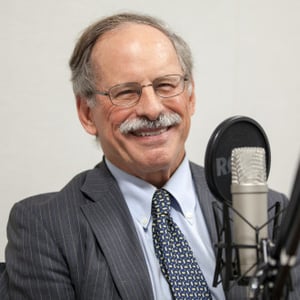
Freelance Journalist and Author
Stuart Taylor, Jr. is a Washington writer focusing on legal and policy issues and a National Journal contributing editor. He occasionally practices law.
Taylor has coauthored three books. All have been acclaimed by commentators across the ideological spectrum. In January 2017, KC Johnson and Taylor authored The Campus Rape Frenzy: The Attack on Due Process at America's Universities. In 2012, Richard Sander and Taylor authored Mismatch: How Affirmative Action Hurts Students It's Intended to Help, and Why Universities Won't Admit It. In 2007, Taylor and Johnson authored Until Proven Innocent: Political Correctness and the Shameful Injustices of the Duke Lacrosse Rape Fraud. Sander and Taylor have also filed amicus briefs in Supreme Court cases involving admissions preferences.
Since 1980, Taylor has done reporting and commentary about issues ranging from the biggest Supreme Court cases to race, voting rights, mindlessly excessive criminal penalties, guilt-presuming campus rape processes, journalistic bias, the death penalty, war powers, gerrymandering, guns, polarization, civil liberties, national security, torture, campaign finance, education, impeachment, and other issues. He has often been called one of the nation's best legal journalists and is known for challenging both liberal and conservative conventional wisdom.
Taylor was a reporter for The New York Times from 1980-1988, covering legal affairs and then the Supreme Court. He wrote commentaries and long features for The American Lawyer, Legal Times and their affiliates from 1989-1997, and for National Journal and Newsweek from 1998 through 2010. He has written (less often) on a freelance basis for numerous publications since 2010. He has written op-eds for The Washington Post, The New York Times, The Wall Street Journal, The Los Angeles Times, USA Today, and The New York Daily News and longer commentaries for RealClearPolitics, The Atlantic, The New Republic, the (late) Weekly Standard, National Review, Slate, The Daily Beast, Harper’s, Reader’s Digest, Time and other magazines. He has been interviewed on all major television and radio networks. He taught “Law and the News Media” at Stanford Law School in 2011 and 2012 and practices law on occasion.
Taylor graduated from Princeton University in 1970 with an A.B. in History. After working as a reporter for the Baltimore Evening Sun and Sun from 1971-1974, he moved to Harvard Law School, was a Harvard Law Review note editor, and graduated in 1977 at the top of his class, with high honors. He also won a Frederick Sheldon Traveling Fellowship and traveled around the world in 1977-1978 while studying freedom of the press in the United Kingdom and Kenya.
Taylor practiced law with Wilmer, Cutler & Pickering, in Washington, D.C., from 1977-1980 before returning to journalism in 1980 by joining the Washington Bureau of The New York Times.
Taylor's journalism honors include the 2009 Northern California Innocence Project Media Award for his work on the Duke lacrosse rape fraud; a 2002 National Headliner Award for best special magazine column on one subject; and a share of The American Lawyer’s National Magazine Award for a March 1990 special issue on the drug war. He was a National Magazine Award finalist in 1993 and 1997 and was nominated by The New York Times for a Pulitzer Prize in 1988.
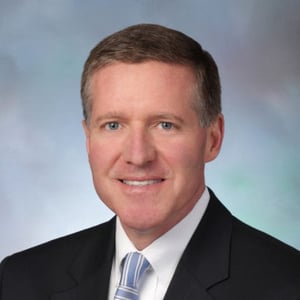
Partner, Davis Polk & Wardwell LLP
Kenneth Wainstein is a partner at Davis Polk & Wardwell, where he focuses his practice on corporate internal investigations and civil and criminal enforcement proceedings. Ken spent over 20 years in a variety of law enforcement and national security positions in the government. Between 1989 and 2001, Ken served as an Assistant U.S. Attorney in both the Southern District of New York and the District of Columbia, where he handled criminal prosecutions ranging from public corruption to gang prosecution cases and held a variety of supervisory positions, including Acting United States Attorney. In 2001, he was appointed Director of the Executive Office for U.S. Attorneys, where he provided oversight and support to the 94 U.S. Attorneys’ Offices. Between 2002 and 2004, Ken served as General Counsel of the Federal Bureau of Investigation and then as Chief of Staff to Director Robert S. Mueller III. In 2004, Ken was appointed and then confirmed as United States Attorney for the District of Columbia, where he had the privilege to lead the largest United States Attorney’s Office in the country. In 2006, the U.S. Senate confirmed Ken as the first Assistant Attorney General for National Security. In that position, Ken established and led the new National Security Division, which consolidated DOJ’s law enforcement and intelligence activities on counterterrorism and counterintelligence matters. In 2008, after 19 years at the Justice Department, Ken was named Homeland Security Advisor by President George W. Bush. In this capacity, he coordinated the nation’s counterterrorism, homeland security, infrastructure protection, and disaster response and recovery efforts. He advised the President, convened and chaired meetings of the Cabinet Officers on the Homeland Security Council, and oversaw the inter-agency coordination process for homeland security and counterterrorism programs.
NBC News Justice Correspondent
Pete Williams is an NBC News correspondent based in Washington, D.C. He has been covering the Justice Department and the U.S. Supreme Court since March 1993. Williams was also a key reporter on the Microsoft anti-trust trial and Judge Jackson's decision.
Prior to joining NBC, Williams served as a press official on Capitol Hill for many years. In 1986 he joined the Washington, DC staff of then Congressman Dick Cheney as press secretary and a legislative assistant. In 1989, when Cheney was named Assistant Secretary of Defense, Williams was appointed Assistant Secretary of Defense for Public Affairs. While in that position, Williams was named Government Communicator of the Year in 1991 by the National Association of Government Communicators.
A native of Casper, Wyo. and a 1974 graduate of Stanford University, Williams was a reporter and news director at KTWO-TV and Radio in Casper from 1974 to 1985. Working with the Radio-Television News Directors Association, for which he served as a member of its board of directors, he successfully lobbied the Wyoming Supreme Court to permit broadcast coverage of its proceedings and twice sued Wyoming judges over pre-trial exclusion of reporters from the courtroom. For these efforts, he received a First Amendment Award from the Society of Professional Journalists.

Stare Decisis Panel
Cassie Chambers Armstrong, Michael T. Morley, John O. Sheller, Amul R. Thapar, Laurance B. VanMeter
On October 7, 2019, The Federalist Society held a panel on Stare Decisis at its...
Panel One: Proposed Reforms to Texas Judicial Selection
Chris W. Bonneau, Jeffrey Vincent Brown, Brian T. Fitzpatrick, Arthur Gollwitzer, Nathan L. Hecht, E. Lee Parsley, Thomas R. Phillips
On September 14, 2019, The Federalist Society held a panel on Proposed Reforms to Texas...
Vance v. Ball State University - Post-Decision SCOTUScast
Jason C. Schwartz
On June 24, 2013, the Supreme Court announced its decision in Vance v. Ball State...
2013 Annual Supreme Court Round Up
Douglas R. Cox, Miguel A. Estrada
On July 8, 2013, Miguel Estrada of Gibson Dunn & Crutcher LLP delivered the Annual Supreme...
Vance v. Ball State University - Post-Argument SCOTUScast
Jason C. Schwartz
On November 26, 2012, the Supreme Court heard oral argument in Vance v. Ball State University....
Supreme Court Preview: What Is in Store for October Term 2012?
Douglas R. Cox, Thomas C. Goldstein, Nicholas Quinn Rosenkranz, Carrie Campbell Severino, Stuart S. Taylor, Kenneth L. Wainstein, Pete Williams
October 1st marks the first day of the 2012 Supreme Court Term. Thus far the...