
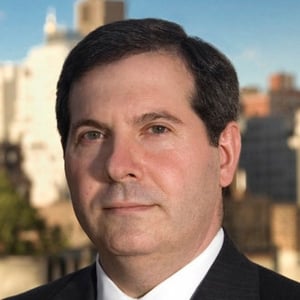
Partner, DeMarco Law, PLLC
Joseph V. DeMarco is a partner at DeMarco Law, PLLC where he focuses on counseling clients on complex issues involving information privacy and security, theft of intellectual property, computer intrusions, on-line fraud, and the lawful use of new technology. His years of experience in private practice and in government handling the most difficult cybercrime investigations handled by the United States Attorney’s Office have made him one of the nation’s most sought-after lawyers on Internet crime and the law relating to emerging technologies. In addition to his counsel practice, Mr. DeMarco serves as an Arbitrator, resolving complex commercial and high-technology disputes between businesses. He is on the National Panel of Neutrals of the American Arbitration Association (AAA) and Federal Arbitration, Inc. (FedArb).
From 1997 to 2007, Mr. DeMarco served an Assistant United States Attorney for the Southern District of New York, where he founded and headed the Computer Hacking and Intellectual Property (CHIPs) Program, a group of five prosecutors dedicated to investigating and prosecuting violations of federal cybercrime laws and intellectual property offenses. Under his leadership, CHIPs prosecutions grew from a trickle in 1997 to a top priority of the United States Attorney’s Office, encompassing all forms of criminal activity affecting e-commerce and critical infrastructures including computer hacking crimes; transmission of Internet worms and viruses; electronic theft of trade secrets; illegal use of “spyware”; web-based frauds; unlawful Internet gambling; and criminal copyright and trademark infringement offenses. As a recognized thought leader in the field, Mr. DeMarco was frequently asked to counsel prosecutors and law enforcement agents regarding novel investigative and surveillance techniques and methodologies, and regularly provided advice to the United States Attorney concerning the Office’s most sensitive computer-related investigations. In 2001, Mr. DeMarco also served as a visiting Trial Attorney at the Department of Justice Computer Crimes and Intellectual Property Section in Washington, D.C., where he focused his work on Internet privacy, gaming, and theft of intellectual property.
Since 2002, Mr. DeMarco has served as an Adjunct Professor at Columbia Law School, where he teaches the upper-class Internet and Computer Crimes seminar. He has been invited to speak throughout the world on cybercrime, e-commerce, and IP enforcement. He has lectured on the subject of cybercrime at Harvard Law School, the Practicing Law Institute, the National Advocacy Center, and at the FBI Academy in Quantico, Virginia, and has served as an instructor on cybercrime to judges attending the New York State Judicial Institute.
Prior to joining the United States Attorney’s Office, Mr. DeMarco was a litigation associate at Cravath, Swaine & Moore in New York City, where he concentrated his work on intellectual property, antitrust, and securities law issues for various high-technology clients. Prior to that, Mr. DeMarco served as law clerk to the Honorable J. Daniel Mahoney, United States Circuit Judge for the Second Circuit Court of Appeals.
Mr. DeMarco holds a J.D. magna cum laude from New York University School of Law. At NYU he was a member of the NYU Law Review. He received his B.S.F.S. summa cum laude from the Edmund A. Walsh School of Foreign Service at Georgetown University.
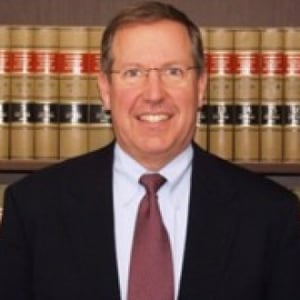
President and CEO, Association of Prosecuting Attorneys
Mr. David LaBahn is President and Chief Executive Officer (CEO) of the Association of Prosecuting Attorneys (APA), a national association representing elected and deputy or assistant prosecutors, and city attorneys. The association acts as a global forum for the exchange of ideas, allowing prosecutors to collaborate with all criminal justice partners, and conducts timely and effective training and technical assistance to improve the prosecutorial function. In addition, APA serves as an advocate for prosecutors on emerging issues related to the administration of justice, development of partnerships and implementation of problem-solving strategies.
Prior to forming APA, Mr. LaBahn was the Director of the American Prosecutors Research Institute (APRI) and the Director of Research and Development for the National District Attorneys Association (NDAA). In this dual capacity, he directed APRI’s Projects including editing and teaching in the areas of child and adult sexual assault and gang violence. He worked with other national organizations to lobby for the increase the funding to assist in the investigation and prosecution of child abuse as well as coordinate the efforts of these federally funded programs. He attended and spoke at numerous national conferences on NDAA’s behalf and applied for and received numerous federal grants to continue the Association’s efforts to support the nation’s district attorneys.
Before joining NDAA, Mr. LaBahn was the Executive Director of the California District Attorneys Association (CDAA). Appointed to this position in 2003, he had responsibility for all of the Association’s efforts and became the primary policy strategist and spokesperson for the organization. Much of his initial efforts involved working through a very difficult budget for the state and then the historic recall of Governor Davis caused a mid-term transition on the Governor’s Office. Throughout this tumultuous time, he managed to maintain and expand CDAA’s staff of approximately 50 full-time employees and annual budget of over $5 million. In 2006 he received the largest grant from the Governor’s Office of Highway Safety in Association history. During this time, he was involved in creating CDAA’s first Violence against Women Project, the Circuit Environmental Prosecution Project and the High Technology Prosecution Project. CDAA expanded its committee structure to include over 30 standing committees as new trends emerged like Community Prosecution, High Technology, Stalking, and Elder Abuse. He also lectured at state-wide MCLE programs on sexual assault and gang crime as well as edited the Legislative Digest to make certain that all prosecutors were aware of changes in the law. He personally staffed the Rural County Committee and taught at the Annual Rural Counties Conference in California.
Mr. LaBahn joined CDAA as the Deputy Executive Director in 1996 and at that time was responsible for the training and publications department, applying for and received state and federal grants, and lobbing the California State Legislature on criminal justice and budget matters. Mr. LaBahn was a former deputy district attorney in Orange and Humboldt counties in California (1987-96). He received numerous awards including being recognized with community service awards for his work with victims and the reduction of gang violence in the City of Westminster, CA.

Professor of Law, Antonin Scalia Law School, George Mason University
ILYA SOMIN is Professor of Law at George Mason University and the B. Kenneth Simon Chair in Constitutional Studies at the Cato Institute. His research focuses on constitutional law, property law, democratic theory, federalism, and migration rights. He is the author of Free to Move: Foot Voting, Migration, and Political Freedom (Oxford University Press, revised and expanded edition, 2022), Democracy and Political Ignorance: Why Smaller Government is Smarter (Stanford University Press, revised and expanded second edition, 2016), and The Grasping Hand: Kelo v. City of New London and the Limits of Eminent Domain (University of Chicago Press, 2015, rev. paperback ed., 2016), coauthor of A Conspiracy Against Obamacare: The Volokh Conspiracy and the Health Care Case (Palgrave Macmillan, 2013), and co-editor of Eminent Domain: A Comparative Perspective (Cambridge University Press, 2017). Democracy and Political Ignorance has been translated into Italian and Japanese.
Somin’s work has appeared in numerous scholarly journals, including the Yale Law Journal, Stanford Law Review, Northwestern University Law Review, Georgetown Law Journal, Critical Review, and others. Somin has also published articles in a variety of popular press outlets, including the New York Times, Washington Post, Wall Street Journal, Los Angeles Times, CNN, NBC, The Atlantic, USA Today, Boston Globe, US News and World Report, South China Morning Post, National Law Journal and Reason. He has been quoted or interviewed by the New York Times, Washington Post, Wall Street Journal, Time, Newsweek, The Economist, the Christian Science Monitor, the Financial Times, The Guardian, the Associated Press, CBS, MSNBC, NPR, BBC, Reuters, the Canadian Broadcasting Corporation, the Australian Broadcasting Corporation, Radio Free Europe/Radio Liberty, Al Jazeera, and the Voice of America, among other media.
Somin’s writings have been cited in decisions by the United States Supreme Court, multiple state supreme courts and lower federal courts, and the Supreme Court of Israel. He is co-counsel for the plaintiffs in VOS Selections, Inc. v. Trump, a case challenging the constitutionality of President Trump’s “Liberation Day” tariffs. Somin has testified on the use of drones for targeted killing in the War on Terror before the US Senate Judiciary Subcommittee on the Constitution, Civil Rights, and Human Rights. In 2009, he testified on property rights issues at the United States Senate Judiciary Committee confirmation hearings for Supreme Court Justice Sonia Sotomayor. Somin writes regularly for the popular Volokh Conspiracy law and politics blog, now affiliated with Reason magazine (previously affiliated with the Washington Post from 2014 to 2017). From 2006 to 2013, he served as Co-Editor of the Supreme Court Economic Review, one of the country’s top-rated law and economics journals.
Somin has served as a visiting professor at the University of Pennsylvania Law School. He has also been a visiting professor or scholar at the Georgetown University Law Center, the University of Hamburg, Germany, the University of Torcuato Di Tella in Buenos Aires, Argentina, Uriel Reichman University in Israel, and Zhengzhou University in China. He is a University Affiliate of the Schar School of Policy and Government at George Mason University, and an affiliated faculty member of the George Mason University Institute for Immigration Research. Before joining the faculty at George Mason, Somin was the John M. Olin Fellow in Law at Northwestern University Law School in 2002-2003. In 2001-2002, he clerked for the Hon. Judge Jerry E. Smith of the U.S. Court of Appeals for the Fifth Circuit. Professor Somin earned his B.A., Summa Cum Laude, at Amherst College, M.A. in Political Science from Harvard University, and J.D. from Yale Law School.
President and CEO, Association of Prosecuting Attorneys
Mr. David LaBahn is President and Chief Executive Officer (CEO) of the Association of Prosecuting Attorneys (APA), a national association representing elected and deputy or assistant prosecutors, and city attorneys. The association acts as a global forum for the exchange of ideas, allowing prosecutors to collaborate with all criminal justice partners, and conducts timely and effective training and technical assistance to improve the prosecutorial function. In addition, APA serves as an advocate for prosecutors on emerging issues related to the administration of justice, development of partnerships and implementation of problem-solving strategies.
Prior to forming APA, Mr. LaBahn was the Director of the American Prosecutors Research Institute (APRI) and the Director of Research and Development for the National District Attorneys Association (NDAA). In this dual capacity, he directed APRI’s Projects including editing and teaching in the areas of child and adult sexual assault and gang violence. He worked with other national organizations to lobby for the increase the funding to assist in the investigation and prosecution of child abuse as well as coordinate the efforts of these federally funded programs. He attended and spoke at numerous national conferences on NDAA’s behalf and applied for and received numerous federal grants to continue the Association’s efforts to support the nation’s district attorneys.
Before joining NDAA, Mr. LaBahn was the Executive Director of the California District Attorneys Association (CDAA). Appointed to this position in 2003, he had responsibility for all of the Association’s efforts and became the primary policy strategist and spokesperson for the organization. Much of his initial efforts involved working through a very difficult budget for the state and then the historic recall of Governor Davis caused a mid-term transition on the Governor’s Office. Throughout this tumultuous time, he managed to maintain and expand CDAA’s staff of approximately 50 full-time employees and annual budget of over $5 million. In 2006 he received the largest grant from the Governor’s Office of Highway Safety in Association history. During this time, he was involved in creating CDAA’s first Violence against Women Project, the Circuit Environmental Prosecution Project and the High Technology Prosecution Project. CDAA expanded its committee structure to include over 30 standing committees as new trends emerged like Community Prosecution, High Technology, Stalking, and Elder Abuse. He also lectured at state-wide MCLE programs on sexual assault and gang crime as well as edited the Legislative Digest to make certain that all prosecutors were aware of changes in the law. He personally staffed the Rural County Committee and taught at the Annual Rural Counties Conference in California.
Mr. LaBahn joined CDAA as the Deputy Executive Director in 1996 and at that time was responsible for the training and publications department, applying for and received state and federal grants, and lobbing the California State Legislature on criminal justice and budget matters. Mr. LaBahn was a former deputy district attorney in Orange and Humboldt counties in California (1987-96). He received numerous awards including being recognized with community service awards for his work with victims and the reduction of gang violence in the City of Westminster, CA.
Professor of Law, Antonin Scalia Law School, George Mason University
ILYA SOMIN is Professor of Law at George Mason University and the B. Kenneth Simon Chair in Constitutional Studies at the Cato Institute. His research focuses on constitutional law, property law, democratic theory, federalism, and migration rights. He is the author of Free to Move: Foot Voting, Migration, and Political Freedom (Oxford University Press, revised and expanded edition, 2022), Democracy and Political Ignorance: Why Smaller Government is Smarter (Stanford University Press, revised and expanded second edition, 2016), and The Grasping Hand: Kelo v. City of New London and the Limits of Eminent Domain (University of Chicago Press, 2015, rev. paperback ed., 2016), coauthor of A Conspiracy Against Obamacare: The Volokh Conspiracy and the Health Care Case (Palgrave Macmillan, 2013), and co-editor of Eminent Domain: A Comparative Perspective (Cambridge University Press, 2017). Democracy and Political Ignorance has been translated into Italian and Japanese.
Somin’s work has appeared in numerous scholarly journals, including the Yale Law Journal, Stanford Law Review, Northwestern University Law Review, Georgetown Law Journal, Critical Review, and others. Somin has also published articles in a variety of popular press outlets, including the New York Times, Washington Post, Wall Street Journal, Los Angeles Times, CNN, NBC, The Atlantic, USA Today, Boston Globe, US News and World Report, South China Morning Post, National Law Journal and Reason. He has been quoted or interviewed by the New York Times, Washington Post, Wall Street Journal, Time, Newsweek, The Economist, the Christian Science Monitor, the Financial Times, The Guardian, the Associated Press, CBS, MSNBC, NPR, BBC, Reuters, the Canadian Broadcasting Corporation, the Australian Broadcasting Corporation, Radio Free Europe/Radio Liberty, Al Jazeera, and the Voice of America, among other media.
Somin’s writings have been cited in decisions by the United States Supreme Court, multiple state supreme courts and lower federal courts, and the Supreme Court of Israel. He is co-counsel for the plaintiffs in VOS Selections, Inc. v. Trump, a case challenging the constitutionality of President Trump’s “Liberation Day” tariffs. Somin has testified on the use of drones for targeted killing in the War on Terror before the US Senate Judiciary Subcommittee on the Constitution, Civil Rights, and Human Rights. In 2009, he testified on property rights issues at the United States Senate Judiciary Committee confirmation hearings for Supreme Court Justice Sonia Sotomayor. Somin writes regularly for the popular Volokh Conspiracy law and politics blog, now affiliated with Reason magazine (previously affiliated with the Washington Post from 2014 to 2017). From 2006 to 2013, he served as Co-Editor of the Supreme Court Economic Review, one of the country’s top-rated law and economics journals.
Somin has served as a visiting professor at the University of Pennsylvania Law School. He has also been a visiting professor or scholar at the Georgetown University Law Center, the University of Hamburg, Germany, the University of Torcuato Di Tella in Buenos Aires, Argentina, Uriel Reichman University in Israel, and Zhengzhou University in China. He is a University Affiliate of the Schar School of Policy and Government at George Mason University, and an affiliated faculty member of the George Mason University Institute for Immigration Research. Before joining the faculty at George Mason, Somin was the John M. Olin Fellow in Law at Northwestern University Law School in 2002-2003. In 2001-2002, he clerked for the Hon. Judge Jerry E. Smith of the U.S. Court of Appeals for the Fifth Circuit. Professor Somin earned his B.A., Summa Cum Laude, at Amherst College, M.A. in Political Science from Harvard University, and J.D. from Yale Law School.

Litigation Update: The Government, Apple, and the Encryption Debate
Joseph V. DeMarco
In 2016 the United States Department of Justice and Apple twice went to federal court...
Compensation for the Wrongfully Imprisoned? - Podcast
David LaBahn, Ilya Somin
In recent years, there have been a growing number of cases where people have been...
Compensation for the Wrongfully Imprisoned?
Teleforum