

Tazewell Taylor Professor of Law and William H. Cabell Research Professor, William & Mary Law School
Jonathan H. Adler joined the William & Mary law faculty as the Tazwell Taylor Professor of Law and William H. Cabell Research Professor in 2025. Prior to joining the faculty, he was the inaugural Johan Verheij Memorial Professor of Law and the founding Director of the Coleman P. Burke Center for Environmental Law at the Case Western Reserve University School of Law.
Professor Adler is the author or editor of seven books, including Climate Liberalism: Perspectives on Liberty, Property and Pollution (Palgrave, 2023), Marijuana Federalism: Uncle Sam and Mary Jane (Brookings Institution Press, 2020), Business and the Roberts Court (Oxford University Press, 2016) and Rebuilding the Ark: New Perspectives on Endangered Species Act Reform (AEI Press, 2011).
His articles have appeared in publications ranging from the Harvard Environmental Law Review and Yale Journal on Regulation to the Wall Street Journal, New York Times, and Washington Post. He has testified before Congress a dozen times, and his work has been cited in the U.S. Supreme Court. A 2024 study identified Professor Adler as the seventh most cited legal academic in administrative and environmental law from 2019 to 2023.
Professor Adler is a contributing editor to Civitas Outlook and a regular contributor to the popular legal blog, The Volokh Conspiracy. A regular commentator on constitutional and regulatory issues, he has appeared on numerous radio and television programs, ranging from the PBS Newshour and National Public Radio to the Fox News Channel and Entertainment Tonight.
Professor Adler is a senior fellow at the Property & Environment Research Center in Bozeman, Montana. In 2018, Professor Adler was elected to membership in the American Law Institute and helped co-found the organization Checks and Balances. In 2024, Professor Adler was appointed a public member of the Administrative Conference of the United States.
Professor Adler clerked for the Honorable David B. Sentelle on the U.S. Court of Appeals for the District of Columbia Circuit.
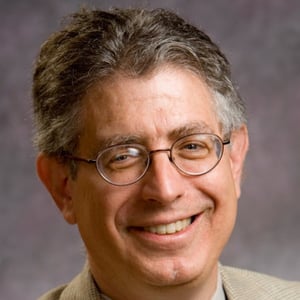
Sho Sato Professor of Law; Faculty Director, Center for Law, Energy, & the Environment, University of California, Berkeley
Dan Farber is the Sho Sato Professor of Law at the University of California, Berkeley. He is also the Co-Director of the Center for Law, Energy, and the Environment. Professor Farber serves on the editorial board of Foundation Press. He is a member of the American Academy of Arts and Sciences and a Life Member of the American Law Institute. He is the editor of Issues in Legal Scholarship.
Professor Farber is a graduate of the University of Illinois, where he earned his B.A., M.A., and J.D. degrees. He graduated, summa cum laude, from the College of Law, where he was the class valedictorian and served as Editor-in-Chief of the University of Illinois Law Review. After graduation from law school, he was a law clerk for Judge Philip W. Tone of the United States Court of Appeals for the Seventh Circuit and then for Justice John Paul Stevens of the Supreme Court of the United States. Professor Farber practiced law with Sidley & Austin, where he primarily worked on energy issues, before joining the University of Illinois College of Law faculty in 1978. He was a member of the University of Minnesota Law School faculty from1981 to 2002, where he was the McKnight Presidential Professor of Public Law. He also has been a Visiting Professor at the Stanford Law School, Harvard Law School, and the University of Chicago Law School.
Among Professor Farber’s eighteen books are RESEARCH HANDBOOK ON PUBLIC CHOICE AND PUBLIC LAW (Elgar 2010) (with A. O’Connell); JUDGMENT CALLS: POLITICS AND PRINCIPLE IN CONSTITUTIONAL LAW (Oxford University Press 2008) (with S. Sherry); RETAINED BY THE PEOPLE: THE “SILENT” NINTH AMENDMENT AND THE RIGHTS AMERICANS DON’T KNOW THEY HAVE (Basic Books 2007); and LINCOLN’S CONSTITUTION (University of Chicago Press 2003).
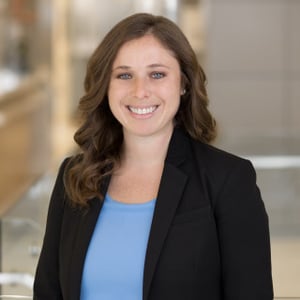
Assistant General Counsel, Office of General Counsel of the United States House of Representatives
Rachel Jankowski serves in the Office of General Counsel of the U.S. House of Representatives, representing the House, its Members, Officers, Committees, and staff on matters related to their official duties. Before joining the office, Rachel worked at Crowell & Moring LLP in Washington, D.C., where she represented clients in mass tort and complex commercial trial and appellate litigation, and in-house at Fidelity National Financial at their headquarters in Jacksonville, Florida. Rachel served as a law clerk to Judge Wendy Williams Berger of the U.S. District Court for the Middle District of Florida and Judge James J. Tancredi of the U.S. Bankruptcy Court for the District of Connecticut. She received her law degree from the University of Michigan Law School, where she litigated cases in the Civil-Criminal Litigation Clinic, including securing an acquittal for her client in a criminal assault trial. During law school, she interned for Deloitte in Detroit and for a non-profit organization in London. A proud Double Wolverine, she also received her Bachelor of Arts degree in Political Science and History from the University of Michigan.
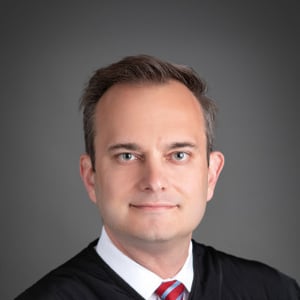
United States Magistrate Judge, Eastern District of North Carolina
Robert T. Numbers, II serves as a United States Magistrate Judge in the United States District Court for the Eastern District of North Carolina.
Judge Numbers received degrees in Political Science and Economics, with honors, from Wake Forest University. After completing his undergraduate work, Judge Numbers obtained his law degree from the University of Notre Dame where he served on the Notre Dame Law Review.
Upon his graduation from law school, Judge Numbers joined the Winston-Salem office of a large, regional law firm. From 2005 until 2010, Judge Numbers’ practice focused on civil rights claims against local municipalities and government contractors. In 2010, Judge Numbers joined the firm’s Raleigh office and concentrated his practice on complex business litigation in state and federal courts.
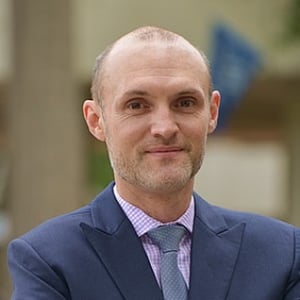
Associate Professor of Law, Washington and Lee University School of Law
Alan M. Trammell teaches and writes primarily in the fields of civil procedure, federal courts, constitutional law, and conflict of laws. He is recognized as one of the leading authorities on universal injunctions and has been invited to present his research at numerous conferences, on podcasts, and in popular media. His scholarship has appeared in the Columbia Law Review, the Virginia Law Review, the Cornell Law Review, the Texas Law Review, and the Vanderbilt Law Review.
Before joining the W&L faculty in 2020, Professor Trammell taught as an Assistant Professor at the University of Arkansas (Fayetteville). He has also served as an Associate-in-Law at Columbia Law School and a Visiting Assistant Professor at Brooklyn Law School, where the student body selected him as Professor of the Year in 2014.
Professor Trammell earned his law degree from the University of Virginia where he was a Hardy Cross Dillard Scholar and served as Articles Development Editor of the Virginia Law Review. After graduation, he clerked for the Honorable Stephen F. Williams of the U.S. Court of Appeals for the D.C. Circuit and the Honorable Theodor Meron of the International Criminal Tribunal for the former Yugoslavia in The Hague (Netherlands). He then spent three years as a litigation associate at the firm now known as Kellogg, Hansen, Todd, Figel & Frederick PLLC in Washington, D.C.
Before law school, he received a bachelor's degree from Wake Forest University and master's degrees from the London School of Economics & Political Science and Oxford University, where he studied as a Marshall Scholar.
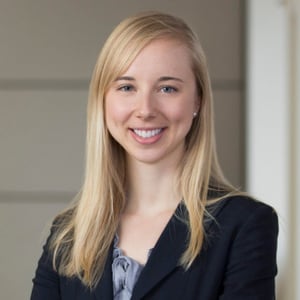
Partner, Vinson & Elkins
Corinne principally practices in environmental law, with an emphasis on litigation, regulatory compliance, internal investigations, and defense against government investigations and enforcement actions.
Corinne draws on wide experience at the U.S. Department of Justice, including serving as Senior Counsel in the Office of the Associate Attorney General, which oversees all civil litigation on behalf of the United States, and as Counselor in the Office of the Attorney General.
Corinne most recently served as Counsel and Chief of Staff in the Environment and Natural Resources Division of the U.S. Department of Justice, where she assisted in managing a 600-person division that included 400 lawyers. In this role she helped manage the Division’s civil and criminal litigation arising under more than 150 environmental and natural resources laws.
She also worked closely with the General Counsel’s Offices for multiple federal agencies, including the EPA, Departments of Interior, Defense, Energy, Commerce, and Agriculture, as well as the White House and Counsel on Environmental Quality to advise high-ranking officials on policy and litigation risks associated with the environmental and natural resource laws.
She has personally argued cases in three U.S. Courts of Appeals, and multiple district courts, and served as the lead or co-lead counsel in district court litigation defending agency regulations, approvals, and permits related to oil and gas operations and other energy extraction projects.
Her roles in government have given her a unique perspective into the decision-making processes in the federal government.
In the private sector, Corinne counsels clients on environmental compliance across a variety of industries, including energy, chemical, manufacturing, and mining sectors. In the transactional context, she assists in the drafting and negotiating of the environmental terms in purchase and sale agreements, lease agreements, credit agreements, and disclosures for debt and equity offerings and public filings. She has also drafted comments on behalf of clients to agencies on proposed rules with significant implications for the oil and gas industry.
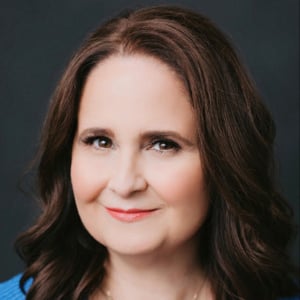
Chief Judge, United States Court of Appeals, Fifth Circuit
Jennifer Walker Elrod is the Chief Judge of the United States Court of Appeals for the Fifth Circuit. She was nominated to the Fifth Circuit in 2007, and she served as a Circuit Judge on the court until assuming the role of Chief Judge in October 2024. Prior to serving as a Circuit Judge, Chief Judge Elrod was appointed and then twice elected Judge of the 190th District Court of Harris County, Texas, where she spent over five years presiding over more than 200 jury and non-jury trials.
Chief Judge Elrod graduated cum laude from Harvard Law School, where she was an active member of the Harvard Federalist Society, an Ames Moot Court finalist, and a Senior Editor of the Harvard Journal of Law & Public Policy. She clerked for the Honorable Sim Lake in the Southern District of Texas. Before serving as a judge, Chief Judge Elrod worked in private practice, focusing on civil litigation, antitrust, and employment matters.
She has been repeatedly recognized for her work as a jurist, as well as for her pro bono work and contributions to the community. She has been named the 2022 Texas Review of Law & Politics’ Jurist of the Year, the 2018 Harvard Federalist Society’s Alumni of the Year, the 2016–17 Texas Association of Civil Trial and Appellate Specialists’ Appellate Judge of the Year, and the 2008 Mexican-American Bar Association of Texas’s Judge of the Year.
Chief Judge Elrod is actively engaged in the academic and legal communities. Chief Judge Elrod currently serves on the Board of Directors and as the Jurist-in-Residence at the South Texas College of Law, where she teaches civil procedure and First Amendment law. She is also a member of the American Law Institute and of the Board of Advisors for the Harvard Journal of Law & Public Policy, and she is a former member of the Board of Regents of her alma mater, Baylor University, and the Board of Visitors at Brigham Young University Law School. She previously served as the Chair of the Codes of Conduct Committee for the Judicial Conference of the United States. She has also served as the M.D. Anderson Visiting Public Service Professor at the Texas Tech University School of Law and as Jurist-in-Residence at Brigham Young University Law School, and she has taught legal writing at the University of Houston Law Center. She presented the Lewis F. Powell, Jr. Distinguished Lecture at the Washington and Lee University School of Law and is a frequent speaker on the topics of trial and appellate procedure, ethics, employment law, and constitutional law. Chief Judge Elrod also serves on the board of the Garland R. Walker Inn of Court, and co-produces an annual musical CLE, for which her pupilage group has won multiple national awards.
Chief Judge Elrod’s publications include: Trial by Siri: AI Comes to the Courtroom; Don’t Mess with Texas Judges: In Praise of the State Judiciary; For Good: Enriching Your Practice and Your Life Through Pro Bono and Community Service; Is the Jury Still Out?: A Case for the Continued Viability of the American Jury; and W(h)ither the Jury? The Diminishing Role of the Jury Trial in our Legal System.
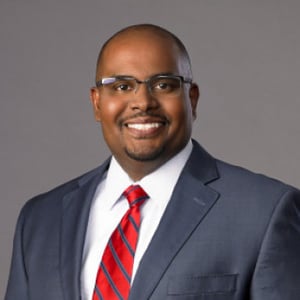
Principal, Kyle George Law Group
Kyle George previously served as Nevada’s First Assistant Attorney General under Attorney General Aaron Ford, where he supervised over 100 attorneys across 9 divisions responsible for legal representation of Nevada’s State Agencies, Boards, and Commissions, as well as civil litigation and regulatory and administrative proceedings.
George has served as General Counsel to the Nevada Governor, counsel and policy advisor to two Members of Congress, a Chief Deputy District Attorney, and as a litigator in private practice. He currently advises clients on state and federal regulatory matters, and government affairs and relations.
George earned his J.D. from Georgetown University Law Center, and he holds bachelor’s and master’s degrees in Chemistry from the University of Nevada, Las Vegas. While at UNLV, he was active in student government and served as President of the Graduate and Professional Student Association.
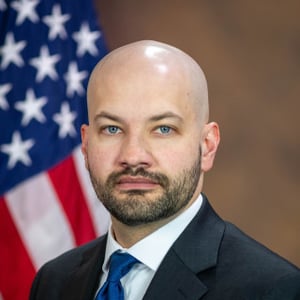
Deputy Assistant Attorney General, U.S. Department of Justice
Eric Hamilton serves as the Deputy Assistant Attorney General for the Federal Programs Branch of the Civil Division. He previously served as the Solicitor General for the State of Nebraska and as an Assistant Solicitor General in the Texas Attorney General’s Office. During the first Trump Administration, Eric worked as an Associate Counsel to the President in the Office of White House Counsel. Earlier in his career, he was in private practice in Washington, D.C. and clerked for Judge Thomas M. Hardiman on the U.S. Court of Appeals for the Third Circuit.
Eric is a graduate of Stanford Law School, where he served on the Stanford Law Review. He holds an undergraduate degree from the University of Nebraska-Lincoln.
Professor of Law, University of Michigan Law School
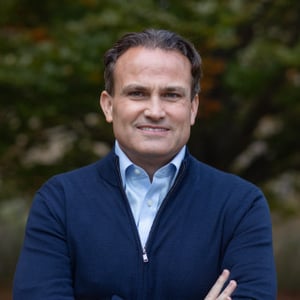
Christopher J. Walker is a Professor of Law at the University of Michigan. Prior to joining Michigan law faculty in 2022, he spent a decade teaching at The Ohio State University Moritz College of Law. He previously clerked for Justice Anthony Kennedy of the U.S. Supreme Court, worked on the Civil Appellate Staff at the U.S. Department of Justice, and served on the Senate Judiciary Committee staff for the Gorsuch Supreme Court confirmation. Professor Walker’s research focuses on administrative law, regulation, and law and policy at the agency level. Outside the law school, he chaired the American Bar Association’s Section of Administrative Law and Regulatory Practice in 2020-21 and served as one of forty Public Members of the Administrative Conference of the United States from 2016-2022, and he continues to serve in both organizations in various capacities. He also works of counsel at the U.S. Chamber Litigation Center. In 2022, he received the Federalist Society’s Joseph Story Award.
Chief Judge, United States Court of Appeals, Fifth Circuit
Jennifer Walker Elrod is the Chief Judge of the United States Court of Appeals for the Fifth Circuit. She was nominated to the Fifth Circuit in 2007, and she served as a Circuit Judge on the court until assuming the role of Chief Judge in October 2024. Prior to serving as a Circuit Judge, Chief Judge Elrod was appointed and then twice elected Judge of the 190th District Court of Harris County, Texas, where she spent over five years presiding over more than 200 jury and non-jury trials.
Chief Judge Elrod graduated cum laude from Harvard Law School, where she was an active member of the Harvard Federalist Society, an Ames Moot Court finalist, and a Senior Editor of the Harvard Journal of Law & Public Policy. She clerked for the Honorable Sim Lake in the Southern District of Texas. Before serving as a judge, Chief Judge Elrod worked in private practice, focusing on civil litigation, antitrust, and employment matters.
She has been repeatedly recognized for her work as a jurist, as well as for her pro bono work and contributions to the community. She has been named the 2022 Texas Review of Law & Politics’ Jurist of the Year, the 2018 Harvard Federalist Society’s Alumni of the Year, the 2016–17 Texas Association of Civil Trial and Appellate Specialists’ Appellate Judge of the Year, and the 2008 Mexican-American Bar Association of Texas’s Judge of the Year.
Chief Judge Elrod is actively engaged in the academic and legal communities. Chief Judge Elrod currently serves on the Board of Directors and as the Jurist-in-Residence at the South Texas College of Law, where she teaches civil procedure and First Amendment law. She is also a member of the American Law Institute and of the Board of Advisors for the Harvard Journal of Law & Public Policy, and she is a former member of the Board of Regents of her alma mater, Baylor University, and the Board of Visitors at Brigham Young University Law School. She previously served as the Chair of the Codes of Conduct Committee for the Judicial Conference of the United States. She has also served as the M.D. Anderson Visiting Public Service Professor at the Texas Tech University School of Law and as Jurist-in-Residence at Brigham Young University Law School, and she has taught legal writing at the University of Houston Law Center. She presented the Lewis F. Powell, Jr. Distinguished Lecture at the Washington and Lee University School of Law and is a frequent speaker on the topics of trial and appellate procedure, ethics, employment law, and constitutional law. Chief Judge Elrod also serves on the board of the Garland R. Walker Inn of Court, and co-produces an annual musical CLE, for which her pupilage group has won multiple national awards.
Chief Judge Elrod’s publications include: Trial by Siri: AI Comes to the Courtroom; Don’t Mess with Texas Judges: In Praise of the State Judiciary; For Good: Enriching Your Practice and Your Life Through Pro Bono and Community Service; Is the Jury Still Out?: A Case for the Continued Viability of the American Jury; and W(h)ither the Jury? The Diminishing Role of the Jury Trial in our Legal System.
Principal, Kyle George Law Group
Kyle George previously served as Nevada’s First Assistant Attorney General under Attorney General Aaron Ford, where he supervised over 100 attorneys across 9 divisions responsible for legal representation of Nevada’s State Agencies, Boards, and Commissions, as well as civil litigation and regulatory and administrative proceedings.
George has served as General Counsel to the Nevada Governor, counsel and policy advisor to two Members of Congress, a Chief Deputy District Attorney, and as a litigator in private practice. He currently advises clients on state and federal regulatory matters, and government affairs and relations.
George earned his J.D. from Georgetown University Law Center, and he holds bachelor’s and master’s degrees in Chemistry from the University of Nevada, Las Vegas. While at UNLV, he was active in student government and served as President of the Graduate and Professional Student Association.
Deputy Assistant Attorney General, U.S. Department of Justice
Eric Hamilton serves as the Deputy Assistant Attorney General for the Federal Programs Branch of the Civil Division. He previously served as the Solicitor General for the State of Nebraska and as an Assistant Solicitor General in the Texas Attorney General’s Office. During the first Trump Administration, Eric worked as an Associate Counsel to the President in the Office of White House Counsel. Earlier in his career, he was in private practice in Washington, D.C. and clerked for Judge Thomas M. Hardiman on the U.S. Court of Appeals for the Third Circuit.
Eric is a graduate of Stanford Law School, where he served on the Stanford Law Review. He holds an undergraduate degree from the University of Nebraska-Lincoln.
Professor of Law, University of Michigan Law School
Christopher J. Walker is a Professor of Law at the University of Michigan. Prior to joining Michigan law faculty in 2022, he spent a decade teaching at The Ohio State University Moritz College of Law. He previously clerked for Justice Anthony Kennedy of the U.S. Supreme Court, worked on the Civil Appellate Staff at the U.S. Department of Justice, and served on the Senate Judiciary Committee staff for the Gorsuch Supreme Court confirmation. Professor Walker’s research focuses on administrative law, regulation, and law and policy at the agency level. Outside the law school, he chaired the American Bar Association’s Section of Administrative Law and Regulatory Practice in 2020-21 and served as one of forty Public Members of the Administrative Conference of the United States from 2016-2022, and he continues to serve in both organizations in various capacities. He also works of counsel at the U.S. Chamber Litigation Center. In 2022, he received the Federalist Society’s Joseph Story Award.

Jurisdiction Stripping: Fact & Fiction Flowing Through the Mountain Valley Pipeline Case
Topics
Simple Rules for Jarkesy v. SEC in a Complex Administrative World
“Administrative law is not for sissies,” Justice Scalia famously quipped. It’s complex. And that’s no...
Topics
Does Texas Have The Right to Defend Its Border?
The state of Texas has taken bold steps to secure its southern border and stem...
Climate Change Litigation and Article III
NYU Student Chapter
New York, NYTopics
2023 National Lawyers Convention: Insurrection & the 14th Amendment
Editor's Note: On December 19th, 2023 the Colorado Supreme Court ruled that Former President Donald Trump...
Topics
2023 National Lawyers Convention: Insurrection & the 14th Amendment
Editor's Note: On December 19th, 2023 the Colorado Supreme Court ruled that Former President Donald...
Topics
Which National Labor Relations Board Unfair Labor Practice Proceedings Deprive Employers of Jury Trial Rights?
A running gag in American movies, stemming from a line in the 1948 film “Treasure...
Topics
Should NLRB Administrative Law Judges Pursue Other Opportunities?
On November 29, the U.S. Supreme Court will hear oral arguments about the constitutionality of...
Do States Enjoy a Special Solicitude?
Jennifer Walker Elrod, Kyle George, Eric Hamilton, Christopher J. Walker
Over the last two decades, states have played an important and increasing role in federal...
Do States Enjoy a Special Solicitude?
2023 National Lawyers Convention
Washington, DC