
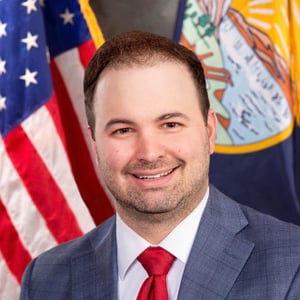
Solicitor General, Montana Attorney General's Office
Christian is currently Solicitor General of Montana, where he serves as the chief litigator and principal legal advisor to Montana Attorney General Austin Knudsen. In that capacity, he manages litigation before the federal district courts, courts of appeal, and the United States Supreme Court, as well as the Montana Supreme Court. He previously served in the Trump Administration as Senior Counsel to the Assistant Secretary for Civil Rights at the U.S. Department of Education. Prior to government service, he was a public interest constitutional litigator at Mountain States Legal Foundation and a fellow at the Institute for Justice. He clerked for Justice Caleb Stegall on the Kansas Supreme Court. He also served as Director of Publications for the Federalist Society's national headquarters.
Christian earned his B.A. in Political Science in 2009 from the University of Pennsylvania before attending the University of Kansas School of Law. Christian is admitted to practice law in Kansas and Montana. A Kansas native, he is a die-hard fan of the Kansas Jayhawks, Kansas City Chiefs, and Kansas City Royals.
Christian is a member of the Federalism & Separation of Powers Practice Group's Executive Committee.
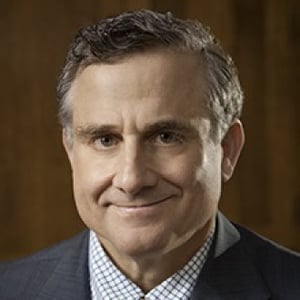
Sam Harris Professor of Corporate Law, Corporate Finance, and Securities Law, Yale Law School
Jonathan R. Macey is Sam Harris Professor of Corporate Law, Corporate Finance, and Securities Law at Yale University, and Professor in the Yale School of Management. From 1991 – 2004, Professor Macey was J. DuPratt White Professor of Law, Director of the John M. Olin Program in Law and Economics at Cornell Law School, and Professor of Law and Business at the Cornell University Johnson Graduate School of Business. Professor Macey earned his B.A. cum laude from Harvard in 1977, and his J.D. from Yale Law School in 1982, where he was Article and Book Review editor of The Yale Law Journal. In 1996, Professor Macey received a Ph.D. honoris causa from the Stockholm School of Economics. Following law school, Professor Macey was law clerk to Judge Henry J. Friendly on the U.S. Court of Appeals for the Second Circuit.
Professor Macey is the author of several books including the two-volume treatise, Macey on Corporation Laws, published in 1998 (Aspen Law & Business), and co-author of two leading casebooks, Corporations: Including Partnerships and Limited Liability Companies (2003 Thomson West), which is in its eighth edition, and Banking Law and Regulation (2002 Aspen Law & Business), which is now in its third edition. He also is the author of over 100 scholarly articles. His recent articles have appeared in the Banking Law Journal, the University of Chicago Law Review, the Stanford Law Review, The Yale Law Journal, the Cornell Law Review, the Journal of Law and Economics, and the Brookings Wharton Papers on Financial Institutions. He has published numerous editorials in such publications as The Wall Street Journal, Forbes, The Los Angeles Times, and The National Law Journal.
Professor Macey has taught at major universities throughout the world, including Bocconi University (Milan), the University of Tokyo; the University of Toronto; the University of Turin, the University of Amsterdam Department of Finance, and the Stockholm School of Economics, Department of Law. He also has been Professor of Law at the University of Chicago (1990) and Visiting Professor of Law at Harvard Law School (1999). Professor Macey is a Senior Research Fellow at the International Centre for Economic Research (ICER) in Turin, Italy. Professor Macey also serves on the Academic Advisory Board (Comitato Scientifico) of the Associazione Disiano Preite for the study of corporate law (per lo studio del diritto dell’impresa). In 1995, Professor Macey was awarded the Paul M. Bator prize for excellence in Teaching, Scholarship and Public Service by the Federalist Society for Law and Public Policy. In 1996, he received a Ph.D., honoris causa from the Stockholm School of Economics. And in 1998, he received the D.P. Jacobs prize for the most significant paper in volume 6 of the Journal of Financial Intermediation for his paper (co-authored with Maureen O’Hara), “The Law & Economics of Best Execution.”
In 1999 Professor Macey was made an honorary Fellow of the Society For Advanced Legal Studies. In 2000, Professor Macey became a member of the Legal Advisory Committee to the Board of Directors of the New York Stock Exchange. In 2001 Professor Macey was appointed a Bertil Daniellson Distinguished Visiting Professor in Banking and Finance at the Stockholm School of Economics. In 2002 Professor Macey was appointed to the Economic Advisory Board of the National Association of Securities Dealers (NASD). In 2004 Professor Macey was awarded a Teaching Award by the Yale Law Women in recognition of his “commitment to excellence in teaching, mentoring and inspiring.” In 2005 Professor Macey became a member of the Board of Editors of Thomson West Publishing Company.
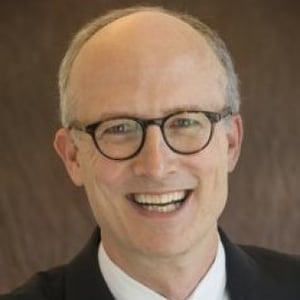
Michael J. Marks Professor of Law, University of Chicago Law School
M. Todd Henderson is the Michael J. Marks Professor of Law at the University of Chicago Law School. Professor Henderson’s research interests include corporations, securities regulation, and law and economics. He has taught classes ranging from Banking Regulation to Torts to American Indian Law.
Professor Henderson received an engineering degree cum laude from Princeton University in 1993. He worked for several years designing and building dams in California before matriculating at the Law School. While at the Law School, Todd was an editor of the Law Review and captained the Law School's all-University champion intramural football team. He graduated magna cum laude in 1998 and was elected to the Order of the Coif. Following law school, Todd served as clerk to the Hon. Dennis Jacobs of the US Court of Appeals for the Second Circuit. He then practiced appellate litigation at Kirkland & Ellis in Washington, DC, and was an engagement manager at McKinsey & Company in Boston, where he specialized in counseling telecommunications and high-tech clients on business and regulatory strategy.
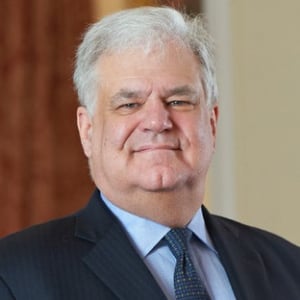
Stuyvesant P. Comfort Professor of Law; Director, Center for Financial Institutions; and Co-Director, Center for Civil Justice, New York University School of Law
Geoffrey Miller is an author or editor of a dozen books and more than 200 articles in the fields of financial institutions, contract law, corporate and securities law, constitutional law, civil procedure, legal history, jurisprudence, and ancient law. He has taught a wide range of subjects including law and economics, corporations, compliance and risk management, property, regulation of financial institutions, land development, securities law, the legal profession, and legal theory. Miller received his BA magna cum laude from Princeton in 1973 and his JD from Columbia in 1978, where he was a Stone Scholar and editor-in-chief of the Columbia Law Review. He clerked for Judge Carl McGowan of the US Court of Appeals for the District of Columbia Circuit and Justice Byron White of the US Supreme Court. After two years as an attorney adviser at the Office of Legal Counsel of the US Department of Justice and one year with a Washington, DC, law firm, he joined the faculty of the University of Chicago Law School in 1983 and NYU School of Law in 1995.
Miller has been a visiting professor or visiting scholar at Columbia University, Harvard University, University of Minnesota, University of Basel (Switzerland), University of Genoa (Italy), Collegio Carlo Alberto (Italy), Study Center Gerzensee (Switzerland), Vanderbilt University, University of St. Gallen (Switzerland), University of Frankfurt (Germany), University of Sydney (Australia), University of Auckland (New Zealand), and the Bank of Japan. Miller is a founder of the Society for Empirical Legal Studies, a scholarly organization devoted to promoting statistical and other empirical techniques in the study of legal institutions. He is founder and director of NYU School of Law’s Center for Financial Institutions, co-director of the Center for Civil Justice, co-founder of and Senior Academic Fellow at NYU's Program on Corporate Compliance and Enforcement, co-convener of the Global Economic Policy Forum, a member of the board of directors of State Farm Bank, and a fellow in the American Academy of Arts and Sciences.
S. Samuel Arsht Professor of Corporate Law, University of Pennsylvania Law School
David Skeel is the Caryl Louise Boies Visiting Professor of Law at New York University, and the S. Samuel Arsht Professor of Corporate Law at the University of Pennsylvania. He is the author of The New Financial Deal: Understanding the Dodd-Frank Act and its (Unintended) Consequences (Wiley, 2011); Icarus in the Boardroom: The Fundamental Flaws in Corporate America and Where They Came From (Oxford University Press, 2005); Debt’s Dominion: A History of Bankruptcy Law in America (Princeton University Press, 2001); and numerous articles on bankruptcy, corporate law, financial regulation, Christianity and law, and other topics. Professor Skeel has also written commentaries for the New York Times, Wall Street Journal, Books & Culture, The Weekly Standard, and other publications.

Laurence H. Silberman Chair in Constitutional Governance, American Enterprise Institute; Executive Director, Antonin Scalia Law School’s C. Boyden Gray Center for the Study of the Administrative State
Adam J. White is the Laurence H. Silberman Chair in Constitutional Governance and senior fellow at the American Enterprise Institute, where he focuses on the Supreme Court and the administrative state. He also directs the Antonin Scalia Law School’s C. Boyden Gray Center for the Study of the Administrative State.
He writes on regulation and constitutional government for a variety of publications. He practiced law in Washington, D.C., after clerking for the D.C. Circuit's Judge David Sentelle. He also has been chairman of the ABA's Administrative Law Section.
In 2021, he served on the Presidential Commission on the Supreme Court of the United States, where he criticized “Court packing” and other efforts to restructure the Supreme Court.
Senior Attorney, Sensient Technologies Corporation
Former United States Attorney General
Michael B. Mukasey is the former Attorney General of the United States, the nation’s chief law enforcement officer. As Attorney General from November 2007 to January 2009, he oversaw the U.S. Department of Justice and advised on critical issues of domestic and international law.
From 1988 to 2006, Judge Mukasey served as a district judge in the United States District Court for the Southern District of New York, becoming Chief Judge in 2000.
From 1972 to 1976, Judge Mukasey served as an Assistant United States Attorney for the Southern District of New York, and as Chief of the Official Corruption Unit from 1975 to 1976. His practice consisted of criminal litigation on behalf of the government, including investigation and prosecution of narcotics, bank robbery, interstate theft, securities fraud, fraud on the government and bribery. From 1976 to 1987 and from 2006 to 2007 he was in private practice.
Judge Mukasey has received numerous honors, including the Federal Bar Council’s Learned Hand Medal for Excellence in Federal Jurisprudence. He served as Chairman of the Committee on Public Access to Information and Proceedings of the New York Bar Association from 1984 to 1987. He served on the Federal Courts Committee of the Association of the Bar of the City of New York from 1979 to 1982 and its Communications Law Committee from 1983 to 1986. Judge Mukasey was also a part-time lecturer at Columbia School of Law from January 1993 to May 2007, teaching trial advocacy.
He received his LL.B. from Yale Law School in 1967 and his B.A. from Columbia College in 1963.

Henry St. George Tucker III Research Professor of Law, The George Washington University Law School
 Professor Cunningham teaches Contracts, Corporations and Law & Accounting. He is the author of Introductory Accounting, Finance and Auditing for Lawyers (West 5th ed. 2009); co-editor of Corporations and Other Business Organizations (LEXIS 7th ed. 2009); and, from 1993 to 1999, was co-editor of the treatise, Corbin on Contracts. He has written more than 40 articles on those and other subjects, which have appeared in Columbia, Cornell, GW, Michigan, Minnesota, UCLA, Vanderbilt and Virginia Law Reviews. His dozen books include The Essays of Warren Buffett: Lessons for Corporate America. Professor Cunningham has also written op-ed pieces for The National Law Journal, The New York Times and The Financial Times and is a permanent writer for the blog, Concurring Opinions.

Milton R. Underwood Chair in Free Enterprise, Vanderbilt University Law School
Brian Fitzpatrick is the Milton R. Underwood Chair in Free Enterprise and Professor of Law at Vanderbilt Law School, where his research focuses on class action litigation, federal courts, judicial selection, and constitutional law. He is best known for his empirical studies of class action settlements as well as his book The Conservative Case for Class Actions (University of Chicago Press, 2019). Professor Fitzpatrick joined Vanderbilt's law faculty in 2007 after serving as the John M. Olin Fellow at New York University School of Law. He graduated first in his class from Harvard Law School and went on to clerk for Judge Diarmuid O'Scannlain on the U.S. Court of Appeals for the Ninth Circuit and Justice Antonin Scalia on the U.S. Supreme Court. After his clerkships, Professor Fitzpatrick practiced commercial and appellate litigation for several years at Sidley Austin in Washington, D.C., and served as Special Counsel for Supreme Court Nominations to U.S. Senator John Cornyn. Before earning his law degree, Fitzpatrick graduated summa cum laude with a bachelor's of science in chemical engineering from the University of Notre Dame. He has received the Hall-Hartman Outstanding Professor Award, which recognizes excellence in classroom teaching, for his Civil Procedure and Federal Courts courses.
Executive Vice President and Senior Counselor to the President, The Federalist Society for Law and Public Policy Studies
B.A., Yale; J.D., University of Chicago. Lee Liberman Otis is the Executive Vice President and Senior Counselor to the President at the Federalist Society. She also serves as a member of the American Law Institute (ALI), a senior fellow of the Administrative Conference (ACUS), and as the co-chair of the National Constitution Center's Coalition of Freedom Advisory Board. She previously was a special assistant and an Associate Deputy Attorney General at the U.S. Department of Justice, General Counsel of the Department of Energy, an associate in the appellate section of Jones, Day, Reavis & Pogue, an associate counsel to President George H.W. Bush, and a law clerk to Associate Justice Antonin Scalia. She also served as an assistant professor of law at George Mason, where she taught legislation, federal jurisdiction, constitutional law, civil procedure, and appellate advocacy. Ms. Otis has been an important member of the Federalist Society team since the organization’s beginnings. Together with David McIntosh, she led the effort to start what became the Chicago chapter of the Society. She also helped organize the Society’s first conference at Yale, its second conference at Chicago, and its first Lawyers Division chapter in Washington DC, as well as the effort to incorporate the Society, recruit its permanent staff, and obtain its early funding. She was a Founding Director of the Federalist Society.
Professor of Law, Benjamin N. Cardozo School of Law, Yeshiva University
Before coming to Cardozo, Professor Sebok was the Centennial Professor of Law and the associate dean for research at Brooklyn Law School, where he taught for 15 years. In 2005-06, Professor Sebok was a Fellow in the Program in Law and Public Affairs at Princeton University, and in 1999 he was a Fellow at the American Academy in Berlin. After completing law school, he clerked for Chief Judge Edward N. Cahn of the US District Court for the Eastern District of Pennsylvania. He has authored numerous articles about mass restitution litigation, including lawsuits involving tobacco, handguns, and slavery reparations. Professor Sebok has also written extensively on the differences between the European and American tort systems, and is currently writing a book with Mauro Bussani of the University of Trieste on comparative tort law that will be published by Oxford University Press. Sebok is the author of Legal Positivism in American Jurisprudence, articles and essays on jurisprudence, and is the coeditor ofThe Philosophy of Law: A Collection of Essays. His casebook, Tort Law: Responsibilities and Redress, which he coauthored with John Goldberg and Benjamin Zipursky, is used at several leading law schools. Professor Sebok is frequently quoted in the national media on timely legal issues, such as the September 11 Victim Compensation Fund. He is a regular columnist forFindlaw, a popular legal Web site.
Frank Edwards Tyler Distinguished Professor of Law, University of Kansas School of Law
Stephen Ware is the author of five books, over 60 law review articles and many other publications. His writings have been cited by the Supreme Court of the United States and in at least 37 other cases. Ware teaches and writes on:
each with an international or comparative dimension. An experienced teacher of lawyering skills exercises in which student groups negotiate, mediate, and draft legal documents, Professor Ware takes this approach in his Transnational Dispute Resolution course, which he has customized for universities from Beijing to Istanbul to Kansas.
Ware has testified before both houses of the U.S. Congress, several state legislatures and, as an expert witness, in court. He is a frequent guest lecturer and speaker at academic and professional conferences—having given such presentations throughout the U.S. and in several other countries. He has appeared on numerous television and radio stations and been quoted in The New York Times, Wall Street Journal, USA Today, Financial Times, National Law Journal and many other news outlets. He is an elected member of the American Law Institute (ALI) and has served, at various times in his career, on the editorial board of the Journal of Legal Education and as an arbitrator for the American Arbitration Association.
Ware was named as the Frank Edwards Tyler Distinguished Professor of Law in 2019.
Partner, O’Melveny & Myers
Brian P. Brooks is the Managing Partner of Valor Capital Group. He has served as CEO of the Bitfury Group and CEO of digital asset exchange and marketplace Binance.US.
Mr. Brooks became Acting Comptroller of the Currency upon the resignation of the 31st Comptroller of the Currency Joseph M. Otting as a result of his designation as First Deputy Comptroller by Treasury Secretary Steven T. Mnuchin pursuant to his authority under 12 USC § 4.
As Acting Comptroller of the Currency, Mr. Brooks was the administrator of the federal banking system and chief officer of the Office of the Comptroller of the Currency (OCC). The OCC supervises nearly 1,200 national banks, federal savings associations, and federal branches and agencies of foreign banks that conduct approximately 70% of all banking business in the United States. The mission of the OCC is to ensure that national banks and federal savings associations operate in a safe and sound manner, provide fair access to financial services, treat customers fairly, and comply with applicable laws and regulations.
The Comptroller also serves as a director of the Federal Deposit Insurance Corporation and a member of the Financial Stability Oversight Council and the Federal Financial Institutions Examination Council.
Prior to becoming Acting Comptroller, Mr. Brooks served as Senior Deputy Comptroller and Chief Operating Officer. In this role, he oversaw OCC bank supervision, bank supervision policy, economics, supervisory system and analytical support, systemic risk identification support and specialty supervision, and innovation. He also served as a member of the OCC's Executive Committee and was the Chair of the Technology and Systems Subcommittee, since joining the agency in April 2020.
Prior to joining the OCC, Mr. Brooks served as Chief Legal Officer of Coinbase Global, Inc., where he headed the legal, compliance, audit, investigations, and government relations functions for the company, which served 20 million customers. He held this position since September 2018.
From 2014-2018, Mr. Brooks served as Executive Vice President, General Counsel, and Corporate Secretary of the $3.2 trillion Fannie Mae. Prior to joining Fannie Mae, he served as a Vice Chairman of OneWest Bank, N.A., from 2011 to 2014. Prior to joining OneWest, he served managing partner of the Washington, D.C. office of the global law firm O'Melveny & Myers LLP, where he also served as chair of the firm's financial services practice group. Prior to joining the OCC, Mr. Brooks also served on the Boards of Directors of Avant, Inc. and Fannie Mae, and also served as an advisor to a number of technology startups.
Mr. Brooks holds a bachelor’s degree from Harvard University in government and a law degree from the University of Chicago.

Wayne A. Abernathy, Wild Bells
Wayne A. Abernathy is a former U.S. Treasury Assistant Secretary for Financial Institutions under President George W. Bush, receiving the Alexander Hamilton Award in recognition of his service. In that office he was also a member of the Board of Directors of the Securities Investor Protection Corporation. Prior to his work at the Treasury, Mr. Abernathy served as Staff Director of the Senate Banking Committee, under Chairman Phil Gramm.
Following his service at the Treasury, Mr. Abernathy worked for 15 years on the staff of the American Bankers Association, as Executive Vice President for Financial Institutions Policy and Regulatory Affairs.
Previous experience with the Senate Banking Committee includes serving as Staff Director of the Subcommittee on Securities during 1995-1998. From 1989 until 1994, Mr. Abernathy was a Republican economist for the committee. He previously worked as a senior legislative assistant for Senator Gramm during 1987-1989 and as an economist for the Banking Committee’s Subcommittee on International Finance and Monetary Policy during 1981-1986, under Chairman Jake Garn.
Mr. Abernathy earned his bachelor’s degree in International Studies from The Johns Hopkins University in 1978. In 1980, he received a master’s degree in International Studies from the School of Advanced International Studies of The Johns Hopkins University.
Professor of Law and Public Finance, NSU Florida Shepard Broad College of Law
Tim Canova is a Professor of Law and Public Finance at the NSU Shepard Broad College of Law, with broad experience in law teaching, private practice, and public policy. He teaches Constitutional Law II: First Amendment Law, Corporations, Business Entities, Regulation of Financial Institutions, and a Seminar on Law, Finance, and Markets at Nova. He previously taught at the Chapman University Dale E. Fowler School of Law in Orange, California, where he served as Associate Dean for Academic Affairs and the inaugural Betty Hutton Williams Professor of International Economic Law. He was first granted tenure at the University of New Mexico School of Law and he has taught as a visitor at the University of Arizona and the University of Miami.
Canova's work crosses the disciplines of law, public finance, history, and economics. He has been a leading critic of private central banks, including the Federal Reserve. His work has been published in more than two dozen book chapters and articles in the U.S. and overseas, including in the Oxford University Press, Edward Elgar Publishing, Harvard Law & Policy Review, American Journal of Economics and Sociology, Brooklyn Law Review, Georgetown Journal of Law & Public Policy, and UC Davis Law Review. Canova was an early critic of financial deregulation and the Federal Reserve under Alan Greenspan. In the 1980s, he wrote critically of the federal bailout of Continental Illinois, the nation’s seventh largest commercial bank, and the collapse of the savings & loan industry. In the 1990s, prior to the Asian currency contagion, he argued against the International Monetary Fund’s capital account liberalization program. Throughout the Bush administration, he warned of an impending crisis in the bubble economy. Following the 2008 financial collapse, he lectured and published widely on the causes and consequences of the economic and financial crisis. In 2011, Canova was appointed by Senator Bernie Sanders (I-Vt.) to serve on an Advisory Committee on Federal Reserve Reform with leading economists, including Jeffrey Sachs, Robert Reich, James Galbraith, and Nobel Laureate Joseph Stiglitz.
Canova also writes and advocates in the areas of campaign finance and election reform, a research agenda informed by his 2016 campaign challenging the then chair of the Democratic National Committee for her U.S. House of Representatives seat in a hotly contested election. Canova’s campaign went viral, raising $3.8 million from 209,000 individual donations and setting a record at the time for the highest percentage (76%) of small online donations for any campaign for federal office. The election results were marred by evidence of statistical anomalies, allegations of electronic voting irregularities, and an order by Florida’s 17th Judicial Circuit Court finding that the Broward County Elections Supervisor had illegally destroyed every ballot cast. In 2019, Canova testified to the Florida Advisory Committee of the United States Civil Rights Commission about the systematic electronic disenfranchisement of voters in Florida elections.
Canova received his A.B. degree from Franklin and Marshall College and his J.D. degree, cum laude, from the Georgetown University Law Center. He has a master’s diploma in graduate legal studies from the University of Stockholm where he was a Swedish Institute Visiting Scholar. He previously served as a legislative assistant to the late U.S. Senator Paul E. Tsongas and practiced law in New York City with Gibson, Dunn & Crutcher and Mudge Rose Guthrie Alexander & Ferdon.
Featured Article entitled “Central Bank Independence as Agency Capture: A Review of the Empirical Literature, Banking & Financial Services Policy Report 30:11 (Nov. 2011).
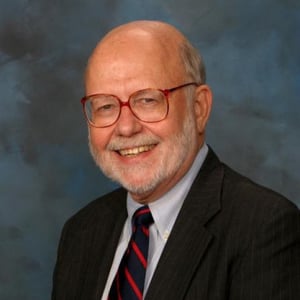
Principal, Ely & Company, Inc.
Bert Ely has specialized in deposit insurance and banking structure issues since 1981. In 1986, he became an early predictor of the S&L crisis and a taxpayer bailout of the FSLIC. In 1991, he was the first person to correctly predict the non-crisis in commercial banking; in 1992, he predicted an eventual taxpayer bailout of the Japanese banking system.
Bert continuously monitors conditions in the banking and S&L industries, monetary policy, and the growing federalization of credit risk. He has helped to draft legislation to enact the cross-guarantee concept for privatizing banking regulation and its related deposit insurance and systemic risks. He has testified on numerous occasions before congressional committees on banking issues and he often speaks on these matters to bankers and others.
Bert first established his consulting practice in 1972. Before that, he was the chief financial officer of a public company, a consultant with Touche, Ross & Company, and an auditor with Ernst & Ernst. He received his MBA from the Harvard Business School in 1968 and his Bachelor's degree in economics in 1964 from Case Western Reserve University.

Professor Emeritus, Paul M. Hebert Law Center, Louisiana State University
In memoriam
Dr. John Baker is Professor Emeritus of Law, and previously the Dale E. Bennett Professor of Law, at Louisiana State University Law School. He is currently Visiting Professor at Peking University School of Transnational Law (via Zoom) and has been Visiting Professor at The Center for the Constitution, Georgetown Law School (2013-2020). He has also been a Visiting Fellow at Oriel College, the University of Oxford (2012-2014) and taught at Blackfriars Hall, Oxford in 2014. Dr. Baker has also been an adjunct Fellow at the Heritage Foundation (Spring, 2008) and a Distinguished Scholar at the Catholic University of America Law School (2011-12). He has taught at Tulane Law School, George Mason Law School, Pepperdine Law School, New York Law School, Hong Kong University, and the University of Dallas, School of Management and also taught and/or lectured in 17 foreign countries. Notable among his foreign visits are the
following: Visiting Professor at the University of Lyon III (France) (1999-2011); Visiting Professor at the Universidad de los Andes, Chile (2012), as a Fulbright Specialist (2006); and a Fulbright Scholar at various universities in the Philippines. Dr. Baker received his J.D., with honors, from the University of Michigan Law School and his B.A., magna cum laude, from the University of Dallas. He also earned a Ph.D. in Political Thought from the University of London. Baker has taught over a dozen different subjects, mostly courses in public law. His main areas of interest are Constitutional Law (particularly federalism and separation of powers), Criminal Law, Anti-Terrorism Law, International Law, Health Care Law, Mediation, and Comparative Law.
In addition to law review articles and book chapters, Dr. Baker’s academic publications include Hall's Criminal Law: Cases and Materials (with Benson, Force and George; 5th ed. Michie, 1993); An Introduction to the Law of the United States (ed. with Levasseur; University Press of America, 1992). He has also published on Forbes.com, FoxNews.com, in The Washington Times, and a number of times in The Wall Street Journal. He argues in federal court, including two oral arguments in the U.S. Supreme Court. For many years, he co-taught courses for the Federalist Society on separation of powers with the late Supreme Court Justice Antonin Scalia. In September 2016, he co-taught a Supreme Court seminar in China with Justice Samuel Alito. Following law school, he served as a law clerk in federal district court and as an assistant district attorney in New Orleans before joining LSU in 1975. While a professor, he has been as a consultant to USAID, USIA (since rolled into the State Department), the Justice Department, the U.S. Senate Judiciary Subcommittee on Separation of Powers, and the Office of Planning in the White House. He served on an ABA Task Force which issued the report, The Federalization of Crime (1998) and later as a consultant to the “Bi-Partisan Task Force on the Over- federalization of Crime” (2012-2014) created by the U.S. House Judiciary Subcommittee on Crime. Dr. Baker was a co-founder of the first iteration (1995) of Stratfor Inc., a global intelligence agency. He co-authored its first book: The Intelligence Edge (with Friedman, Friedman and Chapman; Crown Books/Random House 1997). In 2022, he began a short, weekly video podcast available on YouTube and Rumble, The Baker Brief.

Partner, Latham & Watkins LLP
Alice Fisher is a partner in Latham & Watkins' Washington, D.C. office and is a member of the firm's Executive Committee. She focuses her practice on white collar criminal investigations, internal investigations and advises clients on a range of criminal matters.
From 2005-2008, Ms. Fisher served as Assistant Attorney General in charge of the Criminal Division of the US DOJ. As Assistant Attorney General, Ms. Fisher led more than 750 attorneys and staff responsible for federal criminal enforcement policy as well as handling criminal matters in federal courts across the country in all areas of federal criminal law enforcement. Under her leadership, the Criminal Division pursued a broad array of federal criminal investigations and prosecutions, with particular focus on corporate fraud matters, including securities fraud, procurement fraud, financial institution fraud, anti-money laundering, healthcare fraud, computer hacking and cyber security, national security, as well as US-domestic and international corruption.
Ms. Fisher also chaired the National Procurement Fraud Task Force, supervised the Medicare Fraud Strike Force, and served as a member of the President's Corporate Fraud Task Force. She handled various transnational and multi-national law enforcement operations and policies, including bilateral agreements and treaties involving information sharing and global criminal enforcement initiatives. Representing the DOJ in front of Congress, Ms. Fisher testified on criminal enforcement policies and served on the Federal Criminal Rules Committee.
As a litigation partner at Latham from 2003-2005 and prior to 2001, Ms. Fisher represented both individual and corporate clients in grand jury, agency and congressional inquiries involving allegations of securities and bank fraud, healthcare fraud, the FCPA, criminal antitrust matters, OFAC sanctions and procurement fraud. She has also represented clients in a number of complex civil and regulatory litigations. Ms. Fisher previously held other positions in government, including Deputy Special Counsel to a US Senate Special Committee.
Ms. Fisher has published articles and spoken on criminal law topics such as the criminalization of corporate conduct, the FCPA, healthcare and procurement fraud, the False Claims Act, the US criminal enforcement environment, public corruption and the honest services statute, financial crime in the financial services industry, securities fraud, identity theft, cybercrime and national security.
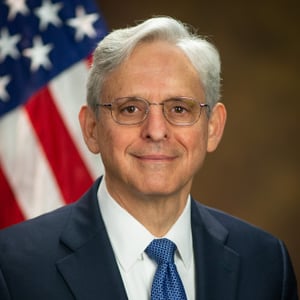
United States Attorney General
Attorney General Merrick B. Garland was sworn in as the 86th Attorney General of the United States on March 11, 2021. As the nation’s chief law enforcement officer, Attorney General Garland leads the Justice Department’s 115,000 employees, who work across the United States and in more than 50 countries worldwide. Under his leadership, the Department of Justice is dedicated to upholding the rule of law, keeping our country safe, and protecting the civil rights of all Americans.
Immediately preceding his confirmation as Attorney General, Attorney General Garland was a judge of the United States Court of Appeals for the District of Columbia Circuit. He was appointed to that position in 1997, served as Chief Judge of the Circuit from 2013-20, and served as Chair of the Executive Committee of the Judicial Conference of the United States from 2017-20. In 2016, President Obama nominated him for the position of Associate Justice of the United States Supreme Court.
Before becoming a federal judge, Attorney General Garland spent a substantial part of his professional life at the Department of Justice. He served in both career and non-career positions under five Attorneys General, including as Special Assistant to the Attorney General, Assistant United States Attorney, Deputy Assistant Attorney General in the Criminal Division, and Principal Associate Deputy Attorney General. In those roles, his responsibilities spanned the work of the Department, including criminal, civil, and national security matters. They also included direct supervision of investigations and prosecutions of national importance, including the Oklahoma City bombing, Unabomber, and Montana Freemen cases.
Earlier in his career, Attorney General Garland was a partner in the law firm of Arnold & Porter, where his practice involved civil and criminal litigation, antitrust, and administrative law. He also taught antitrust at Harvard Law School and published law review articles on both antitrust and administrative law.
Attorney General Garland graduated summa cum laude from Harvard College and magna cum laude from Harvard Law School. Following law school, he clerked for Judge Henry J. Friendly of the United States Court of Appeals for the Second Circuit, and for Justice William J. Brennan, Jr., of the United States Supreme Court.
Senior Counsel, Orrick, Herrington & Sutcliffe LLP
Michael J. Madigan is a litigation partner in Orrick's Washington, D.C., office. Mr. Madigan has more than 30 years of experience in white collar criminal investigations, congressional and corporate investigations, corporate governance issues and Washington, D.C., legislative and political issues. He began his legal career by serving as a federal prosecutor where he tried more than 100 jury trials. At age 30, he served as Counsel to Senator Howard Baker on the historic Senate Watergate Committee. In addition, Mr. Madigan has served as Chief Counsel for Senator Fred Thompson's Campaign Finance investigation, Counsel to the Church Committee and Minority Counsel of the Senate Intelligence Committee.
Mr. Madigan has successfully defended corporate and individual clients (including law firms and accounting firms) in a variety of complex criminal, civil and congressional investigations; conducted corporate internal investigations and counseled on corporate governance and Foreign Corrupt Practices Act issues.
Mr. Madigan has been elected to and/or been asked to serve on a variety of boards and has been involved in the major decision-making of each organization, including the Board of Governors of the D.C. Bar (elected to two three-year terms); the Board of Trustees of the District of Columbia Public Defender Service; the Boards of Directors of the Robert A. Shuker Scholarship Fund, Inc.; the Frederick B. Abramson Memorial Foundation, the D.C. Conference on Opportunities for Minorities in the Legal Profession, the Council for Court Excellence and the Bar Association of the District of Columbia (elected to two two-year terms).
Mr. Madigan has been appointed to serve on a number of commissions and committees, including the District of Columbia Federal Judicial Nominating Commission (federal judge selection), the Magistrate Judge Selection Committee (Vice Chairman), the D.C. Judicial Nomination Commission (local judge selection), the D.C. Circuit Judicial Conference and the Mayor's Corporation Counsel Advisory Committee. He has taught Trial Advocacy at the National Institute of Trial Advocacy for the past 20 years, where he received the "Justin Simon Award for Excellence in Teaching" and has been a Delegate to both the D.C. Circuit and D.C. Judicial Conferences for the last 15 years.
Mr. Madigan is a Fellow in the International Academy of Trial Lawyers and a "Master" in the Edward Bennett Williams Inn of Court. He is a Member of the Barristers, the Lawyers Club and the Cosmos Club.
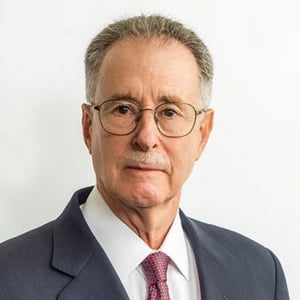
Wallace and Beverley Woodbury University Professor of Law; Co-director of the Litigation and Dispute Resolution Program, The George Washington University Law School
Stephen A. Saltzburg joined GW Law in 1990. Before that, he taught at the University of Virginia School of Law, and was named the first incumbent of the Class of 1962 Endowed Chair. In 1996, he founded and directed the master’s program in Litigation and Dispute Resolution at GW. He was named University Professor, the highest title a University can confer upon a faculty member, in 2004. The Chief Justice of the United States appointed him as reporter for, and then as a member of, the Advisory Committee on the Federal Rules of Criminal Procedure and as a member of the Advisory Committee on the Federal Rules of Evidence. He was the reporter for the Civil Justice Reform Act Committee for the D.C. District Court before he became chair. He has served as a special master in two class action cases in the D.C. District Court, and continues to serve as a mediator for the U.S. Court of Appeals for D.C. He has mediated a variety of disputes involving public agencies and private litigants; served as a sole arbitrator, panel chair, and panel member in domestic arbitrations; and served as an arbitrator for the International Chamber of Commerce.
Professor Saltzburg held the following governmental positions: associate independent counsel in the Iran-Contra investigation; deputy assistant attorney general in the Criminal Division of the U.S. Department of Justice, the Attorney General’s ex-officio representative on the U.S. Sentencing Commission; and director of the U.S. Treasury Department Tax Refund Fraud Task Force. He was chair of the ABA Criminal Justice Section from 2007 to 2008, and represents the section in the ABA House of Delegates. He was appointed to the ABA Task Force on Terrorism and the Law and to the ABA Task Force on Gatekeeper Regulation and the Profession in 2001, and to the ABA President’s Advisory Group on Citizen Detention and Enemy Combatant Issues in 2002. In 2001 he was appointed by Chief Judge Edward R. Becker of the U.S. Court of Appeals for the Third Circuit as co-chair of the Task Force on the Selection of Lead Counsel in Class Actions, which published its final report in 2002. Professor Saltzburg is the author of numerous books and articles on evidence, procedure, and litigation.
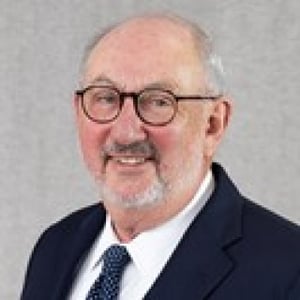
Partner, McGuireWoods LLP
George Terwilliger is co-head of the firm's white collar practice and leads the firm's Strategic Response and Crisis Management practice group. Following his fifteen years of public service in the US Department of Justice, where he began as a law clerk and concluded as Acting Attorney General, George has provided counsel in government and internal investigations, agency enforcement proceedings and in civil and criminal litigation. He has represented many of the nation's and the world's largest corporations, including major financial institutions, energy companies, public institutions as well as leading business and government officials, including members of the US Senate and House as well as cabinet officials. He has also represented lawyers and corporate legal departments in investigations. As a result of both his private sector work and government positions, George is called upon to provide counsel as well as commentary to government officials, Congress and private organizations on national security, homeland defense, terrorism, and other public policy and legal issues. George's work regularly involves providing counsel in the executive suites and boardrooms of major corporations.
In private practice for international law firms, George has represented national and international financial, energy, telecommunications, industrial and healthcare companies. He is a recognized expert in leading credible corporate internal investigations and his experience designing and executing both targeted and global legal compliance reviews has involved work in more than 60 countries around the globe. George is an expert on the Foreign Corrupt Practices Act and regularly provides counsel to companies addressing FCPA issues. No stranger to high stakes litigation and crisis events, George helped lead the Bush-Cheney legal team in the 2000 Florida vote recount, served as special outside counsel to a Senate committee investigating vote fraud allegations, served as counsel to an executive commission on gambling, and has represented many clients in politically charged election law and similar cases. He has guided corporations and individual through high stakes matters of intense public interest. He represented an incumbent president in First Amendment litigation concerning the right to have an inaugural prayer said in a public ceremony.
At the Department of Justice, George served for 10 years as a frontline federal prosecutor, handling hundreds of investigations, trials and appeals, including in white collar and national security cases. President Ronald Reagan appointed him as a U.S. attorney, and he next served as the deputy attorney general and as acting attorney general during the George H.W. Bush administration. As Deputy Attorney General, George ran the Justice Department's operations, overseeing all the nation's federal prosecutors, as well as the FBI and other law enforcement agencies. He also had leadership responsibility in several national and international crises, including a hostage-taking in a federal prison and the federal law enforcement response to domestic unrest in Los Angeles. In several instances, he personally handled negotiations of high-profile criminal and civil matters in the United States and abroad.

J.B. and Maurice C. Shapiro Professor of Public Interest Law, The George Washington University Law School
Jonathan Turley is a nationally recognized legal scholar who has written extensively in areas ranging from constitutional law to legal theory to tort law. After a stint at Tulane Law School, Professor Turley joined the GW Law faculty in 1990, and in 1998, became the youngest chaired professor in the university's history.
He is the founder and executive director of the Project for Older Prisoners (POPS). He has written more than three dozen academic articles that have appeared in a variety of leading law journals including those of Cornell, Duke, Georgetown, Harvard, and Northwestern Universities, among others. He most recently completed a three-part study of the historical and constitutional evolution of the military system.
Professor Turley has served as counsel in some of the most notable cases in the last two decades, including his representation of the Area 51 workers at a secret air base in Nevada; the nuclear couriers at Oak Ridge, Tennessee; the Rocky Flats grand jury in Colorado; Dr. Eric Foretich, the husband in the Elizabeth Morgan custody controversy; and four former U.S. Attorney Generals during the Clinton impeachment litigation. Professor Turley also has served as counsel in a variety of national security and terrorism cases, and has been ranked as one of the top 10 lawyers handling military cases.
He has served as a consultant on statutory and constitutional issues, and he has been a witness in over 100 hearings before the House and Senate, including the impeachments of Presidents Bill Clinton and Donald Trump. He also is a nationally recognized legal commentator; he ranked 38th in the top 100 most cited ‘public intellectuals’ in a recent study by Judge Richard Posner and was found to be the second most cited law professor in the country.
He is a member of the USA Today board of contributors and the recipient of the “2005 Single Issue Advocate of the Year” – the annual opinion award for the Aspen Institute and The Week magazine. Hundreds of his articles on legal and policy issues regularly appear in national newspapers. He also has worked as the legal analyst for four networks, CBS, NBC, BBC, and Fox. After 30 years as a columnist and commentator, the Washington Post called him the "Dean of Legal Analysts."
He is a best-selling author, including his latest New York Times bestseller "Rage and the Republic: The Unfinished Story of the American Revolution." (Simon & Schuster 2026). Turley's blog, Res Ipsa (www.jonathanturley.org), is one of the most read legal sites in the country.
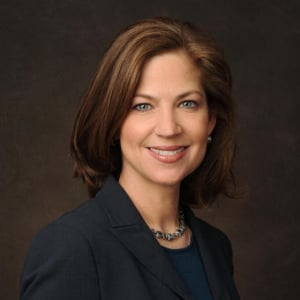
Chief Legal Correspondent, CBS News
Jan Crawford is CBS News' chief legal correspondent and contributes regularly to the "CBS Evening News," "CBS This Morning," and "Face the Nation," as well as CBS News Radio and CBSNews.com.
Crawford joined CBS News in October 2009. She had been a regular contributor to CBS News in 2005 to 2006.
Crawford is a recognized authority on the Supreme Court whose 2007 book, "Supreme Conflict: The Inside Story of the Struggle for the Control of the United States Supreme Court" (Penguin Press), gained critical acclaim and became an instant New York Times Bestseller. She began covering the Court in 1994 for the Chicago Tribune and went on to become a law and political correspondent for all ABC News programs, a Supreme Court analyst for The NewsHour With Jim Lehrer on PBS and a legal analyst for CBS News' "CBS Evening News" and "Face the Nation." She has reported on most of the major judicial appointments and confirmation hearings of the past 15 years and amassed crucial sources in the White House, the Justice Department and Congress along the way.
Chief Justice John Roberts granted his first network television interview to Crawford, just one of the rare interviews she was able to obtain with a total of five of the Court's current members, as well as retired Justice Sandra Day O'Connor. Crawford also sat down with then-86-year-old Justice John Paul Stevens in his first television interview, as well as Justices Clarence Thomas, Antonin Scalia and Stephen Breyer.
Crawford's in-depth reports on the Bush Administration's legal war on terror and her exclusive reports on controversial interrogation techniques used for terror suspects have received wide acclaim and been credited with being a catalyst for congressional hearings. Washingtonian Magazine named her one of Washington's top journalists.
Crawford began her journalistic career at the Tribune in 1987, joining the legal affairs beat in 1993, after her graduation from the University of Chicago Law School. The newspaper awarded Crawford its highest award in 2001, for her role on a team of reporters covering the presidential election of 2000, and the legal battles over the White House. She won the same prize for her 13-part series on the post-civil rights South, a project that brought her back to her native Alabama.
Crawford graduated from the University of Alabama in 1987. She has taught journalism at American University and frequently speaks about the Court to universities, law schools, legal organizations and civic groups across the country. She is a member of the New York Bar. She and her family live in Washington D.C.
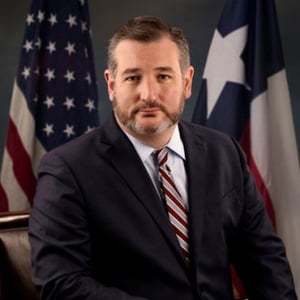
United States Senator, Texas
Ted Cruz represents 28 million Texans in the U.S. Senate as a passionate fighter for limited government and economic growth. He has authored 39 legislative measures signed into law. Recent victories include expanding 529 college savings accounts to allow parents to save for K–12 public, private, and religious education, leading the effort to repeal Obamacare’s individual mandate, imposing sanctions on terrorists who use civilians as human shields, designating North Korea as a state sponsor of terrorism, reauthorizing and reforming NASA, ensuring the availability of additional records to help solve civil rights cold cases, supporting thousands of Texas jobs, and leading the fight to confirm principled constitutionalists to our courts.
Senator Cruz is a graduate of Princeton University and Harvard Law School, a former law clerk to Chief Justice William Rehnquist, and former solicitor general of Texas. He has argued nine cases before the Supreme Court. In November of 2018, he was re-elected to the Senate by the people of Texas.

Judge, United States Court of Appeals, District of Columbia Circuit
Judge Katsas was appointed to the D.C. Circuit in December 2017. He graduated from Princeton University and Harvard Law School, where he was an executive editor on the Harvard Law Review. Between 1989 and 1992, he served as a law clerk to Judge Edward Becker on the Third Circuit, to then-Judge Clarence Thomas on the D.C. Circuit, and to Justice Thomas on the Supreme Court. Between 1992 and 2001, he was an associate and then partner in the Washington office of Jones Day, where he specialized in appellate and complex civil litigation. Between 2001 and 2009, he served in many senior positions in the Department of Justice, including as Assistant Attorney General for the Civil Division and as Acting Associate Attorney General. In 2009, he returned to Jones Day. From January to December 2017, he served as Deputy Assistant to the President and Deputy Counsel to the President.
Before joining the bench, Judge Katsas argued more than 75 appeals, including three cases in the Supreme Court, 13 cases in the D.C. Circuit, and cases in every other federal court of appeals. By appointment of the Chief Justice, he served on the Advisory Committee on Appellate Rules from 2013 to 2017. In 2016, he was elected to membership in the American Academy of Appellate Lawyers.
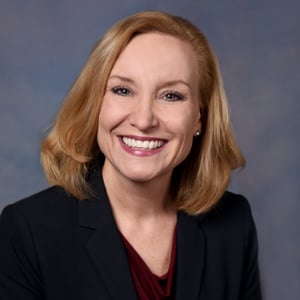
Judge, United States Court of Appeals, Sixth Circuit
The Honorable Joan L. Larsen is a judge of the United States Court of Appeals for the Sixth Circuit. She was nominated by the President on May 8, 2017 and confirmed by the Senate on November 1, 2017. Before her appointment to the federal bench, Judge Larsen served two terms as a Justice of the Michigan Supreme Court, where she was the court’s liaison to Michigan’s drug, sobriety, mental health and veteran’s courts.
Before becoming a judge, Judge Larsen was a faculty member at the University of Michigan Law School, where she was also Special Counsel to the Dean and received the L. Hart Wright Award for Excellence in Teaching. Judge Larsen's research and teaching interests included constitutional law, criminal procedure, statutory interpretation, and presidential power. Judge Larsen continues to assist the law school as the adviser to the Henry M. Campbell Moot Court Competition.
Judge Larsen began her legal career as a law clerk to the Hon. David B. Sentelle of the United States Court of Appeals for the D.C. Circuit and to Justice Antonin Scalia of the Supreme Court of the United States. Following her clerkships, she joined the law firm of Sidley Austin, where she was a member of the Constitutional, Criminal, and Civil Litigation Section. She later served as Deputy Assistant Attorney General in the United States Department of Justice, Office of Legal Counsel.
Judge Larsen graduated first in her class from Northwestern University School of Law, where she served as articles editor of the Northwestern University Law Review and earned the John Paul Stevens Award for Academic Excellence. She received her B.A., with highest honors, from the University of Northern Iowa.
Partner, Jones Day
Glen Nager has argued 13 cases before the U.S. Supreme Court, as well as other appeals in subject areas such as antitrust, civil rights, employment, environmental law, government contracts, and intellectual property. He also defends employers in class action discrimination and employee benefits cases and conducts mediations and neutral case evaluations. In addition, Glen is the Client Affairs Partner for the Firm.
Glen represents clients such as General Electric, H&R Block, IBM, and Sodexo. Among other matters, he argued the American Needle case against the National Football League and won Ledbetter v. Goodyear Tire & Rubber Co., 550 U.S. 618 (2007).
Glen serves as an adjunct professor at the Georgetown University Law Center, where he teaches administrative and constitutional law. From 2012 to 2014, he served as President of the United States Golf Association. He served on the USGA's board from 2009 to 2014 and served as its general counsel from 2006 to 2008.
From 1995 to 2000, by joint appointment of the majority and minority leaders of the House and Senate, Glen chaired the Board of Directors of the Office of Compliance of the U.S. Congress. This board is responsible for promulgating regulations and adjudicating cases under the Congressional Accountability Act, a federal statute that made 11 employment laws applicable to the legislative branch.
Executive Vice President and Senior Counselor to the President, The Federalist Society for Law and Public Policy Studies
B.A., Yale; J.D., University of Chicago. Lee Liberman Otis is the Executive Vice President and Senior Counselor to the President at the Federalist Society. She also serves as a member of the American Law Institute (ALI), a senior fellow of the Administrative Conference (ACUS), and as the co-chair of the National Constitution Center's Coalition of Freedom Advisory Board. She previously was a special assistant and an Associate Deputy Attorney General at the U.S. Department of Justice, General Counsel of the Department of Energy, an associate in the appellate section of Jones, Day, Reavis & Pogue, an associate counsel to President George H.W. Bush, and a law clerk to Associate Justice Antonin Scalia. She also served as an assistant professor of law at George Mason, where she taught legislation, federal jurisdiction, constitutional law, civil procedure, and appellate advocacy. Ms. Otis has been an important member of the Federalist Society team since the organization’s beginnings. Together with David McIntosh, she led the effort to start what became the Chicago chapter of the Society. She also helped organize the Society’s first conference at Yale, its second conference at Chicago, and its first Lawyers Division chapter in Washington DC, as well as the effort to incorporate the Society, recruit its permanent staff, and obtain its early funding. She was a Founding Director of the Federalist Society.

Former Adjunct Professor of Law; former Special Counsel to the President; former federal prosecutor, Georgetown Law (ret.)
Bill Otis is a former Adjunct Professor of Law at Georgetown University, a one-time federal prosecutor, and a former Special White House Counsel for President George H. W. Bush. After graduating from Stanford Law School, he started his career in the Criminal Division of the Justice Department, then became chief of appeals for the US Attorney's Office for the Eastern District of Virginia. In the 1980's he served on the Department's "Train the Trainer" team, which taught US Attorneys Offices across the county how to implement the then-new Sentencing Reform Act. He has held several posts in the federal government, including Special Assistant to the Secretary of Energy and Counselor to the head of the Drug Enforcement Administration, in addition to the White House post. He has testified before Congress on issues in criminal procedure, illegal drugs, the US Sentencing Commission, and the death penalty, and has given numerous media interviews on those and other subjects. He currently teaches a seminar at Georgetown Law titled "Conservatism in Law in America" with his wife, Federalist Society co-founder Lee Liberman Otis.

The Death of Corporate Reputation - Podcast
Christian Corrigan, Jonathan R. Macey
Why did the financial scandals really happen? Why are they continuing to happen? In The Death...
Panel 2: Dodd Frank
Todd Henderson, Geoffrey P. Miller, David Skeel, Adam White
The Federalist Society's Facutly Division hosted this panel discussion on "Dodd-Frank" on Saturday, January 5,...
Can Someone Please Turn on the Lights? Bringing Transparency to the Foreign Corrupt Practices Act
James C. Dunlop, Michael B. Mukasey
Note from the Editor: This paper assesses the Department of Justice’s authority under the Foreign...
Panel 1: Class Actions, Arbitration, and Alternative Litigation Finance
Lawrence A. Cunningham, Brian T. Fitzpatrick, Lee Liberman Otis, Anthony Sebok, Stephen J. Ware
Prof. Lawrence A. Cunningham, The George Washington University Law School Prof. Anthony Sebok, Cardozo School...
SCOTUScast 7-6-09 featuring Brian Brooks
Brian P. Brooks
On Monday, May 4, the Supreme Court announced its decision in Arthur Andersen v. Carlisle....
Panel I: How Did We Get into the Mess We Are in Today?
Wayne A. Abernathy, Timothy Canova, James Carr, Bert Ely, Craig L. Hymowitz
Presentation by Bert Ely of a paper titled: "Bad Rules Produce Bad Outcomes: Underlying Public Policy Causes...
Criminal Law: The Prosecution of Public Corruption
John S. Baker, Alice Fisher, Merrick B. Garland, Daniel E. Reidy, Robert Trout
The United States Department of Justice has traditionally ranked the investigation and prosecution of public...
The Obstruction of Justice
Merrick B. Garland, Michael J. Madigan, Stephen A. Saltzburg, George J. Terwilliger, Jonathan R. Turley
Every few months, a highly visible public figure or government official becomes embroiled in a...
A Preview of the Supreme Court October 2007 Term, With a Look Back at the October 2006 Term
Jan Crawford, Ted Cruz, Gregory G. Katsas, Joan Larsen, Glen Nager, Lee Liberman Otis, William G. Otis
October 1st marks the opening of the new Supreme Court Term. The term promises to...