

Director, Robert A. Levy Center for Constitutional Studies, Cato Institute
Thomas Berry is the director in the Cato Institute’s Robert A. Levy Center for Constitutional Studies and editor in chief of the Cato Supreme Court Review. Before joining Cato, he was an attorney at Pacific Legal Foundation and clerked for Judge E. Grady Jolly of the U.S. Court of Appeals for the Fifth Circuit. His academic work has appeared in NYU Journal of Law and Liberty, Washington and Lee Law Review Online, and Federalist Society Review. His popular writing has appeared in The Wall Street Journal, National Law Journal, Investor’s Business Daily, National Review Online, and The Hill Online. He has testified before the U.S. Senate, and his work has been cited by the U.S. District Court for the District of Columbia.
Berry holds a J.D. from Stanford Law School, where he was a senior editor on the Stanford Law and Policy Review and a Bradley Student Fellow in the Stanford Constitutional Law Center. He graduated with a B.A. in Liberal Arts from St. John’s College, Santa Fe.
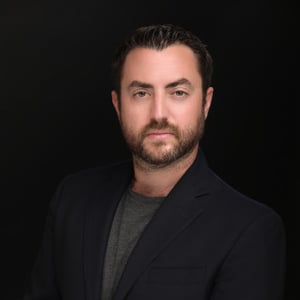
Newsweek Senior Editor-at-Large, Syndicated Columnist, Host of "The Josh Hammer Show," Article III Project Senior Counsel, Newsweek, Salem Media, Article III Project, David Horowitz Freedom Center
Josh Hammer is the senior editor-at-large of Newsweek and host of "The Josh Hammer Show," a podcast, a syndicated radio show, and TV program on Salem News Channel. A syndicated columnist through Creators Syndicate, Josh is a frequent pundit and essayist on political, legal, and cultural issues. He is also senior counsel for the Article III Project and Internet Accountability Project, as well as a Shillman Fellow with the David Horowitz Freedom Center and a fellow with the Palm Beach Freedom Institute.
An outspoken conservative, Josh opines on conservative intellectual trends, contemporary domestic and foreign policy debates, constitutional and legal issues, and the intersection of law, politics and culture. He has been published by many leading outlets, including the Los Angeles Times, the New York Post, Daily Mail, Newsweek, the Claremont Review of Books, National Affairs, American Affairs, The New Criterion, The National Interest, National Review, RealClearPolitics, First Things, City Journal, Public Discourse, Law & Liberty, Tablet Magazine, Deseret Magazine, Compact Magazine, Chronicles Magazine, The Spectator, The American Mind, The American Conservative, The European Conservative, American Greatness, American Compass, The Federalist, Blaze Media, TomKlingenstein.com, Townhall, The Daily Wire, The Daily Signal, The Daily Caller, The Epoch Times, Anchoring Truths, Fortune, Fox Business, The Jerusalem Post, The Times of Israel, The Forward, Jewish Telegraphic Agency and the Jewish Journal. He has also had legal scholarship published by the Harvard Journal of Law & Public Policy and the University of St. Thomas Law Journal.
Josh is a college campus speaker through Young America's Foundation and the Intercollegiate Studies Institute, and a law school campus speaker through the Federalist Society. Prior to Newsweek and The Daily Wire, where he was an editor, Josh worked at Kirkland & Ellis LLP and clerked for the Hon. James C. Ho on the U.S. Court of Appeals for the Fifth Circuit. Josh has also served as a John Marshall Fellow with the Claremont Institute and as a Fellow with the James Wilson Institute. He is the former host of "America on Trial with Josh Hammer," a one-season daily podcast with The First that covered the unique legal issues surrounding the 2024 presidential election.
Josh graduated from Duke University, where he majored in economics, and from the University of Chicago Law School. He lives in Florida, but remains an active member of the State Bar of Texas.

Chief Judge, United States Court of Appeals, Eleventh Circuit
William H. Pryor Jr. serves as Chief Circuit Judge on the United States Court of Appeals for the Eleventh Circuit.
In 2013–18, he served on the United States Sentencing Commission and, in 2017–18, served as Acting Chair.
He has taught as a visiting professor at the University of Alabama School of Law and previously taught as an adjunct professor at the Cumberland School of Law of Samford University.
He served as the 45th Attorney General of Alabama from 1997 to 2004. When he took office, he was the youngest attorney general in the nation. In his reelection, he received the highest percentage of votes of any statewide candidate.
He graduated magna cum laude from Tulane Law School where he finished first in the common-law curriculum and was editor in chief of the Tulane Law Review. He then served as a law clerk for Judge John Minor Wisdom of the U.S. Court of Appeals for the Fifth Circuit.
He is a member of The American Law Institute and an Adviser for the RESTATEMENT OF THE LAW THIRD, CONFLICT OF LAWS. He is a coauthor with Bryan Garner, Justices Gorsuch and Kavanaugh, and several other judges of a treatise, THE LAW OF JUDICIAL PRECEDENT. He has published in the Yale Law Journal, Columbia Law Review, Virginia Law Review, Notre Dame Law Review, Harvard Journal of Law & Public Policy, Yale Law & Policy Review, George Mason Law Review, Florida Law Review, Alabama Law Review, Case Western Reserve Law Review, and Tulane Law Review. He has published op-eds in The Wall Street Journal, The New York Times, National Review, and USA Today. He has debated at National Lawyers’ Conventions of the Federalist Society (including on National Public Radio) and at the Oxford Union in the United Kingdom. And he is listed among several “widely admired judicial writers” in Bryan Garner’s The Redbook: A Manual on Legal Style.
He is a member of the Tulane Law School Hall of Fame and has received the Defender of the Constitution Award from the Heritage Foundation, the Jurist of the Year Award from the Texas Review of Law & Politics, and the St. Thomas More Award from the St. Thomas More Society of Atlanta. Judge Pryor is also a proud member of the National Society of the Sons of the American Revolution.
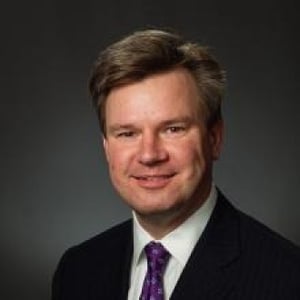
Senior Counsel & Director of the Center for Religious Schools, Alliance Defending Freedom
Gregory S. Baylor serves as senior counsel with Alliance Defending Freedom, where he is the director of the Center for Religious Schools and senior counsel with the Center for Public Policy.
Since joining ADF in 2009, Baylor has focused on defending and advancing the religious freedom of faith-based educational institutions through advice, education, legislative and public advocacy, and representation in disputes. He has testified about religious liberty issues three times before congressional committees and numerous times before state legislative committees.
Greg serves on the board of directors of the International Alliance for Christian Education, the board of directors of the Association for Biblical Higher Education, the board of directors of the Association for Christian Schools International, the board of advisors of the Museum of the Bible, and advisory board of the Center for Academic Faithfulness and Flourishing.
Greg earned his Juris Doctor in 1990 from Duke University School of Law, where he graduated Order of the Coif, with high honors, and served on the editorial board of the Duke Law Journal. He received his bachelor’s degree in Honors English in 1987 from Dartmouth College. Following graduation from law school, he served as law clerk to the Hon. Jerry E. Smith on the U.S. Court of Appeals for the Fifth Circuit. He practiced labor and employment law at two large international law firms for three years before joining the staff of Christian Legal Society’s Center for Law and Religious Freedom, where he served for 15 years prior to joining ADF. He lives in Northern Virginia with his wife (a medical doctor) and two daughters.
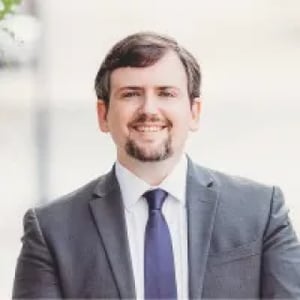
President, Alabama Center for Law and Liberty
Matthew Clark graduated from the Liberty University School of Law in 2012 in the top 10% of his class, and he had served on both the law review editorial board and moot court board. From 2013-2016, Clark worked on the Alabama Supreme Court, beginning as a law clerk but being promoted to a staff attorney after one year. From 2016 until 2021, Clark worked at the Foundation for Moral Law in Montgomery, practicing constitutional law and focusing on religious liberty, the right to life, and promoting a strict interpretation of the United States Constitution according to the intent of its framers.
After joining ACLL in March of 2021, Clark sued the Biden administration over its OSHA vaccine mandate, took it all the way to the United States Supreme Court, and won. Clark also successfully got UAB Health to rescind its vaccine mandate for its employees, guaranteeing that their jobs would be safe so that they could continue to provide much-needed medical services to those in need. Clark also successfully led a campaign of multiple legal and public policy organizations to pressure the Montgomery City Council to vote down an LGBT ordinance that would punish Christians with religious objections to endorsing, encouraging, or enabling conduct that they find sinful. Through his amicus advocacy, Clark has also asked the United States Supreme Court to overrule Roe v. Wade, protect the right of citizens to carry firearms for self-defense outside their homes, recognize the right of government employees to pray in public, and return Congress’s commerce power to the very limited role that the Framers intended for it to have.
Clark is admitted to the state bars of Alabama and Virginia. He is also admitted to the bars of the United States Supreme Court, the United States Courts of Appeals for the Second, Third, Sixth, Eleventh, and D.C. Circuits, and the United States District Courts for the Northern, Middle, and Southern Districts of Alabama. He is also a member of the Federalist Society’s Religious Liberty Executive Committee and an officer in his local Federalist Society Chapter. In 2021 and 2022, he was also a member of Alabama Secretary of State John Merrill’s Voter Fraud Task Force. He also occasionally lectures at Faulkner University on constitutional law.
Clark is married to his wife Laura, who is also an attorney, has an LLM in Alternative Dispute Resolution from the Thomas Goode Jones School of Law, and volunteers her time to assist ACLL. They have one child and are members of Vaughn Park Church in Montgomery.
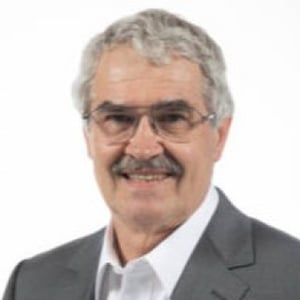
R. B. Price and Isabelle Wade & Paul C. Lyda Professor Emeritus of Law, University of Missouri School of Law
Carl H. Esbeck is R.B. Price Professor and Isabelle Wade & Paul C. Lyda Professor of Law emeritus at the University of Missouri. After attending Cornell University School of Law where he served as an editor on the Cornell Law Review, he held a judicial clerkship with the Honorable Howard C. Bratton, chief judge of the U.S. District Court in New Mexico.
Professor Esbeck publishes widely in the area of religious liberty and church-state relations. He is recognized as the progenitor of "Charitable Choice," an integral part of the 1996 Federal Welfare Reform Act, later made a part of the faith-based initiative and equal-treatment regulations under presidents George W. Bush and Barack Obama. In addition, he has taken the lead in recognizing that the modern Supreme Court has applied the Establishment Clause not as a personal right, but as a structural limit on the government's authority in disputes involving church governance. While on leave from 1999 to 2002, Professor Esbeck directed the Center for Law & Religious Freedom (CLRF) and later served as Senior Counsel to the Deputy Attorney General at the U.S. Department of Justice. While directing the CLRF, Professor Esbeck was a central part of the congressional advocacy behind the Religious Land Use and Institutionalized Persons Act of 2000 (RLUIPA). While at the Department of Justice one of his duties was to direct a task force to remove barriers to the equal-treatment of faith-based organizations applying for social service grants. He is the author of Disestablishment and Religious Dissent: Church-State Relations in the New American States, 1776 - 1833 (U. of MO Press, 2019).

Vice President for Legal Strategy, Stand Together
Casey Mattox is Vice President for Legal Strategy at Stand Together and Senior Advisor at
Americans for Prosperity. In these roles he advocates for and creates strategies and
partnerships to ensure a constitutionally limited government that protects the civil liberties of all
Americans. Prior to joining Stand Together and AFP Casey’s legal career focused on defending
the First Amendment rights of students, faculty, healthcare workers and religious organizations.
Casey has a J.D. from Boston College School of Law and an undergraduate degree from the
University of Virginia. You can find him on Twitter at @CaseyMattox_ and on LinkedIn at
@Casey-Mattox-ST.
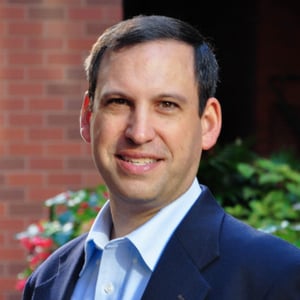
President, Becket Fund for Religious Liberty; Professor of Law and Co-Director of the Center for Religious Liberty, Catholic University; Visiting Professor, Harvard Law School
Mark joined the Becket team in 2011 and splits his time as Associate Professor at The Catholic University of America, Columbus School of Law, and as Visiting Professor at Harvard Law School. Mark teaches constitutional law, religious liberty, torts, and evidence. He has been voted Teacher of the Year three years in a row by the Law School’s Student Bar Association.
Mark has broad experience litigating First Amendment religious exercise and free speech cases. He has represented the winning parties in a variety of Supreme Court First Amendment cases including Hobby Lobby, Little Sisters, Wheaton College, and Holt. In January 2014, Mark argued before the Supreme Court in McCullen v. Coakley, a First Amendment challenge to a Massachusetts speech restriction outside of abortion clinics. The Justices ruled in favor of his clients 9-0. Mark also led a successful eight-year litigation battle against Governor Blagojevich’s effort to force religious pharmacists to distribute the morning-after and week-after pills.
Mark’s academic writing focuses on the First and Fourteenth Amendments, and has appeared in a variety of prestigious journals, including the Harvard Law Review.
Mark is a widely sought after speaker on constitutional issues, particularly concerning abortion and the First Amendment. Professor Rienzi has been invited to discuss these issues at Harvard Law School, Columbia University Law School, Georgetown University Law Center, Boston College Law School, Notre Dame Law School, the National Press Club, and the Capitol. He has been quoted on constitutional law issues on NPR, in the Washington Times, The New York Daily News, and the Chicago Sun-Times. Mark has also been featured on the Kelly File, Fox News Sunday, Your World with Neil Cavuto, Geraldo at Large, CNN Tonight, CNN Live, Andrea Mitchell Reports, and Wall Street Journal Live.
Prior to joining Becket, Mark served as counsel for the litigation department and the intellectual property litigation practice group of WilmerHale LLP. His practice focused on complex civil and appellate litigation with a particular emphasis on intellectual property and First Amendment issues. Prior to joining WilmerHale, he served as law clerk to the Hon. Stephen F. Williams, senior circuit judge for the U.S. Court of Appeals for the D.C. Circuit. Prior to that, Mark was an editor of the Harvard Law Review, and earned his J.D. from Harvard Law School and B.A. from Princeton University, both with honors.

Director of the Program in Human Rights, Catholic University of America
William L. Saunders is Chair Emeritus of the Religious Liberties Practice Group of the Federalist Society. He is also a religious liberty and human rights scholar as well as director of the Center for Human rights at The Catholic University of America. He is Law Fellow with the Institute for Human Ecology, Professor and Director of the Program in Human Rights in the School of Arts & Sciences and Co-director of the Center for Religious Liberty at the Columbus School of Law. Before joining The Catholic University of America, Mr. Saunders served as Senior Vice President and Senior Counsel with Americans United for Life for ten years. From 1999 to 2009, he was Senior Fellow in Bioethics and Human Rights Counsel at the Family Research Council.
Mr. Saunders attended the University of North Carolina at Chapel Hill on a Morehead scholarship. He obtained his degree in law from the Harvard Law School.
Mr. Saunders was featured in Harvard’s first Guide to Conservative Public Interest Law in 2003 and again in the 2008 edition. He served on Harvard’s Advisory Committee for its 2008 celebration of public interest law. A member of the Supreme Court bar, he has authored numerous legal briefs in state, federal, foreign, and international courts.
Mr. Saunders’ book, Unborn Human Life and Fundamental Rights: Leading Constitutional Cases Under Scrutiny, was published in 2019. His articles and book chapters have been published by the university presses of Harvard, Villanova, Brigham Young, Fordham, Georgetown, Houston, Scranton, and the Catholic University of America, as well as by the Intercollegiate Studies Institute, Freedom House, Greenhaven Press, Rowan & Littlefield, Praeger, St. Augustine’s, and Intervarsity press. He has given lectures and participated in debates at many colleges, universities, and law schools, including Princeton, Harvard, Georgetown, and Notre Dame. He delivered the annual J. Michael Miller Lecture at the University of St. Thomas (on international law) in February 2007, the annual R. Wayne Kraft Memorial Lecture (on bioethics) at DeSales University in February 2004 and the annual James Moore Lecture (on human rights violations in Sudan) at Millikin University in 1999. He has also lectured, and/or has been published, in many foreign countries, including Italy, Germany, Poland, Austria, Spain, Greece, Slovakia, Mexico, Qatar, Malaysia, Romania, the Philippines, Hong Kong, and the United Kingdom.
In addition to speaking and writing frequently on bioethics topics, Mr. Saunders has submitted testimony to the President’s Council on Bioethics, as well as to UNESCO’s Committee on Bioethics, and has briefed Congressional staff and state legislatures. He is a regular columnist for the National Catholic Bioethics Quarterly.
Mr. Saunders has appeared often in the media, including BBC World News, CNN, Fox News, Vatican Radio, and National Public Radio. His articles on issues have appeared in a variety of journals, such as First Things, Human Events, Human Life Review, The Legal Times, Communio, The Family in America: A Journal of Public Policy, Ethics & Medics, and Touchstone.
Mr. Saunders served on the official United States delegation to the UN Special Session on Children in 2001/02. In 2011, he was a speaker at an official briefing at the UN, addressing the topic, why euthanasia is not a human right.
In 2004, he served on the NGO Working Committee in connection with the Doha Intergovernmental Conference for the Family.
Mr. Saunders is Senior Fellow with the Religious Freedom Institute, and Affiliated Scholar with the Pellegrino Center for Clinical Ethics at the Georgetown University School of Medicine. He is President of the Fellowship of Catholic Scholars and a member of the boards of the International Association of Catholic Bioethicists, the International Right to Life Federation, the Institute on Religion and Democracy, and the Society of Catholic Social Scientists.
In 1999, Mr. Saunders founded Sudan Relief and Rescue, Inc., to aid the persecuted church in Sudan. He has worked for and written on behalf of the persecuted church for many years.
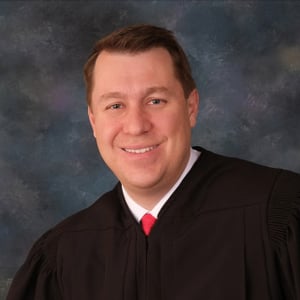
Judge, United States District Court for the Southern District of Ohio
Judge Matthew R. Byrne was nominated to serve on the United States District Court for the Southern District of Ohio by President Donald J. Trump on June 15, 2026. The nomination was confirmed by the United States Senate on September 15, 2026, and Judge Byrne began his federal judicial service on October 2, 2026.
For nearly six years, beginning in 2021, Judge Byrne served as an elected Judge on Ohio’s Twelfth District Court of Appeals, where he heard civil and criminal appeals from trial courts in eight southwest Ohio counties. Judge Byrne served as the Twelfth District Court of Appeals’ Presiding Judge in 2026 and as its Administrative Judge in 2024 and 2025. In his time at the appeals court, Judge Byrne authored 237 majority opinions and a number of concurring and dissenting opinions.
While at the appeals court, Judge Byrne was appointed to serve as Vice Chairman and Member of the Supreme Court of Ohio’s Commission on the Rules of Practice and Procedure in Ohio Courts (where he also served as chair of the Appellate Rules Committee) and as Member of the Board of Commissioners on Character and Fitness. Chief Justice Sharon L. Kennedy appointed Judge Byrne to serve as a visiting judge on the Supreme Court of Ohio in five cases.
From January 2010 to December 2020, Judge Byrne practiced law at the national law firm of Jackson Lewis P.C. He was a member of the firm's General Employment Litigation Practice Group and the Wage and Hour Practice Group. From 2007 to 2010 he practiced at Taft Stettinius & Hollister LLP. At both firms, Judge Byrne represented clients ranging from small businesses to international corporations in state and federal trial and appellate litigation, including multiple class and collective actions. He also represented clients in arbitration and before numerous administrative agencies, including the Equal Employment Opportunity Commission, the National Labor Relations Board, and the Ohio Civil Rights Commission. Judge Byrne's litigation and administrative agency experience included matters in fourteen states.
Judge Byrne earned his law degree, cum laude, from The Ohio State University Moritz College of Law. During law school he was symposium editor of the Ohio State Law Journal and the winner of the Donald S. Teller Memorial Award for student writing contributing most significantly to the Ohio State Law Journal. During law school he working as an Honors Summer Clerk for the Acting General Counsel of the United States Department of the Treasury.
Prior to law school, Judge Byrne served as a member of the White House Staff in the Office of Presidential Personnel. In that role Judge Byrne was responsible for preparing documents submitted to President George W. Bush concerning his selection and nomination of appointees for high-level federal government positions, and for coordinating with the Offices of White House Counsel, Press Secretary, and Executive Clerk regarding candidate background clearances, press announcements, and the status of appointments/nominations.
Judge Byrne earned his bachelor's degree, magna cum laude, from Xavier University, where he majored in International Affairs (Business) and Political Science.
Judge Byrne has been active in numerous community, civic, and religious organizations. He has been a member of the Federalist Society since law school and he served for five years as the president of the Federalist Society's Cincinnati Lawyers Chapter. At various times he has been a member of the Ohio State Bar Association, the Cincinnati Bar Association, the Butler County Bar Association, the Warren County Bar Association, and the Clermont County Bar Association. He is also a former board member and board president of the Saint Thomas More Lawyers Guild of Greater Cincinnati.
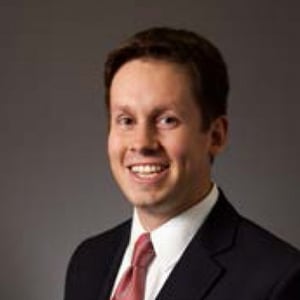
Senior Counsel, Alliance Defending Freedom
Jeremiah Galus serves as senior counsel for Alliance Defending Freedom, where he is a key member of the Center for Christian Ministries.
Since joining ADF in 2015, Galus has represented a wide array of religious ministries, schools, and churches, litigating cases at all levels of state and federal court. Galus has successfully briefed and argued appeals before both state appellate courts and the U.S. Court of Appeals. He was a key member of ADF’s litigation team in Uzuegbunam v. Preszewski, leading to a U.S. Supreme Court victory ensuring government officials are held accountable for violating constitutionally protected freedoms.
Prior to joining ADF, Galus worked as an attorney with a large law firm in Washington, D.C., where he focused on complex civil litigation. Galus also served as a prosecutor before joining ADF. Galus received his J.D., cum laude, in 2009 from the University of Pittsburgh School of Law, where he served as senior research editor of the University of Pittsburgh Law Review. He earned a B.A. in government and political affairs from Millersville University in 2006. Galus also is a 2007 Blackstone Fellow.
Galus is admitted to the state bars of Arizona, Pennsylvania, and the District of Columbia, the U.S. Supreme Court, and various lower federal courts.

Vice President of Government Relations, Columbus Chamber of Commerce
As Vice President of Government Relations, Holly Gross helps our members navigate the ever-changing opportunities and challenges businesses face when it comes to local, state and federal policy decisions. Not only can she advocate for your business, but she also helps to unify the voices of our greater Columbus business community. Holly, an attorney, finds creative ways to help businesses better understand critical policy issues, foster relationships with your elected officials and provide your business with the resources it needs to be successful.
A graduate of The Ohio State University and Capital University Law School, Holly represented the State’s retail industry before the Ohio General Assembly as Legislative Counsel for the Ohio Council of Retail Merchants, where she focused on legislative issues pertaining to labor and employment, alcohol and gambling, economic and workforce development and the automotive industry. Her previous experiences also include Executive Director for the Ohio Association of Convenience Stores and the Ohio Tire and Automotive Association, as well as a Legislative Aide for the Ohio House of Representatives.
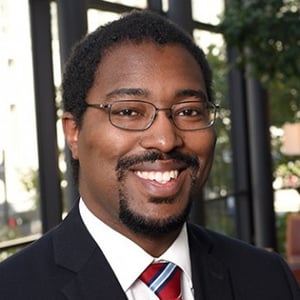
Partner, Taft Stettinius & Hollister LLP
Philip litigates complex matters in state and federal courts. He has briefed appeals in multiple U.S. Courts of Appeals, including the Sixth, Seventh, and Ninth Circuits, as well as state appellate courts in Ohio, Kentucky, and Georgia. Philip has also represented amici at both the cert petition and merits stages in the U.S. Supreme Court.
Prior to joining Taft, Philip served as a law clerk for Judge Raymond M. Kethledge of the U.S. Court of Appeals for the Sixth Circuit, Judge Amul R. Thapar of the U.S. District Court for the Eastern District of Kentucky, and Judge Lavenski R. Smith of the U.S. Court of Appeals for the Eighth Circuit.
Philip serves on the board of directors for the Cincinnati and Northern Kentucky lawyers chapters of the Federalist Society. He was a 2018 James Wilson Fellow with the James Wilson Institute, a 2013 John Marshall Fellow with the Claremont Institute Center for Constitutional Jurisprudence, and a 2011 Blackstone Fellow with the Alliance Defending Freedom.
Philip received his undergraduate degree, with Highest Honors, from Ouachita Baptist University. He received his J.D. from the University of Virginia School of Law, where he served as the submissions review editor for the Journal of Law and Politics.
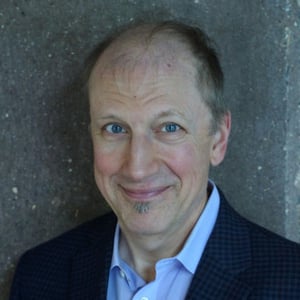
James L. Oberstar Professor of Law and Public Policy, University of St. Thomas School of Law
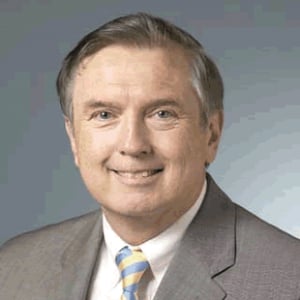
Professor of Law, University of Notre Dame Law School
Gerard V. Bradley is Professor of Law at the University of Notre Dame, where he teaches Legal Ethics and Constitutional Law. At Notre Dame he directs (with John Finnis) the Natural Law Institute and co-edits The American Journal of Jurisprudence, an international forum for legal philosophy. Bradley has been a Visiting Fellow at the Hoover Institution of Stanford University, and a Senior Fellow of the Witherspoon Institute, in Princeton, New Jersey. He served for many years as President of the Fellowship of Catholic Scholars.
Bradley received his B.A and J.D. degrees from Cornell University, graduating Summa cum laude from the law school in 1980. After serving in the Trial Division of the Manhattan District Attorney’s Office he joined the law faculty at the University of Illinois. He moved to Notre Dame in 1992. Bradley has published over one hundred scholarly articles and reviews. His most recent books are an edited collection of essays titled, Challenges to Religious Liberty in the Twenty-First Century (published by Cambridge University Press in 2012), Essays on Law, Religion, and Morality and Unquiet Americans: U.S. Catholics and the Common Good (both to be published in 2014.) He is currently working on a book about regulating obscenity in the Internet Age.
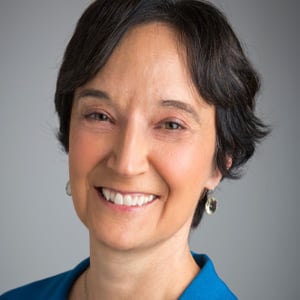
Deputy Legal Director and Director of Center for Liberty, ACLU
Louise Melling is a Deputy Legal Director at the ACLU and the Director of its Center for Liberty, which encompasses the ACLU’s work on reproductive freedom, women’s rights, lesbian gay bisexual and transgender rights, freedom of religion and belief, and disability rights. In this role, she leads the work of the ACLU to address the intersection of religious freedom and equal treatment, among other issues.
Melling has established the ACLU as a national leader in opposing the use of religion to discriminate and in supporting state advocacy teams that have pushed back legislation that would permit discrimination in the name of religion. She has overseen groundbreaking litigation, including cases challenging Catholic hospitals that refuse to provide care consistent with medical ethics and businesses that claim a right to discriminate in the name of religion or speech.
In her time as Director of the Center for Liberty, the ACLU has pursued a program of litigation, advocacy, and public education campaigns that culminated in the 2015 Supreme Court decision recognizing the fundamental right to marry for same-sex couples. Under her leadership, the Center has also challenged innumerable state laws that restrict women’s access to abortion, the federal government policy barring women from serving in combat, school policies that foster sex stereotypes and deny transgender students’ rights, policies and practices that discriminate against Muslims, the use and abuse of guardianship, and government promotion of religion.
Melling has been with the ACLU since 1992, serving in several roles before becoming a Deputy Legal Director in 2010. In 2003, she became Director of the Reproductive Freedom Project, where she oversaw nationwide litigation, public opinion research, public education campaigns, and advocacy efforts in the state legislatures. She has appeared in federal and state courts around the country, most often to challenge laws that restrict reproductive rights.
Melling has appeared in many media outlets, including CNN, PBS News Hour, Frontline, MSNBC, the New York Times, and USA Today. Her opinion pieces have appeared in the Washington Post and The Guardian, among others.
In addition, she is the author of several articles, including Religious Refusals to Public Accommodations Laws: Four Reasons to Say No, 38 Harv J. of Law and Gender (2015); Follow the Money: Ending Discrimination against Women in Hospitals, 15 Georgetown Journal of Gender and the Law 435 (2014) (co-authored with Sarah Lipton-Lubet); Lift the Scarlet Letter from Abortion, 35 Cardozo Law Review 1715 (2014); and The Legal Education of Twenty Women, 40 Stan. L. Rev. 1299 (1988) (co-authored with Catherine Weiss).
She is a graduate of the Yale Law School and Oberlin College. Prior to joining the ACLU, Melling clerked for Judge Morris Lasker of the Southern District of New York and worked for Rabinowitz, Boudin, Standard, Krinsky & Lieberman.
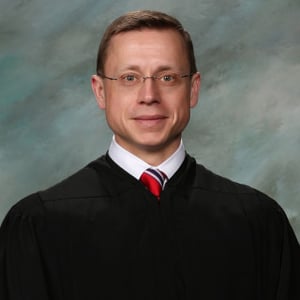
Judge, United States Court of Appeals, Fifth Circuit
Andrew Oldham is a Circuit Judge on the United States Court of Appeals for the Fifth Circuit. Before ascending to the bench, Judge Oldham served as General Counsel to Texas Governor Greg Abbott, where he advised the Governor on a range of issues under federal and state law and managed litigation in which the Governor was an interested party. Before that he served as Deputy Solicitor General for the State of Texas, where he represented Texas in federal courts across the country, including twice before the United States Supreme Court. Before moving to Texas, Judge Oldham was an attorney at Kellogg Hansen Todd Figel & Frederick in Washington, D.C. His practice focused on appellate litigation in federal courts of appeals throughout the country. Before entering private practice, Judge Oldham served as a law clerk to Justice Samuel A. Alito, Jr., at the Supreme Court of the United States and to Judge David B. Sentelle of the U.S. Court of Appeals for the District of Columbia Circuit. He also worked as an attorney-adviser in the Office of Legal Counsel at the U.S. Department of Justice from 2006 to 2008. Judge Oldham earned a B.A. from the University of Virginia with highest honors, a Truman Scholarship for graduate school, an M. Phil., first class (with distinction), from Cambridge University, and a J.D., magna cum laude, from Harvard Law School.
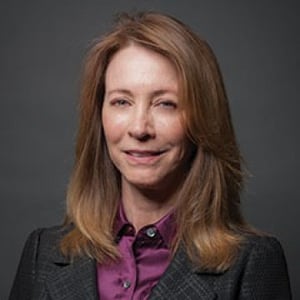
Founder, Libertas-West Project
Karen Lugo is a constitutional law consultant and national security analyst. She was Director of the Center for Tenth Amendment at Texas Public Policy Foundation from 2013 to 2015. When living in California, she was Co-Director of the Center for Constitutional Jurisprudence Center. From 2005 – 2012, she was a clinical visiting and adjunct professor at Chapman University School of Law where she co-taught the advanced Constitutional Law Clinic. Karen has co-authored and written circuit-level and Supreme Court amicus briefs on such issues as FISA Surveillance, Healthcare Reform, Arizona’s Border Security, Gay Marriage, The Ten Commandments, Eminent Domain, Christian Clubs on University Campuses, and Material Support for Terrorists.
Karen is the founder of the Libertas-West Project, a center for study Islamic integration and radicalization issues. In this capacity, she consulted with the Center for Security Policy to write a book on local over-watch of mosque construction and community engagement called: Mosques in America: A Guide to Accountable Permit Hearings and Continuing Citizen Oversight.
Karen writes and speaks for European and American groups on the importance of basing assimilation efforts on principles of Western exceptionalism. She presented a policy brief to the French Conseil d’Etat analyzing the legal implications of banning the burqa. Ms. Lugo has written one of the most comprehensive overviews of sharia law in American courts, American Family Law and Sharia-Compliant Marriages, for the Federalist Society law journal, Engage. She has written several white papers on the American Law for American Courts legislation and sharia tribunals in America.
Ms. Lugo was an appointee to the California Advisory Committee to the U.S. Commission on Civil Rights. She also taught a Human Rights law course on the contrast between French and English Enlightenment theories in Strasbourg, France.
Until moving from California, Ms. Lugo was a member of the David Horowitz Freedom Center Board of Directors. She was also a regular guest on the Orange County PBS local issues debate program, Inside OC, and she is a contributor to Pajamas Media, National Review Online, City Journal, American Spectator, American Greatness, Townhall.com, American Thinker, Daily Caller, and Family Security Matters. She has been interviewed by dozens of radio hosts and has spoken for civic groups on constitutional and cultural concerns.
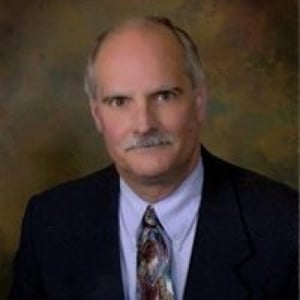
Attorney at Law, Solo Practitioner
Herb Grey was admitted to the Oregon State Bar in 1981 and for the first 14 years practiced mostly insurance defense litigation in state and federal courts. Since 1994 he has been a solo practitioner in Beaverton with a general civil practice that includes estate planning, probate, protective proceedings, general business matters and a variety of litigation in both state and federal courts. Herb also has extensive experience in litigation of constitutional and civil rights claims with an emphasis on religious liberty and conscience matters. He is admitted to practice before all Oregon trial and appellate courts, as well as the U.S. District Court for Oregon, the Ninth Circuit Court of Appeals and the United States Supreme Court.
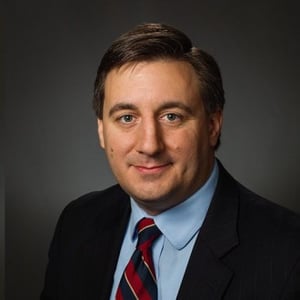
Senior Counsel, Senior Vice President of Corporate Engagement, Alliance Defending Freedom
Jeremy Tedesco serves as senior counsel and senior vice president of corporate engagement for Alliance Defending Freedom. In this role, Tedesco leads ADF’s efforts to combat corporate cancel culture and build a business ethic that respects free speech, religious freedom, and human dignity.
Immediately preceding his current role, Tedesco served as senior vice president for communications, during which time he was a lead convener of the Philadelphia Statement, a movement dedicated to restoring free speech and civil discourse. Tedesco also launched a regular video series called Freedom Matters, profiling ADF clients, cases, and issues. The program included 24 videos in its first year, which more than 31 million people viewed.
Previously, Tedesco litigated First Amendment cases at the highest levels. He was part of the legal team that represented cake artist Jack Phillips in Masterpiece Cakeshop v. Colorado Civil Rights Commission before the U.S. Supreme Court and argued Phillips’ case at the Colorado Court of Appeals. He was also the lead brief writer in two other U.S. Supreme Court wins, Reed v. Town of Gilbert and Arizona Christian School Tuition Organization v. Winn. Tedesco has also argued six times before five different federal appellate courts and founded and directed the ADF Center for Conscience Initiatives, where he led efforts to protect individuals from government-coerced speech.
Numerous media outlets, including The Wall Street Journal, Fox News, CNN, The New York Times, USA Today, PBS, NPR, and National Review, have interviewed Tedesco or published his comments.
Tedesco earned his Juris Doctor in 2004 from the Regent University School of Law.
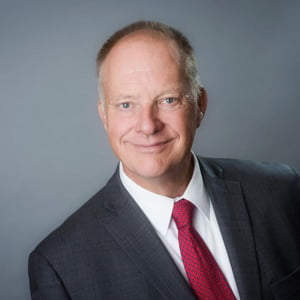
Associate Justice, Minnesota Supreme Court (ret.)
Former Minnesota Supreme Court Justice Barry Anderson is a 1976 graduate of Gustavus Adolphus College in St. Peter, Minnesota and a 1979 graduate of the University of Minnesota Law School. He was a member of the Minnesota Court of Appeals from August 1998 until his appointment to the Supreme Court. He was sworn in and joined the court on October 13, 2004, and served through to his retirement on May 10, 2024.
He previously was a partner in the Minneapolis and Hutchinson law firm of Arnold, Anderson & Dove, PLLP, and also served the City of Hutchinson as City Attorney from 1987 to 1998. He is certified by the Minnesota State Bar Association as a civil trial specialist.
Justice Anderson’s background includes substantial public service including as a board member and chair of variety of community organizations including service clubs, task forces and a local public access channel as well as a wide variety of other community activities.
Justice Anderson also served on the Minnesota Judicial Council, the managing body for the Minnesota Judicial Branch. He is also a frequent contributor to continuing legal education efforts on both appellate advocacy issues as well as general trial practice.
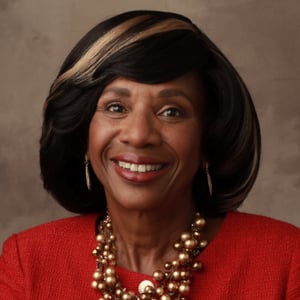
Partner, Locke Lord LLP
Paulette Brown, a partner in the Labor & Employment group of Locke Lord LLP was the first woman of color to lead the American Bar Association in its 137 year history. Brown simultaneously served as the first person of color to Chair the Labor & Employment Section of the New Jersey State Bar Association. Brown has been honored by the National Law Journal as one of the 50 Most Influential Minority Lawyers in the US and by US News as one of the Best Lawyers in America. She is also nationally recognized for her efforts relating to diversity & inclusion.
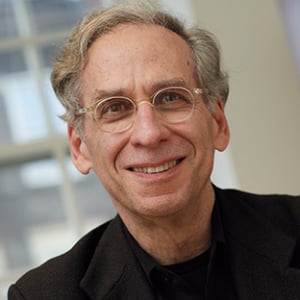
Elihu Root Professor of Law, New York University School of Law
Stephen Gillers has been a professor of law at New York University School of Law since 1978 and Vice Dean from 1999-2004. He holds the Elihu Root chair. He does most of his research and writing on the regulation of the legal profession. His courses include Regulation of Lawyers, Evidence, and Law and Literature (with University Professor Catharine Stimpson, former dean of the graduate school).
Professor Gillers has written widely on legal and judicial ethics in law reviews and in the legal and popular press. He has taught legal ethics as a visitor at other law schools and has spoken on lawyer regulatory issues at hundreds of events in the U.S. and in Europe, Asia, and South America - often for legal ethics CLE credit - including at federal and state judicial conferences, law firms, corporate general counsel's offices, government law offices, ABA meetings, state and city bar meetings nationwide, in oral and written submissions to Congress, and in law school lectureships. For many years, four or five times each year, he has lectured on legal ethics at the New York City Bar Association CLEs.
Professor Gillers is the author of Regulation of Lawyers: Problems of Law and Ethics, a widely used law school casebook first published by Little, Brown (now Aspen) in 1985 with a 10th edition in 2015. With Roy Simon (and Andrew Perlman as of 2008 and Dana Remus as of 2016), he has edited Regulation of Lawyers: Statutes and Standards, published annually by Little, Brown, then Aspen, since 1989. He is also the author of Regulation of the Legal Profession (Aspen 2009)(the "Essentials" series).
From 2000-2002, Professor Gillers was a member of the ABA's Multijurisdictional Practice Commission which proposed rule changes (all of them accepted) to recognize the cross-border nature of legal practice. In 2009, Professor Gillers was selected to be a member of the ABA 20/20 Commission, 2010-2013, which studied the effects of technology and globalization on the regulation of lawyers leading to amendments to the Model Rules and recommended rule changes all of which were accepted. He was chair of the Policy Implementation Committee of the ABA's Center for Professional Responsibility (2004-2008) and was a member from 2002-2010. He was a member of the International Issues Committee of the ABA Section on Legal Education (2008-2009) and
In 2011, he received the Michael Franck Award from the ABA’s Center for Professional Responsibility. The Award is given annually for “significant contributions to the work of the organized bar….noteworthy scholarly contributions made in academic settings, [and] creative judicial or legislative initiatives undertaken to advance the professionalism of lawyers…are also given consideration.” The American Bar Foundation gave him the Outstanding Scholar Award in 2015.
Following a clerkship with Chief Judge Gus J. Solomon in Federal District Court in Portland, Oregon, Professor Gillers practiced law for nine years in various settings in New York City before joining the NYU Law School faculty. He is often quoted on issues of legal ethics in the legal and popular media.
Professor Gillers' latest scholarship is A Rule to Forbid Bias and Harassment in Law Practice: A Guide for State Courts Considering Model Rule 8.4(g), 30 Geo. J. Legal Ethics ____ (2017); Guns, Fruits, Drugs, and Documents: A Criminal Defense Lawyer's Responsibility for Real Evidence, 63 Stan. L. Rev. 813 (2011); A Profession, If You Can Keep It: How Information Technology and Fading Borders Are Reshaping the Law Marketplace and What We Should Do About It, 63 Hastings L. J. 953 (2012); How To Make Rules for Lawyers: The Professional Responsibility of the Legal Profession, 40 Pepperdine L. Rev. 365 (2013)(Symposium issue on The Lawyer of the Future); and Lowering the Bar: How Lawyer Discipline in New York Fails to Protect the Public, 17 J. Legis. & Public Policy 485 (2014).
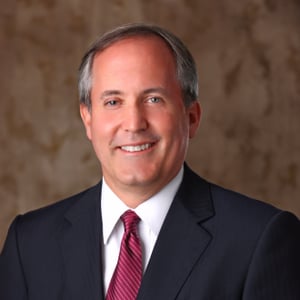
State Attorney General, Texas
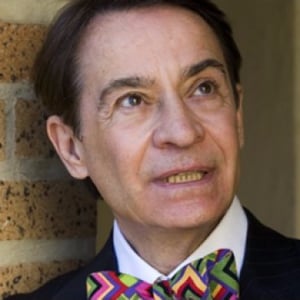
Doy & Dee Henley Chair and Distinguished Professor of Jurisprude, Chapman University Dale E. Fowler School of Law
Ronald D. Rotunda was the Doy & Dee Henley Chair and Distinguished Professor of Jurisprudence, at Chapman University, the Dale E. Fowler School of Law. He joined the faculty in 2008. Before that, he was University Professor and Professor of Law at George Mason University School of Law. From 2002 to 2006, he was the George Mason University Foundation Professor of Law. Before that, he was the Albert E. Jenner, Jr. Professor of Law, at the University of Illinois. He was a magna cum laude graduate of both Harvard College and Harvard Law School, where he was a member of Harvard Law Review. He joined the University of Illinois faculty in 1974 after clerking for Judge Walter R. Mansfield of the United States Court of Appeals for the Second Circuit, practicing law in Washington, D.C., and serving as assistant majority counsel for the Senate Watergate Committee. He has co-authored the most widely used course book on legal ethics, Problems and Materials on Professional Responsibility(Foundation Press, 12th ed. 2014) and was the author of a leading course book on constitutional law, Modern Constitutional Law (West Academic Co., 11th ed. 2015)(Abridged & Unabridged editions). He was the coauthor of, Legal Ethics: The Lawyer's Deskbook on Professional Responsibility (ABA- West/Thompson Reuters Publishing, St. Paul, Minnesota, 2016-2017 ed.) (Jointly published by the ABA and West/Thompson Reuters Publishing) (with John Dzienkowski). Rotunda also co-authored (with John Nowak) the six-volume Treatise on Constitutional Law (West/Thompson Reuters Publishing, 5th ed. 2012)(with annual updates), and a one volume Treatise on Constitutional Law (West Academic, 8th ed. 2010). He was also the author of several other books and more than 500 articles in various law reviews, journals, newspapers, and books in this country and abroad. His works have been translated into French, Portuguese German, Romanian, Czech, Russian, Japanese, and Korean. These books and articles have been cited more than 2000 times by law reviews, by state and federal courts at every level, from trial courts to the U.S. Supreme Court, and by foreign courts in Europe, Africa, Asia, and South America. He has been interviewed on radio and television on legal issues, both in this country and abroad. In 1993 he was the Constitutional Law Adviser to the Supreme National Council of Cambodia and assisted that country in writing its first democratic constitution. He has consulted with various new democracies in Eastern Europe and the former Soviet Union, including Moldova, Romania, and Ukraine, on their proposed constitutions and judicial codes. He chaired the subcommittee that drafted the American Bar Association's Model Rules for Lawyer Disciplinary Enforcement; was a member of the Publications Board of the A.B.A. Center for Professional Responsibility from 1994 to 2016; was a member of the A.B.A. Standing Committee on Professional Discipline (1991-1997); and was Liaison to the A.B.A. Standing Committee on Ethics and Professional Responsibility (1994-1997). He was a Fulbright Professor in Venezuela in 1986 and a Fulbright Research Scholar in Italy in 1981. In 1996 he assisted the Czech Republic in drafting the first Rules of Ethics for lawyers in that country. During the Spring, 1999 semester, he was Visiting Professor at the University of Alabama School of Law, holding the John S. Stone Endowed Chair of Law. During the summer and fall of 2000, he was the Visiting Senior Fellow in Constitutional Studies at the Cato Institute, in Washington, DC. In the fall of 2001, he was visiting professor at George Mason University School of Law. During November-December, 2002, he was Visiting Scholar, Katholieke Universiteit Leuven, Faculty of Law, Leuven, Belgium. In May, 2004, and December, 2005, he was visiting lecturer at the Institute of Law and Economics, Institut für Recht und Ökonomik, at the University of Hamburg. From early June 2004 to May 2005, he was the Special Counsel to the Department of Defense. He was on the Panel of Contributing Editors that produced, Black's Law Dictionary (West/Thompson Reuters Publishing, 8th ed. 2004; Thomson-Reuters, 10th ed. 2014). From 2005-2006, he was a member of the Task Force on Judicial Functions of the Commission on Virginia Courts in the 21st Century: To Benefit All, to Exclude None.
In May, 2000, American Law Media, publisher of The American Lawyer, the National Law Journal, and the Legal Times picked Professor Rotunda as one of the ten most influential Illinois Lawyers. Also in 2000, a lengthy study that the University of Chicago Press published, which sought to determine the influence, productivity, and reputations of law professors over the last several decades, listed Professor Rotunda as the 17th highest in the nation. The 2002-2003 New Educational Quality Ranking of U.S. Law Schools (EQR) [the last year for which such records are available] ranks Professor Rotunda as the eleventh most cited of all law faculty in the United States. Seehttp://www.leiterrankings.com/faculty/2002faculty_impact_cites.shtml.
In July, 2007, he was one of the main speakers at the International Judicial Conference hosted by the United States Embassy, the Supreme Court of Latvia, and the Latvian Ministry of Justice. The other main speakers were Justice Samuel Alito, the President of Latvia, the Prime Minister of Latvia, the Chief Justice of Latvia, and the Minister of Justice of Latvia. On February 27, 2008, President George W. Bush nominated Ronald D. Rotunda to become a member of the Privacy and Civil Liberties Oversight Board (PCLOB) for an initial four-year term and sent his nomination to the Senate Committee on Homeland Security and Governmental Affairs for confirmation hearings on the nominees. He was selected the Best Lawyer in Washington, DC, in 2009 in Ethics and Professional Responsibility Law, as published in November 2008 in the Washington Post in association with the Legal Times. When he moved to California, he was also selected as one of the Best Lawyers in Southern California, in 2009, 2010, 2011, 2012, 2013, 2014, 2015, 2016, 2017, also in Ethics and Professional Responsibility Law as published in the Los Angeles Times, U.S. News, and American Law Media. On June 17, 2009, he became a Commissioner of the Fair Political Practices Commission, a state regulatory agency (analogous to the Federal Election Commission) that is California's independent political watchdog. He served until January 31, 2013, when his term expired. In 2012, he became a Distinguished International Research Fellow at the World Engagement Institute, a non-profit, multidisciplinary and academically-based non-governmental organization with the mission to facilitate professional global engagement for international development and poverty reduction http://www.weinstitute.org/fellows.html. In 2012, Chapman University honored him with The Chapman University Excellence In Scholarly/Creative Work Award, 2011-2012. Since 2014, he has been a member of the Editorial Board of, The International Journal of Sustainable Human Security (IJSHS), a peer-reviewed publication of the World Engagement Institute (WEI). Rotunda was a Member of the Editorial Board of ABA's Journal of Legal Education (2014 to 2016).
President, The Ethics and Public Policy Center
Ryan T. Anderson, Ph.D., is the President of the Ethics and Public Policy Center. In May 2025, Anderson was appointed by President Trump to the Religious Liberty Commission.
He is the author or co-author of five books, including the just-released Tearing Us Apart: How Abortion Harms Everything and Solves Nothing. Previous books include When Harry Became Sally: Responding to the Transgender Moment, Truth Overruled: The Future of Marriage and Religious Freedom, What Is Marriage? Man and Woman: A Defense, and Debating Religious Liberty and Discrimination. He is the co-editor of A Liberalism Safe for Catholicism? Perspectives from “The Review of Politics.”
Anderson’s research has been cited by two U.S. Supreme Court justices, Justice Samuel Alito and Justice Clarence Thomas, in two Supreme Court cases.
He received his bachelor of arts degree from Princeton University, graduating Phi Beta Kappa and magna cum laude, and he received his doctoral degree in political philosophy from the University of Notre Dame. His dissertation was titled: “Neither Liberal Nor Libertarian: A Natural Law Approach to Social Justice and Economic Rights.”
Anderson has made appearances on ABC, CNN, CNBC, MSNBC, and Fox News. His work has been published by the New York Times, the Washington Post, the Wall Street Journal, Oxford University Press, Cambridge University Press, the Harvard Journal of Law and Public Policy, the Harvard Health Policy Review, the Georgetown Journal of Law and Public Policy, First Things, the Claremont Review of Books, and National Review.
He is the John Paul II Teaching Fellow in Social Thought at the University of Dallas, a member of the James Madison Society at Princeton University, and a Fellow of the Institute for Human Ecology at the Catholic University of America, as well as the Founding Editor of Public Discourse, the online journal of the Witherspoon Institute of Princeton, New Jersey.
For 9 years he was the William E. Simon senior research fellow at The Heritage Foundation, and has served as an adjunct professor of philosophy and political science at Christendom College, and a Visiting Fellow at the Veritas Center at Franciscan University. He has also served as an assistant editor of First Things.

Daniel Webster Debate Series: Should Americans Embrace Common-Good Constitutionalism?
Thomas Berry, Josh Hammer, William H. Pryor
The Federalist Society's Georgetown Law Chapter'sDaniel Webster Debate Series presents Daniel Webster Debate Series:Should...
The Respect for Marriage Act & Religious Liberty: At Odds or Unaffected?
Gregory Baylor, Matt Clark, Carl H. Esbeck
In December 2022, Congress passed and President Biden signed the Respect for Marriage Act (RFMA)....
Litigation Update: InterVarsity Christian Fellowship/USA v. University of Iowa et al.
Casey Mattox
On July 16, 2021, the U.S. Court of Appeals for the Eight Circuit issued a...
Religious Liberty at the Supreme Court: Previewing the New Term
Mark L. Rienzi, William L. Saunders
The Supreme Court's most recent term ended with several high-profile liberty rulings, including Espinoza v. Montana...
Panel 3: Emerging Religious Liberty Issues in Ohio
Matthew R. Byrne, Jeremiah Galus, Holly Gross, Philip D. Williamson
On April 5, 2019, the Federalist Society's Ohio lawyers chapters hosted the 2019 Ohio Chapters...
Masterpiece Cakeshop and Its Implications
Thomas C. Berg, Gerard V. Bradley, Louise Melling, Andrew Oldham
The Supreme Court’s decision in Masterpiece Cakeshop v. Colorado Civil Rights Commission was unexpectedly based...
Civil Rights Commissions: Enforcers of Social Justice
Karen J. Lugo, Herbert G. Grey, Jeremy Tedesco
Whether called Human Rights, Human Relations, or Civil Rights Commissions, many cities and counties and...
Using the Licensing Power of the Administrative State: Model Rule 8.4(g)
Barry Anderson, Paulette Brown, Stephen Gillers, Ken Paxton, Ronald D. Rotunda
At its August 2016 meeting in San Francisco, the American Bar Association approved a major...
Conscience Cases and Religious Liberty - Podcast
Ryan T. Anderson, Anthony Kreis
With the legalization of gay marriage, numerous cases have arisen in which private citizens have...