
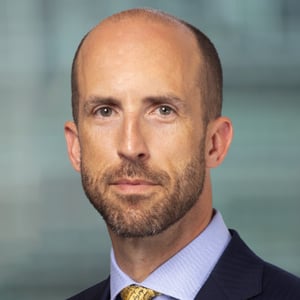
Director of Health Policy Studies, Cato Institute
Michael F. Cannon is the Cato Institute’s director of health policy studies. His scholarship spans public health; regulation of clinicians, medical facilities, pharmaceuticals, and medical devices; employer‐sponsored and other private health insurance; Medicare; Medicaid; CHIP; the Veterans Health Administration; medical malpractice litigation; administrative law; international health systems; political philosophy; and more. Cannon is “an influential health‐care wonk” (Washington Post) and “the most famous libertarian health care scholar” (Washington Examiner). Washingtonian magazine named Cannon one of Washington, DC’s “Most Influential People” in 2021, 2022, and 2023.
Cannon has appeared on ABC, Al Jazeera, BBC, CBS, CNN, CNBC, C‑SPAN, Fox News Channel, NPR, and other broadcast media. His articles have appeared in the Wall Street Journal; the New York Times; USA Today; the Washington Post; the Los Angeles Times; SCOTUSBlog; Forum for Health Economics and Policy; JAMA Internal Medicine; Health Matrix: Journal of Law‐Medicine; Harvard Health Policy Review; the Yale Journal of Health Policy, Law, and Ethics; the Journal of Health Politics, Policy and Law; and Quinnipiac Health Law Journal. His latest book is Recovery: A Guide to Reforming the U.S. Health Sector.
Cannon was previously a domestic policy analyst for the U.S. Senate Republican Policy Committee, where he advised the Senate leadership on health, education, labor, welfare, and the Second Amendment. He is a member of the Board of Advisers of Harvard Health Policy Review and the Federalist Society Regulatory Transparency Project’s FDA & Health Working Group.
Cannon holds an MA in economics and a JM in law and economics from George Mason University and a BA in American government from the University of Virginia.

Executive Vice President, Goldwater Institute
Christina Sandefur is the Executive Vice President at the Goldwater Institute. She develops policies and litigates cases advancing healthcare freedom, free enterprise, private property rights, free speech, and taxpayer rights.
Christina is a co-drafter of the Right to Try initiative, now federal law, which protects terminally ill patients' right to try safe investigational treatments that have been prescribed by their physician but are not yet FDA-approved. She has won important victories for property rights in Arizona and works nationally to promote the Institute's Private Property Rights Protection Act, a state-level reform that requires government to pay owners when regulations destroy property rights and reduce property values.
Christina is the co-author of the book Cornerstone of Liberty: Private Property Rights in 21st Century America (2016). She is a frequent guest on national television and radio programs, has provided expert legal testimony to various legislative committees, and is a frequent speaker at conferences. She is the recipient of the 2018 Buckley Award in recognition of her leadership in the freedom movement, and she is an Advisory Board Member of the Network of enlightened Women. Christina serves on the board of the Phoenix Lawyers Chapter of the Federalist Society and is a member of the executive committee for the Federalist Society's Regulatory Transparency Project: FDA & Health.
Christina is a graduate of Michigan State University College of Law and Hillsdale College.
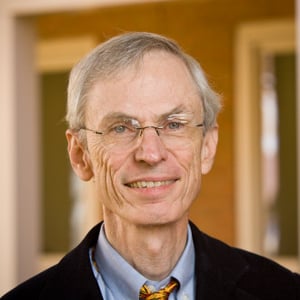
Professor Emeritus, Wake Forest University School of Law
Michael Kent Curtis is one of the foremost constitutional historians in the United States. His book "Free Speech: The People's Darling Privilege: Struggles for Freedom of Expression in American History" won the Playboy Foundation Heffner First Amendment Award for the best book of its year on the subject of the 1st Amendment. The North Carolina Literary and Historical Society also chose the book as the best non-fiction book of the year by a North Carolina author. Professor Akhil Amar of Yale Law School described Michael Curtis's book "No State Shall Abridge: The Fourteenth Amendment and the Bill of Rights" as "one of the most important and most impressive works of constitutional scholarship of the late twentieth century." Professor Curtis has also received the Frank Porter Graham Award from the North Carolina Civil Liberties Union for achievement in defending and advancing civil liberties in North Carolina. He lives in Greensboro, North Carolina with his wife Deborah Maury, who is also an attorney. Deborah Maury retired from law practice after a serious horse accident which left her with incomplete quadriplegia. He has one son, Matthew Fontaine Curtis-Maury.
A. W. Walker Centennial Chair in Law, University of Texas at Austin School of Law
Professor Graglia has written widely in constitutional law--especially on judicial review, constitutional interpretation, race discrimination, and affirmative action--and also teaches and writes in the area of antitrust. He is the author of Disaster by Decree: The Supreme Court Decisions on Race and the Schools (Cornell, 1976) and many articles, including recently "Church of the Lukumi Babalu Aye: Of Animal Sacrifice and Religious Persecution" (Georgetown Law Journal, 1996). He has been a Visiting Professor at the University of Virginia School of Law.
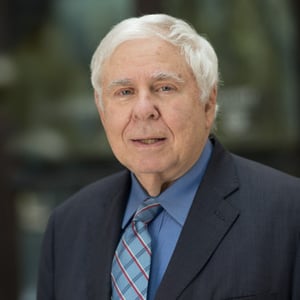
W. St. John Garwood and W. St. John Garwood, Jr. Centennial Chair and Professor of Government, University of Texas at Austin School of Law
Sanford Levinson, who holds the W. St. John Garwood and W. St. John Garwood, Jr. Centennial Chair in Law, joined the University of Texas Law School in 1980. Previously a member of the Department of Politics at Princeton University, he is also a Professor in the Department of Government at the University of Texas. Levinson is the author of approximately 400 articles, book reviews, or commentaries in professional and popular journals--and a regular contributor to the popular blog Balkinization. He has also written six books: Constitutional Faith (1988, winner of the Scribes Award, 2d edition 2011); Written in Stone: Public Monuments in Changing Societies (1998); Wrestling With Diversity (2003); Our Undemocratic Constitution: Where the Constitution Goes Wrong (and How We the People Can Correct It)(2006); Framed: America's 51 Constitutions and the Crisis of Governance (2012); An Argument Open to All: Reading the Federalist in the 21st Century (2015); and, with Cynthia Levinson, Fault Lines in the Constitution: The Framers, Their Fights, and teh Flaws that Affect Us Today (forthcoming, September 2017). Edited or co-edited books include a leading constitutional law casebook, Processes of Constitutional Decisionmaking (6th ed. 2015, with Paul Brest, Jack Balkin, Akhil Amar, and Reva Siegel); Nullification and Secession in Modern Constitutional Thought (2016); Reading Law and Literature: A Hermeneutic Reader (1988, with Steven Mallioux); Responding to Imperfection: The Theory and Practice of Constitutional Amendment (1995); Constitutional Stupidities, Constitutional Tragedies (1998, with William Eskridge); Legal Canons (2000, with Jack Balkin); The Louisiana Purchase and American Expansion (2005, with Batholomew Sparrow); Torture: A Collection (2004, revised paperback edition, 2006); and The Oxford Handbook on the United States Constitution (with Mark Tushnet and Mark Graber, 2015). He received the Lifetime Achievement Award from the Law and Courts Section of the American Political Science Association in 2010.
He has been a visiting faculty member of the Boston University, Georgetown, Harvard, New York University, and Yale law schools in the United States and has taught abroad in programs of law in London; Paris; Jerusalem; Auckland, New Zealand; and Melbourne, Australia. He was a Fellow at the Institute for Advanced Study in Princeton in 1985-86 and a Member of the Ethics in the Professions Program at Harvard in 1991-92. He is also affiliated with the Shalom Hartman Institute of Jewish Philosophy in Jerusalem. A member of the American Law Institute, Levinson was elected to the American Academy of Arts and Sciences in 2001. He is married to Cynthia Y. Levinson, a writer of children's literature, and has two daughters and four grandchildren.
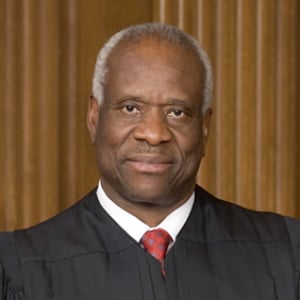
Associate Justice, Supreme Court of the United States
Clarence Thomas, Associate Justice, was born in the Pinpoint community near Savannah, Georgia on June 23, 1948. He attended Conception Seminary from 1967-1968 and received an A.B., cum laude, from Holy Cross College in 1971 and a J.D. from Yale Law School in 1974. He was admitted to law practice in Missouri in 1974, and served as an Assistant Attorney General of Missouri, 1974-1977; an attorney with the Monsanto Company, 1977-1979; and Legislative Assistant to Senator John Danforth, 1979-1981. From 1981–1982 he served as Assistant Secretary for Civil Rights, U.S. Department of Education, and as Chairman of the U.S. Equal Employment Opportunity Commission, 1982-1990. From 1990–1991, he served as a Judge on the United States Court of Appeals for the District of Columbia Circuit. President Bush nominated him as an Associate Justice of the Supreme Court and he took his seat October 23, 1991. He married Virginia Lamp on May 30, 1987 and has one child, Jamal Adeen by a previous marriage.

United States Court of Appeals, Fourth Circuit
James Harvie Wilkinson III is an Article III federal judge on the United States Court of Appeals for the Fourth Circuit. He joined the Court in 1984 after being nominated by President Ronald Reagan.
Born in New York City, New York, Wilkinson graduated from Yale University with his Bachelor's degree in 1967. Wilkinson served in the United States Army from 1968 to 1969 and received his Juris Doctor degree from the University of Virginia School of Law in 1972.
On the recommendation of Virginia U.S. Senator John Warner, Wilkinson was nominated to the United States Court of Appeals for the Fourth Circuit by President Ronald Reagan on January 30, 1984 to a seat vacated by John Butzner, Jr.,. Wilkinson was confirmed by the Senate on August 9, 1984 on a Senate vote and received commission on August 13, 1984. Wilkinson served as the Chief Judge of the Court from 1996 to 2003.
Professor of Political Science, Northeastern University
Professor of Law Emeritus, Brooklyn Law
Henry Mark Holzer received his B.A. degree from New York University where he studied Russian and political science. After graduation in 1954 he served in South Korea with United States Army intelligence, holding top secret clearance as chief order of battle analyst (Chinese Communist Forces) at Eighth Army Headquarters in Seoul. Following Professor Holzer’s military service he earned his Juris Doctor degree at New York University School of Law. After his admission to the New York bar in December 1959 he practiced constitutional and appellate law.
From 1972 to 1993 he taught full time at Brooklyn Law School, and for two years was an associate dean. His courses included Constitutional Law, Administrative Law, Civil Liberties, First Amendment and Appellate Advocacy. In the fall of 1993, he taught as a visiting professor at the University of New Mexico School of Law in Albuquerque.
He is author of approximately 300 articles, essays, and reviews. He has published legal and political commentary on current issues in print and electronic media, and has often been interviewed on radio and television.
Several of his out-of-print books are The Gold Clause: Government’s Money Monopoly; Sweet Land of Liberty? The Supreme Court and Individual Rights; Speaking Freely: The Case Against Speech Codes; Why Not Call it Treason? Korea, Vietnam, Afghanistan and Today. With his wife, Erika Holzer, he is co-author of “Aid and Comfort”: Jane Fonda in North Vietnam; and Fake Warriors: Identifying, Exposing, and Punishing Those Who Falsify Their Military Service.
His book The Supreme Court Opinions of Clarence Thomas, 1919-2006, was published in 2007. The second edition, covering the years 1991-2011 was published in 2012. Also published in 2012, in a print edition and eBook, was Professor Holzer’s book The American Constitution and Ayn Rand’s “Inner Contradiction.”

Richard and Frances Mallery Professor of Law and Faculty Director, Constitutional Law Center, Stanford Law School
Michael W. McConnell is the Richard and Frances Mallery Professor and Faculty Director of the Constitutional Law Center at Stanford Law School, and a Senior Fellow at the Hoover Institution. From 2002 to 2009, he served as a Circuit Judge on the United States Court of Appeals for the Tenth Circuit. He was nominated by President George W. Bush, a Republican, and confirmed by a Democratic Senate by unanimous consent. McConnell has previously held chaired professorships at the University of Chicago and the University of Utah, and visiting professorships at Harvard and NYU. He teaches courses on constitutional law, constitutional history, First Amendment, and interpretive theory. He has published widely in the fields of constitutional law and theory, especially church and state, equal protection, and separation of powers. His book, “The President Who Would Not Be King: Executive Power Under the Constitution,” was published by Princeton University Press in 2020, based on the Tanner Lectures in Human Values, which he delivered at Princeton in 2019. His latest book, co-authored with Nathan Chapman, “Agreeing to Disagree: How the Establishment Clause Protects Religious Diversity and Freedom of Conscience,” was published by Oxford University Press in mid-2023. McConnell has argued sixteen cases in the United States Supreme Court, most recently Carney v. Adams (2020). defending a provision of the Delaware Constitution requiring political balance on that state’s courts. More recently, he was co-counsel in Gonzalez v. Google. He earned his B.A. from Michigan State University and his J.D. from the University of Chicago, and has received honorary degrees from Notre Dame University and Michigan State. He served as law clerk to Supreme Court Justice William J. Brennan, Jr. and D.C. Circuit Chief Judge J. Skelly Wright. He has been Assistant General Counsel of the Office of Management & Budget, Assistant to the Solicitor General of the Department of Justice, and a member of the President’s Intelligence Oversight Board. He is Senior of Counsel to the law firm Wilson, Sonsini, Goodrich & Rosati, and is co-chair of Meta’s Oversight Review Board.
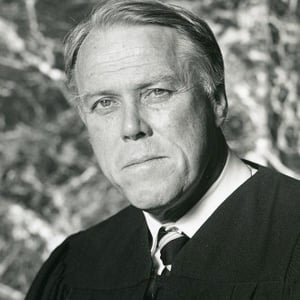
Senior Judge, United States Court of Appeals, Ninth Circuit
John T. Noonan, Jr. was a federal judge on senior status with the United States Court of Appeals for the 9th Circuit. He joined the court in 1985 after being nominated by President Ronald Reagan. He assumed senior status on December 27, 1996, and served as a senior judge until his death on April 17, 2017.
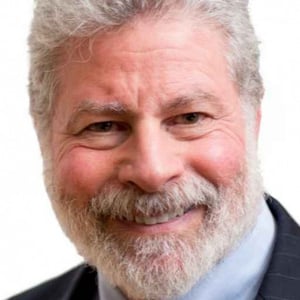
Senior Counsel, American Civil Liberties Union
Arthur B. Spitzer was the Legal Director of the ACLU of the District of Columbia from April Fool’s Day, 1980 until April 2020, when he became Senior Counsel. His work has spanned the range of ACLU issues, including freedom of speech and religion, police misconduct, national security, due process, privacy, prisoners’ rights, the rights of government employees, freedom of information, discrimination based on race, sex, religion, sexual orientation and gender preference, and more.
He has represented such varied clients as Mohamedou Ould Slahi (a Guantánamo detainee held without charge for 14 years), Louis Farrakhan (when he was barred from attending then-D.C. Mayor Marion Barry’s criminal trial), the Ku Klux Klan (when it was denied a permit to march in D.C.), the National Black Police Association (challenging ultra-low D.C. election campaign contribution limits), the White House Vigil for the Equal Rights Amendment (challenging restrictive regulations for demonstrating near the White House), People for the Ethical Treatment of Animals (when its design for an abused circus elephant was rejected from a public art display), Milo Yiannopoulos (whose advertisement for his new book was denied advertising by the D.C. transit authority), and both John and Jane Doe.
In Abbate v. Ramsey, Art represented some of the nearly 400 protestors arrested at an anti-World Bank demonstration in Pershing Park in 2002, challenging their illegal arrest and inhumane detention, and resulting in a settlement that included major changes in D.C. police practices in demonstration situations. He also had a major hand in crafting the legislation that created the D.C. police civilian review board (now known as the Office of Police Complaints) and the First Amendment Rights and Police Practices Act, a model statute governing D.C. police conduct during the peaceful exercise of free speech rights.
Other cases include Harmon v. Thornburgh (challenging random drug testing of Justice Department employees), Walsh v. Montrose Christian School (representing longtime school secretaries and a cafeteria worker at a Christian School who were fired because they were not members of the church), Schroer v. Billington (representing a trans woman who was fired by the Library of Congress when she disclosed her status), Center for National Security Studies v. U.S. Department of Justice (challenging the secret detention of immigrants after 9/11), Wimberly v. D.C. Board of Elections and Ethics (blocking a proposed ballot initiative to permit organized group prayer in D.C. public schools), and LaShawn A. v. Bowser (a still-ongoing class action filed in 1989 to reform D.C.’s dysfunctional foster care system).
In the Supreme Court, Art successfully argued Ake v. Oklahoma, which ruled that poor criminal defendants are entitled to free expert witnesses when needed for their defense, just as they’re entitled to free lawyers.
Art was born in Brooklyn (yay!), raised in Queens, and educated at Cornell University and Yale Law School. Before ascending to the ACLU, he practiced for several years at the law firm now known as WilmerHale. He has taught a course in “Demonstration Law” at the University of the District of Columbia School of Law.
His dog is Taxi; his cats are Tigris and Euphrates. He is not and has never been related to former New York governor Elliot Spitzer.

Explainer 67 - Veterans' Benefits Reforms: How Healthcare Influences Foreign Policy
Michael F. Cannon, Christina Sandefur
The Regulatory Transparency Project’s Fourth Branch Podcast presents Explainer Episode 67. In this Fourth Branch...
Panel III: The Modern Role of the Privileges or Immunities Clause [Archive Collection]
Michael Kent Curtis, Lino A. Graglia, Sanford V. Levinson, Clarence Thomas, J. Harvie Wilkinson
On March 4-5, 1988, The Federalist Society's University of Virginia student chapter hosted the National...
Panel II: The Freedom of Religion [Archive Collection]
Robert L. Cord, Mitchell L. Edwards, Henry Mark Holzer, Michael W. McConnell, John T. Noonan, Arthur B. Spitzer
On March 7-8, 1986, The Federalist Society hosted its annual National Student Symposium at Stanford...