
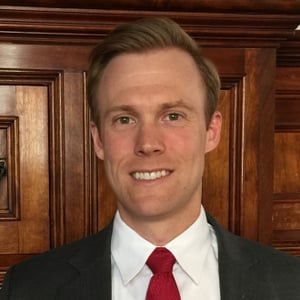
CJ Szafir is Executive Vice President at WILL. He regularly advises clients and stakeholders on legal, regulatory, and policy issues. He has been involved with litigation relating to school districts violating Act 10, promoting school choice for children with special needs, and pushing back against burdensome regulations. He has authored and co-authored numerous policy reports, including the effectiveness of the Milwaukee Parental Choice Program and independent public charter schools, reforming Milwaukee Public Schools, and repealing Wisconsin’s prevailing wage law.
His law and policy work has appeared in the Wall Street Journal, Washington Post, Politico, FoxNews.com, Milwaukee Journal Sentinel, and Wisconsin State Journal. CJ’s op-eds and commentary have been published in local and national publications, including the Wall Street Journal, Forbes, National Review, and Washington Times.
CJ was appointed by Governor Scott Walker to the Wisconsin Real Estate Board and Council on Mental Health. He volunteers at the Milwaukee County VA and Wills for Heroes program. He is currently on the Board of Directors at HOPE Christian Schools and Vice President of the Milwaukee Lawyers Chapter for the Federalist Society.
Before joining WILL, CJ was a policy advisor to State Senate Majority Leader Scott Fitzgerald in the Wisconsin Legislature. He has a Masters in Public Policy from the University of Chicago and law degree from Marquette Law School. He received a BA in Political Science from Michigan State University.
Senior Counsel, Becket Fund for Religious Liberty
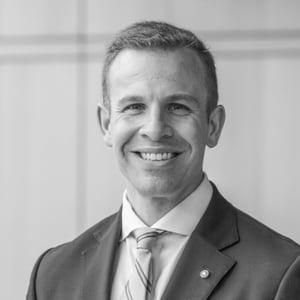
William J. Haun is Senior Counsel at the Becket Fund for Religious Liberty and a Nonresident Fellow at the American Enterprise Institute (AEI). At Becket, Will litigates nationwide in defense of religious liberty for all faith traditions, particularly before the U.S. Supreme Court and in other federal and state appellate courts. His litigation includes being a member of the U.S. Supreme Court team that prevailed 9-0 for Catholic Social Services in Fulton v. City of Philadelphia, arguing before multiple federal appellate courts, federal district courts, and the Supreme Court of Texas. At AEI, Will writes and researches on constitutionalism and self-government’s prerequisites, especially the role of religion in securing and preserving freedom.
Before joining Becket and AEI, Will practiced appellate and antitrust law at two international law firms—Shearman & Sterling and Hunton & Williams. He also served as a law clerk to Judge Janice Rogers Brown of the U.S. Court of Appeals for the D.C. Circuit and Judge Claude Hilton of the U.S. District Court for the Eastern District of Virginia. Will often writes on constitutional law issues, including in the Harvard Journal of Law & Public Policy, the Catholic University Law Review, National Affairs, Law & Liberty, National Review Online, the Wall Street Journal, and the Washington Post. He also speaks on these topics, including at the Catholic University of America, Columbus School of Law, Princeton University, the University of Virginia School of Law, and the University of Chicago Law School. He received his J.D. from the Catholic University of America, cum laude, where he was a published member of the Law Review. He received his B.A. from American University in political science, cum laude. He lives in Maryland with his wife and children, where they enjoy sailing, cheering on their favorite baseball teams, and discovering the great traditions of their Catholic faith.
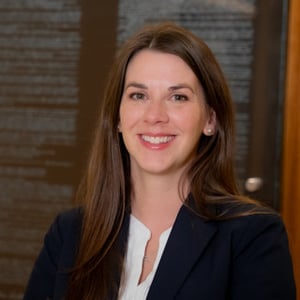
Vice President, Practice Groups, The Federalist Society
Senior Counsel, Becket Fund for Religious Liberty
William J. Haun is Senior Counsel at the Becket Fund for Religious Liberty and a Nonresident Fellow at the American Enterprise Institute (AEI). At Becket, Will litigates nationwide in defense of religious liberty for all faith traditions, particularly before the U.S. Supreme Court and in other federal and state appellate courts. His litigation includes being a member of the U.S. Supreme Court team that prevailed 9-0 for Catholic Social Services in Fulton v. City of Philadelphia, arguing before multiple federal appellate courts, federal district courts, and the Supreme Court of Texas. At AEI, Will writes and researches on constitutionalism and self-government’s prerequisites, especially the role of religion in securing and preserving freedom.
Before joining Becket and AEI, Will practiced appellate and antitrust law at two international law firms—Shearman & Sterling and Hunton & Williams. He also served as a law clerk to Judge Janice Rogers Brown of the U.S. Court of Appeals for the D.C. Circuit and Judge Claude Hilton of the U.S. District Court for the Eastern District of Virginia. Will often writes on constitutional law issues, including in the Harvard Journal of Law & Public Policy, the Catholic University Law Review, National Affairs, Law & Liberty, National Review Online, the Wall Street Journal, and the Washington Post. He also speaks on these topics, including at the Catholic University of America, Columbus School of Law, Princeton University, the University of Virginia School of Law, and the University of Chicago Law School. He received his J.D. from the Catholic University of America, cum laude, where he was a published member of the Law Review. He received his B.A. from American University in political science, cum laude. He lives in Maryland with his wife and children, where they enjoy sailing, cheering on their favorite baseball teams, and discovering the great traditions of their Catholic faith.
Associate Justice, Supreme Court of the United States
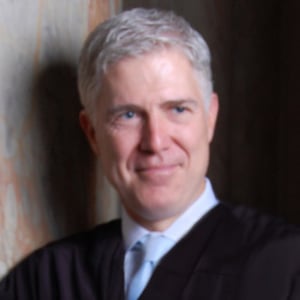
Neil M. Gorsuch, Associate Justice, was born in Denver, Colorado, August 29, 1967. He and his wife Louise have two daughters. He received a B.A. from Columbia University, a J.D. from Harvard Law School, and a D.Phil. from Oxford University. He served as a law clerk to Judge David B. Sentelle of the United States Court of Appeals for the District of Columbia Circuit, and as a law clerk to Justice Byron White and Justice Anthony M. Kennedy of the Supreme Court of the United States. From 1995–2005, he was in private practice, and from 2005–2006 he was Principal Deputy Associate Attorney General at the U.S. Department of Justice. He was appointed to the United States Court of Appeals for the Tenth Circuit in 2006. He served on the Standing Committee on Rules for Practice and Procedure of the U.S. Judicial Conference, and as chairman of the Advisory Committee on Rules of Appellate Procedure. He taught at the University of Colorado Law School. President Donald J. Trump nominated him as an Associate Justice of the Supreme Court, and he took his seat on April 10, 2017.

Tetra Tech v. Wisconsin Department of Revenue
Charles J. Szafir
Across the country, conservatives and libertarians are making it a priority to roll back the...
Topics
Docket Watch: Tetra Tech v. Wisconsin Department of Revenue
Across the country, conservatives and libertarians are making it a priority to roll back the...
Topics
Morrison v. Olson Oral Argument Rewind: Everything Old Is New Again
Historian-turned-politician Sen. Ben Sasse (NE) likes a good historical coincidence. And last week, on April...
Courthouse Steps Decision: Class v. United States
William J. Haun
Rodney Class was arrested in May of 2013 when he violated federal law for possession...
Courthouse Steps Decision: Class v. United States
Criminal Law & Procedure Practice Group Teleforum
TeleforumTopics
With the Supreme Court's Abandonment, it's Time for States to Protect Property Rights
Private property is a critical ingredient in freedom. That’s why the U.S. Constitution refers to...
Getting Legal Ethics Right
Denver, ColoradoFisher v. UT–Austin and the Future of Racial Preferences in College Admissions
Elizabeth Slattery
Note from the Editor: This article discusses the Supreme Court’s recent decision in Fisher v. University...
Topics
"Affirmative Action Gone Wild?": Supreme Court Upholds Race Preferences in Fisher v. University of Texas II
I like to think I am unusually gifted at political prognostication because, in 2004, I...
Topics
Williams v. Pennsylvania: Supreme Court Holds Judge Can't Hear Case He Once Prosecuted
The legal principle that “No person may be a judge in his own cause” can...