

Vice President, Edwin Meese III Institute for the Rule of Law, Advancing American Freedom
John G. Malcolm oversees Advancing American Freedom’s work to increase understanding of the Constitution and the rule of law as Vice President of the organization’s Edwin Meese III Institute for the Rule of Law. Malcolm brings to the challenge a wealth of legal expertise and experience in both the public and private sectors.
Prior to joining Advancing American Freedom in 2025, Malcolm was the Vice President of the Institute for Constitutional Government and the Director of the Meese Center for Legal and Judicial Studies at the Heritage Foundation. Prior to joining Heritage in 2012, Malcolm was general counsel at the U.S. Commission on International Religious Freedom, as well as a distinguished practitioner in residence at Pepperdine Law School. From 2004 to 2009, Malcolm was executive vice president and director of worldwide anti-piracy operations for the Motion Picture Association.
Malcolm served as a deputy assistant attorney general in the Department of Justice’s Criminal Division from 2001 to 2004, where he oversaw sections on computer crime and intellectual property, domestic security, child exploitation and obscenity, and special investigations. Immediately prior to that, he was a founding partner in the Atlanta law firm of Malcolm & Schroeder, LLP.
From 1990 to 1997, Malcolm was an assistant U.S. attorney in Atlanta, assigned to the fraud and public corruption section, and also an associate independent counsel, investigating fraud and abuse in the Department of Housing and Urban Development. He was honored with the Director’s Award for Superior Performance for his work in connection with the successful prosecution of Walter Leroy Moody Jr., who assassinated an 11th Circuit judge and the head of the Savannah chapter of the NAACP.
A graduate of Harvard Law School and Columbia College, Malcolm began his career as a law clerk to a federal district court judge and a federal appellate court judge, and as an associate at the Atlanta-based law firm of Sutherland, Asbill & Brennan (new Eversheds Sutherland).
Malcolm, who resides in Washington, D.C., serves on the Board of Trustees of the Washington National Opera and is a Senate-confirmed member of the Board of Directors of the Legal Services Corporation, the largest funder of civil legal aid in the United States.

Emanuel S. Heller Professor of Law, University of California at Berkeley; Thomas Smith Senior Research Fellow, The Civitas Institute, University of Texas at Austin
John Yoo is the Emanuel Heller Professor of Law at the University of California at Berkeley. He is also the Thomas Smith Senior Research Fellow, Civitas Institute, at the University of Texas at Austin. He is also a Nonresident Senior Fellow at the American Enterprise Institute.
His most recent book, The Politically Incorrect Guide to the Supreme Court, co-authored with Robert Delahunty, was published in 2023. Professor Yoo’s other books include Defender-in-Chief: Trump’s Fight for Presidential Power; Striking Power: How Cyber, Robots, and Space Weapons Change the Rules for War; Point of Attack: Preventive War, International Law, and Global Welfare; and Crisis and Command: A History of Executive Power from George Washington to George Bush.
He is a co-author of volumes 1 and 2 of R. Rossum, G. Tarr, V. Munoz & J. Yoo American Constitution Law (Routledge, 2026), and a co-editor of the eight-volume series on the 250th anniversary of the American Revolution, We Hold These Truths, with Yuval Levin and Adam White of the American Enterprise Institute.
Professor Yoo has published more than 100 articles in academic journals on subjects including national security, constitutional law, international law, and the Supreme Court. He also regularly contributes to the editorial pages of the Wall Street Journal, New York Times, Washington Post, Los Angeles Times, and National Review, among others.
Professor Yoo has served in all three branches of government. He was an official in the U.S. Department of Justice, where he worked on national security and terrorism issues after the 9/11 attacks. He served as general counsel of the U.S. Senate Judiciary Committee. He has been a law clerk for Supreme Court Justice Clarence Thomas and federal appeals Judge Laurence Silberman. He has been a visiting professor at the University of Texas at Austin’s School of Civic Leadership, Seoul National University, the Interdisciplinary Center Herzliya, Keio University, Trento University, the University of Chicago, and the Free University of Amsterdam.
Professor Yoo supervises the Public Law and Policy Program and the California Constitution Center. He also serves on the boards of Founding Forward, the Washington Legal Foundation, the Pacific Legal Foundation, the Ulysses Grant Institute, the Federalist Society’s Separation of Powers and Federalism Division, the Universidad Cientifica del Sur Law School, and the Asia-Pacific Law Institute at Seoul National University. He is a winner of the Federalist Society’s Paul Bator award and the Heritage Foundation’s Edwin Meese III Originalism Lectureship.
Professor Yoo graduated from Yale Law School and summa cum laude from Harvard College.

Executive Vice President, Chief Legal Officer, Gates Corporation
Matthew R. A. Heiman joined the Company in May 2026 and has served as the Company’s Chief Legal Officer and Corporate Secretary since June 2026. As Chief Legal Officer, Mr. Heiman is responsible for all legal functions for Gates, including securities and corporate governance, M&A, litigation, commercial, regulatory, compliance, patents and trademarks, real estate, employment and labor, sustainability and environmental matters. Prior to joining Gates, Mr. Heiman held senior legal leadership roles at Waystar, where he served as Chief Legal & Administrative Officer from 2023 to 2025 and as General Counsel and Corporate Secretary from 2020 to 2023. Prior to that, he was with Johnson Controls, where he served as Vice President, Corporate Secretary, and Associate General Counsel. Mr. Heiman has been a Senior Fellow for the National Security Institute at George Mason University’s Antonin Scalia School of Law since 2018.
Senior Counselor, The Brunswick Group
Robert B. Zoellick is a Principal of Brunswick Group’s Geopolitical advisory offer and a Senior Fellow at the Belfer Center for Science and International Affairs at Harvard University’s Kennedy School of Government. In addition, Zoellick serves on the boards of Temasek, Singapore’s Sovereign Wealth Fund, and Twitter, Inc., and is on the Advisory Board of Swiss Re. He is a member of the boards of the Peterson Institute for International Economics and the Carnegie Endowment, chairs the Global Tiger Initiative, and is a member of the Global Leadership Council of Mercy Corps, a global humanitarian agency.
Zoellick was the President of the World Bank Group from 2007-12, U.S. Trade Representative from 2001 to 2005, and Deputy Secretary of State from 2005 to 2006. From 1985 to 1993, Zoellick served as Counselor to the Secretary of the Treasury and Under Secretary of State, as well as White House Deputy Chief of Staff.
Zoellick is a recipient of the Distinguished Service Award, the Department of State’s highest honor, the Alexander Hamilton Award of the Department of the Treasury, and the Medal for Distinguished Public Service of the Department of Defense. The German government awarded him the Knight Commanders Cross for his achievements in the course of German unification. The Mexican and Chilean governments awarded him their highest honors for non-citizens, the Aztec Eagle and the Order of Merit, for recognition of his work on free trade, development, and the environment.
Zoellick holds a J.D. magna cum laude from the Harvard Law School, a master's degree in public policy from Harvard's Kennedy School of Government, and a bachelor's degree from Swarthmore College.

Founding Partner, Cooper & Kirk PLLC
Charles J. Cooper is a founding member and the chairman of Cooper & Kirk, PLLC, “one of the Nation’s leading litigation boutiques” (Above The Law 2017). The National Law Journal recently wrote that Mr. Cooper’s “brilliant legal career has so far spanned five decades and thrust Cooper into the spotlight in some of the most historic moments of the country’s modern history.” He has argued nine cases before the United States Supreme Court and scores of appeals before each of the 13 federal courts of appeals and several state supreme courts. He has been lead trial counsel in numerous complex, weeks-long trials in federal courts throughout the country. Named by the National Law Journal as one of the 10 best litigators in Washington D.C., Mr. Cooper’s work has been reported in numerous press accounts, and he has been called a “powerhouse attorney” (Fortune 2015), “a hard-nosed litigator” (Washington Post 2017), and “one of the country’s most in-demand civil litigators and a Washington legal institution unto himself” (The American Spectator 2014).
After graduating from the University of Alabama School of Law in 1977, where he ranked first in his class and served as Editor-in-Chief of the Alabama Law Review, Mr. Cooper began his career as a law clerk to Judge Paul Roney on the Fifth Circuit Court of Appeals and to Justice William H. Rehnquist in 1978–79. He then practiced law in Atlanta for two years before joining the Civil Rights Division of the U.S. Department of Justice, where he served as the Deputy Assistant Attorney General in charge of, among other things, appellate matters. In 1985 President Reagan appointed him to the position of Assistant Attorney General for the Office of Legal Counsel, which is the office responsible for providing legal opinions and advice to the White House, the Attorney General, and Executive Branch departments and agencies on issues covering the full spectrum of federal constitutional, statutory, and regulatory law.
In 1988 he returned to private practice as a litigation partner in the Washington, D.C. office of McGuireWoods. From 1990 until the founding of Cooper & Kirk in 1996, he was a partner at Shaw Pittman (now Pillsbury Winthrop Shaw Pittman), where he headed the firm’s Constitutional and Government Litigation Group.
Mr. Cooper has represented a wide range of public and private clients in highly complex constitutional, civil rights, antitrust, healthcare, banking, intellectual property, elections, campaign finance, administrative, commercial, and government contract cases. He has led trial teams in cases that have won judgments and settlements valued in the billions of dollars and that have established ground-breaking constitutional precedents.
Much of Mr. Cooper’s practice has involved representing high-profile clients in nationally prominent matters, including: the State of Florida in a First Amendment suit brought by the Disney Company concerning its autonomous regulatory authority over its Disney World property; the Commonwealth of Virginia in a suit seeking to enjoin the removal of noncitizens from its voter rolls; 38 members of the Duke Lacrosse team falsely accused of rape by officials of Duke University and the City of Durham; Harper Lee in a copyright dispute with the heirs of Gregory Peck; high-ranking former government officials such as former Attorneys General John Ashcroft, Jeff Sessions, and William Barr, and Ambassador John Bolton; several Governors and United States Senators; over 100 Members of Congress; and many state, territorial, and local government bodies and officials. He has also represented and advised government officials and public figures in connection with sensitive private issues that needed to be, and were, resolved discreetly without becoming matters of public record.
In 1998 Chief Justice Rehnquist appointed Mr. Cooper to the Standing Committee on Rules of Practice and Procedure of the Judicial Conference of the United States, where he served for three terms. He also served as a Public Member, appointed by President George H.W. Bush, of the National Commission on Judicial Discipline and Removal. He is a member of numerous professional associations, including the American Law Institute (since 1993) and the American Academy of Appellate Lawyers (since 1996). He is also an active member of the Federalist Society and the Republican National Lawyers Association, which in 2010 named him Republican Lawyer of the Year and in 2016 honored him with its Edwin Meese III Award.
Mr. Cooper has published scores of articles and spoken extensively on constitutional and legal policy topics. He has appeared before congressional committees on 26 occasions, testifying as an expert on a wide variety of legal issues, including the Chevron doctrine of judicial deference to administrative agencies, the diversity of citizenship jurisdiction of federal courts, statehood bills for Puerto Rico and the District of Columbia, and the impeachment of President Clinton.
Former United States Senator, Utah
Over nearly four decades of public service, Senator Orrin Hatch established himself as a leading conservative voice in the United States Senate. As the upper chamber’s most senior Republican, he served as President Pro Tempore and as Chairman of the Senate Finance Committee. In this capacity, he fought to create jobs and strengthen the economy by repealing and replacing Obamacare, reforming the tax code, and opening up overseas markets to American exports.
As a long-time member and former Chairman of the Senate Judiciary Committee, Senator Hatch also fought to check judicial activism and protect our liberties. He was instrumental in confirming conservative judges to the federal bench and played an indispensable role in confirming Supreme Court Justices Antonin Scalia, Clarence Thomas, and Samuel Alito as well as scores of district and circuit court judges.
One of Senator Hatch’s particularly noteworthy achievements on the Judiciary Committee is the Religious Freedom Restoration Act of 1993—a bill he co-authored with the late Senator Ted Kennedy. This landmark legislation prohibits substantial government burdens on the free exercise of religion, allowing all Americans to live, work, and worship in accordance with their beliefs.
In addition to protecting our individual liberties, Senator Hatch was on the front lines of legislative battles to protect our free-market economy and system of limited government under the Constitution. His reputation as a statesman and his record of fiscal responsibility earned him the nickname “Mr. Balanced Budget” from President Reagan.
By virtually all measures, Senator Hatch was among the most effective and consequential legislators in history. Since he first came to Congress in 1977, no legislator alive today has authored more bills that have become law than Senator Hatch.
Of all Senator Hatch’s achievements, he is proudest of his family, and he credits the love of his wife and children as the key to his success. He and Elaine have been married for more than fifty years. Together, they are the parents of six children, twenty-three grandchildren, and sixteen great-grandchildren.
Former Dean, Yale Law School
Eugene Victor Debs Rostow (August 25, 1913 – November 25, 2002) was an American legal scholar and public servant. He was Dean of Yale Law School and served as Under Secretary of State for Political Affairs under President Lyndon B. Johnson. In the 1970s Rostow was a leader of the movement against détente with Russia and in 1981, President Ronald Reagan appointed him director of the Arms Control and Disarmament Agency.
Professor Emeritus of the Practice of Law, Duke University School of Law; Professor Emeritus of Law, Washington College of Law, American University
Michael E. Tigar is Professor Emeritus of the Practice of Law at Duke University School of Law, and Professor Emeritus of Law at Washington College of Law, American University,Washington, D.C. He has held full-time positions at UCLA and The University of Texas. He has been a lecturer at dozens of law schools and bar associations in the United States, Europe, Africa, and Latin America, including service as Professeur Invité at the Faculty of Law of Université Paul-Cezanne, Aix-en-Provence. He is a 1966 graduate of Boalt Hall, University of California, Berkeley, where he was first in his class, Editor-in-Chief of the law review and Order of the Coif. He has authored or co-authored twelve books, three plays, and scores of articles and essays. He has argued seven cases in the U.S. Supreme Court, about 100 federal appeals, and has tried cases in all parts of the country in state and federal courts. His latest books are Trial Stories (2008) (edited with Angela Jordan Davis), and Thinking About Terrorism: The Threat to Civil Liberties in Times of National Emergency (2007). His clients have included Angela Davis, H. Rap Brown, John Connally, Kay Bailey Hutchison, the Washington Post, Mobil Oil, Fantasy Films, Terry Nichols, Allen Ginsberg, Leonard Peltier, the Charleston Five, Fernando Chavez and Lynne Stewart. He has been chair of the 60,000-member Section of Litigation of the American Bar Association, and chair of the board of directors of the Texas Resource Center for Capital Litigation. In his teaching, he has worked with law students in clinical programs where students are counsel or law clerks in significant human rights litigation. He has made several trips to South Africa, working with organizations of African lawyers engaged in the struggle to end apartheid, and, after the release of Nelson Mandela from prison, to lecture on human rights issues and to advise the African National Congress on issues in drafting a new constitution. He has been actively involved in efforts to bring to justice members of the Chilean junta, including former President Pinochet. Of Mr. Tigar's career, Justice William J. Brennan has written that his "tireless striving for justice stretches his arms towards perfection." In 1999, the California Attorneys for Criminal Justice held a ballot for "Lawyer of the Century." Mr. Tigar was third in the balloting, behind Clarence Darrow and Thurgood Marshall. In 2003, the Texas Civil Rights Project named its new building in Austin, Texas, (purchased with a gift from attorney Wayne Reaud) the "Michael Tigar Human Rights Center."
Judge, United States Court of Appeals, Second Circuit
Judge Winter was appointed United States Circuit Judge for the Second Circuit on December 10, 1981 and entered on duty January 5, 1982. He received a B.A. degree from Yale College in 1957 and an LL.B. degree from Yale Law School in 1960. He served as a law clerk to Judge Caleb M. Wright, Chief Judge, U.S. District Court, Delaware, 1960-61, and to Judge Thurgood Marshall, U.S. Court of Appeals, Second Circuit, 1961-62.
Judge Winter was a full-time member of the Yale Law School Faculty from 1962 until entering judicial service. At the time of his appointment, he was the William K. Townsend Professor of Law. He was also a Consultant to the Subcommittee of Separation of Powers, Committee on the Judiciary, U.S. Senate from 1968 to 1972, a Senior Fellow, The Brookings Institute, Washington, D.C. from 1968 to 1970, a John Simon Guggenheim Fellow from 1971 to 1972 and an Adjutant Scholar, American Enterprise Institute from 1972 to 1981.
He served from 1987 to 1992 as a member of the Judicial Conference Advisory Committee on Civil Rules. He served as Chair of the Judicial Conference Advisory Committee on the Rules of Evidence from 1992 to 1996. From July 1, 1997 to September 30, 2000, Judge Winter served as Chief Judge of the U.S. Court of Appeals for the Second Circuit. In April 1998, he was appointed to the Executive Committee of the U.S. Judicial Conference. From October 1999 to September 2000, he served as Chair of the Executive Committee. On October 1, 2000, he took Senior Judge status.
He served as Chair of the Committee to Review Circuit Council Conduct and Disability Orders from 2005 to 2008. He was a member of the United States Foreign Intelligence Surveillance Act Court of Review from 2003 to 2010.
Judge Winter has received the Connecticut Law Review Award, Honorary Doctors of Law from Brooklyn Law School and New York Law School, the Federal Bar Council's Learned Hand Award for Excellence in Federal Jurisprudence, and the Yale Law School's Association's Award of Merit. He is a Fellow of the American Academy of Arts and Sciences.
Partner, Kirkland & Ellis LLP
Neil Eggleston is a litigation partner in the Washington, D.C. office of Kirkland & Ellis LLP.
Neil has a distinguished record of public service, and has held a number of senior government roles. He was White House Counsel to President Obama from 2014 to 2017, and advised the president on all legal and constitutional issues across a broad spectrum of domestic and foreign policy matters. Neil’s practice focuses on enforcement defense including at the U.S. Department of Justice (DOJ), U.S. Securities and Exchange Commission (SEC), U.S. Attorney’s Offices, and other enforcement agencies.
Earlier in his career, Neil served as Associate Counsel to President Clinton from 1993 to 1994. Heals o served as Deputy Chief Counsel, U.S. House of Representatives Select Committee Investigating the Iran/Contra Affair (1987-1988); Assistant U.S. Attorney (1981-1987); and Chief Appellate Attorney for the Southern District of New York (1986-1987).
Neil served as a law clerk for the United States Court of Appeals for the Third Circuit (1978-1979) and for Chief Justice Warren E. Burger on the United States Supreme Court (1979-1980).
Neil teaches a seminar in Presidential Power at Harvard Law School in the spring of 2017, 2019, 2020, and 2021 and at Yale Law School in the spring of 2018. He also frequently lectures at American Bar Association and similar seminars.
Partner, Dechert LLP
In a career spanning both private and public practice, Steven A. Engel is a leading litigator and counselor, acting as an advocate in high-profile trial and appellate matters and advising clients on their most sensitive and complex legal issues. Mr. Engel is the Chair of Dechert’s Appellate and Regulatory Litigation Group and has appeared in courts across the country, handling a wide range of civil litigation matters, including administrative law, commercial litigation, constitutional law and securities cases. He regularly counsels clients on challenges to agency regulations and in connection with government, congressional and internal investigations.
Until January 2021, Mr. Engel served as the Assistant Attorney General for the Department of Justice’s Office of Legal Counsel. As the head of the office, Mr. Engel served as the chief counsel to the Attorney General and the principal legal adviser to the Executive Branch, providing legal advice to the President and cabinet secretaries on the most critical constitutional and statutory questions, including matters pertaining to national security, administrative law, criminal law, congressional oversight, and executive orders. In December 2020, Mr. Engel was awarded the Department of Justice’s highest honor, the Edmund J. Randolph Award, for outstanding service to the Department.
Before his appointment as Assistant Attorney General in 2017, Mr. Engel had been a partner at Dechert since 2009 and previously served as Deputy Assistant Attorney General for the Department of Justice’s Office of Legal Counsel. Mr. Engel clerked on the U.S. Supreme Court for Associate Justice Anthony M. Kennedy and on the U.S. Court of Appeals for the Ninth Circuit for Judge Alex Kozinski.
Mr. Engel is a member of the Advisory Committee on Rules for the U.S. Court of Appeals for the District of Columbia Circuit and the Administrative Conference of the United States. He has been an Adjunct Professor at the Antonin Scalia School of Law at George Mason University and the Columbus School of Law at the Catholic University of America and was formerly the Chief Justice William H. Rehnquist Distinguished Practitioner in Residence at the C. Boyden Gray Center for the Study of the Administrative State. He has been nationally ranked as a leading lawyer in The Legal 500 USA and Benchmark Litigation. Mr. Engel has frequently commented on legal subjects in numerous publications, including The New York Times, The Washington Post, The Wall Street Journal and USA Today, and has appeared on national news programs as a legal analyst, including on MSNBC, CNN, Fox News Channel and the Fox Business Network. Mr. Engel has testified on several occasions before committees of the U.S. House of Representatives and the Senate.
Partner, Boies Schiller Flexner LLP
Jesse, the former third-ranking official at the U.S. Department of Justice, helps clients with their most difficult litigation and regulatory issues─whether that means defending against an enforcement action, pursuing high-stakes litigation and appeals, navigating regulatory thickets at federal and state agencies, or crafting a comprehensive strategy to manage a crisis. He approaches these problems with the knowledge gained both from his broad private-practice experience and from having served at the highest levels of federal and state government.
Jesse has experience across a range of substantive and regulatory areas. He has sued the federal government and has also been one of its top law-enforcement officials; he has represented states and has also navigated their regulatory agencies on behalf of clients; and he has represented companies in business disputes, both as defendants and plaintiffs.
Before joining the firm, Jesse was the Acting Associate Attorney General at the United States Department of Justice. In that role, he oversaw the civil and criminal work of the Antitrust, Civil, Civil Rights, Environment and Natural Resources, and Tax Divisions. During Jesse’s tenure, the Associate’s office closely managed the Department’s most significant litigation, including matters involving large financial institutions, healthcare companies, automakers, energy companies, and state and local governments. In addition, Jesse served as Chair of DOJ’s Regulatory Reform Task Force and Vice Chair of DOJ’s Task Force on Market Integrity and Consumer Fraud. Jesse regularly provided legal and strategic advice to the highest-level decision makers in the federal government, including the Attorney General and Deputy Attorney General, general counsels across the spectrum of federal agencies, and White House officials.
Jesse served for three years as the secretary of Florida’s labor, economic-development, and land-use agency, the Florida Department of Economic Opportunity. Before that, he served as Governor (now Senator) Rick Scott’s general counsel.
Jesse maintains offices in both Washington D.C. and Florida. From Washington, he focuses on federal litigation and crisis management. In Florida, in addition to federal litigation, Jesse employs his knowledge of state government and regulation to help clients in courts across the state, from trial through the Florida Supreme Court.
Jesse currently serves on the Florida Supreme Court Judicial Nominating Commission, the body that provides the governor with nominees for appointment to the Florida Supreme Court. Jesse is also a fellow at the Center for the Study of the Administrative State at the Scalia Law School at George Mason University, where he writes and speaks about administrative law.

Executive Vice President, The Federalist Society
Dean Reuter is Executive Vice President at the Federalist Society for Law and Public Policy Studies. He has served in two federal government agency Offices of the Inspector General, as Counsel to the Inspector General and Deputy Inspector General, responsible for policing the use of federal funds granted and contracted through those agencies. As such, he helped conduct and oversee criminal investigations across the country. He is the principal author of the non-fiction book, The Hidden Nazi: The Untold Story of America's Deal with the Devil, and editor of Liberty’s Nemesis: The Unchecked Expansion of the State and Confronting Terror: 9/11 and the Future of American National Security. He was appointed by the President and served as Vice-Chairman of the Board of Directors of the Corporation for National and Community Service, and recently served as an appointee on the U.S. Commission on Presidential Scholars. He is a graduate of Hood College (BA with Honors) and the University of Maryland School of Law.
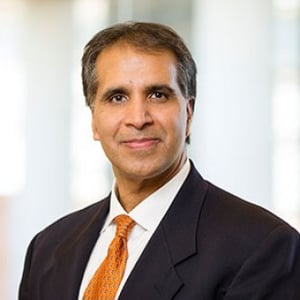
Dean and Iwan Foundation Professor of Law, University of Illinois College of Law
Dean Amar joined the College of Law as its dean in 2015, after having been a professor of law for many years at law schools in the University of California System, most recently the UC Davis School of Law, where he served as Senior Associate Dean for Academic Affairs. Amar is one of the most eminent and frequently cited authorities in constitutional law, federal courts, and civil procedure. He has produced several books and over 60 articles in leading law reviews. He is a co-author (along with Akhil Reed Amar and Steven Calabresi) of the upcoming edition of the six-volume Treatise on Constitutional Law (West Publishing Co., 6th ed. 2021) pioneered by Ron Rotunda and John Nowak, as well as the hardbound and soft-cover one-volume hornbooks that derive from it. He is also a co-author (along with Jonathan Varat) of Constitutional Law: Cases and Materials (Foundation Press, 15th ed. 2017), a co-author on multiple volumes of the Wright & Miller Federal Practice and Procedure Treatise (West Publishing Co. 2006), and a co-author (along with John Oakley) of a one-volume treatise on American Civil Procedure (Kluwer, 2008). He writes a biweekly column on constitutional matters for Justia.com and a monthly column on legal education for abovethelaw.com, is a frequent commentator on local and national radio and TV, and has penned dozens of op-ed pieces for major newspapers and magazines.
A strong proponent of public and professional engagement, Amar is an elected member of the American Law Institute and has served as a consultant for, among others, the National Association of Attorneys General, the United States Department of Justice, the California Attorney General’s Office, the ACLU of Southern California, and the Center for Civic Education. For one year he chaired the Civil Procedure Section of the Association of American Law Schools.
Amar earned his bachelor’s degree from UC Berkeley and his juris doctor from Yale Law School, where he was an articles editor for the Yale Law Journal. He then clerked for Judge William A. Norris of the United States Court of Appeals for the Ninth Circuit and for Justice Harry A. Blackmun of the United States Supreme Court before joining Gibson, Dunn & Crutcher, where he handled a variety of complex civil and white-collar criminal matters. It appears that dean Amar was the first person of South Asian heritage to clerk at the U.S. Supreme Court, and was the first American-born person of Indian descent to serve as a dean of a major American law school. Follow Dean Amar’s bi-weekly column on Justia.com and his monthly column on Above the Law, and read archived posts from his FindLaw.com column.

University Professor of Law and Executive Director, Liberty & Law Center, Antonin Scalia Law School, George Mason University
David Bernstein holds a University Professorship chair at the Antonin Scalia Law School, where he has been teaching since 1995. He has also been a visiting professor at the University of Michigan, Georgetown University, William & Mary, Brooklyn Law School, the University of Turin, and Hebrew University. Professor Bernstein teaches Constitutional Law, Evidence, and Products Liability.
A prolific author, Professor Bernstein often challenges the conventional wisdom with prodigious research and sharp, original analysis. He is the author of five books, and coauthor of two more. Professor Bernstein’s book Rehabilitating Lochner was praised across the political spectrum as “intellectual history in its highest form,” a “fresh perspective and a cogent analysis,” “delightful and informative,” “sharp and iconoclastic,” and “a terrific work of historical revisionism.” Columnist George Will praised Bernstein’s most recent book, Classified, The Untold Story of Racial Classification in America, as “perhaps the most consequential American book of 2022.”
Professor Bernstein has also written dozens of articles and essays published in major law reviews, including the California Law Review, Columbia Law Review, Michigan Law Review, and Yale Law Journal. An article he coauthored, Defending Daubert: It’s Time to Amend Federal Rule of Evidence 702, directly inspired a pending amendment to Rule 702.
Professor Bernstein blogs at the Instapundit.com, the Times of Israel, and the Volokh Conspiracy. He is a graduate of the Yale Law School, where he was senior editor of the Yale Law Journal and a John M. Olin Fellow in Law, Economics, and Public Policy.
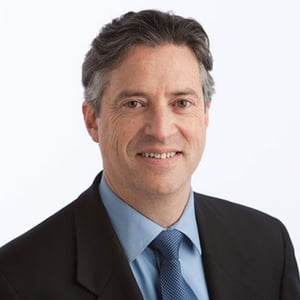
Dean Emeritus and Branch Rickey Collegiate Professor of Law, University of Michigan Law School
Evan H. Caminker, the Branch Rickey Collegiate Professor of Law, served as dean of the Law School from 2003 to 2013. During his tenure he helped design and oversee a significant expansion and renovation of the Law School's historic facilities, emphasized and shaped a curricular and co-curricular focus on skills-based and experiential learning, and helped nurture the unique culture at Michigan Law that creates a vibrant and collegial student-faculty community. He recently spent several years (both full- and part-time) serving as a special assistant U.S. attorney for the Detroit office, where he specialized in appellate litigation. Professor Caminker writes, teaches, and litigates about various issues of American constitutional law, including individual rights, allocation of governmental powers, and judicial decision-making. He has taught in the fields of appellate advocacy, constitutional law, federal courts, and civil procedure, and has lectured widely before various professional, scholarly, and student audiences. Professor Caminker came to Michigan Law from the University of California, Los Angeles, School of Law, where he was a faculty member from 1991 to 1999. He received his BA in political economy and environmental studies, summa cum laude, from UCLA and his JD from Yale Law School. He clerked for Justice William Brennan Jr. of the U.S. Supreme Court and for The Hon. William Norris of the U.S. Court of Appeals for the Ninth Circuit. Professor Caminker also practiced law with the Center for Law in the Public Interest in Los Angeles and with Wilmer, Cutler & Pickering in Washington, D.C. From May 2000 through January 2001, he served as deputy assistant attorney general in the Office of Legal Counsel, U.S. Department of Justice.

Judge, United States Court of Appeals, Sixth Circuit
Judge Readler earned his undergraduate and law degrees from the University of Michigan. After graduating, he served as a law clerk to Judge Alan Norris of the United States Court of Appeals for the Sixth Circuit. Judge Readler then began practicing law in the Columbus office of the international law firm Jones Day, eventually spending ten years as a partner in the firm’s Issues and Appeals Practice Group. While at Jones Day, Judge Readler appeared in state and federal trial and appellate courts around the country, most frequently the Supreme Court of Ohio and the Sixth Circuit. Judge Readler also successfully argued before the United States Supreme Court in McQuiggin v. Perkins on behalf of an inmate claiming actual innocence. His other pro bono representations include representing capital defendants before the Tenth Circuit and the Supreme Court of Ohio, as well as representing defendants sentenced to life in prison before the Sixth Circuit. While at Jones Day, Judge Readler traveled to Nairobi with Lawyers Without Borders to train Kenyan lawyers in prosecuting domestic violence cases, and he was also a recipient of the American Marshall Memorial Fellowship awarded by the German Marshall Fund of the United States. Following his career in private practice, Judge Readler served as Acting Assistant Attorney General for the Civil Division of the United States Department of Justice from 2017 to 2019. In that role, Judge Readler led and supervised over 1,000 lawyers in the Department’s largest litigating division, briefing and arguing several cases on behalf of the United States in federal courts across the country, including high-profile cases significant to the Administration and the Department. In March 2019, Judge Readler was confirmed to serve as a Circuit Judge on the Sixth Circuit. He resides in Columbus.

David Boies Professor of Law, Yale Law School

Senior Fellow and Director of Constitutional Studies, Manhattan Institute
Ilya Shapiro is a senior fellow and director of constitutional studies at the Manhattan Institute and a contributing editor of City Journal. Previously he was executive director and senior lecturer at the Georgetown Center for the Constitution, and before that a vice president of the Cato Institute.
Shapiro is the author of Lawless: The Miseducation of America’s Elites (2025) and Supreme Disorder: Judicial Nominations and the Politics of America’s Highest Court (2020), coauthor of Religious Liberties for Corporations? (2014), and editor of 11 volumes of the Cato Supreme Court Review (2008-18). He has contributed to a variety of academic, popular, and professional publications, including the Wall Street Journal, Harvard Journal of Law & Public Policy, Washington Post, Los Angeles Times, USA Today, National Review, and Newsweek. He also regularly provides commentary for various media outlets, writes the Shapiro’s Gavel newsletter on Substack, and once appeared on the Colbert Report.
Shapiro has testified many times before Congress and state legislatures and has filed more than 500 amicus curiae “friend of the court” briefs in the Supreme Court. He lectures regularly on behalf of the Federalist Society, is a member of the board of fellows of the Jewish Policy Center, was an inaugural Washington Fellow at the National Review Institute, and has been an adjunct law professor at the George Washington University and University of Mississippi. He is also the chairman of the board of advisers of the Mississippi Justice Institute, a barrister in the Edward Coke Appellate Inn of Court, and a former member of the Virginia Advisory Committee to the U.S. Commission on Civil Rights.
Earlier in his career, Shapiro was a special assistant/adviser to the Multi-National Force in Iraq on rule-of-law issues and practiced at Patton Boggs and Cleary Gottlieb. Before entering private practice, he clerked for Judge E. Grady Jolly of the U.S. Court of Appeals for the Fifth Circuit. He holds an AB from Princeton University, an MSc from the London School of Economics, and a JD from the University of Chicago Law School.
President, American Constitution Society Penn State Law Student Chapter
President, Penn State-University Park Student Chapter
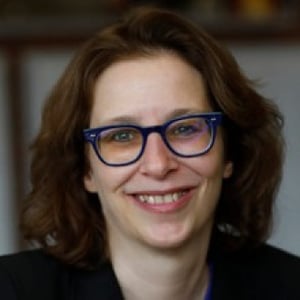
Robins, Kaplan, Miller & Ciresi Professor of Law, University of Minnesota Law School
Professor Heidi Kitrosser joined the University of Minnesota Law School faculty in 2006. She was a visiting professor at the Law School from 2005-06, and an assistant professor at Brooklyn Law School from 2003-2006.
Kitrosser is an expert on the constitutional law of federal government secrecy and on separation of powers and free speech law more broadly. She has written, spoken, and consulted widely on these topics. Her book, Reclaiming Accountability: Transparency, Executive Power, and the U.S. Constitution, was published in 2015 by the University of Chicago Press. It was awarded the 2014 IIT Chicago-Kent College of Law / Roy C. Palmer Civil Liberties Prize. Kitrosser’s articles have appeared in many venues, including Supreme Court Review, Georgetown Law Journal, Journal of National Security Law and Policy, Minnesota Law Review, and Constitutional Commentary.
Kitrosser is a 2017 Guggenheim Fellow. She is spending the 2017-18 school year using her fellowship to work on a new book about the law and policy of whistleblowing among federal government employees and contractors.
Kitrosser graduated from UCLA in 1992, summa cum laude and Phi Beta Kappa, with a B.A. in political science. She received her J.D. degree from Yale Law School in 1996. During her third year at Yale, she won the Harlan Fiske Stone Prize for best oral argument in the Morris Tyler Moot Court of Appeals.
Following law school, she clerked for Judge William Rea on the District Court for the Central District of California and for Judge Judith Rogers on the U.S. Court of Appeals for the District of Columbia Circuit. She also worked as an associate at the Washington, D.C., office of Jenner & Block.
For more information, download Professor Kitrosser’s  curriculum vitae.
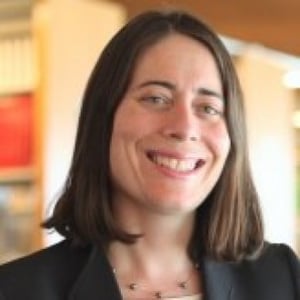
Dean and Distinguished Professor of Law, Penn State Law
Hari M. Osofsky is Dean of Penn State Law and the Penn State School of International Affairs and Distinguished Professor of Law, Professor of International Affairs, and Professor of Geography. As dean, she is deeply committed to collaboratively building legal and international affairs education for a changing society, and is leading initiatives in mentoring, technology, and interdisciplinary and international partnerships. She has been recognized for her technology leadership by the American Bar Association’s Legal Technology Resource Center as one of the 2019 Women of Legal-Tech. She also has been very involved nationally in supporting more women and people of color to consider law school and university leadership.
Dean Osofsky’s over 50 publications focus on improving governance and addressing injustice in energy and climate change regulation. Her scholarship includes books with Cambridge University Press on climate change litigation, textbooks on both energy and climate change law, and articles in leading law and geography journals. Dean Osofsky’s Emory Law Journal article, Energy Partisanship, was awarded the 2018 Morrison Prize, which recognizes the most impactful sustainability-related legal academic article published in North America during the previous year. Dean Osofsky has collaborated extensively with business, government, and nonprofit leaders to make bipartisan progress on these issues through her leadership roles and teaching.
Her professional leadership roles have included, among others, serving as President of the Association for Law, Property, and Society; chair of the American Association of Law School’s Section on Property; and a member of the Executive Council of the American Society of International Law and the International Law Association’s Committee on the Legal Principles of Climate Change. She also is a member of the Board of Governors of the Society of American Law Teachers and the editorial board of Climate Law. Her leadership and mentorship work was recognized by the Association for Law, Property, and Society’s 2016 Distinguished Service Award and the University of Minnesota 2015 Sara Evans Faculty Woman Scholar/Leader Award.
Dean Osofsky received a Ph.D. in geography from the University of Oregon and a J.D. from Yale Law School. Prior to joining the Pennsylvania State University, Dean Osofsky served on the faculties of University of Minnesota Law School, Washington and Lee University School of Law, the University of Oregon School of Law, and Whittier Law School.
David Boies Professor of Law, Yale Law School
Vice President, Edwin Meese III Institute for the Rule of Law, Advancing American Freedom
John G. Malcolm oversees Advancing American Freedom’s work to increase understanding of the Constitution and the rule of law as Vice President of the organization’s Edwin Meese III Institute for the Rule of Law. Malcolm brings to the challenge a wealth of legal expertise and experience in both the public and private sectors.
Prior to joining Advancing American Freedom in 2025, Malcolm was the Vice President of the Institute for Constitutional Government and the Director of the Meese Center for Legal and Judicial Studies at the Heritage Foundation. Prior to joining Heritage in 2012, Malcolm was general counsel at the U.S. Commission on International Religious Freedom, as well as a distinguished practitioner in residence at Pepperdine Law School. From 2004 to 2009, Malcolm was executive vice president and director of worldwide anti-piracy operations for the Motion Picture Association.
Malcolm served as a deputy assistant attorney general in the Department of Justice’s Criminal Division from 2001 to 2004, where he oversaw sections on computer crime and intellectual property, domestic security, child exploitation and obscenity, and special investigations. Immediately prior to that, he was a founding partner in the Atlanta law firm of Malcolm & Schroeder, LLP.
From 1990 to 1997, Malcolm was an assistant U.S. attorney in Atlanta, assigned to the fraud and public corruption section, and also an associate independent counsel, investigating fraud and abuse in the Department of Housing and Urban Development. He was honored with the Director’s Award for Superior Performance for his work in connection with the successful prosecution of Walter Leroy Moody Jr., who assassinated an 11th Circuit judge and the head of the Savannah chapter of the NAACP.
A graduate of Harvard Law School and Columbia College, Malcolm began his career as a law clerk to a federal district court judge and a federal appellate court judge, and as an associate at the Atlanta-based law firm of Sutherland, Asbill & Brennan (new Eversheds Sutherland).
Malcolm, who resides in Washington, D.C., serves on the Board of Trustees of the Washington National Opera and is a Senate-confirmed member of the Board of Directors of the Legal Services Corporation, the largest funder of civil legal aid in the United States.
Emanuel S. Heller Professor of Law, University of California at Berkeley; Thomas Smith Senior Research Fellow, The Civitas Institute, University of Texas at Austin
John Yoo is the Emanuel Heller Professor of Law at the University of California at Berkeley. He is also the Thomas Smith Senior Research Fellow, Civitas Institute, at the University of Texas at Austin. He is also a Nonresident Senior Fellow at the American Enterprise Institute.
His most recent book, The Politically Incorrect Guide to the Supreme Court, co-authored with Robert Delahunty, was published in 2023. Professor Yoo’s other books include Defender-in-Chief: Trump’s Fight for Presidential Power; Striking Power: How Cyber, Robots, and Space Weapons Change the Rules for War; Point of Attack: Preventive War, International Law, and Global Welfare; and Crisis and Command: A History of Executive Power from George Washington to George Bush.
He is a co-author of volumes 1 and 2 of R. Rossum, G. Tarr, V. Munoz & J. Yoo American Constitution Law (Routledge, 2026), and a co-editor of the eight-volume series on the 250th anniversary of the American Revolution, We Hold These Truths, with Yuval Levin and Adam White of the American Enterprise Institute.
Professor Yoo has published more than 100 articles in academic journals on subjects including national security, constitutional law, international law, and the Supreme Court. He also regularly contributes to the editorial pages of the Wall Street Journal, New York Times, Washington Post, Los Angeles Times, and National Review, among others.
Professor Yoo has served in all three branches of government. He was an official in the U.S. Department of Justice, where he worked on national security and terrorism issues after the 9/11 attacks. He served as general counsel of the U.S. Senate Judiciary Committee. He has been a law clerk for Supreme Court Justice Clarence Thomas and federal appeals Judge Laurence Silberman. He has been a visiting professor at the University of Texas at Austin’s School of Civic Leadership, Seoul National University, the Interdisciplinary Center Herzliya, Keio University, Trento University, the University of Chicago, and the Free University of Amsterdam.
Professor Yoo supervises the Public Law and Policy Program and the California Constitution Center. He also serves on the boards of Founding Forward, the Washington Legal Foundation, the Pacific Legal Foundation, the Ulysses Grant Institute, the Federalist Society’s Separation of Powers and Federalism Division, the Universidad Cientifica del Sur Law School, and the Asia-Pacific Law Institute at Seoul National University. He is a winner of the Federalist Society’s Paul Bator award and the Heritage Foundation’s Edwin Meese III Originalism Lectureship.
Professor Yoo graduated from Yale Law School and summa cum laude from Harvard College.
Partner, Kirkland & Ellis LLP
Neil Eggleston is a litigation partner in the Washington, D.C. office of Kirkland & Ellis LLP.
Neil has a distinguished record of public service, and has held a number of senior government roles. He was White House Counsel to President Obama from 2014 to 2017, and advised the president on all legal and constitutional issues across a broad spectrum of domestic and foreign policy matters. Neil’s practice focuses on enforcement defense including at the U.S. Department of Justice (DOJ), U.S. Securities and Exchange Commission (SEC), U.S. Attorney’s Offices, and other enforcement agencies.
Earlier in his career, Neil served as Associate Counsel to President Clinton from 1993 to 1994. Heals o served as Deputy Chief Counsel, U.S. House of Representatives Select Committee Investigating the Iran/Contra Affair (1987-1988); Assistant U.S. Attorney (1981-1987); and Chief Appellate Attorney for the Southern District of New York (1986-1987).
Neil served as a law clerk for the United States Court of Appeals for the Third Circuit (1978-1979) and for Chief Justice Warren E. Burger on the United States Supreme Court (1979-1980).
Neil teaches a seminar in Presidential Power at Harvard Law School in the spring of 2017, 2019, 2020, and 2021 and at Yale Law School in the spring of 2018. He also frequently lectures at American Bar Association and similar seminars.

Judge, United States Court of Appeals, Fifth Circuit
Edith Jones graduated from Alamo Heights High School, where she was a National Merit Scholar. In 1971, she received her B.A. in Economics from Cornell University, graduating with honors. In 1974, she was awarded her J.D. at the University of Texas Law School, where she was a law review editor and received the Order of the Coif.
Judge Jones was the first female partner at Andrews, Kurth, Campbell & Jones (now Hunton Andrews Kurth) where she practiced various types of litigation and bankruptcy cases. Judge Jones went on the federal bench on June 1, 1985.
Judge Jones served as a former member of the National Bankruptcy Review Commission, and as a member of the Judicial Conference Commission on Bankruptcy Rules. Judge Jones served on the White House Fellows Commission. Judge Jones served on the board of the Sam Houston Area Council of the Boy Scouts of America. She has been a member of the Garland Walker Inn of Court in Houston for more than 20 years and its President for at least ten years. Judge Jones is also on the Board of the Calvin Coolidge Presidential Foundation.
Professor from Practice, Georgetown University Law Center

Judge, United States Court of Appeals, D.C. Circuit
Judge Randolph was confirmed by the Senate and appointed to the United States Court of Appeals for the District of Columbia Circuit by President George H. W. Bush in July 1990.
Judge Randolph received his B.S. degree in 1966 from Drexel University, majoring in economics and basic engineering. At Drexel, he was president of the debate society, vice president of the Student Senate, and a member of the varsity wrestling squad. In 1969, he received his J.D. from the University of Pennsylvania, summa cum laude. Judge Randolph ranked first in his law school class all three years and was managing editor of the Law Review.
After graduation, Judge Randolph served as a law clerk to Judge Henry J. Friendly of the United States Court of Appeals for the Second Circuit in New York.
Admitted to the California Bar in 1970 (and to the District of Columbia bar in 1973), Judge Randolph worked as Assistant to the Solicitor General, U.S. Department of Justice, in Washington, D.C., 1970-1973.
After two years in private practice, Judge Randolph was named Deputy Solicitor General of the United States, a position he held from 1975-1977.
In 1979, Judge Randolph was appointed Special Counsel to the Committee on Standards of Official Conduct (the Ethics Committee) of the United States House of Representatives, remaining in this position until 1980.
In the 1980s, Judge Randolph held a number of positions while in private practice, including Special Assistant Attorney General for the states of New Mexico (1985 90), Utah (1986-1990) and Montana (1983-1990). He also served as a Member of the Advisory Panel of the Federal Courts Study Committee.
From 1971-1990, Judge Randolph argued 23 times in the United States Supreme Court, winning 20 of his cases.
As an Adjunct Professor of Law at Georgetown University Law Center from 1974-1978 he taught courses in civil procedure and injunctions. In 1992 he taught a course in constitutional law. He is a Distinguished Adjunct Professor of Law at George Mason School of Law and for the past ten years has been teaching First Amendment law. He also serves on the Judicial Advisory Board of the George Mason University Law and Economics Center.
From 1993 through 1995 Judge Randolph was a member of the Committee on Codes of Conduct of the Judicial Conference of the United States, and from 1995 to 1998 served as the Committee's chairman. He also served as the judicial liaison to the American Bar Association’s Administrative Law Section.
Judge Randolph is a member of the Board of Visitors at Drexel University Law School and was named to the “Drexel One Hundred” as a leading alumnus. In 2002 he was presented the James Wilson Award by the University of Pennsylvania Law School. In November 2005 he delivered the Fifth Annual Barbara K. Olson Memorial Lecture at the Annual Lawyers Convention of the Federalist Society. He has published numerous articles, the most recent of which is in the June 2006 issue of the Harvard Journal of Law and Public Policy.
Judge Randolph is married to the Honorable Eileen J. O’Connor, formerly Assistant Attorney General, Tax Division, U.S. Department of Justice. His son John Trevor Randolph is an investment banker in New York. His daughter Cynthia Lee Randolph is an artist living in San Francisco.

Partner, Baker Hostetler LLP
David Rivkin is a member of the firm's litigation, international and environmental teams and is co-leader of the firm's national appellate practice. He has extensive experience in constitutional, administrative and international law litigation and has been involved in numerous high-profile cases. With his prior experience in the government sector, David draws on a wealth of knowledge when providing compliance advice to companies and handling enforcement proceedings before government agencies on issues arising out of multilateral and unilateral sanctions, the Foreign Corrupt Practices Act (FCPA), anti-boycott issues, bankruptcy and financial fraud matters, and environmental and energy issues.
David has developed and implemented legislative, regulatory and litigation initiatives for two presidential administrations. Over the years, he has published hundreds of articles, op-eds, book reviews and book chapters on a variety of international, legal, constitutional, defense, arms control, foreign policy, environmental and energy issues for various newspapers and magazines, including The Wall Street Journal, The Washington Post, The New York Times, USA Today and The Los Angeles Times, and has been a frequent commentator and guest on TV and radio shows including ABC, CBS, NBC, CNN, Fox News, NPR and PBS.
Vice President, Edwin Meese III Institute for the Rule of Law, Advancing American Freedom
John G. Malcolm oversees Advancing American Freedom’s work to increase understanding of the Constitution and the rule of law as Vice President of the organization’s Edwin Meese III Institute for the Rule of Law. Malcolm brings to the challenge a wealth of legal expertise and experience in both the public and private sectors.
Prior to joining Advancing American Freedom in 2025, Malcolm was the Vice President of the Institute for Constitutional Government and the Director of the Meese Center for Legal and Judicial Studies at the Heritage Foundation. Prior to joining Heritage in 2012, Malcolm was general counsel at the U.S. Commission on International Religious Freedom, as well as a distinguished practitioner in residence at Pepperdine Law School. From 2004 to 2009, Malcolm was executive vice president and director of worldwide anti-piracy operations for the Motion Picture Association.
Malcolm served as a deputy assistant attorney general in the Department of Justice’s Criminal Division from 2001 to 2004, where he oversaw sections on computer crime and intellectual property, domestic security, child exploitation and obscenity, and special investigations. Immediately prior to that, he was a founding partner in the Atlanta law firm of Malcolm & Schroeder, LLP.
From 1990 to 1997, Malcolm was an assistant U.S. attorney in Atlanta, assigned to the fraud and public corruption section, and also an associate independent counsel, investigating fraud and abuse in the Department of Housing and Urban Development. He was honored with the Director’s Award for Superior Performance for his work in connection with the successful prosecution of Walter Leroy Moody Jr., who assassinated an 11th Circuit judge and the head of the Savannah chapter of the NAACP.
A graduate of Harvard Law School and Columbia College, Malcolm began his career as a law clerk to a federal district court judge and a federal appellate court judge, and as an associate at the Atlanta-based law firm of Sutherland, Asbill & Brennan (new Eversheds Sutherland).
Malcolm, who resides in Washington, D.C., serves on the Board of Trustees of the Washington National Opera and is a Senate-confirmed member of the Board of Directors of the Legal Services Corporation, the largest funder of civil legal aid in the United States.
Emanuel S. Heller Professor of Law, University of California at Berkeley; Thomas Smith Senior Research Fellow, The Civitas Institute, University of Texas at Austin
John Yoo is the Emanuel Heller Professor of Law at the University of California at Berkeley. He is also the Thomas Smith Senior Research Fellow, Civitas Institute, at the University of Texas at Austin. He is also a Nonresident Senior Fellow at the American Enterprise Institute.
His most recent book, The Politically Incorrect Guide to the Supreme Court, co-authored with Robert Delahunty, was published in 2023. Professor Yoo’s other books include Defender-in-Chief: Trump’s Fight for Presidential Power; Striking Power: How Cyber, Robots, and Space Weapons Change the Rules for War; Point of Attack: Preventive War, International Law, and Global Welfare; and Crisis and Command: A History of Executive Power from George Washington to George Bush.
He is a co-author of volumes 1 and 2 of R. Rossum, G. Tarr, V. Munoz & J. Yoo American Constitution Law (Routledge, 2026), and a co-editor of the eight-volume series on the 250th anniversary of the American Revolution, We Hold These Truths, with Yuval Levin and Adam White of the American Enterprise Institute.
Professor Yoo has published more than 100 articles in academic journals on subjects including national security, constitutional law, international law, and the Supreme Court. He also regularly contributes to the editorial pages of the Wall Street Journal, New York Times, Washington Post, Los Angeles Times, and National Review, among others.
Professor Yoo has served in all three branches of government. He was an official in the U.S. Department of Justice, where he worked on national security and terrorism issues after the 9/11 attacks. He served as general counsel of the U.S. Senate Judiciary Committee. He has been a law clerk for Supreme Court Justice Clarence Thomas and federal appeals Judge Laurence Silberman. He has been a visiting professor at the University of Texas at Austin’s School of Civic Leadership, Seoul National University, the Interdisciplinary Center Herzliya, Keio University, Trento University, the University of Chicago, and the Free University of Amsterdam.
Professor Yoo supervises the Public Law and Policy Program and the California Constitution Center. He also serves on the boards of Founding Forward, the Washington Legal Foundation, the Pacific Legal Foundation, the Ulysses Grant Institute, the Federalist Society’s Separation of Powers and Federalism Division, the Universidad Cientifica del Sur Law School, and the Asia-Pacific Law Institute at Seoul National University. He is a winner of the Federalist Society’s Paul Bator award and the Heritage Foundation’s Edwin Meese III Originalism Lectureship.
Professor Yoo graduated from Yale Law School and summa cum laude from Harvard College.

The Executive Branch, the Supreme Court, and More
John G. Malcolm, John C. Yoo
Join us as John Malcolm and John Yoo discuss recent Supreme Court news, the 25th...
Book Review: America in the World: A History of U.S. Diplomacy and Foreign Policy
Matthew R. A. Heiman, Robert Zoellick
Ranging from Benjamin Franklin, Alexander Hamilton, and Thomas Jefferson to Henry Kissinger, Ronald Reagan, and...
Panel IV: What the Constitution Means by Executive Power [Archive Collection]
Charles J. Cooper, Orrin Hatch, Eugene V. Rostow, Michael Tigar, Ralph K. Winter
On November 6-7, 1987, The Federalist Society held a symposium at the Grand Hyatt Hotel...
Restoring the Executive Power: Revisiting Humphrey's Executor, Reviving the Unitary Executive
W. Neil Eggleston, Steven A. Engel, Jesse Panuccio, Dean Reuter
The Eighth Annual Executive Branch Review Conference was held on April 28, 2020 via an...
Panel III: Do Changing Norms Undermine Support for Our System of Government?
Vikram D. Amar, David Bernstein, Evan H. Caminker, Chad A. Readler, Keith E. Whittington
On March 14, 2020, the Federalist Society held its 39th National Student Symposium. The Symposium...
Courthouse Steps Oral Argument: Seila Law LLC v. Consumer Financial Protection Bureau (CFPB)
Ilya Shapiro
In Seila Law LLC v. Consumer Financial Protection Bureau (CFPB), the Supreme Court will decide the...
Presidential Impeachment: Historical Context and Current Controversies
Shifa Abuzaid, Dallas Kephart, Heidi Kitrosser, Hari M. Osofsky, Keith E. Whittington
On January 16, 2020, the Penn State-University Park Student Chapter, the Article I Initiative, and...
The President's Impeachment
John G. Malcolm, John C. Yoo
In December 2019, the United States House of Representatives voted to impeach President Donald Trump....
Special Session: Executive Power vs. Congressional Power
W. Neil Eggleston, Edith H. Jones, Martin S. Lederman, A. Raymond Randolph, David B. Rivkin
On November 16, 2019, the Federalist Society's Federalism & Separation of Powers Practice Group held...
The Trump Impeachment Effort
John G. Malcolm, John C. Yoo
Defenders of the Constitution designed impeachment to be a rare event, especially by making the...