

Founder and Co-Director, James Wilson Institute
Hadley Arkes joined the faculty of Amherst College in 1966. He became the Edward Ney Professor of Jurisprudence in 1987, and held that chair until he retired officially in July 2015. But he has not retired from writing and speaking. He has carried that teaching into a new phase; he has become the Founder and Director of the James Wilson Institute on Natural Rights and the American Founding in Washington, D.C. He has written eight books, mostly with Princeton and Cambridge University Presss. Among the books at Princeton have been: The Philosopher in the City (1981), First Things (1986), Beyond the Constitution (1990), and The Return of George Sutherland (1994). With Cambridge Press he has done Natural Rights and the Right to Choose (2002), and Constitutional Illusions & Anchoring Truths: The Touchstone of the Natural Law (2010). His most recent book, with Regnery Press is Mere Natural Law (2023) His articles have appeared in professional journals, but apart from his writing in more scholarly formats, he has become known to a wider audience through his writings in the Wall Street Journal, National Review, Civitas and First Things, a journal that took its name from his book of that title.
He was the main advocate, and architect, of the bill that became known as the Born-Alive Infants’ Protection Act. The account of his experience, in moving the bill through Congress, is contained as an epilogue or memoir in his book, Natural Rights & the Right to Choose. Arkes first prepared his proposal as part of the debating kit assembled for the first George Bush in 1988. The purpose of that proposal was to offer the “most modest first step” of all in legislating on abortion, and opening a conversation even with people who called themselves “pro-choice.” Professor Arkes proposed to begin simply by preserving the life of a child who survived an abortion–contrary to the holding of one federal judge, that such a child was not protected by the laws. Professor Arkes led the testimony on the bill before the Judiciary Committee of the U.S. House in July 2000, then again in July 2001. The legislative calendar was upended in the aftermath of September 11th, but in March 2002, the bill was brought to the floor of the House, where it passed unanimously. To the surprise of Professor Arkes, the bill was brought to the floor of the Senate on July 18 by the Deputy Majority Leader, Harry Reid, and passed in the same way. On August 5, President Bush signed the bill into law with Professor Arkes in attendance.
Professor Arkes was the founder, at Amherst, of the Committee for the American Founding, a group of alumni and students seeking to preserve, at Amherst, the doctrines of “natural rights” taught by the American Founders and Lincoln. That interest has been carried over now to the founding of a new center for the jurisprudence of natural law, in Washington, D.C.: the James Wilson Institute on Natural Rights and the American Founding, named for one of the premier minds among the American Founders. Professor Arkes has drawn to this project a cluster of accomplished federal judges who have wanted to get a firmer hold on the natural law, and brought them together with some gifted teachers of philosophy and law. The new institute will be sponsoring lectures and seminars in Washington and other parts of the country. The purpose of this new James Wilson Institute is to teach anew, to lawyers, judges, and students those principles of law that furnished the guide to the American Founders as they set about framing a Constitution. And the hope is to restore, to a new generation, the furnishings of mind of the men who formed this regime.
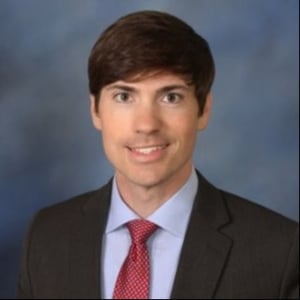
Deputy Attorney General and Director of the Civil Rights Enforcement Division, Office of the Tennessee Attorney General

Judge, Arizona Court of Appeals, Division One
The Honorable Jennifer M. Perkins began service on the Arizona Court of Appeals, Division One, on October 30, 2017. At the time of her appointment by Governor Douglas Ducey, Judge Perkins was Assistant Solicitor General for the State of Arizona.
Judge Perkins was born in Portales, New Mexico, and primarily raised in Albuquerque. She attended the prestigious Albuquerque Academy from 1988-1995, before moving to Washington D.C. to attend the Elliott School of International Affairs at the George Washington University as a National Merit Scholar. Therafter, she relocated again to Dallas, Texas, and earned her juris doctor from the SMU Dedman School of Law, graduating cum laude in 2002.
Judge Perkins started her career at the law firm of Browning & Peifer (now Peifer, Hanson, Mullins, and Baker) in Albuquerque, New Mexico. While there, she litigated complex commercial matters including class action plaintiff and defense work, and assisted with employment and contract litigation. In 2003, the judge accompanied the Honorable James O. Browning in transitioning to the federal district court bench, serving as his first law clerk.
After her clerkship, Judge Perkins moved to Arizona to work for the Institute for Justice, Arizona Chapter, a public interest law firm. She spent five years with IJ-AZ litigating civil rights cases in Arizona and across the country. In 2009, the judge became Disciplinary Counsel for the Arizona Commission on Judicial Conduct, where she reviewed and prosecuted ethics complaints against state court judges throughout Arizona. After five years serving the state in this capacity, Judge Perkins entered private practice by joining an appellate law firm in Phoenix. While there, she worked on state and federal appeals involving a wide range of legal subjects, including complex business disputes, property rights, judicial ethics, and personal injury matters.
In January 2015, Judge Perkins joined the Office of the Arizona Attorney General to serve as the first Assistant Solicitor General; in that capacity, she was responsible for oversight of Attorney General Opinions and served as ethics counsel to the entire office. In addition to these two primary roles, the judge assisted on a variety of matters including trial and appellate litigation of election-related matters; federal appellate litigation with the Federalism Unit; state criminal appeals; and drafting amicus briefs on behalf of Arizona in state and federal courts.

Executive Vice President, Goldwater Institute
Christina Sandefur is the Executive Vice President at the Goldwater Institute. She develops policies and litigates cases advancing healthcare freedom, free enterprise, private property rights, free speech, and taxpayer rights.
Christina is a co-drafter of the Right to Try initiative, now federal law, which protects terminally ill patients' right to try safe investigational treatments that have been prescribed by their physician but are not yet FDA-approved. She has won important victories for property rights in Arizona and works nationally to promote the Institute's Private Property Rights Protection Act, a state-level reform that requires government to pay owners when regulations destroy property rights and reduce property values.
Christina is the co-author of the book Cornerstone of Liberty: Private Property Rights in 21st Century America (2016). She is a frequent guest on national television and radio programs, has provided expert legal testimony to various legislative committees, and is a frequent speaker at conferences. She is the recipient of the 2018 Buckley Award in recognition of her leadership in the freedom movement, and she is an Advisory Board Member of the Network of enlightened Women. Christina serves on the board of the Phoenix Lawyers Chapter of the Federalist Society and is a member of the executive committee for the Federalist Society's Regulatory Transparency Project: FDA & Health.
Christina is a graduate of Michigan State University College of Law and Hillsdale College.
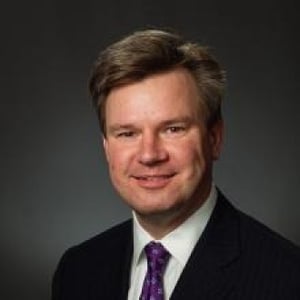
Senior Counsel & Director of the Center for Religious Schools, Alliance Defending Freedom
Gregory S. Baylor serves as senior counsel with Alliance Defending Freedom, where he is the director of the Center for Religious Schools and senior counsel with the Center for Public Policy.
Since joining ADF in 2009, Baylor has focused on defending and advancing the religious freedom of faith-based educational institutions through advice, education, legislative and public advocacy, and representation in disputes. He has testified about religious liberty issues three times before congressional committees and numerous times before state legislative committees.
Greg serves on the board of directors of the International Alliance for Christian Education, the board of directors of the Association for Biblical Higher Education, the board of directors of the Association for Christian Schools International, the board of advisors of the Museum of the Bible, and advisory board of the Center for Academic Faithfulness and Flourishing.
Greg earned his Juris Doctor in 1990 from Duke University School of Law, where he graduated Order of the Coif, with high honors, and served on the editorial board of the Duke Law Journal. He received his bachelor’s degree in Honors English in 1987 from Dartmouth College. Following graduation from law school, he served as law clerk to the Hon. Jerry E. Smith on the U.S. Court of Appeals for the Fifth Circuit. He practiced labor and employment law at two large international law firms for three years before joining the staff of Christian Legal Society’s Center for Law and Religious Freedom, where he served for 15 years prior to joining ADF. He lives in Northern Virginia with his wife (a medical doctor) and two daughters.
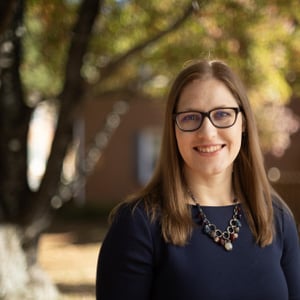
Fellow, Ethics and Public Policy Center
Rachel N. Morrison is an attorney and Fellow at the Ethics and Public Policy Center, where she directs EPPC’s Administrative State Accountability Project. Her legal and policy work focuses on religious liberty, health care rights of conscience, the right to life, nondiscrimination, and civil rights.
Before joining EPPC, Ms. Morrison served as an Attorney Advisor and Special Assistant to General Counsel Sharon Fast Gustafson at the Equal Employment Opportunity Commission (EEOC), where she focused on religious discrimination issues and was a member of the General Counsel’s Religious Discrimination Work Group. Before that, she served as Litigation Counsel for Americans United for Life and as a Constitutional Law Fellow at the Becket Fund for Religious Liberty, defending the right to life and religious freedom for all. She also clerked on the U.S. Court of Federal Claims.
Ms. Morrison’s legal analysis has been published in the Seton Hall Law Review, the Pepperdine Law Review, and the Ave Maria Law Review, as well as various other print media outlets.
Ms. Morrison earned her J.D., magna cum laude, from the Pepperdine University School of Law, where she was elected to the Order of the Coif and served as an editor for the Pepperdine Law Review and the Harvard Journal of Law & Public Policy. She received her B.A. in Mathematics and Speech Communication, summa cum laude, from Whitworth University (Spokane, WA). She is a member of the District of Columbia and the Washington State bars.
Ms. Morrison lives with her husband and daughter in Virginia.
Professor of Law, Case Western Reserve University School of Law
Professor Dent taught law at New York University, Cardozo, and the New York Law School before joining the faculty in 1990. Earlier he had clerked for Judge Paul R. Hays of the U.S. Court of Appeals, Second Circuit, and practiced corporate law in New York with Debevoise, Plimpton, Lyons & Gates. He teaches Business Associations, Mergers and Acquisitions, and Business Planning and is the faculty supervisor for the Business Organizations Concentration. He has published many articles on corporate and securities law, including “Academics in Wonderland: The Team Production and Director Primacy Models of Corporate Governance,” Houston Law Review (2008); “Corporate Governance: Still Broke, No Fix in Sight,” Journal of Corporation Law (2005); “Lawyers and Trust in Business Alliances,” Business Lawyer (2002); and “Gap Fillers and Fiduciary Duties in Strategic Alliances,” The Business Lawyer (2001). He also writes on law and religion, as in “Civil Rights for Whom: Gay Rights Versus Religious Freedom,” University of Kentucky Law Journal (2006-07); and “How Does Same-Sex Marriage Threaten You?,” Rutgers Law Review (2007). Mr. Dent serves as a director of the National Association of Scholars and as president of the Ohio Association of Scholars. He serves as an officer of Cleveland Chapter of the Federalist Society. He heads the Law Section of the Association for the Study of Free Institutions. He is chairman of the Ohio State Advisory Committee to the U.S. Commission on Civil Rights.

Panel IV: Mandates, Medicine, and Liberty: The Legal Battle Over Bodily Autonomy and the Right to Choose
Hadley P. Arkes, Steven J. Griffin, Jennifer Perkins, Christina Sandefur
Featuring: Prof. Hadley P. Arkes, Founder and Director, The James Wilson Institute Mr. Steven Griffin, Deputy Attorney...
Explainer Episode 82 - Is Gender Dysphoria a Protected Disability?
Gregory Baylor, Rachel N. Morrison
In this episode, Rachel Morrison from the Ethics and Public Policy Center and Gregory Baylor...
ABA House of Delegates Will Consider Recommendations on Judicial Nominations, Recusal Policy, Sustainable Development, and Election Law
The American Bar Association’s House of Delegates will consider a number of resolutions at...
Perry v. Schwarzenegger: Is Traditional Marriage Unconstitutional?
George W. Dent
Note from the Editor: This article and the article in this issue by Mark Strasser...
Recent Developments
Engle Court Paves Way for Record Punitive Award A Florida trial court has paved the...