
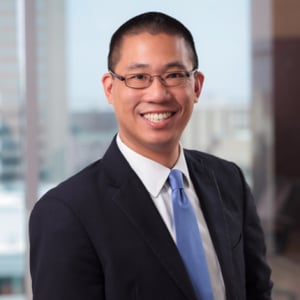
Chair, Issues & Appeals, Hunton Andrews Kurth LLP
The former Solicitor General of West Virginia, Mr. Lin has been on the front lines of many precedent-setting cases in appellate courts across the country, including in a US Supreme Court victory that George Will called “the court’s most severe rebuke of a president” since the Truman administration. Having argued more than 60 appeals, he brings to clients a well-honed ability to identify the most persuasive issues for appeal and a practiced understanding of how best to frame complex legal questions in appellate courts.
With experience in the private sector and multiple branches of government, Mr. Lin’s practice has spanned a wide range of issues, including major questions of constitutional and administrative law at the federal and state levels. On behalf of more than two dozen states, he won a stay from the US Supreme Court of the EPA’s Clean Power Plan. Described by the New York Times as an “unprecedented” order, the stay was the first time the Supreme Court had ever put a regulation on hold before review by a federal appeals court. In that same case, Elbert argued before the en banc DC Circuit in an historic proceeding that one commenter quoted in E&E News compared to “the NBA All-Star Game.” At the state level, Elbert led the effort that persuaded the West Virginia Supreme Court of Appeals to overturn an injunction of the state’s right-to-work law.
In 2013, Mr. Lin was appointed the Solicitor General of West Virginia. During his four-and-a-half year tenure, he served as a member of the Attorney General’s senior management team, oversaw all civil and criminal appeals, and argued nearly two dozen cases in federal and state appellate courts. He authored more than twenty-five briefs in the US Supreme Court and more than forty-five formal Opinions of the Attorney General.
Earlier in his career, Mr. Lin served as a trial attorney in the Federal Programs Branch of the US Department of Justice’s Civil Division, where he received a Special Service Award. He has also been a law clerk at all three levels of the federal judiciary: for Justice Clarence Thomas on the US Supreme Court; for Judge William H. Pryor Jr. on the US Court of Appeals for the Eleventh Circuit; and for Senior Judge Robert E. Keeton on the US District Court for the District of Massachusetts.
Mr. Lin speaks regularly on a wide variety of topics, including constitutional law, administrative law, environmental law, state and federal relations, the US Supreme Court, and appellate practice. He has testified before Congress, and has spoken at the national conventions of the American Bar Association, the Association of Corporate Counsel, the National Asian Pacific American Bar Association, the Federalist Society, Americans for Prosperity, and the American Legislative Exchange Council. He is an elected member of the American Law Institute, a public member of the Administrative Conference of the United States, and a fellow of the American Academy of Appellate Lawyers.
Mr. Lin is admitted to practice in the following federal courts: the Supreme Court of the United States; the First, Second, Third, Fourth, Fifth, Sixth, Seventh, Eighth, Ninth, Eleventh, D.C., and Federal Circuits; the District of Massachusetts; the Northern and Southern Districts of West Virginia; and the Eastern and Western Districts of Virginia.
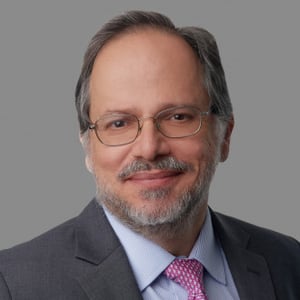
Director of Law & Policy, Environmental Integrity Project
Following Princeton and the University of Chicago Law School, David began practicing law at Paul, Weiss, Rifkind, Wharton & Garrison. Eventually tiring of litigation where the result was a wire transfer from Entity A to Entity B, in the early 1990’s David began his environmental law career at the Massachusetts Attorney General’s Office. Since then, he has litigated dozens of cases under all of the major environmental statutes including, as Sierra Club’s Chief Climate Counsel, initiating and managing Massachusetts v. EPA. Most recently, he has been busy challenging FERC’s permitting of natural gas pipelines and LNG export terminals. Apart from litigation, David has helped lead efforts on both greenhouse gas regulation and global warming legislation (and may be the only person ever invited to testify by both Barbara Boxer and James Inhofe).
He has drafted a range of federal climate legislation, advised states as to their greenhouse gas regulatory authority (and for many years has represented environmental groups defending state GHG regulations from dormant Commerce Clause challenges). David has designed and taught courses on “Environmental Litigation” at Georgetown University Law Center and “Environmental Law and Science” at the William and Mary Law School/Virginia Institute of Marine Science.
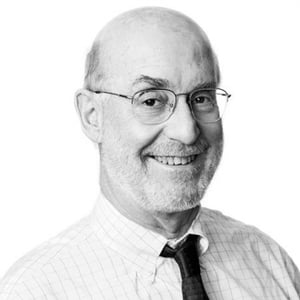
Director, Climate & Clean Air Program, Natural Resources Defense Council
David Doniger has been at the forefront of the battle against air pollution and global climate change since he joined NRDC in 1978. He helped formulate the Montreal Protocol, an international agreement designed to stop the depletion of the earth's ozone layer, as well as several essential amendments to the Clean Air Act. In 1993, he left NRDC to serve on the White House Council on Environmental Quality, followed by key posts at the U.S. Environmental Protection Agency. He rejoined NRDC in 2001 and has since been working to defend the Clean Air Act from assaults in Congress. He is based in Washington, D.C.
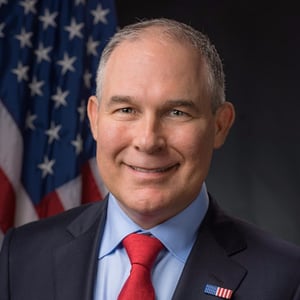
Former Administrator, U.S. Environmental Protection Agency
Scott Pruitt served as the 14th Administrator of the U.S. Environmental Protection Agency.
As Administrator, Mr. Pruitt’s overarching goal was to lead EPA in a way that our future generations inherit a better and healthier environment as he works with the thousands of dedicated public servants at EPA who have devoted their careers to helping realize this shared vision, while faithfully administering environmental laws.
Prior to the EPA, Pruitt served as the Attorney General for Oklahoma. Almost immediately upon taking office, he worked with his Democratic counterpart in Arkansas to reach agreement to study the water quality of the Illinois River, which crosses the border between the two states and has been enjoyed by generations of Oklahomans. The Statement of Joint Principles provides for a best science study using EPA-approved methods, with both states agreeing, for the first time, to be bound by the outcome.
Also during his tenure as Oklahoma’s Attorney General, Pruitt led an historic water rights settlement between Oklahoma, Oklahoma City and the Choctaw and Chickasaw Tribal Nations that preserved the ecosystems of scenic lakes and rivers on native lands. The agreement, which required Congressional approval, was enacted into Section 3608 of Public Law 114-322 and signed in December 2016. It provides a framework that fosters intergovernmental collaboration on significant water resource concerns with the settlement area, while at the same time protecting existing water rights and affirming the state’s role in water rights permitting and administration.
Water settlement cases can be lengthy, costly, divisive and disruptive; however under Pruitt’s forward-thinking leadership, the process was hailed by all parties as one of commitment, hard work, perseverance and cooperation.
Pruitt became a national leader through a career of advocating to keep power in the hands of hard-working Americans. He has a proven track record of working with others – including industry, farmers, ranchers, landowners and small business owners - who want to do the right thing by the environment.
He has dedicated his career to creating policy that serves the people. He strongly believes that environmental law, policy and progress are all based on cooperation between the states, cooperation between the states and EPA, and cooperation between regulators and the public. As Attorney General for Oklahoma, he led the state’s legal challenges against property rights intrusion, while protecting Oklahoma’s natural resources and environment.
He is recognized as a national leader in the cause to restore the proper balance between the states and federal government, and he established Oklahoma’s first federalism unit to combat unwarranted regulation and overreach by the federal government.
Before being elected attorney general, he served eight years in the Oklahoma State Senate where he was a leading voice for fiscal responsibility.
After earning his Bachelor’s Degree from Georgetown College and graduating from the University of Tulsa College of Law, Pruitt went into private legal practice, specializing in constitutional law.
In addition to his life as a civil servant, Pruitt is a successful entrepreneur. As a co-owner and managing general partner of Oklahoma City’s Triple-A minor league baseball affiliate, the Oklahoma City Redhawks, Mr. Pruitt took over the team’s marketing operations and helped the team become one of the minor league leaders in attendance and merchandise sales.
Pruitt is, first and foremost, a family man. He and Marlyn, his wife of 27 years, proudly raised their daughter, McKenna, and son, Cade, in Tulsa. Pruitt has made it a priority to pass on to his children the same principled family values with which he was raised.

Partner, Baker Hostetler LLP
David Rivkin is a member of the firm's litigation, international and environmental teams and is co-leader of the firm's national appellate practice. He has extensive experience in constitutional, administrative and international law litigation and has been involved in numerous high-profile cases. With his prior experience in the government sector, David draws on a wealth of knowledge when providing compliance advice to companies and handling enforcement proceedings before government agencies on issues arising out of multilateral and unilateral sanctions, the Foreign Corrupt Practices Act (FCPA), anti-boycott issues, bankruptcy and financial fraud matters, and environmental and energy issues.
David has developed and implemented legislative, regulatory and litigation initiatives for two presidential administrations. Over the years, he has published hundreds of articles, op-eds, book reviews and book chapters on a variety of international, legal, constitutional, defense, arms control, foreign policy, environmental and energy issues for various newspapers and magazines, including The Wall Street Journal, The Washington Post, The New York Times, USA Today and The Los Angeles Times, and has been a frequent commentator and guest on TV and radio shows including ABC, CBS, NBC, CNN, Fox News, NPR and PBS.

Laurence H. Silberman Chair in Constitutional Governance, American Enterprise Institute; Executive Director, Antonin Scalia Law School’s C. Boyden Gray Center for the Study of the Administrative State
Adam J. White is the Laurence H. Silberman Chair in Constitutional Governance and senior fellow at the American Enterprise Institute, where he focuses on the Supreme Court and the administrative state. He also directs the Antonin Scalia Law School’s C. Boyden Gray Center for the Study of the Administrative State.
He writes on regulation and constitutional government for a variety of publications. He practiced law in Washington, D.C., after clerking for the D.C. Circuit's Judge David Sentelle. He also has been chairman of the ABA's Administrative Law Section.
In 2021, he served on the Presidential Commission on the Supreme Court of the United States, where he criticized “Court packing” and other efforts to restructure the Supreme Court.
Senior Vice President for Federal Affairs and Policy, American Coalition for Clean Coal Electricity
Paul is ACCCE’s senior vice president for federal affairs and policy, overseeing government relations at the federal level as well as policy analysis.
He has many years of experience dealing with energy and environmental issues and is widely recognized as an excellent lobbyist and analyst. In 2007 and 2010, The Hill, a Washington publication that reports on politics and Congress, named him one of the top lobbyists in D.C. Prior to joining ACCCE, Paul’s career included vice president for environmental affairs for the Edison Electric Institute; managing director for Natsource, LLC; director of health and environmental affairs for the American Petroleum Institute; special assistant to the deputy secretary at the U.S. Department of Energy; and director of federal environmental issues for Southern Company. After graduate school, he was an analyst at Oak Ridge National Laboratory.
His education includes a B.S. from Birmingham-Southern College and an M.S. in engineering from Vanderbilt University. Paul also attended Stanford University’s executive management program.

U.S. Court of Appeals, Seventh Circuit
Frank H. Easterbrook is a judge of the United States Court of Appeals for the Seventh Circuit and a Senior Lecturer at the Law School of the University of Chicago. He was Chief Judge from 2006–2013. Before joining the court in 1985, he was the Lee andBrena Freeman Professor of Law at the University of Chicago, where he taught and wrote in antitrust, securities, corporate law, jurisprudence, and criminal procedure. He has published The Economic Structure of Corporate Law (with Daniel R. Fischel) and about 100 scholarly articles. He served as Co-Editor of the Journal of Law and Economics from 1982 to 1991 and as a member of the Judicial Conference’s Standing Committee on Rules of Practice and Procedure from 1991 to 1997. Before joining the faculty of the Law School in 1979, Judge Easterbrook was Deputy Solicitor General of the United States. He holds degrees from Swarthmore College (B.A. with high honors, 1970) and the University of Chicago (J.D. cum laude, 1973), and is a member of the American Academy of Arts and Sciences, the American Law Institute, the Mont Pelerin Society, Phi Beta Kappa, and the Order of the Coif.
Chair, Issues & Appeals, Hunton Andrews Kurth LLP
The former Solicitor General of West Virginia, Mr. Lin has been on the front lines of many precedent-setting cases in appellate courts across the country, including in a US Supreme Court victory that George Will called “the court’s most severe rebuke of a president” since the Truman administration. Having argued more than 60 appeals, he brings to clients a well-honed ability to identify the most persuasive issues for appeal and a practiced understanding of how best to frame complex legal questions in appellate courts.
With experience in the private sector and multiple branches of government, Mr. Lin’s practice has spanned a wide range of issues, including major questions of constitutional and administrative law at the federal and state levels. On behalf of more than two dozen states, he won a stay from the US Supreme Court of the EPA’s Clean Power Plan. Described by the New York Times as an “unprecedented” order, the stay was the first time the Supreme Court had ever put a regulation on hold before review by a federal appeals court. In that same case, Elbert argued before the en banc DC Circuit in an historic proceeding that one commenter quoted in E&E News compared to “the NBA All-Star Game.” At the state level, Elbert led the effort that persuaded the West Virginia Supreme Court of Appeals to overturn an injunction of the state’s right-to-work law.
In 2013, Mr. Lin was appointed the Solicitor General of West Virginia. During his four-and-a-half year tenure, he served as a member of the Attorney General’s senior management team, oversaw all civil and criminal appeals, and argued nearly two dozen cases in federal and state appellate courts. He authored more than twenty-five briefs in the US Supreme Court and more than forty-five formal Opinions of the Attorney General.
Earlier in his career, Mr. Lin served as a trial attorney in the Federal Programs Branch of the US Department of Justice’s Civil Division, where he received a Special Service Award. He has also been a law clerk at all three levels of the federal judiciary: for Justice Clarence Thomas on the US Supreme Court; for Judge William H. Pryor Jr. on the US Court of Appeals for the Eleventh Circuit; and for Senior Judge Robert E. Keeton on the US District Court for the District of Massachusetts.
Mr. Lin speaks regularly on a wide variety of topics, including constitutional law, administrative law, environmental law, state and federal relations, the US Supreme Court, and appellate practice. He has testified before Congress, and has spoken at the national conventions of the American Bar Association, the Association of Corporate Counsel, the National Asian Pacific American Bar Association, the Federalist Society, Americans for Prosperity, and the American Legislative Exchange Council. He is an elected member of the American Law Institute, a public member of the Administrative Conference of the United States, and a fellow of the American Academy of Appellate Lawyers.
Mr. Lin is admitted to practice in the following federal courts: the Supreme Court of the United States; the First, Second, Third, Fourth, Fifth, Sixth, Seventh, Eighth, Ninth, Eleventh, D.C., and Federal Circuits; the District of Massachusetts; the Northern and Southern Districts of West Virginia; and the Eastern and Western Districts of Virginia.
Robert F. Stanton Professor of Law, University of Maryland Carey School of Law
Robert V. Percival is the Robert F. Stanton Professor of Law and the Director of the Environmental Law Program at the University of Maryland School of Law. He received a B.A. summa cum laude from Macalester College, a J.D. from Stanford Law School and an M.A. in economics from Stanford University. At Stanford Percival was named the Nathan Abbott Scholar for graduating first in his law school class. Following graduation, he served as a law clerk for Judge Shirley M. Hufstedler of the U.S. Court of Appeals for the Ninth Circuit and for U.S. Supreme Court Justice Byron R. White. He joined the Maryland faculty in 1987 after serving as a senior attorney for the Environmental Defense Fund. Percival has served as a visiting professor of law at Harvard Law School, Georgetown University Law Center, the China University of Political Science and Law (Beijing), and Comenius University (Bratislava). He is the principal author of a leading environmental law casebook, now in its 9th edition, and the author of several articles about the Supreme Court and presidential authority over executive agencies. Percival wrote one of the first articles on the propriety of consent decrees to effectuate and enforce federal law “The Bounds of Consent: Consent Decrees, Settlements and Federal Environmental Policymaking,” 1987 Univ. Chic. Leg. F. 327 (1987). He also is the author of the first comprehensive analyses of what the papers of the late Justices Thurgood Marshall and Harry Blackmun reveal about the Supreme Court’s handling of environmental cases (“Environmental Law in the Supreme Court: Highlights from the Blackmun Papers,” 35 ELR 10637 (2005), and “Environmental Law in the Supreme Court: Highlights from the Marshall Papers,” 13 ELR 10606 (Oct. 1993)).
Principal, Sussman & Associates and Adjunct Professor of Law, Georgetown University Law Center
Bob Sussman is the principal in Sussman and Associates, a consulting firm that offers advice and support on energy and environmental policy issues to clients in the non-profit and private sectors.
Professor Sussman recently completed four and a half years of service in the Obama Administration, first as C0-Chair of the Transition Team for EPA and then as Senior Policy Counsel to the EPA Administrator. In this position, Professor Sussman functioned as the Administrator’s principal policy advisor, providing oversight and guidance on the full suite of policy issues across the Agency. He worked closely with all of EPA’s senior officials in Washington and the Regions. He also played a key role in EPA’s interface with OMB, CEQ and other White House offices and worked closely with other agencies, particularly the Department of Energy and Department of Interior.
Professor Sussman served in the Clinton Administration as the EPA Deputy Administrator during 1993-94. He was the Agency’s Chief Operating Officer and Regulatory Policy Officer, testified frequently before Congress and represented EPA at several international meetings.
At the end of 2007, Professor Sussman retired as a partner at the law firm of Latham & Watkins, where he headed the firm’s environmental practice in DC for ten years. He joined Latham in 1987 to start its environmental practice in DC after being a partner at Covington & Burling since 1974. Professor Sussman worked with a wide range of companies and trade associations on all aspects of energy and environmental policy, functioning as a policy advisor, advocate and litigator.
For several years, Professor Sussman was named one of the leading environmental lawyers in Washington, DC by Chambers USA: America’s Leading Business Lawyers and The International Who’s Who of Environmental Lawyers.
Professor Sussman was a Senior Fellow at the Center for American Progress in 2008, writing and speaking about climate change and energy.
Professor Sussman is a magna cum laude 1969 graduate of Yale College and a 1973 graduate of Yale Law School, where he was an editor of the Yale Law Journal. Bob clerked for Judge Walter K. Stapleton of the Third Circuit Court of Appeals.
Lecturer in Law, University of Chicago Law School
Robert Gasaway is a Lecturer in Law at the University of Chicago Law School. He was formerly a Partner at Kirkland & Ellis LLP in their Washington office. He has represented and advised corporate clients on a wide variety of matters before federal courts, state courts, federal administrative agencies, and federal and state legislative bodies. Mr. Gasaway focuses his practice on appellate litigation, representing clients in the preparation of integrated, multiforum trial and appellate strategies in high-risk sets of related cases.
Partner, Hunton & Williams LLP
Bill is Chairman of the firm’s Executive Committee, and former head of its Administrative Law and Environmental Practice Groups. His practice focuses on environmental litigation, regulation and counseling, including climate change regulation and litigation, clean air regulation, environmental licensing and auditing, and waste management and clean water issues. Bill and his team represent clients in both the United States and Europe. In the United States, his practice involves proceedings before federal and state agencies, courts and Congress; in Europe, it involves advice on European Community law.
Bill is a member of the American Bar Association and is AV® Peer Review Rated in Martindale-Hubbell. He is admitted to practice before the U.S. Supreme Court and the U.S. Courts of Appeals for the D.C., Second, Fourth, Fifth, Sixth, Seventh and Eleventh Circuits.
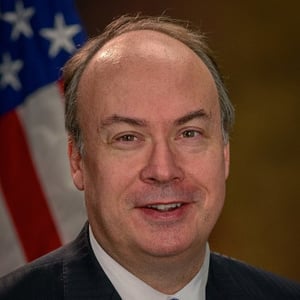
Assistant Attorney General, Environment and Natural Resources Division, U.S. Department of Justice
Jeffrey Bossert Clark was born in Philadelphia, Pennsylvania on April 17, 1967. He is a graduate of Harvard University (A.B. in economics and history, 1989), the University of Delaware (M.A. in urban affairs and public policy, 1993), and the Georgetown University Law Center (J.D., 1995).
Mr. Clark began his career working for the State of Delaware’s Department of Finance, Division of Revenue as an economics analyst in the field of tax policy. During his tenure from 1989 to 1992, he authored several white papers analyzing Delaware revenue sources. Delaware also selected Mr. Clark to submit an economic report and affidavit to the United States Supreme Court in the original jurisdiction case of Delaware v. New York, 507 U.S. 490 (1993).
He entered Georgetown’s law school in 1992 where he earned honors as an articles editor of the Georgetown Law Journal, an Olin Law & Economics Fellow, and a member of the Order of the Coif. From 1995 to 1996, Mr. Clark clerked for Judge Boggs of the U.S. Court of Appeals of the Sixth Circuit. Mr. Clark then joined the law firm of Kirkland & Ellis as an associate from 1996-2001. He worked as an appellate litigator on numerous Supreme Court and other appellate cases and developed expertise in administrative law, statutory interpretation, as well as antitrust, labor, environmental, and telecommunications law.
Mr. Clark went on to serve in ENRD from 2001-2005 as a Deputy Assistant Attorney General selected by Attorney General Ashcroft and Assistant Attorney General Tom Sansonetti. In that capacity, he supervised ENRD’s Appellate and Indian Resources Sections. He reviewed, edited, and contributed to virtually every brief that ENRD filed in the Courts of Appeals, including several cases of exceptional significance that he personally briefed and argued. During his service in the early 2000s, Mr. Clark argued and won numerous cases in multiple U.S. Courts of Appeals and worked on all Supreme Court cases arising out of ENRD’s work.
In 2005, Mr. Clark returned to Kirkland & Ellis LLP as a partner, where he litigated until his return to ENRD in 2018. There he worked on numerous multi-billion-dollar matters and continued to argue many appellate cases. His practice operated at all levels — appellate litigation, trial court litigation, agency proceedings, and regulatory and litigation counseling. He has been named a Super Lawyer for multiple years running, highlighted in the Legal 500, named to the “Legal Who’s Who for Environmental Law” in Corporate Responsibility Magazine, rated A.V. preeminent by Martindale Hubbell, and named a member of the National Association of Distinguished Counsel’s Nation’s One Percent. He also was named one of America’s Top 100 High Stakes Litigators.
President Trump nominated Mr. Clark to be the Assistant Attorney General of the Environment and Natural Resources Division (ENRD) on June 7, 2017. He was confirmed by the U.S. Senate on October 11, 2018 and sworn into office on November 1, 2018, followed by an investiture ceremony on November 15, 2018.
Director, Climate & Clean Air Program, Natural Resources Defense Council
David Doniger has been at the forefront of the battle against air pollution and global climate change since he joined NRDC in 1978. He helped formulate the Montreal Protocol, an international agreement designed to stop the depletion of the earth's ozone layer, as well as several essential amendments to the Clean Air Act. In 1993, he left NRDC to serve on the White House Council on Environmental Quality, followed by key posts at the U.S. Environmental Protection Agency. He rejoined NRDC in 2001 and has since been working to defend the Clean Air Act from assaults in Congress. He is based in Washington, D.C.
Republican Special Counsel, U.S. Senate Energy and Natural Resources Committee
Patrick McCormick was appointed to the position of Special Counsel to the United States Committee on Energy and Natural Resources in April 2011 by U.S. Sen. Lisa Murkowski, R-Alaska, the Committee's Ranking Republican. He provides counsel and advocacy on all matters within the committee's jurisdiction especially as they bear on the security, adequacy, reliability and affordability of the nation's energy supply resources and delivery infrastructure.
Prior to this appointment, he was with Hunton & Williams LLP where he was a partner and the leader of the regulated markets and energy infrastructure practice in the firm's Washington office. McCormick's private practice focused on representing clients and advising executives on matters pertaining to energy regulation and infrastructure development.
Before joining Hunton and Williams in 2005, McCormick was the managing partner for the Washington office of Balch & Bingham LLP for more than a decade. Earlier in his career he served as deputy assistant general counsel for electric rates and corporate regulation with the Federal Energy Regulatory Commission and in positions of increasing responsibility in the law and governmental affairs departments of Potomac Electric Power Company.
McCormick is admitted to practice in the District of Columbia and Maryland. He has been listed in Chambers USA and Best Lawyers in America.
McCormick earned a Bachelor of Arts in history at Wheeling Jesuit in 1977 and a Juris Doctorate from Columbus School of Law, Catholic University of America in 1984.
Former Administrator, U.S. Environmental Protection Agency
Scott Pruitt served as the 14th Administrator of the U.S. Environmental Protection Agency.
As Administrator, Mr. Pruitt’s overarching goal was to lead EPA in a way that our future generations inherit a better and healthier environment as he works with the thousands of dedicated public servants at EPA who have devoted their careers to helping realize this shared vision, while faithfully administering environmental laws.
Prior to the EPA, Pruitt served as the Attorney General for Oklahoma. Almost immediately upon taking office, he worked with his Democratic counterpart in Arkansas to reach agreement to study the water quality of the Illinois River, which crosses the border between the two states and has been enjoyed by generations of Oklahomans. The Statement of Joint Principles provides for a best science study using EPA-approved methods, with both states agreeing, for the first time, to be bound by the outcome.
Also during his tenure as Oklahoma’s Attorney General, Pruitt led an historic water rights settlement between Oklahoma, Oklahoma City and the Choctaw and Chickasaw Tribal Nations that preserved the ecosystems of scenic lakes and rivers on native lands. The agreement, which required Congressional approval, was enacted into Section 3608 of Public Law 114-322 and signed in December 2016. It provides a framework that fosters intergovernmental collaboration on significant water resource concerns with the settlement area, while at the same time protecting existing water rights and affirming the state’s role in water rights permitting and administration.
Water settlement cases can be lengthy, costly, divisive and disruptive; however under Pruitt’s forward-thinking leadership, the process was hailed by all parties as one of commitment, hard work, perseverance and cooperation.
Pruitt became a national leader through a career of advocating to keep power in the hands of hard-working Americans. He has a proven track record of working with others – including industry, farmers, ranchers, landowners and small business owners - who want to do the right thing by the environment.
He has dedicated his career to creating policy that serves the people. He strongly believes that environmental law, policy and progress are all based on cooperation between the states, cooperation between the states and EPA, and cooperation between regulators and the public. As Attorney General for Oklahoma, he led the state’s legal challenges against property rights intrusion, while protecting Oklahoma’s natural resources and environment.
He is recognized as a national leader in the cause to restore the proper balance between the states and federal government, and he established Oklahoma’s first federalism unit to combat unwarranted regulation and overreach by the federal government.
Before being elected attorney general, he served eight years in the Oklahoma State Senate where he was a leading voice for fiscal responsibility.
After earning his Bachelor’s Degree from Georgetown College and graduating from the University of Tulsa College of Law, Pruitt went into private legal practice, specializing in constitutional law.
In addition to his life as a civil servant, Pruitt is a successful entrepreneur. As a co-owner and managing general partner of Oklahoma City’s Triple-A minor league baseball affiliate, the Oklahoma City Redhawks, Mr. Pruitt took over the team’s marketing operations and helped the team become one of the minor league leaders in attendance and merchandise sales.
Pruitt is, first and foremost, a family man. He and Marlyn, his wife of 27 years, proudly raised their daughter, McKenna, and son, Cade, in Tulsa. Pruitt has made it a priority to pass on to his children the same principled family values with which he was raised.
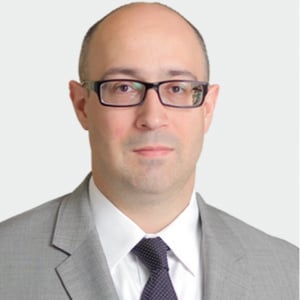
Partner, Baker & Hostetler LLP
Mark DeLaquil is a first-chair trial and appellate advocate who focuses on complex environmental and regulatory proceedings, First Amendment practice and political law.
Mark has been recognized by Chambers USA for environmental litigation (2015 to 2024) and has been named by Law360 as one of the "Top 5 Environmental Attorneys Under the Age of 40" on two occasions.

Executive Vice President, The Federalist Society
Dean Reuter is Executive Vice President at the Federalist Society for Law and Public Policy Studies. He has served in two federal government agency Offices of the Inspector General, as Counsel to the Inspector General and Deputy Inspector General, responsible for policing the use of federal funds granted and contracted through those agencies. As such, he helped conduct and oversee criminal investigations across the country. He is the principal author of the non-fiction book, The Hidden Nazi: The Untold Story of America's Deal with the Devil, and editor of Liberty’s Nemesis: The Unchecked Expansion of the State and Confronting Terror: 9/11 and the Future of American National Security. He was appointed by the President and served as Vice-Chairman of the Board of Directors of the Corporation for National and Community Service, and recently served as an appointee on the U.S. Commission on Presidential Scholars. He is a graduate of Hood College (BA with Honors) and the University of Maryland School of Law.

Partner, Wiley Rein, LLP
Megan L. Brown is a partner at Wiley Rein LLP. She has significant litigation, appellate and regulatory experience before state and federal courts and agencies.
Ms. Brown helps businesses respond to federal, state and local regulation and investigations raising administrative law, statutory interpretation, and constitutional issues, including the First Amendment.
Executive Vice President and General Counsel, Battery Council International
Partner, Wiley Rein, LLP
Megan L. Brown is a partner at Wiley Rein LLP. She has significant litigation, appellate and regulatory experience before state and federal courts and agencies.
Ms. Brown helps businesses respond to federal, state and local regulation and investigations raising administrative law, statutory interpretation, and constitutional issues, including the First Amendment.

Partner, Gibson Dunn & Crutcher
Douglas R. Cox is a partner in the Washington, D.C. office of Gibson, Dunn & Crutcher and Vice-Chair of the firm's Crisis Management Practice Group. He practices in the areas of constitutional and general commercial litigation, appellate law, and governmental matters.
Mr. Cox has represented numerous clients in litigation before federal and state trial and appellate courts. He played a principal role in the firm's successful representation of the prevailing candidate before the Supreme Court of the United States in Bush v. Palm Beach County Canvassing Board and Bush v. Gore, stemming from the 2000 presidential election, and in other cases before the Supreme Court involving equal protection, voting rights and election law, the scope of the jury trial right under the Seventh Amendment, and other constitutional and statutory issues.
Mr. Cox successfully represented the National Association of Securities Dealers ("NASD") in a series of trial and appellate matters, including DL Capital Group, LLC v. Nasdaq Stock Market, Inc., 409 F.3d 93 (2d Cir. 2005) and Sparta Surgical Corp. v. NASD, 159 F.3d 1209 (9th Cir. 1998).
Mr. Cox frequently represents accounting firms in a variety of matters, including matters involving the SEC and PCAOB. He also has substantial experience representing clients before congressional investigating committees.
Mr. Cox previously served for five years during the Reagan and Bush Administrations in the Justice Department's Office of Legal Counsel, becoming Principal Deputy Assistant Attorney General during the Bush Administration. In that Office, he provided legal advice to Executive Branch departments; resolved legal disputes on behalf of the Attorney General between Executive Branch departments; prepared formal opinions of the Attorney General; drafted and issued opinions on legal issues of importance to the Executive Branch; and advised Congress as to the constitutionality of pending legislation.
From 1981 through 1987, Mr. Cox practiced in New York City with a national firm, representing major corporations in state and federal courts. His practice focused on intellectual property, securities, and international tax litigation.
Mr. Cox received his law degree, cum laude, from Harvard Law School in 1980, where he served as Editor-in-Chief of the Harvard Journal of Law and Public Policy from 1979-1980. He received his undergraduate degree in history, magna cum laude, from Princeton University in 1977. He attended Oxford University on a Knox Scholarship in 1980-1981.
In 2005, Chief Justice Rehnquist appointed Mr. Cox to serve as a member of the Judicial Conference Standing Committee on Rules of Practice and Procedure. In 2008 he was reappointed by Chief Justice Roberts.

Partner, Gibson Dunn & Crutcher LLP
Miguel A. Estrada is a partner in the Washington, D.C. office of Gibson, Dunn & Crutcher.
Mr. Estrada has represented clients before federal and state courts throughout the country in a broad range of matters. He has argued 24 cases before the United States Supreme Court, and briefed many others. He has also argued dozens of appeals in the lower federal courts.
Best Lawyers® recognized Mr. Estrada as a 2020 Lawyer of the Year in Intellectual Property Litigation and as a Lawyer of the Year in Appellate Practice. He has been recognized by Benchmark Litigation as a 2020 U.S. Appellate Litigation “Star”. In 2014, The American Lawyer named Mr. Estrada a “Litigator of the Year,” praising his “brains and tenacity” and noting he is the lawyer to call for “a tough, potentially unwinnable case.” From 2014-2021, Chambers & Partners has named him as one of a handful of attorneys that it ranked in the top tier among the nation’s leading appellate lawyers. Chambers & Partners noted that “clients are impressed by his intellect and ability, with one saying, ‘His papers are just blindingly clear in what they say and devastating in how they marshal the arguments.’” The Atlantic described his oral argument in a 2014 high-profile separation-of-powers case as “one of the most dazzling arguments the marble chamber has heard in many years.”
Mr. Estrada was selected by his peers for inclusion in the 2020 edition of The Best Lawyers in America® in the area of Appellate Law, in addition to previous recognition by the publication in the specialties of Bet-the-Company Litigation, Commercial Litigation and Criminal Defense: White Collar, Intellectual Property Litigation, and Regulatory Enforcement Litigation in the areas of SEC, Telecom, and Energy. In 2017, he was elected as a member of the American Law Institute. In 2021, Mr. Estrada was named among the Lawdragon 500 Leading Lawyers in America. In 2004, Legal Times named him one of the top 12 appellate litigators in the D.C. area, noting that “people who follow appellate practice in Washington have known for several years that Estrada . . . is one of the best around.” Also in 2004, Washingtonian Magazine named him one of the top constitutional law lawyers “who could become one of the legends of the Supreme Court bar.”
Mr. Estrada joined Gibson Dunn in 1997, after serving for five years as Assistant to the Solicitor General of the United States. He previously served as Assistant U.S. Attorney and Deputy Chief of the Appellate Section, U.S. Attorney’s Office, Southern District of New York. In those capacities, Mr. Estrada represented the government in numerous jury trials and in many appeals before the U.S. Court of Appeals for the Second Circuit. Before joining the U.S. Attorney’s Office, Mr. Estrada practiced corporate law in New York with Wachtell, Lipton, Rosen & Katz.
Mr. Estrada is a Trustee of the Supreme Court Historical Society. He was formerly a member of the Board of Visitors of Harvard Law School.
Mr. Estrada served as a law clerk to the Honorable Anthony M. Kennedy in the U.S. Supreme Court from 1988 to 1989 and to the Honorable Amalya L. Kearse in the U.S. Court of Appeals for the Second Circuit from 1986 to 1987. He received a J.D. degree magna cum laude in 1986 from Harvard Law School, where he was editor of the Harvard Law Review. Mr. Estrada graduated with an A.B. degree magna cum laude and Phi Beta Kappa in 1983 from Columbia College, New York. He is fluent in Spanish and proficient in French.
Representative Supreme Court matters include:
In 2011, the Supreme Court appointed Mr. Estrada to brief and argue two criminal cases –Dorsey v. United States and Hill v. United States – in which the Solicitor General declined to defend the judgments of the court of appeals. Mr. Estrada was appointed to argue the position that the Solicitor General had declined to defend.
Mr. Estrada was also part of the team that successfully presented then Governor Bush’s position to the Supreme Court in Bush v. Gore (2000). Other cases that Mr. Estrada handled in the Supreme Court include Granholm v. Heald (2005) (dormant Commerce Clause and Twenty-First Amendment), Vermont Agency of Natural Resources v. United States ex rel. Stevens (2000) (False Claims Act, Article III standing and Eleventh Amendment immunity), Old Chief v. United States (1997) (rules of evidence), United States v. Mezzanatto (1995) (evidence and plea bargaining), United States v. Robertson (1995) (constitutional limits on Congress’s Commerce Clause powers), Citizens Bank of Maryland v. Strumpf (1995) (bankruptcy law), and NOW, Inc. v. Scheidler (1994) (RICO).
Recent Court of Appeals matters include:
In addition, Mr. Estrada is lead appellate counsel to Vivendi S.A. in two securities-fraud appeals from jury verdicts that are currently pending in the Second Circuit, and to the National Association of Broadcasters in a challenge to certain procedures promulgated by the FCC in connection with the upcoming Spectrum Auction. Mr. Estrada also recently presented argument before the D.C. Circuit on behalf of the tobacco industry in a first amendment challenge to certain compelled disclosures that were imposed as part of the government’s long-running civil RICO case against the industry.
Other matters:
Partner, Wiley Rein, LLP
Megan L. Brown is a partner at Wiley Rein LLP. She has significant litigation, appellate and regulatory experience before state and federal courts and agencies.
Ms. Brown helps businesses respond to federal, state and local regulation and investigations raising administrative law, statutory interpretation, and constitutional issues, including the First Amendment.

Clean Power Plan Oral Argument Recap - Podcast
Elbert Lin
On Tuesday, September 27, the D.C. Circuit Court of Appeals heard en banc West Virginia...
The Clean Power Plan Goes to Court
David Bookbinder, David D. Doniger, Scott Pruitt, David B. Rivkin, Adam White
In August 2015 the President announced the Clean Power Plan, characterized by the Environmental Protection...
Do the EPA’s CO2 Rules Go Too Far?
Paul Bailey, Frank H. Easterbrook, Elbert Lin, Robert V. Percival, Robert Sussman
On June 2, 2014, the Obama Administration took action that would require a 30 percent...
Supreme Court Rules on Greenhouse Gases - Podcast
Robert R. Gasaway
On Monday, June 23, 2014, the Supreme Court decided Utility Air Regulatory Group v. Environmental...
The Oklahoma Attorney General's Plan: The Clean Air Act Section 111(d) Framework that Preserves States' Rights
William Brownell, Jeffrey Bossert Clark, David D. Doniger, Patrick McCormick, Scott Pruitt
Under Section 111(d) of the Clean Air Act, the Environmental Protection Agency is poised to...
EPA in the US Supreme Court: EPA v. EME Homer City Generation - Podcast
Mark DeLaquil, Dean Reuter
On Tuesday, December 10, the Supreme Court heard oral arguments in EPA v. EME Homer...
Global Warming Nuisance Suits Given a Cool Reception in Court
Megan L. Brown, Roger H. Miksad
For the better part of a decade, courts have confronted several global warming nuisance suits...
American Electric Power Company v. Connecticut - Post-Decision SCOTUScast
Megan L. Brown
On June 20, 2011, the Supreme Court announced its decision in American Electrical Power Company...
2011 Annual Supreme Court Round Up
Douglas R. Cox, Miguel A. Estrada
On July 12, 2011, Miguel Estrada of Gibson Dunn & Crutcher delivered the Annual Supreme Court...
American Electrical Power Company v. Connecticut - Post-Decision SCOTUScast
Megan L. Brown
[Insert text and image.]