
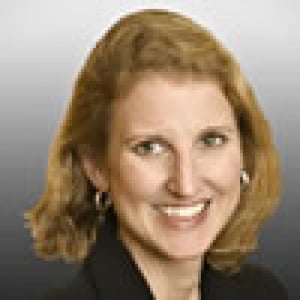
President, American Constitution Society for Law and Policy
Caroline Fredrickson joined ACS in 2009 and serves as president. She oversees the group and provides a steady hand of leadership to the nation’s leading progressive legal organization.
During her tenure, Caroline has helped grow ACS, which now has more than 40 lawyer chapters across the country, student chapters in nearly every law school in the United States, and thousands of members throughout the nation. She is an eloquent spokesperson for ACS and the progressive movement on issues such as civil and human rights, judicial nominations and the importance of the courts in America, marriage equality, voting rights, the role of money in politics, labor law, anti-discrimination efforts, and so much more.
She has been widely published on a wide range of legal and constitutional issues and is a frequent guest on television and radio shows, including a notable and well-covered appearance on Fox News’ The O’Reilly Factor in 2012 defending the constitutionality of the Affordable Care Act.
Before joining ACS, Caroline served as the director of the ACLU’s Washington legislative office and as general counsel and legal director of NARAL Pro-Choice America. In addition, Caroline was chief of staff to Sen. Maria Cantwell and deputy chief of staff to then-Senate Democratic Leader Tom Daschle. During the Clinton administration, she served as special assistant to the president for legislative affairs.
Caroline graduated summa cum laude from Yale University with a Bachelor of Arts in Russian and East European Studies in 1986 and from Columbia University School of Law with a J.D. in 1992. In law school, she was a Harlan Fiske Stone scholar, served on the Columbia Law Review and co-founded the Columbia Journal of Gender and Law. Following law school she clerked for James L. Oakes of the United States Court of Appeals for the Second Circuit. She currently is a member of Law Students for Reproductive Justice's Advisory Board.
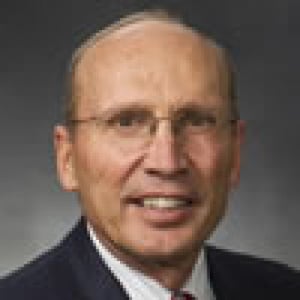
Guy Anderson Chair and Professor of Law, Brigham Young University Law School
Professor Gedicks holds the Guy Anderson Chair, one of three endowed chairs at the Law School. He is widely published on law and religion, constitutional law, and constitutional interpretation, including two books,The Rhetoric of Church and State: A Critical Analysis of Religion Clause Jurisprudence (Duke University Press, 1995), and Choosing the Dream: The Future of Religion in American Public Life (Greenwood Press, 1991) (with Roger Hendrix).
Professor Gedicks is an active defender of the contraception mandate of the Affordable Care Act and opposes efforts by owners of for-profit businesses to obtain religious exemptions from the mandate. See "One Cheer for Hobby Lobby: Improbably Alternatives, Trutly Strict Scrutiny, and Third-Party Employee Burdens," 38 Harvard Journal of Law & Gender 153 (2015); "RFRA Exemptions from the Contraception Mandate: An Unconstitutional Accommodation of Religion," 49 Harvard Civil Rights-Civil Liberties Law Review (Spring 2014); (with Rebecca Van Tassell); "Invisible Women" Why an Exemption for Hobby Lobby Would Violate the Establishment Clause," 67 Vanderbilt Law Review En Banc 51 (2014) (with Andrew Koppelman); and "With Religious LIberty for All: A Defense of the Affordable Care Act's Contraception Coverage Mandate," 6 Advance 135 (Fall 2012). He was principal author and counsel of record on a U.S. Supreme Court amicus brief filed for himself and twenty other church-state scholars in the Hobby Lobbyand Conestoga Wood cases, arguing that for-profit employer exemptions would violate the Establishment Clause, and also published a widely read op-ed in the Washington Post making the same argument, "Paying for the Boss's Religion" (January 20, 2014).
Other recent publications include "Cross, Crucifix, Culture: An Approach to the Constitutional Meaning of Confessional Symbols," 13 First Amendment Law Review (forthcoming 2015) (with Pasquale Annicchino); "Incorporation of the Establishment Clause Against the States: A Logical, Textual, and HIstorical Account," 88Indiana Law Journal 699 (2013); and "Narrative Pluralism and Doctrinal Incoherence in Hosanna-Tabor," 64 Mercer Law Review 405 (2013). Professor Gedicks is currently working with Professors Robert Tuttle, Micah Schwartzman, and Nelson Tebbe on a freedom of religion casebook for West Publishing.
Professor Gedicks has lectured in Italian at universities throughout Italy, including the Catholic University of the Sacred Heart (at both its Milan and Piacenza campuses), the Graduate Institute of Sant'Anna in Pisa, and the Universities of Alessandria, Como, Florence, Genoa, Milan, Salerno, Siena, and Turin. He was a Visiting Research Fellow for the ReligioWest project at the European University Institute in Florence, Italy during November and December 2012.
Professor Gedicks grew up in New Jersey and southern California. Following graduation from law school and a clerkship on the Ninth Circuit, he practiced corporation and securities law in Phoenix, Arizona, until he entered law teaching. Professor Gedicks joined the BYU law faculty in 1990 after four years at Mercer University in Macon, Georgia, and a year at the University of Denver. He has been a visiting professor at the law schools of the University of North Carolina (Chapel Hill), the University of Notre Dame, and the University of Utah.

Professor of Law, The George Washington University Law School; CEO Emeritus, National Constitution Center
Jeffrey Rosen is the CEO Emeritus of the National Constitution Center, a professor of law at the George Washington University Law School, a senior fellow at the Foundation for Individual Rights and Expression (FIRE), and a contributing editor of The Atlantic. Host of "The Blessings of Liberty" podcast, he was previously the legal affairs editor of The New Republic and a staff writer for the New Yorker.
Rosen is the author of the New York Times bestsellers The Pursuit of Happiness and Conversations with RBG. His new book is The Pursuit of Liberty: How Hamilton vs. Jefferson Ignited the Lasting Battle Over Power in America.
Rosen is a graduate of Harvard College; Oxford University, where he was a Marshall Scholar; and Yale Law School. He is an elected member of the American Philosophical Society and the American Law Institute. In 2024, the French government recognized him as a Chevalier in the Ordre des Arts et des Lettres.
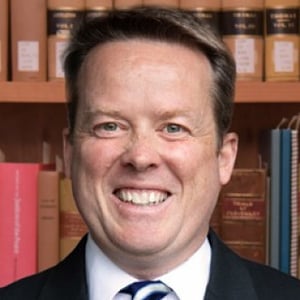
Knights of Columbus Professor of Law and the Catholic Tradition, The Catholic University of America Columbus School of Law
Kevin C. Walsh teaches and writes in the areas of federal jurisdiction, constitutional law, and the U.S. Supreme Court. His scholarship explores the doctrines that define—and delimit—the scope of federal judicial power.
Professor Walsh graduated from Harvard Law School, where he was Articles Chair for Volume 115 of the Harvard Law Review. After graduation, he clerked for Judge Paul V. Niemeyer of the United States Court of Appeals for the Fourth Circuit and Associate Justice Antonin Scalia of the Supreme Court of the United States. He then practiced law at Hunton & Williams LLP and taught as a visiting assistant professor at Villanova University School of Law. Walsh received his A.B. from Dartmouth College, and an M.A. in Theological Studies from the University of Notre Dame. He taught at the University of Richmond School of Law for thirteen years prior to joining The Catholic University of America, where he currently resides.
In early 2011, Professor Walsh filed two amicus curiae briefs addressing jurisdictional issues in the State challenges to the individual mandate in the federal healthcare reform legislation: a brief in Virginia v. Sebelius (United States Court of Appeals for the Fourth Circuit), and a brief in Florida v. HHS (United States Court of Appeals for the Eleventh Circuit).
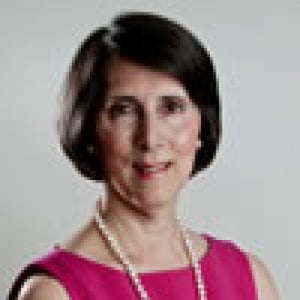
Senior Fellow and Research Coordinator, American Enterprise Institute
Karlyn Bowman compiles and analyzes American public opinion using available polling data on a variety of subjects, including the economy, taxes, the state of workers in America, environment and global warming, attitudes about homosexuality and gay marriage, NAFTA and free trade, the war in Iraq, and women’s attitudes. In addition, Ms. Bowman has studied and spoken about the evolution of American politics because of key demographic and geographic changes. She has often lectured on the role of think tanks in the United States and writes a weekly column for Forbes.com.
B.A., University of Wisconsin

Executive Vice President of Global Governance, Chief Legal Officer and Corporate Secretary, Walmart Inc.
Rachel Brand is Walmart’s executive vice president of global governance, chief legal officer, and corporate secretary. She oversees the company’s global legal, compliance, ethics, corporate governance, digital citizenship, aviation, investigative, and corporate security functions, including Walmart’s Emergency Operations Center.
Immediately before joining Walmart, Rachel served as the United States Associate Attorney General and holds the distinction of being the first woman to serve in this role. She had previously served in the U.S. Department of Justice as the Assistant Attorney General for the Office of Legal Policy during President George W. Bush’s administration. Her other government service includes an appointment by President Obama to serve as a Member of the U.S. Privacy and Civil Liberties Oversight Board, service as an Associate Counsel to the President at the White House, and judicial clerkships with Justice Charles Fried of the Supreme Judicial Court of Massachusetts and Justice Anthony Kennedy at the Supreme Court of the United States. In the private sector, Rachel was a lawyer in private practice at two law firms in Washington, D.C. and served as the Vice President and Chief Counsel for Regulatory Litigation at the U.S. Chamber of Commerce Litigation Center.
Rachel serves on the board of directors for the Walmart Foundation and is the executive sponsor for Walmart’s Tribal Voices Associate Resource Group. Outside of Walmart, she serves on the board of directors for the International Justice Mission and is a member of The American Law Institute.
Rachel earned her Bachelor of Arts degree from the University of Minnesota-Morris and her J.D. from Harvard Law School.
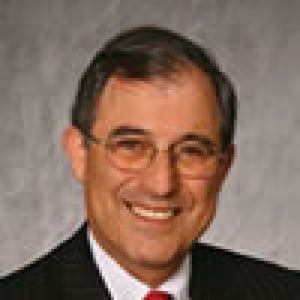
Lanny J. Davis & Associates, LLC
Lanny J. Davis counsels individuals, corporations and government contractors, and those under congressional scrutiny, on crisis management and legal issues by developing legal, media and legislative strategies that are designed to best produce a successful result for the client. He has experience in securities fraud and SEC investigations as well, and has found that utilizing such an integrated legal/media/lobbying approach can lead to quicker and less expensive settlements or even successfully litigated outcomes. Senior officials of public companies have also hired Lanny and his crisis group to defend themselves successfully against "short and distort" attacks and other market manipulations. For 25 years prior to 1996, before his tenure as special counsel to President Clinton, Lanny was a commercial, antitrust, government contracts and False Claims Act litigator (both in defense as well as plaintiff). He has argued numerous appellate cases in the U.S. courts of appeals.
In June 2005, President Bush appointed Lanny to serve on the five-member Privacy and Civil Liberties Oversight Board, created by the U.S. Congress as part of the 2005 Intelligence Reform Act. In that capacity, he received the highest level security clearances so that he could be fully briefed and "read in" to the various anti-terrorist surveillance and financial tracking programs at the highest classified level. From 1996 to 1998, Lanny served as special counsel to the president in the White House and was a spokesperson for the president and the White House on matters concerning campaign finance investigations and other legal issues. Lanny has participated in national, state and local politics for almost 30 years. He has served three terms (1980 to 1992) on the Democratic National Committee representing the state of Maryland, and during that period he served on the DNC Executive Committee and as chairman of the Eastern Region Caucus. In Montgomery County, Maryland, he served as chairman of the Washington Suburban Transit Commission.
Lanny has authored several books and lectured throughout the United States and Europe on various political issues. Between 1990 and 1996, Lanny was a bimonthly commentator on Maryland politics for WAMU-88.5/FM, a Washington, D.C. local affiliate of National Public Radio. He has been a regular television commentator and has been a political and legal analyst for MSNBC, CNN, Fox Cable, CNBC and network TV news programs. He has published numerous op-ed/analysis pieces in the New York Times, the Wall Street Journal, the Washington Post and other national publications.
Lanny graduated from Yale Law School, where he won the prestigious Thurman Arnold Moot Court prize and served on the Yale Law Journal. A graduate of Yale University, Lanny served as chairman of the Yale Daily News.
Lanny is admitted to practice in the District of Columbia and Connecticut and before the Supreme Court of the United States and the U.S. Court of Appeals for the District of Columbia Circuit.

Partner, Millbank LLP
Mr. Katyal, the former Acting Solicitor General of the United States, focuses on appellate and complex litigation. He has argued 54 cases before the Supreme Court of the United States.
He has extensive experience in matters of antitrust, corporate, constitutional, securities, technology, criminal, patent, copyright, trademark, ERISA, products liability, labor, employment and tribal law. In the 2022-23 Supreme Court term, he argued five separate cases (nearly 10% of the docket), including winning the landmark voting case Moore v. Harper, which Judge Michael Luttig described as “the most important case for American democracy in the almost two and a half centuries since America’s founding.” Judge Luttig also said Mr. Katyal’s argument “was the single best oral argument I have ever heard made in the Supreme Court of the United States.” His cases include successfully striking down the Guantanamo military tribunals, successfully defending the constitutionality of the Voting Rights Act and successfully defending the Peace Cross in Maryland. His 2017 win in Bristol Myers Squibb v. Superior Court was a landmark victory for personal jurisdiction law and his 2006 win in Hamdan v. Rumsfeld was described by former Acting Solicitor General Walter Dellinger as “simply the most important decision on presidential power and the rule of law ever. Ever.”
From 2010 to 2011, Mr. Katyal served as Acting Solicitor General of the United States, where he argued several major Supreme Court cases involving a variety of issues, such as his successful defense of the constitutionality of the Voting Rights Act of 1965, his victorious defense of former Attorney General John Ashcroft for alleged abuses in the war on terror, his unanimous victory against eight states who sued the nation's leading power plants for contributing to global warming, and a variety of other matters. As Acting Solicitor General, he was responsible for representing the federal government of the United States in all appellate matters before the US Supreme Court and the Courts of Appeals throughout the nation. He served as Counsel of Record hundreds of times in the US Supreme Court. He was also the only head of the Solicitor General's office to argue a case in the US Court of Appeals for the Federal Circuit, on the important question of whether certain aspects of the human genome were patentable.
After graduating from Yale Law School, Mr. Katyal clerked for The Honorable Guido Calabresi of the US Court of Appeals for the Second Circuit as well as for The Honorable Justice Stephen G. Breyer of the US Supreme Court. He also served in the Deputy Attorney General's Office at the Justice Department as National Security Advisor and as Special Assistant to the Deputy Attorney General during 1998-1999.
Mr. Katyal is a best-selling New York Times author and has published dozens of scholarly articles in law journals (including several in the Harvard Law Review and Yale Law Journal), as well as many op-ed articles in publications such as the New York Times and the Washington Post. He has testified numerous times before various committees of both the US House of Representatives and the US Senate.
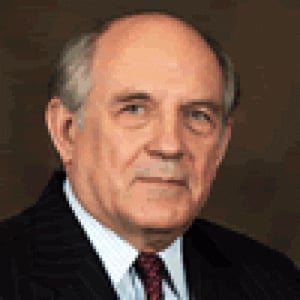
W. H. Brady Scholar, American Enterprise Institute
Charles Murray is a political scientist, author, and libertarian. He first came to national attention in 1984 with the publication of Losing Ground, which has been credited as the intellectual foundation for the Welfare Reform Act of 1996. His 1994 New York Times bestseller, The Bell Curve (Free Press, 1994), coauthored with the late Richard J. Herrnstein, sparked heated controversy for its analysis of the role of IQ in shaping America’s class structure. Murray's other books include What It Means to Be a Libertarian (1997), Human Accomplishment (2003), In Our Hands (2006), and Real Education (2008). His most recent book, Coming Apart (Crown Forum, 2012), describes an unprecedented divergence in American classes over the last half century.

Former President & CEO, The Federalist Society for Law and Public Policy Studies
Eugene B. Meyer, former President and CEO of the Federalist Society, has served as Executive Director, CEO, and/or President of the organization for more than 40 years. He is responsible for shepherding the organization from a small group of law students to a community of 90,000 lawyers, law students, academics, judges, and others interested in the rule of law. The Society now includes a Student Chapter at nearly every ABA-accredited law school in the country and Lawyers Chapters in 220 major cities across the nation. Gene earned his B.A. in history at Yale in 1975 and his M.A. in political science from the London School of Economics in 1976. Gene currently serves on the boards of the U.S. Chess Center, the Holman Foundation, the Sarah Scaife Foundation, and the advisory board of the Adam Smith Society. He holds the title of International Chess Master.

Former United States Attorney General
Michael B. Mukasey is the former Attorney General of the United States, the nation’s chief law enforcement officer. As Attorney General from November 2007 to January 2009, he oversaw the U.S. Department of Justice and advised on critical issues of domestic and international law.
From 1988 to 2006, Judge Mukasey served as a district judge in the United States District Court for the Southern District of New York, becoming Chief Judge in 2000.
From 1972 to 1976, Judge Mukasey served as an Assistant United States Attorney for the Southern District of New York, and as Chief of the Official Corruption Unit from 1975 to 1976. His practice consisted of criminal litigation on behalf of the government, including investigation and prosecution of narcotics, bank robbery, interstate theft, securities fraud, fraud on the government and bribery. From 1976 to 1987 and from 2006 to 2007 he was in private practice.
Judge Mukasey has received numerous honors, including the Federal Bar Council’s Learned Hand Medal for Excellence in Federal Jurisprudence. He served as Chairman of the Committee on Public Access to Information and Proceedings of the New York Bar Association from 1984 to 1987. He served on the Federal Courts Committee of the Association of the Bar of the City of New York from 1979 to 1982 and its Communications Law Committee from 1983 to 1986. Judge Mukasey was also a part-time lecturer at Columbia School of Law from January 1993 to May 2007, teaching trial advocacy.
He received his LL.B. from Yale Law School in 1967 and his B.A. from Columbia College in 1963.

Professor of Law, Georgetown University Law Center
Nicholas Quinn Rosenkranz teaches constitutional law and federal jurisdiction, and he writes articles for the Harvard Law Review and the Stanford Law Review.
He is currently developing a new theory of constitutional interpretation and judicial review. The first installment, entitledThe Subjects of the Constitution, was published in the Stanford Law Review in May of 2010, and it is among the most downloaded articles about constitutional interpretation, judicial review, and/or federal courts in the history of SSRN. The second installment, The Objects of the Constitution, was published in May of 2011, also in the Stanford Law Review. And the comprehensive version is forthcoming as a book by Oxford University Press.
Rosenkranz has served and advised the federal government in a variety of capacities. He clerked for Judge Frank H. Easterbrook on the U.S. Court of Appeals for the Seventh Circuit (1999-2000) and for Justice Anthony M. Kennedy at the U.S. Supreme Court (October Term 2001). He served as an Attorney-Advisor at the Office of Legal Counsel in the U.S. Department of Justice (November 2002 - July 2004). He often testifies before Congress as a constitutional expert—most recently before the House Financial Services Oversight Subcommittee, regarding the Obama Administration's use of bank settlement agreements to circumvent the Appropriations Clause. He has also filed briefs and presented oral argument before the U.S. Supreme Court. His most recent Supreme Court brief, in Los Angeles v. Patel, was cited by Justice Alito in dissent.
Rosenkranz is a member of the New York Bar and the U.S. Supreme Court Bar. He is a Senior Fellow at the Cato Institute. He serves on the Board of Directors of the Foundation for Individual Rights in Education (FIRE). He is a founding member of Heterodox Academy and a member of its Executive Committee. He also serves on the Board of Directors of the Federalist Society and as the faculty advisor to the Georgetown chapter.

John Marshall Harlan II Professor of Law Emerita, New York Law School; Former President, American Civil Liberties Union
Nadine Strossen, New York Law School Professor Emerita and Senior Fellow at FIRE (the Foundation for Individual Rights and Expression), was national President of the American Civil Liberties Union from 1991 to 2008. An internationally acclaimed free speech scholar and advocate, who regularly addresses diverse audiences and provides media commentary around the world, Strossen is also the Host and Project Consultant for Free To Speak, a 3-hour documentary film series distributed on public television in 2023. Her books about free speech include: Free Speech: What Everyone Needs to Know® (Oxford University Press 2023); HATE: Why We Should Resist It with Free Speech, Not Censorship (Oxford University Press 2018); and Defending Pornography: Free Speech, Sex, and the Fight for Women’s Rights (Scribner 1995), which was republished with a new Preface in 2024 as part of the NYU Classics Series. Her many honors and awards include the National Coalition Against Censorship’s Judy Blume Lifetime Achievement Award for Free Speech. She serves on the Advisory Boards of several organizations that do free speech work, including: ACLU, Academic Freedom Alliance, Foundation Against Intolerance and Racism (FAIR), Heterodox Academy, National Coalition Against Censorship, and the University of Austin.
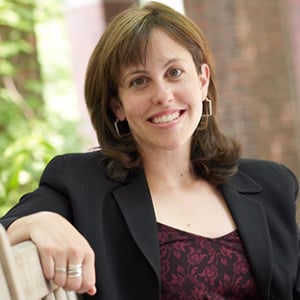
Segal Family Professor of Regulatory Law and Policy, New York University School of Law
Rachel Barkow is the Segal Family Professor of Regulatory Law and Policy and the Faculty Director of the Center on the Administration of Criminal Law at NYU. In June of 2013, the Senate confirmed her as a Member of the United States Sentencing Commission. Since 2010, she has also been a member of the Manhattan District Attorney's Office Conviction Integrity Policy Advisory Panel.
Professor Barkow teaches courses in criminal law, administrative law, and constitutional law. In 2013, she was the recipient of the NYU Distinguished Teaching Award. The Law School awarded her its Podell Distinguished Teaching Award in 2007.
Her scholarship focuses on criminal law, and she is especially interested in applying the lessons and theory of administrative and constitutional law to the administration of criminal justice. She has written more than 20 articles that span a range of topics. She has written several articles on sentencing, including the relationship between modern sentencing laws and the constitutional role of the criminal jury; federalism and the politics of sentencing; the role of cost-benefit and risk tradeoff analysis in sentencing policy; what institutional model works for designing agencies that regulate criminal punishment; the political factors that lead to guideline and commission formation; and the flawed bifurcation between capital and noncapital constitutional sentencing jurisprudence. Professor Barkow has also explored in numerous articles the role of prosecutors in the criminal justice system. For example, she has analyzed how the lessons of institutional design from administrative law could improve the way prosecutors' offices are structured; she has looked to organizational guidelines and compliance programs as a model for prosecutorial oversight; and she has considered the increasing role of prosecutors as regulators through the conditions they place on corporations. Professor Barkow has also explored larger structural questions of how criminal justice is administered in the United States. In a series of major articles, she has explored the relationship between separation of powers and the criminal law and the relationship between federalism and the criminal law. Professor Barkow has also considered the role of mercy and clemency in criminal justice, paying particular attention to the relationship between administrative law's dominance and the increasing reluctance of scholars and experts to accept pockets of unreviewable discretion in criminal law.
Barkow has been invited to present her work in various settings. In the summer of 2009, Barkow testified before the House of Representatives Subcommittee on Commerce, Trade, and Consumer Protection regarding the institutional design of the proposed Consumer Financial Protection Agency. Barkow testified before the United States Sentencing Commission at a 2009 regional hearing on the 25th Anniversary of the Sentencing Reform Act. In the summer of 2004, Barkow testified before the Senate Judiciary Committee at a hearing on the future of the Federal Sentencing Guidelines. She has also presented her work on sentencing to the National Association of Sentencing Commissions Conference, the Federal Judicial Center's National Sentencing Policy Institute, and the Judicial Conference of the Courts of Appeals for the First and Seventh Circuits. In addition, Barkow has presented papers at numerous law schools.
After graduating from Northwestern University (B.A. 1993), Barkow attended Harvard Law School (J.D. 1996), where she won the Sears Prize, which is awarded annually to two students with the top overall grade averages in the first-year class. Barkow served as a law clerk to Judge Laurence H. Silberman on the District of Columbia Circuit, and Justice Antonin Scalia on the U.S. Supreme Court. Barkow was an associate at Kellogg, Huber, Hansen, Todd, Evans & Figel, PLLC, in Washington, D.C., from 1998-2002, where she focused on telecommunications and administrative law issues in proceedings before the FCC, state regulatory agencies, and federal and state courts. She took a leave from the firm in 2001 to serve as the John M. Olin Fellow in Law at Georgetown University Law Center.
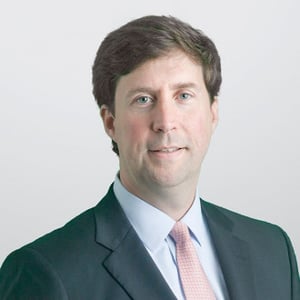
Partner, Holland & Knight
William Shepherd is a trial lawyer in Holland & Knight's West Palm Beach and Washington, D.C., offices. Mr. Shepherd, who also serves as executive partner of the firm's West Palm Beach office, represents clients involved in civil and criminal government investigations. He also assists the general counsel of public and private companies in conducting sensitive internal investigations and compliance matters. In addition to his enforcement practice, Mr. Shepherd handles complex civil litigation in related subject matters. Prior to joining the firm, Mr. Shepherd served, at the appointment of the attorney general, as the statewide prosecutor of Florida and earlier in his career, as a prosecutor in Miami, Florida.
Chambers USA – America's Leading Business Lawyers guide has recognized Mr. Shepherd since 2013 for Litigation: White Collar Crime & Government Investigations.
Mr. Shepherd was elected to serve as chair of the 20,000 member Criminal Justice Section of the American Bar Association and served as a member of its Global Anti-Corruption Task Force and as division director of its White Collar Crime Division.
Segal Family Professor of Regulatory Law and Policy, New York University School of Law
Rachel Barkow is the Segal Family Professor of Regulatory Law and Policy and the Faculty Director of the Center on the Administration of Criminal Law at NYU. In June of 2013, the Senate confirmed her as a Member of the United States Sentencing Commission. Since 2010, she has also been a member of the Manhattan District Attorney's Office Conviction Integrity Policy Advisory Panel.
Professor Barkow teaches courses in criminal law, administrative law, and constitutional law. In 2013, she was the recipient of the NYU Distinguished Teaching Award. The Law School awarded her its Podell Distinguished Teaching Award in 2007.
Her scholarship focuses on criminal law, and she is especially interested in applying the lessons and theory of administrative and constitutional law to the administration of criminal justice. She has written more than 20 articles that span a range of topics. She has written several articles on sentencing, including the relationship between modern sentencing laws and the constitutional role of the criminal jury; federalism and the politics of sentencing; the role of cost-benefit and risk tradeoff analysis in sentencing policy; what institutional model works for designing agencies that regulate criminal punishment; the political factors that lead to guideline and commission formation; and the flawed bifurcation between capital and noncapital constitutional sentencing jurisprudence. Professor Barkow has also explored in numerous articles the role of prosecutors in the criminal justice system. For example, she has analyzed how the lessons of institutional design from administrative law could improve the way prosecutors' offices are structured; she has looked to organizational guidelines and compliance programs as a model for prosecutorial oversight; and she has considered the increasing role of prosecutors as regulators through the conditions they place on corporations. Professor Barkow has also explored larger structural questions of how criminal justice is administered in the United States. In a series of major articles, she has explored the relationship between separation of powers and the criminal law and the relationship between federalism and the criminal law. Professor Barkow has also considered the role of mercy and clemency in criminal justice, paying particular attention to the relationship between administrative law's dominance and the increasing reluctance of scholars and experts to accept pockets of unreviewable discretion in criminal law.
Barkow has been invited to present her work in various settings. In the summer of 2009, Barkow testified before the House of Representatives Subcommittee on Commerce, Trade, and Consumer Protection regarding the institutional design of the proposed Consumer Financial Protection Agency. Barkow testified before the United States Sentencing Commission at a 2009 regional hearing on the 25th Anniversary of the Sentencing Reform Act. In the summer of 2004, Barkow testified before the Senate Judiciary Committee at a hearing on the future of the Federal Sentencing Guidelines. She has also presented her work on sentencing to the National Association of Sentencing Commissions Conference, the Federal Judicial Center's National Sentencing Policy Institute, and the Judicial Conference of the Courts of Appeals for the First and Seventh Circuits. In addition, Barkow has presented papers at numerous law schools.
After graduating from Northwestern University (B.A. 1993), Barkow attended Harvard Law School (J.D. 1996), where she won the Sears Prize, which is awarded annually to two students with the top overall grade averages in the first-year class. Barkow served as a law clerk to Judge Laurence H. Silberman on the District of Columbia Circuit, and Justice Antonin Scalia on the U.S. Supreme Court. Barkow was an associate at Kellogg, Huber, Hansen, Todd, Evans & Figel, PLLC, in Washington, D.C., from 1998-2002, where she focused on telecommunications and administrative law issues in proceedings before the FCC, state regulatory agencies, and federal and state courts. She took a leave from the firm in 2001 to serve as the John M. Olin Fellow in Law at Georgetown University Law Center.
Partner, Holland & Knight
William Shepherd is a trial lawyer in Holland & Knight's West Palm Beach and Washington, D.C., offices. Mr. Shepherd, who also serves as executive partner of the firm's West Palm Beach office, represents clients involved in civil and criminal government investigations. He also assists the general counsel of public and private companies in conducting sensitive internal investigations and compliance matters. In addition to his enforcement practice, Mr. Shepherd handles complex civil litigation in related subject matters. Prior to joining the firm, Mr. Shepherd served, at the appointment of the attorney general, as the statewide prosecutor of Florida and earlier in his career, as a prosecutor in Miami, Florida.
Chambers USA – America's Leading Business Lawyers guide has recognized Mr. Shepherd since 2013 for Litigation: White Collar Crime & Government Investigations.
Mr. Shepherd was elected to serve as chair of the 20,000 member Criminal Justice Section of the American Bar Association and served as a member of its Global Anti-Corruption Task Force and as division director of its White Collar Crime Division.
President, American Constitution Society for Law and Policy
Caroline Fredrickson joined ACS in 2009 and serves as president. She oversees the group and provides a steady hand of leadership to the nation’s leading progressive legal organization.
During her tenure, Caroline has helped grow ACS, which now has more than 40 lawyer chapters across the country, student chapters in nearly every law school in the United States, and thousands of members throughout the nation. She is an eloquent spokesperson for ACS and the progressive movement on issues such as civil and human rights, judicial nominations and the importance of the courts in America, marriage equality, voting rights, the role of money in politics, labor law, anti-discrimination efforts, and so much more.
She has been widely published on a wide range of legal and constitutional issues and is a frequent guest on television and radio shows, including a notable and well-covered appearance on Fox News’ The O’Reilly Factor in 2012 defending the constitutionality of the Affordable Care Act.
Before joining ACS, Caroline served as the director of the ACLU’s Washington legislative office and as general counsel and legal director of NARAL Pro-Choice America. In addition, Caroline was chief of staff to Sen. Maria Cantwell and deputy chief of staff to then-Senate Democratic Leader Tom Daschle. During the Clinton administration, she served as special assistant to the president for legislative affairs.
Caroline graduated summa cum laude from Yale University with a Bachelor of Arts in Russian and East European Studies in 1986 and from Columbia University School of Law with a J.D. in 1992. In law school, she was a Harlan Fiske Stone scholar, served on the Columbia Law Review and co-founded the Columbia Journal of Gender and Law. Following law school she clerked for James L. Oakes of the United States Court of Appeals for the Second Circuit. She currently is a member of Law Students for Reproductive Justice's Advisory Board.
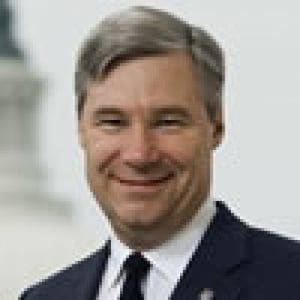
United States Senator, Rhode Island
A graduate of Yale University and the University of Virginia School of Law, Sheldon served as Rhode Island’s Director of Business Regulation under Governor Sundlun before being recommended by Senator Pell and nominated by President Bill Clinton to be Rhode Island’s United States Attorney in 1994. He was elected Attorney General of Rhode Island in 1998, a position in which he served until 2003. On November 7, 2006, Rhode Islanders elected Sheldon to the United States Senate, where he is a member of the Budget Committee; the Environment and Public Works Committee (EPW); the Judiciary Committee; the Health, Education, Labor, and Pensions Committee; and the Special Committee on Aging. He is the chairman of the Judiciary Subcommittee on Crime and Terrorism and of the EPW Subcommittee on Oversight.
He and his wife Sandra, a marine biologist and environmental advocate, live in Newport. They have two children.
President, American Constitution Society for Law and Policy
Caroline Fredrickson joined ACS in 2009 and serves as president. She oversees the group and provides a steady hand of leadership to the nation’s leading progressive legal organization.
During her tenure, Caroline has helped grow ACS, which now has more than 40 lawyer chapters across the country, student chapters in nearly every law school in the United States, and thousands of members throughout the nation. She is an eloquent spokesperson for ACS and the progressive movement on issues such as civil and human rights, judicial nominations and the importance of the courts in America, marriage equality, voting rights, the role of money in politics, labor law, anti-discrimination efforts, and so much more.
She has been widely published on a wide range of legal and constitutional issues and is a frequent guest on television and radio shows, including a notable and well-covered appearance on Fox News’ The O’Reilly Factor in 2012 defending the constitutionality of the Affordable Care Act.
Before joining ACS, Caroline served as the director of the ACLU’s Washington legislative office and as general counsel and legal director of NARAL Pro-Choice America. In addition, Caroline was chief of staff to Sen. Maria Cantwell and deputy chief of staff to then-Senate Democratic Leader Tom Daschle. During the Clinton administration, she served as special assistant to the president for legislative affairs.
Caroline graduated summa cum laude from Yale University with a Bachelor of Arts in Russian and East European Studies in 1986 and from Columbia University School of Law with a J.D. in 1992. In law school, she was a Harlan Fiske Stone scholar, served on the Columbia Law Review and co-founded the Columbia Journal of Gender and Law. Following law school she clerked for James L. Oakes of the United States Court of Appeals for the Second Circuit. She currently is a member of Law Students for Reproductive Justice's Advisory Board.
United States Senator, Rhode Island
A graduate of Yale University and the University of Virginia School of Law, Sheldon served as Rhode Island’s Director of Business Regulation under Governor Sundlun before being recommended by Senator Pell and nominated by President Bill Clinton to be Rhode Island’s United States Attorney in 1994. He was elected Attorney General of Rhode Island in 1998, a position in which he served until 2003. On November 7, 2006, Rhode Islanders elected Sheldon to the United States Senate, where he is a member of the Budget Committee; the Environment and Public Works Committee (EPW); the Judiciary Committee; the Health, Education, Labor, and Pensions Committee; and the Special Committee on Aging. He is the chairman of the Judiciary Subcommittee on Crime and Terrorism and of the EPW Subcommittee on Oversight.
He and his wife Sandra, a marine biologist and environmental advocate, live in Newport. They have two children.
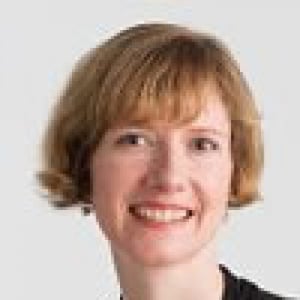
Assistant Professor of Law, University of Michigan Law School
Prof. Kate Andrias teaches and writes in the areas of constitutional and administrative law, labor law, and the law of democracy. Prof. Andrias previously served as Special Assistant and Associate Counsel to the President of the United States, and as Chief of Staff of the White House Counsel's Office. While in the White House, she focused on constitutional and administrative law issues and on domestic policy, including labor and immigration. Prior to joining the Obama Administration, Prof. Andrias was an attorney in the Washington, D.C., office of Perkins Coie LLP, where she practiced in the political law and appellate litigation groups. In addition, she clerked for Justice Ruth Bader Ginsburg of the U.S. Supreme Court and Judge Stephen Reinhardt of the U.S. Court of Appeals for the Ninth Circuit, and taught American Constitutional Law as a visiting professor at L'Institut d'Études Politiques (Sciences Po) in Paris. Prof. Andrias graduated from Yale Law School, where she served on the Yale Law Journal and as a Coker Fellow. Prior to law school, Prof. Andrias worked as a union organizer.
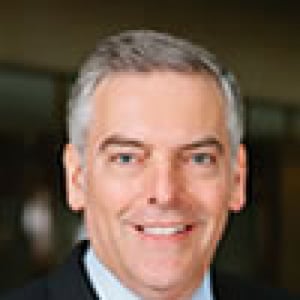
Partner, Cohen Milstein Sellers & Toll PLLC
Matt Axelrod, a Partner at the Firm, joined Cohen Milstein at the beginning of 2014. His practice is focused on holding entities accountable for corporate malfeasance and spans a number of the Firm’s practice groups, including the Antitrust Group, the Whistleblower/False Claims Act Group, and the Public Client Group. He is one of the firm’s senior trial lawyers, having tried nearly twenty cases to verdict in federal court.
Prior to joining the firm, Mr. Axelrod worked for more than a decade at the United States Department of Justice (“DOJ”), where he served as both a federal prosecutor in Miami and then as one of DOJ’s highest-ranking career officials in Washington, D.C.
From March 2011 until December 2013, Mr. Axelrod served as Associate Deputy Attorney General in the Office of the Deputy Attorney General, where he advised the Deputy Attorney General and Attorney General on DOJ’s most significant white collar criminal matters and False Claims Act investigations, and oversaw the work of DOJ’s Criminal Division, Tax Division, FBI, ATF, and U.S. Attorneys’ Offices. He was also responsible for managing DOJ’s efforts to combat healthcare fraud, and served as DOJ’s primary liaison to the U.S. Department of Health and Human Services on healthcare fraud matters.
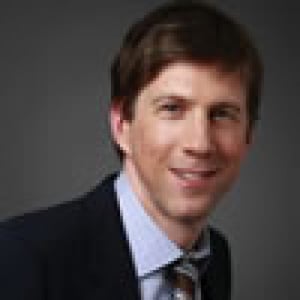
Professor of Law, Benjamin N. Cardozo School of Law
Professor Bierschbach's scholarship focuses on the procedural and institutional structure of criminal justice and its relationship to the substantive and regulatory concerns of the criminal law. He teaches courses in administrative law, corporations, and criminal law, and his work often touches on points of overlap between those fields. His articles have been published in a number of top law reviews, including the flagship journals of Yale, Pennsylvania, Minnesota, Michigan, Georgetown, and Virginia.
Before joining Cardozo's full-time faculty in 2005, Professor Bierschbach served as a Bristow Fellow in the U.S. Department of Justice's Office of the Solicitor General, an Attorney-Advisor in its Office of Legal Counsel, and a law clerk to D.C. Circuit Judge A. Raymond Randolph and U.S. Supreme Court Justice Sandra Day O'Connor. He has also done multiple stints in private practice and has held various leadership roles in the ABA's Criminal Justice and Administrative Law & Regulatory Practice Sections.
He received his J.D. from the University of Michigan Law School, where he was an articles editor of the Michigan Law Review and the winner of both the Daniel H. Grady Prize (for graduating first in his class) and the Henry M. Bates Award (the law school’s highest honor).
Cardozo students voted Professor Bierschbach "best professor" in 2013.
Director, Center for Legal Policy, Manhattan Institute for Policy Research
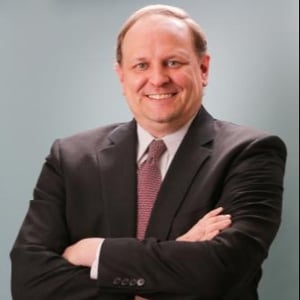
James R. Copland is a senior fellow at the Manhattan Institute and director of Legal Policy. In those roles, he develops and communicates novel, sound ideas on how to improve America’s civil- and criminal-justice systems. His forthcoming book, The Unelected: How an Unaccountable Elite is Governing America (Encounter Books) will be released on September 8, 2020. He has testified before Congress as well as state and municipal legislatures; and has authored many policy briefs, book chapters, articles and opinion pieces in a variety of publications, including the Harvard Business Law Review and Yale Journal on Regulation, the Wall Street Journal, National Law Journal, and USA Today. Copland speaks regularly on civil- and criminal-justice issues; has made hundreds of media appearances in such outlets as PBS, Fox News, MSNBC, CNBC, Fox Business, Bloomberg, C-Span, and NPR; and is frequently cited in news articles in the New York Times, Washington Post, The Economist, and Forbes. In 2011 and 2012, he was named to the National Association of Corporate Directors “Directorship 100” list, which designates the individuals most influential over U.S. corporate governance.
Prior to joining MI, Copland was a management consultant with McKinsey and Company in New York. Earlier, he was a law clerk for Ralph K. Winter on the U.S. Court of Appeals for the Second Circuit. Copland has been a director of two privately held manufacturing companies since 1997 and has served on many public and nonprofit boards. He holds a J.D. and an M.B.A. from Yale, where he was an Olin Fellow in Law and Economics; an M.Sc. in the politics of the world economy from the London School of Economics; and a B.A. in economics from the University of North Carolina at Chapel Hill, where he was a Morehead Scholar.
University of Maryland School of Law and President, Center for Progressive Reform
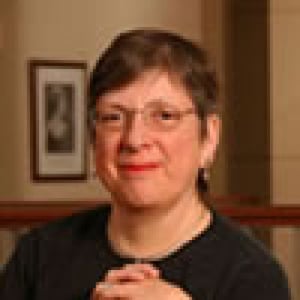
Rena Steinzor is a Professor at the University of Maryland School of Law and teaches an environmental survey course, as well as offerings in risk assessment, critical issues in law and science, legal methods, contracts, and an introduction to the administrative system. During the course of her academic career, Professor Steinzor has written extensively on efforts to reinvent environmental regulation in the United States, the use and misuse of science in environmental policy making, and the devolution of legal and administrative authority to the states.
Professor Steinzor edited the book A New Progressive Agenda for Public Health and the Environment (Carolina Academic Press 2005) with Professor Christopher Schroeder of the Duke Law School. The book proposes an alternative set of values and principles that should guide efforts to reform environmental law. She worked with Professor Wendy Wagner of the University of Texas School of Law, to edit a book of essays by prominent academics entitled Rescuing Science from Politics (Cambridge University Press, 2005) writing an introduction and conclusion summarizing the issues and recommendations suggested by the book. Professor Steinzor's book entitled Mother Earth and Uncle Sam: How Pollution and Hollow Government Hurt Our Kids was published by the University of Texas Press in the fall of 2007.
Professor Steinzor is the president of the Center for Progressive Reform (CPR) (http://www.progressivereform.org/), a think tank comprised of some 52 member scholars from universities across the United States. CPR is committed to developing and sharing knowledge and information, with the ultimate aim of preserving the fundamental value of the life and health of human beings and the natural environment. One component of CPR's mission is to circulate academic papers, studies, and other analyses that promote public policy based on the multiple social values that motivated the enactment of our nation's health, safety and environmental laws. CPR seeks to inform the public about scholarship that envisions government as an arena where members of society choose and preserve their collective values. CPR rejects the idea that government's only function is to increase the economic efficiency of private markets.
Before joining the law school faculty, Professor Steinzor was the partner in charge of the environmental practice at Spiegel & McDiarmid, a Washington D.C. Law firm specializing in the representation of state and local government entities in the energy and environmental areas. Prior to joining the firm, Professor Steinzor was counsel to the Subcommittee on Commerce, Transportation & Tourism of the House Energy & Commerce Committee, which was then chaired by James J. Florio (D-N.J.). She advised the Subcommittee during its consideration of the Superfund Amendments and Reauthorization Act of 1986 and the Asbestos Hazard Emergency Response Act of 1986. She also served as an attorney advisor to Commissioner Patricia P. Bailey of the Federal Trade Commission and worked as a consumer protection attorney at the FTC in various staff positions.
Assistant Professor of Law, University of Michigan Law School
Prof. Kate Andrias teaches and writes in the areas of constitutional and administrative law, labor law, and the law of democracy. Prof. Andrias previously served as Special Assistant and Associate Counsel to the President of the United States, and as Chief of Staff of the White House Counsel's Office. While in the White House, she focused on constitutional and administrative law issues and on domestic policy, including labor and immigration. Prior to joining the Obama Administration, Prof. Andrias was an attorney in the Washington, D.C., office of Perkins Coie LLP, where she practiced in the political law and appellate litigation groups. In addition, she clerked for Justice Ruth Bader Ginsburg of the U.S. Supreme Court and Judge Stephen Reinhardt of the U.S. Court of Appeals for the Ninth Circuit, and taught American Constitutional Law as a visiting professor at L'Institut d'Études Politiques (Sciences Po) in Paris. Prof. Andrias graduated from Yale Law School, where she served on the Yale Law Journal and as a Coker Fellow. Prior to law school, Prof. Andrias worked as a union organizer.
Partner, Cohen Milstein Sellers & Toll PLLC
Matt Axelrod, a Partner at the Firm, joined Cohen Milstein at the beginning of 2014. His practice is focused on holding entities accountable for corporate malfeasance and spans a number of the Firm’s practice groups, including the Antitrust Group, the Whistleblower/False Claims Act Group, and the Public Client Group. He is one of the firm’s senior trial lawyers, having tried nearly twenty cases to verdict in federal court.
Prior to joining the firm, Mr. Axelrod worked for more than a decade at the United States Department of Justice (“DOJ”), where he served as both a federal prosecutor in Miami and then as one of DOJ’s highest-ranking career officials in Washington, D.C.
From March 2011 until December 2013, Mr. Axelrod served as Associate Deputy Attorney General in the Office of the Deputy Attorney General, where he advised the Deputy Attorney General and Attorney General on DOJ’s most significant white collar criminal matters and False Claims Act investigations, and oversaw the work of DOJ’s Criminal Division, Tax Division, FBI, ATF, and U.S. Attorneys’ Offices. He was also responsible for managing DOJ’s efforts to combat healthcare fraud, and served as DOJ’s primary liaison to the U.S. Department of Health and Human Services on healthcare fraud matters.
Professor of Law, Benjamin N. Cardozo School of Law
Professor Bierschbach's scholarship focuses on the procedural and institutional structure of criminal justice and its relationship to the substantive and regulatory concerns of the criminal law. He teaches courses in administrative law, corporations, and criminal law, and his work often touches on points of overlap between those fields. His articles have been published in a number of top law reviews, including the flagship journals of Yale, Pennsylvania, Minnesota, Michigan, Georgetown, and Virginia.
Before joining Cardozo's full-time faculty in 2005, Professor Bierschbach served as a Bristow Fellow in the U.S. Department of Justice's Office of the Solicitor General, an Attorney-Advisor in its Office of Legal Counsel, and a law clerk to D.C. Circuit Judge A. Raymond Randolph and U.S. Supreme Court Justice Sandra Day O'Connor. He has also done multiple stints in private practice and has held various leadership roles in the ABA's Criminal Justice and Administrative Law & Regulatory Practice Sections.
He received his J.D. from the University of Michigan Law School, where he was an articles editor of the Michigan Law Review and the winner of both the Daniel H. Grady Prize (for graduating first in his class) and the Henry M. Bates Award (the law school’s highest honor).
Cardozo students voted Professor Bierschbach "best professor" in 2013.
Director, Center for Legal Policy, Manhattan Institute for Policy Research
James R. Copland is a senior fellow at the Manhattan Institute and director of Legal Policy. In those roles, he develops and communicates novel, sound ideas on how to improve America’s civil- and criminal-justice systems. His forthcoming book, The Unelected: How an Unaccountable Elite is Governing America (Encounter Books) will be released on September 8, 2020. He has testified before Congress as well as state and municipal legislatures; and has authored many policy briefs, book chapters, articles and opinion pieces in a variety of publications, including the Harvard Business Law Review and Yale Journal on Regulation, the Wall Street Journal, National Law Journal, and USA Today. Copland speaks regularly on civil- and criminal-justice issues; has made hundreds of media appearances in such outlets as PBS, Fox News, MSNBC, CNBC, Fox Business, Bloomberg, C-Span, and NPR; and is frequently cited in news articles in the New York Times, Washington Post, The Economist, and Forbes. In 2011 and 2012, he was named to the National Association of Corporate Directors “Directorship 100” list, which designates the individuals most influential over U.S. corporate governance.
Prior to joining MI, Copland was a management consultant with McKinsey and Company in New York. Earlier, he was a law clerk for Ralph K. Winter on the U.S. Court of Appeals for the Second Circuit. Copland has been a director of two privately held manufacturing companies since 1997 and has served on many public and nonprofit boards. He holds a J.D. and an M.B.A. from Yale, where he was an Olin Fellow in Law and Economics; an M.Sc. in the politics of the world economy from the London School of Economics; and a B.A. in economics from the University of North Carolina at Chapel Hill, where he was a Morehead Scholar.
University of Maryland School of Law and President, Center for Progressive Reform
Rena Steinzor is a Professor at the University of Maryland School of Law and teaches an environmental survey course, as well as offerings in risk assessment, critical issues in law and science, legal methods, contracts, and an introduction to the administrative system. During the course of her academic career, Professor Steinzor has written extensively on efforts to reinvent environmental regulation in the United States, the use and misuse of science in environmental policy making, and the devolution of legal and administrative authority to the states.
Professor Steinzor edited the book A New Progressive Agenda for Public Health and the Environment (Carolina Academic Press 2005) with Professor Christopher Schroeder of the Duke Law School. The book proposes an alternative set of values and principles that should guide efforts to reform environmental law. She worked with Professor Wendy Wagner of the University of Texas School of Law, to edit a book of essays by prominent academics entitled Rescuing Science from Politics (Cambridge University Press, 2005) writing an introduction and conclusion summarizing the issues and recommendations suggested by the book. Professor Steinzor's book entitled Mother Earth and Uncle Sam: How Pollution and Hollow Government Hurt Our Kids was published by the University of Texas Press in the fall of 2007.
Professor Steinzor is the president of the Center for Progressive Reform (CPR) (http://www.progressivereform.org/), a think tank comprised of some 52 member scholars from universities across the United States. CPR is committed to developing and sharing knowledge and information, with the ultimate aim of preserving the fundamental value of the life and health of human beings and the natural environment. One component of CPR's mission is to circulate academic papers, studies, and other analyses that promote public policy based on the multiple social values that motivated the enactment of our nation's health, safety and environmental laws. CPR seeks to inform the public about scholarship that envisions government as an arena where members of society choose and preserve their collective values. CPR rejects the idea that government's only function is to increase the economic efficiency of private markets.
Before joining the law school faculty, Professor Steinzor was the partner in charge of the environmental practice at Spiegel & McDiarmid, a Washington D.C. Law firm specializing in the representation of state and local government entities in the energy and environmental areas. Prior to joining the firm, Professor Steinzor was counsel to the Subcommittee on Commerce, Transportation & Tourism of the House Energy & Commerce Committee, which was then chaired by James J. Florio (D-N.J.). She advised the Subcommittee during its consideration of the Superfund Amendments and Reauthorization Act of 1986 and the Asbestos Hazard Emergency Response Act of 1986. She also served as an attorney advisor to Commissioner Patricia P. Bailey of the Federal Trade Commission and worked as a consumer protection attorney at the FTC in various staff positions.

United States Senator, Utah
Elected in 2010 as Utah's 16th Senator, Mike Lee has spent his career defending the basic liberties of Americans and Utahns as a tireless advocate for our founding constitutional principles.
Senator Lee acquired a deep respect for the Constitution early on. His father, Rex Lee, who served as the Solicitor General under President Ronald Reagan, would often discuss varied aspects of judicial and constitutional doctrine around the kitchen table, from Due Process to the uses of Executive Plenary Power. He attended most of his father's arguments before the U.S. Supreme Court, giving him a unique, hands-on experience and understanding of government up close.
Lee graduated from Brigham Young University with a Bachelor of Science in Political Science, and served as BYU's Student Body President in his senior year. He graduated from BYU's Law School in 1997 and went on to serve as law clerk to Judge Dee Benson of the U.S. District Court for the District of Utah, and then with future Supreme Court Justice Judge Samuel A. Alito, Jr. on the U.S. Court of Appeals for the Third Circuit.
Lee spent several years as an attorney with the law firm Sidley & Austin specializing in appellate and Supreme Court litigation, and then served as an Assistant U.S. Attorney in Salt Lake City arguing cases before the U.S. Court of Appeals for the Tenth Circuit.
Lee served the state of Utah as Governor Jon Huntsman's General Counsel and was later honored to reunite with Justice Alito, now on the Supreme Court, for a one-year clerkship. He returned to private practice in 2007.
Throughout his career, Lee earned a reputation as an outstanding practitioner of the law based on his sound judgment, abilities in the courtroom, and thorough understanding of the Constitution.
Today, Lee fights to preserve America's proud founding document in the United States Senate. He advocates efforts to support constitutionally limited government, fiscal responsibility, individual liberty, and economic prosperity.
Lee is a member of the Judiciary Committee, and serves as Chairman of the Antitrust, Competition Policy and Consumer Rights Subcommittee protecting business competition and personal freedom.
He also oversees issues critical to Utah as the Chairman of the Water and Power Subcommittee of the Energy and Natural Resources Committee. He serves on the Commerce Committee and the Joint Economic Committee, as well.
In the 114th Congress, Lee also began his tenure as Chairman of the Senate Steering Committee, where he works with his Republican colleagues in the Senate to introduce bold and innovative solutions to issues facing the American people.
Lee and his wife Sharon live in Alpine, Utah, with their three children. He is a member of The Church of Jesus Christ of Latter-day Saints and served a two-year mission for the Church in the Texas Rio Grande Valley.
Partner, Holland & Knight
William Shepherd is a trial lawyer in Holland & Knight's West Palm Beach and Washington, D.C., offices. Mr. Shepherd, who also serves as executive partner of the firm's West Palm Beach office, represents clients involved in civil and criminal government investigations. He also assists the general counsel of public and private companies in conducting sensitive internal investigations and compliance matters. In addition to his enforcement practice, Mr. Shepherd handles complex civil litigation in related subject matters. Prior to joining the firm, Mr. Shepherd served, at the appointment of the attorney general, as the statewide prosecutor of Florida and earlier in his career, as a prosecutor in Miami, Florida.
Chambers USA – America's Leading Business Lawyers guide has recognized Mr. Shepherd since 2013 for Litigation: White Collar Crime & Government Investigations.
Mr. Shepherd was elected to serve as chair of the 20,000 member Criminal Justice Section of the American Bar Association and served as a member of its Global Anti-Corruption Task Force and as division director of its White Collar Crime Division.

Debate: Hobby Lobby Decision
Federalist Society with the American Constitution Society and the National Constitution Center
Washington, DCShowcase Panel IV: ROUNDTABLE: Is the Future of the American Dream Bright?
Karlyn Bowman, Rachel L. Brand, Lanny J. Davis, Neal K. Katyal, Charles Murray
America has always been a forward-looking country. What is the future for our young –...
Seventh Annual Rosenkranz Debate
Eugene B. Meyer, Michael B. Mukasey, Nicholas Quinn Rosenkranz, Nadine Strossen
RESOLVED: Indiscriminate Collection of American Phone Records Violates the Fourth Amendment The Seventh Annual Rosenkranz...
Keynote Remarks by Commissioner Rachel Barkow
Rachel Barkow, William N. Shepherd
The Administrative Conference, together with The Federalist Society, the American Bar Association's Criminal Justice and...
Keynote Remarks by Commissioner Rachel Barkow
Rachel Barkow, William N. Shepherd
The Administrative Conference, together with The Federalist Society, the American Bar Association's Criminal Justice and...
Keynote Remarks by Senator Sheldon Whitehouse
Caroline Fredrickson, Sheldon Whitehouse
The Administrative Conference, together with The Federalist Society, the American Bar Association's Criminal Justice and...
Keynote Remarks by Senator Sheldon Whitehouse
Caroline Fredrickson, Sheldon Whitehouse
The Administrative Conference, together with The Federalist Society, the American Bar Association's Criminal Justice and...
Panel II: Agency Enforcement and Prosecution of Regulatory Crimes
Kate Andrias, Matthew S. Axelrod, Richard Bierschbach, James R. Copland, Rena I. Steinzor
The Administrative Conference, together with The Federalist Society, the American Bar Association's Criminal Justice and...
Panel II: Agency Enforcement and Prosecution of Regulatory Crimes
Kate Andrias, Matthew S. Axelrod, Richard Bierschbach, James R. Copland, Rena I. Steinzor
The Administrative Conference, together with The Federalist Society, the American Bar Association's Criminal Justice and...
Keynote Remarks by Senator Mike Lee
Mike S. Lee, William N. Shepherd
The Administrative Conference, together with The Federalist Society, the American Bar Association's Criminal Justice and...