
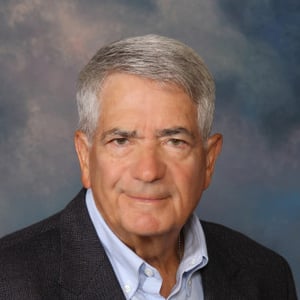
Professor Emeritus of Law, Indiana University; Co-Author, The Law of Lawyering
After graduating with honors from Harvard College in 1966, and from Rutgers Law School with highest honors in 1969, W. William Hodes began practice in a small civil rights and personal injury firm in New Orleans, where he had lived as a child. During the next eight years, he worked in Newark, New Jersey, first for the Kenneth Gibson administration, and then as senior staff attorney for the Education Law Center, a public interest law firm funded by the Ford Foundation.
In 1979, Hodes returned to the legal academy, first as a Bigelow Teaching Fellow at the University of Chicago Law School, and then as a Professor of Law at the Indiana University School of Law in Indianapolis. For the next twenty years, Professor Hodes taught in the areas of Civil Procedure, Constitutonal Law, Federal Courts, Administrative Law, and Professional Responsibility. He gained a national reputation as a scholar, consultant, and expert witness in the areas of Legal Ethics and Professional Responsbility, as they were then known.
Beginning in 1985 however, those subjects began to be known as "The Law of Lawyering," after a book of that name was published, co-authored by Professor Hodes and Professor Geoffrey C. Hazard, Jr., who had served as the Reporter to the Kutak Commission that developed the Model Rules of Professional Conduct. The treatise, which is now in its fourth edition and updated twice a year by Hodes and new co-author Peter R. Jarvis of Portland, Oregon, has become a mainstay resource for both the practicing bar and the academic community, and is often cited in court and ethics committee opinions.
While in the academy, Professor Hodes took two unusual sabbatical leaves. In the Spring of 1989, Hodes, who had spent his junior high school years in Beijing and is still fluent in Chinese, was a Visiting Scholar and Lecturer at the China University of Politics and Law, teaching a course in American Civil Procedure and conducting research into Chinese People's Mediation. (The course was suspended in April, when the events leading to the June 4th Tiananmen Massacre began to unfold, and Professor Hodes began to accompany his students on protest marches.)
During the October 1996 Term of the United States Supreme Court, Professor Hodes served as law clerk to Justice Ruth Bader Ginsburg, who had been his Civil Procedure and Conflicts of Law professor some thirty years earlier, during her Rutgers days. According to knowledgeable sources, Hodes was the oldest person to have served as a law clerk since the early 19th Century.
In 1999, W. William Hodes retired from law teaching (at age 56) in order to establish the William Hodes Professional Corporation, which was later renamed The William Hodes Law Firm; he became Professor Emeritus of Law at Indiana University as the new century began. Through this solo practice, Hodes can now devote full time to providing representation, consultation, expert testimony, legal opinions, and other counsel and assistance to lawyers in the areas of The Law of Lawyering, and Constitutional, Appellate, Supreme Court, and other complex litigation.
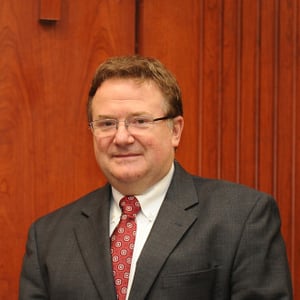
Professor of Law & Dean John F. Sutton, Jr. Chair in Lawyering a, Texas Law
John S. Dzienkowski is a summa cum laude graduate of the University of Miami with a Bachelor of Business Administration and a high honors graduate of the University of Texas School of Law. While in law school, Mr. Dzienkowski served as the editor-in-chief of the Texas Law Review and he received the honors of a member in the UT Chancellors and the Order of the Coif. He served as a judicial law clerk for Ninth Circuit Court of Appeals Judge Joseph Sneed in 1983-84 and for District of Massachusetts Judge Robert Keeton in 1984-85. Mr. Dzienkowski began his teaching career at Tulane Law School in New Orleans and he joined the Texas faculty in 1988. John was a visiting professor at the George Washington University School of Law in 1992-93 and at Cornell Law School in 1995. In Spring 2002, Mr. Dzienkowski visited the University of Florida Levin College of Law as the Hurst Eminent Visiting Scholar, and in Fall 2002, he visited the University of Alabama School of Law as the Francis Hare Visiting Chair in Tort Law.
Mr. Dzienkowski teaches and writes in the areas of professional responsibility of lawyers, real property, international energy transactions, and oil and gas taxation. He is widely regarded as one of the most dynamic and effective speakers on topics of professional responsibility and he has delivered almost one hundred ethics presentations to in-house corporate departments, large and small law firms, state bar continuing legal education programs, and law faculties throughout this country. In 2005, Mr. Dzienkowski received the Texas Exes Faculty Teaching Award for excellence in teaching. He is a four-term member of the drafting committee of the Multistate Professional Responsibility Examination.
In the area of professional responsibility of lawyers, John has authored leading articles on topics relating to conflicts of interest in lawyering: "Positional Conflicts of Interest" (71 Texas Law Review 457), "Lawyers as Intermediaries" (1992 Illinois Law Review 741), "Multidisciplinary Practice of Law" (69 Fordham Law Review 83) (with Bob Peroni), and "Lawyer Equity Investments in Clients" (81 Texas Law Review 405) (with Bob Peroni). He is the editor of the leading statutory supplement on PROFESSIONAL RESPONSIBILITY: STANDARDS, RULES, AND STATUTES and a co-author of a casebook on PROFESSIONAL RESPONSIBILITY OF LAWYERS (1988 and 2002) (with John Sutton). In 2005, Mr. Dzienkowski joined Ronald Rotunda as a co-author of Legal Ethics: A Lawyer's Deskbook on Professional Responsibility (2005). In the area of natural resources, Mr. Dzienkowski is a founding co-author of the first commercially produced casebooks on NATURAL RESOURCES TAXATION (1988) and INTERNATIONAL PETROLEUM TRANSACTIONS (1993 and 2000). He is also a co-author of a leading treatise on oil and gas law and taxation, HEMINGWAY'S OIL AND GAS LAW AND TAXATION (2004). Mr. Dzienkowski is also the co-chair of a bi-annual UT Program on Oil and Gas Taxation co-sponsored with the Internal Revenue Service. Mr. Dzienkowski, along with John Steele and Bradley Wendel, have co-founded www.legalethicsforum.com, a leading blog on issues related to legal ethics.

Vice President, Edwin Meese III Institute for the Rule of Law, Advancing American Freedom
John G. Malcolm oversees Advancing American Freedom’s work to increase understanding of the Constitution and the rule of law as Vice President of the organization’s Edwin Meese III Institute for the Rule of Law. Malcolm brings to the challenge a wealth of legal expertise and experience in both the public and private sectors.
Prior to joining Advancing American Freedom in 2025, Malcolm was the Vice President of the Institute for Constitutional Government and the Director of the Meese Center for Legal and Judicial Studies at the Heritage Foundation. Prior to joining Heritage in 2012, Malcolm was general counsel at the U.S. Commission on International Religious Freedom, as well as a distinguished practitioner in residence at Pepperdine Law School. From 2004 to 2009, Malcolm was executive vice president and director of worldwide anti-piracy operations for the Motion Picture Association.
Malcolm served as a deputy assistant attorney general in the Department of Justice’s Criminal Division from 2001 to 2004, where he oversaw sections on computer crime and intellectual property, domestic security, child exploitation and obscenity, and special investigations. Immediately prior to that, he was a founding partner in the Atlanta law firm of Malcolm & Schroeder, LLP.
From 1990 to 1997, Malcolm was an assistant U.S. attorney in Atlanta, assigned to the fraud and public corruption section, and also an associate independent counsel, investigating fraud and abuse in the Department of Housing and Urban Development. He was honored with the Director’s Award for Superior Performance for his work in connection with the successful prosecution of Walter Leroy Moody Jr., who assassinated an 11th Circuit judge and the head of the Savannah chapter of the NAACP.
A graduate of Harvard Law School and Columbia College, Malcolm began his career as a law clerk to a federal district court judge and a federal appellate court judge, and as an associate at the Atlanta-based law firm of Sutherland, Asbill & Brennan (new Eversheds Sutherland).
Malcolm, who resides in Washington, D.C., serves on the Board of Trustees of the Washington National Opera and is a Senate-confirmed member of the Board of Directors of the Legal Services Corporation, the largest funder of civil legal aid in the United States.

Thomas M. Siebel Senior Fellow, The Hoover Institution, Stanford University; Gary T. Schwartz Distinguished Professor of Law Emeritus, UCLA School of Law
Eugene Volokh is the Thomas M. Siebel Senior Fellow at the Hoover Institution (Stanford), as well as the Gary T. Schwartz Distinguished Professor of Law Emeritus and Distinguished Research Professor at UCLA School of Law. He recently retired from teaching at UCLA, after 30 years there, and is now focusing on research.
Volokh is the author of the textbooks The First Amendment and Related Statutes (8th ed. 2023), and Academic Legal Writing (5th ed. 2016), as well as over 100 academic law journal articles, mostly on First Amendment law. He is a member of The American Law Institute; the editor-in-chief of the Journal of Free Speech Law; and the creator and coauthor of The Volokh Conspiracy, a leading legal blog founded in 2002 (hosted at the Washington Post from 2014 to 2017 and now at Reason Magazine).
Professor Emeritus of Law, Indiana University; Co-Author, The Law of Lawyering
After graduating with honors from Harvard College in 1966, and from Rutgers Law School with highest honors in 1969, W. William Hodes began practice in a small civil rights and personal injury firm in New Orleans, where he had lived as a child. During the next eight years, he worked in Newark, New Jersey, first for the Kenneth Gibson administration, and then as senior staff attorney for the Education Law Center, a public interest law firm funded by the Ford Foundation.
In 1979, Hodes returned to the legal academy, first as a Bigelow Teaching Fellow at the University of Chicago Law School, and then as a Professor of Law at the Indiana University School of Law in Indianapolis. For the next twenty years, Professor Hodes taught in the areas of Civil Procedure, Constitutonal Law, Federal Courts, Administrative Law, and Professional Responsibility. He gained a national reputation as a scholar, consultant, and expert witness in the areas of Legal Ethics and Professional Responsbility, as they were then known.
Beginning in 1985 however, those subjects began to be known as "The Law of Lawyering," after a book of that name was published, co-authored by Professor Hodes and Professor Geoffrey C. Hazard, Jr., who had served as the Reporter to the Kutak Commission that developed the Model Rules of Professional Conduct. The treatise, which is now in its fourth edition and updated twice a year by Hodes and new co-author Peter R. Jarvis of Portland, Oregon, has become a mainstay resource for both the practicing bar and the academic community, and is often cited in court and ethics committee opinions.
While in the academy, Professor Hodes took two unusual sabbatical leaves. In the Spring of 1989, Hodes, who had spent his junior high school years in Beijing and is still fluent in Chinese, was a Visiting Scholar and Lecturer at the China University of Politics and Law, teaching a course in American Civil Procedure and conducting research into Chinese People's Mediation. (The course was suspended in April, when the events leading to the June 4th Tiananmen Massacre began to unfold, and Professor Hodes began to accompany his students on protest marches.)
During the October 1996 Term of the United States Supreme Court, Professor Hodes served as law clerk to Justice Ruth Bader Ginsburg, who had been his Civil Procedure and Conflicts of Law professor some thirty years earlier, during her Rutgers days. According to knowledgeable sources, Hodes was the oldest person to have served as a law clerk since the early 19th Century.
In 1999, W. William Hodes retired from law teaching (at age 56) in order to establish the William Hodes Professional Corporation, which was later renamed The William Hodes Law Firm; he became Professor Emeritus of Law at Indiana University as the new century began. Through this solo practice, Hodes can now devote full time to providing representation, consultation, expert testimony, legal opinions, and other counsel and assistance to lawyers in the areas of The Law of Lawyering, and Constitutional, Appellate, Supreme Court, and other complex litigation.
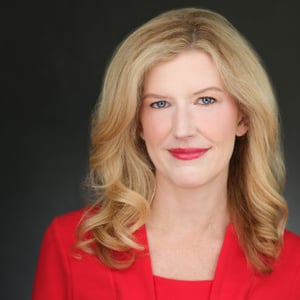
Justice, Texas Fifteenth District Court of Appeals
April Farris was appointed to the Fifteenth Court of Appeals on September 1 of 2024. April previously served on the First Court of Appeals after being appointed in 2021 and elected in 2022.
Before joining the Court, April was a partner at Yetter Coleman LLP, where she handled complex appellate litigation for energy, technology, and government clients. While in private practice, she was recognized in appellate law by Law360, Best Lawyers in America, and Thompson Reuters' Super Lawyers. In 2020, she was one of five attorneys in the nation to be named a Law360 appellate Rising Star, an honor reserved for lawyers under 40.
April previously served as an Assistant Solicitor General for the State of Texas, handling appeals for various Texas agencies. She is a former councilmember for the Texas State Bar's Appellate Section and a current councilmember for the Civil Rights & Civil Liberties Section. She serves as a trustee for the Texas Supreme Court Historical Association, and she is on the board of the Garland R. Walker Inn of Court in Houston. She is a member of the State Bar of Texas Pattern Jury Charge Oversight Committee, and she is on the editorial board of The Advocate. In 2022 and 2023, she was a guest instructor for Harvard Law School's Introduction to Trial Advocacy Program. She taught Origins of the Federal Constitution with Judge Charles Eskridge at the University of Texas School of Law in 2025, and she previously taught First Amendment at South Texas College of Law.
April clerked for Judge Jennifer Walker Elrod on the U.S. Court of Appeals for the Fifth Circuit. She graduated from Harvard Law School cum laude in 2009, and she earned her bachelor's degree summa cum laude from Abilene Christian University in 2006. She was named ACU's Young Alumnus of the Year for 2025. She enjoys spending time with her husband and children, tennis, and theology.

Topics
Bar Watch: Beware the ABA's Own Version of 'Judicial Activism'
Federalist Society expert Adam White published an article in the Weekly Standard yesterday criticizing the American...
Ethics CLE Teleforum 2017: Recent Developments Impacting the Ethical Practice of Law
William Hodes, John S. Dzienkowski
Our panel of three experts in legal and judicial ethics will discuss several recent cases...
Ethics CLE Teleforum 2017
Recent Developments Impacting the Ethical Practice of Law
TeleforumABA Watch: Unconstitutional and Blatantly Political, Model Rule 8.4(g)
In 2016 the American Bar Association added new Rule 8.4(g) to its Model Rules of...
Morally Innocent, Legally Guilty: The Case for Mens Rea Reform
John G. Malcolm
Note from the Editor: This article discusses the concept of mens rea, argues that too...
The Fight Over ABA Rule 8.4(g) Proceeds to the States
As has been noted, the American Bar Association has proposed the adoption of a new...
More on the ABA's Threat to Free Speech
In my post of May 9, 2017 regarding the ABA’s new Model Rule 8.4(g), I...
The ABA's Garbled View of Free Speech
In 2011, Florida enacted the Firearm Owners’ Protection Act, which as Joseph Greenlee has written...
A Nationwide Speech Code for Lawyers?
Eugene Volokh
Is it a violation of the first amendment for the American Bar Association to impose...
ABA Model Rule 8.4(g): The ABA’s New Speech Code for Lawyers?
Tallahassee, Florida