

James L. Oberstar Professor of Law and Public Policy, University of St. Thomas School of Law
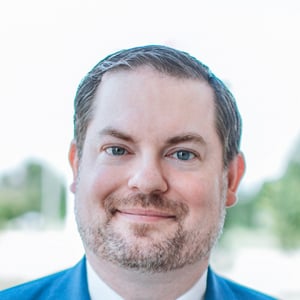
Deputy General Counsel, First Liberty Institute
Justin Butterfield is Deputy General Counsel at First Liberty Institute, to which Justin returned after serving for two years as Senior Advisor for Conscience and Religious Freedom at the U.S. Department of Health and Human Services. In his role at HHS, Justin launched a new division of the HHS Office for Civil Rights under Roger Severino dedicated to protecting Americans’ rights of conscience and religious freedom in health care. Prior to his work at HHS, Justin had been with First Liberty Institute for over seven years, during which time he litigated numerous religious freedom cases and wrote several scholarly articles on religion and the law. Justin received his J.D. from Harvard Law School and his bachelor of science summa cum laude in Electrical Engineering from the University of Texas at El Paso, where Justin is originally from.

Judge, United States Court of Appeals, Fifth Circuit
James C. Ho is a Circuit Judge on the U.S. Court of Appeals for the Fifth Circuit. Before taking the bench on January 4, 2018, he was a partner and co-chair of the national Appellate and Constitutional Law practice group of Gibson, Dunn & Crutcher LLP.
As an appellate litigator for over a decade, including three years as the Solicitor General of Texas, Judge Ho presented 50 oral arguments in federal and state courts nationwide. He won numerous appeals, including three merits cases at the U.S. Supreme Court. He was routinely ranked among the nation’s leading lawyers by Benchmark, Chambers, Law360, The Legal 500, and The National Law Journal, among other publications. His work has been cited favorably by courts at every level of both the federal and state judiciaries. He won a Best Brief Award from the National Association of Attorneys General for every year that he served as solicitor general, and he is the only state solicitor general in history to be invited by the U.S. Supreme Court to express the views of a state.
Judge Ho has served in all three branches of the federal government. On the Senate Judiciary Committee, he served as chief counsel of the Subcommittees on the Constitution and Immigration under Senator John Cornyn. At the Justice Department, he served as Special Assistant to the Assistant Attorney General for Civil Rights and an attorney-advisor at the Office of Legal Counsel. He clerked for Judge Jerry E. Smith of the U.S. Court of Appeals for the Fifth Circuit and Justice Clarence Thomas of the U.S. Supreme Court.
His record of public service also includes appointments as vice chair of the Federal Judicial Evaluation Committee in Texas and co-chair of the National Asian Pacific American Bar Association Judiciary Committee, and as a member of the U.S. Magistrate Judge Merit Selection Panel for the Northern District of Texas, the U.S. delegation to the United Nations Committee on the Elimination of Racial Discrimination, and the Continuity of Government Commission.
In addition, Judge Ho has served as an Adjunct Professor of Law at the University of Texas School of Law, where he taught seminars on U.S. Supreme Court Litigation and Religious Liberty. He has authored numerous articles in respected law reviews nationwide, including an annual feature on exemplary judicial writing for The Green Bag Almanac & Reader. He previously served as senior editor of The Green Bag and as co-editor of Pub. L. Misc.
Judge Ho graduated from Stanford University with honors and a B.A. in Public Policy in 1995, and the University of Chicago Law School with high honors in 1999. Before law school, he was a legislative aide to California State Senator Quentin Kopp. He and his wife Allyson live in Dallas, Texas, with their twin daughter and son.
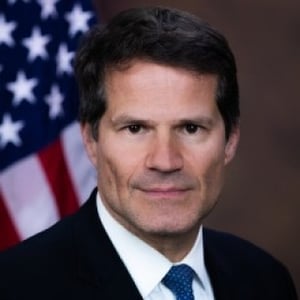
Solicitor General, United States of America
On April 4, 2025, D. John Sauer became the 49th Solicitor General of the United States. He previously served as Solicitor General of Missouri from 2017 to 2023.. Before that, he served as a federal prosecutor for five years and spent time in civil practice at boutique law firms, including the firm he founded, the James Otis Law Group. Mr. Sauer has first-chaired many jury and bench trials, and served as lead counsel in many appeals. He has presented oral argument in the U.S. Supreme Court, the U.S. Court of Appeals for the Eighth Circuit, the Supreme Court of Missouri, and many other state and federal appellate courts. Mr. Sauer served as a law clerk to Justice Antonin Scalia of the U.S. Supreme Court and Judge J. Michael Luttig of the U.S. Court of Appeals for the Fourth Circuit. He was a Rhodes Scholar and a magna cum laude graduate of Harvard Law School.
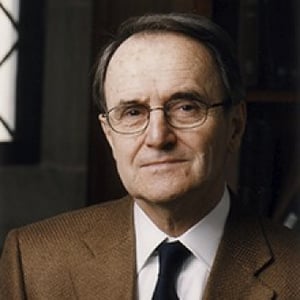
Sterling Professor Emeritus of Law, Yale Law School
Mirjan Damaška is Sterling Professor Emeritus of Law at Yale Law School. He teaches and writes in the fields of comparative and foreign law, procedural law, evidence, international criminal law, and continental legal history.
He is the author of six books, among which The Faces of Justice and Evidence Law Adrift were translated into several languages. He has published more than 100 articles in professional journals of numerous countries.
He received his basic law degree at the University of Zagreb in his native Croatia. He then studied at the Academy of International Law at The Hague, and the Comparative Law Faculty in Luxembourg. He earned his Ph.D. at the University of Ljubljana (Slovenia). Following time spent practicing in the courts of former Yugoslavia, he began his teaching career at the University of Zagreb Law School, rising quickly to the rank of full professor, and briefly serving as Acting Dean. In 1971, he left his native land, and accepted a tenured position at the University of Pennsylvania Law School. Since 1976, he has been on the faculty of Yale Law School.
Damaška is a fellow of the American Academy of Arts and Sciences, a member of the International Academy of Comparative Law, the Croatian Academy of Arts and Sciences, and the American Society of Comparative Law. In 1978-79, he was fellow of the National Endowment for the Humanities. He is also holder of several honorary degrees.
He was keynote speaker and general reporter at many international congresses. Five symposia were organized about his work: Bielefeld (Germany) in 1987; Siena (Italy) in 1988; San Francisco in 1998; Zagreb (Croatia) in 2006; and New Haven in 2008. From 1990 to 1995, he served on the Advisory Board of the Central and East European Legal Initiative of ABA. Since 1995, he has periodically advised the Croatian government in its relations with the International War Crimes Tribunal for the Former Yugoslavia, and the International Court of Justice in The Hague.
In 2005, he was appointed Amicus Curiae of the International War Crimes Tribunal for the Former Yugoslavia in the matter of transferring cases to domestic courts. In 2009, he was presented the lifetime achievement award by the American Society of Comparative Law. In 2014, he was awarded the Life Achievement award by Jadranko Crnic Foundation, Croatia. He does counseling work on foreign law problems for law firms in New York, Los Angeles, and Washington.
In 2010 he was appointed special adviser to the Prime Minister of Croatia, and agent of the Republic of Croatia before the International Court of Justice, heading a team of Croatian and English lawyers in the case of Croatia v. Serbia.
Two books of essays have been published in his honor: Jackson, Langer, & Tillers (eds.), "Crime, Procedure, and Evidence: Essays in honor of Mirjan Damaška (Oxford 2008), and Ackerman, Ambos, Sikiric (eds.), "Visions of Justice, Liber Amicorum Mirjan Damaška" (Berlin 2016).
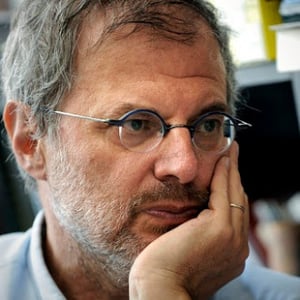
Professor of Comparative Constitutional Law, European University Institute
Since September 2016 Gábor Halmai, professor of law, is the chair of Comparative Constitutional Law at the European University Institute in Florence. Since January 2018 he is the Director of Graduate Studies at the Law Department. His primary research interests are comparative constitutional law, and international human rights. He has published several books and articles, as well as edited volumes on these topics in English, German and Hungarian. He is joining the EUI after a teaching and research career (at the Eötvös Loránd University in Hungary, the Princeton University in the USA, the the European Masters Program in Human Rights and Democratization in Italy) as well as years of professional career as chief advisor to the President of the Hungarian Constitutional Court, member of the EU Fundamental Rights Agency’s Management Board and numerous other civic activities.
Prior to joining to EUI Professor Halmai has worked on various research projects at the IWM in Vienna and the Woodrow Wilson School of Princeton University: Backsliding of liberal democracies within the European Union, with special focus on the development of constitutionalism and human rights in Hungary since its democratic transition in 1989-1990 till now; Models of state-church relations and religious freedom; Constitutionalism and transitional justice in Central and Eastern Europe. His most recent book, „Perspectives on Global Constitutionalism” deals with the use of foreign and international law by domestic courts (published by Eleven International Publishing in 2014). In addition to research, Professor Halmai has also been teaching and supervising students in Budapest, Princeton and Florence on the subjects of comparative constitutional law and human rights, as well as on rule of law.
Besides his academic work he was member of the EU Fundamental Rights Agency’s Management Board based in Vienna, Austria (2007-2010), the national director of the European Masters Program in Human Rights and Democratization in Venice, Italy (2003-2013), vice-chair of the Hungarian National Election Commission (2006-2010; chief counsellor to the President of the Hungarian Constitutional Court (1990-1996).
Gábor Halmai is founder and editor-in-chief of Fundamentum, the Hungarian human right quarterly, and Member of the Scientific Advisory Board of the European Yearbook on Human Rights, the Review of Constitutionalism and Constitutional Change (RC3), and the This Century’s Review.
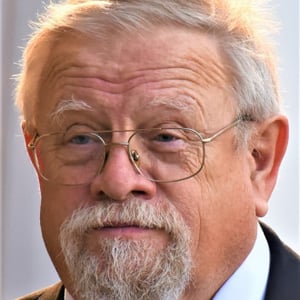
Assistant Professor, University of Ústí nad Labem
Daniel Kroupa is a Czech politician and philosopher, dissident, signatory of Charter 77, President of the Civic Democratic Alliance (ODA) from 1998 to 2001, former MP, Euro MP and senator. After the Velvet Revolution, he taught political philosophy at several faculties of Charles University in Prague. From 2005 to 2015, he was the Head of the Department of Political Science and Philosophy of the Faculty of Arts, University of Ústí nad Labem. Since 2015 he has been an assistant professor at this department.
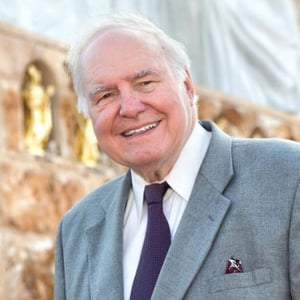
Philosopher, Journalist, Novelist, and Diplomat
Michael John Novak Jr. (1933–2017) was an American Roman Catholic philosopher, journalist, novelist, and diplomat. The author of more than forty books on the philosophy and theology of culture, Novak is most widely known for his book The Spirit of Democratic Capitalism (1982). In 1993 Novak was honored with an honorary doctorate at Universidad Francisco Marroquín due to his commitment to the idea of liberty. In 1994 he was awarded the Templeton Prize for Progress in Religion, which included a million-dollar purse awarded at Buckingham Palace. He wrote books and articles focused on capitalism, religion, and the politics of democratization.
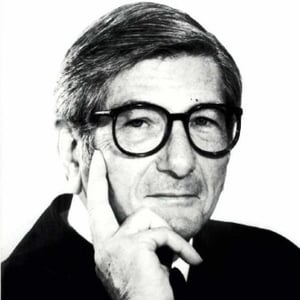
Former Judge, United States Court of Appeals, Fifth Circuit
Alvin Benjamin Rubin's long and storied tenure as a federal judge began with a nomination by President Lyndon B. Johnson in 1966 and ended in 1991 at his death.
Judge Rubin was born in Alexandria, Louisiana, in 1920, and received a B.S. from Louisiana State University in 1941. He started at Louisiana State University Law School in 1940. When World War II broke out, he enlisted in the U.S. Army, was assigned to General Patton's "Big Red 1," and served in the European Theatre of Operations in England, France, Belgium, and Germany, rising to the rank of Captain and serving as an Assistant Judge Advocate. After the war ended, he married Janice Ginsberg, also from Alexandria, and returned to Baton Rouge for law school in an accelerated post-war program for returning war veterans. He graduated first in his law school class in 1942 and was Editor-in-Chief of the Louisiana Law Review.
After his graduation, he began practicing law in Baton Rouge with J.Y. Sanders and Ben Miller, Sr., and after several years the firm of Sanders, Miller, Downing, Rubin and Kean was formed. Judge Rubin specialized in tax law, corporate transactions, and trust and estates law. He also was an arbitrator and mediator.
Soon after he started practice in 1942, the illness of a faculty member at the LSU Law School propelled Judge Rubin back into the classroom as a professor. Judge Rubin taught a variety of subjects continuously at the Law School until 1989, including Admiralty, Civil Code, Ethics, Negotiations, Constitutional Law, Federal Procedure, State and Local Tax Law, Federal Tax Law, Law Office Practice, and many others. Judge Rubin's love of teaching and of student interaction was particularly meaningful to him, and throughout his life Judge Rubin was invited to teach and lecture at schools around the world, including Harvard, Yale, Notre Dame, University of Pennsylvania, Cornell, University of Miami, University of Georgia, University of Texas, Tulane, and Duke. He also traveled to give presentations throughout Europe. Because of his expertise in civil law, during the Vietnam War, Judge Rubin was asked by the State Department to travel to South Vietnam and assist in drafting the constitution for South Vietnam. He also served as a moderator for the Aspen Institute and for many programs for the American Bar Association.
In 1963, Judge Rubin and Dean Henry George McMahon co-authored Louisiana Pleadings and Judicial Forms Annotated. For over 20 years, Judge Rubin continued the annual updates for this vital resource used by Louisiana attorneys. Before 1960, Louisiana civil law prohibited the establishment of Trusts. Judge Rubin was instrumental in the creation of a Trust Code for Louisiana, which was adopted by the Louisiana Legislature in 1960. In 1966 he and his wife, Janice, co-authored the Louisiana Trust Handbook, and later, he wrote Louisiana Wills and Trust: A Drafting System (with Professor Gerald LeVan). Judge Rubin's list of law review and journal articles spans many pages. Two of his most prominent works are "A Causerie on Lawyer's Ethics" and "Hazards of a Civilian Venturer in Federal Court: Travel and Travail on the Erie Railroad" (both in the Louisiana Law Review).
He then practiced law until 1966 when President Johnson nominated him to a new seat on the United States District Court for the Eastern District of Louisiana created by 80 Stat. 75. Judge Rubin served at an important time in the Court's history, hearing many of the desegregation and civil rights cases in the 1960s. He served as Chief Judge of the District and wrote and implemented the first comprehensive written pre-trial procedure rules for the District. He served on and chaired many committees for the Judicial Conference and co-wrote the first law clerk handbook for the federal system. Judge Rubin kept long hours and was often in his Chambers early. He always took home briefs to read and drafts of opinions to edit, keeping two secretaries busy at all times.
After eleven years as a judge on the federal district court, Judge Rubin was nominated in 1977 by President Jimmy Carter to fill a seat on the United States Court of Appeals for the Fifth Circuit vacated by John Minor Wisdom. Judge Rubin assumed senior status on July 1, 1989, and served in that capacity until his death in 1991 in Baton Rouge, Louisiana. In his memory, the Louisiana Law Review published a special edition (Vol. 52, 1992) dedicated solely to his life and work, including articles and remembrances by his wife, Justice Byron White, Judge John Minor Wisdom, Judge Charles Clark, Judge Fred Cassibry, Judge Henry Politz, and many others.
Judge Rubin wrote more than 700 important (and sometimes humorous) opinions during his time as a federal judge. His rulings included ones that ended Louisiana's exemption of women from juries, applied the Voting Rights Act to local elections, and upheld the rights of government employees to criticize their superiors and to organize unions. Judge Rubin's interests spanned poetry, drama, history, art, the classics, and music of all types. He enjoyed writing Gilbert-and-Sullivan-ish parodies concerning legal matters and performing them for students, clerks, lawyers, at judicial seminars, and even for United States Supreme Court Justices.
The judicial activity that Judge Rubin reportedly most enjoyed was conducting naturalization ceremonies in open court. Judge Rubin spoke not as a jurist but as the son of immigrants from Eastern Europe whose parents had lost many relatives to war and hatred. He spoke movingly of his parents, their courage, and their determination to give their children the education and opportunities they had never had. Judge Rubin always emphasized that those citizens, new though they were, had equal rights. They could vote. They could develop their own talents and those of their children. They were entitled to occupy as well as to stand before the bench of justice.
Judge Rubin also enjoyed the close friendship of his many law clerks (serving as officiant of at least one wedding) and was an avid tennis player and jogger, often enlisting law clerks and young lawyers as his tennis or running partner.
Judge Rubin was the first member of the LSU Law Center Hall of Alumni Distinction, and was the First Alumni Member of the LSU Phi Beta Kappa Chapter. He was awarded the Louisiana ACLU Award for his civil rights work and was active in the National Conference of Christians and Jews and his synagogue in Baton Rouge.
Judge John Minor Wisdom wrote that "Alvin Rubin was born to be a judge, a great judge. His intellect, scholarship, and judicial leadership place him in a select group. In recent years, some of this small group graced the Supreme Court: Holmes, Brandeis, and Cardozo. These judges would have welcomed him on equal intellectual terms and as a kindred spirit."
The New Orleans Chapter of the Federal Bar Association hosts an annual symposium in Judge Rubin's honor. The symposium is an annual discussion on aspects of federal law or practice as a living memorial to Judge Rubin's contribution to federal jurisprudence and legal scholarship. The symposium is well attended by his family, friends, former clerks, and lawyers.
Judge Rubin's wife, Janice, best summed him up. "[His] friends spanned continents and age barriers . . . . [He] was the jurist he was because he was the man the boy became, a man who remembered Biblical injunctions about relationships and courage, about discipline and standards, about justice and mercy and integrity, a man whose goal on the bench was the oath taken by judges on the Isle of Man: 'You shall do justice between cause and cause as equally as the backbone of the herring doth lie midmost of the fish.' "
Sterling Professor Emeritus of Law, Yale Law School
Mirjan Damaška is Sterling Professor Emeritus of Law at Yale Law School. He teaches and writes in the fields of comparative and foreign law, procedural law, evidence, international criminal law, and continental legal history.
He is the author of six books, among which The Faces of Justice and Evidence Law Adrift were translated into several languages. He has published more than 100 articles in professional journals of numerous countries.
He received his basic law degree at the University of Zagreb in his native Croatia. He then studied at the Academy of International Law at The Hague, and the Comparative Law Faculty in Luxembourg. He earned his Ph.D. at the University of Ljubljana (Slovenia). Following time spent practicing in the courts of former Yugoslavia, he began his teaching career at the University of Zagreb Law School, rising quickly to the rank of full professor, and briefly serving as Acting Dean. In 1971, he left his native land, and accepted a tenured position at the University of Pennsylvania Law School. Since 1976, he has been on the faculty of Yale Law School.
Damaška is a fellow of the American Academy of Arts and Sciences, a member of the International Academy of Comparative Law, the Croatian Academy of Arts and Sciences, and the American Society of Comparative Law. In 1978-79, he was fellow of the National Endowment for the Humanities. He is also holder of several honorary degrees.
He was keynote speaker and general reporter at many international congresses. Five symposia were organized about his work: Bielefeld (Germany) in 1987; Siena (Italy) in 1988; San Francisco in 1998; Zagreb (Croatia) in 2006; and New Haven in 2008. From 1990 to 1995, he served on the Advisory Board of the Central and East European Legal Initiative of ABA. Since 1995, he has periodically advised the Croatian government in its relations with the International War Crimes Tribunal for the Former Yugoslavia, and the International Court of Justice in The Hague.
In 2005, he was appointed Amicus Curiae of the International War Crimes Tribunal for the Former Yugoslavia in the matter of transferring cases to domestic courts. In 2009, he was presented the lifetime achievement award by the American Society of Comparative Law. In 2014, he was awarded the Life Achievement award by Jadranko Crnic Foundation, Croatia. He does counseling work on foreign law problems for law firms in New York, Los Angeles, and Washington.
In 2010 he was appointed special adviser to the Prime Minister of Croatia, and agent of the Republic of Croatia before the International Court of Justice, heading a team of Croatian and English lawyers in the case of Croatia v. Serbia.
Two books of essays have been published in his honor: Jackson, Langer, & Tillers (eds.), "Crime, Procedure, and Evidence: Essays in honor of Mirjan Damaška (Oxford 2008), and Ackerman, Ambos, Sikiric (eds.), "Visions of Justice, Liber Amicorum Mirjan Damaška" (Berlin 2016).
Professor of Comparative Constitutional Law, European University Institute
Since September 2016 Gábor Halmai, professor of law, is the chair of Comparative Constitutional Law at the European University Institute in Florence. Since January 2018 he is the Director of Graduate Studies at the Law Department. His primary research interests are comparative constitutional law, and international human rights. He has published several books and articles, as well as edited volumes on these topics in English, German and Hungarian. He is joining the EUI after a teaching and research career (at the Eötvös Loránd University in Hungary, the Princeton University in the USA, the the European Masters Program in Human Rights and Democratization in Italy) as well as years of professional career as chief advisor to the President of the Hungarian Constitutional Court, member of the EU Fundamental Rights Agency’s Management Board and numerous other civic activities.
Prior to joining to EUI Professor Halmai has worked on various research projects at the IWM in Vienna and the Woodrow Wilson School of Princeton University: Backsliding of liberal democracies within the European Union, with special focus on the development of constitutionalism and human rights in Hungary since its democratic transition in 1989-1990 till now; Models of state-church relations and religious freedom; Constitutionalism and transitional justice in Central and Eastern Europe. His most recent book, „Perspectives on Global Constitutionalism” deals with the use of foreign and international law by domestic courts (published by Eleven International Publishing in 2014). In addition to research, Professor Halmai has also been teaching and supervising students in Budapest, Princeton and Florence on the subjects of comparative constitutional law and human rights, as well as on rule of law.
Besides his academic work he was member of the EU Fundamental Rights Agency’s Management Board based in Vienna, Austria (2007-2010), the national director of the European Masters Program in Human Rights and Democratization in Venice, Italy (2003-2013), vice-chair of the Hungarian National Election Commission (2006-2010; chief counsellor to the President of the Hungarian Constitutional Court (1990-1996).
Gábor Halmai is founder and editor-in-chief of Fundamentum, the Hungarian human right quarterly, and Member of the Scientific Advisory Board of the European Yearbook on Human Rights, the Review of Constitutionalism and Constitutional Change (RC3), and the This Century’s Review.
Assistant Professor, University of Ústí nad Labem
Daniel Kroupa is a Czech politician and philosopher, dissident, signatory of Charter 77, President of the Civic Democratic Alliance (ODA) from 1998 to 2001, former MP, Euro MP and senator. After the Velvet Revolution, he taught political philosophy at several faculties of Charles University in Prague. From 2005 to 2015, he was the Head of the Department of Political Science and Philosophy of the Faculty of Arts, University of Ústí nad Labem. Since 2015 he has been an assistant professor at this department.
Philosopher, Journalist, Novelist, and Diplomat
Michael John Novak Jr. (1933–2017) was an American Roman Catholic philosopher, journalist, novelist, and diplomat. The author of more than forty books on the philosophy and theology of culture, Novak is most widely known for his book The Spirit of Democratic Capitalism (1982). In 1993 Novak was honored with an honorary doctorate at Universidad Francisco Marroquín due to his commitment to the idea of liberty. In 1994 he was awarded the Templeton Prize for Progress in Religion, which included a million-dollar purse awarded at Buckingham Palace. He wrote books and articles focused on capitalism, religion, and the politics of democratization.
Former Judge, United States Court of Appeals, Fifth Circuit
Alvin Benjamin Rubin's long and storied tenure as a federal judge began with a nomination by President Lyndon B. Johnson in 1966 and ended in 1991 at his death.
Judge Rubin was born in Alexandria, Louisiana, in 1920, and received a B.S. from Louisiana State University in 1941. He started at Louisiana State University Law School in 1940. When World War II broke out, he enlisted in the U.S. Army, was assigned to General Patton's "Big Red 1," and served in the European Theatre of Operations in England, France, Belgium, and Germany, rising to the rank of Captain and serving as an Assistant Judge Advocate. After the war ended, he married Janice Ginsberg, also from Alexandria, and returned to Baton Rouge for law school in an accelerated post-war program for returning war veterans. He graduated first in his law school class in 1942 and was Editor-in-Chief of the Louisiana Law Review.
After his graduation, he began practicing law in Baton Rouge with J.Y. Sanders and Ben Miller, Sr., and after several years the firm of Sanders, Miller, Downing, Rubin and Kean was formed. Judge Rubin specialized in tax law, corporate transactions, and trust and estates law. He also was an arbitrator and mediator.
Soon after he started practice in 1942, the illness of a faculty member at the LSU Law School propelled Judge Rubin back into the classroom as a professor. Judge Rubin taught a variety of subjects continuously at the Law School until 1989, including Admiralty, Civil Code, Ethics, Negotiations, Constitutional Law, Federal Procedure, State and Local Tax Law, Federal Tax Law, Law Office Practice, and many others. Judge Rubin's love of teaching and of student interaction was particularly meaningful to him, and throughout his life Judge Rubin was invited to teach and lecture at schools around the world, including Harvard, Yale, Notre Dame, University of Pennsylvania, Cornell, University of Miami, University of Georgia, University of Texas, Tulane, and Duke. He also traveled to give presentations throughout Europe. Because of his expertise in civil law, during the Vietnam War, Judge Rubin was asked by the State Department to travel to South Vietnam and assist in drafting the constitution for South Vietnam. He also served as a moderator for the Aspen Institute and for many programs for the American Bar Association.
In 1963, Judge Rubin and Dean Henry George McMahon co-authored Louisiana Pleadings and Judicial Forms Annotated. For over 20 years, Judge Rubin continued the annual updates for this vital resource used by Louisiana attorneys. Before 1960, Louisiana civil law prohibited the establishment of Trusts. Judge Rubin was instrumental in the creation of a Trust Code for Louisiana, which was adopted by the Louisiana Legislature in 1960. In 1966 he and his wife, Janice, co-authored the Louisiana Trust Handbook, and later, he wrote Louisiana Wills and Trust: A Drafting System (with Professor Gerald LeVan). Judge Rubin's list of law review and journal articles spans many pages. Two of his most prominent works are "A Causerie on Lawyer's Ethics" and "Hazards of a Civilian Venturer in Federal Court: Travel and Travail on the Erie Railroad" (both in the Louisiana Law Review).
He then practiced law until 1966 when President Johnson nominated him to a new seat on the United States District Court for the Eastern District of Louisiana created by 80 Stat. 75. Judge Rubin served at an important time in the Court's history, hearing many of the desegregation and civil rights cases in the 1960s. He served as Chief Judge of the District and wrote and implemented the first comprehensive written pre-trial procedure rules for the District. He served on and chaired many committees for the Judicial Conference and co-wrote the first law clerk handbook for the federal system. Judge Rubin kept long hours and was often in his Chambers early. He always took home briefs to read and drafts of opinions to edit, keeping two secretaries busy at all times.
After eleven years as a judge on the federal district court, Judge Rubin was nominated in 1977 by President Jimmy Carter to fill a seat on the United States Court of Appeals for the Fifth Circuit vacated by John Minor Wisdom. Judge Rubin assumed senior status on July 1, 1989, and served in that capacity until his death in 1991 in Baton Rouge, Louisiana. In his memory, the Louisiana Law Review published a special edition (Vol. 52, 1992) dedicated solely to his life and work, including articles and remembrances by his wife, Justice Byron White, Judge John Minor Wisdom, Judge Charles Clark, Judge Fred Cassibry, Judge Henry Politz, and many others.
Judge Rubin wrote more than 700 important (and sometimes humorous) opinions during his time as a federal judge. His rulings included ones that ended Louisiana's exemption of women from juries, applied the Voting Rights Act to local elections, and upheld the rights of government employees to criticize their superiors and to organize unions. Judge Rubin's interests spanned poetry, drama, history, art, the classics, and music of all types. He enjoyed writing Gilbert-and-Sullivan-ish parodies concerning legal matters and performing them for students, clerks, lawyers, at judicial seminars, and even for United States Supreme Court Justices.
The judicial activity that Judge Rubin reportedly most enjoyed was conducting naturalization ceremonies in open court. Judge Rubin spoke not as a jurist but as the son of immigrants from Eastern Europe whose parents had lost many relatives to war and hatred. He spoke movingly of his parents, their courage, and their determination to give their children the education and opportunities they had never had. Judge Rubin always emphasized that those citizens, new though they were, had equal rights. They could vote. They could develop their own talents and those of their children. They were entitled to occupy as well as to stand before the bench of justice.
Judge Rubin also enjoyed the close friendship of his many law clerks (serving as officiant of at least one wedding) and was an avid tennis player and jogger, often enlisting law clerks and young lawyers as his tennis or running partner.
Judge Rubin was the first member of the LSU Law Center Hall of Alumni Distinction, and was the First Alumni Member of the LSU Phi Beta Kappa Chapter. He was awarded the Louisiana ACLU Award for his civil rights work and was active in the National Conference of Christians and Jews and his synagogue in Baton Rouge.
Judge John Minor Wisdom wrote that "Alvin Rubin was born to be a judge, a great judge. His intellect, scholarship, and judicial leadership place him in a select group. In recent years, some of this small group graced the Supreme Court: Holmes, Brandeis, and Cardozo. These judges would have welcomed him on equal intellectual terms and as a kindred spirit."
The New Orleans Chapter of the Federal Bar Association hosts an annual symposium in Judge Rubin's honor. The symposium is an annual discussion on aspects of federal law or practice as a living memorial to Judge Rubin's contribution to federal jurisprudence and legal scholarship. The symposium is well attended by his family, friends, former clerks, and lawyers.
Judge Rubin's wife, Janice, best summed him up. "[His] friends spanned continents and age barriers . . . . [He] was the jurist he was because he was the man the boy became, a man who remembered Biblical injunctions about relationships and courage, about discipline and standards, about justice and mercy and integrity, a man whose goal on the bench was the oath taken by judges on the Isle of Man: 'You shall do justice between cause and cause as equally as the backbone of the herring doth lie midmost of the fish.' "
James L. Oberstar Professor of Law and Public Policy, University of St. Thomas School of Law
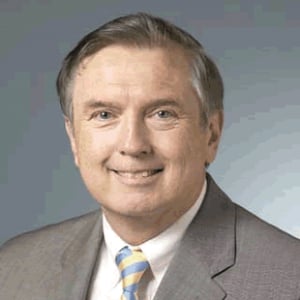
Professor of Law, University of Notre Dame Law School
Gerard V. Bradley is Professor of Law at the University of Notre Dame, where he teaches Legal Ethics and Constitutional Law. At Notre Dame he directs (with John Finnis) the Natural Law Institute and co-edits The American Journal of Jurisprudence, an international forum for legal philosophy. Bradley has been a Visiting Fellow at the Hoover Institution of Stanford University, and a Senior Fellow of the Witherspoon Institute, in Princeton, New Jersey. He served for many years as President of the Fellowship of Catholic Scholars.
Bradley received his B.A and J.D. degrees from Cornell University, graduating Summa cum laude from the law school in 1980. After serving in the Trial Division of the Manhattan District Attorney’s Office he joined the law faculty at the University of Illinois. He moved to Notre Dame in 1992. Bradley has published over one hundred scholarly articles and reviews. His most recent books are an edited collection of essays titled, Challenges to Religious Liberty in the Twenty-First Century (published by Cambridge University Press in 2012), Essays on Law, Religion, and Morality and Unquiet Americans: U.S. Catholics and the Common Good (both to be published in 2014.) He is currently working on a book about regulating obscenity in the Internet Age.
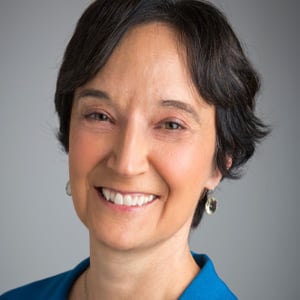
Deputy Legal Director and Director of Center for Liberty, ACLU
Louise Melling is a Deputy Legal Director at the ACLU and the Director of its Center for Liberty, which encompasses the ACLU’s work on reproductive freedom, women’s rights, lesbian gay bisexual and transgender rights, freedom of religion and belief, and disability rights. In this role, she leads the work of the ACLU to address the intersection of religious freedom and equal treatment, among other issues.
Melling has established the ACLU as a national leader in opposing the use of religion to discriminate and in supporting state advocacy teams that have pushed back legislation that would permit discrimination in the name of religion. She has overseen groundbreaking litigation, including cases challenging Catholic hospitals that refuse to provide care consistent with medical ethics and businesses that claim a right to discriminate in the name of religion or speech.
In her time as Director of the Center for Liberty, the ACLU has pursued a program of litigation, advocacy, and public education campaigns that culminated in the 2015 Supreme Court decision recognizing the fundamental right to marry for same-sex couples. Under her leadership, the Center has also challenged innumerable state laws that restrict women’s access to abortion, the federal government policy barring women from serving in combat, school policies that foster sex stereotypes and deny transgender students’ rights, policies and practices that discriminate against Muslims, the use and abuse of guardianship, and government promotion of religion.
Melling has been with the ACLU since 1992, serving in several roles before becoming a Deputy Legal Director in 2010. In 2003, she became Director of the Reproductive Freedom Project, where she oversaw nationwide litigation, public opinion research, public education campaigns, and advocacy efforts in the state legislatures. She has appeared in federal and state courts around the country, most often to challenge laws that restrict reproductive rights.
Melling has appeared in many media outlets, including CNN, PBS News Hour, Frontline, MSNBC, the New York Times, and USA Today. Her opinion pieces have appeared in the Washington Post and The Guardian, among others.
In addition, she is the author of several articles, including Religious Refusals to Public Accommodations Laws: Four Reasons to Say No, 38 Harv J. of Law and Gender (2015); Follow the Money: Ending Discrimination against Women in Hospitals, 15 Georgetown Journal of Gender and the Law 435 (2014) (co-authored with Sarah Lipton-Lubet); Lift the Scarlet Letter from Abortion, 35 Cardozo Law Review 1715 (2014); and The Legal Education of Twenty Women, 40 Stan. L. Rev. 1299 (1988) (co-authored with Catherine Weiss).
She is a graduate of the Yale Law School and Oberlin College. Prior to joining the ACLU, Melling clerked for Judge Morris Lasker of the Southern District of New York and worked for Rabinowitz, Boudin, Standard, Krinsky & Lieberman.

Judge, United States Court of Appeals, Fifth Circuit
Andrew Oldham is a Circuit Judge on the United States Court of Appeals for the Fifth Circuit. Before ascending to the bench, Judge Oldham served as General Counsel to Texas Governor Greg Abbott, where he advised the Governor on a range of issues under federal and state law and managed litigation in which the Governor was an interested party. Before that he served as Deputy Solicitor General for the State of Texas, where he represented Texas in federal courts across the country, including twice before the United States Supreme Court. Before moving to Texas, Judge Oldham was an attorney at Kellogg Hansen Todd Figel & Frederick in Washington, D.C. His practice focused on appellate litigation in federal courts of appeals throughout the country. Before entering private practice, Judge Oldham served as a law clerk to Justice Samuel A. Alito, Jr., at the Supreme Court of the United States and to Judge David B. Sentelle of the U.S. Court of Appeals for the District of Columbia Circuit. He also worked as an attorney-adviser in the Office of Legal Counsel at the U.S. Department of Justice from 2006 to 2008. Judge Oldham earned a B.A. from the University of Virginia with highest honors, a Truman Scholarship for graduate school, an M. Phil., first class (with distinction), from Cambridge University, and a J.D., magna cum laude, from Harvard Law School.

Tazewell Taylor Professor of Law and William H. Cabell Research Professor, William & Mary Law School
Jonathan H. Adler joined the William & Mary law faculty as the Tazwell Taylor Professor of Law and William H. Cabell Research Professor in 2025. Prior to joining the faculty, he was the inaugural Johan Verheij Memorial Professor of Law and the founding Director of the Coleman P. Burke Center for Environmental Law at the Case Western Reserve University School of Law.
Professor Adler is the author or editor of seven books, including Climate Liberalism: Perspectives on Liberty, Property and Pollution (Palgrave, 2023), Marijuana Federalism: Uncle Sam and Mary Jane (Brookings Institution Press, 2020), Business and the Roberts Court (Oxford University Press, 2016) and Rebuilding the Ark: New Perspectives on Endangered Species Act Reform (AEI Press, 2011).
His articles have appeared in publications ranging from the Harvard Environmental Law Review and Yale Journal on Regulation to the Wall Street Journal, New York Times, and Washington Post. He has testified before Congress a dozen times, and his work has been cited in the U.S. Supreme Court. A 2024 study identified Professor Adler as the seventh most cited legal academic in administrative and environmental law from 2019 to 2023.
Professor Adler is a contributing editor to Civitas Outlook and a regular contributor to the popular legal blog, The Volokh Conspiracy. A regular commentator on constitutional and regulatory issues, he has appeared on numerous radio and television programs, ranging from the PBS Newshour and National Public Radio to the Fox News Channel and Entertainment Tonight.
Professor Adler is a senior fellow at the Property & Environment Research Center in Bozeman, Montana. In 2018, Professor Adler was elected to membership in the American Law Institute and helped co-found the organization Checks and Balances. In 2024, Professor Adler was appointed a public member of the Administrative Conference of the United States.
Professor Adler clerked for the Honorable David B. Sentelle on the U.S. Court of Appeals for the District of Columbia Circuit.

Judge, United States Court of Appeals, District of Columbia Circuit
Judge Katsas was appointed to the D.C. Circuit in December 2017. He graduated from Princeton University and Harvard Law School, where he was an executive editor on the Harvard Law Review. Between 1989 and 1992, he served as a law clerk to Judge Edward Becker on the Third Circuit, to then-Judge Clarence Thomas on the D.C. Circuit, and to Justice Thomas on the Supreme Court. Between 1992 and 2001, he was an associate and then partner in the Washington office of Jones Day, where he specialized in appellate and complex civil litigation. Between 2001 and 2009, he served in many senior positions in the Department of Justice, including as Assistant Attorney General for the Civil Division and as Acting Associate Attorney General. In 2009, he returned to Jones Day. From January to December 2017, he served as Deputy Assistant to the President and Deputy Counsel to the President.
Before joining the bench, Judge Katsas argued more than 75 appeals, including three cases in the Supreme Court, 13 cases in the D.C. Circuit, and cases in every other federal court of appeals. By appointment of the Chief Justice, he served on the Advisory Committee on Appellate Rules from 2013 to 2017. In 2016, he was elected to membership in the American Academy of Appellate Lawyers.
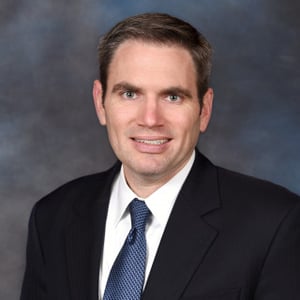
Judge, United States Court of Appeals, Sixth Circuit
Eric Murphy has been a Judge on the United States Court of Appeals for the Sixth Circuit since March 2019. He previously served as the ninth State Solicitor of Ohio. In that role, Eric briefed and argued appellate cases on behalf of Ohio and its state agencies and officers in the U.S. Supreme Court, the U.S. Court of Appeals for the Sixth Circuit, and the Ohio Supreme Court. Before his appointment as State Solicitor, Eric practiced appellate litigation at Jones Day. After graduation from law school, he served as a law clerk for Justice Anthony M. Kennedy of the Supreme Court of the United States, and Judge J. Harvie Wilkinson III of the United States Court of Appeals for the Fourth Circuit. He received his law degree from the University of Chicago and his undergraduate degree from Miami University.
Jacob E. Davis and Jacob E. Davis II Chair in Law, Moritz Colleg, The Ohio State University
Professor Shane came to Ohio State in 2003 from Carnegie Mellon University's H. John Heinz III School of Public Policy and Management. He is an internationally recognized scholar in administrative law, with a specialty in separation of powers law, and has co-authored leading casebooks on each subject. He has served on the faculty at the University of Iowa College of Law and was dean at the University of Pittsburgh School of Law.
In addition to his outstanding law teaching and scholarship, Professor Shane has received a National Science Foundation grant for interdisciplinary study related to cyberspace and democracy. At Ohio State, he provides strong leadership in interdisciplinary scholarship and teaching.
United States Court of Appeals, Second Circuit
Dennis Jacobs is the Chief Judge of the United States Court of Appeals for the Second Circuit. He became Chief Judge on October 1, 2006. At the time of his appointment in 1992, he was a partner in the New York law firm of Simpson Thacher & Bartlett.
Judge Jacobs received his B.A. degree from Queens College of the City University of New York in 1964; his M.A. degree from New York University in 1965; and his J.D. degree from the New York University School of Law in 1973.
Judge Jacobs was a lecturer in the English Department of Queens College of the City University of New York from 1967 until 1969. He was in private practice from 1973 with the New York law firm of Simpson, Thacher & Bartlett, serving as a partner there from 1980 until his judicial appointment.
In 1997-2004, Judge Jacobs was a member of the Committee on Judicial Resources of the Judicial Conference of the United States; starting in 1999 he was chair of that committee.
Judge Jacobs is a native of New York City.
Sterling Professor Emeritus of Law, Yale Law School
Mirjan Damaška is Sterling Professor Emeritus of Law at Yale Law School. He teaches and writes in the fields of comparative and foreign law, procedural law, evidence, international criminal law, and continental legal history.
He is the author of six books, among which The Faces of Justice and Evidence Law Adrift were translated into several languages. He has published more than 100 articles in professional journals of numerous countries.
He received his basic law degree at the University of Zagreb in his native Croatia. He then studied at the Academy of International Law at The Hague, and the Comparative Law Faculty in Luxembourg. He earned his Ph.D. at the University of Ljubljana (Slovenia). Following time spent practicing in the courts of former Yugoslavia, he began his teaching career at the University of Zagreb Law School, rising quickly to the rank of full professor, and briefly serving as Acting Dean. In 1971, he left his native land, and accepted a tenured position at the University of Pennsylvania Law School. Since 1976, he has been on the faculty of Yale Law School.
Damaška is a fellow of the American Academy of Arts and Sciences, a member of the International Academy of Comparative Law, the Croatian Academy of Arts and Sciences, and the American Society of Comparative Law. In 1978-79, he was fellow of the National Endowment for the Humanities. He is also holder of several honorary degrees.
He was keynote speaker and general reporter at many international congresses. Five symposia were organized about his work: Bielefeld (Germany) in 1987; Siena (Italy) in 1988; San Francisco in 1998; Zagreb (Croatia) in 2006; and New Haven in 2008. From 1990 to 1995, he served on the Advisory Board of the Central and East European Legal Initiative of ABA. Since 1995, he has periodically advised the Croatian government in its relations with the International War Crimes Tribunal for the Former Yugoslavia, and the International Court of Justice in The Hague.
In 2005, he was appointed Amicus Curiae of the International War Crimes Tribunal for the Former Yugoslavia in the matter of transferring cases to domestic courts. In 2009, he was presented the lifetime achievement award by the American Society of Comparative Law. In 2014, he was awarded the Life Achievement award by Jadranko Crnic Foundation, Croatia. He does counseling work on foreign law problems for law firms in New York, Los Angeles, and Washington.
In 2010 he was appointed special adviser to the Prime Minister of Croatia, and agent of the Republic of Croatia before the International Court of Justice, heading a team of Croatian and English lawyers in the case of Croatia v. Serbia.
Two books of essays have been published in his honor: Jackson, Langer, & Tillers (eds.), "Crime, Procedure, and Evidence: Essays in honor of Mirjan Damaška (Oxford 2008), and Ackerman, Ambos, Sikiric (eds.), "Visions of Justice, Liber Amicorum Mirjan Damaška" (Berlin 2016).
Professor of Comparative Constitutional Law, European University Institute
Since September 2016 Gábor Halmai, professor of law, is the chair of Comparative Constitutional Law at the European University Institute in Florence. Since January 2018 he is the Director of Graduate Studies at the Law Department. His primary research interests are comparative constitutional law, and international human rights. He has published several books and articles, as well as edited volumes on these topics in English, German and Hungarian. He is joining the EUI after a teaching and research career (at the Eötvös Loránd University in Hungary, the Princeton University in the USA, the the European Masters Program in Human Rights and Democratization in Italy) as well as years of professional career as chief advisor to the President of the Hungarian Constitutional Court, member of the EU Fundamental Rights Agency’s Management Board and numerous other civic activities.
Prior to joining to EUI Professor Halmai has worked on various research projects at the IWM in Vienna and the Woodrow Wilson School of Princeton University: Backsliding of liberal democracies within the European Union, with special focus on the development of constitutionalism and human rights in Hungary since its democratic transition in 1989-1990 till now; Models of state-church relations and religious freedom; Constitutionalism and transitional justice in Central and Eastern Europe. His most recent book, „Perspectives on Global Constitutionalism” deals with the use of foreign and international law by domestic courts (published by Eleven International Publishing in 2014). In addition to research, Professor Halmai has also been teaching and supervising students in Budapest, Princeton and Florence on the subjects of comparative constitutional law and human rights, as well as on rule of law.
Besides his academic work he was member of the EU Fundamental Rights Agency’s Management Board based in Vienna, Austria (2007-2010), the national director of the European Masters Program in Human Rights and Democratization in Venice, Italy (2003-2013), vice-chair of the Hungarian National Election Commission (2006-2010; chief counsellor to the President of the Hungarian Constitutional Court (1990-1996).
Gábor Halmai is founder and editor-in-chief of Fundamentum, the Hungarian human right quarterly, and Member of the Scientific Advisory Board of the European Yearbook on Human Rights, the Review of Constitutionalism and Constitutional Change (RC3), and the This Century’s Review.
Assistant Professor, University of Ústí nad Labem
Daniel Kroupa is a Czech politician and philosopher, dissident, signatory of Charter 77, President of the Civic Democratic Alliance (ODA) from 1998 to 2001, former MP, Euro MP and senator. After the Velvet Revolution, he taught political philosophy at several faculties of Charles University in Prague. From 2005 to 2015, he was the Head of the Department of Political Science and Philosophy of the Faculty of Arts, University of Ústí nad Labem. Since 2015 he has been an assistant professor at this department.
Philosopher, Journalist, Novelist, and Diplomat
Michael John Novak Jr. (1933–2017) was an American Roman Catholic philosopher, journalist, novelist, and diplomat. The author of more than forty books on the philosophy and theology of culture, Novak is most widely known for his book The Spirit of Democratic Capitalism (1982). In 1993 Novak was honored with an honorary doctorate at Universidad Francisco Marroquín due to his commitment to the idea of liberty. In 1994 he was awarded the Templeton Prize for Progress in Religion, which included a million-dollar purse awarded at Buckingham Palace. He wrote books and articles focused on capitalism, religion, and the politics of democratization.
Former Judge, United States Court of Appeals, Fifth Circuit
Alvin Benjamin Rubin's long and storied tenure as a federal judge began with a nomination by President Lyndon B. Johnson in 1966 and ended in 1991 at his death.
Judge Rubin was born in Alexandria, Louisiana, in 1920, and received a B.S. from Louisiana State University in 1941. He started at Louisiana State University Law School in 1940. When World War II broke out, he enlisted in the U.S. Army, was assigned to General Patton's "Big Red 1," and served in the European Theatre of Operations in England, France, Belgium, and Germany, rising to the rank of Captain and serving as an Assistant Judge Advocate. After the war ended, he married Janice Ginsberg, also from Alexandria, and returned to Baton Rouge for law school in an accelerated post-war program for returning war veterans. He graduated first in his law school class in 1942 and was Editor-in-Chief of the Louisiana Law Review.
After his graduation, he began practicing law in Baton Rouge with J.Y. Sanders and Ben Miller, Sr., and after several years the firm of Sanders, Miller, Downing, Rubin and Kean was formed. Judge Rubin specialized in tax law, corporate transactions, and trust and estates law. He also was an arbitrator and mediator.
Soon after he started practice in 1942, the illness of a faculty member at the LSU Law School propelled Judge Rubin back into the classroom as a professor. Judge Rubin taught a variety of subjects continuously at the Law School until 1989, including Admiralty, Civil Code, Ethics, Negotiations, Constitutional Law, Federal Procedure, State and Local Tax Law, Federal Tax Law, Law Office Practice, and many others. Judge Rubin's love of teaching and of student interaction was particularly meaningful to him, and throughout his life Judge Rubin was invited to teach and lecture at schools around the world, including Harvard, Yale, Notre Dame, University of Pennsylvania, Cornell, University of Miami, University of Georgia, University of Texas, Tulane, and Duke. He also traveled to give presentations throughout Europe. Because of his expertise in civil law, during the Vietnam War, Judge Rubin was asked by the State Department to travel to South Vietnam and assist in drafting the constitution for South Vietnam. He also served as a moderator for the Aspen Institute and for many programs for the American Bar Association.
In 1963, Judge Rubin and Dean Henry George McMahon co-authored Louisiana Pleadings and Judicial Forms Annotated. For over 20 years, Judge Rubin continued the annual updates for this vital resource used by Louisiana attorneys. Before 1960, Louisiana civil law prohibited the establishment of Trusts. Judge Rubin was instrumental in the creation of a Trust Code for Louisiana, which was adopted by the Louisiana Legislature in 1960. In 1966 he and his wife, Janice, co-authored the Louisiana Trust Handbook, and later, he wrote Louisiana Wills and Trust: A Drafting System (with Professor Gerald LeVan). Judge Rubin's list of law review and journal articles spans many pages. Two of his most prominent works are "A Causerie on Lawyer's Ethics" and "Hazards of a Civilian Venturer in Federal Court: Travel and Travail on the Erie Railroad" (both in the Louisiana Law Review).
He then practiced law until 1966 when President Johnson nominated him to a new seat on the United States District Court for the Eastern District of Louisiana created by 80 Stat. 75. Judge Rubin served at an important time in the Court's history, hearing many of the desegregation and civil rights cases in the 1960s. He served as Chief Judge of the District and wrote and implemented the first comprehensive written pre-trial procedure rules for the District. He served on and chaired many committees for the Judicial Conference and co-wrote the first law clerk handbook for the federal system. Judge Rubin kept long hours and was often in his Chambers early. He always took home briefs to read and drafts of opinions to edit, keeping two secretaries busy at all times.
After eleven years as a judge on the federal district court, Judge Rubin was nominated in 1977 by President Jimmy Carter to fill a seat on the United States Court of Appeals for the Fifth Circuit vacated by John Minor Wisdom. Judge Rubin assumed senior status on July 1, 1989, and served in that capacity until his death in 1991 in Baton Rouge, Louisiana. In his memory, the Louisiana Law Review published a special edition (Vol. 52, 1992) dedicated solely to his life and work, including articles and remembrances by his wife, Justice Byron White, Judge John Minor Wisdom, Judge Charles Clark, Judge Fred Cassibry, Judge Henry Politz, and many others.
Judge Rubin wrote more than 700 important (and sometimes humorous) opinions during his time as a federal judge. His rulings included ones that ended Louisiana's exemption of women from juries, applied the Voting Rights Act to local elections, and upheld the rights of government employees to criticize their superiors and to organize unions. Judge Rubin's interests spanned poetry, drama, history, art, the classics, and music of all types. He enjoyed writing Gilbert-and-Sullivan-ish parodies concerning legal matters and performing them for students, clerks, lawyers, at judicial seminars, and even for United States Supreme Court Justices.
The judicial activity that Judge Rubin reportedly most enjoyed was conducting naturalization ceremonies in open court. Judge Rubin spoke not as a jurist but as the son of immigrants from Eastern Europe whose parents had lost many relatives to war and hatred. He spoke movingly of his parents, their courage, and their determination to give their children the education and opportunities they had never had. Judge Rubin always emphasized that those citizens, new though they were, had equal rights. They could vote. They could develop their own talents and those of their children. They were entitled to occupy as well as to stand before the bench of justice.
Judge Rubin also enjoyed the close friendship of his many law clerks (serving as officiant of at least one wedding) and was an avid tennis player and jogger, often enlisting law clerks and young lawyers as his tennis or running partner.
Judge Rubin was the first member of the LSU Law Center Hall of Alumni Distinction, and was the First Alumni Member of the LSU Phi Beta Kappa Chapter. He was awarded the Louisiana ACLU Award for his civil rights work and was active in the National Conference of Christians and Jews and his synagogue in Baton Rouge.
Judge John Minor Wisdom wrote that "Alvin Rubin was born to be a judge, a great judge. His intellect, scholarship, and judicial leadership place him in a select group. In recent years, some of this small group graced the Supreme Court: Holmes, Brandeis, and Cardozo. These judges would have welcomed him on equal intellectual terms and as a kindred spirit."
The New Orleans Chapter of the Federal Bar Association hosts an annual symposium in Judge Rubin's honor. The symposium is an annual discussion on aspects of federal law or practice as a living memorial to Judge Rubin's contribution to federal jurisprudence and legal scholarship. The symposium is well attended by his family, friends, former clerks, and lawyers.
Judge Rubin's wife, Janice, best summed him up. "[His] friends spanned continents and age barriers . . . . [He] was the jurist he was because he was the man the boy became, a man who remembered Biblical injunctions about relationships and courage, about discipline and standards, about justice and mercy and integrity, a man whose goal on the bench was the oath taken by judges on the Isle of Man: 'You shall do justice between cause and cause as equally as the backbone of the herring doth lie midmost of the fish.' "

Panel 2 - Better Believe It: Free Exercise and the First Amendment
Thomas C. Berg, Justin Edward Butterfield, James C. Ho, D. John Sauer
Leading the charge for abolition during the Civil War-era, among others, were abolitionists with deeply...
The Judiciary and the Role of the Rule of Law [Archive Collection]
Mirjan R. Dama?ka, Gábor Halmai, Daniel Kroupa, Michael J. Novak, Alvin Rubin
On November 30- December 1, 1990, the Federalist Society hosted its annual National Lawyers Convention...
The Judiciary and the Role of the Rule of Law [Archive Collection]
Mirjan R. Dama?ka, Gábor Halmai, Daniel Kroupa, Michael J. Novak, Alvin Rubin
On November 30- December 1, 1990, the Federalist Society hosted its annual National Lawyers Convention...
Masterpiece Cakeshop and Its Implications
Thomas C. Berg, Gerard V. Bradley, Louise Melling, Andrew Oldham
The Supreme Court’s decision in Masterpiece Cakeshop v. Colorado Civil Rights Commission was unexpectedly based...
Introduction to Originalism and Federalism: Where Are the Courts Heading?
Jonathan H. Adler, Gregory G. Katsas, Eric E. Murphy, Peter M. Shane
Since the 1980s, the originalist approach to constitutional interpretation has gained greater and greater acceptance...
Speech by Judge Dennis G. Jacobs
Dennis Jacobs
The following remarks were delivered by Chief Judge Dennis Jacobs of the United States Court...
The Judiciary and the Role of the Rule of Law [Archive Collection]
1990 National Lawyers Convention
New Orleans, LA