
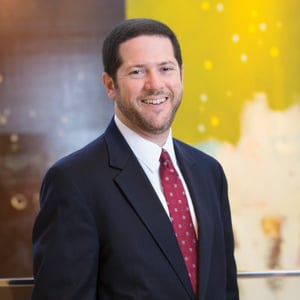
Partner, Co-chair of the Litigation & Trial Practice Group, Alston & Bird LLP
Adam Biegel is co-chair of Alston & Bird’s Litigation & Trial Practice Group and former co-chair of its Antitrust Team. He has substantial experience representing clients on antitrust counseling and litigation matters, including those involving government and internal investigations, mergers and joint ventures, pricing and distribution, compliance counseling and training, pre-merger reviews under the Hart-Scott-Rodino (HSR) Act, and multidistrict litigation. He regularly represents clients before the U.S. Department of Justice (DOJ) Antitrust Division, Federal Trade Commission (FTC) and state attorneys general, and in federal courts.
Adam is recognized for his antitrust experience by Chambers USA and selected to The Best Lawyers in America®, including his recognition as “Lawyer of the Year” for Antitrust Litigation in Washington, D.C., in 2022. He is a longtime member of the American Bar Association Antitrust Law Section’s leadership, currently serving as co-chair of its In-House Counsel Task Force and previously having served on its board, and chaired its Corporate Counseling Committee, Long Range Planning Committee, and Spring Meeting conference. He also serves on the board of the Federalist Society’s antitrust practice group.
Adam served as a law clerk to the Hon. Frank M. Hull, U.S. Court of Appeals for the Eleventh Circuit. Before attending law school, he worked as a newspaper reporter in Arkansas and on the legislative staff of U.S. Senator Orrin Hatch.
Partner in the Antitrust & Competition Practice Group, Sheppard Mullin
John’s practice focuses on civil and criminal antitrust matters, including mergers & acquisitions, strategic counseling and compliance, and global cartel investigations, where he represents clients before the Department of Justice Antitrust Division, Federal Trade Commission, and international and state antitrust enforcement authorities.
Prior to private practice, John was in the Mergers I Division of the Federal Trade Commission’s Bureau of Competition for several years. While with the FTC, he investigated, challenged, and negotiated settlements in a number of potentially anti-competitive business combinations in the aerospace, technology, consumer products, defense, healthcare, and pharmaceutical industries and received an Award for Meritorious Service for work on merger litigation.
John frequently speaks and writes on antitrust issues. He was the lead editor on the American Bar Association, Section of Antitrust Law’s Energy Antitrust Handbook, and has held leadership positions in that organization.
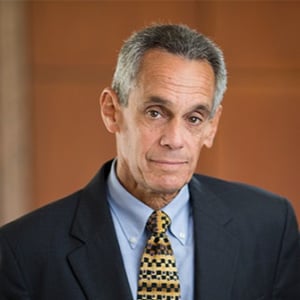
Partner, Boies Schiller Flexner LLP
Rich’s primary practice area is complex litigation, with a particular emphasis on antitrust matters. He frequently represents plaintiffs and defendants in private litigation, in addition to representing parties and third parties in the context of DOJ, FTC, and State Attorney General investigations and litigation. He also advises clients regarding transactions—both their own and those of others—including mergers or acquisitions that may be subject to review by federal, state, or international antitrust authorities. His experience includes both criminal and civil antitrust jury trials, and he is relied upon by clients for clear and practical guidance shaped by years of experience in antitrust enforcement and private practice.
Rich rejoined the firm in December 2013 after serving for four years as the Director of the Bureau of Competition at the Federal Trade Commission. He directed the FTC’s antitrust enforcement activity during a period when approximately 80 enforcement actions were initiated in a wide variety of industries. Major matters included, among others, two victories in the Supreme Court (involving pay-for-delay and state action), successful challenges to hospital mergers, and Intel and Google consent orders. He also participated directly in drafting and implementing the 2010 Horizontal Merger Guidelines.
Prior to serving as Bureau Director, Rich was a partner in the firm’s Washington D.C. office from 2001 to 2009. From October 1998 to June 2001, he served as an Assistant Director of the Bureau of Competition, in charge of the Health Care Services and Products Division. The work of that Division focused on antitrust enforcement in the health care industry, including anticompetitive practices and mergers involving health care providers, and anticompetitive conduct in the pharmaceutical industry.
Before initially entering private practice in 1985, Rich worked as a trial attorney in the Antitrust Division of the U.S. Department of Justice, and also served as Acting Deputy Director of the Division’s Office of Policy Planning and as Acting Assistant Chief of the Division’s Energy Section.
Research Manager, American Economic Liberties Project
Laurel manages AELP’s team of policy analysts and coordinates with expert advisors and fellows to develop original research and policy briefs. An experienced attorney, she also frequently writes and speaks about high profile court cases that impact the economic liberties of the American people.
In private practice, Laurel represented firms of all sizes– from startups to Fortune 500 companies– spanning a wide variety of industries, from software to generic pharmaceuticals to semiconductors. At Comar Mollé LLP, a boutique firm that specializes in serving startups and investors, she provided strategic counseling on employment, privacy, and transactional matters. At Goodwin Procter LLP, a global biglaw firm, she litigated high stakes patent and complex commercial disputes and counseled clients on technology transactions.
Before joining AELP, Laurel researched competition policy issues for the Balanced Economy Project in Europe. Earlier in her career, she analyzed legislation promoting access to essential medicines at the World Health Organization, coordinated patent law training workshops for Vietnamese research institutions through the Public Intellectual Property Resource for Agriculture, and developed public outreach materials for the American Association for the Advancement of Science. She has also developed and taught courses on topics ranging from legal practice skills to emerging policy issues.

Partner, Global Chair, Antitrust and Competition, Fried Frank
Bernard A. Nigro Jr. (“Barry”) is Global Chair of Fried Frank's Antitrust and Competition Department. Barry previously served as the Department of Justice’s Principal Deputy Assistant Attorney General for Antitrust and the Federal Trade Commission’s Deputy Director for the Bureau of Competition.
During his almost 40 years of practice and government service, Barry has handled hundreds of civil and criminal matters in dozens of industries ranging from concrete to high tech and everything in between. For example, Barry has been involved in some of the largest M&A transactions during the past decade, served as the antitrust compliance monitor in United States v. Apple Inc. (S.D.N.Y. 2013), worked on a variety of cartel matters, and counseled on complex compliance and litigation matters. While in government, Barry supported the rollout of the Procurement Collusion Strike Force, an initiative to modernize the merger review process, and revisions to the merger guidelines and remedies policies.
Barry is recognized as a leader by Chambers USA: America’s Leading Lawyers for Business, a “Leading Lawyer” by Legal 500 in Antitrust: Merger Control, and a “Global Leader” by Who’s Who Legal: Competition. Clients say "Barry is very adept at getting deals across the finish lines. He knows the inside game very well," “he is a skilled and knowledgeable antitrust lawyer with a very practical approach,” and “knows how to marry business and antitrust.” Other clients describe him as “the rare combination of DOJ and FTC expertise that is invaluable to clients who need to understand the agencies’ latest thinking” and note that “his decades of experience generally, and recent experience as the number-two lawyer in the Antitrust Division, make him a knowledgeable and skilled counselor on a broad array of government enforcement matters.” Clients say he is “fabulous” and “figures out quickly what’s important and focuses energies there.” Clients also report that “[n]o one compares to Barry Nigro in terms of goodwill” and note his “years of experience make his counsel and perspective, particularly seeing what is coming down the road, exceptional.”
Barry’s commitment to public service includes having served as Vice Chair of the American Bar Association’s Section of Antitrust Law (numbering over 10,000 members from across the globe), President of the George Washington University Law Alumni Association, a member of the Executive Committee of Higher Achievement’s DC President’s Council, a member of St. Albans School’s Development Committee, a member of Bishop Ireton High School’s Campaign Leadership Committee, and a member of Georgetown University’s Class of 1982 Executive Committee, among many other roles.
Alexander Hamilton Professor of Business Law, George Washington University Law School
Barak Richman’s primary research interests include the economics of contracting, new institutional economics, antitrust, and healthcare policy. His work has been published in the Columbia Law Review, the University of Pennsylvania Law Review, Law and Social Inquiry, the New England Journal of Medicine, the Journal of the American Medical Association, and Health Affairs. In 2006, he co-edited with Clark Havighurst a symposium volume of Law and Contemporary Problems entitled "Who Pays? Who Benefits? Distributional Issues in Health Care,” and his book Stateless Commerce was published by Harvard University Press in 2017.
Professor Richman represented the NFL Coaches Association in an amicus curiae brief in American Needle v. The Nat’l Football League, which was argued before the U.S. Supreme Court in January 2010 and again in Brady v. The Nat’l Football League in 2011. His recent work challenging illegal practices by Rabbinical Associations was featured in the New York Times. And in 2020, he was a member of the Working Group on Platform Scale at Stanford University’s Program on Democracy and the Internet that proposed middleware as a solution to stem the economic and political power of dominant internet platforms.
Professor Richman is also a Senior Scholar at the Clinical Excellence Research Center at the Stanford University School of Medicine and is currently a special counsel for competition policy at the Department of Health and Human Services. He won Duke Law School's Blueprint Award in 2005 and was named Teacher of the Year in 2010. He has had visiting appointments at Columbia, Harvard, and Stanford.
Professor Richman has an AB, magna cum laude, from Brown University, a JD, magna cum laude, from Harvard Law School, and a PhD from the University of California, Berkeley, where he studied under Nobel Laureate in Economics Oliver Williamson. He served as a law clerk to Judge Bruce M. Selya of the United States Court of Appeals for the First Circuit, and from 1994-1996 he handled international trade legislation as a staff member of the United States Senate Committee on Finance, then chaired by Senator Daniel Patrick Moynihan
Elizabeth and Thomas Holder Chair, Scheller College of Business, Georgia Institute of Technology
Peter Swire has been a leading privacy and cyberlaw scholar, government leader, and practitioner since the rise of the Internet in the 1990’s. He came to the Georgia Institute of Technology in 2013, where he is the Elizabeth and Tommy Holder Chair in the Scheller College of Business, and Professor in the School of Cybersecurity and Privacy. He is senior counsel with the law firm of Alston & Bird LLP.
Swire served as one of five members of President Obama’s Review Group on Intelligence and Communications Technology. Prior to that, he was co-chair of the global Do Not Track process for the World Wide Web Consortium. He is a Senior Fellow with the Future of Privacy Forum, and has served on the National Academy of Sciences & Engineering Forum on Cyber Resilience.
Under President Clinton, Swire was the Chief Counselor for Privacy, in the U.S. Office of Management and Budget, the first person to have U.S. government-wide responsibility for privacy policy. Under President Obama, he was Special Assistant to the President for Economic Policy.
Senior Fellow, Governance Studies, The Brookings Institution
Benjamin Wittes is a senior fellow in Governance Studies at The Brookings Institution. He co-founded and is the editor-in-chief of the Lawfare blog, which is devoted to sober and serious discussion of "Hard National Security Choices," and is a member of the Hoover Institution's Task Force on National Security and Law. He is the author of Detention and Denial: The Case for Candor After Guantanamo, published in November 2011, co-editor of Constitution 3.0: Freedom and Technological Change, published in December 2011, and editor of Campaign 2012: Twelve Independent Ideas for Improving American Public Policy (Brookings Institution Press, May 2012). He is also writing a book on data and technology proliferation and their implications for security. He is the author of Law and the Long War: The Future of Justice in the Age of Terror, published in June 2008 by The Penguin Press, and the editor of the 2009 Brookings book, Legislating the War on Terror: An Agenda for Reform.
His previous books include Starr: A Reassessment, published in 2002 by Yale University Press, and Confirmation Wars: Preserving Independent Courts in Angry Times, published in 2006 by Rowman & Littlefield and the Hoover Institution.
Between 1997 and 2006, he served as an editorial writer for The Washington Post specializing in legal affairs. Before joining the editorial page staff of The Washington Post, Wittes covered the Justice Department and federal regulatory agencies as a reporter and news editor at Legal Times. His writing has also appeared in a wide range of journals and magazines including The Atlantic, Slate, The New Republic, The Wilson Quarterly, The Weekly Standard, Policy Review, and First Things.
Benjamin Wittes was born in Boston, Massachusetts. He graduated from Oberlin College in 1990, and he has a black belt in taekwondo.
Presiding Judge, Georgia Court of Appeals
Presiding Judge Stephen Louis A. Dillard was appointed as the 73rd judge of the Court of Appeals of the State of Georgia on November 1, 2010 by Governor Sonny Perdue. Prior to his appointment, Judge Dillard was in private practice with James, Bates, Pope & Spivey in Macon, serving as chairman of the firm’s appellate practice group. Judge Dillard was elected and then reelected by his fellow Georgians in 2012, 2018, and 2024. On July 1, 2017, Judge Dillard was sworn in as the 30th Chief Judge of the Court of Appeals of Georgia for a two-year term that ended on June 30, 2019. He currently serves as the presiding judge of the Court’s Fourth Division, and will begin serving as the presiding judge of the Court’s Third Division in 2026.
Judge Dillard was born in Nashville, Tennessee on November 13, 1969. He attended and graduated from Hillwood High School in Nashville, Tennessee; Samford University (B.A. 1992); Mississippi College School of Law (J.D., cum laude, 1996); and Duke University School of Law (LL.M., Judicial Studies, 2025). In college, Judge Dillard was a member of The Sigma Chi Fraternity and Omicron Delta Kappa. He was also given the Evelyn Meadows Historical Essay Award, as well as the William McMillian Rogers Colonial Dames Overall Essay Award, for “The Tempting of America to be America: Alexander Hamilton and the Federalist Papers.” During law school, Judge Dillard was a member of the Moot Court Board and received the Judge Robert G. Gillespie Outstanding Achievement in Appellate Advocacy Award, as well as the American Jurisprudence Award in Appellate Advocacy. He also served as president of the Mississippi College Chapter of the Federalist Society for Law and Public Policy Studies.
After graduating from law school, Judge Dillard joined the Macon law firm of Stone and Baxter, where he practiced from 1996 until 2001. In September 2001, he left private practice for a two-year period to serve as a law clerk at the U.S. Court of Appeals for the Seventh Circuit for Judge Daniel A. Manion (who was appointed by President Ronald W. Reagan in 1986 and served until 2022). In September 2003, Judge Dillard joined James Bates as of counsel, specialized in appellate practice and complex litigation, and served as chairperson of the firm’s appellate practice group. While in practice, he received an AV® Preeminent™ Peer-Review Rating from Martindale-Hubbell and was named by Super Lawyers as one of Georgia’s “rising stars.”
Additionally, Judge Dillard was appointed by Governor Sonny Perdue to the Judicial Nominating Commission and the Public Defender Selection Panel for the Macon Judicial Circuit. He has published scholarly essays in the Encyclopedia of Civil Liberties, the Encyclopedia of Great American Judges, the Encyclopedia of Great American Lawyers, Judicature, the Green Bag Almanac & Reader, the Journal of Appellate Practice & Process, as well as two articles in the Mercer Law Review regarding the inner workings and culture of the Court of Appeals of the State of Georgia. He was also a participating lawyer with the Criminal Justice Act Appellate Panel for the U.S. Court of Appeals for the Eleventh Circuit, handling pro bono publico appeals for indigent individuals. Judge Dillard is a member of the State Bar of Georgia’s Appellate Practice and Judicial Sections, the Macon Bar Association, the Atlanta Bar Association, the Lawyers Club of Atlanta, the Saint Thomas More Society, the Judge Clarence Cooper American Inn of Court, the Logan E. Bleckley American Inn of Court, the William Augustus Bootle American Inn of Court, the Federalist Society for Law and Public Policy Studies, the Palaver Club of Macon, and the Samford Bulldog Club. He also has served as a mentor for The Appellate Project, which is “focused on empowering law students of color to pursue appellate work.”
Since joining the Court of Appeals, Judge Dillard has spoken to numerous organizations, participated in countless state and national seminars, held a wide variety of leadership positions, and received many awards. In 2025, one of Judge Dillard’s opinions—his concurrence in Board of Commissioners of Brantley County v. Brantley County Development Partners LLC et al.—was selected by The Green Bag Almanac and Reader as one of its works of “exemplary writing.” Judge Dillard was also named as the Milvain Chair in Advocacy by the University of Calgary Law Faculty that year, and he is the first American jurist and 43rd person to ever receive this honor. In 2024, Judge Dillard was appointed by Chief Justice Michael P. Boggs as co-chair of the Supreme Court of Georgia’s Study Committee on Legal Regulatory Reform, joined The Legal Accountability Project’s Advisory Board, and also gave the “Last Senior Lecture” to the Samford University Class of 2024. In 2023, Judge Dillard began serving his second term on Samford University’s Board of Overseers, and started the L.L.M. program for Judicial Studies at the Duke University School of Law. In 2022, he began serving on the Communications Committee of the Council of Chief Judges of the State Courts of Appeal. In 2021, Judge Dillard was given the “Significant Sig” award by The Sigma Chi Fraternity (one of its highest honors), which “recognizes those alumni members whose exemplary achievements in their fields of endeavor have brought great honor and prestige to the name of Sigma Chi.” He also began serving that year on the Dean Search Committee for Samford University’s Cumberland School of Law, and completed his work on that committee in April 2022. In 2020, Judge Dillard began serving his second two-year term as the president of the Samford University Alumni Association, a three-year term on Samford University’s Board of Overseers, as an advisor to the Pi Chapter of The Sigma Chi Fraternity at Samford University, and as a member of the Samford University Presidential Search Committee and the Samford University Task Force on Racial Justice. He was also given the Distinguished Judicial Service Award that year by the Young Lawyers Division of the State Bar of Georgia for the second time in his career. In 2019, Judge Dillard began teaching Appellate Practice and Procedure at Mercer University Law School and joined the National Advisory Board for The Constitutional Sources Project (“ConSource”), an organization dedicated to increasing access to and understanding of the United States Constitution and its history and creation. He was also named that year as the “Tweeter Laureate” of Georgia by the Georgia House of Representatives, as one of Atlanta’s 500 most powerful leaders by Atlanta Magazine, and as “Best Social Mediator” by the Fulton County Daily Report. In 2018, Judge Dillard began serving his first two-year term as president of the Samford University Alumni Association, as well as a member of the Samford University Athletic Director’s Cabinet. He also began his service that year as a member of the Supreme Court of Georgia’s Justice for Children Committee. In 2017, Judge Dillard was named Samford University’s “Alumnus of the Year,” which is the highest honor the university bestows on its graduates. In 2016, Judge Dillard began serving a two-year term as president of Samford University’s Atlanta Alumni chapter. He was also appointed that year as the co-chairperson of the Georgia Judicial Council’s Strategic Plan Standing Committee, and as a member of the Council’s Standing Committee on Technology. Finally, he was also named Samford University’s 2016 “Featured Alumnus” for the Howard College of Arts and Sciences. In 2015, Judge Dillard was appointed by Governor Nathan Deal to the Georgia Appellate Jurisdiction Review Commission. He was also appointed that year to serve on the Georgia Judicial Council, and as the chairperson of the Court Reporting Matters Committee. In 2014, Judge Dillard was named the “State Judge of the Year” by his alma mater, the Mississippi College School of Law, for his outstanding judicial service; and he also received the “Fastcase 50” award, which honors leaders in the world of law, scholarship, and legal technology. In 2013, Judge Dillard was awarded the Distinguished Judicial Service Award by the Young Lawyers Division of the State Bar of Georgia, recognizing his outstanding service on the bench and commitment to improving the practice of law. In 2012, Judge Dillard was appointed to the Code of Judicial Conduct Review Committee by Chief Judge John J. Ellington, and he also began serving as the special consultant to the Georgia High School Mock Trial Committee.
Among his many accomplishments in leadership at the Court of Appeals, Judge Dillard restructured the Court’s Central Staff Attorney Office, advocated for and implemented livestreaming and archiving of the Court’s oral arguments, helped design and shepherd a complete overhaul of the Court’s operational structure, had the primary responsibility for overseeing the Court’s move to the Nathan Deal Judicial Center (during his time as chief judge), drafted numerous Court rules (including the rule abolishing “physical precedent”) and IOM revisions, and lead the implementation of the Court’s transition to its first typography change in twenty years (i.e., the “Equity” font). Finally, he created, designed, and continues to oversee the Judge Herbert E. Phipps Fellowship program in partnership with Morehouse College.
Judge Dillard is married to the former Krista McDaniel, and they have three children. He is a parishioner of Saint Joseph Catholic Church and the former president of the School Board for Saint Joseph’s Catholic School.
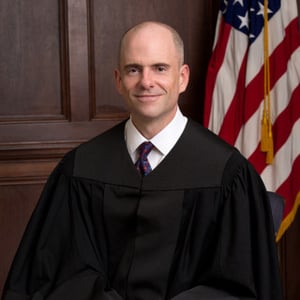
Judge, United States Court of Appeals, Eleventh Circuit
Judge Kevin C. Newsom is a member of the United States Court of Appeals for the Eleventh Circuit. He sits in Birmingham, Alabama.
Before his appointment to the bench, Judge Newsom was the head of the appellate practice group at Bradley Arant Boult Cummings LLP and, before that, the Solicitor General of Alabama. As a practicing lawyer, Judge Newsom argued four cases in the Supreme Court of the United States, and nearly 40 more in the United States Courts of Appeals and state supreme and appellate courts.
Judge Newsom graduated summa cum laude from Samford University and magna cum laude from Harvard Law School, where he was an articles editor on the Harvard Law Review. Following law school, Judge Newsom clerked for Judge Diarmuid F. O’Scannlain of the United States Court of Appeals for the Ninth Circuit and Justice David H. Souter of the Supreme Court of the United States.
Judge Newsom teaches at Harvard Law School, Yale Law School, Stanford Law School, and the University of Chicago Law School. His published work has appeared in the Yale Law Journal and the Harvard Law Review.
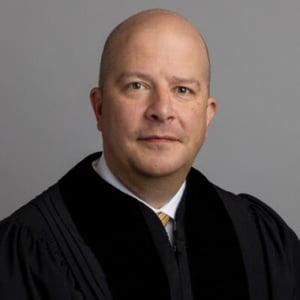
Chief Justice, Supreme Court of Georgia
Chief Justice Nels Peterson was appointed to the Georgia Supreme Court in 2016, and was elected to full six-year terms in 2018 and 2024. He previously served in a variety of other roles in Georgia state government, including as judge on the Georgia Court of Appeals, general counsel for the University System of Georgia, Georgia’s first solicitor general in the Attorney General’s Office, and executive counsel to the Governor.
Before entering state government, Nels practiced at King & Spalding LLP in Atlanta and clerked for Chief Judge William H. Pryor Jr. of the United States Court of Appeals for the Eleventh Circuit. He is a graduate of Kennesaw State University and Harvard Law School. Nels and his wife Jennifer have two children and live in Cobb County, where they teach adult Sunday school at Johnson Ferry Baptist Church.

Chairman and Founder, Institute for Free Speech; Josiah H. Blackmore II/Shirley M. Nault Designated Professor of Law, Capital University Law School
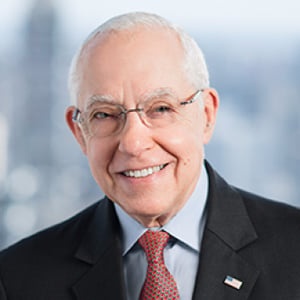
Former United States Attorney General
Michael B. Mukasey is the former Attorney General of the United States, the nation’s chief law enforcement officer. As Attorney General from November 2007 to January 2009, he oversaw the U.S. Department of Justice and advised on critical issues of domestic and international law.
From 1988 to 2006, Judge Mukasey served as a district judge in the United States District Court for the Southern District of New York, becoming Chief Judge in 2000.
From 1972 to 1976, Judge Mukasey served as an Assistant United States Attorney for the Southern District of New York, and as Chief of the Official Corruption Unit from 1975 to 1976. His practice consisted of criminal litigation on behalf of the government, including investigation and prosecution of narcotics, bank robbery, interstate theft, securities fraud, fraud on the government and bribery. From 1976 to 1987 and from 2006 to 2007 he was in private practice.
Judge Mukasey has received numerous honors, including the Federal Bar Council’s Learned Hand Medal for Excellence in Federal Jurisprudence. He served as Chairman of the Committee on Public Access to Information and Proceedings of the New York Bar Association from 1984 to 1987. He served on the Federal Courts Committee of the Association of the Bar of the City of New York from 1979 to 1982 and its Communications Law Committee from 1983 to 1986. Judge Mukasey was also a part-time lecturer at Columbia School of Law from January 1993 to May 2007, teaching trial advocacy.
He received his LL.B. from Yale Law School in 1967 and his B.A. from Columbia College in 1963.

Thomas M. Siebel Senior Fellow, The Hoover Institution, Stanford University; Gary T. Schwartz Distinguished Professor of Law Emeritus, UCLA School of Law
Eugene Volokh is the Thomas M. Siebel Senior Fellow at the Hoover Institution (Stanford), as well as the Gary T. Schwartz Distinguished Professor of Law Emeritus and Distinguished Research Professor at UCLA School of Law. He recently retired from teaching at UCLA, after 30 years there, and is now focusing on research.
Volokh is the author of the textbooks The First Amendment and Related Statutes (8th ed. 2023), and Academic Legal Writing (5th ed. 2016), as well as over 100 academic law journal articles, mostly on First Amendment law. He is a member of The American Law Institute; the editor-in-chief of the Journal of Free Speech Law; and the creator and coauthor of The Volokh Conspiracy, a leading legal blog founded in 2002 (hosted at the Washington Post from 2014 to 2017 and now at Reason Magazine).


Time for a Checkup: Evaluating the Withdrawal of the Health Care Antitrust Guidelines
Adam Biegel, John D. Carroll, Richard A. Feinstein, Laurel Kilgour, Bernard A. Nigro, Barak D. Richman
In 1996, the FTC and DOJ issued Statements of Antitrust Enforcement Policy in Health Care. ...
"Going Dark" and the Intersection of Law Enforcement and Privacy Interests
TeleforumIt’s Not Child’s Play: What Are the Roles of Parents and the Government in Raising Children?
Atlanta, GeorgiaU.S. Supreme Court Update: Noteworthy Cases on the Horizon and Key Decisions from Last Spring
Atlanta, GeorgiaThe Annual Summer Barbeque
Atlanta, GeorgiaCitizens United, McCutcheon, and the Supreme Court’s Campaign Finance Jurisprudence
AtlantaNational Security, Privacy and the Constitution – Myth and Reality
Atlanta, Georgia[The] Sky [is] Fall[ing]: Slippery Slope Arguments
Atlanta, GeorgiaNever Say Never (to Commerce) Again: An Introduction to the Georgia Department of Economic Development
Atlanta, GeorgiaLive and Let Sine Die: A Preview of the 2014 Georgia Legislative Session
Atlanta, Georgia