
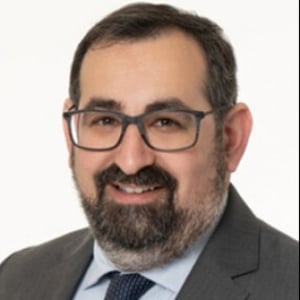
Research Scholar in Law and Executive Director, Center for Academic Freedom and Free Speech, Yale Law School
Joe Cohn is a research scholar in law at Yale Law school and the executive director of the Center for Academic Freedom and Free Speech (CAFFS).
Cohn has served as a staff attorney at the AIDS Law Project of Pennsylvania, a staff attorney for the Court of Appeals for the 3rd Circuit, an adjunct professor of law at the University of Pennsylvania Law School, where he supervised law students representing clients in litigation in state and federal courts, and as the interim legal director for ACLU affiliates in Nevada and Utah.
A majority of Cohn’s career has been dedicated to defending civil liberties on college campuses and free expression in society at large. As the Foundation for Individual Rights and Expression’s (FIRE’s) founding legislative and policy director, from 2012 to 2023, he testified on numerous occasions in legislatures across America and in Congress, drafted legislation on campus free speech, campus due process, and academic freedom that has been enacted in states across the country. Immediately before joining CAFFS, Cohn advocated for open inquiry, viewpoint diversity, and constructive disagreement in higher education as Heterodox Academy’s director of policy.
Cohn writes extensively on civil liberties, with articles published in a wide array of media outlets, including the Wall Street Journal, the Washington Post, Newsweek, the Hill, the New York Daily News, the Chicago Tribune, the Las Vegas Review Journal, the Minnesota Star Tribune, the Chronicle of Higher Education, Inside Higher Ed, and the Volokh Conspiracy.
He earned his bachelor of arts from the University of Nevada at Las Vegas in 2000. He is a 2004 graduate of the University of Pennsylvania Carey School of Law and the Fels Institute of Government Administration, where he earned his J.D. and M.A. in Government Administration.
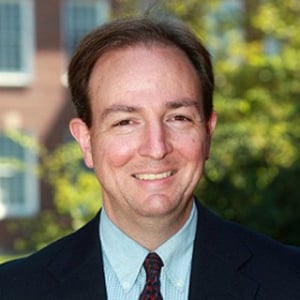
Political Science, Professor and Department Chair, University of Nebraska Omaha
Carson Holloway is Department Chair and Professor of Political Science at the University of Nebraska, Omaha and a Washington Fellow in the Claremont Institute’s Center for the American Way of Life. He is the author most recently of No Liberty to Libel: The Constitutional Case Against New York Times v. Sullivan (Encounter Books, 2026). He is co-editor, with Bradford P. Wilson, of The Political Writings of Alexander Hamilton (Cambridge University Press, 2017) and The Political Writings of George Washington (Cambridge University Press, 2023). He has held visiting fellowships in Princeton University’s James Madison Program in American Ideals and Institutions and at the Heritage Foundation. His scholarly articles have appeared in the Review of Politics, Interpretation, and Perspectives on Political Science, and he has written public commentary for The New Criterion, First Things, National Affairs, Public Discourse, National Review, Law and Liberty, The Federalist, the American Spectator, and the American Conservative.
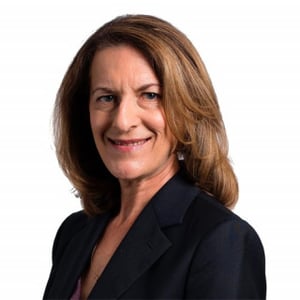
Partner, Thomas & LoCicero PL
Carol is the managing partner in TLo's Tampa office. She practices at the trial and appellate levels, handling litigation concerning defamation and privacy, the Public Records Act, the Government in the Sunshine Law, court access and cameras in the courtroom. She leads advocacy efforts on media issues, including cameras in the courtroom, and sealed court records.
Carol is a nationally-recognized media lawyer routinely sought after as a speaker on media issues at national and statewide conferences. She often leads statewide advocacy efforts on media issues, most recently involving access to Florida courts and Florida’s anti-SLAPP law. Carol regularly renders pre-and post-publication advice on investigative news stories. She handles issues concerning newsgathering and technology – including smartphones, social media and drones. Carol has litigated many cases resulting in published opinions. In addition to media law, Carol is experienced in marketing law, web law and intellectual property matters. She manages trademark portfolios, policing programs and litigation for sophisticated corporations.
Carol is the Immediate Past Chair for the First Amendment Foundation's Board of Trustees. She is a former board member of the Junior League of Tampa, former vice-chair of the Media Law Committee of The Florida Bar, and is a governing committee member of the ABA Forum on Communications Law. She has litigated capital habeas cases with other lawyers in the firm. Carol also serves as the Program Coordinator for End 68 Hours of Hunger – Tampa, a charity dedicated to eradicating hunger among school children. She is an active member of Hyde Park Presbyterian Church.
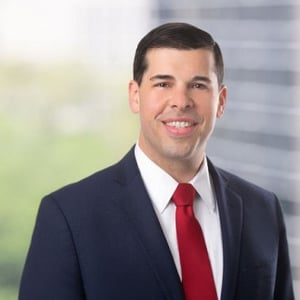
Partner, Boies Schiller Flexner LLP
Jesse, the former third-ranking official at the U.S. Department of Justice, helps clients with their most difficult litigation and regulatory issues─whether that means defending against an enforcement action, pursuing high-stakes litigation and appeals, navigating regulatory thickets at federal and state agencies, or crafting a comprehensive strategy to manage a crisis. He approaches these problems with the knowledge gained both from his broad private-practice experience and from having served at the highest levels of federal and state government.
Jesse has experience across a range of substantive and regulatory areas. He has sued the federal government and has also been one of its top law-enforcement officials; he has represented states and has also navigated their regulatory agencies on behalf of clients; and he has represented companies in business disputes, both as defendants and plaintiffs.
Before joining the firm, Jesse was the Acting Associate Attorney General at the United States Department of Justice. In that role, he oversaw the civil and criminal work of the Antitrust, Civil, Civil Rights, Environment and Natural Resources, and Tax Divisions. During Jesse’s tenure, the Associate’s office closely managed the Department’s most significant litigation, including matters involving large financial institutions, healthcare companies, automakers, energy companies, and state and local governments. In addition, Jesse served as Chair of DOJ’s Regulatory Reform Task Force and Vice Chair of DOJ’s Task Force on Market Integrity and Consumer Fraud. Jesse regularly provided legal and strategic advice to the highest-level decision makers in the federal government, including the Attorney General and Deputy Attorney General, general counsels across the spectrum of federal agencies, and White House officials.
Jesse served for three years as the secretary of Florida’s labor, economic-development, and land-use agency, the Florida Department of Economic Opportunity. Before that, he served as Governor (now Senator) Rick Scott’s general counsel.
Jesse maintains offices in both Washington D.C. and Florida. From Washington, he focuses on federal litigation and crisis management. In Florida, in addition to federal litigation, Jesse employs his knowledge of state government and regulation to help clients in courts across the state, from trial through the Florida Supreme Court.
Jesse currently serves on the Florida Supreme Court Judicial Nominating Commission, the body that provides the governor with nominees for appointment to the Florida Supreme Court. Jesse is also a fellow at the Center for the Study of the Administrative State at the Scalia Law School at George Mason University, where he writes and speaks about administrative law.
Counsel, Clare Locke
Jered is an experienced litigator relied upon by his clients to deliver practical and exacting legal advice guided by sound business judgment. He has spent his career representing clients ranging from Fortune 500 companies to controversial high-profile figures in sensitive and sometimes existential crises requiring extraordinary discretion.
Prior to joining Clare Locke, Jered was the chief legal officer of media non-profit Project Veritas, through which he managed a team of lawyers working on reputational risk. During his time at Veritas, Jered and his team obtained over five dozen corrections and retractions and avoided countless more inaccurate articles. Jered also oversaw a portfolio of defamation lawsuits, including Project Veritas’ lawsuit against The New York Times in which Clare Locke defeated The Times’ motion to dismiss – the first defamation case to survive New York’s newly-expanded anti-SLAPP law.
Jered has successfully represented clients in litigation and appeals in federal and state courts across the country. Throughout his career, Jered has handled a variety of matters, including media liability, fraud and deceptive trade practices, financial services, construction and real estate, bankruptcy, and harassment. Jered served as lead trial counsel in securing one of 2019’s top 50 highest bench awards in the United States in a real estate dispute, and in obtaining a first-of-its-kind national injunction and receivership over a fraudster leading to federal incarceration and a permanent restraining order.
Associate Justice, Minnesota Supreme Court (ret.)
Former Minnesota Supreme Court Justice Barry Anderson is a 1976 graduate of Gustavus Adolphus College in St. Peter, Minnesota and a 1979 graduate of the University of Minnesota Law School. He was a member of the Minnesota Court of Appeals from August 1998 until his appointment to the Supreme Court. He was sworn in and joined the court on October 13, 2004, and served through to his retirement on May 10, 2024.
He previously was a partner in the Minneapolis and Hutchinson law firm of Arnold, Anderson & Dove, PLLP, and also served the City of Hutchinson as City Attorney from 1987 to 1998. He is certified by the Minnesota State Bar Association as a civil trial specialist.
Justice Anderson’s background includes substantial public service including as a board member and chair of variety of community organizations including service clubs, task forces and a local public access channel as well as a wide variety of other community activities.
Justice Anderson also served on the Minnesota Judicial Council, the managing body for the Minnesota Judicial Branch. He is also a frequent contributor to continuing legal education efforts on both appellate advocacy issues as well as general trial practice.
Partner, Clare Locke LLP
Libby is one of the country’s most sought-after libel lawyers. She is a trusted counselor and fierce advocate for Fortune 100 companies and high-profile individuals facing existential reputational attacks from the national media and other influential publishers, achieving remarkable results for her clients both in and outside the courtroom. Court watchers have called her “as good as they get,” “aggressive and not afraid to litigate,” and someone who has the media savvy to handle high profile matters in the public eye.
After co-founding Clare Locke LLP in 2014, Libby rapidly rose to national prominence for a highly-publicized multi-million dollar trial victory against Rolling Stone magazine about a fabricated gang rape at a University of Virginia fraternity. In 2019, she was lead trial counsel and won a $26 million federal jury verdict on behalf of a successful North Carolina businessman who was defamed by a public company during a proxy fight. A commentator opined that “she was excellent in trial and she eviscerated the other side,” and the federal judge concluded that her vigorous cross-examination “exposed [Defendant’s] CEO as a non-credible witness.” A skilled appellate advocate and former federal circuit clerk, in 2019 Libby achieved a rare win against The New York Times on behalf of former Gov. Sarah Palin in the U.S. Court of Appeals for the Second Circuit arising out of a false and defamatory editorial. She is actively litigating matters against a variety of mainstream news outlets, including CNN and The New York Times.
Libby’s success in the courtroom gets her results in the newsroom. She regularly advises clients and their PR counsel in dealing with the national media in crisis situations, and some of her biggest wins are the false stories the public will never hear about. She has killed flawed articles, storylines, and broadcast segments in outlets including in The New York Times, The Washington Post, Vanity Fair, The National Enquirer, and on Bloomberg, CBS and The Dr. Oz Show. Libby has also vindicated her clients’ reputations by obtaining myriad retractions of false publications. Examples include securing a $3.375 million settlement and video apology from the Southern Poverty Law Center, a complete retraction of a Bloomberg podcast, a multi-article correction from The Chicago Tribune, and the removal of a paperback edition book from publication by Simon & Schuster.
Recognized as an expert in libel law and the First Amendment, Libby has been ranked as a Band 1 global defamation/reputation management provider in Chambers & Partners HNW directory every year since its inception in 2016, and a Band 1 First Amendment Litigator in Chambers & Partners USA in 2020. She has numerous national awards and accolades from the National Law Journal, including being named as one of D.C.’s 40 Under 40 in 2019. She is regularly asked to speak on issues involving the First Amendment, media, and reputation, including publishing multiple op-eds in The Wall Street Journal and appearing as a guest on Fox News, CNN, and ABC’s 20/20. Libby has also served as an adjunct professor at Georgetown University Law Center and George Washington University Law School.
Libby graduated from NYU’s College of Arts and Science with a degree in Politics and Economics, and she received her J.D. from Georgetown University Law Center. After law school, she clerked on the U.S. Court of Appeals for the Fifth Circuit, and then began her career in private practice at Kirkland & Ellis. Perhaps the accomplishment of which she is most proud, Libby is a mom of five. She lives in Alexandria, Virginia with her husband and law partner, Tom Clare, their children, and the world’s most spoiled Labrador Retriever, Gipper.
Executive Director, Center for Law, Science and Innovation, Sandra Day O'Connor College of Law
Josh Abbott serves as Executive Director of the Center for Law, Science & Innovation at Arizona State University’s Sandra Day O’Connor College of Law. His research interests focus on the ethical, legal, and social issues surrounding new and emerging digital technologies. He is currently collaborating on a grant project on “Soft Law” Governance of AI technologies. He also organizes ASU’s annual conference on Governance of Emerging Technologies and Science (GETS) as well as the ASU-Arkfeld eDiscovery, Law and Technology Conference. Prior to joining the College of Law, Josh worked as an attorney in Washington, D.C., where his practice focused on international telecom regulation and antitrust litigation.
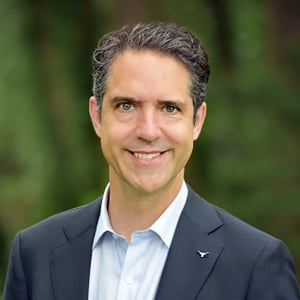
James A. Baker III Chair in the Rule of Law and World Affairs and Associate Dean for Academic Affairs, The University of Texas at Austin School of Law
Bobby Chesney holds the James Baker Chair and also serves as the Associate Dean for Academic Affairs at the University of Texas School of Law. In addition, he is the Director of the Robert S. Strauss Center for International Security and Law, a University-wide research unit bridging across disciplines to improve understanding of international security issues.
In 2009, Professor Chesney served in the Justice Department in connection with the Detention Policy Task Force created by Executive Order 13493. He also previously served the Intelligence Community as an associate member of the Intelligence Science Board and as a member of the Advanced Technology Board. In addition to his current positions at the University of Texas, he is a member of the American Law Institute, and a senior editor for the Journal of National Security Law & Policy, and a former non-resident Senior Fellow of the Brookings Institution.
Professor Chesney is a co-founder and contributor to www.lawfareblog.com, the leading source for analysis, commentary, and news relating to law and national security. In addition to his blogging at Lawfare, those interested in national security law should consider following Professor Chesney on Twitter (@bobbychesney) as well as subscribing to the National Security Law Podcast (which he co-hosts with his colleague Steve Vladeck). Professor Chesney's scholarship focuses on U.S. national security policies and institutions, encompassing both domestic and international law issues. His articles may be downloaded from SSRN here.
Professor Chesney is a magna cum laude graduate of both Texas Christian University and Harvard Law School. After law school he clerked for the Honorable Lewis A. Kaplan of the United States District Court for the Southern District of New York and the Honorable Robert D. Sack of the United States Court of Appeals for the Second Circuit. He then practiced with the firm Davis Polk & Wardwell in New York (litigation), before beginning his academic career with Wake Forest University School of Law. There he received a teacher of the year award from the student body in one year, and from the school's dean in another. In 2008 he came to the University of Texas School of Law as a visiting professor, and then joined UT on a permanent basis in 2009. He became the Associate Dean for Academic Affairs in 2011.
Professor Chesney teaches a variety of courses, including: Constitutional Law, National Security Law, Foundations of Cybersecurity: Law, Institutions, and Policy; Law of the Intelligence Community; History of U.S. Counterterrorism Law & Policy: 1970 to Present; Evidence, Civil Procedure, and an array of seminars. He is from San Antonio.
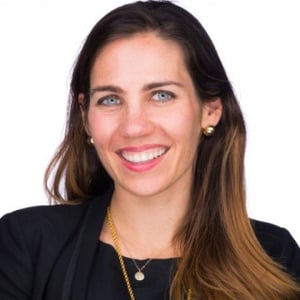
Adjunct Professor of Law, Scalia Law; Google, Corporate Counsel
Kathryn Ciano Mauler currently serves as a Corporate Counsel at Google. Prior to Google, Kathryn was Senior Regulatory Counsel at Uber Technologies, and also spent three years at i360, LLC as General Counsel. Before this, she also worked at a boutique law firm in Washington, D.C. and at the Institute for Justice.
She received her B.A. from the University of Florida. She also received her business degree from the University of Florida - Warrington College of Business, studying at the Ecole supérieure de Commerce de Toulouse in France. Kathryn's J.D. is from the George Mason University School of Law.
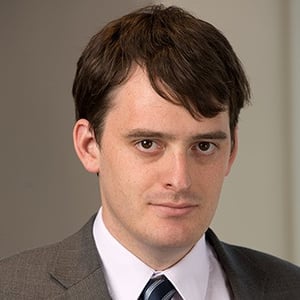
Head of Tech & Innovation, Centre for Policy Studies
Matthew Feeney is Head of Tech & Innovation at Centre for Policy Studies. Before joining CPS, Matthew was the director of Cato Institute’s Project on Emerging Technologies. His writing has appeared in The New York Times, The Washington Post, City A.M., and others. He received both his BA and MA in philosophy from the University of Reading.

Thomas M. Siebel Senior Fellow, The Hoover Institution, Stanford University; Gary T. Schwartz Distinguished Professor of Law Emeritus, UCLA School of Law
Eugene Volokh is the Thomas M. Siebel Senior Fellow at the Hoover Institution (Stanford), as well as the Gary T. Schwartz Distinguished Professor of Law Emeritus and Distinguished Research Professor at UCLA School of Law. He recently retired from teaching at UCLA, after 30 years there, and is now focusing on research.
Volokh is the author of the textbooks The First Amendment and Related Statutes (8th ed. 2023), and Academic Legal Writing (5th ed. 2016), as well as over 100 academic law journal articles, mostly on First Amendment law. He is a member of The American Law Institute; the editor-in-chief of the Journal of Free Speech Law; and the creator and coauthor of The Volokh Conspiracy, a leading legal blog founded in 2002 (hosted at the Washington Post from 2014 to 2017 and now at Reason Magazine).
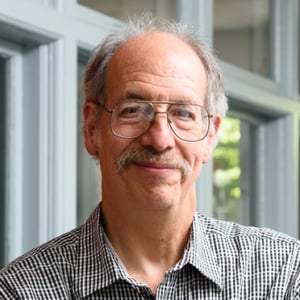
Attorney, Public Citizen Litigation Group
Paul Alan Levy is an attorney with the Public Citizen Litigation Group, a public interest law firm that is a division of the consumer advocacy organization Public Citizen. Among the issues on which the group litigates are federal health and safety regulation, consumer litigation, open government, union democracy, separation of powers, and the First Amendment. PCLG litigates cases at all levels of the federal and state judiciaries and has a substantial practice before federal regulatory agencies.
After working as a law clerk to Honorable Wade H. McCree, Jr. (United States Court of Appeals, Sixth Circuit) and Special Assistant to Solicitor General McCree, Paul joined the Litigation Group in December 1977 to represent workers in rank-and-file labor law cases, largely representing dissident union members in cases involving union governance. He has been there ever since, with the exception of a one-year sabbatical when he taught at Cardozo Law School. Over the years, he also developed subspecialties in some arcane issues of federal procedure such as removal jurisdiction, and the representation of "lawyers in trouble" from sanctions, contempt findings and the like (these days, though, as a defense lawyer, he files sanctions motions). He also pioneered Public Citizen's work on federal preemption of state law claims and objecting to collusive class action settlements.
He has argued scores of cases in United States Court of Appeals (three en banc). Moreover, he has argued four cases in Supreme Court of the United States, as well as writing briefs for parties in seven other cases. One odd aspect of his Supreme Court practice is that each of these eleven cases was decided 9-0 – win or lose.
Paul has specialized more recently in free speech issues arising on the Internet. He has litigated cases in state and federal courts throughout the country about the identification of anonymous Internet speakers. His amicus curiae brief in Dendrite v. Doe, whose approach was adopted by New Jersey's Superior Court Appellate Division, has become the model for other cases. His Internet practice also includes the defense of trademark and copyright claims brought as a means of suppressing critical web sites. His cases in this area, such as Bosley Medical v. Kremer and Lamparello v. Falwell, have established the right to create internet “gripe" sites that include the trademark names of companies in their domain names and meta tags. In Smith v. Wal-Mart Stores and McCall v. National Security Agency, he defended the rights of parodists to make fun of Wal-Mart's trademarks and the seals of the NSA and Department of Homeland Security. In arguing against the issuance of prior restraints in Bank Julius Baer v. Wikileaks, he had the key insight that the case had been filed without subject matter jurisdiction. For several years, Paul chaired subcommittees (on domain name litigation or on keyword advertising) of the American Bar Association's Intellectual Property Section. He currently serves on the Legal Review Committee of the American Civil Liberties Union of the District of Columbia.
A description of his work in this area was published in the Washingtonian Magazine as “Paul Levy, the Web Bully's Worst Enemy." It is accessible at http://www.washingtonian.com/articles/people/paul-levy-the-web-bullys-worst-enemy/. His work was also recently described in Hill, Stars and Gripes: Legal challenges over online reviews seek to separate fact from fiction, ABA Journal (July 2016), available at http://www.abajournal.com/magazine/article/legal_challenges_over_online_reviews_seek_to_separate_fact_from_fiction.
Partner, Clare Locke LLP
Libby is one of the country’s most sought-after libel lawyers. She is a trusted counselor and fierce advocate for Fortune 100 companies and high-profile individuals facing existential reputational attacks from the national media and other influential publishers, achieving remarkable results for her clients both in and outside the courtroom. Court watchers have called her “as good as they get,” “aggressive and not afraid to litigate,” and someone who has the media savvy to handle high profile matters in the public eye.
After co-founding Clare Locke LLP in 2014, Libby rapidly rose to national prominence for a highly-publicized multi-million dollar trial victory against Rolling Stone magazine about a fabricated gang rape at a University of Virginia fraternity. In 2019, she was lead trial counsel and won a $26 million federal jury verdict on behalf of a successful North Carolina businessman who was defamed by a public company during a proxy fight. A commentator opined that “she was excellent in trial and she eviscerated the other side,” and the federal judge concluded that her vigorous cross-examination “exposed [Defendant’s] CEO as a non-credible witness.” A skilled appellate advocate and former federal circuit clerk, in 2019 Libby achieved a rare win against The New York Times on behalf of former Gov. Sarah Palin in the U.S. Court of Appeals for the Second Circuit arising out of a false and defamatory editorial. She is actively litigating matters against a variety of mainstream news outlets, including CNN and The New York Times.
Libby’s success in the courtroom gets her results in the newsroom. She regularly advises clients and their PR counsel in dealing with the national media in crisis situations, and some of her biggest wins are the false stories the public will never hear about. She has killed flawed articles, storylines, and broadcast segments in outlets including in The New York Times, The Washington Post, Vanity Fair, The National Enquirer, and on Bloomberg, CBS and The Dr. Oz Show. Libby has also vindicated her clients’ reputations by obtaining myriad retractions of false publications. Examples include securing a $3.375 million settlement and video apology from the Southern Poverty Law Center, a complete retraction of a Bloomberg podcast, a multi-article correction from The Chicago Tribune, and the removal of a paperback edition book from publication by Simon & Schuster.
Recognized as an expert in libel law and the First Amendment, Libby has been ranked as a Band 1 global defamation/reputation management provider in Chambers & Partners HNW directory every year since its inception in 2016, and a Band 1 First Amendment Litigator in Chambers & Partners USA in 2020. She has numerous national awards and accolades from the National Law Journal, including being named as one of D.C.’s 40 Under 40 in 2019. She is regularly asked to speak on issues involving the First Amendment, media, and reputation, including publishing multiple op-eds in The Wall Street Journal and appearing as a guest on Fox News, CNN, and ABC’s 20/20. Libby has also served as an adjunct professor at Georgetown University Law Center and George Washington University Law School.
Libby graduated from NYU’s College of Arts and Science with a degree in Politics and Economics, and she received her J.D. from Georgetown University Law Center. After law school, she clerked on the U.S. Court of Appeals for the Fifth Circuit, and then began her career in private practice at Kirkland & Ellis. Perhaps the accomplishment of which she is most proud, Libby is a mom of five. She lives in Alexandria, Virginia with her husband and law partner, Tom Clare, their children, and the world’s most spoiled Labrador Retriever, Gipper.

Judge, United States Court of Appeals, Fifth Circuit
Judge Smith was appointed U.S. Circuit Judge for the Fifth Circuit by President Reagan and entered on duty in January 1988. He attended public schools in Lubbock, Texas, and graduated from Yale University, receiving a B.A. in 1969 and a J.D. in 1972.
Judge Smith was a Law Clerk to U.S. District Judge Halbert Woodward, Northern District of Texas, 1972-1973; with the Houston law firm of Fulbright & Jaworski as an Associate, 1973-1981, and as Partner, 1981-1984; and as City Attorney, City of Houston, 1984-1988. He was Chairman, Civil Service Commission, City of Houston, 1982-1984; and a Director, Harris County Housing Authority, 1978-1980.
Judge Smith lives in Houston and is married to Mary Jane Smith and has four children: Ruth Ann, Clark, J.J., and Brandon. He formerly was Chair of the Advisory Committee on Federal Rules of Evidence of the Judicial Conference of the United States. He assists LexisNexis/Matthew Bender & Co. in periodic revisions of several chapters of Moore’s Federal Practice.
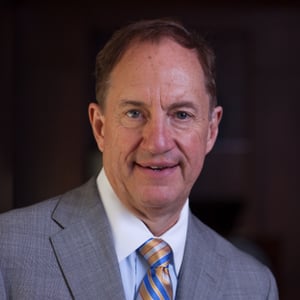
Dean and Professor of Law, Widener University Delaware School of Law
Rod Smolla is Dean and Professor of Law at the Delaware Law School of Widener University, in Wilmington, Delaware. He was previously the 11th President of Furman University, in Greenville, South Carolina, the Dean of the Law School at Washington and Lee University Law School, the Dean of the University of Richmond Law School, the Director of the Institute of Bill of Rights Law at the College of William and Mary, and Senior Fellow and Project Director of the Washington Annenberg Program of Northwestern University. He has also been a faculty member at the DePaul, University of Illinois, and University of Arkansas law schools, and a visiting professor at the Duke, University of Georgia, University of Indiana, Denver University, and University of Melbourne law schools. As an educator, he has been an advocate for experiential learning, including greater emphasis on helping law students develop skills relating to counseling, problem-solving, negotiation, drafting, advocacy, civic engagement, pro bono service, legal ethics, and professionalism. He has emphasized diversity and community outreach and important institutional missions in higher education and legal education.
Smolla is a nationally-known scholar on matters relating to constitutional law, civil rights, freedom of speech, and mass media, particularly matters relating to libel and privacy. He is the author of five multi-volume legal treatises, all published by Thomson Reuters, which are updated twice annually: Law of Defamation; Smolla and Nimmer on Freedom of Speech; Rights and Liabilities in Media Content, Internet, Broadcast, and Print; Federal Civil Rights Acts; and, Law of Lawyer Advertising. He is also author of The First Amendment: Freedom of Expression, Regulation of Mass Media, Freedom of Religion (Carolina Academic Press 1999) (a law school casebook); and co-author of Constitutional Law: Structure and Rights in Our Federal System (6th Edition, 2010, with Dean William Banks). He is the editor each year of the First Amendment Law Handbook, published annually by Thomson Reuters. He was also editor of The Copyright Law Anthology published by Thomson Reuters. He is also the author of may trade and university press books, including Suing the Press: Libel, the Media, and Power (Oxford University Press 1986) (won ABA Silver Gavel Award Certificate of Merit); Jerry Falwell v. Larry Flynt: The First Amendment on Trial (St. Martin's Press 1988); Free Speech in an Open Society (Alfred A. Knopf 1992) (winner of the William O. Douglas Award); Deliberate Intent: A Lawyer Tells the True Story of Murder by the Book (Crown Publishers 1999) (made into a television movie by FX, with Timothy Hutton playing the role of Rod Smolla); The Constitution Goes to College (New York University Press 2010). He was editor of A Year in the Life of the Supreme Court (Duke University Press 1995) (won ABA Civil Gavel Award). Smolla has published over 100 articles in law reviews and other publications.
Smolla has served as Chairman of the Association of American Law Schools Section on Defamation and Privacy Law, as Chairman of the Association of American Law Schools Section on Mass Communications Law, as a member of the American Bar Association Advisory Committee to the Forum on Mass Communications Law, and as a member of the First Amendment Advisory Board to the Media Institute, as the Director of the Annenberg Washington Program Libel Reform Project, and author of the Annenberg Libel Reform Report that emerged from the blue ribbon task force on that project. He served as a Director of the Media General Corporation, and as a Director of the American Arbitration Association. In 2011, he was appointed by Governor Nikki Haley to serve as a Commissioner on the South Carolina Commission of Higher Education, which included within its mission the oversight of all of South Carolina's public universities and colleges, and licensure and programmatic approval for all public and private educational programs within the state.
Smolla has been and remains an active litigator. He has participated as counsel or co-counsel in litigation matters in state and federal courts throughout the nation, and is a frequent advocate, having presented oral argument in numerous state and federal courts, including the Supreme Court of the United States.
Thomas M. Siebel Senior Fellow, The Hoover Institution, Stanford University; Gary T. Schwartz Distinguished Professor of Law Emeritus, UCLA School of Law
Eugene Volokh is the Thomas M. Siebel Senior Fellow at the Hoover Institution (Stanford), as well as the Gary T. Schwartz Distinguished Professor of Law Emeritus and Distinguished Research Professor at UCLA School of Law. He recently retired from teaching at UCLA, after 30 years there, and is now focusing on research.
Volokh is the author of the textbooks The First Amendment and Related Statutes (8th ed. 2023), and Academic Legal Writing (5th ed. 2016), as well as over 100 academic law journal articles, mostly on First Amendment law. He is a member of The American Law Institute; the editor-in-chief of the Journal of Free Speech Law; and the creator and coauthor of The Volokh Conspiracy, a leading legal blog founded in 2002 (hosted at the Washington Post from 2014 to 2017 and now at Reason Magazine).

Panel I: New York Times v. Sullivan
Joe Cohn, Carson Holloway, Carol Jean Locicero, Jesse Panuccio, Jered Ede
In 1964, the U.S. Supreme Court issued its opinion in New York Times v. Sullivan...
Navigating High Profile Defamation
Barry Anderson, Libby Locke
The rise in cancel culture aided by online activity—and more recently by the national press—can...
Deep Dive Episode 168 – Deepfakes: What, If Anything, Should Policymakers Do?
Joshua Abbott, Robert Chesney, Kathryn Ciano Mauler, Matthew Feeney
“Deepfakes” are one of the latest technologies to prompt debate about online media. Using Deepfake...
The Future of Libel Law
Eugene Volokh
Since 1990, the Supreme Court has not dealt with any libel cases. Has anything happened...
The Future of Libel Law
Paul Alan Levy, Libby Locke, Jerry E. Smith, Rodney Smolla, Eugene Volokh
Libel law leads two lives. Most famously, there is the life of presidential candidates and...