
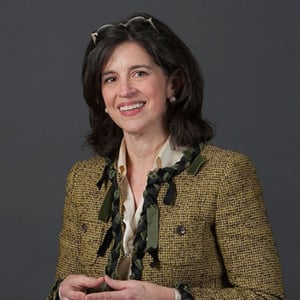
Professor of Law, Antonin Scalia Law School, George Mason University
Helen Alvaré is a Professor of Law at Antonin Scalia Law School, George Mason University, where she teaches Family Law, Law and Religion, and Property Law. She publishes on matters concerning marriage, parenting, non-marital households, and the First Amendment religion clauses. She is faculty advisor to the law school’s Civil Rights Law Journal, and the Latino/a Law Student Association, a Member of the Holy See’s Dicastery for Laity, Family and Life (Vatican City), a board member of Catholic Relief Services, a member of the Executive Committee of the AALS’ Section on Law and Religion, and an ABC news consultant. She cooperates with the Permanent Observer Mission of the Holy See to the United Nations as a speaker and a delegate to various United Nations conferences concerning women and the family.
In addition to her books, and her publications in law reviews and other academic journals, Professor Alvaré publishes regularly in news outlets including the New York Times, the Washington Post, the Huffington Post, and CNN.com. She also speaks at academic and professional conferences in the United States, Europe, Latin America and Australia.
Prior to joining the faculty of Scalia Law, Professor Alvaré taught at the Columbus School of Law at the Catholic University of America; represented the U.S. Conference of Catholic Bishops before legislative bodies, academic audiences and the media; and was a litigation attorney for the Philadelphia law firm of Stradley, Ronon, Stevens & Young.
Professor Alvaré received her law degree from Cornell University School of Law and her master’s degree in Systematic Theology from the Catholic University of America.
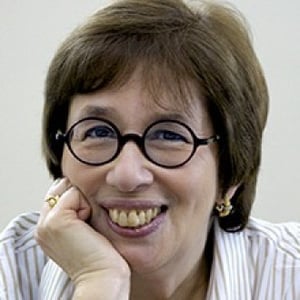
Senior Research Scholar in Law, Yale Law School
Linda Greenhouse is Senior Research Scholar in Law at Yale Law School. She covered the Supreme Court for The New York Times between 1978 and 2008 and writes a biweekly op-ed column on law as a contributing columnist. Ms. Greenhouse received several major journalism awards during her 40-year career at the Times, including the Pulitzer Prize (1998) and the Goldsmith Career Award for Excellence in Journalism from Harvard University’s Kennedy School (2004). In 2002, the American Political Science Association gave her its Carey McWilliams Award for “a major journalistic contribution to our understanding of politics.” Her books include a biography of Justice Harry A. Blackmun, Becoming Justice Blackmun; Before Roe v. Wade: Voices That Shaped the Abortion Debate Before the Supreme Court's Ruling (with Reva B. Siegel); The U.S. Supreme Court, A Very Short Introduction, published by Oxford University Press in 2012; and The Burger Court and the Rise of the Judicial Right, with Michael J. Graetz, published in 2016. Her latest book is Just a Journalist: Reflections on the Press, Life, and the Spaces Between, published by Harvard University Press in 2017. In her extracurricular life, Ms. Greenhouse is president of the American Philosophical Society, the country's oldest learned society, which in 2005 awarded her its Henry Allen Moe Prize for writing in jurisprudence and the humanities. She also serves on the council of the American Academy of Arts and Sciences, the national Senate of Phi Beta Kappa, and is one of two non-lawyer honorary members elected to the American Law Institute, which in 2002 awarded her its Henry J. Friendly Medal. She has been awarded thirteen honorary degrees. She is a 1968 graduate of Radcliffe College (Harvard) and earned a Master of Studies in Law degree from Yale Law School (1978), which she attended on a Ford Foundation fellowship. She is married to Eugene R. Fidell, Florence Rogatz Lecturer in Law at Yale. Their daughter, Hannah, is a filmmaker in Los Angeles.

Judge, United States Court of Appeals, D.C. Circuit
Judge Randolph was confirmed by the Senate and appointed to the United States Court of Appeals for the District of Columbia Circuit by President George H. W. Bush in July 1990.
Judge Randolph received his B.S. degree in 1966 from Drexel University, majoring in economics and basic engineering. At Drexel, he was president of the debate society, vice president of the Student Senate, and a member of the varsity wrestling squad. In 1969, he received his J.D. from the University of Pennsylvania, summa cum laude. Judge Randolph ranked first in his law school class all three years and was managing editor of the Law Review.
After graduation, Judge Randolph served as a law clerk to Judge Henry J. Friendly of the United States Court of Appeals for the Second Circuit in New York.
Admitted to the California Bar in 1970 (and to the District of Columbia bar in 1973), Judge Randolph worked as Assistant to the Solicitor General, U.S. Department of Justice, in Washington, D.C., 1970-1973.
After two years in private practice, Judge Randolph was named Deputy Solicitor General of the United States, a position he held from 1975-1977.
In 1979, Judge Randolph was appointed Special Counsel to the Committee on Standards of Official Conduct (the Ethics Committee) of the United States House of Representatives, remaining in this position until 1980.
In the 1980s, Judge Randolph held a number of positions while in private practice, including Special Assistant Attorney General for the states of New Mexico (1985 90), Utah (1986-1990) and Montana (1983-1990). He also served as a Member of the Advisory Panel of the Federal Courts Study Committee.
From 1971-1990, Judge Randolph argued 23 times in the United States Supreme Court, winning 20 of his cases.
As an Adjunct Professor of Law at Georgetown University Law Center from 1974-1978 he taught courses in civil procedure and injunctions. In 1992 he taught a course in constitutional law. He is a Distinguished Adjunct Professor of Law at George Mason School of Law and for the past ten years has been teaching First Amendment law. He also serves on the Judicial Advisory Board of the George Mason University Law and Economics Center.
From 1993 through 1995 Judge Randolph was a member of the Committee on Codes of Conduct of the Judicial Conference of the United States, and from 1995 to 1998 served as the Committee's chairman. He also served as the judicial liaison to the American Bar Association’s Administrative Law Section.
Judge Randolph is a member of the Board of Visitors at Drexel University Law School and was named to the “Drexel One Hundred” as a leading alumnus. In 2002 he was presented the James Wilson Award by the University of Pennsylvania Law School. In November 2005 he delivered the Fifth Annual Barbara K. Olson Memorial Lecture at the Annual Lawyers Convention of the Federalist Society. He has published numerous articles, the most recent of which is in the June 2006 issue of the Harvard Journal of Law and Public Policy.
Judge Randolph is married to the Honorable Eileen J. O’Connor, formerly Assistant Attorney General, Tax Division, U.S. Department of Justice. His son John Trevor Randolph is an investment banker in New York. His daughter Cynthia Lee Randolph is an artist living in San Francisco.
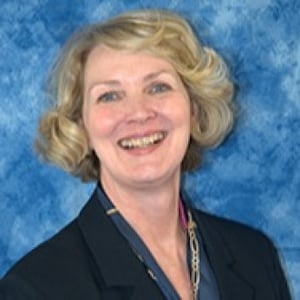
Professor and Director, Prolife Center, University of St. Thomas School of Law
Teresa Collett, J.D., is professor at the University of St. Thomas School of Law, where she serves as director of the school's Prolife Center. Collett received her doctorate at the University of Oklahoma College of Law. As a well-known advocate for the protection of human life and the family, Collett specializes in the subjects of marriage, religion and bioethics in her research.
Collett has published numerous legal articles and is the co-author of a law casebook on professional responsibility and co-editor of a collection of essays exploring “catholic” and “Catholic” perspectives on American law. She is an elected member of the American Law Institute, and has testified before committees of the U.S. Senate and House of Representatives, as well as before legislative committees in several states.
In 2009, Pope Benedict XVI appointed Collett to a five-year term on the Pontifical Council for the Family. Her appointment was renewed by His Holiness Pope Francis until 2016 when the responsibilities of the Council were assumed by the Dicastery for the Laity, Family and Life. In 2013, she served as a delegate to the International Conference on Population and Development (ICPD) for the Mission of the Holy See to the United Nations.
She represented Congressman Ron Paul and various medical groups in the defense of the U.S. federal ban of partial-birth abortion, and the governors of Minnesota and North Dakota defending the N.H. requirement of state parental involvement prior to performance of an abortion on a minor before the U.S. Supreme Court. Collett is often asked to represent the interests of government officials before federal appellate courts. She has served as special attorney general for the states of Oklahoma and Kansas, as well as assisting other state attorneys general in defending laws protecting human life and marriage. Prior to joining St. Thomas in 2003, Collett taught at the South Texas College of Law, where she established the nation's first annual symposium on legal ethics.
Professor of Law, Antonin Scalia Law School, George Mason University
Helen Alvaré is a Professor of Law at Antonin Scalia Law School, George Mason University, where she teaches Family Law, Law and Religion, and Property Law. She publishes on matters concerning marriage, parenting, non-marital households, and the First Amendment religion clauses. She is faculty advisor to the law school’s Civil Rights Law Journal, and the Latino/a Law Student Association, a Member of the Holy See’s Dicastery for Laity, Family and Life (Vatican City), a board member of Catholic Relief Services, a member of the Executive Committee of the AALS’ Section on Law and Religion, and an ABC news consultant. She cooperates with the Permanent Observer Mission of the Holy See to the United Nations as a speaker and a delegate to various United Nations conferences concerning women and the family.
In addition to her books, and her publications in law reviews and other academic journals, Professor Alvaré publishes regularly in news outlets including the New York Times, the Washington Post, the Huffington Post, and CNN.com. She also speaks at academic and professional conferences in the United States, Europe, Latin America and Australia.
Prior to joining the faculty of Scalia Law, Professor Alvaré taught at the Columbus School of Law at the Catholic University of America; represented the U.S. Conference of Catholic Bishops before legislative bodies, academic audiences and the media; and was a litigation attorney for the Philadelphia law firm of Stradley, Ronon, Stevens & Young.
Professor Alvaré received her law degree from Cornell University School of Law and her master’s degree in Systematic Theology from the Catholic University of America.

University Professor of Law and Executive Director, Liberty & Law Center, Antonin Scalia Law School, George Mason University
David Bernstein holds a University Professorship chair at the Antonin Scalia Law School, where he has been teaching since 1995. He has also been a visiting professor at the University of Michigan, Georgetown University, William & Mary, Brooklyn Law School, the University of Turin, and Hebrew University. Professor Bernstein teaches Constitutional Law, Evidence, and Products Liability.
A prolific author, Professor Bernstein often challenges the conventional wisdom with prodigious research and sharp, original analysis. He is the author of five books, and coauthor of two more. Professor Bernstein’s book Rehabilitating Lochner was praised across the political spectrum as “intellectual history in its highest form,” a “fresh perspective and a cogent analysis,” “delightful and informative,” “sharp and iconoclastic,” and “a terrific work of historical revisionism.” Columnist George Will praised Bernstein’s most recent book, Classified, The Untold Story of Racial Classification in America, as “perhaps the most consequential American book of 2022.”
Professor Bernstein has also written dozens of articles and essays published in major law reviews, including the California Law Review, Columbia Law Review, Michigan Law Review, and Yale Law Journal. An article he coauthored, Defending Daubert: It’s Time to Amend Federal Rule of Evidence 702, directly inspired a pending amendment to Rule 702.
Professor Bernstein blogs at the Instapundit.com, the Times of Israel, and the Volokh Conspiracy. He is a graduate of the Yale Law School, where he was senior editor of the Yale Law Journal and a John M. Olin Fellow in Law, Economics, and Public Policy.

McCormick Professor of Jurisprudence; Director, James Madison Program, Princeton University
Robert P. George is McCormick Professor of Jurisprudence and Director of the James Madison Program in American Ideals and Institutions at Princeton University. He has several times been a Visiting Professor at Harvard Law School. He has served as Chairman of the U.S. Commission on International Religious Freedom and on the U.S. Commission on Civil Rights and the President’s Council on Bioethics. He has also served as the U.S. member of UNESCO’s World Commission on the Ethics of Scientific Knowledge and Technology. He was a Judicial Fellow at the Supreme Court of the United States, where he received the Justice Tom C. Clark Award. A Phi Beta Kappa graduate of Swarthmore, he holds the degrees of J.D. and M.T.S. from Harvard University and the degrees of D.Phil., B.C.L., D.C.L., and D.Litt. from Oxford University, in addition to twenty-one honorary doctorates. He is a recipient of the U.S. Presidential Citizens Medal, the Honorific Medal for the Defense of Human Rights of the Republic of Poland, the Canterbury Medal of the Becket Fund for Religious Liberty, the Bradley Prize, the Irving Kristol Award of the American Enterprise Institute, and Princeton University’s President’s Award for Distinguished Teaching. His books include Making Men Moral: Civil Liberties and Public Morality and In Defense of Natural Law (both published by Oxford University Press), as well as The Clash of Orthodoxies and Conscience and Its Enemies (both published by ISI Books).
Senior Research Scholar in Law, Yale Law School
Linda Greenhouse is Senior Research Scholar in Law at Yale Law School. She covered the Supreme Court for The New York Times between 1978 and 2008 and writes a biweekly op-ed column on law as a contributing columnist. Ms. Greenhouse received several major journalism awards during her 40-year career at the Times, including the Pulitzer Prize (1998) and the Goldsmith Career Award for Excellence in Journalism from Harvard University’s Kennedy School (2004). In 2002, the American Political Science Association gave her its Carey McWilliams Award for “a major journalistic contribution to our understanding of politics.” Her books include a biography of Justice Harry A. Blackmun, Becoming Justice Blackmun; Before Roe v. Wade: Voices That Shaped the Abortion Debate Before the Supreme Court's Ruling (with Reva B. Siegel); The U.S. Supreme Court, A Very Short Introduction, published by Oxford University Press in 2012; and The Burger Court and the Rise of the Judicial Right, with Michael J. Graetz, published in 2016. Her latest book is Just a Journalist: Reflections on the Press, Life, and the Spaces Between, published by Harvard University Press in 2017. In her extracurricular life, Ms. Greenhouse is president of the American Philosophical Society, the country's oldest learned society, which in 2005 awarded her its Henry Allen Moe Prize for writing in jurisprudence and the humanities. She also serves on the council of the American Academy of Arts and Sciences, the national Senate of Phi Beta Kappa, and is one of two non-lawyer honorary members elected to the American Law Institute, which in 2002 awarded her its Henry J. Friendly Medal. She has been awarded thirteen honorary degrees. She is a 1968 graduate of Radcliffe College (Harvard) and earned a Master of Studies in Law degree from Yale Law School (1978), which she attended on a Ford Foundation fellowship. She is married to Eugene R. Fidell, Florence Rogatz Lecturer in Law at Yale. Their daughter, Hannah, is a filmmaker in Los Angeles.
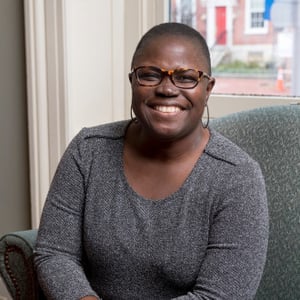
Co-Dean and Professor of Law, Rutgers Law School in Camden
Kimberly Mutcherson is Co-Dean and Professor of Law at Rutgers Law School in Camden. Her scholarly work is at the intersection of family law, health law, and bioethics. She writes on issues related to reproductive justice, with a focus on assisted reproduction, abortion, and maternal-fetal decision-making.
Professor Mutcherson teaches Family Law, Torts, South African Constitutional Law, and Bioethics, Babies, & Babymaking. She has served as a Senior Fellow/Sabbatical Visitor at the Center for Gender and Sexuality Law at Columbia Law School, a Visiting Scholar at the Center for Bioethics at the University of Pennsylvania, and as a fellow at the Institute for Research on Women at Rutgers University. She won a Center for Reproductive Rights Innovation in Scholarship Award in 2013 and a Chancellor’s Teaching Excellence Award in 2011.
She received her B.A. in history from the University of Pennsylvania and her J.D. from Columbia Law School where she was a Stone Scholar. At Columbia, she received the Samuel I. Rosenman Prize for excellence in public law courses and outstanding qualities of citizenship and leadership in the law school. She also received the Kirkland and Ellis Fellowship for post-graduate public interest work. Prior to joining the faculty at Rutgers School of Law in 2002, Professor Mutcherson was an Acting Assistant Professor of Lawyering at the New York University School of Law, a consulting attorney at the Center for Reproductive Law and Policy (now the Center for Reproductive Rights), and a Staff Attorney at the HIV Law Project.
Professor and Director, Prolife Center, University of St. Thomas School of Law
Teresa Collett, J.D., is professor at the University of St. Thomas School of Law, where she serves as director of the school's Prolife Center. Collett received her doctorate at the University of Oklahoma College of Law. As a well-known advocate for the protection of human life and the family, Collett specializes in the subjects of marriage, religion and bioethics in her research.
Collett has published numerous legal articles and is the co-author of a law casebook on professional responsibility and co-editor of a collection of essays exploring “catholic” and “Catholic” perspectives on American law. She is an elected member of the American Law Institute, and has testified before committees of the U.S. Senate and House of Representatives, as well as before legislative committees in several states.
In 2009, Pope Benedict XVI appointed Collett to a five-year term on the Pontifical Council for the Family. Her appointment was renewed by His Holiness Pope Francis until 2016 when the responsibilities of the Council were assumed by the Dicastery for the Laity, Family and Life. In 2013, she served as a delegate to the International Conference on Population and Development (ICPD) for the Mission of the Holy See to the United Nations.
She represented Congressman Ron Paul and various medical groups in the defense of the U.S. federal ban of partial-birth abortion, and the governors of Minnesota and North Dakota defending the N.H. requirement of state parental involvement prior to performance of an abortion on a minor before the U.S. Supreme Court. Collett is often asked to represent the interests of government officials before federal appellate courts. She has served as special attorney general for the states of Oklahoma and Kansas, as well as assisting other state attorneys general in defending laws protecting human life and marriage. Prior to joining St. Thomas in 2003, Collett taught at the South Texas College of Law, where she established the nation's first annual symposium on legal ethics.
Professor of Law, Antonin Scalia Law School, George Mason University
Helen Alvaré is a Professor of Law at Antonin Scalia Law School, George Mason University, where she teaches Family Law, Law and Religion, and Property Law. She publishes on matters concerning marriage, parenting, non-marital households, and the First Amendment religion clauses. She is faculty advisor to the law school’s Civil Rights Law Journal, and the Latino/a Law Student Association, a Member of the Holy See’s Dicastery for Laity, Family and Life (Vatican City), a board member of Catholic Relief Services, a member of the Executive Committee of the AALS’ Section on Law and Religion, and an ABC news consultant. She cooperates with the Permanent Observer Mission of the Holy See to the United Nations as a speaker and a delegate to various United Nations conferences concerning women and the family.
In addition to her books, and her publications in law reviews and other academic journals, Professor Alvaré publishes regularly in news outlets including the New York Times, the Washington Post, the Huffington Post, and CNN.com. She also speaks at academic and professional conferences in the United States, Europe, Latin America and Australia.
Prior to joining the faculty of Scalia Law, Professor Alvaré taught at the Columbus School of Law at the Catholic University of America; represented the U.S. Conference of Catholic Bishops before legislative bodies, academic audiences and the media; and was a litigation attorney for the Philadelphia law firm of Stradley, Ronon, Stevens & Young.
Professor Alvaré received her law degree from Cornell University School of Law and her master’s degree in Systematic Theology from the Catholic University of America.
University Professor of Law and Executive Director, Liberty & Law Center, Antonin Scalia Law School, George Mason University
David Bernstein holds a University Professorship chair at the Antonin Scalia Law School, where he has been teaching since 1995. He has also been a visiting professor at the University of Michigan, Georgetown University, William & Mary, Brooklyn Law School, the University of Turin, and Hebrew University. Professor Bernstein teaches Constitutional Law, Evidence, and Products Liability.
A prolific author, Professor Bernstein often challenges the conventional wisdom with prodigious research and sharp, original analysis. He is the author of five books, and coauthor of two more. Professor Bernstein’s book Rehabilitating Lochner was praised across the political spectrum as “intellectual history in its highest form,” a “fresh perspective and a cogent analysis,” “delightful and informative,” “sharp and iconoclastic,” and “a terrific work of historical revisionism.” Columnist George Will praised Bernstein’s most recent book, Classified, The Untold Story of Racial Classification in America, as “perhaps the most consequential American book of 2022.”
Professor Bernstein has also written dozens of articles and essays published in major law reviews, including the California Law Review, Columbia Law Review, Michigan Law Review, and Yale Law Journal. An article he coauthored, Defending Daubert: It’s Time to Amend Federal Rule of Evidence 702, directly inspired a pending amendment to Rule 702.
Professor Bernstein blogs at the Instapundit.com, the Times of Israel, and the Volokh Conspiracy. He is a graduate of the Yale Law School, where he was senior editor of the Yale Law Journal and a John M. Olin Fellow in Law, Economics, and Public Policy.
McCormick Professor of Jurisprudence; Director, James Madison Program, Princeton University
Robert P. George is McCormick Professor of Jurisprudence and Director of the James Madison Program in American Ideals and Institutions at Princeton University. He has several times been a Visiting Professor at Harvard Law School. He has served as Chairman of the U.S. Commission on International Religious Freedom and on the U.S. Commission on Civil Rights and the President’s Council on Bioethics. He has also served as the U.S. member of UNESCO’s World Commission on the Ethics of Scientific Knowledge and Technology. He was a Judicial Fellow at the Supreme Court of the United States, where he received the Justice Tom C. Clark Award. A Phi Beta Kappa graduate of Swarthmore, he holds the degrees of J.D. and M.T.S. from Harvard University and the degrees of D.Phil., B.C.L., D.C.L., and D.Litt. from Oxford University, in addition to twenty-one honorary doctorates. He is a recipient of the U.S. Presidential Citizens Medal, the Honorific Medal for the Defense of Human Rights of the Republic of Poland, the Canterbury Medal of the Becket Fund for Religious Liberty, the Bradley Prize, the Irving Kristol Award of the American Enterprise Institute, and Princeton University’s President’s Award for Distinguished Teaching. His books include Making Men Moral: Civil Liberties and Public Morality and In Defense of Natural Law (both published by Oxford University Press), as well as The Clash of Orthodoxies and Conscience and Its Enemies (both published by ISI Books).
Senior Research Scholar in Law, Yale Law School
Linda Greenhouse is Senior Research Scholar in Law at Yale Law School. She covered the Supreme Court for The New York Times between 1978 and 2008 and writes a biweekly op-ed column on law as a contributing columnist. Ms. Greenhouse received several major journalism awards during her 40-year career at the Times, including the Pulitzer Prize (1998) and the Goldsmith Career Award for Excellence in Journalism from Harvard University’s Kennedy School (2004). In 2002, the American Political Science Association gave her its Carey McWilliams Award for “a major journalistic contribution to our understanding of politics.” Her books include a biography of Justice Harry A. Blackmun, Becoming Justice Blackmun; Before Roe v. Wade: Voices That Shaped the Abortion Debate Before the Supreme Court's Ruling (with Reva B. Siegel); The U.S. Supreme Court, A Very Short Introduction, published by Oxford University Press in 2012; and The Burger Court and the Rise of the Judicial Right, with Michael J. Graetz, published in 2016. Her latest book is Just a Journalist: Reflections on the Press, Life, and the Spaces Between, published by Harvard University Press in 2017. In her extracurricular life, Ms. Greenhouse is president of the American Philosophical Society, the country's oldest learned society, which in 2005 awarded her its Henry Allen Moe Prize for writing in jurisprudence and the humanities. She also serves on the council of the American Academy of Arts and Sciences, the national Senate of Phi Beta Kappa, and is one of two non-lawyer honorary members elected to the American Law Institute, which in 2002 awarded her its Henry J. Friendly Medal. She has been awarded thirteen honorary degrees. She is a 1968 graduate of Radcliffe College (Harvard) and earned a Master of Studies in Law degree from Yale Law School (1978), which she attended on a Ford Foundation fellowship. She is married to Eugene R. Fidell, Florence Rogatz Lecturer in Law at Yale. Their daughter, Hannah, is a filmmaker in Los Angeles.
Co-Dean and Professor of Law, Rutgers Law School in Camden
Kimberly Mutcherson is Co-Dean and Professor of Law at Rutgers Law School in Camden. Her scholarly work is at the intersection of family law, health law, and bioethics. She writes on issues related to reproductive justice, with a focus on assisted reproduction, abortion, and maternal-fetal decision-making.
Professor Mutcherson teaches Family Law, Torts, South African Constitutional Law, and Bioethics, Babies, & Babymaking. She has served as a Senior Fellow/Sabbatical Visitor at the Center for Gender and Sexuality Law at Columbia Law School, a Visiting Scholar at the Center for Bioethics at the University of Pennsylvania, and as a fellow at the Institute for Research on Women at Rutgers University. She won a Center for Reproductive Rights Innovation in Scholarship Award in 2013 and a Chancellor’s Teaching Excellence Award in 2011.
She received her B.A. in history from the University of Pennsylvania and her J.D. from Columbia Law School where she was a Stone Scholar. At Columbia, she received the Samuel I. Rosenman Prize for excellence in public law courses and outstanding qualities of citizenship and leadership in the law school. She also received the Kirkland and Ellis Fellowship for post-graduate public interest work. Prior to joining the faculty at Rutgers School of Law in 2002, Professor Mutcherson was an Acting Assistant Professor of Lawyering at the New York University School of Law, a consulting attorney at the Center for Reproductive Law and Policy (now the Center for Reproductive Rights), and a Staff Attorney at the HIV Law Project.
Professor and Director, Prolife Center, University of St. Thomas School of Law
Teresa Collett, J.D., is professor at the University of St. Thomas School of Law, where she serves as director of the school's Prolife Center. Collett received her doctorate at the University of Oklahoma College of Law. As a well-known advocate for the protection of human life and the family, Collett specializes in the subjects of marriage, religion and bioethics in her research.
Collett has published numerous legal articles and is the co-author of a law casebook on professional responsibility and co-editor of a collection of essays exploring “catholic” and “Catholic” perspectives on American law. She is an elected member of the American Law Institute, and has testified before committees of the U.S. Senate and House of Representatives, as well as before legislative committees in several states.
In 2009, Pope Benedict XVI appointed Collett to a five-year term on the Pontifical Council for the Family. Her appointment was renewed by His Holiness Pope Francis until 2016 when the responsibilities of the Council were assumed by the Dicastery for the Laity, Family and Life. In 2013, she served as a delegate to the International Conference on Population and Development (ICPD) for the Mission of the Holy See to the United Nations.
She represented Congressman Ron Paul and various medical groups in the defense of the U.S. federal ban of partial-birth abortion, and the governors of Minnesota and North Dakota defending the N.H. requirement of state parental involvement prior to performance of an abortion on a minor before the U.S. Supreme Court. Collett is often asked to represent the interests of government officials before federal appellate courts. She has served as special attorney general for the states of Oklahoma and Kansas, as well as assisting other state attorneys general in defending laws protecting human life and marriage. Prior to joining St. Thomas in 2003, Collett taught at the South Texas College of Law, where she established the nation's first annual symposium on legal ethics.
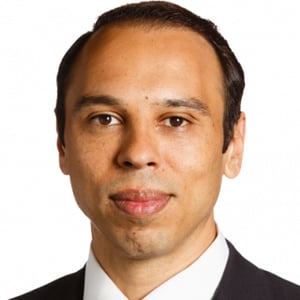
Vice President of Domestic and Economic Policy, The Heritage Foundation
Roger Severino is Vice President of Economic and Domestic Policy, and the Joseph C. and Elizabeth A. Anderlik Fellow at The Heritage Foundation.
Severino is a national authority on civil rights, conscience and religious freedom, the administrative state, and information privacy, particularly as applied to health care law and policy. Find his tweets at @RogerSeverino_.
Severino spearheaded the HHS Accountability Project while a Senior Fellow at EPPC from 2021 to 2023. Previously, Severino was Director of HHS’ Office for Civil Rights, where he led a team of over 250 staff enforcing our nation’s civil rights, conscience and religious freedom, and health information privacy laws. He served from 2017 to 2021 and was the longest-serving OCR director of the past three decades.
Prior to joining HHS, Severino served for two years as Director of the DeVos Center for Religion and Civil Society at Heritage, advocating for life, family, and religious-freedom policies. Before that, he was a trial attorney for seven years at the U.S. Department of Justice’s Civil Rights Division where he enforced the Fair Housing Act and the Civil Rights Act of 1964. Severino started his legal career at the Becket Fund for Religious Liberty, where he was Legal Counsel and Chief Operations Officer and defended the rights of people of all faiths under federal and international law.
Severino has been profiled in The New York Times, The Atlantic, The Wall Street Journal, and The Hill and has appeared on Fox News, CNN, MSNBC, NPR, and PBS, among others. In 2020, The New York Times dubbed him and his wife Carrie, “a conservative power couple” to be reckoned with.
Severino holds a JD from Harvard Law School, a master’s degree in public policy, with highest distinction, from Carnegie Mellon University, and a bachelor’s degree in business from the University of Southern California. He was appointed by President Trump to the Administrative Conference of the United States and is a member of the District of Columbia and the Commonwealth of Virginia bars.
As OCR director, Severino founded the federal government’s first division dedicated exclusively to conscience and religious freedom compliance and enforcement. He enforced the Weldon Amendment for the first time against a state (California) after it coerced families and religious organizations into paying for abortion insurance coverage, leading to a $200 million federal funding disallowance. He also enforced laws protecting pro-life pregnancy resource centers from discrimination by states hostile to their message and enforced laws prohibiting forced participation in abortions by medical professionals.
With respect to civil rights, Severino protected older persons and people with disabilities from being denied life-saving care due to discriminatory “quality of life” judgments, especially during the COVID-19 pandemic. He also achieved a landmark sexual harassment resolution with Michigan State University in the wake of the Larry Nassar sexual assault scandal and protected the rights of non-English speakers to have equal access to health and human services.
In the area of health privacy, he secured the largest HIPAA monetary settlement in history and achieved the largest number of enforcement resolutions both in a single year and across four years. He also facilitated the transformational use of Skype, Zoom, and Facetime for delivery of telehealth during the COVID-19 pandemic and beyond.
His regulatory reform activities resulted in a comprehensive conscience protection regulation and proposed a life-affirming disability rights regulation. He achieved regulatory savings of $3.6 billion in health care industry costs over five years and identified and proposed an additional $3.2 billion in cost savings from the repeal of ineffective and unnecessary regulatory burdens.
Severino is a Spanish speaker who teaches salsa and west coast swing in his spare time.

Judge, United States Court of Appeals, District of Columbia Circuit
Judge Katsas was appointed to the D.C. Circuit in December 2017. He graduated from Princeton University and Harvard Law School, where he was an executive editor on the Harvard Law Review. Between 1989 and 1992, he served as a law clerk to Judge Edward Becker on the Third Circuit, to then-Judge Clarence Thomas on the D.C. Circuit, and to Justice Thomas on the Supreme Court. Between 1992 and 2001, he was an associate and then partner in the Washington office of Jones Day, where he specialized in appellate and complex civil litigation. Between 2001 and 2009, he served in many senior positions in the Department of Justice, including as Assistant Attorney General for the Civil Division and as Acting Associate Attorney General. In 2009, he returned to Jones Day. From January to December 2017, he served as Deputy Assistant to the President and Deputy Counsel to the President.
Before joining the bench, Judge Katsas argued more than 75 appeals, including three cases in the Supreme Court, 13 cases in the D.C. Circuit, and cases in every other federal court of appeals. By appointment of the Chief Justice, he served on the Advisory Committee on Appellate Rules from 2013 to 2017. In 2016, he was elected to membership in the American Academy of Appellate Lawyers.
Vice President of Domestic and Economic Policy, The Heritage Foundation
Roger Severino is Vice President of Economic and Domestic Policy, and the Joseph C. and Elizabeth A. Anderlik Fellow at The Heritage Foundation.
Severino is a national authority on civil rights, conscience and religious freedom, the administrative state, and information privacy, particularly as applied to health care law and policy. Find his tweets at @RogerSeverino_.
Severino spearheaded the HHS Accountability Project while a Senior Fellow at EPPC from 2021 to 2023. Previously, Severino was Director of HHS’ Office for Civil Rights, where he led a team of over 250 staff enforcing our nation’s civil rights, conscience and religious freedom, and health information privacy laws. He served from 2017 to 2021 and was the longest-serving OCR director of the past three decades.
Prior to joining HHS, Severino served for two years as Director of the DeVos Center for Religion and Civil Society at Heritage, advocating for life, family, and religious-freedom policies. Before that, he was a trial attorney for seven years at the U.S. Department of Justice’s Civil Rights Division where he enforced the Fair Housing Act and the Civil Rights Act of 1964. Severino started his legal career at the Becket Fund for Religious Liberty, where he was Legal Counsel and Chief Operations Officer and defended the rights of people of all faiths under federal and international law.
Severino has been profiled in The New York Times, The Atlantic, The Wall Street Journal, and The Hill and has appeared on Fox News, CNN, MSNBC, NPR, and PBS, among others. In 2020, The New York Times dubbed him and his wife Carrie, “a conservative power couple” to be reckoned with.
Severino holds a JD from Harvard Law School, a master’s degree in public policy, with highest distinction, from Carnegie Mellon University, and a bachelor’s degree in business from the University of Southern California. He was appointed by President Trump to the Administrative Conference of the United States and is a member of the District of Columbia and the Commonwealth of Virginia bars.
As OCR director, Severino founded the federal government’s first division dedicated exclusively to conscience and religious freedom compliance and enforcement. He enforced the Weldon Amendment for the first time against a state (California) after it coerced families and religious organizations into paying for abortion insurance coverage, leading to a $200 million federal funding disallowance. He also enforced laws protecting pro-life pregnancy resource centers from discrimination by states hostile to their message and enforced laws prohibiting forced participation in abortions by medical professionals.
With respect to civil rights, Severino protected older persons and people with disabilities from being denied life-saving care due to discriminatory “quality of life” judgments, especially during the COVID-19 pandemic. He also achieved a landmark sexual harassment resolution with Michigan State University in the wake of the Larry Nassar sexual assault scandal and protected the rights of non-English speakers to have equal access to health and human services.
In the area of health privacy, he secured the largest HIPAA monetary settlement in history and achieved the largest number of enforcement resolutions both in a single year and across four years. He also facilitated the transformational use of Skype, Zoom, and Facetime for delivery of telehealth during the COVID-19 pandemic and beyond.
His regulatory reform activities resulted in a comprehensive conscience protection regulation and proposed a life-affirming disability rights regulation. He achieved regulatory savings of $3.6 billion in health care industry costs over five years and identified and proposed an additional $3.2 billion in cost savings from the repeal of ineffective and unnecessary regulatory burdens.
Severino is a Spanish speaker who teaches salsa and west coast swing in his spare time.
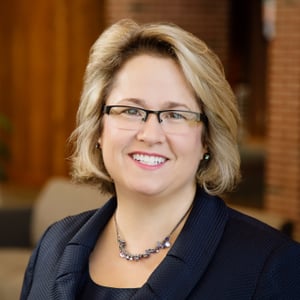
Professor, University of Illinois College of Law
Robin Fretwell Wilson is the Mildred Van Voorhis Jones Chair in Law at the University of Illinois College of Law.
A scholar in family law, bioethics and law and religion, Professor Wilson has worked extensively on behalf of state and federal law reform efforts in each realm.
Across two decades, she has worked to secure laws protecting the autonomy of patients to decide when they will be used to teach intimate exams to medical students, laws now in place in 22 states—sixteen of which have been enacted since 2019.
Professor Wilson is known for bridging differences in the culture war. In 2015, she spent a month in residence with the Utah legislature, helping Utah state lawmakers to pass anti-discrimination legislation that balances religious liberty and LGBT rights. In 2019, Professor Wilson assisted the governor of Utah to craft regulations banning gay conversion therapy. In 2019, she also aided U.S. Representative Chris Stewart with portions of the “Fairness for All” he introduced in Congress. A member of the American Law Institute and a Fulbright Specialist, Professor Wilson has served as a consultant to the United Arab Emirates’ Judicial Department as they sought to create a parallel court system for the adjudication by expatriates of family law matters using the laws of their home country or of their faith traditions.
Professor Wilson is the author of 20 books, including her 2018 book, Religious Freedom, LGBT Rights, and the Prospects for Common Ground, with Yale University Professor William Eskridge, Jr., which is now in paperback at Cambridge University Press. Her other books include: The Contested Place of Religion in Family Law (Cambridge University Press, 2018, ed.), Reconceiving the Family: Critical Reflections on the American Law Institute’s Principles of the Law of Family Dissolution (Cambridge University Press, 2006, ed.); The Handbook of Children, Culture & Violence (Sage Publications, 2006, with Nancy Dowd and Dorothy Singer, eds.); Same-Sex Marriage and Religious Liberty: Emerging Conflicts (Rowman & Littlefield, 2008, with Douglas Laycock and Anthony Picarello, eds.); Health Law and Bioethics: Cases in Context (Aspen, 2008, with Joan Krause, Sandra Johnson, and Richard Saver, eds.); Domestic Relations: Cases and Materials, 8th edition (Foundation Press, 2017, with Walter Wadlington and Raymond C. O’Brien); and Understanding Family Law, 4th edition (LexisNexis, 2013, with John DeWitt Gregory and Peter N. Swisher). Her articles have appeared in the Boston College Law Review, Cornell Law Review, Emory Law Journal, Illinois Law Review, North Carolina Law Review, San Diego Law Review, U.C. Davis Law Review, and Washington and Lee Law Review, as well as in numerous peer-reviewed journals.
In 2010 and again in 2016, Professor Wilson was ranked among the Top Ten Family Law Scholars in the United States for scholarly impact. She ranks among the Top 10% of Authors in all time downloads on the Social Science Research Network. Professor Wilson’s scholarship has been cited by the Fifth, Seventh and Tenth Circuit Court of Appeals, the Minnesota Court of Appeals, lower federal courts, and the Supreme Courts of Delaware, Illinois, Iowa, and Washington.
Professor Wilson’s work has been featured in the New York Times, Wall Street Journal, National Public Radio’s All Things Considered, Washington Post, Los Angeles Times, The Atlantic Monthly, U.S. News and World Report, ABA Journal, Chronicle of Higher Education, Chicago Tribune, CNN Headline News, Good Morning America, ABC News, CBS News, Philadelphia Inquirer, Essence Magazine, The American Prospect, People Magazine, The American Conservative, The Australian, and Al Jazeera, among others. She has presented her research across the world, including the United Nations in Geneva, Switzerland, as well as in Argentina, Brazil, Peru, Chile, China, Israel, Qatar, the Netherlands, Italy, England, Wales, Poland, Spain, Serbia, Japan, Canada, Norway, Denmark, Australia, New Zealand, South Africa, Turkey, and France.
Professor Wilson has seven times been honored for her work on innovative laws that respect all persons. In 2007, she received the Citizen’s Legislative Award for her work on changing Virginia’s informed consent law. In 2018, Professor Wilson received the Thomas L. Kane Religious Freedom Award from the J. Reuben Clark Law Society, which is presented annually to an individual who exemplifies the spirit of religious liberty for all and who has contributed in significant ways to the defense of religious freedom in the public square.
In 2018, Professor Wilson was honored as one of the 150 for 150: Celebrating the Accomplishments of Women at the University of Illinois at Urbana-Champaign for its sesquicentennial celebration. In 2020, Professor Wilson received the 2020 Larine Y. Cowan Make a Difference Award for Advocacy for LGBTQ Affairs, a university-wide honor given by the Office of Diversity, Equity and Inclusion at the University of Illinois at Urbana-Champaign.
Professor and Director, Prolife Center, University of St. Thomas School of Law
Teresa Collett, J.D., is professor at the University of St. Thomas School of Law, where she serves as director of the school's Prolife Center. Collett received her doctorate at the University of Oklahoma College of Law. As a well-known advocate for the protection of human life and the family, Collett specializes in the subjects of marriage, religion and bioethics in her research.
Collett has published numerous legal articles and is the co-author of a law casebook on professional responsibility and co-editor of a collection of essays exploring “catholic” and “Catholic” perspectives on American law. She is an elected member of the American Law Institute, and has testified before committees of the U.S. Senate and House of Representatives, as well as before legislative committees in several states.
In 2009, Pope Benedict XVI appointed Collett to a five-year term on the Pontifical Council for the Family. Her appointment was renewed by His Holiness Pope Francis until 2016 when the responsibilities of the Council were assumed by the Dicastery for the Laity, Family and Life. In 2013, she served as a delegate to the International Conference on Population and Development (ICPD) for the Mission of the Holy See to the United Nations.
She represented Congressman Ron Paul and various medical groups in the defense of the U.S. federal ban of partial-birth abortion, and the governors of Minnesota and North Dakota defending the N.H. requirement of state parental involvement prior to performance of an abortion on a minor before the U.S. Supreme Court. Collett is often asked to represent the interests of government officials before federal appellate courts. She has served as special attorney general for the states of Oklahoma and Kansas, as well as assisting other state attorneys general in defending laws protecting human life and marriage. Prior to joining St. Thomas in 2003, Collett taught at the South Texas College of Law, where she established the nation's first annual symposium on legal ethics.
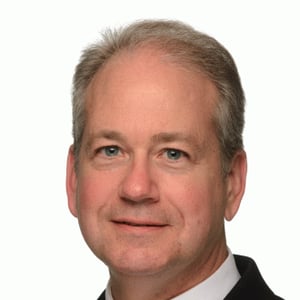
Senior Counsel, Americans United for Life
Clarke has a law degree from Valparaiso University School of Law and a B.A. in Political Science from Allegheny College.
Clarke Forsythe is currently Senior Counsel for AUL and author of Abuse of Discretion: The Inside Story of Roe v. Wade. His twenty-seven years of service to AUL includes founding and directing the AUL Project in Law & Bioethics, serving for six years as Vice President and General Counsel, overseeing our nationwide litigation and legislation strategy, and serving as President for ten years.
Mr. Forsythe has argued cases before federal and state courts and has testified before Congress and state legislatures. He is also a prolific writer on pro-life law issues, having published more than 15 law review articles and book chapters, as well as articles in First Things, the Wall Street Journal, and National Review Online. Other leading newspapers that have published his articles or quoted him include The New York Times, USA Today, the Washington Times, the Washington Post, Chicago Tribune, and the Wall Street Journal. Clarke blogs frequently on “The Road to Roe."
In 2006, Mr. Forsythe received an M.A. in Bioethics from Trinity International University. His recent articles include “A Lack of Prudence,” published in Human Life Review; “Protecting Unconscious, Medically-Dependent Persons after Wendland & Schiavo,” published in Constitutional Commentary; “The Tragic Failure of Roe v. Wade: Why Abortion Should be Returned to the States” published in Texas Review of Law and Politics; and most recently, “A Road Map Through the Supreme Court’s Back Alley” published in Villanova Law Review.
His first book, Politics for the Greatest Good: The Case for Prudence in the Public Square, was published by InterVarsity Press in 2009. First Things called it “an essential book for lawmakers and all participants in the ongoing culture wars.”

Professor of Law, The George Washington University Law School; CEO Emeritus, National Constitution Center
Jeffrey Rosen is the CEO Emeritus of the National Constitution Center, a professor of law at the George Washington University Law School, a senior fellow at the Foundation for Individual Rights and Expression (FIRE), and a contributing editor of The Atlantic. Host of "The Blessings of Liberty" podcast, he was previously the legal affairs editor of The New Republic and a staff writer for the New Yorker.
Rosen is the author of the New York Times bestsellers The Pursuit of Happiness and Conversations with RBG. His new book is The Pursuit of Liberty: How Hamilton vs. Jefferson Ignited the Lasting Battle Over Power in America.
Rosen is a graduate of Harvard College; Oxford University, where he was a Marshall Scholar; and Yale Law School. He is an elected member of the American Philosophical Society and the American Law Institute. In 2024, the French government recognized him as a Chevalier in the Ordre des Arts et des Lettres.

Distinguished University Chair and Professor of Law, University of St. Thomas School of Law
Michael Stokes Paulsen is Distinguished University Chair & Professor of Law at the University of St. Thomas, where he has taught since 2007. Professor Paulsen was previously the McKnight Presidential Professor of Law & Public Policy and Associate Dean at the University of Minnesota Law School, where he taught from 1991-2007. He is a graduate of Northwestern University, Yale Law School, and Yale Divinity School. He has served as a federal prosecutor, as Attorney-Advisor in the Office of Legal Counsel of the U.S. Department of Justice, and as counsel for the Center for Law & Religious Freedom.
Paulsen has taught as a visiting professor at Princeton University, Pepperdine University, Georgetown University, Bethel University, Uppsala University (Sweden), Daystar University (Kenya), and University of the Andes (Chile). He has been a guest lecturer at universities around the nation, including Harvard, Yale, Columbia, Princeton, Penn, NYU, Georgetown, Virginia, Stanford, Berkeley, Michigan, University of Chicago, and Northwestern.
Professor Paulsen is the author of more than ninety scholarly articles and book chapters on a wide variety of constitutional law topics, published in law journals including the Harvard Law Review, the Yale Law Journal, the Stanford Law Review, the University of Chicago Law Review, the Michigan Law Review, the Georgetown Law Journal, and the Northwestern University Law Review. He is the author or co-author of three books, including The Constitution: An Introduction (Basic Books, 2015) (co-authored with Luke Paulsen) and the casebook The Constitution of the United States, now in its fifth edition with Foundation Press, co-authored with Michael McConnell, Samuel Bray, and Will Baude.
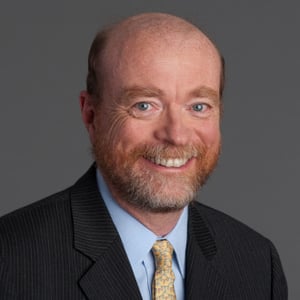
Executive Vice President and Dean of the Law Center; Paul Regis Dean Leadership Chair; Professor of Law, Georgetown University Law Center
William M. Treanor is the Executive Vice President of Georgetown University, Dean of the Law Center, and Paul Regis Dean Leadership Chair. Treanor joined Georgetown in 2010 and was reappointed to serve a third term as Dean and Executive Vice President on July 1, 2020.
Under Treanor’s leadership, Georgetown Law has hired 75 new faculty members; tripled the number of experiential offerings for students in its clinical, externship, and practicum programs; transformed its law and technology offerings into a world class program with 19 full-time faculty experts and over 80 courses in this area; and experienced its most successful era of fundraising, culminating in nearly $67 million in giving in the last fiscal year.
Treanor has also advanced Georgetown Law’s commitment to affordability and access. During his tenure, Georgetown has more than doubled financial aid; raised nearly $25 million dollars for the Law Center’s scholarship program for exceptional students with significant financial need; and launched the RISE program, which provides academic support for students from historically underrepresented groups. The Law Center also created the Early Outreach Initiative, which brings the Law Center’s dean of admissions, current law students, and alumni together to encourage students in underserved high schools to consider pursuing careers as lawyers.
In keeping with Georgetown Law’s motto, “Law is but the means; justice is the end,” Treanor has focused on increasing opportunities for students to pursue careers in public interest law. He is proud that nearly 1 in 4 graduates move straight into public service jobs – a ratio higher than any other top law school in America. The Law Center supports post-graduate fellowships that have enabled more than 400 graduates to work in public interest jobs, and, in combination with the law firms ArentFox Schiff and DLA Piper, it has launched the D.C. Affordable Law Firm, a “low bono” law firm where recent Georgetown Law graduates provide legal representation to people of limited means.
The National Jurist magazine has named Treanor one of the most influential people in legal education five times. He is a member of the Morristown (N.J.) High School Hall of Fame. In 2020, he was elected into the American Academy of Arts & Sciences for law and education. Most recently, he was selected for the inaugural Honorable Robert A. Katzmann Award for Academic Excellence by the Burton Awards.
Treanor’s areas of academic expertise include constitutional law, property law, criminal law, intellectual property, and legal history. At Georgetown Law, he has taught a first-year legal justice seminar, an upper-level course on the drafting of the U.S. Constitution, and leadership courses. His writings have principally been in the area of constitutional history, and he has been recognized as one of the 10 most-cited legal history scholars in the United States by the University of Chicago Law School’s Brian Leiter. His early work largely focused on the history of constitutional protections of private property. His article “The Original Understanding of the Takings Clause and the Political Process,” 95 Colum. L. Rev. 782 (1995), was recognized by the Land Use Professors Blog as the most cited land use article of the past 30 years. Treanor’s article, “Judicial Review before Marbury” was cited in the Moore v. Harper (2023) majority opinion written by Chief Justice Roberts. His recent article, “The Case of the Dishonest Scrivener: Gouverneur Morris and the Creation of the Federalist Constitution,” examined the changes that Gouverneur Morris and the Committee of Style made in preparing the Constitution’s final draft. W.W. Norton will publish his upcoming book, Fathers of the Constitution: Triumph, Tragedy, and the Creation of the American Republic.
Before coming to Georgetown, Treanor was Dean and Paul Fuller Professor of Law at Fordham Law School. He also served in a variety of positions in the government, including Deputy Assistant Attorney General in the Office of Legal Counsel, U.S. Department of Justice; Associate Counsel, Office of Independent Counsel during the Iran/Contra investigation. He was law clerk to the Honorable James L. Oakes, U.S. Court of Appeals for the Second Circuit. Treanor has a Ph.D. in history from Harvard University, a J.D. from Yale Law School, and a B.A., summa cum laude, from Yale College.

Roe v. Wade: The Power of a Law Review [Short Film]
Helen Alvaré, Linda Greenhouse, A. Raymond Randolph, Teresa Stanton Collett
How did a law review article impact one of the most famous cases in Supreme...
Roe v. Wade: A Legal History | Part Three: The Decision
Helen Alvaré, David Bernstein, Robert P. George, Linda Greenhouse, Kimberly Mutcherson, Teresa Stanton Collett
The majority opinion written by Justice Blackmun in Roe v. Wade declared that abortion was a...
Roe v. Wade: A Legal History | Part One: To the Court
Helen Alvaré, David Bernstein, Robert P. George, Linda Greenhouse, Kimberly Mutcherson, Teresa Stanton Collett
As one of the most consequential decisions in the history of the Supreme Court, Roe...
Whole Woman's Health v. Hellerstedt - Post-Decision SCOTUScast
Roger Severino
On June 27, 2016, the Supreme Court decided Whole Woman's Health v. Hellerstedt. Whole Woman’s...
Supreme Court Concludes 2015 Term - Podcast
Gregory G. Katsas, Roger Severino
On June 27, 2016, the United States Supreme Court concluded its October 2015 term by...
Whole Woman's Health v. Hellerstedt - Post-Argument SCOTUScast
Roger Severino
On March 2, 2016, the Supreme Court heard oral argument in Whole Woman's Health v....
Whole Woman's Health v. Hellerstedt: Will the Court Ban the Texas Abortion Statute? - Podcast
Roger Severino
This week the Supreme Court will hear arguments in Whole Woman’s Health v. Hellerstedt, also...
Whole Woman’s Health v. Hellerstedt
Robin Fretwell Wilson, Teresa Stanton Collett
Teresa Collett, Professor of Law at the University of St. Thomas School of Law and...
Abuse of Discretion: The Inside Story of Roe v. Wade - Podcast
Clarke D. Forsythe, Jeffrey Rosen
Based on 20 years of research, including an examination of the papers of eight of...
The Unbearable Wrongness of Roe v. Wade
Michael Stokes Paulsen, William M. Treanor
The following audio and video were recorded on March 5, 2009. This event was co-sponsored with the Catholic...