
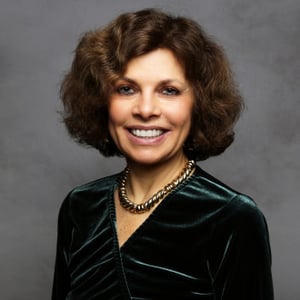
John Marshall Harlan II Professor of Law Emerita, New York Law School; Former President, American Civil Liberties Union
Nadine Strossen, New York Law School Professor Emerita and Senior Fellow at FIRE (the Foundation for Individual Rights and Expression), was national President of the American Civil Liberties Union from 1991 to 2008. An internationally acclaimed free speech scholar and advocate, who regularly addresses diverse audiences and provides media commentary around the world, Strossen is also the Host and Project Consultant for Free To Speak, a 3-hour documentary film series distributed on public television in 2023. Her books about free speech include: Free Speech: What Everyone Needs to Know® (Oxford University Press 2023); HATE: Why We Should Resist It with Free Speech, Not Censorship (Oxford University Press 2018); and Defending Pornography: Free Speech, Sex, and the Fight for Women’s Rights (Scribner 1995), which was republished with a new Preface in 2024 as part of the NYU Classics Series. Her many honors and awards include the National Coalition Against Censorship’s Judy Blume Lifetime Achievement Award for Free Speech. She serves on the Advisory Boards of several organizations that do free speech work, including: ACLU, Academic Freedom Alliance, Foundation Against Intolerance and Racism (FAIR), Heterodox Academy, National Coalition Against Censorship, and the University of Austin.
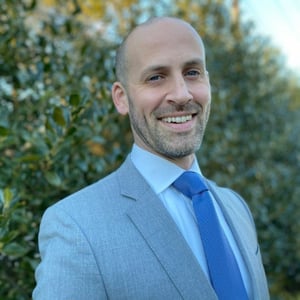
Partner, Lehotsky Keller LLP
The New York Times recognized Scott A. Keller as a “legal heavyweight,” who “is praised by opponents as a formidable advocate.”
Mr. Keller has argued 12 cases before the U.S. Supreme Court and 12 cases before the Texas Supreme Court. He is the only practicing lawyer to have argued at least 10 cases in both courts. Mr. Keller frequently represents parties in high stakes appeals, and he has argued many cases in federal courts of appeals throughout the nation. He has earned individual accolades from Lawdragon 500 Leading Litigators in America, Chambers, Legal 500, The American Lawyer, The National Law Journal, Law360, Super Lawyers, The Best Lawyers in America, and other publications.
Before founding Lehotsky Keller Cohn LLP, Mr. Keller headed Baker Botts LLP’s Supreme Court Practice. He also has significant experience at the highest levels in all three branches of government. Mr. Keller served as the Solicitor General of Texas, the State’s chief appellate litigator. He was U.S. Senator Ted Cruz’s chief counsel on the Senate Judiciary Committee. Mr. Keller was a law clerk for Justice Anthony Kennedy of the Supreme Court of the United States and Chief Judge Alex Kozinski of the U.S. Court of Appeals for the Ninth Circuit. He was also a Bristow Fellow in the U.S. Department of Justice’s Office of the Solicitor General.
Mr. Keller represents clients in cases where public communications strategy is crucial, and he has made numerous media appearances in major outlets such as The New York Times, The Wall Street Journal, BBC, Fox News, NPR, and Politico. As a sought after speaker and writer, Mr. Keller’s articles have appeared in the Stanford Law Review, Virginia Law Review, and Texas Law Review. He has also served as an adjunct professor of constitutional litigation, Supreme Court practice, and federal courts at the University of Texas School of Law.
Partner, Lehotsky Keller LLP
The New York Times recognized Scott A. Keller as a “legal heavyweight,” who “is praised by opponents as a formidable advocate.”
Mr. Keller has argued 12 cases before the U.S. Supreme Court and 12 cases before the Texas Supreme Court. He is the only practicing lawyer to have argued at least 10 cases in both courts. Mr. Keller frequently represents parties in high stakes appeals, and he has argued many cases in federal courts of appeals throughout the nation. He has earned individual accolades from Lawdragon 500 Leading Litigators in America, Chambers, Legal 500, The American Lawyer, The National Law Journal, Law360, Super Lawyers, The Best Lawyers in America, and other publications.
Before founding Lehotsky Keller Cohn LLP, Mr. Keller headed Baker Botts LLP’s Supreme Court Practice. He also has significant experience at the highest levels in all three branches of government. Mr. Keller served as the Solicitor General of Texas, the State’s chief appellate litigator. He was U.S. Senator Ted Cruz’s chief counsel on the Senate Judiciary Committee. Mr. Keller was a law clerk for Justice Anthony Kennedy of the Supreme Court of the United States and Chief Judge Alex Kozinski of the U.S. Court of Appeals for the Ninth Circuit. He was also a Bristow Fellow in the U.S. Department of Justice’s Office of the Solicitor General.
Mr. Keller represents clients in cases where public communications strategy is crucial, and he has made numerous media appearances in major outlets such as The New York Times, The Wall Street Journal, BBC, Fox News, NPR, and Politico. As a sought after speaker and writer, Mr. Keller’s articles have appeared in the Stanford Law Review, Virginia Law Review, and Texas Law Review. He has also served as an adjunct professor of constitutional litigation, Supreme Court practice, and federal courts at the University of Texas School of Law.
J. Richard Broughton is Assistant Professor of Law at the University of Detroit Mercy School of Law in Detroit, Michigan. He teaches in the areas of criminal law, criminal procedure, and constitutional law; his scholarship focuses on the separation of powers, constitutional law and politics, and crime policy.
Previously, Professor Broughton served as Visiting Assistant Professor of Law at Wayne State University, where he was named both the First-Year Professor of the Year and Upperclass Professor of the Year for 2008-09. He also has taught on the law school faculties at Stetson University and Texas Wesleyan University (where he also won two teaching awards), and as a Lecturer in Government at Johns Hopkins University. From 2005 to 2008, he served in the Criminal Division of the United States Department of Justice in Washington, D.C., where he advised senior Department leaders and federal prosecutors on issues arising in federal death penalty cases.
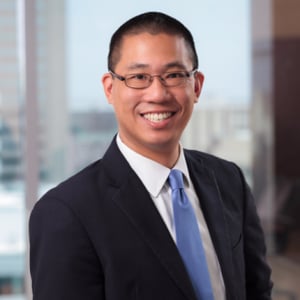
Chair, Issues & Appeals, Hunton Andrews Kurth LLP
The former Solicitor General of West Virginia, Mr. Lin has been on the front lines of many precedent-setting cases in appellate courts across the country, including in a US Supreme Court victory that George Will called “the court’s most severe rebuke of a president” since the Truman administration. Having argued more than 60 appeals, he brings to clients a well-honed ability to identify the most persuasive issues for appeal and a practiced understanding of how best to frame complex legal questions in appellate courts.
With experience in the private sector and multiple branches of government, Mr. Lin’s practice has spanned a wide range of issues, including major questions of constitutional and administrative law at the federal and state levels. On behalf of more than two dozen states, he won a stay from the US Supreme Court of the EPA’s Clean Power Plan. Described by the New York Times as an “unprecedented” order, the stay was the first time the Supreme Court had ever put a regulation on hold before review by a federal appeals court. In that same case, Elbert argued before the en banc DC Circuit in an historic proceeding that one commenter quoted in E&E News compared to “the NBA All-Star Game.” At the state level, Elbert led the effort that persuaded the West Virginia Supreme Court of Appeals to overturn an injunction of the state’s right-to-work law.
In 2013, Mr. Lin was appointed the Solicitor General of West Virginia. During his four-and-a-half year tenure, he served as a member of the Attorney General’s senior management team, oversaw all civil and criminal appeals, and argued nearly two dozen cases in federal and state appellate courts. He authored more than twenty-five briefs in the US Supreme Court and more than forty-five formal Opinions of the Attorney General.
Earlier in his career, Mr. Lin served as a trial attorney in the Federal Programs Branch of the US Department of Justice’s Civil Division, where he received a Special Service Award. He has also been a law clerk at all three levels of the federal judiciary: for Justice Clarence Thomas on the US Supreme Court; for Judge William H. Pryor Jr. on the US Court of Appeals for the Eleventh Circuit; and for Senior Judge Robert E. Keeton on the US District Court for the District of Massachusetts.
Mr. Lin speaks regularly on a wide variety of topics, including constitutional law, administrative law, environmental law, state and federal relations, the US Supreme Court, and appellate practice. He has testified before Congress, and has spoken at the national conventions of the American Bar Association, the Association of Corporate Counsel, the National Asian Pacific American Bar Association, the Federalist Society, Americans for Prosperity, and the American Legislative Exchange Council. He is an elected member of the American Law Institute, a public member of the Administrative Conference of the United States, and a fellow of the American Academy of Appellate Lawyers.
Mr. Lin is admitted to practice in the following federal courts: the Supreme Court of the United States; the First, Second, Third, Fourth, Fifth, Sixth, Seventh, Eighth, Ninth, Eleventh, D.C., and Federal Circuits; the District of Massachusetts; the Northern and Southern Districts of West Virginia; and the Eastern and Western Districts of Virginia.
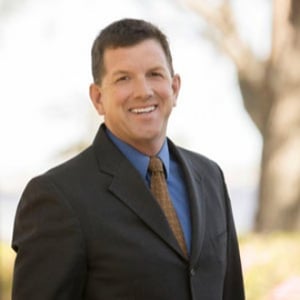
Partner, Creed & Gowdy
Bryan Gowdy is a board-certified appellate lawyer. His practice is limited to handling appeals, post-conviction motions, and trial support for matters likely to be appealed. His practice encompasses all substantive areas of the law, including plaintiff's injury and products liability, commercial cases, criminal law, and family law. He has briefed and orally argued appeals before the U.S. Supreme Court, the U.S. Court of Appeals for the Eleventh Circuit, the Supreme Court of Florida, and Florida's district courts of appeal. He also has handled appeals in the U.S. Courts of Appeals for the First, Fourth, Fifth, and Ninth Circuits. He is AV-rated by Martindale Hubbell and has been selected as a Top 100 in Florida Super Lawyer, Top 25 in Jacksonville Super Lawyer, and a "Legal Elite" by Florida Trend Magazine. In 2019, Mr. Gowdy began serving as the Chair for the Florida Justice Association Amicus Curiae Committee.
Before joining the firm, Mr. Gowdy was with the national law firm of McGuireWoods LLP, where he primarily handled commercial litigation at the trial and appellate level. Mr. Gowdy began his legal career as a law clerk for federal judges at the trial and appellate level. Mr. Gowdy attended the University of Florida Levin College of Law, where he was first in his class, a member of the Order of the Coif, and the management editor of the Florida Law Review.
Before law school, Mr. Gowdy was an active-duty surface warfare officer in the United States Navy, and he graduated from the School of Foreign Service at Georgetown University.
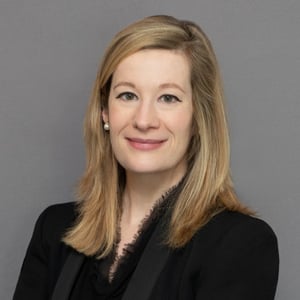
Partner, Williams & Connolly
Sarah Harris is a partner in Williams & Connolly’s Supreme Court and Appellate practice, where she represents clients in high-stakes appeals in the U.S. Supreme Court and federal and state appellate courts across the country. She has argued five cases before the U.S. Supreme Court, and she has presented many arguments in federal courts of appeals and state appellate courts. Her cases have run the gamut of substantive areas, including constitutional law—especially First Amendment and separation-of-powers issues—as well as administrative law, arbitration, class actions, antitrust, False Claims Act litigation, commercial litigation, and federal civil procedure.
Sarah is widely recognized for her appellate advocacy. Chambers USA has recognized her as “Up and Coming” in Appellate Law. She has been named to Bloomberg Law’s 40 Under 40 list of top lawyers nationwide and to Benchmark Litigation’s “40 & Under Hot List,” as well as a an appellate “Rising Star” by The National Law Journal and Law360, a “Next Generation Lawyer” by The Legal 500, and as one of Bloomberg Law’s “Five Fresh Faces to Know in Appellate.”
Sarah clerked for Justice Clarence Thomas on the Supreme Court of the United States, Judge Laurence Silberman on the United States Court of Appeals for the D.C. Circuit, and Judge Sandra Lynch on the United States Court of Appeals for the First Circuit. Before joining Williams & Connolly, she served as a Deputy Assistant Attorney General in the Department of Justice’s Office of Legal Counsel.
Sarah received her undergraduate degree summa cum laude from Princeton University, and her J.D. magna cum laude from Harvard Law School. She also holds a Ph.D. and M. Phil. from the University of Cambridge.
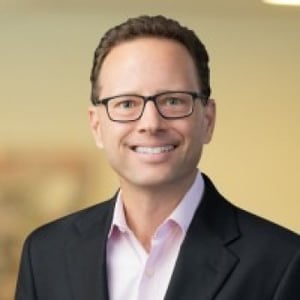
Co-chair, Appellate and Supreme Court Practice Group and Managing Partner, Morrison & Foerster LLP
Joe Palmore co-chairs Morrison & Foerster’s Appellate and Supreme Court practice and is the Managing Partner of the firm’s Washington, D.C. office. With 12 oral arguments before the U.S. Supreme Court and more than 45 in other appellate courts nationwide, Joe has handled complex appeals and critical motions on a wide range of issues important to businesses. Clients call him “an outstanding oral advocate,” praising his ability to remain “completely calm at all times and in complete command of the facts” (Chambers USA).
During a recent U.S. Supreme Court term, Joe successfully argued two cases: Law360 called one of them (Thole v. U.S. Bank) a “landmark ruling” that “made huge waves in the ERISA litigation arena” and named the other (Atlantic Richfield Co. v. Christian) one of the “biggest environmental law decisions” of the year. And Joe’s oral argument before the Supreme Court on the preemptive scope of the Comprehensive Environmental Response, Compensation and Liability Act (CERCLA) in CTS Corp. v. Waldburger was described in the National Law Journal as “brilliant” and a “template for anyone arguing a statutory case before these nine justices in the future.”
Joe’s practice extends to federal and state appellate courts across the country, where he has handled appeals on issues as varied as antitrust, class actions, communications, false advertising, intellectual property, and securities. Joe’s victory in the Federal Circuit for Immersion Corporation in a patent appeal was described by another practitioner as having “saved from the fire tens of thousands of patents that would have gone up in smoke.” Joe has secured important victories in the Second Circuit (where he clerked), including for an online marketplace in a securities class action and for a technology company in a Telephone Consumer Protection Act suit. He also has a successful track record in the Ninth Circuit, including winning for a beverage company defending against an antitrust suit and for an equipment manufacturer embroiled in a dispute over U.S. discovery for foreign litigation.
Before joining Morrison & Foerster, Joe served as an Assistant to the Solicitor General at the U.S. Department of Justice. During his nearly five years in the Solicitor General’s Office, Joe had principal responsibility for briefing the constitutionality of the Affordable Care Act’s minimum coverage provision, which was upheld in the Supreme Court’s landmark decision in NFIB v. Sebelius. For his work on that case, Joe received the Attorney General’s Award for Exceptional Service (the Department of Justice’s highest honor for employee performance). He also received the Environmental Protection Agency General Counsel’s medal for his successful defense of the EPA’s interstate air pollution rules in EPA v. EME Homer City Generation.
Before working for the Justice Department, Joe spent three years as Deputy General Counsel at the Federal Communications Commission, where he oversaw all litigation involving constitutional, statutory, and administrative-law challenges to the agency’s actions and argued 10 cases in the federal courts of appeals. His FCC experience includes virtually all aspects of communications regulation, including broadcast, cable, wireless, wireline, and Internet. In addition, he provided counsel to FCC officials on matters likely to result in litigation.
Joe clerked for Justice Ruth Bader Ginsburg of the U.S. Supreme Court, Judge John Gleeson of the U.S. District Court for the Eastern District of New York, and Judge Dennis Jacobs of the U.S. Court of Appeals for the Second Circuit in New York. Joe earned his J.D. from the University of Virginia School of Law, his M.A. in legal history from the University of Virginia, and his A.B. magna cum laude from Harvard University.
Joe is a Fellow in the American Academy of Appellate Lawyers, selected for his distinction as an appellate lawyer. He also serves as a member of the Technology Litigation Advisory Committee of the U.S. Chamber Litigation Center and is a master in, and former officer of, the Coke Appellate Inn at Court. In 2016, he served as one of the 15 “nationally recognized lawyers with substantial trial and appellate practices” who advised the American Bar Association’s Standing Committee on the Federal Judiciary on the professional qualifications of the Honorable Merrick Garland to be an Associate Justice of the Supreme Court of the United States. He is recommended by Chambers USA and Legal 500 US for appellate law.
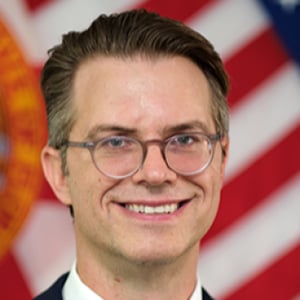
Solicitor General of Florida
Henry Whitaker became Florida’s Solicitor General in July 2021. He came to the position after four years of serving in the Office of Legal Counsel of the U.S. Department of Justice, including as Principal Deputy Assistant Attorney General, where he advised the White House Counsel’s Office, the Attorney General, and cabinet secretaries on a range of important and complex legal issues. Before that, Solicitor General Whitaker worked on the Appellate Staff of the Civil Division of the U.S. Department of Justice for almost nine years, arguing more than 40 appeals in the federal appellate courts. He clerked for Justice Clarence Thomas of the U.S. Supreme Court and for Judge David B. Sentelle of the U.S. Court of Appeals for the D.C. Circuit after graduating magna cum laude from both Harvard Law School and Yale College.
Partner, Creed & Gowdy
Bryan Gowdy is a board-certified appellate lawyer. His practice is limited to handling appeals, post-conviction motions, and trial support for matters likely to be appealed. His practice encompasses all substantive areas of the law, including plaintiff's injury and products liability, commercial cases, criminal law, and family law. He has briefed and orally argued appeals before the U.S. Supreme Court, the U.S. Court of Appeals for the Eleventh Circuit, the Supreme Court of Florida, and Florida's district courts of appeal. He also has handled appeals in the U.S. Courts of Appeals for the First, Fourth, Fifth, and Ninth Circuits. He is AV-rated by Martindale Hubbell and has been selected as a Top 100 in Florida Super Lawyer, Top 25 in Jacksonville Super Lawyer, and a "Legal Elite" by Florida Trend Magazine. In 2019, Mr. Gowdy began serving as the Chair for the Florida Justice Association Amicus Curiae Committee.
Before joining the firm, Mr. Gowdy was with the national law firm of McGuireWoods LLP, where he primarily handled commercial litigation at the trial and appellate level. Mr. Gowdy began his legal career as a law clerk for federal judges at the trial and appellate level. Mr. Gowdy attended the University of Florida Levin College of Law, where he was first in his class, a member of the Order of the Coif, and the management editor of the Florida Law Review.
Before law school, Mr. Gowdy was an active-duty surface warfare officer in the United States Navy, and he graduated from the School of Foreign Service at Georgetown University.
Partner, Williams & Connolly
Sarah Harris is a partner in Williams & Connolly’s Supreme Court and Appellate practice, where she represents clients in high-stakes appeals in the U.S. Supreme Court and federal and state appellate courts across the country. She has argued five cases before the U.S. Supreme Court, and she has presented many arguments in federal courts of appeals and state appellate courts. Her cases have run the gamut of substantive areas, including constitutional law—especially First Amendment and separation-of-powers issues—as well as administrative law, arbitration, class actions, antitrust, False Claims Act litigation, commercial litigation, and federal civil procedure.
Sarah is widely recognized for her appellate advocacy. Chambers USA has recognized her as “Up and Coming” in Appellate Law. She has been named to Bloomberg Law’s 40 Under 40 list of top lawyers nationwide and to Benchmark Litigation’s “40 & Under Hot List,” as well as a an appellate “Rising Star” by The National Law Journal and Law360, a “Next Generation Lawyer” by The Legal 500, and as one of Bloomberg Law’s “Five Fresh Faces to Know in Appellate.”
Sarah clerked for Justice Clarence Thomas on the Supreme Court of the United States, Judge Laurence Silberman on the United States Court of Appeals for the D.C. Circuit, and Judge Sandra Lynch on the United States Court of Appeals for the First Circuit. Before joining Williams & Connolly, she served as a Deputy Assistant Attorney General in the Department of Justice’s Office of Legal Counsel.
Sarah received her undergraduate degree summa cum laude from Princeton University, and her J.D. magna cum laude from Harvard Law School. She also holds a Ph.D. and M. Phil. from the University of Cambridge.
Co-chair, Appellate and Supreme Court Practice Group and Managing Partner, Morrison & Foerster LLP
Joe Palmore co-chairs Morrison & Foerster’s Appellate and Supreme Court practice and is the Managing Partner of the firm’s Washington, D.C. office. With 12 oral arguments before the U.S. Supreme Court and more than 45 in other appellate courts nationwide, Joe has handled complex appeals and critical motions on a wide range of issues important to businesses. Clients call him “an outstanding oral advocate,” praising his ability to remain “completely calm at all times and in complete command of the facts” (Chambers USA).
During a recent U.S. Supreme Court term, Joe successfully argued two cases: Law360 called one of them (Thole v. U.S. Bank) a “landmark ruling” that “made huge waves in the ERISA litigation arena” and named the other (Atlantic Richfield Co. v. Christian) one of the “biggest environmental law decisions” of the year. And Joe’s oral argument before the Supreme Court on the preemptive scope of the Comprehensive Environmental Response, Compensation and Liability Act (CERCLA) in CTS Corp. v. Waldburger was described in the National Law Journal as “brilliant” and a “template for anyone arguing a statutory case before these nine justices in the future.”
Joe’s practice extends to federal and state appellate courts across the country, where he has handled appeals on issues as varied as antitrust, class actions, communications, false advertising, intellectual property, and securities. Joe’s victory in the Federal Circuit for Immersion Corporation in a patent appeal was described by another practitioner as having “saved from the fire tens of thousands of patents that would have gone up in smoke.” Joe has secured important victories in the Second Circuit (where he clerked), including for an online marketplace in a securities class action and for a technology company in a Telephone Consumer Protection Act suit. He also has a successful track record in the Ninth Circuit, including winning for a beverage company defending against an antitrust suit and for an equipment manufacturer embroiled in a dispute over U.S. discovery for foreign litigation.
Before joining Morrison & Foerster, Joe served as an Assistant to the Solicitor General at the U.S. Department of Justice. During his nearly five years in the Solicitor General’s Office, Joe had principal responsibility for briefing the constitutionality of the Affordable Care Act’s minimum coverage provision, which was upheld in the Supreme Court’s landmark decision in NFIB v. Sebelius. For his work on that case, Joe received the Attorney General’s Award for Exceptional Service (the Department of Justice’s highest honor for employee performance). He also received the Environmental Protection Agency General Counsel’s medal for his successful defense of the EPA’s interstate air pollution rules in EPA v. EME Homer City Generation.
Before working for the Justice Department, Joe spent three years as Deputy General Counsel at the Federal Communications Commission, where he oversaw all litigation involving constitutional, statutory, and administrative-law challenges to the agency’s actions and argued 10 cases in the federal courts of appeals. His FCC experience includes virtually all aspects of communications regulation, including broadcast, cable, wireless, wireline, and Internet. In addition, he provided counsel to FCC officials on matters likely to result in litigation.
Joe clerked for Justice Ruth Bader Ginsburg of the U.S. Supreme Court, Judge John Gleeson of the U.S. District Court for the Eastern District of New York, and Judge Dennis Jacobs of the U.S. Court of Appeals for the Second Circuit in New York. Joe earned his J.D. from the University of Virginia School of Law, his M.A. in legal history from the University of Virginia, and his A.B. magna cum laude from Harvard University.
Joe is a Fellow in the American Academy of Appellate Lawyers, selected for his distinction as an appellate lawyer. He also serves as a member of the Technology Litigation Advisory Committee of the U.S. Chamber Litigation Center and is a master in, and former officer of, the Coke Appellate Inn at Court. In 2016, he served as one of the 15 “nationally recognized lawyers with substantial trial and appellate practices” who advised the American Bar Association’s Standing Committee on the Federal Judiciary on the professional qualifications of the Honorable Merrick Garland to be an Associate Justice of the Supreme Court of the United States. He is recommended by Chambers USA and Legal 500 US for appellate law.
Solicitor General of Florida
Henry Whitaker became Florida’s Solicitor General in July 2021. He came to the position after four years of serving in the Office of Legal Counsel of the U.S. Department of Justice, including as Principal Deputy Assistant Attorney General, where he advised the White House Counsel’s Office, the Attorney General, and cabinet secretaries on a range of important and complex legal issues. Before that, Solicitor General Whitaker worked on the Appellate Staff of the Civil Division of the U.S. Department of Justice for almost nine years, arguing more than 40 appeals in the federal appellate courts. He clerked for Justice Clarence Thomas of the U.S. Supreme Court and for Judge David B. Sentelle of the U.S. Court of Appeals for the D.C. Circuit after graduating magna cum laude from both Harvard Law School and Yale College.
President and General Counsel, Hamilton Lincoln Law Institute
Anna St. John is an attorney with the Hamilton Lincoln Law Institute. She began working with the Center for Class Action Fairness, which has since moved to HLLI, in March 2015. She has argued appeals before the Second, Seventh, Ninth, and D.C. Circuits and state courts in New York and California, and presented argument to over a dozen federal and state trial courts. Her work has led to the return of over $100 million in settlement funds to class members.
Previously, she clerked for the Honorable Rhesa H. Barksdale on the Fifth Circuit Court of Appeals and was an attorney with Covington & Burling LLP.
St. John is a graduate of Columbia Law School, where she was named a James Kent Scholar. She is a member of the state bars of New York and Louisiana and the District of Columbia Bar. She has spoken on topics of class action fairness, government overreach and regulatory abuses, the First Amendment, and the U.S. Supreme Court.
She resides in New Orleans, Louisiana.

Topics
Carson v. Makin: Charting a Course Beyond the Status/Use Distinction
The Supreme Court has long interpreted the Establishment Clause as requiring “governmental neutrality between religion...
Tinker v. Des Moines [SCOTUSbrief]
Nadine Strossen
Short video featuring Nadine Strossen
In the midst of the controversial Vietnam War, a handful of middle and high school...
Virtual Supreme Court Preview
Scott Allen Keller
Virtual Event - Little Rock Lawyers Chapter
The Federalist Society's Little Rock Lawyers Chapter recently hosted a virtual discussion on the upcoming...
Virtual Supreme Court Preview
Scott Allen Keller
Virtual Event - Little Rock Lawyers Chapter
The Federalist Society's Little Rock Lawyers Chapter recently hosted a virtual discussion on the upcoming...
United States v. Tsarnaev - Post-Argument SCOTUScast
Richard Broughton
Featuring Richard Broughton
We conclude the October sitting with United States v. Tsarnaev, argued on October 13th, 2021,...
Cameron v. EMW Women's Surgical Center - Post-Argument SCOTUScast
Elbert Lin
Featuring Elbert Lin
On October 12, 2021 the Court heard oral argument in Cameron v. EMW Women’s Surgical...
2021 Supreme Court Preview
Bryan Scott Gowdy, Sarah M. Harris, Joseph Palmore, Henry Charles Whitaker
Jacksonville Lawyers Chapter - Online Event
On September 29, 2021, the Federalist Society's Jacksonville Lawyers Chapter hosted a virtual discussion giving...
2021 Supreme Court Preview
Bryan Scott Gowdy, Sarah M. Harris, Joseph Palmore, Henry Charles Whitaker
Jacksonville Lawyers Chapter - Online Event
On September 29, 2021, the Federalist Society's Jacksonville Lawyers Chapter hosted a virtual discussion giving...
United States v. Zubaydah - Post-Argument SCOTUScast
Kate Comerford Todd
Featuring Kate Todd
On October 6th, the Court heard oral argument in United States v. Zubaydah, a case...
Supreme Court Roundup: October Term 2020 [SCOTUSbrief]
Anna St. John
Short video featuring Anna St. John
While the Supreme Court’s last term included a number of blockbuster decisions, the majority of...