
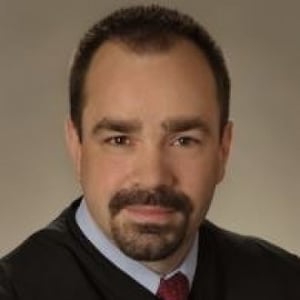
Judge, Commonwealth Court of Pennsylvania
Kevin Brobson is a Justice on the Pennsylvania Supreme Court. He was elected on November 4, 2021, effective January 2022. His current term will expire in January 2032.
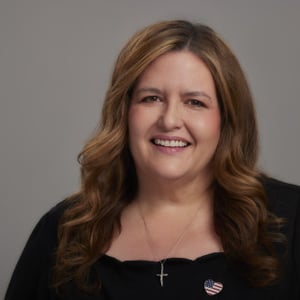
Attorney, Law Offices of Linda A. Kerns, LLC
Judge, Superior Court of Pennsylvania
Victor P. Stabile is a judge on the Pennsylvania Superior Court. He was elected to bench on November 5, 2013, and took office in January 2014 for a term that expires in January 2024.
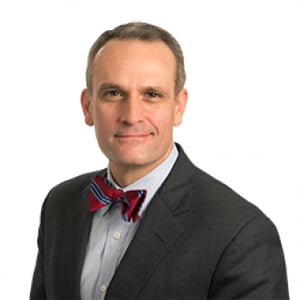
Shareholder, Littler Mendelson PC
Matthew J. Hank practices employment law, including issues arising under the common law and various statutes:
He particularly focuses on disputes concerning (1) wage and hour class actions (including cases involving independent contractor relationships, overtime claims, and payroll debit cards) and (2) noncompetition agreements and trade secrets.
Matthew served as a law clerk to the Hon. Daniel Manion of the U.S. Court of Appeals for the Seventh Circuit and the Hon. Paul V. Gadola of the U.S. District Court for the Eastern District of Michigan. Before attending law school, he served for four years on active duty in the United States Army as an Armor officer.
Shareholder, Littler Mendelson PC
Matthew J. Hank practices employment law, including issues arising under the common law and various statutes:
He particularly focuses on disputes concerning (1) wage and hour class actions (including cases involving independent contractor relationships, overtime claims, and payroll debit cards) and (2) noncompetition agreements and trade secrets.
Matthew served as a law clerk to the Hon. Daniel Manion of the U.S. Court of Appeals for the Seventh Circuit and the Hon. Paul V. Gadola of the U.S. District Court for the Eastern District of Michigan. Before attending law school, he served for four years on active duty in the United States Army as an Armor officer.

Chief Judge, United States Court of Appeals, Sixth Circuit
JEFFREY S. SUTTON is the Chief Judge of the United States Court of Appeals for the Sixth Circuit. He has served as Chair of the Federal Judicial Conference Committee on Rules of Practice and Procedure, Chair of the Advisory Committee on Appellate Rules, and Chair of the Supreme Court Fellows Commission. He currently serves as Chair of the Executive Committee of the Judicial Conference of the United States. Since 1993, Chief Judge Sutton has been an adjunct professor at The Ohio State University College of Law, where he teaches seminars on State Constitutional Law, the United States Supreme Court, and Appellate Advocacy. He also teaches a class on State Constitutional Law at Harvard Law School. Among other publications, he is the author of Who Decides? States as Laboratories of Constitutional Experimentation and 51 Imperfect Solutions: States and the Making of American Constitutional Law. He is the co-author of a casebook, State Constitutional Law: The Modern Experience, as well as The Law of Judicial Precedent. He is also the co-editor of The Essential Scalia: On the Constitution, the Courts, and the Rule of Law. In 2006, Chief Judge Sutton was elected to the American Law Institute, and in 2017 he was elected to its Council.
Shareholder, Littler Mendelson PC
Matthew J. Hank practices employment law, including issues arising under the common law and various statutes:
He particularly focuses on disputes concerning (1) wage and hour class actions (including cases involving independent contractor relationships, overtime claims, and payroll debit cards) and (2) noncompetition agreements and trade secrets.
Matthew served as a law clerk to the Hon. Daniel Manion of the U.S. Court of Appeals for the Seventh Circuit and the Hon. Paul V. Gadola of the U.S. District Court for the Eastern District of Michigan. Before attending law school, he served for four years on active duty in the United States Army as an Armor officer.
Chief Judge, United States Court of Appeals, Sixth Circuit
JEFFREY S. SUTTON is the Chief Judge of the United States Court of Appeals for the Sixth Circuit. He has served as Chair of the Federal Judicial Conference Committee on Rules of Practice and Procedure, Chair of the Advisory Committee on Appellate Rules, and Chair of the Supreme Court Fellows Commission. He currently serves as Chair of the Executive Committee of the Judicial Conference of the United States. Since 1993, Chief Judge Sutton has been an adjunct professor at The Ohio State University College of Law, where he teaches seminars on State Constitutional Law, the United States Supreme Court, and Appellate Advocacy. He also teaches a class on State Constitutional Law at Harvard Law School. Among other publications, he is the author of Who Decides? States as Laboratories of Constitutional Experimentation and 51 Imperfect Solutions: States and the Making of American Constitutional Law. He is the co-author of a casebook, State Constitutional Law: The Modern Experience, as well as The Law of Judicial Precedent. He is also the co-editor of The Essential Scalia: On the Constitution, the Courts, and the Rule of Law. In 2006, Chief Judge Sutton was elected to the American Law Institute, and in 2017 he was elected to its Council.
Shareholder, Littler Mendelson PC
Matthew J. Hank practices employment law, including issues arising under the common law and various statutes:
He particularly focuses on disputes concerning (1) wage and hour class actions (including cases involving independent contractor relationships, overtime claims, and payroll debit cards) and (2) noncompetition agreements and trade secrets.
Matthew served as a law clerk to the Hon. Daniel Manion of the U.S. Court of Appeals for the Seventh Circuit and the Hon. Paul V. Gadola of the U.S. District Court for the Eastern District of Michigan. Before attending law school, he served for four years on active duty in the United States Army as an Armor officer.
Chief Judge, United States Court of Appeals, Sixth Circuit
JEFFREY S. SUTTON is the Chief Judge of the United States Court of Appeals for the Sixth Circuit. He has served as Chair of the Federal Judicial Conference Committee on Rules of Practice and Procedure, Chair of the Advisory Committee on Appellate Rules, and Chair of the Supreme Court Fellows Commission. He currently serves as Chair of the Executive Committee of the Judicial Conference of the United States. Since 1993, Chief Judge Sutton has been an adjunct professor at The Ohio State University College of Law, where he teaches seminars on State Constitutional Law, the United States Supreme Court, and Appellate Advocacy. He also teaches a class on State Constitutional Law at Harvard Law School. Among other publications, he is the author of Who Decides? States as Laboratories of Constitutional Experimentation and 51 Imperfect Solutions: States and the Making of American Constitutional Law. He is the co-author of a casebook, State Constitutional Law: The Modern Experience, as well as The Law of Judicial Precedent. He is also the co-editor of The Essential Scalia: On the Constitution, the Courts, and the Rule of Law. In 2006, Chief Judge Sutton was elected to the American Law Institute, and in 2017 he was elected to its Council.
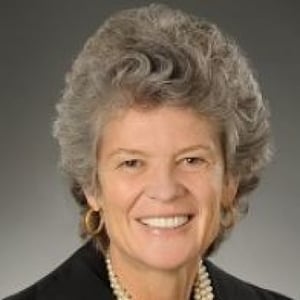
Judge, Pennsylvania Commonwealth Court
Anne Covey is a judge on the Pennsylvania Commonwealth Court. She was elected to the court in 2011, and her term expires in January 2022.
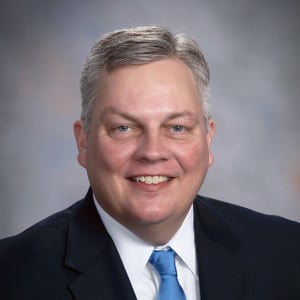
University Professor of Law and Religion and Director of the Eleanor H. McCullen Center for Law, Religion and Public Policy, Villanova University Charles Widger School of Law
Michael P. Moreland was appointed University Professor of Law and Religion and Director of the Eleanor H. McCullen Center for Law, Religion and Public Policy at Villanova University in 2017. Professor Moreland joined the Villanova faculty in 2006 and served as Vice Dean from 2012 to 2015. His research is primarily in the areas of torts, law and religion, constitutional law, and Catholic social thought, and he regularly teaches Torts, First Amendment, seminars in law and religion, and undergraduate courses in ethics.
Professor Moreland is the co-editor of Christianity and Private Law (Routledge, 2021), and his most recent publications include: “The Authority of Tradition: John Henry Newman and Legal Theory” in Christianity and the Making of Irish Law (Routledge, 2025); “Christianity and Torts” in The Oxford Handbook on Christianity and Law, (Oxford University Press, 2023); “Germaneness and Religious Liberty” in the Notre Dame Law Review (2023); “Contingency and Contestation in Christianity and Liberalism” in the Notre Dame Law Review (2023); “Friendship as the Primary Purpose of Law” in The American Journal of Jurisprudence 279 (2022); and “The Moral of Torts” (with Jeffrey Pojanowski) in Christianity and Private Law (Routledge, 2021).
Professor Moreland was a Visiting Professor of Law at the University of Notre Dame and the Mary Ann Remick Senior Visiting Fellow at the Notre Dame Center for Ethics and Culture from 2015 to 2017. He was the Forbes Visiting Fellow at Princeton University in the James Madison Program during academic year 2010-11. He has served as the project leader for grants from the John Templeton Foundation and the Charles Koch Foundation. He serves as the Chair of the Federalist Society’s Religious Liberties Practice Group Executive Committee and the Chair of the Board of Trustees of the Institute for Advanced Catholic Studies at the University of Southern California.
Professor Moreland received his BA in philosophy from the University of Notre Dame, his MA and PhD in theological ethics from Boston College, and his JD from the University of Michigan Law School. Following law school, Professor Moreland clerked for the Honorable Paul J. Kelly Jr., of the United States Court of Appeals for the Tenth Circuit and was an associate at Williams & Connolly LLP in Washington, DC, where he represented clients in First Amendment, professional liability, and products liability matters. Before coming to Villanova, he served as Associate Director for Domestic Policy at the White House under President George W. Bush, where he worked on a range of legal policy issues, including criminal justice, immigration, civil rights, and liability reform.
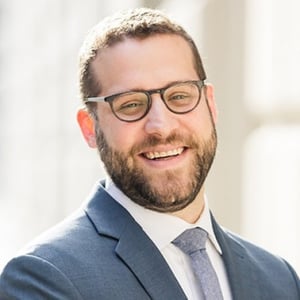
President and General Counsel, The Fairness Center
David R. Osborne is President & General Counsel of the Fairness Center. David helped to launch the Fairness Center in 2014 and provides advice and counsel to clients, directs the Fairness Center’s legal strategy, and oversees all litigation efforts. Prior to joining the Fairness Center, David practiced law in Florida, where he had previously served as clerk to a Florida Supreme Court justice.
David received his Juris Doctorate from the Florida State University College of Law, graduating magna cum laude. He enrolled in law school after working as official staff for a Member of Congress from Orlando, Florida.
David is a member of the Pennsylvania and Florida state bars and has been admitted to the federal District Court for the Middle District of Pennsylvania. He is based in central Pennsylvania, where he is also president of the Harrisburg Chapter of the Federalist Society and a State Advisory Committee Member for the U.S. Commission on Civil Rights. David and his wife have been happily married for 11 years and have four children together.
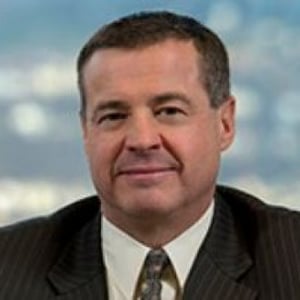
Justice, Supreme Court of Pennsylvania
David N. Wecht is a Pennsylvania Supreme Court justice. Wecht is one of three Democrats elected to the Pennsylvania Supreme Court in November 2015. He was sworn in to office on January 7, 2016, for a term that expires on January 4, 2026.
Judge, Pennsylvania Commonwealth Court
Anne Covey is a judge on the Pennsylvania Commonwealth Court. She was elected to the court in 2011, and her term expires in January 2022.
University Professor of Law and Religion and Director of the Eleanor H. McCullen Center for Law, Religion and Public Policy, Villanova University Charles Widger School of Law
Michael P. Moreland was appointed University Professor of Law and Religion and Director of the Eleanor H. McCullen Center for Law, Religion and Public Policy at Villanova University in 2017. Professor Moreland joined the Villanova faculty in 2006 and served as Vice Dean from 2012 to 2015. His research is primarily in the areas of torts, law and religion, constitutional law, and Catholic social thought, and he regularly teaches Torts, First Amendment, seminars in law and religion, and undergraduate courses in ethics.
Professor Moreland is the co-editor of Christianity and Private Law (Routledge, 2021), and his most recent publications include: “The Authority of Tradition: John Henry Newman and Legal Theory” in Christianity and the Making of Irish Law (Routledge, 2025); “Christianity and Torts” in The Oxford Handbook on Christianity and Law, (Oxford University Press, 2023); “Germaneness and Religious Liberty” in the Notre Dame Law Review (2023); “Contingency and Contestation in Christianity and Liberalism” in the Notre Dame Law Review (2023); “Friendship as the Primary Purpose of Law” in The American Journal of Jurisprudence 279 (2022); and “The Moral of Torts” (with Jeffrey Pojanowski) in Christianity and Private Law (Routledge, 2021).
Professor Moreland was a Visiting Professor of Law at the University of Notre Dame and the Mary Ann Remick Senior Visiting Fellow at the Notre Dame Center for Ethics and Culture from 2015 to 2017. He was the Forbes Visiting Fellow at Princeton University in the James Madison Program during academic year 2010-11. He has served as the project leader for grants from the John Templeton Foundation and the Charles Koch Foundation. He serves as the Chair of the Federalist Society’s Religious Liberties Practice Group Executive Committee and the Chair of the Board of Trustees of the Institute for Advanced Catholic Studies at the University of Southern California.
Professor Moreland received his BA in philosophy from the University of Notre Dame, his MA and PhD in theological ethics from Boston College, and his JD from the University of Michigan Law School. Following law school, Professor Moreland clerked for the Honorable Paul J. Kelly Jr., of the United States Court of Appeals for the Tenth Circuit and was an associate at Williams & Connolly LLP in Washington, DC, where he represented clients in First Amendment, professional liability, and products liability matters. Before coming to Villanova, he served as Associate Director for Domestic Policy at the White House under President George W. Bush, where he worked on a range of legal policy issues, including criminal justice, immigration, civil rights, and liability reform.
President and General Counsel, The Fairness Center
David R. Osborne is President & General Counsel of the Fairness Center. David helped to launch the Fairness Center in 2014 and provides advice and counsel to clients, directs the Fairness Center’s legal strategy, and oversees all litigation efforts. Prior to joining the Fairness Center, David practiced law in Florida, where he had previously served as clerk to a Florida Supreme Court justice.
David received his Juris Doctorate from the Florida State University College of Law, graduating magna cum laude. He enrolled in law school after working as official staff for a Member of Congress from Orlando, Florida.
David is a member of the Pennsylvania and Florida state bars and has been admitted to the federal District Court for the Middle District of Pennsylvania. He is based in central Pennsylvania, where he is also president of the Harrisburg Chapter of the Federalist Society and a State Advisory Committee Member for the U.S. Commission on Civil Rights. David and his wife have been happily married for 11 years and have four children together.
Justice, Supreme Court of Pennsylvania
David N. Wecht is a Pennsylvania Supreme Court justice. Wecht is one of three Democrats elected to the Pennsylvania Supreme Court in November 2015. He was sworn in to office on January 7, 2016, for a term that expires on January 4, 2026.
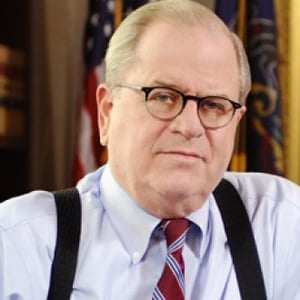
Former Chief Justice, Supreme Court of Pennsylvania
Ronald Castille was the chief justice of the Pennsylvania Supreme Court. He was first elected to the court in 1993. Castille was retained in 2003 and 2013. He retired from the bench in December 2014. He served as chief justice of the court from 2008 until his retirement.
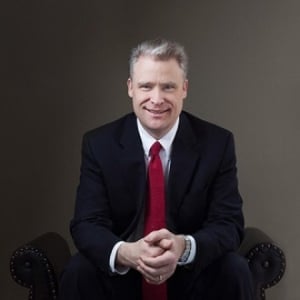
Founder, OGC Law, LLC
Greg Teufel is the founder of OGC Law, LLC. Greg focuses his practice on outside general counsel work, including drafting and negotiating contracts and commercial litigation, including breach of contract disputes, customs litigation, construction litigation, employee benefits disputes and employment disputes. Before founding OGC Law, Greg practiced at several major law firms in Pittsburgh for more than 20 years.
He has trial experience in state and federal courts in Pennsylvania and West Virginia, and in the Court of International Trade, and has also handled AAA arbitrations. His appellate experience includes arguing before the Pennsylvania Supreme Court and the U.S. Court of Appeals for the Federal Circuit.
Former Chief Justice, Supreme Court of Pennsylvania
Ronald Castille was the chief justice of the Pennsylvania Supreme Court. He was first elected to the court in 1993. Castille was retained in 2003 and 2013. He retired from the bench in December 2014. He served as chief justice of the court from 2008 until his retirement.
Founder, OGC Law, LLC
Greg Teufel is the founder of OGC Law, LLC. Greg focuses his practice on outside general counsel work, including drafting and negotiating contracts and commercial litigation, including breach of contract disputes, customs litigation, construction litigation, employee benefits disputes and employment disputes. Before founding OGC Law, Greg practiced at several major law firms in Pittsburgh for more than 20 years.
He has trial experience in state and federal courts in Pennsylvania and West Virginia, and in the Court of International Trade, and has also handled AAA arbitrations. His appellate experience includes arguing before the Pennsylvania Supreme Court and the U.S. Court of Appeals for the Federal Circuit.
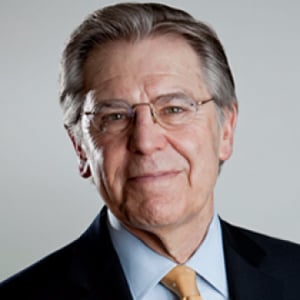
Senior Fellow, Arthur F. Burns Fellow in Financial Policy Studies, American Enterprise Institute
Peter J. Wallison holds the Arthur F. Burns Chair in Financial Policy Studies and is co-director of AEI’s program on Financial Policy Studies. Prior to joining AEI, he practiced banking, corporate and financial law at Gibson, Dunn & Crutcher in Washington, D.C., and New York. Mr. Wallison has held a number of government positions. From June 1981 to January 1985, he was General Counsel of the United States Treasury Department, where he had a significant role in the development of the Reagan Administration's proposals for deregulation in the financial services industry. During 1986 and 1987, Mr. Wallison was White House counsel to President Ronald Reagan, and between 1972 and 1976, he served first as Special Assistant to New York's Gov. Nelson A. Rockefeller and, subsequently, as counsel to Mr. Rockefeller as vice president of the United States.
Mr. Wallison was admitted to practice before the courts of New York and the District of Columbia, and is retired from practice in New York. He continues to be a member of the District of Columbia Bar Association. He received his undergraduate degree from Harvard College in 1963 and law degree from Harvard Law School in 1966.
Mr. Wallison is the author of Ronald Reagan: The Power of Conviction and the Success of His Presidency, published in December 2002 by Westview Press. On campaign finance, he is the author (with Joel Gora) of Better Parties, Better Government, (AEI Press 2009). On financial or regulatory matters, he is the author of Back From the Brink, a proposal for a private deposit insurance system, and co-author of Nationalizing Mortgage Risk: The Growth of Fannie Mae and Freddie Mac; The GAAP Gap: Corporate Disclosure in the Internet Age; Competitive Equity: A Better Way to Organize Mutual Funds; Bad History, Worse Policy: How a False Narrative about the Financial Crisis Led to the Dodd-Frank Act (AEI Press 2013); and Hidden In Plain Sight: What Caused the World’s Worst Financial Crisis and Why it Could Happen Again (Encounter Books 2015). His most recent book is Judicial Fortitude: The Last Chance to Rein in the Administrative State, published by Encounter Books in October 2018.
He testifies frequently before committees of Congress, and is a frequent contributor to the op-ed pages of the Wall Street Journal and other print and online journals. He has also been a speaker at many conferences on financial services, housing, the causes of the financial crisis, the Dodd-Frank Act, accounting, and corporate governance, and was a member of the Shadow Financial Regulatory Committee between 1995 and 2015. He was a member of the SEC Advisory Committee on Improvements to Financial Reporting (2008), co-Chair of the Pew Financial Reform Task Force (2009), and a member of the congressionally- appointed Financial Crisis Inquiry Commission (2009-2011). In May 2011, for his work in financial policy, Mr. Wallison received an honorary doctorate in Humane Letters from the University of Colorado.

Panel 2: Hot Topics in Pennsylvania Courts
P. Kevin Brobson, Linda A. Kerns, Victor P. Stabile, Matthew J. Hank
2018 Pennsylvania Chapters Conference
On October 19, 2018, the Federalist Society's Pennsylvania chapters hosted the 2018 Pennsylvania Chapters Conference...
Lunch and Keynote Address by Jeffrey Sutton
Matthew J. Hank, Jeffrey S. Sutton
2018 Pennsylvania Chapters Conference
On October 19, 2018, the Federalist Society's Pennsylvania chapters hosted the 2018 Pennsylvania Chapters Conference...
Lunch and Keynote Address by Jeffrey Sutton
Matthew J. Hank, Jeffrey S. Sutton
2018 Pennsylvania Chapters Conference
On October 19, 2018, the Federalist Society's Pennsylvania chapters hosted the 2018 Pennsylvania Chapters Conference...
Lunch and Keynote Address by Jeffrey Sutton
Matthew J. Hank, Jeffrey S. Sutton
2018 Pennsylvania Chapters Conference
On October 19, 2018, the Federalist Society's Pennsylvania chapters hosted the 2018 Pennsylvania Chapters Conference...
Panel 1: Approaches to Constitutional and Statutory Interpretation
Anne E. Covey, Michael P. Moreland, David R. Osborne, David N. Wecht
2018 Pennsylvania Chapters Conference
On October 19, 2018, the Federalist Society's Pennsylvania chapters hosted the 2018 Pennsylvania Chapters Conference...
Panel 1: Approaches to Constitutional and Statutory Interpretation
Anne E. Covey, Michael P. Moreland, David R. Osborne, David N. Wecht
2018 Pennsylvania Chapters Conference
On October 19, 2018, the Federalist Society's Pennsylvania chapters hosted the 2018 Pennsylvania Chapters Conference...
Opening Address by Ronald D. Castille
Ronald D. Castille, Gregory H. Teufel
2018 Pennsylvania Chapters Conference
On October 19, 2018, the Federalist Society's Pennsylvania chapters hosted the 2018 Pennsylvania Chapters Conference...
Opening Address by Ronald D. Castille
Ronald D. Castille, Gregory H. Teufel
2018 Pennsylvania Chapters Conference
On October 19, 2018, the Federalist Society's Pennsylvania chapters hosted the 2018 Pennsylvania Chapters Conference...
Topics
Civil Justice Update : Arkansas Issue 1 – Off the Ballot
On October 18, 2018, the Arkansas Supreme Court handed down a 6-1 decision, removing a...
Book Review: Judicial Fortitude: The Last Chance to Rein In the Administrative State
Peter J. Wallison
Federalism and Separation of Powers and Financial Services & E-Commerce Practice Groups and Regulatory Transparency Project
In this book, Peter J. Wallison argues that the administrative agencies of the executive branch...