
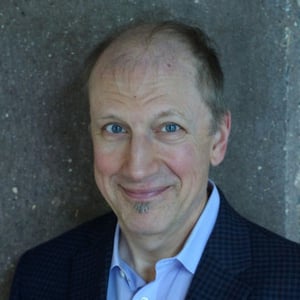
James L. Oberstar Professor of Law and Public Policy, University of St. Thomas School of Law
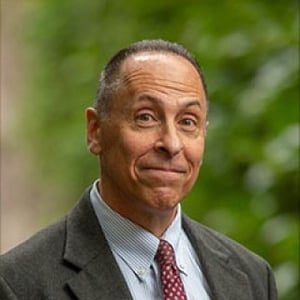
John Paul Stevens Professor of Law, Northwestern University School of Law
Andrew Koppelman is John Paul Stevens Professor of Law, Professor (by courtesy) of Political Science, and Philosophy Department Affiliated Faculty at Northwestern University. He received the Walder Award for Research Excellence from Northwestern, the Hart-Dworkin award in legal philosophy from the Association of American Law Schools, and the Edward S. Corwin Prize from the American Political Science Association. His scholarship focuses on issues at the intersection of law and political philosophy. He has written more than 100 scholarly articles and eight books, most recently Burning Down the House: How Libertarian Philosophy Was Corrupted by Delusion and Greed, (St. Martin’s Press). His column appears regularly at The Hill. You can find his recent work at andrewkoppelman.com.

Robert E. Scott Distinguished Professor of Law Emeritus, University of Virginia School of Law; Alice McKean Young Regents Chair in Law Emeritus, University of Texas
Douglas Laycock is perhaps the nation’s leading authority on the law of religious liberty and also on the law of remedies. He has taught and written about these topics for more than four decades at the University of Chicago, the University of Texas, the University of Michigan and the University of Virginia. He retired from teaching at UVA Law School in May 2023.
Laycock has testified frequently before Congress and has argued many cases in the courts, including the U.S. Supreme Court, where he has served as lead counsel in six cases and has also filed influential amicus briefs. He is the author (co-author in the most recent edition) of the leading casebook Modern American Remedies, the award-winning monograph The Death of the Irreparable Injury Rule and many articles in leading law reviews. He co-edited a collection of essays, Same-Sex Marriage and Religious Liberty.
His many writings on religious liberty have been republished in a five-volume collection:
Laycock resigned from the council and as first vice president of the American Law Institute to become co-reporter for the Restatement (Third) of Torts: Remedies. He is a fellow of the American Academy of Arts and Sciences. He earned his B.A. from Michigan State University and his J.D. from the University of Chicago.

Senior Counsel, Vice President of Litigation Strategy, Alliance Defending Freedom
Jonathan Scruggs serves as senior counsel and vice president of litigation strategy with Alliance Defending Freedom. In this role, he identifies new litigation opportunities, develops new legal strategies, and improves processes across multiple litigation teams in collaboration with the chief legal counsel.
Since joining ADF in 2006, Scruggs has worked on and prevailed in a variety of cases related to Title IX, gender ideology, and people’s right to freely express their faith, including Masterpiece Cakeshop v. Colorado Civil Rights Commission, 303 Creative v. Elenis, and Brush & Nib Studio v. Phoenix, which Scruggs argued at the Arizona Supreme Court. Scruggs has argued before numerous federal appellate courts and trial courts across the country and has extensive experience litigating free-speech, religious-liberty, establishment, Title IX, and equal-protection issues on behalf of students, female athletes, businesses, professionals, and non-profit entities.
Scruggs earned his B.A., summa cum laude, from Vanderbilt University in 2003 and his J.D. at Harvard Law School in 2006. He is also a 2004 Blackstone Fellow.
A member of the bars of Arizona and Tennessee, Scruggs is admitted to the U.S. Supreme Court and multiple federal district and appellate courts.
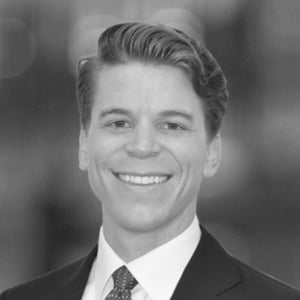
Chief Civil Counsel, Senate Judiciary Committee
Austin Rogers serves as Chief Counsel for the Senate Judiciary Committee, covering the civil portfolio for the Chairman. He obtained dual graduate degrees in Law and Theology from Duke University (summa cum laude), where he served on the Duke Law Journal and Harvard Journal of Law & Public Policy. After law school, he clerked for Chief Judge Steven D. Merryday in the Middle District of Florida. Following his clerkship, he practiced law at White & Case, specializing in commercial and appellate litigation. Prior to serving as Chief Civil Counsel for the Senate Judiciary Committee, he served as Senior Counsel of Oversight and Investigations for the Senate Judiciary Committee.
Austin obtained undergraduate degrees (summa cum laude) in International Business and Theology from Southeastern University and Wheaton College, respectively, and played college soccer at both schools.
He has published First Amendment scholarship in the Duke Law Journal and the Marquette Law Review, and he has a forthcoming article that will be published in the Florida Law Review. He is a member of the District of Columbia Bar, the Republican National Lawyers Association, and the Federalist Society, where he serves in a volunteer capacity. Austin is actively involved in his church and serves on its worship team.
John Paul Stevens Professor of Law, Northwestern University School of Law
Andrew Koppelman is John Paul Stevens Professor of Law, Professor (by courtesy) of Political Science, and Philosophy Department Affiliated Faculty at Northwestern University. He received the Walder Award for Research Excellence from Northwestern, the Hart-Dworkin award in legal philosophy from the Association of American Law Schools, and the Edward S. Corwin Prize from the American Political Science Association. His scholarship focuses on issues at the intersection of law and political philosophy. He has written more than 100 scholarly articles and eight books, most recently Burning Down the House: How Libertarian Philosophy Was Corrupted by Delusion and Greed, (St. Martin’s Press). His column appears regularly at The Hill. You can find his recent work at andrewkoppelman.com.
Robert E. Scott Distinguished Professor of Law Emeritus, University of Virginia School of Law; Alice McKean Young Regents Chair in Law Emeritus, University of Texas
Douglas Laycock is perhaps the nation’s leading authority on the law of religious liberty and also on the law of remedies. He has taught and written about these topics for more than four decades at the University of Chicago, the University of Texas, the University of Michigan and the University of Virginia. He retired from teaching at UVA Law School in May 2023.
Laycock has testified frequently before Congress and has argued many cases in the courts, including the U.S. Supreme Court, where he has served as lead counsel in six cases and has also filed influential amicus briefs. He is the author (co-author in the most recent edition) of the leading casebook Modern American Remedies, the award-winning monograph The Death of the Irreparable Injury Rule and many articles in leading law reviews. He co-edited a collection of essays, Same-Sex Marriage and Religious Liberty.
His many writings on religious liberty have been republished in a five-volume collection:
Laycock resigned from the council and as first vice president of the American Law Institute to become co-reporter for the Restatement (Third) of Torts: Remedies. He is a fellow of the American Academy of Arts and Sciences. He earned his B.A. from Michigan State University and his J.D. from the University of Chicago.
Senior Counsel, Vice President of Litigation Strategy, Alliance Defending Freedom
Jonathan Scruggs serves as senior counsel and vice president of litigation strategy with Alliance Defending Freedom. In this role, he identifies new litigation opportunities, develops new legal strategies, and improves processes across multiple litigation teams in collaboration with the chief legal counsel.
Since joining ADF in 2006, Scruggs has worked on and prevailed in a variety of cases related to Title IX, gender ideology, and people’s right to freely express their faith, including Masterpiece Cakeshop v. Colorado Civil Rights Commission, 303 Creative v. Elenis, and Brush & Nib Studio v. Phoenix, which Scruggs argued at the Arizona Supreme Court. Scruggs has argued before numerous federal appellate courts and trial courts across the country and has extensive experience litigating free-speech, religious-liberty, establishment, Title IX, and equal-protection issues on behalf of students, female athletes, businesses, professionals, and non-profit entities.
Scruggs earned his B.A., summa cum laude, from Vanderbilt University in 2003 and his J.D. at Harvard Law School in 2006. He is also a 2004 Blackstone Fellow.
A member of the bars of Arizona and Tennessee, Scruggs is admitted to the U.S. Supreme Court and multiple federal district and appellate courts.
Chief Civil Counsel, Senate Judiciary Committee
Austin Rogers serves as Chief Counsel for the Senate Judiciary Committee, covering the civil portfolio for the Chairman. He obtained dual graduate degrees in Law and Theology from Duke University (summa cum laude), where he served on the Duke Law Journal and Harvard Journal of Law & Public Policy. After law school, he clerked for Chief Judge Steven D. Merryday in the Middle District of Florida. Following his clerkship, he practiced law at White & Case, specializing in commercial and appellate litigation. Prior to serving as Chief Civil Counsel for the Senate Judiciary Committee, he served as Senior Counsel of Oversight and Investigations for the Senate Judiciary Committee.
Austin obtained undergraduate degrees (summa cum laude) in International Business and Theology from Southeastern University and Wheaton College, respectively, and played college soccer at both schools.
He has published First Amendment scholarship in the Duke Law Journal and the Marquette Law Review, and he has a forthcoming article that will be published in the Florida Law Review. He is a member of the District of Columbia Bar, the Republican National Lawyers Association, and the Federalist Society, where he serves in a volunteer capacity. Austin is actively involved in his church and serves on its worship team.

Topics
Louisiana's Ten Commandments Statute and the Establishment Clause
On June 19, 2024, the governor of Louisiana signed into law House Bill No. 71....
Topics
Hile v. Michigan: A New Era for Blaine Amendments?
On November 6, 2023, in Hile v. Michigan, the Sixth Circuit upheld a Michigan state...
Topics
Of Beetles and Babies: The Possible Futures for Standing after FDA v. Alliance for Hippocratic Medicine
The U.S. Supreme Court is poised to issue a decision in FDA v. Alliance for...
Religious Liberty Apologetics
Thomas C. Berg
Federalist Society Review, Volume 25
Nick Reaves and Matthew Krauter have written a fine review, in this journal,[1] of my...
Topics
Abortion Returns to the Supreme Court: Oral Arguments In FDA v. AHM
Last month, the U.S. Supreme Court heard oral arguments about access to a chemical abortion...
303 Creative, Masterpiece Cakeshop, and the Fate of Free Exercise for Wedding Vendors
Andrew Koppelman, Douglas Laycock, Jonathan Scruggs, Austin Rogers
Over the past decade, the tension between First Amendment rights and public accommodations laws has...
303 Creative, Masterpiece Cakeshop, and the Fate of Free Exercise for Wedding Vendors
Andrew Koppelman, Douglas Laycock, Jonathan Scruggs, Austin Rogers
Over the past decade, the tension between First Amendment rights and public accommodations laws has...
Topics
LePage v. Center for Reproductive Medicine, P.C.
On February 16, 2024, the Alabama Supreme Court held 7-2 in LePage v. Center for...
Topics
Department of Veterans Affairs Rule Doubles Down on Abortion
On March 4, 2024, the Department of Veterans Affairs (VA) finalized “without changes” an interim...
Topics
State Department’s Proposed Foreign Assistance Nondiscrimination Requirements Raise Concerns
On January 19, 2024, the U.S. Department of State issued two notices of proposed rulemaking...