

Partner, Sullivan & Cromwell LLP
Andrei Iancu is a partner at Sullivan & Cromwell and one of the leading voices in intellectual property law and innovation policy. He is a former Undersecretary of Commerce for Intellectual Property and Director of the U.S. Patent and Trademark Office (USPTO), a position to which he was confirmed unanimously by the Senate. Andrei has decades of experience representing plaintiffs and defendants in IP matters across the technical and scientific spectra, including medical devices, genetic testing, therapeutics, the Internet, telephony, TV broadcasting, video game systems and computer peripherals. He represents clients in litigation and trials before the district courts, the U.S. International Trade Commission and the USPTO, the Federal Circuit and U.S. Supreme Court, and also counsels clients on obtaining, licensing, enforcing and defending against IP rights globally.
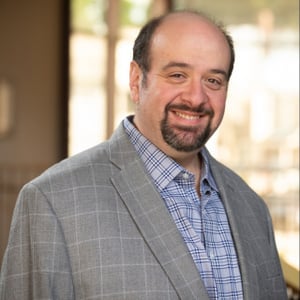
Associate Professor, UNH Franklin Pierce School of Law
Zvi S. Rosen is an Associate Professor at UNH Franklin Pierce School of Law and the Faculty Director of the Franklin Pierce Society for Intellectual Property. He has served as a Assistant Professor at the Southern Illinois University School of Law, as a Visiting Assistant Professor at the Maurice A. Deane School of Law at Hofstra University, and as a Visiting Scholar and Professorial Lecturer in Law at George Washington University School of Law.
In 2015-2016, he was the Abraham L. Kaminstein Scholar in Residence at the U.S. Copyright Office. Mr. Rosen received his J.D. from Northwestern University School of Law in 2005 and LLM in Intellectual Property in 2006 from the George Washington University Law School. He has practiced at Fried, Frank, Harris, Shriver & Jacobson LLP as well as smaller firms and his own practice, and clerked for the Hon. Thomas B. Bennett of the U.S. Bankruptcy Court for the Northern District of Alabama. He has written extensively on the development of modern copyright and trademark law, as well as on bankruptcy law.
Associate Professor, UNH Franklin Pierce School of Law
Zvi S. Rosen is an Associate Professor at UNH Franklin Pierce School of Law and the Faculty Director of the Franklin Pierce Society for Intellectual Property. He has served as a Assistant Professor at the Southern Illinois University School of Law, as a Visiting Assistant Professor at the Maurice A. Deane School of Law at Hofstra University, and as a Visiting Scholar and Professorial Lecturer in Law at George Washington University School of Law.
In 2015-2016, he was the Abraham L. Kaminstein Scholar in Residence at the U.S. Copyright Office. Mr. Rosen received his J.D. from Northwestern University School of Law in 2005 and LLM in Intellectual Property in 2006 from the George Washington University Law School. He has practiced at Fried, Frank, Harris, Shriver & Jacobson LLP as well as smaller firms and his own practice, and clerked for the Hon. Thomas B. Bennett of the U.S. Bankruptcy Court for the Northern District of Alabama. He has written extensively on the development of modern copyright and trademark law, as well as on bankruptcy law.

Professor, UNH Franklin Pierce School of Law
Ann Bartow joined the UNH Franklin Pierce School of Law in 2015. She previously held tenured faculty appointments at Pace Law School and the University of South Carolina School of Law. During the 2011-2012 academic year, Professor Bartow was a Fulbright Scholar at Tongji University in Shanghai, China. She teaches Copyright Law, Trademark Law, Survey of Intellectual Property Law, Art Law and Torts. She is a graduate of Cornell University and the University of Pennsylvania Law School. Her scholarship focuses on the intersection between intellectual property laws and public policy concerns, privacy and technology law, and feminist legal theory, and she has published numerous articles and book chapters on these subjects.
Professor Bartow has served as chair and a past advisory board member of the American Association of Law Schools Executive Committee of the Defamation and Privacy Section, and also a past chair and past advisory board member the Intellectual Property Law Section. She is also a member of the Advisory Board of the Electronic Privacy Information Center (EPIC), and also a member of the American Law Institute.
Prior to entering the academy in 1995, Professor Bartow practiced law at McCutchen, Doyle, Brown & Enersen (later known as Bingham McCutchen LLP and now merged with Morgan, Lewis & Bockius) in San Francisco. She began her teaching career as an Honorable Abraham L. Freedman Teaching Fellow at Temple University School of Law, where she also received an LL.M. in Legal Education and later served as a visiting professor. Professor Bartow has also taught as a visitor at the University of Florida School of Law, American University Washington College of Law, the University of Dayton School of Law and the University of Idaho College of Law.

Associate, McKool Smith PC
Eliza Beeney is an Associate in McKool Smith’s New York office. She focuses her practice on intellectual property litigation, including patents, copyrights, and trademarks. Prior to joining the firm, Eliza clerked for the Honorable Margo K. Brodie of the U.S. District Court for the Eastern District of New York where she assisted in civil and criminal matters in all stages of litigation, including trial. Prior to her clerkship, Eliza was a litigation associate at Davis Polk & Wardwell.
Eliza attended Cornell Law School where she was an editor for the Cornell Law Review, Executive Vice Chancellor of the Moot Court Board and a member of the Cornell Women’s Law Coalition. She also worked in Cornell’s Capital Punishment Clinic and authored a note selected for publication in the Law Review.
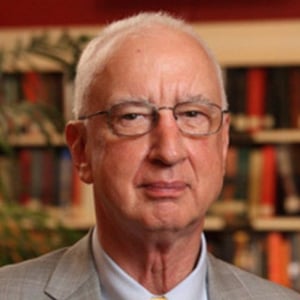
Former Chief Judge, United States Court of Appeals for the Federal Circuit
Judge Michel served for more than 22 years on the Federal Circuit, retiring on May 31, 2010. From December 25, 2004 until his retirement, he also discharged the duties of Chief Judge of this national court, serving simultaneously on the U.S. Judicial Conference -- the Judiciary's governing body -- and by appointment of the Chief Justice on its seven-judge Executive Committee.
He judged several thousand appeals and authored more than 800 opinions, one third concerning intellectual property law. Intellectual Asset Management magazine inducted him into its Hall of Fame and he was designated one of the 50 most influential leaders in intellectual property law in the world. His contributions were also recognized by lifetime achievement and similar awards by the American Intellectual Property Law Association (AIPLA); Intellectual Property Owners Education Foundation (IPO); the American Bar Association's Intellectual Property Section; Managing Intellectual Property magazine; the Sedona Conference; the Patent and Trademark Office Society (PTOS); the New York, Chicago, Philadelphia, and Los Angeles Intellectual Property Law Associations; and the William C. Connor, the Giles S. Rich, and the Richard Linn Intellectual Property American Inns of Court. In 2010 the Los Angeles IP Inn was renamed in his honor as the Paul R. Michel IP Inn.
Judge Michel received the Jefferson Medal, the Eli Whitney Award, and the Katz-Kiley Prize as well as Honorary Doctor of Law degrees from the Catholic University of America and the John Marshall Law School. He is a lifetime Member of Honore of FICPI, the international association of private practitioners of intellectual property law. Williams College granted him the Kellogg Award for "outstanding leadership in law and public service."
Judge Michel has written numerous articles on patent law and advocacy, taught related courses and master classes at George Washington University, the University of Akron, and John Marshall law schools, serving as well on their IP advisory boards and on counterpart boards at the universities of California (Berkley), Washington, and Maryland. He co-authored a casebook, Patent Litigation and Strategy (West, 1999) and an August 2010 editorial in the New York Times on strengthening the patent system to promote prosperity and create new jobs.
A frequent speaker at conferences and law schools during his judicial tenure and since, he retired from a lifetime appointment to be free to speak out on the national need for better patent policy and protection of intellectual property and the vital, unmet resource needs of the courts, the PTO, the International Trade Commission, and other IP-related agencies. He was appointed Distinguished Scholar in Residence by IPO, following his retirement. Judge Michel also consults for law firms and their clients in intellectual property litigations, conducting moot courts, mock trials, case evaluations, editing briefs, advising on strategy and providing mediation and arbitration services.
Professor, UNH Franklin Pierce School of Law
Ann Bartow joined the UNH Franklin Pierce School of Law in 2015. She previously held tenured faculty appointments at Pace Law School and the University of South Carolina School of Law. During the 2011-2012 academic year, Professor Bartow was a Fulbright Scholar at Tongji University in Shanghai, China. She teaches Copyright Law, Trademark Law, Survey of Intellectual Property Law, Art Law and Torts. She is a graduate of Cornell University and the University of Pennsylvania Law School. Her scholarship focuses on the intersection between intellectual property laws and public policy concerns, privacy and technology law, and feminist legal theory, and she has published numerous articles and book chapters on these subjects.
Professor Bartow has served as chair and a past advisory board member of the American Association of Law Schools Executive Committee of the Defamation and Privacy Section, and also a past chair and past advisory board member the Intellectual Property Law Section. She is also a member of the Advisory Board of the Electronic Privacy Information Center (EPIC), and also a member of the American Law Institute.
Prior to entering the academy in 1995, Professor Bartow practiced law at McCutchen, Doyle, Brown & Enersen (later known as Bingham McCutchen LLP and now merged with Morgan, Lewis & Bockius) in San Francisco. She began her teaching career as an Honorable Abraham L. Freedman Teaching Fellow at Temple University School of Law, where she also received an LL.M. in Legal Education and later served as a visiting professor. Professor Bartow has also taught as a visitor at the University of Florida School of Law, American University Washington College of Law, the University of Dayton School of Law and the University of Idaho College of Law.
Associate, McKool Smith PC
Eliza Beeney is an Associate in McKool Smith’s New York office. She focuses her practice on intellectual property litigation, including patents, copyrights, and trademarks. Prior to joining the firm, Eliza clerked for the Honorable Margo K. Brodie of the U.S. District Court for the Eastern District of New York where she assisted in civil and criminal matters in all stages of litigation, including trial. Prior to her clerkship, Eliza was a litigation associate at Davis Polk & Wardwell.
Eliza attended Cornell Law School where she was an editor for the Cornell Law Review, Executive Vice Chancellor of the Moot Court Board and a member of the Cornell Women’s Law Coalition. She also worked in Cornell’s Capital Punishment Clinic and authored a note selected for publication in the Law Review.
Former Chief Judge, United States Court of Appeals for the Federal Circuit
Judge Michel served for more than 22 years on the Federal Circuit, retiring on May 31, 2010. From December 25, 2004 until his retirement, he also discharged the duties of Chief Judge of this national court, serving simultaneously on the U.S. Judicial Conference -- the Judiciary's governing body -- and by appointment of the Chief Justice on its seven-judge Executive Committee.
He judged several thousand appeals and authored more than 800 opinions, one third concerning intellectual property law. Intellectual Asset Management magazine inducted him into its Hall of Fame and he was designated one of the 50 most influential leaders in intellectual property law in the world. His contributions were also recognized by lifetime achievement and similar awards by the American Intellectual Property Law Association (AIPLA); Intellectual Property Owners Education Foundation (IPO); the American Bar Association's Intellectual Property Section; Managing Intellectual Property magazine; the Sedona Conference; the Patent and Trademark Office Society (PTOS); the New York, Chicago, Philadelphia, and Los Angeles Intellectual Property Law Associations; and the William C. Connor, the Giles S. Rich, and the Richard Linn Intellectual Property American Inns of Court. In 2010 the Los Angeles IP Inn was renamed in his honor as the Paul R. Michel IP Inn.
Judge Michel received the Jefferson Medal, the Eli Whitney Award, and the Katz-Kiley Prize as well as Honorary Doctor of Law degrees from the Catholic University of America and the John Marshall Law School. He is a lifetime Member of Honore of FICPI, the international association of private practitioners of intellectual property law. Williams College granted him the Kellogg Award for "outstanding leadership in law and public service."
Judge Michel has written numerous articles on patent law and advocacy, taught related courses and master classes at George Washington University, the University of Akron, and John Marshall law schools, serving as well on their IP advisory boards and on counterpart boards at the universities of California (Berkley), Washington, and Maryland. He co-authored a casebook, Patent Litigation and Strategy (West, 1999) and an August 2010 editorial in the New York Times on strengthening the patent system to promote prosperity and create new jobs.
A frequent speaker at conferences and law schools during his judicial tenure and since, he retired from a lifetime appointment to be free to speak out on the national need for better patent policy and protection of intellectual property and the vital, unmet resource needs of the courts, the PTO, the International Trade Commission, and other IP-related agencies. He was appointed Distinguished Scholar in Residence by IPO, following his retirement. Judge Michel also consults for law firms and their clients in intellectual property litigations, conducting moot courts, mock trials, case evaluations, editing briefs, advising on strategy and providing mediation and arbitration services.
Partner, Sullivan & Cromwell LLP
Andrei Iancu is a partner at Sullivan & Cromwell and one of the leading voices in intellectual property law and innovation policy. He is a former Undersecretary of Commerce for Intellectual Property and Director of the U.S. Patent and Trademark Office (USPTO), a position to which he was confirmed unanimously by the Senate. Andrei has decades of experience representing plaintiffs and defendants in IP matters across the technical and scientific spectra, including medical devices, genetic testing, therapeutics, the Internet, telephony, TV broadcasting, video game systems and computer peripherals. He represents clients in litigation and trials before the district courts, the U.S. International Trade Commission and the USPTO, the Federal Circuit and U.S. Supreme Court, and also counsels clients on obtaining, licensing, enforcing and defending against IP rights globally.
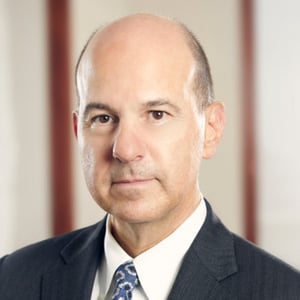
Partner, Cravath Swaine & Moore LLP
David J. Kappos is a partner at Cravath. He is widely recognized as one of the world’s foremost leaders in the field of intellectual property, including intellectual property management and strategy, the development of global intellectual property norms, laws and practices as well as commercialization and enforcement of innovation-based assets. Mr. Kappos supports the Firm’s clients with a wide range of their most complex intellectual property issues, including those pertaining to blockchain and financial technology (FinTech).
From August 2009 to January 2013, Mr. Kappos served as Under Secretary of Commerce and Director of the United States Patent and Trademark Office (USPTO). In that role, he advised the President, the Secretary of Commerce and the Administration on intellectual property policy matters. As Director of the USPTO, he led the Agency in dramatically re-engineering its entire management and operational systems as well as its engagement with the global innovation community. He was instrumental in achieving the greatest legislative reform of the U.S. patent system in generations through passage and implementation of the Leahy‑Smith America Invents Act, signed into law by President Obama in September 2011.
Prior to leading the USPTO, Mr. Kappos held several executive posts in the legal department of IBM, the world’s largest patent holder. From 2003 to 2009, he served as the company’s chief intellectual property lawyer. In that capacity, he managed global intellectual property activities for IBM, including all aspects of patent, trademark, copyright and trade secret protection. Mr. Kappos joined IBM as a development engineer. During his more than 25 years at IBM, he served in a variety of roles including litigation counsel and Asia Pacific IP counsel, based in Tokyo, Japan, where he led all aspects of intellectual property protection, including licensing, transactions support and mergers and acquisitions activity for the Asia/Pacific region.
Mr. Kappos has received numerous accolades for his contributions to the field of intellectual property, including, among others, the 2014 Global Agenda Council Vision Award for the Intellectual Property Council’s pro bono initiative from the World Economic Forum, the 2014 Jefferson Medal from the New Jersey Intellectual Property Law Association (NJIPLA), the 2013 Board of Director’s Excellence Award from the American Intellectual Property Law Association (AIPLA), the 2013 Champion of Intellectual Property Award from the District of Columbia Bar Association and the 2013 North America Government Leadership Award from Semiconductor Equipment and Materials International (SEMI). He was named one of the “Top 25 Icons of IP” by Law360, one of the “50 Most Influential People in Intellectual Property” and the “Outstanding Practitioner of the Year in IP Transactions” by Managing IP, one of the “Top 50 Intellectual Property Trailblazers & Pioneers” and one of the “100 Most Influential Lawyers in America” by The National Law Journal, “Intellectual Property Professional of the Year” by the Intellectual Property Owners Association and inducted into the Intellectual Property Hall of Fame by Intellectual Asset Management Magazine in 2012. Mr. Kappos was also recognized as a leading lawyer by IAM Strategy 300, IAM Patent 1000, World IP Review, The Legal 500 US, Who’s Who Legal: Patents, Lawdragon, Super Lawyers and The Best Lawyers in America. He is a frequent speaker and has authored many published articles on various intellectual property, innovation and leadership topics.
Mr. Kappos serves on the Boards of Directors of the Partnership for Public Service, the Center for Global Enterprise and the Intellectual Property Owners Education Foundation. He is the Chair of the Advisory Council of the Naples Roundtable, and the U.S. Chair of the U.S.-China IP Cooperation Dialogue. He is also an Adjunct Professor at Columbia Law School, where he teaches copyright litigation, and Cornell Law School, where he teaches legal advising for the start-up general counsel.
Mr. Kappos was born in Palos Verdes, California. He received a B.S. summa cum laude in Electrical and Computer Engineering from the University of California, Davis in 1983 and a J.D. from the University of California, Berkeley in 1990.

Elvin R. Latty Professor of Law, Duke University School of Law
Arti Rai, Elvin R. Latty Professor of Law and co-Director, Duke Law Center for Innovation Policy, is an internationally recognized expert in intellectual property (IP) law, administrative law, and health policy. Rai has also taught at Harvard, Yale, and the University of Pennsylvania law schools. Rai's research on IP law and policy in biotechnology, pharmaceuticals, and software has been funded by NIH, the Kauffman Foundation, and the Woodrow Wilson Center. She has published over 50 articles, essays, and book chapters on IP law, administrative law, and health policy. Her publications have appeared in both peer-reviewed journals and law reviews, including Science, the New England Journal of Medicine, the Journal of Legal Studies, Nature Biotechnology, and the Columbia, Georgetown, and Northwestern law reviews. She is the editor of Intellectual Property Law and Biotechnology: Critical Concepts (Edward Elgar, 2011) and the co-author of a 2012 Kauffman Foundation monograph on cost-effective health care innovation.
From 2009-2010, Rai served as the Administrator of the Office of External Affairs at the U.S. Patent and Trademark Office (USPTO). As External Affairs Administrator, Rai led policy analysis of the patent reform legislation that ultimately became the America Invents Act and worked to establish the USPTO’s Office of the Chief Economist. Prior to that time, she had served on President-Elect Obama’s transition team reviewing the USPTO. Prior to entering academia, Rai clerked for the Honorable Marilyn Hall Patel of the U.S. District Court for the Northern District of California; was a litigation associate at Jenner & Block (doing patent litigation as well as other litigation); and was a litigator at the Federal Programs Branch of the U.S. Department of Justice's Civil Division.
Rai regularly testifies before Congress and relevant administrative bodies on IP law and policy issues and regularly advises federal agencies on IP policy issues raised by the research that they fund. She is a member of the National Advisory Council for Human Genome Research and of an Expert Advisory Council to the Defense Advanced Projects Research Agency (DARPA). Rai is a public member of the Administrative Conference of the United States, a member of the American Law Institute, and co-chair of the IP Committee of the Administrative Law Section of the ABA. Rai is currently a member of the Institute of Medicine Committee on Strategies for Responsible Sharing of Clinical Trial Data and has served on, or as a reviewer for, numerous National Academies of Science committees. In 2011, Rai won the World Technology Network Award for Law.
Rai graduated from Harvard College, magna cum laude, with a degree in biochemistry and history (history and science), attended Harvard Medical School for the 1987-1988 academic year, and received her J.D., cum laude, from Harvard Law School in 1991. Rai's moot court team at Harvard Law School won Best Brief and Team honors at the school's prestigious Ames Moot Court Competition.

Professor of Law and Director, Intellectual Property and Information Law Program, Benjamin N. Cardozo School of Law, Yeshiva University
Saurabh Vishnubhakat is a Professor of Law and Director of the Intellectual Property and Information Law Program at Cardozo Law. He is also a Research Fellow at the Duke Law Center for Innovation Policy and a Senior Scholar at the George Mason University Center for IP and Innovation Policy. Previously, he held joint appointments as a Professor of Law and Professor of Engineering at Texas A&M University.
Professor Vishnubhakat’s expertise is in intellectual property, administrative law and federal litigation, especially from an empirical perspective. His legal writings have been cited in federal judicial opinions, agency regulations and over two dozen Supreme Court briefs. His latest work is published or forthcoming in the Indiana Law Journal, the Washington and Lee Law Review and the Iowa Law Review as well as the peer-reviewed Journal of the Copyright Society of the USA and the Journal of Economic Perspectives.
His research explores the interaction of the U.S. intellectual property system with federal courts and agencies, among other topics. With a background in the natural sciences, Professor Vishnubhakat brings a scientific mindset to legal thinking and is dedicated to teaching students how to build arguments with analytical rigor.
Prior to his appointment at Texas A&M, Professor Vishnubhakat served in the United States Patent and Trademark Office as principal legal advisor to that agency’s first two chief economists. He was also a faculty fellow at Duke Law School, where he co-taught patent law and was a postdoctoral associate at the Duke Center for Public Genomics, where he researched law and policy issues surrounding innovation in genetics and biomedicine.
Professor Vishnubhakat holds both a J.D. and LL.M. in intellectual property from the University of New Hampshire Franklin Pierce School of Law, where he was an editor of the Law Review. He also holds a B.S. in chemistry from the Georgia Institute of Technology. He is admitted to the bars of Texas, Illinois, the U.S. Court of Appeals for the Federal Circuit and the Supreme Court of the United States.
Partner, Sullivan & Cromwell LLP
Andrei Iancu is a partner at Sullivan & Cromwell and one of the leading voices in intellectual property law and innovation policy. He is a former Undersecretary of Commerce for Intellectual Property and Director of the U.S. Patent and Trademark Office (USPTO), a position to which he was confirmed unanimously by the Senate. Andrei has decades of experience representing plaintiffs and defendants in IP matters across the technical and scientific spectra, including medical devices, genetic testing, therapeutics, the Internet, telephony, TV broadcasting, video game systems and computer peripherals. He represents clients in litigation and trials before the district courts, the U.S. International Trade Commission and the USPTO, the Federal Circuit and U.S. Supreme Court, and also counsels clients on obtaining, licensing, enforcing and defending against IP rights globally.
Partner, Cravath Swaine & Moore LLP
David J. Kappos is a partner at Cravath. He is widely recognized as one of the world’s foremost leaders in the field of intellectual property, including intellectual property management and strategy, the development of global intellectual property norms, laws and practices as well as commercialization and enforcement of innovation-based assets. Mr. Kappos supports the Firm’s clients with a wide range of their most complex intellectual property issues, including those pertaining to blockchain and financial technology (FinTech).
From August 2009 to January 2013, Mr. Kappos served as Under Secretary of Commerce and Director of the United States Patent and Trademark Office (USPTO). In that role, he advised the President, the Secretary of Commerce and the Administration on intellectual property policy matters. As Director of the USPTO, he led the Agency in dramatically re-engineering its entire management and operational systems as well as its engagement with the global innovation community. He was instrumental in achieving the greatest legislative reform of the U.S. patent system in generations through passage and implementation of the Leahy‑Smith America Invents Act, signed into law by President Obama in September 2011.
Prior to leading the USPTO, Mr. Kappos held several executive posts in the legal department of IBM, the world’s largest patent holder. From 2003 to 2009, he served as the company’s chief intellectual property lawyer. In that capacity, he managed global intellectual property activities for IBM, including all aspects of patent, trademark, copyright and trade secret protection. Mr. Kappos joined IBM as a development engineer. During his more than 25 years at IBM, he served in a variety of roles including litigation counsel and Asia Pacific IP counsel, based in Tokyo, Japan, where he led all aspects of intellectual property protection, including licensing, transactions support and mergers and acquisitions activity for the Asia/Pacific region.
Mr. Kappos has received numerous accolades for his contributions to the field of intellectual property, including, among others, the 2014 Global Agenda Council Vision Award for the Intellectual Property Council’s pro bono initiative from the World Economic Forum, the 2014 Jefferson Medal from the New Jersey Intellectual Property Law Association (NJIPLA), the 2013 Board of Director’s Excellence Award from the American Intellectual Property Law Association (AIPLA), the 2013 Champion of Intellectual Property Award from the District of Columbia Bar Association and the 2013 North America Government Leadership Award from Semiconductor Equipment and Materials International (SEMI). He was named one of the “Top 25 Icons of IP” by Law360, one of the “50 Most Influential People in Intellectual Property” and the “Outstanding Practitioner of the Year in IP Transactions” by Managing IP, one of the “Top 50 Intellectual Property Trailblazers & Pioneers” and one of the “100 Most Influential Lawyers in America” by The National Law Journal, “Intellectual Property Professional of the Year” by the Intellectual Property Owners Association and inducted into the Intellectual Property Hall of Fame by Intellectual Asset Management Magazine in 2012. Mr. Kappos was also recognized as a leading lawyer by IAM Strategy 300, IAM Patent 1000, World IP Review, The Legal 500 US, Who’s Who Legal: Patents, Lawdragon, Super Lawyers and The Best Lawyers in America. He is a frequent speaker and has authored many published articles on various intellectual property, innovation and leadership topics.
Mr. Kappos serves on the Boards of Directors of the Partnership for Public Service, the Center for Global Enterprise and the Intellectual Property Owners Education Foundation. He is the Chair of the Advisory Council of the Naples Roundtable, and the U.S. Chair of the U.S.-China IP Cooperation Dialogue. He is also an Adjunct Professor at Columbia Law School, where he teaches copyright litigation, and Cornell Law School, where he teaches legal advising for the start-up general counsel.
Mr. Kappos was born in Palos Verdes, California. He received a B.S. summa cum laude in Electrical and Computer Engineering from the University of California, Davis in 1983 and a J.D. from the University of California, Berkeley in 1990.
Elvin R. Latty Professor of Law, Duke University School of Law
Arti Rai, Elvin R. Latty Professor of Law and co-Director, Duke Law Center for Innovation Policy, is an internationally recognized expert in intellectual property (IP) law, administrative law, and health policy. Rai has also taught at Harvard, Yale, and the University of Pennsylvania law schools. Rai's research on IP law and policy in biotechnology, pharmaceuticals, and software has been funded by NIH, the Kauffman Foundation, and the Woodrow Wilson Center. She has published over 50 articles, essays, and book chapters on IP law, administrative law, and health policy. Her publications have appeared in both peer-reviewed journals and law reviews, including Science, the New England Journal of Medicine, the Journal of Legal Studies, Nature Biotechnology, and the Columbia, Georgetown, and Northwestern law reviews. She is the editor of Intellectual Property Law and Biotechnology: Critical Concepts (Edward Elgar, 2011) and the co-author of a 2012 Kauffman Foundation monograph on cost-effective health care innovation.
From 2009-2010, Rai served as the Administrator of the Office of External Affairs at the U.S. Patent and Trademark Office (USPTO). As External Affairs Administrator, Rai led policy analysis of the patent reform legislation that ultimately became the America Invents Act and worked to establish the USPTO’s Office of the Chief Economist. Prior to that time, she had served on President-Elect Obama’s transition team reviewing the USPTO. Prior to entering academia, Rai clerked for the Honorable Marilyn Hall Patel of the U.S. District Court for the Northern District of California; was a litigation associate at Jenner & Block (doing patent litigation as well as other litigation); and was a litigator at the Federal Programs Branch of the U.S. Department of Justice's Civil Division.
Rai regularly testifies before Congress and relevant administrative bodies on IP law and policy issues and regularly advises federal agencies on IP policy issues raised by the research that they fund. She is a member of the National Advisory Council for Human Genome Research and of an Expert Advisory Council to the Defense Advanced Projects Research Agency (DARPA). Rai is a public member of the Administrative Conference of the United States, a member of the American Law Institute, and co-chair of the IP Committee of the Administrative Law Section of the ABA. Rai is currently a member of the Institute of Medicine Committee on Strategies for Responsible Sharing of Clinical Trial Data and has served on, or as a reviewer for, numerous National Academies of Science committees. In 2011, Rai won the World Technology Network Award for Law.
Rai graduated from Harvard College, magna cum laude, with a degree in biochemistry and history (history and science), attended Harvard Medical School for the 1987-1988 academic year, and received her J.D., cum laude, from Harvard Law School in 1991. Rai's moot court team at Harvard Law School won Best Brief and Team honors at the school's prestigious Ames Moot Court Competition.
Professor of Law and Director, Intellectual Property and Information Law Program, Benjamin N. Cardozo School of Law, Yeshiva University
Saurabh Vishnubhakat is a Professor of Law and Director of the Intellectual Property and Information Law Program at Cardozo Law. He is also a Research Fellow at the Duke Law Center for Innovation Policy and a Senior Scholar at the George Mason University Center for IP and Innovation Policy. Previously, he held joint appointments as a Professor of Law and Professor of Engineering at Texas A&M University.
Professor Vishnubhakat’s expertise is in intellectual property, administrative law and federal litigation, especially from an empirical perspective. His legal writings have been cited in federal judicial opinions, agency regulations and over two dozen Supreme Court briefs. His latest work is published or forthcoming in the Indiana Law Journal, the Washington and Lee Law Review and the Iowa Law Review as well as the peer-reviewed Journal of the Copyright Society of the USA and the Journal of Economic Perspectives.
His research explores the interaction of the U.S. intellectual property system with federal courts and agencies, among other topics. With a background in the natural sciences, Professor Vishnubhakat brings a scientific mindset to legal thinking and is dedicated to teaching students how to build arguments with analytical rigor.
Prior to his appointment at Texas A&M, Professor Vishnubhakat served in the United States Patent and Trademark Office as principal legal advisor to that agency’s first two chief economists. He was also a faculty fellow at Duke Law School, where he co-taught patent law and was a postdoctoral associate at the Duke Center for Public Genomics, where he researched law and policy issues surrounding innovation in genetics and biomedicine.
Professor Vishnubhakat holds both a J.D. and LL.M. in intellectual property from the University of New Hampshire Franklin Pierce School of Law, where he was an editor of the Law Review. He also holds a B.S. in chemistry from the Georgia Institute of Technology. He is admitted to the bars of Texas, Illinois, the U.S. Court of Appeals for the Federal Circuit and the Supreme Court of the United States.
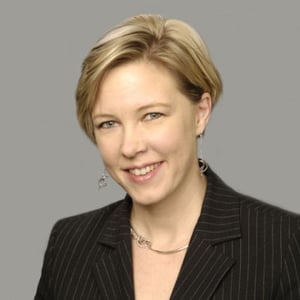
Clinical Professor and Senior Scholar and Senior Fellow for Copyright Research and Policy of C-IP2, Antonin Scalia Law School, George Mason University
Sandra Aistars is Senior Fellow for Copyright Research and Policy and a Senior Scholar at the Center for Intellectual Property x Innovation Policy (C-IP2). She also leads the law school’s Arts & Entertainment Advocacy Program. Professor Aistars has over twenty years of advocacy experience on behalf of copyright and other intellectual property owners. She has served on trade missions and been an industry advisor to the Department of Commerce on intellectual property implications for international trade negotiations; worked on legislative and regulatory matters worldwide; frequently testified before Congress and federal agencies regarding intellectual property matters; chaired cross-industry coalitions and technology standards efforts; and is regularly tapped by government agencies to lecture in U.S. government-sponsored study tours for visiting legislators, judges, prosecutors, and regulators.
Immediately prior to joining Scalia Law, Professor Aistars was the Chief Executive Officer of the Copyright Alliance – a nonprofit, public interest organization that represents the interests of artists and creators across the creative spectrum. While at Scalia Law, she continues to collaborate with the Copyright Alliance as a member of its Academic Advisory Board. Professor Aistars currently serves on the boards of the Washington Area Lawyers for the Arts (WALA) and the Howard Intellectual Property Program (HIPP), and she has previously served as trustee of the Copyright Society of the USA (CSUSA). Professor Aistars has also previously served as Vice President and Associate General Counsel at Time Warner Inc. She began her legal career in private practice at Weil, Gotshal and Manges LLP.
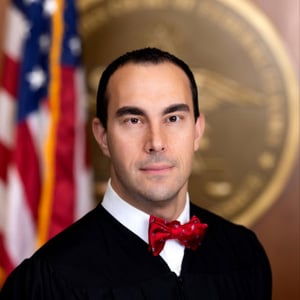
U.S. Court of Federal Claims and Jurist-In-Residence Professor of Law, The University of Akron School of Law
Judge Ryan T. Holte was sworn in as a judge on the United States Court of Federal Claims in July 2019. Prior to confirmation he served as the David L. Brennan Professor of Law and Director of the Center for Intellectual Property Law and Technology at The University of Akron School of Law (2017-2019) and an assistant professor of law at Southern Illinois University School of Law (2013-2017). Judge Holte has written and presented widely on patent law subjects and empirical legal studies of Federal Circuit and district court patent law cases. His most recent articles were published in the Iowa Law Review (2019), George Mason Law Review (2018), and Washington Law Review (2017).
In practice, Judge Holte served for six years as general counsel and partner of an electrical engineering technology company and is co-inventor of multiple patents related to Systems and Methods for Countering Satellite-Navigated Munitions. Prior to entering academia, Judge Holte practiced as a litigation attorney at the Federal Trade Commission and an associate in the Intellectual Property Practice Group at Jones Day. Prior to practice, he served as a law clerk to Judge Stanley F. Birch, Jr. on the United States Court of Appeals for the Eleventh Circuit and as a law clerk to Judge Loren A. Smith on the United States Court of Federal Claims.
Judge Holte received his JD from the University of California Davis School of Law and his BS, magna cum laude, in engineering from the California Maritime Academy where he was a First Class graduate of the Corps of Cadets Third Engineering Division and sailed as a U.S. Merchant Marine oiler.
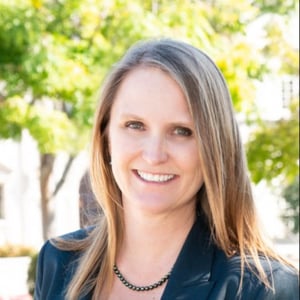
Professor of Law, University of San Diego School of Law
Lisa Ramsey is a Professor of Law at the University of San Diego School of Law, where she is a founding member of the Center for Intellectual Property Law and Markets. She teaches and writes in the intellectual property and international intellectual property law area and is an expert on trademark law. Professor Ramsey is an active member of the American Intellectual Property Law Association and has given presentations on trademark law to attorneys, professors, and students throughout the United States and around the world. Before joining the USD law faculty, she was an intellectual property litigator at Gray Cary Ware & Freidenrich and served as a judicial law clerk for the Honorable Rebecca Beach Smith in the United States District Court for the Eastern District of Virginia. Professor Ramsey’s scholarship focuses on potential conflicts between trademark laws and free speech rights, and explains how trademark protection of inherently valuable words, symbols, and product features can harm fair competition and freedom of expression.
Examples of Professor Ramsey’s publications include Protectable Trademark Subject Matter in Common Law Countries and the Problem with Flexibility in The Cambridge Handbook of International and Comparative Trademark Law (Irene Calboli & Jane Ginsburg eds., Cambridge University Press 2020); Using Failure to Function Doctrine to Protect Free Speech and Competition in Trademark Law in the Iowa Law Review Online (2020); Non-Traditional Trademarks and Inherently Valuable Expression in The Protection of Non-Traditional Trademarks (Irene Calboli & Martin Senftleben eds., Oxford University Press 2018); Free Speech Challenges to Trademark Law After Matal v. Tam in the Houston Law Review (2018); A Free Speech Right to Trademark Protection? in the Trademark Reporter (2016); and Free Speech and International Obligations to Protect Trademarks in the Yale Journal of International Law (2010). Her article Descriptive Trademarks and the First Amendment in the Tennessee Law Review (2003) was judged by the editor of the Intellectual Property Law Review to be one of the best intellectual property law articles of 2003.
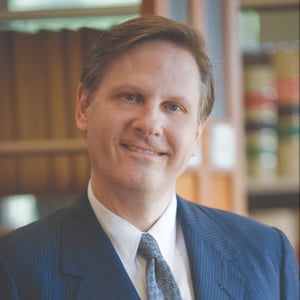
Associate Dean for Faculty Development & Chapman Distinguished Professor of Law, University of Tulsa College of Law
Robert Spoo is Chapman Distinguished Professor at The University of Tulsa College of Law, where he teaches copyright law, property, contracts, law and literature, and other subjects. He received his Ph.D. in English from Princeton University and his J.D. from the Yale Law School. After serving as a judicial clerk for the Honorable Sonia Sotomayor when she was a judge on the U.S. Court of Appeals for the Second Circuit, Spoo was an attorney with law firms in New York, San Francisco, and Tulsa.
Formerly, Spoo was, for more than a decade, editor of the James Joyce Quarterly and a tenured member of the English Department at the University of Tulsa. He has published extensively on modern authors, law and literature, copyrights, and the public domain. His recent articles have appeared in the Stanford Law Review, UCLA Law Review, Law & Literature, Cardozo Arts & Entertainment Law Journal, and Journal of Modern Literature. His book Without Copyrights: Piracy, Publishing, and the Public Domain (Oxford University Press, 2013)—an exploration of the problems faced by foreign authors during the nineteenth and early twentieth centuries when they lacked copyright protection in the United States—was enthusiastically reviewed in The Nation, London Times Literary Supplement, Paris Review Daily, American Historical Review, Critical Inquiry, and other venues. Spoo’s earlier books and editions, published with Oxford and Duke University Presses, focused on James Joyce, Ezra Pound, and H.D. (Hilda Doolittle).
Spoo is coeditor, with Simon Stern, of a Law & Literature series with Oxford University Press.
In 2016, Spoo was awarded a Guggenheim Foundation Fellowship in the Humanities—one of four legal scholars in the United States and Canada to receive a Guggenheim that year. His book Modernism and the Law, prepared during his Guggenheim year, was published in 2018 by Bloomsbury Academic.
In 2020-2021, Spoo was on leave with a Law and Public Affairs (LAPA) Fellowship from Princeton University, where his project for the LAPA year was “Lawful Piracy and Trade Courtesy in the American Copyright Vacuum.”
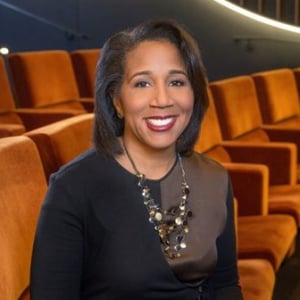
Senior Executive Vice President and Global General Counsel, Motion Picture Association
Karyn A. Temple is Senior Executive Vice President and Global General Counsel for the Motion Picture Association. One of the world’s leading authorities on copyright, Ms. Temple oversees all of the Association’s legal affairs and content protection efforts around the world.
Prior to joining the Motion Picture Association, Ms. Temple served more than eight years in the U.S. Copyright Office, most recently as the Register of Copyrights, where she led the 400-person agency and its eight divisions. Prior to leading the U.S. Copyright Office, Ms. Temple headed its Office of Policy and International Affairs, as well as served in policy and litigation roles at the U.S. Department of Justice; she most recently served in the Obama Administration as Senior Counsel to the Deputy Attorney General of the United States.
Ms. Temple received her J.D. from Columbia University School of Law and her B.A. in English from the University of Michigan.
Clinical Professor and Senior Scholar and Senior Fellow for Copyright Research and Policy of C-IP2, Antonin Scalia Law School, George Mason University
Sandra Aistars is Senior Fellow for Copyright Research and Policy and a Senior Scholar at the Center for Intellectual Property x Innovation Policy (C-IP2). She also leads the law school’s Arts & Entertainment Advocacy Program. Professor Aistars has over twenty years of advocacy experience on behalf of copyright and other intellectual property owners. She has served on trade missions and been an industry advisor to the Department of Commerce on intellectual property implications for international trade negotiations; worked on legislative and regulatory matters worldwide; frequently testified before Congress and federal agencies regarding intellectual property matters; chaired cross-industry coalitions and technology standards efforts; and is regularly tapped by government agencies to lecture in U.S. government-sponsored study tours for visiting legislators, judges, prosecutors, and regulators.
Immediately prior to joining Scalia Law, Professor Aistars was the Chief Executive Officer of the Copyright Alliance – a nonprofit, public interest organization that represents the interests of artists and creators across the creative spectrum. While at Scalia Law, she continues to collaborate with the Copyright Alliance as a member of its Academic Advisory Board. Professor Aistars currently serves on the boards of the Washington Area Lawyers for the Arts (WALA) and the Howard Intellectual Property Program (HIPP), and she has previously served as trustee of the Copyright Society of the USA (CSUSA). Professor Aistars has also previously served as Vice President and Associate General Counsel at Time Warner Inc. She began her legal career in private practice at Weil, Gotshal and Manges LLP.
U.S. Court of Federal Claims and Jurist-In-Residence Professor of Law, The University of Akron School of Law
Judge Ryan T. Holte was sworn in as a judge on the United States Court of Federal Claims in July 2019. Prior to confirmation he served as the David L. Brennan Professor of Law and Director of the Center for Intellectual Property Law and Technology at The University of Akron School of Law (2017-2019) and an assistant professor of law at Southern Illinois University School of Law (2013-2017). Judge Holte has written and presented widely on patent law subjects and empirical legal studies of Federal Circuit and district court patent law cases. His most recent articles were published in the Iowa Law Review (2019), George Mason Law Review (2018), and Washington Law Review (2017).
In practice, Judge Holte served for six years as general counsel and partner of an electrical engineering technology company and is co-inventor of multiple patents related to Systems and Methods for Countering Satellite-Navigated Munitions. Prior to entering academia, Judge Holte practiced as a litigation attorney at the Federal Trade Commission and an associate in the Intellectual Property Practice Group at Jones Day. Prior to practice, he served as a law clerk to Judge Stanley F. Birch, Jr. on the United States Court of Appeals for the Eleventh Circuit and as a law clerk to Judge Loren A. Smith on the United States Court of Federal Claims.
Judge Holte received his JD from the University of California Davis School of Law and his BS, magna cum laude, in engineering from the California Maritime Academy where he was a First Class graduate of the Corps of Cadets Third Engineering Division and sailed as a U.S. Merchant Marine oiler.
Professor of Law, University of San Diego School of Law
Lisa Ramsey is a Professor of Law at the University of San Diego School of Law, where she is a founding member of the Center for Intellectual Property Law and Markets. She teaches and writes in the intellectual property and international intellectual property law area and is an expert on trademark law. Professor Ramsey is an active member of the American Intellectual Property Law Association and has given presentations on trademark law to attorneys, professors, and students throughout the United States and around the world. Before joining the USD law faculty, she was an intellectual property litigator at Gray Cary Ware & Freidenrich and served as a judicial law clerk for the Honorable Rebecca Beach Smith in the United States District Court for the Eastern District of Virginia. Professor Ramsey’s scholarship focuses on potential conflicts between trademark laws and free speech rights, and explains how trademark protection of inherently valuable words, symbols, and product features can harm fair competition and freedom of expression.
Examples of Professor Ramsey’s publications include Protectable Trademark Subject Matter in Common Law Countries and the Problem with Flexibility in The Cambridge Handbook of International and Comparative Trademark Law (Irene Calboli & Jane Ginsburg eds., Cambridge University Press 2020); Using Failure to Function Doctrine to Protect Free Speech and Competition in Trademark Law in the Iowa Law Review Online (2020); Non-Traditional Trademarks and Inherently Valuable Expression in The Protection of Non-Traditional Trademarks (Irene Calboli & Martin Senftleben eds., Oxford University Press 2018); Free Speech Challenges to Trademark Law After Matal v. Tam in the Houston Law Review (2018); A Free Speech Right to Trademark Protection? in the Trademark Reporter (2016); and Free Speech and International Obligations to Protect Trademarks in the Yale Journal of International Law (2010). Her article Descriptive Trademarks and the First Amendment in the Tennessee Law Review (2003) was judged by the editor of the Intellectual Property Law Review to be one of the best intellectual property law articles of 2003.
Associate Dean for Faculty Development & Chapman Distinguished Professor of Law, University of Tulsa College of Law
Robert Spoo is Chapman Distinguished Professor at The University of Tulsa College of Law, where he teaches copyright law, property, contracts, law and literature, and other subjects. He received his Ph.D. in English from Princeton University and his J.D. from the Yale Law School. After serving as a judicial clerk for the Honorable Sonia Sotomayor when she was a judge on the U.S. Court of Appeals for the Second Circuit, Spoo was an attorney with law firms in New York, San Francisco, and Tulsa.
Formerly, Spoo was, for more than a decade, editor of the James Joyce Quarterly and a tenured member of the English Department at the University of Tulsa. He has published extensively on modern authors, law and literature, copyrights, and the public domain. His recent articles have appeared in the Stanford Law Review, UCLA Law Review, Law & Literature, Cardozo Arts & Entertainment Law Journal, and Journal of Modern Literature. His book Without Copyrights: Piracy, Publishing, and the Public Domain (Oxford University Press, 2013)—an exploration of the problems faced by foreign authors during the nineteenth and early twentieth centuries when they lacked copyright protection in the United States—was enthusiastically reviewed in The Nation, London Times Literary Supplement, Paris Review Daily, American Historical Review, Critical Inquiry, and other venues. Spoo’s earlier books and editions, published with Oxford and Duke University Presses, focused on James Joyce, Ezra Pound, and H.D. (Hilda Doolittle).
Spoo is coeditor, with Simon Stern, of a Law & Literature series with Oxford University Press.
In 2016, Spoo was awarded a Guggenheim Foundation Fellowship in the Humanities—one of four legal scholars in the United States and Canada to receive a Guggenheim that year. His book Modernism and the Law, prepared during his Guggenheim year, was published in 2018 by Bloomsbury Academic.
In 2020-2021, Spoo was on leave with a Law and Public Affairs (LAPA) Fellowship from Princeton University, where his project for the LAPA year was “Lawful Piracy and Trade Courtesy in the American Copyright Vacuum.”
Senior Executive Vice President and Global General Counsel, Motion Picture Association
Karyn A. Temple is Senior Executive Vice President and Global General Counsel for the Motion Picture Association. One of the world’s leading authorities on copyright, Ms. Temple oversees all of the Association’s legal affairs and content protection efforts around the world.
Prior to joining the Motion Picture Association, Ms. Temple served more than eight years in the U.S. Copyright Office, most recently as the Register of Copyrights, where she led the 400-person agency and its eight divisions. Prior to leading the U.S. Copyright Office, Ms. Temple headed its Office of Policy and International Affairs, as well as served in policy and litigation roles at the U.S. Department of Justice; she most recently served in the Obama Administration as Senior Counsel to the Deputy Attorney General of the United States.
Ms. Temple received her J.D. from Columbia University School of Law and her B.A. in English from the University of Michigan.


Draft SEP Policy Statement
Andrei Iancu
Technical standards like 5G and Wi-Fi are a key component to economic growth and innovation...
Topics
Do Androids Dream of Patent Protections? American Patent Law and AI-Generated Inventions
The incredible ability of artificial intelligence (AI) has captured the minds of inventors, writers, scientists,...
Courthouse Steps Decision: Unicolors, Inc v. H&M Hennes & Mauritz, LP
Zvi Rosen
Join us virtually to hear a discussion on the Supreme Court's recent decision in Unicolors,...
Courthouse Steps Decision: Unicolors, Inc v. H&M Hennes & Mauritz, LP
Zvi Rosen
Join us virtually to hear a discussion on the Supreme Court's recent decision in Unicolors,...
The (Mis)Use of Anti-Suit Injunctions in International IP Litigation: Can foreign courts enjoin enforcement of US patent rights?
Steve Akerley, Ann Bartow, Eliza Beeney, Paul Redmond Michel
The propriety of anti-suit injunctions—that is, orders issued in one jurisdiction prohibiting a party from...
The (Mis)Use of Anti-Suit Injunctions in International IP Litigation: Can foreign courts enjoin enforcement of US patent rights?
Steve Akerley, Ann Bartow, Eliza Beeney, Paul Redmond Michel
The propriety of anti-suit injunctions—that is, orders issued in one jurisdiction prohibiting a party from...
Deep Dive Episode 206 – Intellectual Property in a Pandemic: The Proposed COVID-19 WTO Waiver
Andrei Iancu, David J. Kappos, Arti K. Rai, Saurabh Vishnubhakat
Regulatory Transparency Project's Fourth Branch Podcast
In October 2020, India and South Africa filed a request at the World Trade Organization...
Intellectual Property in a Pandemic: The Proposed COVID-19 WTO Waiver
Andrei Iancu, David J. Kappos, Arti K. Rai, Saurabh Vishnubhakat
A Regulatory Transparency Project Webinar
In October 2020, India and South Africa filed a request at the World Trade Organization...
IP Law and Culture
Sandra Aistars, Ryan T. Holte, Lisa P. Ramsey, Robert Spoo, Karyn A. Temple
2021 National Lawyers Convention
The 2021 National Lawyers Convention took place November 11-13, 2021 at the Mayflower Hotel in...
IP Law and Culture
Sandra Aistars, Ryan T. Holte, Lisa P. Ramsey, Robert Spoo, Karyn A. Temple
2021 National Lawyers Convention
The 2021 National Lawyers Convention took place November 11-13, 2021 at the Mayflower Hotel in...