
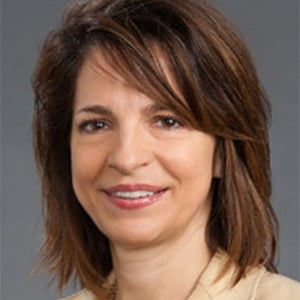
Chief Manufacturing Development Center Officer, Wake Forest Institute for Regenerative Medicine
Julie has more than 25 years of experience in clinical translation of cellular therapies and regenerative medicine products, including business management and board directorship experience. She has eight years of experience as an executive officer with a publicly traded company building services for cellular banking, including licensure of technology with more than 30 affiliates. She is an experienced scientist who excels at delivering innovation, driving milestones, maintaining sensitivity to financial considerations, building multidisciplinary teams, as well as strategic planning, project management, and regulatory expertise. Dr. Allickson has a history of creating value in clinical development and translation.

Chairman, Committee to Reduce Infection Deaths
Betsy McCaughey is a patient advocate and former Lt. Governor of New York State. In 2004, she founded and is now Chairman of the Committee to Reduce Infection Deaths (also known as RID), a nationwide educational campaign to stop hospital-acquired infections. RID has made hospital infections a major public issue. It has provided compelling evidence that preventing infection improves hospital profitability as well as saving lives, and RID has won legislation in 34 states and Washington, D.C. for public reporting of infection rates. RID has become synonymous with patient safety and clean hospital care.
Betsy McCaughey’s research on how to prevent infection deaths has been featured on Good Morning America, the CBS Morning Show, ABC’s 20/20, and many other national programs.
Betsy McCaughey is the author of more than one hundred scholarly and popular articles on health policy, infection, medical innovation, the economics of aging, and Medicare. Her writings have appeared in The New York Times, The Wall Street Journal, New Republic, Policy Review, Forbes Magazine, New York Law Journal, Los Angeles Times, U.S. News & World Report, and many other national publications. Her 1994 analysis of the dangers of the Clinton health plan in The New Republic won a National Magazine Award for the best article in the nation on public policy. She has been profiled in The New Yorker, The New York Times Magazine, New York Magazine, The Washington Post, and other publications.
Prior to entering the health policy field, Betsy McCaughey earned a Ph.D. in constitutional history from Columbia University. She is the author of two books on that subject. She has taught at Vassar College and Columbia University, and she produced prize-winning studies while at two think tanks, the Manhattan Institute and later the Hudson Institute.
From 1995 to 1998, she served as Lt. Governor of New York State. She focused on health issues, and her bills became models for legislation in many states and in Congress.
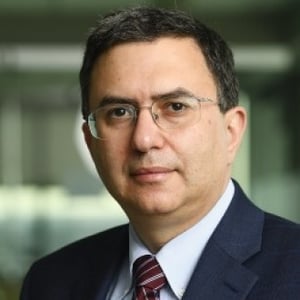
Vice Dean for Public Health Practice and Community Engagement, Bloomberg School of Public Health, Johns Hopkins University
Dr. Joshua M. Sharfstein is Vice Dean for Public Health Practice and Community Engagement and Professor of the Practice in Health Policy and Management at the Johns Hopkins Bloomberg School of Public Health. He is also the Director of the Bloomberg American Health Initiative. He is the author of the Public Health Crisis Survival Guide: Leadership and Management in Trying Times, and the co-author of The Opioid Epidemic: What Everyone Needs to Know.
Previously, Dr. Sharfstein served as Secretary of the Maryland Department of Health and Mental Hygiene from January 2011 to December 2014. In this position, he led efforts to align Maryland’s health care system with improved health outcomes, culminating in the adoption of a revised payment model for all hospital care for Maryland residents. He also oversaw the development of a statewide health improvement process with 18 local public-private coalitions and the reshaping of state’s approach to health information exchange, long-term care, and behavioral health.
From March 2009 to January 2011, Dr. Sharfstein served as Principal Deputy Commissioner of the U.S. Food and Drug Administration, where he oversaw the agency’s successful performance management and transparency initiatives. From December 2005 to March 2009, as Commissioner of Health for Baltimore City, Dr. Sharfstein led innovative efforts that contributed to major declines in both overdose deaths and infant mortality rates. From July 2001 to December 2005, as minority professional staff and health policy advisor for Congressman Henry A. Waxman, Dr. Sharfstein was engaged in a wide range of oversight and legislative activities on health care topics, including emergency preparedness, HIV, and the politicization of science.
Dr. Sharfstein graduated summa cum laude with an A.B. in Social Studies from Harvard College in 1991. From August 1991 to August 1992, he worked on public health projects in Guatemala and Costa Rica with a Frederick Sheldon Prize Fellowship. He graduated from Harvard Medical School in 1996, from the Boston Combined Residency Program in Pediatrics at Boston Medical Center and Children’s Hospital in 1999, and from the fellowship in general academic pediatrics at the Boston University School of Medicine in 2001.
Dr. Sharfstein is an elected member of the Institute of Medicine (2014) and fellow of the National Academy of Public Administration (2013). He serves on the editorial board of the Journal of the American Medical Association. His awards have included the Jay S. Drotman Memorial Award from the American Public Health Association (1994), Public Official of the Year from Governing Magazine (2008) and the Circle of Commendation Award from the Consumer Product Safety Commission (2013).
Dr. Sharfstein lives with his family in Baltimore, Maryland.
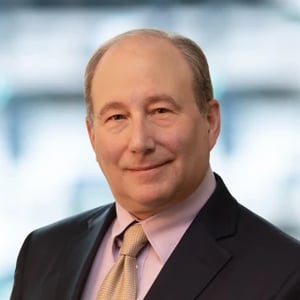
Managing Director, Berkeley Research Group
Dan Troy is the Managing Director at Berkeley Research Group.
Prior to that, he was the Chief Business Officer, Chief Administrative Officer, and General Counsel of Valo in Boston, Massachusetts.
Prior to joining Valo, he served as the Senior Vice President & General Counsel of GlaxoSmithKline and was a member of its Corporate Executive Team. Dan joined GSK in September 2008 and was responsible for leading the company’s legal department in protecting GSK’s intellectual property; managing litigation; supporting business development transactions; and business compliance and risk management. In 2012, Dan led the integration team following the acquisition of Human Genome Sciences, which later resulted in the launch of Benlysta, the first lupus treatment in 50 years. Dan led GSK’s Contributions Committee in the US and also led the Government Affairs, Public Policy and Patient Advocacy team from 2012 until 2014.
Prior to joining GSK, he was a Partner at the Washington law firm Sidley Austin LLP, where he principally represented pharmaceutical companies and trade associations on matters related to the US Food and Drug Administration (FDA) and government regulations. Dan was formerly Chief Counsel for the FDA, where he served as a primary liaison to the White House and the US Department of Health and Human Services.
Dan has chaired the American Bar Association's Section of Administrative Law and is a member of the American Law Institute. He currently chairs the US Chamber of Commerce Litigation Center. He has also chaired the Civil Justice Reform Group, as well as the PhRMA Law Section Executive Committee. He was the 2012 CPR Corporate Leadership Award recipient and, in 2013, was named a 'Legend in the Law' at the Burton Awards.
Dan holds a B.S. in Industrial and Labor Relations from Cornell University and a J.D. from Columbia University School of Law, where he was a member of the Law Review and a Kent Scholar. After graduation from law school, he was a law clerk for the US Circuit Court of Appeals for the District of Columbia Circuit.

Executive Vice President, Goldwater Institute
Christina Sandefur is the Executive Vice President at the Goldwater Institute. She develops policies and litigates cases advancing healthcare freedom, free enterprise, private property rights, free speech, and taxpayer rights.
Christina is a co-drafter of the Right to Try initiative, now federal law, which protects terminally ill patients' right to try safe investigational treatments that have been prescribed by their physician but are not yet FDA-approved. She has won important victories for property rights in Arizona and works nationally to promote the Institute's Private Property Rights Protection Act, a state-level reform that requires government to pay owners when regulations destroy property rights and reduce property values.
Christina is the co-author of the book Cornerstone of Liberty: Private Property Rights in 21st Century America (2016). She is a frequent guest on national television and radio programs, has provided expert legal testimony to various legislative committees, and is a frequent speaker at conferences. She is the recipient of the 2018 Buckley Award in recognition of her leadership in the freedom movement, and she is an Advisory Board Member of the Network of enlightened Women. Christina serves on the board of the Phoenix Lawyers Chapter of the Federalist Society and is a member of the executive committee for the Federalist Society's Regulatory Transparency Project: FDA & Health.
Christina is a graduate of Michigan State University College of Law and Hillsdale College.
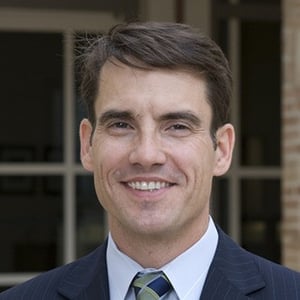
Professor, Dale E. Fowler School of Law, Chapman University
Professor Bell joined the faculty of Fowler School of Law in 1998. Professor Bell specializes in high-tech legal issues and has written a variety of works on intellectual property and Internet law, including the book, Intellectual Privilege: Copyright, Common Law, and the Common Good (2014). He received his Juris Doctor from the University of Chicago Law School in 1993, where he served both as a member of the University of Chicago Law Review and as Articles Editor and cofounder of the University of Chicago Legal Roundtable. After graduating from law school, Professor Bell joined the Silicon Valley law firm of Wilson Sonsini Goodrich & Rosati. He entered teaching in 1995, when he became an Assistant Professor of Law in the Law and Technology Program at the University of Dayton School of Law. During a one year leave of absence from that school, and just prior to joining the Fowler School of Law faculty, he served as Director of Telecommunications and Technology Studies at the Cato Institute in Washington, D.C. Professor Bell joined the faculty of Fowler School of Law in 1998. In addition to writing a steady stream of scholarly works, Professor Bell has appeared on or been quoted in the Wall Street Journal, CNN, Economist, Los Angeles Times, and many other news sources, and starred in several online videos addressing timely legal issues.
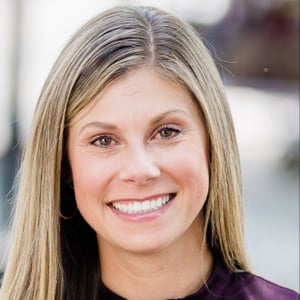
Executive Director, Southeastern Legal Foundation
Kimberly Hermann serves as Executive Director for Southeastern Legal Foundation.
Kim has worked with Southeastern Legal Foundation since 2009. Her belief in liberty and desire to serve started at a young age – instilled by her parents’ dedication to hard work, family values, and love for America.
After earning her undergraduate degree in Analytical Finance and graduate degree in Accounting from Wake Forest University, Kim worked as a licensed CPA with an international accounting firm. But her strong belief in individual liberty, the rule of law, and accountability in government led her to pursue a career in law. While in law school at Georgia State University College of Law, Kim served as a law clerk at SLF. After graduating, Kim worked at a private law firm in Atlanta where she specialized in financial and business litigation but continued to serve SLF in a pro bono capacity. In 2013, Kim returned to SLF full-time and is proud to dedicate her career to the freedom-based law movement.
Kim advances liberty through litigation in federal and state trial and appellate courts on issues ranging from government overreach, free speech, property rights, and economic liberty. In addition to representing clients, Kim testifies before state legislatures, drafts model legislation, and regularly publishes legal articles. Through SLF’s legal initiatives, she informs Americans about their constitutional rights, equipping them with the tools they need to stand up to government overreach. Her work and that of Southeastern Legal Foundation is regularly covered by national media and you will frequently hear or see her on radio, podcasts, and television.
Kim is an active member of the Federalist Society where she serves as an expert on the Federalist Society’s Civil Rights Executive Committee. She is also an active member of her community and when she isn’t fighting for liberty, you can find her at her children’s school or on the sports fields cheering them on. She lives in the Atlanta area with her husband and two children.
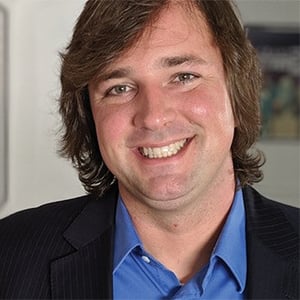
Producer, They Say It Can’t be Done
Patrick is the lead Producer on They Say It Can’t be Done. He previously produced the award-winning feature length documentary Of Dogs and Men. He is co-creator and producer on an animated comedy web series based on the NY Times bestselling book series, “The Politically Incorrect Guides,” also to be released Fall 2019. Through his work with corporate partners, Patrick has produced more than 300 animated, documentary, virtual reality and narrative projects. He holds a B.A. from Emory University in Creative Writing and Philosophy
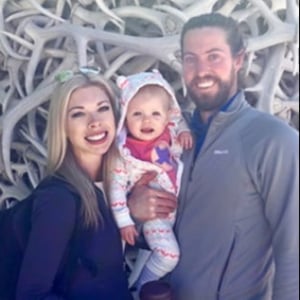
Co-Founder and Chief Executive Officer, Primary Ocean Producers
Scott graduated from Texas A&M University with a Bachelor of Business Administration of Finance. He has extensive start-up, operating, financial, and managerial experience, where he has earned a strong understanding of accounting, project management, logistics, marketing, and financial reporting. Scott began his career with the co-founding of Impulse One, a full-service CPG marketing company, where he oversaw the development of SOP’s, sales and marketing campaigns, brand development, the development of an international supply chain, managed compliance with FDA, USDA, and the Department of Agriculture in all 50 states, oversaw one corporate acquisition, one joint venture with a public company, and managed growth to over $21M in revenues. Shortly thereafter, Scott made his first real estate investments and subsequently co-founded a real estate syndicate, Building Forts Real Estate Investment Fund, and Climbing Fences, a real estate construction company, where he serves as CEO and President, respectively. In 2014, Scott co-founded Venice Fixes, a bicycle marketing and e-commerce platform, where he served as Chief Operating Officer and oversaw sourcing and logistics. Venice Fixies turned a profit in year 1 and was divested. Scott Schmidt currently serves as Chief Investment Officer of the Schmidt 2001 FLP and manages equity and debt investments in the petrochemical, medical, real estate, and beverage industries, and maintains a Directors role in the early and growth-stage companies.
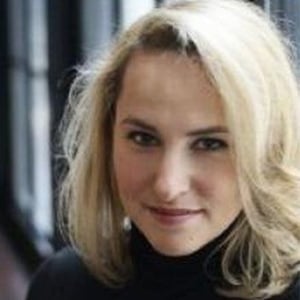
CEO & Board Chair, World Future Society
Julie Friedman Steele is on the Board of Advisors of the United Nations Women for Peace and the Board Chair, and driving force, behind the World Future Society, the most influential international authority for the past 50 years in future thinking.
With a background in education, AI & technology, entertainment, science and child advocacy, Julie is working to realize the vision that utilizing a futurist mindset in education will change the world. She is passionate about emerging technology and accelerating its adoption to make complex technology tools accessible to all. Julie thrives at the cutting edge of disruption and empathy.
Julie is a regular keynote speaker and panelist including for universities discussing the future of education and jobs, TEDX, the United States Patent and Trademark Office, TechWeek, the International Manufacturing Trade Show, and the Chicago Innovation Awards, to name a few. Since becoming Board Chair of the World Future Society, she has advised governments and world leaders across the globe.
Julie has garnered national and international media attention appearing in over 20 countries in print, radio, and television including The Today Show, Al Jazeera, Vanity Fair Italy, Time Magazine, and a profile in Entrepreneur Magazine. She has also been named by The Chicago Tribune as a top 100 Innovator in the City.
As a social entrepreneur and producer Julie created The 3D Printer Experience (3DPX), built an International MPEG standard to make all TV and Film video content searchable and indexable on the internet and produced and directed the Genesis Award winning documentary, Best Friend Forgotten starring actor David Duchovny.
Julie studied biochemistry and molecular biology at Boston University, Music Synthesis at the famed Berklee College of Music, and Artificial Intelligence through Stanford University. With a background in stand-up comedy, Julie brings a fresh and passionate approach to her advisory roles and appearances.
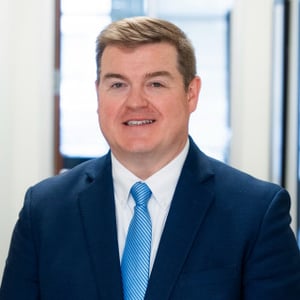
Vice President, Networks, The Federalist Society for Law and Public Policy Studies
Nathan Kaczmarek is Vice President for Networks at the Federalist Society. He began his legal career in Detroit representing nationwide clients in all phases of healthcare litigation and complex medical malpractice claims. He has since served as a Senior Legal and Policy Advisor in the U.S. House of Representatives and as Counsel for the Subcommittee on Regulatory Affairs and Federal Management in the U.S. Senate. Prior to overseeing the Networks, he was Director of the Practice Groups, the Regulatory Transparency Project, and the Article I Initiative for the Federalist Society.
Nathan holds degrees from Hillsdale College and Thomas M. Cooley Law School. He is a Liaison Representative for The Administrative Conference of the United States. He also serves as Vice President of the Associates of St. John Bosco, a Virginia based non-profit dedicated to Catholic high school and college students.
Professor, Dale E. Fowler School of Law, Chapman University
Professor Bell joined the faculty of Fowler School of Law in 1998. Professor Bell specializes in high-tech legal issues and has written a variety of works on intellectual property and Internet law, including the book, Intellectual Privilege: Copyright, Common Law, and the Common Good (2014). He received his Juris Doctor from the University of Chicago Law School in 1993, where he served both as a member of the University of Chicago Law Review and as Articles Editor and cofounder of the University of Chicago Legal Roundtable. After graduating from law school, Professor Bell joined the Silicon Valley law firm of Wilson Sonsini Goodrich & Rosati. He entered teaching in 1995, when he became an Assistant Professor of Law in the Law and Technology Program at the University of Dayton School of Law. During a one year leave of absence from that school, and just prior to joining the Fowler School of Law faculty, he served as Director of Telecommunications and Technology Studies at the Cato Institute in Washington, D.C. Professor Bell joined the faculty of Fowler School of Law in 1998. In addition to writing a steady stream of scholarly works, Professor Bell has appeared on or been quoted in the Wall Street Journal, CNN, Economist, Los Angeles Times, and many other news sources, and starred in several online videos addressing timely legal issues.
Executive Director, Southeastern Legal Foundation
Kimberly Hermann serves as Executive Director for Southeastern Legal Foundation.
Kim has worked with Southeastern Legal Foundation since 2009. Her belief in liberty and desire to serve started at a young age – instilled by her parents’ dedication to hard work, family values, and love for America.
After earning her undergraduate degree in Analytical Finance and graduate degree in Accounting from Wake Forest University, Kim worked as a licensed CPA with an international accounting firm. But her strong belief in individual liberty, the rule of law, and accountability in government led her to pursue a career in law. While in law school at Georgia State University College of Law, Kim served as a law clerk at SLF. After graduating, Kim worked at a private law firm in Atlanta where she specialized in financial and business litigation but continued to serve SLF in a pro bono capacity. In 2013, Kim returned to SLF full-time and is proud to dedicate her career to the freedom-based law movement.
Kim advances liberty through litigation in federal and state trial and appellate courts on issues ranging from government overreach, free speech, property rights, and economic liberty. In addition to representing clients, Kim testifies before state legislatures, drafts model legislation, and regularly publishes legal articles. Through SLF’s legal initiatives, she informs Americans about their constitutional rights, equipping them with the tools they need to stand up to government overreach. Her work and that of Southeastern Legal Foundation is regularly covered by national media and you will frequently hear or see her on radio, podcasts, and television.
Kim is an active member of the Federalist Society where she serves as an expert on the Federalist Society’s Civil Rights Executive Committee. She is also an active member of her community and when she isn’t fighting for liberty, you can find her at her children’s school or on the sports fields cheering them on. She lives in the Atlanta area with her husband and two children.
Vice President, Networks, The Federalist Society for Law and Public Policy Studies
Nathan Kaczmarek is Vice President for Networks at the Federalist Society. He began his legal career in Detroit representing nationwide clients in all phases of healthcare litigation and complex medical malpractice claims. He has since served as a Senior Legal and Policy Advisor in the U.S. House of Representatives and as Counsel for the Subcommittee on Regulatory Affairs and Federal Management in the U.S. Senate. Prior to overseeing the Networks, he was Director of the Practice Groups, the Regulatory Transparency Project, and the Article I Initiative for the Federalist Society.
Nathan holds degrees from Hillsdale College and Thomas M. Cooley Law School. He is a Liaison Representative for The Administrative Conference of the United States. He also serves as Vice President of the Associates of St. John Bosco, a Virginia based non-profit dedicated to Catholic high school and college students.
Producer, They Say It Can’t be Done
Patrick is the lead Producer on They Say It Can’t be Done. He previously produced the award-winning feature length documentary Of Dogs and Men. He is co-creator and producer on an animated comedy web series based on the NY Times bestselling book series, “The Politically Incorrect Guides,” also to be released Fall 2019. Through his work with corporate partners, Patrick has produced more than 300 animated, documentary, virtual reality and narrative projects. He holds a B.A. from Emory University in Creative Writing and Philosophy
Co-Founder and Chief Executive Officer, Primary Ocean Producers
Scott graduated from Texas A&M University with a Bachelor of Business Administration of Finance. He has extensive start-up, operating, financial, and managerial experience, where he has earned a strong understanding of accounting, project management, logistics, marketing, and financial reporting. Scott began his career with the co-founding of Impulse One, a full-service CPG marketing company, where he oversaw the development of SOP’s, sales and marketing campaigns, brand development, the development of an international supply chain, managed compliance with FDA, USDA, and the Department of Agriculture in all 50 states, oversaw one corporate acquisition, one joint venture with a public company, and managed growth to over $21M in revenues. Shortly thereafter, Scott made his first real estate investments and subsequently co-founded a real estate syndicate, Building Forts Real Estate Investment Fund, and Climbing Fences, a real estate construction company, where he serves as CEO and President, respectively. In 2014, Scott co-founded Venice Fixes, a bicycle marketing and e-commerce platform, where he served as Chief Operating Officer and oversaw sourcing and logistics. Venice Fixies turned a profit in year 1 and was divested. Scott Schmidt currently serves as Chief Investment Officer of the Schmidt 2001 FLP and manages equity and debt investments in the petrochemical, medical, real estate, and beverage industries, and maintains a Directors role in the early and growth-stage companies.
CEO & Board Chair, World Future Society
Julie Friedman Steele is on the Board of Advisors of the United Nations Women for Peace and the Board Chair, and driving force, behind the World Future Society, the most influential international authority for the past 50 years in future thinking.
With a background in education, AI & technology, entertainment, science and child advocacy, Julie is working to realize the vision that utilizing a futurist mindset in education will change the world. She is passionate about emerging technology and accelerating its adoption to make complex technology tools accessible to all. Julie thrives at the cutting edge of disruption and empathy.
Julie is a regular keynote speaker and panelist including for universities discussing the future of education and jobs, TEDX, the United States Patent and Trademark Office, TechWeek, the International Manufacturing Trade Show, and the Chicago Innovation Awards, to name a few. Since becoming Board Chair of the World Future Society, she has advised governments and world leaders across the globe.
Julie has garnered national and international media attention appearing in over 20 countries in print, radio, and television including The Today Show, Al Jazeera, Vanity Fair Italy, Time Magazine, and a profile in Entrepreneur Magazine. She has also been named by The Chicago Tribune as a top 100 Innovator in the City.
As a social entrepreneur and producer Julie created The 3D Printer Experience (3DPX), built an International MPEG standard to make all TV and Film video content searchable and indexable on the internet and produced and directed the Genesis Award winning documentary, Best Friend Forgotten starring actor David Duchovny.
Julie studied biochemistry and molecular biology at Boston University, Music Synthesis at the famed Berklee College of Music, and Artificial Intelligence through Stanford University. With a background in stand-up comedy, Julie brings a fresh and passionate approach to her advisory roles and appearances.
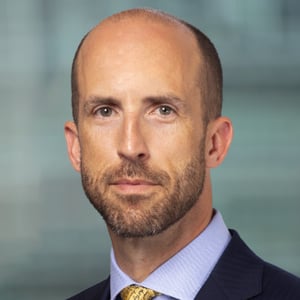
Director of Health Policy Studies, Cato Institute
Michael F. Cannon is the Cato Institute’s director of health policy studies. His scholarship spans public health; regulation of clinicians, medical facilities, pharmaceuticals, and medical devices; employer‐sponsored and other private health insurance; Medicare; Medicaid; CHIP; the Veterans Health Administration; medical malpractice litigation; administrative law; international health systems; political philosophy; and more. Cannon is “an influential health‐care wonk” (Washington Post) and “the most famous libertarian health care scholar” (Washington Examiner). Washingtonian magazine named Cannon one of Washington, DC’s “Most Influential People” in 2021, 2022, and 2023.
Cannon has appeared on ABC, Al Jazeera, BBC, CBS, CNN, CNBC, C‑SPAN, Fox News Channel, NPR, and other broadcast media. His articles have appeared in the Wall Street Journal; the New York Times; USA Today; the Washington Post; the Los Angeles Times; SCOTUSBlog; Forum for Health Economics and Policy; JAMA Internal Medicine; Health Matrix: Journal of Law‐Medicine; Harvard Health Policy Review; the Yale Journal of Health Policy, Law, and Ethics; the Journal of Health Politics, Policy and Law; and Quinnipiac Health Law Journal. His latest book is Recovery: A Guide to Reforming the U.S. Health Sector.
Cannon was previously a domestic policy analyst for the U.S. Senate Republican Policy Committee, where he advised the Senate leadership on health, education, labor, welfare, and the Second Amendment. He is a member of the Board of Advisers of Harvard Health Policy Review and the Federalist Society Regulatory Transparency Project’s FDA & Health Working Group.
Cannon holds an MA in economics and a JM in law and economics from George Mason University and a BA in American government from the University of Virginia.
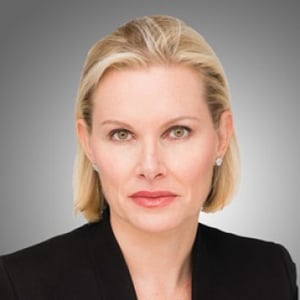
Partner, Goodwin Procter LLP
Delphine O’Rourke is a partner in the Life Sciences group and Healthcare practice at Goodwin Procter LLP. She is trusted counsel to health industry leaders. Ms. O’Rourke counsels health companies, hospitals & healthcare systems, and investors on the regulatory frameworks that drive their business. Clients rely on her deep knowledge of healthcare law and policy as well as her experience as a health care executive and in-house general counsel. She served as Associate General Counsel of Ascension and in her decades plus with Ascension, she served in legal roles of increasing responsibility for the $29 billion health enterprise.
Ms. O’Rourke’s healthcare regulatory practice focuses on:
Ms. O’Rourke is a regular speaker on cutting edge healthcare regulatory developments and contributor to leading legal and industry publications and podcasts including Modern Healthcare, Law360 and the American Health Law Association. She is nationally recognized for her commitment to the advancement of women and inclusionary leadership.
Ms. O’Rourke also maintains an active pro bono practice.
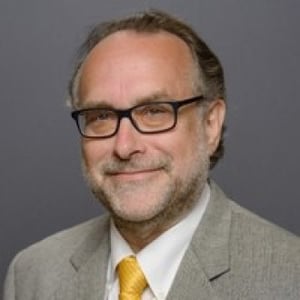
Chair, Missouri Chapter, Physicians for a National Health Program
Dr. Ed Weisbart chairs the Missouri chapter of Physicians for a National Health Program, a 30 year-old non-profit research and education organization of more than 21,000 physicians, medical students, health professionals, and others who support single-payer national health insurance.
He is an assistant professor of clinical medicine at Washington University in St. Louis. He volunteers in a variety of safety net clinics and other non-profits across the St. Louis area, and as a volunteer physician recruiter for free clinics across the nation. He serves as vice president of the Consumers Council of Missouri.
He received his medical degree at the University of Illinois in Chicago in 1979, completed his family medicine residency and a fellowship in family medicine education at Michigan State University in 1982, and practiced family medicine at Rush Medical Center in Chicago for 20 years. He served as chief medical officer of Express Scripts from 2003 to 2010.
Dr. Weisbart has had several articles published in both national medical journals and local media outlets regarding the health care needs of the uninsured.
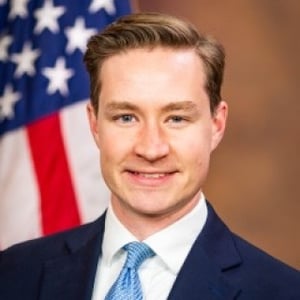
Assistant Attorney General, Office of Legal Counsel, U.S. Department of Justice
T. Elliot Gaiser is the Office of Legal Counsel’s 27th Assistant Attorney General. He was nominated by President Donald Trump on April 29, 2025, confirmed by the United States Senate on July 30, 2025, and sworn in as AAG by Attorney General Pam Bondi on August 4, 2025.
Prior to joining the Office of Legal Counsel, Mr. Gaiser served as the 11th Solicitor General of Ohio. In that role, he represented his home state and its agencies before the Supreme Court of the United States, the United States Court of Appeals for the Sixth Circuit, the Supreme Court of Ohio, and other state and federal courts. He also advised Ohio Attorney General Dave Yost on significant legal and constitutional matters important to the people of Ohio.
Mr. Gaiser clerked for Justice Samuel A. Alito, Jr. of the Supreme Court of the United States, Judge Neomi Rao of the United States Court of Appeals for the D.C. Circuit, and Judge Edith H. Jones of the United States Court of Appeals for the Fifth Circuit. In the private sector, Mr. Gaiser worked at the law firms Jones Day, Boyden Gray, and Gibson Dunn. He graduated from the University of Chicago Law School and Hillsdale College. He is also a husband and father.
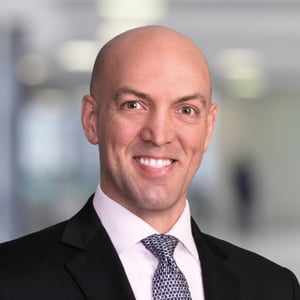
Attorney, Kniffin Law PLLC, Fellow, Ethics and Public Policy Center
Eric Kniffin is a fellow at the Ethics and Public Policy Center, where he works on a range of initiatives to protect and strengthen religious liberty as part of EPPC’s HHS Accountability Project.
Kniffin also practices law at Kniffin Law PLLC, where he helps religious organizations and individuals protect their liberty and advance their mission. Before starting his solo practice, Kniffin worked at the U.S. Department of Justice’s Civil Rights Division, at the Becket Fund, and was a partner at Lewis Roca.
Kniffin has protected hundreds of religious employers from the HHS contraception and abortifacient mandate and the HHS gender transition mandate. He has represented the U.S. Conference of Catholic Bishops, the Knights of Columbus, and the Assemblies of God, among others, in amicus briefs before the Supreme Court. His work helping religious organizations understand, maximize, and defend their religious liberties has made him a nationally recognized expert in the field.
Kniffin is a sought-after commentator on religious liberty issues and has appeared in the Wall Street Journal, National Review, Huffington Post, National Catholic Register, Inside Higher Ed, and Washington Times, and has spoken regularly for The Federalist Society and The Heritage Foundation.
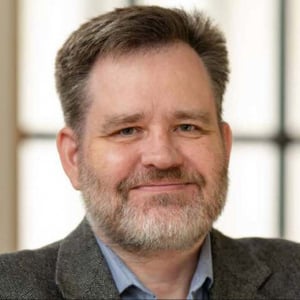
David Boies Professor of Law, Yale Law School
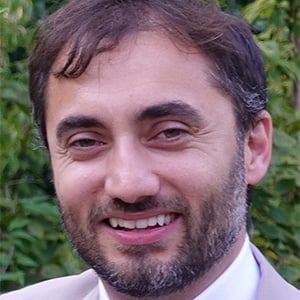
Vice President and Counsel for Privacy and Cyber Policy, CrowdStrike
Drew Bagley, CIPP/E, CrowdStrike Vice President and Counsel for Privacy and Cyber Policy, is responsible for leading CrowdStrike’s data protection initiatives, privacy strategy and global policy engagement. He serves on the Europol Advisory Group on Internet Security and the U.S. Department of State’s International Telecommunications Advisory Committee. Recently, Drew helped lead the ICANN Competition, Consumer Choice, and Consumer Trust Review Team, which assessed the expansion of the Internet’s Domain Name System. Prior to joining CrowdStrike, Drew served in the Office of the General Counsel at the Federal Bureau of Investigation. He is a member of the New York State Bar and a former German Chancellor Fellow. Drew has taught at the University of Maryland, University of Leipzig, and University of Florida and holds degrees from the University of Miami (JD) and the University of Florida (MA, BS, and BA).
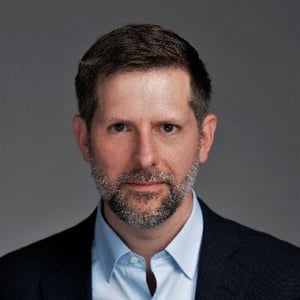
Head of AI Policy, Abundance Institute
Neil Chilson is the Head of AI Policy at the Abundance Institute. Prior to this position, he served as a Senior Research Fellow at the Center for Growth and Opportunity. Chilson is a lawyer, computer scientist, and author of the book “Getting Out of Control: Emergent Leadership in a Complex World.”
Chilson was previously the senior research fellow for Technology and Innovation at Stand Together, where he guided efforts to understand and promote the legal and cultural paradigms that best enable people to discover, innovate, and improve all our lives.
Before Stand Together, Chilson was the Chief Technologist at the Federal Trade Commission, where he focused on the economics of privacy and blockchain-related issues. Previously, he was an attorney advisor to Acting FTC Chairman Maureen K. Ohlhausen. In both roles he advised Chairman Ohlhausen and worked with staff on nearly every major technology-related case, report, workshop, or other FTC proceeding since January 2014. Neil joined the FTC from telecom firm Wilkinson Barker Knauer. Neil is frequently quoted by the press and his work has appeared in numerous news outlets, including The Wall Street Journal, The Washington Post, USAToday, and Newsweek. Neil has a J.D. from The George Washington Law School, a M.S. in computer science from University of Illinois, Urbana-Champaign, and a B.S. in computer science from Harding University.
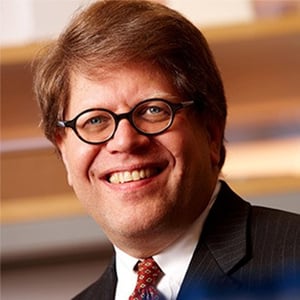
Faculty Fellow, Center for Law, Science & Innovation, Sandra Day O'Connor College of Law, Arizona State University
Dr. Klein is a Faculty Fellow at the Center for Law, Science & Innovation at the Sandra Day O'Connor College of Law at Arizona State University. He is also Principal at Roger D. Klein, MD JD Consulting and Klein & Klein Co., L.P.A. He was formerly Chief Medical Officer at OmniSeq, an oncology focused genomic profiling company that was recently acquired by LabCorp. Previously, Roger was the Medical Director at the Molecular Oncology division at the Cleveland Clinic. He was also the Chair of the Professional Relations Committee at the Association for Molecular Pathology. Prior to joining the Cleveland Clinic, he served as Medical Director of Molecular Oncology at the BloodCenter of Wisconsin where he led the center’s Diagnostic Laboratories’ initiative focused on DNA- and RNA-based testing for evaluation of cancer patients.
Dr. Klein has been an advisor to the Department of Health and Human Services (HHS), the Food and Drug Administration (FDA), the Centers for Medicare and Medicaid Services (CMS), and the Centers for Disease Control and Prevention (CDC). He has participated in and assumed leadership roles in many professional society committees and corporate advisory boards and is a policy advisor to the Heartland Institute.
Dr. Klein is licensed to practice medicine in Ohio, Florida, and Wisconsin. Additionally, he is licensed to practice law in the District of Columbia and Ohio. Roger obtained his Molecular Genetic Pathology certification at Mayo Medical School following completion of his M.D. Yale University School of Medicine. He obtained his J.D. from Yale Law School.
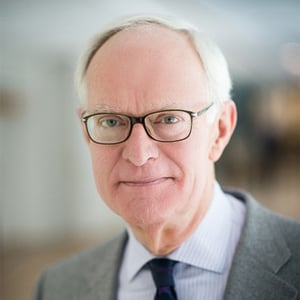
Distinguished Fellow, Hudson Institute
Christopher DeMuth is a distinguished fellow at Hudson Institute. He was president of the American Enterprise Institute for Public Policy Research (AEI) from 1986 to 2008 and was the D.C. Searle Senior Fellow at AEI from 2008 to 2011.
Mr. DeMuth was raised in Kenilworth, Illinois, and attended the Lawrenceville School (1964), Harvard College (A.B. 1968), and the University of Chicago Law School (J.D. 1973). He served as staff assistant to President Richard M. Nixon from 1969 to 1970, working first for Daniel P. Moynihan (then assistant to the President for Urban Affairs) on urban policy matters and then as chairman of the White House Task Force on Environmental Policy. Following law school, he practiced regulatory, antitrust, and general corporate law with Sidley & Austin in Chicago (1973-1976) and was associate general counsel of the Consolidated Rail Corporation (Conrail) in Philadelphia (1976-1977).
From 1977 to 1981, Mr. DeMuth was lecturer in public policy at the Kennedy School of Government at Harvard University, and director of the Harvard Faculty Project on Regulation. There he taught courses on law, economics, and regulatory policy and conducted and sponsored research on health, safety, environmental, and economic regulation.
Returning to Washington in 1981, Mr. DeMuth served as administrator for information and regulatory affairs in the U.S. Office of Management and Budget, and as executive director of the Presidential Task Force on Regulatory Relief during President Ronald Reagan’s first term of office. From 1984 to 1986, he was managing director of Lexecon Inc., a law-and-economics consulting firm; in 1986, he was also publisher and editor-in-chief of Regulation magazine. He was elected president of the American Enterprise Institute in December 1986.
Many of Mr. DeMuth’s articles, lectures, and occasional talks are posted on his website (https://www.ccdemuth.com).
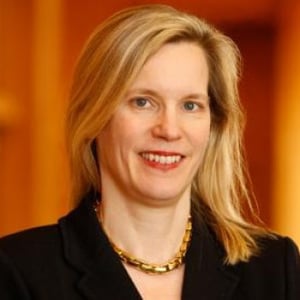
John S. Battle Professor of Law, University of Virginia School of Law
Julia D. Mahoney teaches courses in property, government finance, constitutional law and nonprofit organizations. A graduate of Yale Law School, she joined the University of Virginia faculty as an associate professor in 1999 and is now John S. Battle Professor of Law. She has also taught at the University of Southern California Law School and the University of Chicago Law School, and before entering the legal academy, practiced law at the New York firm Wachtell, Lipton, Rosen & Katz. Her scholarly articles include works on land preservation, eminent domain, health care reform and property rights in human biological materials.
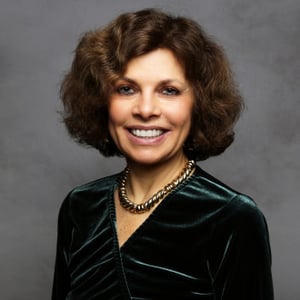
John Marshall Harlan II Professor of Law Emerita, New York Law School; Former President, American Civil Liberties Union
Nadine Strossen, New York Law School Professor Emerita and Senior Fellow at FIRE (the Foundation for Individual Rights and Expression), was national President of the American Civil Liberties Union from 1991 to 2008. An internationally acclaimed free speech scholar and advocate, who regularly addresses diverse audiences and provides media commentary around the world, Strossen is also the Host and Project Consultant for Free To Speak, a 3-hour documentary film series distributed on public television in 2023. Her books about free speech include: Free Speech: What Everyone Needs to Know® (Oxford University Press 2023); HATE: Why We Should Resist It with Free Speech, Not Censorship (Oxford University Press 2018); and Defending Pornography: Free Speech, Sex, and the Fight for Women’s Rights (Scribner 1995), which was republished with a new Preface in 2024 as part of the NYU Classics Series. Her many honors and awards include the National Coalition Against Censorship’s Judy Blume Lifetime Achievement Award for Free Speech. She serves on the Advisory Boards of several organizations that do free speech work, including: ACLU, Academic Freedom Alliance, Foundation Against Intolerance and Racism (FAIR), Heterodox Academy, National Coalition Against Censorship, and the University of Austin.
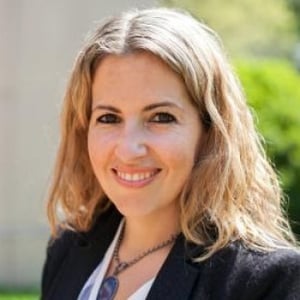
Martha Lubin Karsh and Bruce A. Karsh Bicentennial Professor of Law; Director, Human Rights Program; Senior Fellow, Miller Center, University of Virginia School of Law
Mila Versteeg joined the Law School in 2011. Her research and teaching interests include comparative constitutional law, public international law and empirical legal studies. Most of her research deals with the origins, evolution and effectiveness of provisions in the world’s constitutions. Her publications have, amongst others, appeared in the California Law Review, the New York University Law Review, the University of Chicago Law Review, the American Political Science Review, the American Journal of Political Science, the Journal of Legal Studies, the Journal of Law and Economics, the American Journal of International Law, and the Journal of Law, Economics and Organizations. A number of her works have been translated into Chinese, Portuguese and Turkish.
In 2017, Versteeg was named an Andrew Carnegie Fellow, which provided her with a $200,000 award to expand her research into the world's constitutions to better understand how constitutional rights are enforced in different countries.
Versteeg earned her B.A. in public administration and first law degree from Tilburg University in the Netherlands in 2006. She earned her LL.M. from Harvard Law School in 2007 and a D.Phil. in socio-legal studies in 2011 from the University of Oxford, where she was a Gregory Kulkes Scholar at Balliol College and recipient of an Arts and the Humanities Research Council Award.
Prior to joining the Law School, Versteeg was an Olin Fellow and lecturer in law at the University of Chicago Law School. Versteeg previously worked at the U.N. Interregional Crime and Justice Research Institute in Turin and at the Southern Africa Litigation Centre in Johannesburg. While at UVA, Versteeg has been a visiting associate professor at the University of Chicago Law School (fall 2013) and Columbia Law School (spring 2016), and a visiting professor at the law schools of Hebrew University, the University of Hamburg (summer 2015) and Tel Aviv University (spring 2017).

Thomas M. Siebel Senior Fellow, The Hoover Institution, Stanford University; Gary T. Schwartz Distinguished Professor of Law Emeritus, UCLA School of Law
Eugene Volokh is the Thomas M. Siebel Senior Fellow at the Hoover Institution (Stanford), as well as the Gary T. Schwartz Distinguished Professor of Law Emeritus and Distinguished Research Professor at UCLA School of Law. He recently retired from teaching at UCLA, after 30 years there, and is now focusing on research.
Volokh is the author of the textbooks The First Amendment and Related Statutes (8th ed. 2023), and Academic Legal Writing (5th ed. 2016), as well as over 100 academic law journal articles, mostly on First Amendment law. He is a member of The American Law Institute; the editor-in-chief of the Journal of Free Speech Law; and the creator and coauthor of The Volokh Conspiracy, a leading legal blog founded in 2002 (hosted at the Washington Post from 2014 to 2017 and now at Reason Magazine).
Distinguished Fellow, Hudson Institute
Christopher DeMuth is a distinguished fellow at Hudson Institute. He was president of the American Enterprise Institute for Public Policy Research (AEI) from 1986 to 2008 and was the D.C. Searle Senior Fellow at AEI from 2008 to 2011.
Mr. DeMuth was raised in Kenilworth, Illinois, and attended the Lawrenceville School (1964), Harvard College (A.B. 1968), and the University of Chicago Law School (J.D. 1973). He served as staff assistant to President Richard M. Nixon from 1969 to 1970, working first for Daniel P. Moynihan (then assistant to the President for Urban Affairs) on urban policy matters and then as chairman of the White House Task Force on Environmental Policy. Following law school, he practiced regulatory, antitrust, and general corporate law with Sidley & Austin in Chicago (1973-1976) and was associate general counsel of the Consolidated Rail Corporation (Conrail) in Philadelphia (1976-1977).
From 1977 to 1981, Mr. DeMuth was lecturer in public policy at the Kennedy School of Government at Harvard University, and director of the Harvard Faculty Project on Regulation. There he taught courses on law, economics, and regulatory policy and conducted and sponsored research on health, safety, environmental, and economic regulation.
Returning to Washington in 1981, Mr. DeMuth served as administrator for information and regulatory affairs in the U.S. Office of Management and Budget, and as executive director of the Presidential Task Force on Regulatory Relief during President Ronald Reagan’s first term of office. From 1984 to 1986, he was managing director of Lexecon Inc., a law-and-economics consulting firm; in 1986, he was also publisher and editor-in-chief of Regulation magazine. He was elected president of the American Enterprise Institute in December 1986.
Many of Mr. DeMuth’s articles, lectures, and occasional talks are posted on his website (https://www.ccdemuth.com).
John S. Battle Professor of Law, University of Virginia School of Law
Julia D. Mahoney teaches courses in property, government finance, constitutional law and nonprofit organizations. A graduate of Yale Law School, she joined the University of Virginia faculty as an associate professor in 1999 and is now John S. Battle Professor of Law. She has also taught at the University of Southern California Law School and the University of Chicago Law School, and before entering the legal academy, practiced law at the New York firm Wachtell, Lipton, Rosen & Katz. Her scholarly articles include works on land preservation, eminent domain, health care reform and property rights in human biological materials.
John Marshall Harlan II Professor of Law Emerita, New York Law School; Former President, American Civil Liberties Union
Nadine Strossen, New York Law School Professor Emerita and Senior Fellow at FIRE (the Foundation for Individual Rights and Expression), was national President of the American Civil Liberties Union from 1991 to 2008. An internationally acclaimed free speech scholar and advocate, who regularly addresses diverse audiences and provides media commentary around the world, Strossen is also the Host and Project Consultant for Free To Speak, a 3-hour documentary film series distributed on public television in 2023. Her books about free speech include: Free Speech: What Everyone Needs to Know® (Oxford University Press 2023); HATE: Why We Should Resist It with Free Speech, Not Censorship (Oxford University Press 2018); and Defending Pornography: Free Speech, Sex, and the Fight for Women’s Rights (Scribner 1995), which was republished with a new Preface in 2024 as part of the NYU Classics Series. Her many honors and awards include the National Coalition Against Censorship’s Judy Blume Lifetime Achievement Award for Free Speech. She serves on the Advisory Boards of several organizations that do free speech work, including: ACLU, Academic Freedom Alliance, Foundation Against Intolerance and Racism (FAIR), Heterodox Academy, National Coalition Against Censorship, and the University of Austin.
Martha Lubin Karsh and Bruce A. Karsh Bicentennial Professor of Law; Director, Human Rights Program; Senior Fellow, Miller Center, University of Virginia School of Law
Mila Versteeg joined the Law School in 2011. Her research and teaching interests include comparative constitutional law, public international law and empirical legal studies. Most of her research deals with the origins, evolution and effectiveness of provisions in the world’s constitutions. Her publications have, amongst others, appeared in the California Law Review, the New York University Law Review, the University of Chicago Law Review, the American Political Science Review, the American Journal of Political Science, the Journal of Legal Studies, the Journal of Law and Economics, the American Journal of International Law, and the Journal of Law, Economics and Organizations. A number of her works have been translated into Chinese, Portuguese and Turkish.
In 2017, Versteeg was named an Andrew Carnegie Fellow, which provided her with a $200,000 award to expand her research into the world's constitutions to better understand how constitutional rights are enforced in different countries.
Versteeg earned her B.A. in public administration and first law degree from Tilburg University in the Netherlands in 2006. She earned her LL.M. from Harvard Law School in 2007 and a D.Phil. in socio-legal studies in 2011 from the University of Oxford, where she was a Gregory Kulkes Scholar at Balliol College and recipient of an Arts and the Humanities Research Council Award.
Prior to joining the Law School, Versteeg was an Olin Fellow and lecturer in law at the University of Chicago Law School. Versteeg previously worked at the U.N. Interregional Crime and Justice Research Institute in Turin and at the Southern Africa Litigation Centre in Johannesburg. While at UVA, Versteeg has been a visiting associate professor at the University of Chicago Law School (fall 2013) and Columbia Law School (spring 2016), and a visiting professor at the law schools of Hebrew University, the University of Hamburg (summer 2015) and Tel Aviv University (spring 2017).
Thomas M. Siebel Senior Fellow, The Hoover Institution, Stanford University; Gary T. Schwartz Distinguished Professor of Law Emeritus, UCLA School of Law
Eugene Volokh is the Thomas M. Siebel Senior Fellow at the Hoover Institution (Stanford), as well as the Gary T. Schwartz Distinguished Professor of Law Emeritus and Distinguished Research Professor at UCLA School of Law. He recently retired from teaching at UCLA, after 30 years there, and is now focusing on research.
Volokh is the author of the textbooks The First Amendment and Related Statutes (8th ed. 2023), and Academic Legal Writing (5th ed. 2016), as well as over 100 academic law journal articles, mostly on First Amendment law. He is a member of The American Law Institute; the editor-in-chief of the Journal of Free Speech Law; and the creator and coauthor of The Volokh Conspiracy, a leading legal blog founded in 2002 (hosted at the Washington Post from 2014 to 2017 and now at Reason Magazine).

Deep Dive Episode 136 – It Can Be Done Live: The Future of Our Health
Julie Allickson, Betsy McCaughey, Joshua Sharfstein, Dan Troy, Christina Sandefur
Regulatory Transparency Project's Fourth Branch Podcast
The creators of the award-winning documentary, They Say It Can’t Be Done, in partnership with...
It Can Be Done Live: The Future of Our Seas
Thomas W. Bell, Kimberly Hermann, Patrick Reasonover, Scott Schmidt, Julie Friedman Steele, Nathan Kaczmarek
A Four-Part Virtual Movie Premiere
The creators of the award-winning documentary, They Say It Can't Be Done, in partnership with the...
It Can Be Done Live: The Future of Our Seas
Thomas W. Bell, Kimberly Hermann, Nathan Kaczmarek, Patrick Reasonover, Scott Schmidt, Julie Friedman Steele
A Four-Part Virtual Movie Premiere
The creators of the award-winning documentary, They Say It Can't Be Done, in partnership with the...
Deep Dive Episode 133 – Medicare for All? A National Single-Payer v. Private Payer Insurance Debate
Michael F. Cannon, Delphine O'Rourke, Ed Weisbart
Regulatory Transparency Project's Fourth Branch Podcast
On September 22, the Federalist Society's Villanova Student Chapter co-sponsored a debate on Medicare for...
How Does the FDA Regulate Hand Sanitizer?
T. Elliot Gaiser
Regulatory Transparency Project's Fourth Branch Video
Due to the COVID-19 pandemic, hand sanitizer has been in high demand. The FDA has...
Little Sisters of the Poor Saints Peter and Paul Home v. Pennsylvania - Post-Decision SCOTUScast
Eric N. Kniffin
featuring Eric N. Kniffin
On July 8, 2020 the Supreme Court decided Little Sisters of the Poor Saints...
What are the Limits of Federal Power During an Emergency? [POLICYbrief]
Keith E. Whittington
Short video featuring Keith Whittington
Does the Constitution limit the power of the federal government during emergencies just as it...
Deep Dive Episode 117 – How to Approach Data Collection and Breaches in the Age of COVID-19
Drew Bagley, Neil Chilson, Roger D. Klein
Regulatory Transparency Project Teleforum
In an effort to combat the spread of COVID-19 and contain its impact, nations across...
Civil Liberties and COVID-19
Christopher C. DeMuth, Julia D. Mahoney, Nadine Strossen, Mila Versteeg, Eugene Volokh
COVID-19 & the Law Conference
The Federalist Society's COVID-19 & the Law Conference concluded with a panel on "Civil Liberties...
Civil Liberties and COVID-19
Christopher C. DeMuth, Julia D. Mahoney, Nadine Strossen, Mila Versteeg, Eugene Volokh
COVID-19 & the Law Conference
The Federalist Society's COVID-19 & the Law Conference concluded with a panel on "Civil Liberties...