

U.S. Court of Appeals, Seventh Circuit
Frank H. Easterbrook is a judge of the United States Court of Appeals for the Seventh Circuit and a Senior Lecturer at the Law School of the University of Chicago. He was Chief Judge from 2006–2013. Before joining the court in 1985, he was the Lee andBrena Freeman Professor of Law at the University of Chicago, where he taught and wrote in antitrust, securities, corporate law, jurisprudence, and criminal procedure. He has published The Economic Structure of Corporate Law (with Daniel R. Fischel) and about 100 scholarly articles. He served as Co-Editor of the Journal of Law and Economics from 1982 to 1991 and as a member of the Judicial Conference’s Standing Committee on Rules of Practice and Procedure from 1991 to 1997. Before joining the faculty of the Law School in 1979, Judge Easterbrook was Deputy Solicitor General of the United States. He holds degrees from Swarthmore College (B.A. with high honors, 1970) and the University of Chicago (J.D. cum laude, 1973), and is a member of the American Academy of Arts and Sciences, the American Law Institute, the Mont Pelerin Society, Phi Beta Kappa, and the Order of the Coif.

David McIntosh is a leader for the principles of limited constitutional government and individual freedom. He is president of the Club for Growth, the leading advocate for economic liberty.
Former Congressman David McIntosh represented Indiana's 2nd Congressional District in the United States Congress from 1995-2001. As a Freshman, David chaired the Subcommittee on Regulatory Relief. He passed the Congressional Review Act and held extensive oversight and field hearings to build a record of public support for regulatory relief initiatives in energy, biotechnology, pharmaceutical, healthcare, transportation and technology sectors. Another issue that he championed was the elimination of the marriage penalty in the Federal Tax Code.
David served during the Reagan administration as special assistant to Attorney General Edwin Meese III, and as special assistant to President Reagan for Domestic Affairs. During the first Bush administration, he served as executive director of the President's Council on Competitiveness and assistant to the Vice President. The Competitiveness Council coordinated the cost/benefit review of major regulations and promoted legal reform measures.
David is a co-founder of the Federalist Society for Law and Public Policy and serves on the Board of Directors. He remains active with several free market and conservative think tanks and grassroots organizations. David has also had stints at the Hudson Institute and as a Professor of Economics at Ball State School of Business.
Prior to the Club for Growth, David was a partner at Mayer Brown, LLP in Washington, DC.
David graduated from the University of Chicago Law School in 1983, and Yale University, BA, cum laude, in 1980. He and his wife, Ruthie, are the proud parents of Ellie age 17 and Davey age 13.
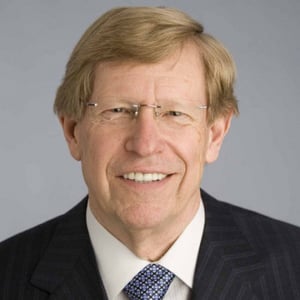
Partner, Gibson Dunn & Crutcher LLP
Theodore B. Olson is a Partner in Gibson, Dunn & Crutcher’s Washington, D.C. office; a founder of the Firm’s Crisis Management, Sports Law, and Appellate and Constitutional Law Practice Groups.
Mr. Olson was Solicitor General of the United States during the period 2001-2004. From 1981-1984, he was Assistant Attorney General in charge of the Office of Legal Counsel in the U.S. Department of Justice. Except for those two intervals, he has been a lawyer with Gibson, Dunn & Crutcher in Los Angeles and Washington, D.C. since 1965.
Selected by Time magazine in 2010 as one of the 100 most influential people in the world, Mr. Olson is one of the nation’s premier appellate and United States Supreme Court advocates. He has argued 65 cases in the Supreme Court and has prevailed in over 75% of those cases. These include the two Bush v Gore cases arising out of the 2000 presidential election; Citizens United v Federal Election Commission; Hollingsworth v Perry, the case affirming the overturning of California’s Proposition 8, banning same-sex marriages; Murphy v NCAA, overturning a federal law prohibiting states from authorizing sports betting; and U.S. Dept. of Homeland Security v Regents of the Univ. of Calif., challenging the Trump Administration’s rescission of the Deferred Action for Childhood Arrivals (“DACA”). Mr. Olson’s practice is concentrated on appellate and constitutional law, federal legislation, media and commercial disputes, and assisting clients with strategies for the containment, management and resolution of major legal crises. He has handled cases at all levels of state and federal court systems throughout the United States. Mr. Olson co-authored “Redeeming the Dream, the Case for Marriage Equality” with David Boies. Both were featured in HBO’s award-winning documentary, “The Case Against 8.”
Mr. Olson's Supreme Court arguments have included cases involving separation of powers; federalism; voting rights; the Tenth Amendment; the First Amendment; the Equal Protection and Due Process Clauses; jury trial rights; punitive damages; takings of property; the Commerce Clause; administrative law; taxation; criminal law; sports wagering; copyright, patent and antitrust; securities; campaign finance; foreign sovereign immunities; telecommunications; the environment; the internet; the Supremacy Clause; and other federal constitutional and statutory questions. As Solicitor General, during the presidency of George W. Bush, Mr. Olson was the Government's principal advocate in the United States Supreme Court, responsible for supervising and coordinating all appellate litigation of the United States, and a legal adviser to the President and the Attorney General. As Assistant Attorney General for the Office of Legal Counsel during the Reagan Administration, Mr. Olson was the Executive Branch's principal legal adviser, rendering legal guidance to the President and to the heads of the Executive Branch departments on a wide range of constitutional and federal statutory questions, and assisting in formulating and articulating the Executive Branch's position on constitutional issues.
Mr. Olson has served as private counsel to two Presidents, Ronald W. Reagan and George W. Bush, in addition to serving those two Presidents in high-level positions in the Department of Justice. He has twice been awarded the United States Department of Justice's Edmund J. Randolph Award, its highest award for public service and leadership, and also received the Department of Defense's Distinguished Public Service Award, its highest civilian award, for his advocacy in the courts of the United States, including the Supreme Court. He also received the American Bar Association Medal, its highest award for “exceptionally distinguished service by a lawyer or lawyers to the cause of American jurisprudence.” Mr. Olson is to receive the 2021 Jack Valenti Friend of the White House Fellows Award in the Fall of 2021 to be presented by the White House Fellows Foundation and Association.
Mr. Olson is a member of the Commission on White House Fellowships; a member of the Board of Trustees of the Ronald Reagan Presidential Foundation; a member of the Board of Visitors of the Federalist Society; the Board of Directors of the Knight First Amendment Institute at Columbia University; and the 9/11 Pentagon Memorial Foundation. He was a visiting scholar at the National Constitution Center in 2007. He served on the President's Privacy and Civil Liberties Oversight Board from 2006 to 2008; and of the Council of the Administrative Conference of the United States from 2010 to 2020. He was Co-Chair of the Knight Commission on the Information Needs of Communities in a Democracy from 2008-2009, and served two terms on the Board of Directors of the National Center for State Courts.
Mr. Olson is a Fellow of both the American College of Trial Lawyers and the American Academy of Appellate Lawyers. He has been repeatedly listed in legal publications as one of the nation’s leading appellate lawyers. The late New York Times columnist William Safire described Mr. Olson as his generation's "most persuasive advocate" before the Supreme Court and "the most effective Solicitor General in decades.”
Mr. Olson received his law degree in 1965 from the University of California at Berkeley (Boalt Hall) where he was a member of the California Law Review and Order of the Coif. He received his bachelor's degree from the University of the Pacific, where he was recognized as the outstanding graduating student in both forensics and journalism. He has written and lectured extensively on appellate advocacy, oral communication in the courtroom, civil justice reform, and constitutional and administrative law.
Partner, Akin Gump Strauss Hauer & Feld LLP
Steven Ross has extensive public- and private-sector experience in representing corporations, institutions, boards and individuals in all manner of investigations, including congressional, criminal and regulatory proceedings and related civil litigation. He concentrates on congressional investigations, internal investigations, governmental ethics, federal election law, white collar criminal defense and constitutional issues.
From 1983 to 1993, Steven served as the General Counsel of the U.S. House of Representatives, advising and representing its members, leadership, committees and employees from both political parties. He has also counseled the leadership and relevant committees on numerous congressional investigations.
In private practice, Steven guides clients through complex congressional inquiries and related litigation. He represents clients in investigations conducted by various federal executive branch departments, commissions and agencies, including the U.S. departments of Justice, Education, Health and Human Services, Defense and the Interior, as well as the Federal Election Commission and the Food and Drug Administration.
Steven has significant litigation experience, ranging from trials before U.S. district courts to arguments before the Supreme Court and numerous federal courts of appeals. He was actively involved in defending the constitutionality of multiple federal statutes, including the Independent Counsel Act, the Competition in Contracting Act and the Gramm-Rudman-Hollings Deficit Reduction Act.
Over the course of his career, Steven has litigated seminal cases regarding the scope of Congress’ oversight and investigations power, both on behalf of Congress and as counsel to private parties implicated by such inquiries. He has taught constitutional law as an adjunct professor at George Mason University Law School and served as a guest lecturer on the topic of congressional investigations at a number of law schools, including NYU, Fordham and the Georgetown University Law Center.
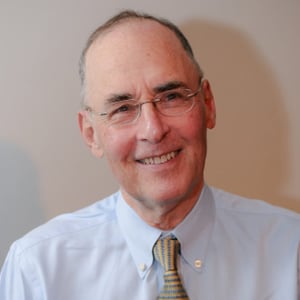
Trustee Professor of Law, New York Law School
From 1972-79, Schoenbrod served as one of the leaders of the Natural Resources Defense Council, where he campaigned to reduce lead in gasoline, resurrect the then-decrepit New York City subway, and protect the environment of Puerto Rico. Previously, he was Director of Program Development at the community development project that Senator Robert Kennedy established in Bedford Stuyvesant. He has also been a senior fellow at the Cato Institute and the American Enterprise Institute.
His books include
D.C. Confidential: Inside the Five Tricks of Washington (Encounter Books, 2017) with forewords by Governor Howard Dean and Senator Mike Lee;
Breaking the Logjam: Environmental Protection That Will Work (Yale University Press, 2010)(with Richard B. Stewart and Katrina M. Wyman);
Saving Our Environment from Washington: How Congress Grabs Power, Shirks Responsibility, and Shortchanges the People (Yale University Press, 2005);
Democracy by Decree: What Happens When Courts Run Government (Yale University Press, 2003) (with Ross Sandler); and
Power Without Responsibility: How Congress Abuses the People Through Delegation (Yale University Press, 1993).
In addition to writing scholarly articles, he has frequently contributed opinion pieces to the Wall Street Journal, The Hill, the New York Times, and other publications.
He has an undergraduate degree from Yale College, a graduate degree in economics from Oxford University, which he attended as a Marshall Scholar, and a law degree from Yale Law School.
U.S. Court of Appeals, Seventh Circuit
Frank H. Easterbrook is a judge of the United States Court of Appeals for the Seventh Circuit and a Senior Lecturer at the Law School of the University of Chicago. He was Chief Judge from 2006–2013. Before joining the court in 1985, he was the Lee andBrena Freeman Professor of Law at the University of Chicago, where he taught and wrote in antitrust, securities, corporate law, jurisprudence, and criminal procedure. He has published The Economic Structure of Corporate Law (with Daniel R. Fischel) and about 100 scholarly articles. He served as Co-Editor of the Journal of Law and Economics from 1982 to 1991 and as a member of the Judicial Conference’s Standing Committee on Rules of Practice and Procedure from 1991 to 1997. Before joining the faculty of the Law School in 1979, Judge Easterbrook was Deputy Solicitor General of the United States. He holds degrees from Swarthmore College (B.A. with high honors, 1970) and the University of Chicago (J.D. cum laude, 1973), and is a member of the American Academy of Arts and Sciences, the American Law Institute, the Mont Pelerin Society, Phi Beta Kappa, and the Order of the Coif.
David McIntosh is a leader for the principles of limited constitutional government and individual freedom. He is president of the Club for Growth, the leading advocate for economic liberty.
Former Congressman David McIntosh represented Indiana's 2nd Congressional District in the United States Congress from 1995-2001. As a Freshman, David chaired the Subcommittee on Regulatory Relief. He passed the Congressional Review Act and held extensive oversight and field hearings to build a record of public support for regulatory relief initiatives in energy, biotechnology, pharmaceutical, healthcare, transportation and technology sectors. Another issue that he championed was the elimination of the marriage penalty in the Federal Tax Code.
David served during the Reagan administration as special assistant to Attorney General Edwin Meese III, and as special assistant to President Reagan for Domestic Affairs. During the first Bush administration, he served as executive director of the President's Council on Competitiveness and assistant to the Vice President. The Competitiveness Council coordinated the cost/benefit review of major regulations and promoted legal reform measures.
David is a co-founder of the Federalist Society for Law and Public Policy and serves on the Board of Directors. He remains active with several free market and conservative think tanks and grassroots organizations. David has also had stints at the Hudson Institute and as a Professor of Economics at Ball State School of Business.
Prior to the Club for Growth, David was a partner at Mayer Brown, LLP in Washington, DC.
David graduated from the University of Chicago Law School in 1983, and Yale University, BA, cum laude, in 1980. He and his wife, Ruthie, are the proud parents of Ellie age 17 and Davey age 13.
Partner, Gibson Dunn & Crutcher LLP
Theodore B. Olson is a Partner in Gibson, Dunn & Crutcher’s Washington, D.C. office; a founder of the Firm’s Crisis Management, Sports Law, and Appellate and Constitutional Law Practice Groups.
Mr. Olson was Solicitor General of the United States during the period 2001-2004. From 1981-1984, he was Assistant Attorney General in charge of the Office of Legal Counsel in the U.S. Department of Justice. Except for those two intervals, he has been a lawyer with Gibson, Dunn & Crutcher in Los Angeles and Washington, D.C. since 1965.
Selected by Time magazine in 2010 as one of the 100 most influential people in the world, Mr. Olson is one of the nation’s premier appellate and United States Supreme Court advocates. He has argued 65 cases in the Supreme Court and has prevailed in over 75% of those cases. These include the two Bush v Gore cases arising out of the 2000 presidential election; Citizens United v Federal Election Commission; Hollingsworth v Perry, the case affirming the overturning of California’s Proposition 8, banning same-sex marriages; Murphy v NCAA, overturning a federal law prohibiting states from authorizing sports betting; and U.S. Dept. of Homeland Security v Regents of the Univ. of Calif., challenging the Trump Administration’s rescission of the Deferred Action for Childhood Arrivals (“DACA”). Mr. Olson’s practice is concentrated on appellate and constitutional law, federal legislation, media and commercial disputes, and assisting clients with strategies for the containment, management and resolution of major legal crises. He has handled cases at all levels of state and federal court systems throughout the United States. Mr. Olson co-authored “Redeeming the Dream, the Case for Marriage Equality” with David Boies. Both were featured in HBO’s award-winning documentary, “The Case Against 8.”
Mr. Olson's Supreme Court arguments have included cases involving separation of powers; federalism; voting rights; the Tenth Amendment; the First Amendment; the Equal Protection and Due Process Clauses; jury trial rights; punitive damages; takings of property; the Commerce Clause; administrative law; taxation; criminal law; sports wagering; copyright, patent and antitrust; securities; campaign finance; foreign sovereign immunities; telecommunications; the environment; the internet; the Supremacy Clause; and other federal constitutional and statutory questions. As Solicitor General, during the presidency of George W. Bush, Mr. Olson was the Government's principal advocate in the United States Supreme Court, responsible for supervising and coordinating all appellate litigation of the United States, and a legal adviser to the President and the Attorney General. As Assistant Attorney General for the Office of Legal Counsel during the Reagan Administration, Mr. Olson was the Executive Branch's principal legal adviser, rendering legal guidance to the President and to the heads of the Executive Branch departments on a wide range of constitutional and federal statutory questions, and assisting in formulating and articulating the Executive Branch's position on constitutional issues.
Mr. Olson has served as private counsel to two Presidents, Ronald W. Reagan and George W. Bush, in addition to serving those two Presidents in high-level positions in the Department of Justice. He has twice been awarded the United States Department of Justice's Edmund J. Randolph Award, its highest award for public service and leadership, and also received the Department of Defense's Distinguished Public Service Award, its highest civilian award, for his advocacy in the courts of the United States, including the Supreme Court. He also received the American Bar Association Medal, its highest award for “exceptionally distinguished service by a lawyer or lawyers to the cause of American jurisprudence.” Mr. Olson is to receive the 2021 Jack Valenti Friend of the White House Fellows Award in the Fall of 2021 to be presented by the White House Fellows Foundation and Association.
Mr. Olson is a member of the Commission on White House Fellowships; a member of the Board of Trustees of the Ronald Reagan Presidential Foundation; a member of the Board of Visitors of the Federalist Society; the Board of Directors of the Knight First Amendment Institute at Columbia University; and the 9/11 Pentagon Memorial Foundation. He was a visiting scholar at the National Constitution Center in 2007. He served on the President's Privacy and Civil Liberties Oversight Board from 2006 to 2008; and of the Council of the Administrative Conference of the United States from 2010 to 2020. He was Co-Chair of the Knight Commission on the Information Needs of Communities in a Democracy from 2008-2009, and served two terms on the Board of Directors of the National Center for State Courts.
Mr. Olson is a Fellow of both the American College of Trial Lawyers and the American Academy of Appellate Lawyers. He has been repeatedly listed in legal publications as one of the nation’s leading appellate lawyers. The late New York Times columnist William Safire described Mr. Olson as his generation's "most persuasive advocate" before the Supreme Court and "the most effective Solicitor General in decades.”
Mr. Olson received his law degree in 1965 from the University of California at Berkeley (Boalt Hall) where he was a member of the California Law Review and Order of the Coif. He received his bachelor's degree from the University of the Pacific, where he was recognized as the outstanding graduating student in both forensics and journalism. He has written and lectured extensively on appellate advocacy, oral communication in the courtroom, civil justice reform, and constitutional and administrative law.
Partner, Akin Gump Strauss Hauer & Feld LLP
Steven Ross has extensive public- and private-sector experience in representing corporations, institutions, boards and individuals in all manner of investigations, including congressional, criminal and regulatory proceedings and related civil litigation. He concentrates on congressional investigations, internal investigations, governmental ethics, federal election law, white collar criminal defense and constitutional issues.
From 1983 to 1993, Steven served as the General Counsel of the U.S. House of Representatives, advising and representing its members, leadership, committees and employees from both political parties. He has also counseled the leadership and relevant committees on numerous congressional investigations.
In private practice, Steven guides clients through complex congressional inquiries and related litigation. He represents clients in investigations conducted by various federal executive branch departments, commissions and agencies, including the U.S. departments of Justice, Education, Health and Human Services, Defense and the Interior, as well as the Federal Election Commission and the Food and Drug Administration.
Steven has significant litigation experience, ranging from trials before U.S. district courts to arguments before the Supreme Court and numerous federal courts of appeals. He was actively involved in defending the constitutionality of multiple federal statutes, including the Independent Counsel Act, the Competition in Contracting Act and the Gramm-Rudman-Hollings Deficit Reduction Act.
Over the course of his career, Steven has litigated seminal cases regarding the scope of Congress’ oversight and investigations power, both on behalf of Congress and as counsel to private parties implicated by such inquiries. He has taught constitutional law as an adjunct professor at George Mason University Law School and served as a guest lecturer on the topic of congressional investigations at a number of law schools, including NYU, Fordham and the Georgetown University Law Center.
Trustee Professor of Law, New York Law School
From 1972-79, Schoenbrod served as one of the leaders of the Natural Resources Defense Council, where he campaigned to reduce lead in gasoline, resurrect the then-decrepit New York City subway, and protect the environment of Puerto Rico. Previously, he was Director of Program Development at the community development project that Senator Robert Kennedy established in Bedford Stuyvesant. He has also been a senior fellow at the Cato Institute and the American Enterprise Institute.
His books include
D.C. Confidential: Inside the Five Tricks of Washington (Encounter Books, 2017) with forewords by Governor Howard Dean and Senator Mike Lee;
Breaking the Logjam: Environmental Protection That Will Work (Yale University Press, 2010)(with Richard B. Stewart and Katrina M. Wyman);
Saving Our Environment from Washington: How Congress Grabs Power, Shirks Responsibility, and Shortchanges the People (Yale University Press, 2005);
Democracy by Decree: What Happens When Courts Run Government (Yale University Press, 2003) (with Ross Sandler); and
Power Without Responsibility: How Congress Abuses the People Through Delegation (Yale University Press, 1993).
In addition to writing scholarly articles, he has frequently contributed opinion pieces to the Wall Street Journal, The Hill, the New York Times, and other publications.
He has an undergraduate degree from Yale College, a graduate degree in economics from Oxford University, which he attended as a Marshall Scholar, and a law degree from Yale Law School.
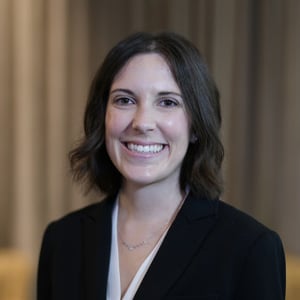
Director, Faculty Relations, The Federalist Society
Katie McClendon is the Director of Faculty Relations at the Federalist Society, where she has worked since 2015.
Katie holds a J.D. from the University of Pennsylvania Law School and a B.A. in Political Science from Biola University, where she was a member of the Torrey Honors Institute. She is a fellow of the John Jay Institute and the Blackstone Legal Fellowship. Katie is originally from Los Angeles, and she now lives with her husband and four children in Atlanta.
Former Chief Counsel, Federal Aviation Administration
Reggie Govan is former Chief Counsel of the Federal Aviation Administration’s (FAA). The Office of the Chief Counsel provides legal advice in support of the FAA Administrator and all aspects of agency operations at headquarters, regions, and centers and works closely with the Department of Transportation’s Office of General Counsel on issues of national significance to the aviation industry.
Mr. Govan previously served as a corporate counsel, litigator, and legislative counsel. Prior to joining the FAA, he served as Managing Associate General Counsel of Freddie Mac. He also served as Counsel to Chairmen Augustus H. Hawkins and William D. Ford of the United States (U.S.) House of Representatives Committee on Education and Labor, and as Counsel to the then-Chairman (now Vice President) Joseph R. Biden of the U.S. Senate Committee on the Judiciary. His litigation experience includes service as an Assistant District Attorney in Manhattan and as plaintiffs’ counsel in federal civil rights litigation, including school desegregation and voting rights cases.
After acquiring a Bachelor’s degree in Economics and Philosophy from Carnegie-Mellon University and a Juris Doctor from the University of Pennsylvania Law School, he clerked for the Honorable Nathaniel Jones of U.S. Court of Appeals for Sixth Circuit.
Mr. Govan is the author of several professional journal and law review articles. He lives in the District of Columbia.
Innovation, Cyber, and National Security Analyst, Lincoln Network
Alexiaa Jordan is a South-Side Chicagoan and new D.C transplant from Bologna, Italy. She recently attained her master’s degree from The Johns Hopkins School of Advanced International Studies (SAIS). There she focused on international economics, Strategic Studies, and Portuguese. During her time at Johns Hopkins, she started working with the international strategic consulting firm RiceHadleyGatesManuel, LLC. Before Hopkins, she’s served as a Chief of Staff within the Illinois House of Representatives and as the youngest female campaign manager in Chicago’s history; prior to that, she served with City Year Chicago to teach inner city students. As an undergraduate, she majored in molecular and cellular biology at the University of Illinois; successfully published several pieces of health policy research. With her unique intersection of STEM, economics, national security, and government affairs, she looks forward to bridging public-private relationships to improve the national security of the United States. Aside from work, she enjoys spending time with her younger sister, working with Alpha Kappa Alpha Sorority Incorporated, serving on various boards to increase the participation of women and people of color into national security spaces.
Legal Fellow, Center for Constitutional Studies, Cato Institute
Brent Skorup is a legal fellow in the Cato Institute’s Robert A. Levy Center for Constitutional Studies.
Before joining Cato, he was a senior research fellow at the Mercatus Center at the George Mason University. His research areas include free speech, technology law, Fourth Amendment protections, regulation, and property law. Skorup has published pieces in economics and law journals and in popular media, including The Wall Street Journal, The New York Times, Bloomberg Law, Reuters, and Wired. He’s appeared as a TV and radio interview guest for news outlets like C‑SPAN, NPR, CBS News, ABC News, and CNBC Asia.
The Pennsylvania Supreme Court, a dissenting opinion at the Illinois Supreme Court, and the ALI's Restatement of the Law of Property have cited his legal research and he has testified as a technology and legal expert in legislative hearings in several states. Skorup has been appointed to several federal and state advisory bodies and he is currently a member of the Texas Advanced Air Mobility Advisory Committee.
Skorup has a BA in economics from Wheaton College and a law degree from the George Mason University School of Law, where he was articles editor for the Civil Rights Law Journal. He was a legal clerk at the FCC’s wireless bureau and Office of General Counsel and at the Energy and Commerce Committee in the U.S. House of Representatives.
Executive Director, International Center for Law & Economics
Ian Adams joined ICLE as Executive Director in April 2020. He is responsible for ICLE’s strategic planning, programmatic implementation, and organizational growth. Ian’s substantive policy work focuses on the disruptive impact of burgeoning technologies on law and regulation, with a particular concentration on automation and the future of work, privacy and insurance.
Earlier in his career, Ian was Vice President of Policy at TechFreedom. Before that, he worked as Associate Vice President of Government Affairs at the R Street Institute and held staff roles in the California and Oregon state legislatures. Ian is also a public policy attorney at the international law firm of Orrick, Herrington & Sutcliffe LLP.
Ian is a graduate of Seattle University, with bachelor’s degrees in history and philosophy, and received his juris doctor from the University of Oregon. He is a member of the California, District of Columbia, and Illinois bars.

Professor of Law, South Texas College of Law Houston
Josh Blackman is a national thought leader on constitutional law and the United States Supreme Court. Josh’s work was quoted during two presidential impeachment trials. He has testified before Congress and advises federal and state lawmakers. Josh regularly appears on TV, including NBC, CBS, ABC, Fox, and the BBC. Josh is also a frequent guest on NPR and other syndicated radio programs. He has published commentaries in the New York Times, Wall Street Journal, Washington Post, and leading national publications.
Since 2012, Josh has served as a professor at the South Texas College of Law Houston. He holds the Centennial Chair of Constitutional Law. Josh is an Adjunct Fellow at the Manhattan Institute. Josh has written more than seven dozen law review articles that have been cited more than a thousand times. Josh was selected as the Jurist of the Year by the Texas Journal of Law & Public Policy, received the inaugural Meese III Originalism Award, and was awarded the Inaugural Joseph Story Award. Josh was selected by Forbes Magazine for the “30 Under 30” in Law and Policy. Josh is the President of the Harlan Institute, and founded FantasySCOTUS, the Internet’s Premier Supreme Court Fantasy League. He blogs at the Volokh Conspiracyand posts@JoshMBlackman.
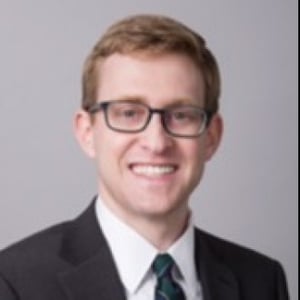
Associate Attorney, Gibson, Dunn & Crutcher
Max Schulman is an associate in the Washington, D.C. office of Gibson, Dunn & Crutcher. He practices in the firm’s Litigation Department.
Before joining the firm, Mr. Schulman served as a law clerk to the Honorable Gregory G. Katsas of the United States Court of Appeals for the District of Columbia Circuit and the Honorable Sidney H. Stein of the United States District Court for the Southern District of New York. Mr. Schulman earned his J.D. magna cum laude in 2017 from Harvard Law School, where he was an Articles Editor of the Harvard Law Review. He graduated cum laude in 2013 from Harvard College with an A.B. in Social Studies.
Mr. Schulman is admitted to practice in Maryland and the District of Columbia, and before the United States Court of Appeals for the District of Columbia Circuit and the United States District Court for the District of Columbia.
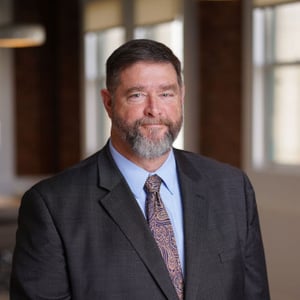
Partner, Briscoe Prows Kao Ivester & Bazel LLP
Tony Francois is experienced in Water and Real Property Law, Land Use and Zoning, Environmental Regulation, Natural Resources Development, Agricultural Law, and Constitutional Law. He has represented homeowners, builders, farmers and ranchers, trade associations, and water districts in administrative, civil, and criminal proceedings before state and federal administrative agencies and state and federal trial and appellate courts. He is a member of the California State Bar and the Northern, Eastern, and Central Districts of California and the Districts of New Mexico and North Dakota, and has litigated cases in federal courts in California, Oregon, Washington, Idaho, Montana, Nevada, Arizona, New Mexico, Colorado, North and South Dakota, Minnesota, Massachusetts, Maryland, South Carolina, and the District of Columbia, as well as the Sixth, Eighth, Ninth, and Tenth Circuit Courts of Appeals. He has appeared before the Supreme Courts of California, Idaho, Nevada, and the United States.
Prior to attending law school, he served as an infantry officer in the United States Army, and was stationed in the former West Germany during the fall of the Berlin Wall.
Tony was an Attorney at Pacific Legal Foundation from 2012 to 2021. He was a lobbyist for 10 years, first with California Farm Bureau Federation from 2003 to 2007, and then with KP Public Affairs from 2007 to 2012. He was an attorney at McQuaid, Bedford & Van Zandt in San Francisco from 1999 – 2003.
Legal Fellow, Center for Constitutional Studies, Cato Institute
Brent Skorup is a legal fellow in the Cato Institute’s Robert A. Levy Center for Constitutional Studies.
Before joining Cato, he was a senior research fellow at the Mercatus Center at the George Mason University. His research areas include free speech, technology law, Fourth Amendment protections, regulation, and property law. Skorup has published pieces in economics and law journals and in popular media, including The Wall Street Journal, The New York Times, Bloomberg Law, Reuters, and Wired. He’s appeared as a TV and radio interview guest for news outlets like C‑SPAN, NPR, CBS News, ABC News, and CNBC Asia.
The Pennsylvania Supreme Court, a dissenting opinion at the Illinois Supreme Court, and the ALI's Restatement of the Law of Property have cited his legal research and he has testified as a technology and legal expert in legislative hearings in several states. Skorup has been appointed to several federal and state advisory bodies and he is currently a member of the Texas Advanced Air Mobility Advisory Committee.
Skorup has a BA in economics from Wheaton College and a law degree from the George Mason University School of Law, where he was articles editor for the Civil Rights Law Journal. He was a legal clerk at the FCC’s wireless bureau and Office of General Counsel and at the Energy and Commerce Committee in the U.S. House of Representatives.
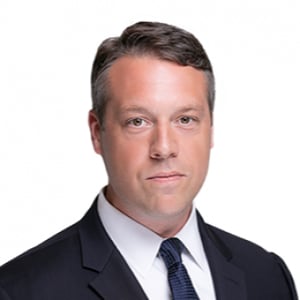
Partner, K&L Gates LLP
David Rybicki is a partner in the Washington, D.C. office of K&L Gates LLP. He is a member of the investigations, enforcement, and white collar practice group.
David recently served in the Criminal Division of the U. S. Department of Justice in Washington, D.C., as Acting Principal Deputy Assistant Attorney General (2017) and Deputy Assistant Attorney General (2017-2020), the second- and third-highest ranking positions in the division. In these roles, David led the investigation, prosecution, and coordination of nationally significant matters and initiatives involving corporate fraud, the Bank Secrecy Act, the Foreign Corrupt Practices Act (FCPA), cybercrime and cryptocurrencies, OFAC sanctions enforcement, transnational organized crime, healthcare fraud, consumer fraud, immigration fraud, civil and criminal RICO, public corruption, human rights, labor racketeering, and gaming law.
Prior to joining the Criminal Division, David served as Counselor to the Attorney General and worked on the Justice Department’s top criminal enforcement initiatives. This work included revision of the Department’s corporate enforcement policies, extension of the FCPA Pilot Program, “Going Dark” and other significant cybersecurity policy matters, Mutual Legal Assistance Treaties, marijuana enforcement and regulatory policy, and creation of the Department's new civil asset forfeiture policies and regulatory guidelines.
In 2018, David was appointed to serve as an ex officio member of the United States Sentencing Commission, where he represented the Justice Department with respect to all aspects of federal sentencing law and policy, including amendments to the Federal Sentencing Guidelines for corporate fraud and other white collar crimes.

Panel II: Presidential Lawmaking Powers: Vetoes, Line Item Vetoes, Signing Statements, Executive Orders, and Delegations of Rulemaking Authority [Archive Collection]
Frank H. Easterbrook, David M. McIntosh, Theodore B. Olson, Steven R. Ross, David S. Schoenbrod
The Presidency and Congress
On January 19-20, 1990, The Federalist Society hosted a conference at the Mayflower Hotel in...
Panel II: Presidential Lawmaking Powers: Vetoes, Line Item Vetoes, Signing Statements, Executive Orders, and Delegations of Rulemaking Authority [Archive Collection]
Frank H. Easterbrook, David M. McIntosh, Theodore B. Olson, Steven R. Ross, David S. Schoenbrod
The Presidency and Congress
On January 19-20, 1990, The Federalist Society hosted a conference at the Mayflower Hotel in...
Federalist Society Review, Volume 21
Katie McClendon
The Federalist Society Review is the legal journal produced by the Federalist Society for Law & Public...
Deep Dive Episode 153 – Reboot Conversations: The Future of Drone Policy
Reggie Govan, Alexiaa Jordan, Brent Skorup
Regulatory Transparency Project's Fourth Branch Podcast
There are nearly 500,000 commercial drones registered in the United States, far exceeding recent FAA...
Explainer Episode 21 – How is Insurance Regulated?
Ian David Adams
Regulatory Transparency Project's Fourth Branch Podcast
How is insurance regulated in the United States? How are emerging technologies disrupting the industry? And...
Jacobson v. Massachusetts [SCOTUSbrief]
Josh Blackman
Short video featuring Josh Blackman
When a smallpox outbreak swept through the town of Cambridge, Massachusetts in 1903, Rev. Henning...
Rutledge v. Pharmaceutical Care Management Association - Post-Decision SCOTUScast
Max E. Schulman
featuring Max Schulman
On December 10, 2020 the Supreme Court decided Rutledge v. Pharmaceutical Care Management Association. The...
Texas v. New Mexico - Post-Decision SCOTUScast
Tony Francois
featuring Anthony L. Francois
On December 14, 2020, the Supreme Court released its decision in Texas v. New Mexico. By a...
Tech Roundup Episode 12 – Airspace and Drone Regulations
Brent Skorup
Regulatory Transparency Project's Fourth Branch Podcast
In this episode, Brent Skorup discusses the current state of drone technology, the history of...
Cargill v. Doe I - Post-Argument SCOTUScast
David C. Rybicki
featuring David Rybicki
On December 1 2020, the Supreme Court heard oral argument in Cargill v. Doe I....