
Assistant Attorney General, U.S. Department of Justice
As head of the Criminal Division, Mr. Breuer oversees nearly 600 attorneys who prosecute federal criminal cases across the country and help develop the criminal law. He also works closely with the nation’s 94 U.S. Attorneys’ Offices in connection with the investigation and prosecution of criminal matters in their districts. Mr. Breuer is a national leader on a range of federal law enforcement priorities, including financial fraud, health care fraud, public corruption, and violence along the Southwest Border. He has also been a leading voice on policy issues related to criminal law enforcement, including the scope of prosecutors’ discovery obligations in federal criminal cases and sentencing disparities between crack and powder cocaine offenses. Mr. Breuer regularly testifies before Congress on the Administration’s policy initiatives and advises the Attorney General and the White House on matters of criminal law. Mr. Breuer also serves as the Department's representative on the Atrocities Prevention Board, which President Obama announced in April 2012. For his work as Assistant Attorney General, the National Law Journal named Mr. Breuer a "Visionary" in the Washington, D.C. legal community, and he was recently ranked sixth on Ethisphere’s list of The 100 Most Influential People in Business Ethics.
Mr. Breuer began his legal career in 1985 as an Assistant District Attorney in Manhattan, where he prosecuted violent crime, such as armed robbery and gang violence, white collar crime, and other offenses. In 1989, he joined the law firm of Covington & Burling LLP, where he worked until 1997, when he joined the White House Counsel’s Office as Special Counsel to President William Jefferson Clinton. As Special Counsel, Mr. Breuer assisted in defending President Clinton in the Senate impeachment trial.
Mr. Breuer returned to Covington in 1999 as co-chair of the White Collar Defense and Investigations practice group, where he specialized in white collar criminal defense and complex civil litigation and represented individuals and corporations in matters involving high-stakes legal risks. He also vice-chaired the firm’s Public Service Committee. At Covington, Mr. Breuer developed a reputation as one of the top defense lawyers in the country. He has been recognized as a leading litigator by numerous publications, including American Lawyer ("45 Under 45"), Chambers USA, The Best Lawyers in America, Guide to the World’s Leading White Collar Crime Lawyers, The International Who’s Who of Business Lawyers, and Washingtonian ("Big Guns"). He is a Fellow of the American College of Trial Lawyers, a Barrister of the Edward Bennett Williams Inn of Court, and a member of the American Law Institute.
Mr. Breuer received his B.A. from Columbia College in 1980 and his J.D. from Columbia Law School in 1985.
Partner, Paul, Weiss, Rifkind, Wharton & Garrison LLP
A partner in the Litigation Department, Mark Mendelsohn is Chair of the FCPA Group, and a member of the White Collar Crime and Regulatory Defense, Internal Investigations, and Securities Litigation Practice Groups. Prior to joining Paul, Weiss, Mark served as the deputy chief of the Fraud Section of the Criminal Division of the United States Department of Justice (DOJ), and is internationally acknowledged and respected as the architect and key enforcement official of DOJ’s modern Foreign Corrupt Practices Act (FCPA) enforcement program.
As deputy chief of the Fraud Section from 2005 to 2010, Mark was responsible for overseeing all DOJ investigations and prosecutions under the FCPA, and for supervising a team of trial attorneys with respect to investigations and prosecutions of a wide variety of federal white collar crimes including money laundering, mail and wire fraud, procurement fraud, Arms Export Control Act and International Traffic in Arms Regulations (ITAR) violations, and violations of economic and trade sanctions laws and regulations, including with respect to the United Nations Oil for Food Program. During his tenure, Mark handled hundreds of voluntary disclosures of illicit corporate payments, worked closely with attorneys in the Division of Enforcement at the U.S. Securities and Exchange Commission, helped establish and worked closely with the Federal Bureau of Investigation's FCPA squad at the Washington Field Office, negotiated numerous corporate plea, deferred and non-prosecution agreements on behalf of DOJ, and participated in the appointment of, interaction with, and reporting by more than 16 corporate compliance monitors. Mark led an effort to forge closer working relationships with foreign regulators in connection with transnational bribery cases, resulting in coordinated settlements with the Munich Public Prosecutor in Germany in the Siemens prosecutions and coordinated settlements with the U.K.'s Serious Fraud Office in the BAE and Innospec prosecutions, among others. Mark was also responsible for administering DOJ's FCPA Opinion Release Procedure, including issuing the seminal opinion on FCPA transactional diligence and successor liability (Op. Rel. 08-02).
In addition to case-related responsibilities, Mark had significant policy responsibilities, including principal policy responsibilities related to the Organisation for Economic Co-operation and Development (OECD) Anti-bribery Convention. As a member of the U.S. delegation to the OECD Bribery Working Group, Mark served as a lead examiner for the follow-up review of Japan's implementation of the OECD Anti-bribery Convention, played a key role in peer review of the United Kingdom including consultation regarding its Bribery Act of 2010, negotiated the 2009 Anti-Bribery Recommendation, and played a leading role in the drafting and adoption of the OECD's "Good Practice Guidance on Internal Controls, Ethics and Compliance."
During his tenure administering the DOJ's FCPA enforcement program, the DOJ brought more than 50 prosecutions against corporations for violations of the FCPA and related offenses, resulting in more than $1.5 billion in criminal penalties. During that same period, DOJ brought approximately 80 prosecutions against individuals. Among the notable prosecutions were the following: U.S. v. Siemens AG, et al.; U.S. v. Kellogg Brown & Root, LLC and U.S. v. Albert "Jack" Stanley; U.S. v. Congressman William J. Jefferson; U.S. v.BAE Systems plc; U.S. v. Baker Hughes, et al.; U.S. v. Titan Corp.; U.S. v. Statoil ASA; U.S. v.Monsanto; Lucent Technologies, Inc.; U.S. v. Willbros Group, Inc., et al.; U.S. v. Christian Sapsizian, et al.; U.S. v. Viktor Kozeny and Frederick Bourke, Jr.; U.S. v. Gerald and Patricia Green; U.S. v. Innospec, Inc.; and U.S. v. Daimler AG.
Prior to joining the Fraud Section, Mark was senior counsel in the DOJ's Computer Crime and Intellectual Property Section in Washington, D.C., and prior to that served for nearly six years as an assistant U.S. attorney in the U.S. Attorney's Office in the Southern District of New York. During his service with the U.S. Attorney's Office, Mark tried numerous cases to verdict and argued several appeals before the United States Court of Appeals for the Second Circuit. As a federal prosecutor, Mark was a recipient of the Attorney General's Award for Distinguished Service for the "Investigation into Corrupt Payments by Siemens AG," and a recipient of the Assistant Attorney General's Award for "The Safeguarding and Maintenance of Confidence in the American Marketplace." Mark has been recognized by Ethisphere Institute in 2011 as a "Top Gun" among "Attorneys Who Matter," in 2009 as a "Government Star" among "Attorneys Who Matter In Corporate Compliance," and in 2007 and 2008 as one of the "100 Most Influential People in Business Ethics." In 2010 and 2011, Mark was selected as one of the 2010 Lawdragon "500 Leading Lawyers in America." Mark is also ranked by Chambers as an International Trade/FCPA expert.
Mark has spoken frequently as a faculty member, panelist and keynote speaker at numerous FCPA, anti-corruption, corporate compliance, securities fraud, money laundering, and white collar crime programs and conferences. He teaches International Criminal Law as a visiting professor at the University of Virginia School of Law and has also been an adjunct lecturer-in-law at Columbia Law School. Mark is member of the Edward Bennett Williams Inn of Court and a member of the Board of Directors of Transparency International-USA.
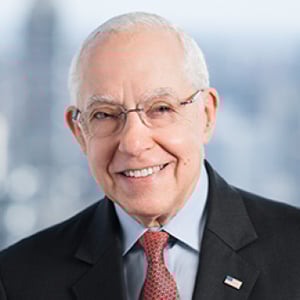
Former United States Attorney General
Michael B. Mukasey is the former Attorney General of the United States, the nation’s chief law enforcement officer. As Attorney General from November 2007 to January 2009, he oversaw the U.S. Department of Justice and advised on critical issues of domestic and international law.
From 1988 to 2006, Judge Mukasey served as a district judge in the United States District Court for the Southern District of New York, becoming Chief Judge in 2000.
From 1972 to 1976, Judge Mukasey served as an Assistant United States Attorney for the Southern District of New York, and as Chief of the Official Corruption Unit from 1975 to 1976. His practice consisted of criminal litigation on behalf of the government, including investigation and prosecution of narcotics, bank robbery, interstate theft, securities fraud, fraud on the government and bribery. From 1976 to 1987 and from 2006 to 2007 he was in private practice.
Judge Mukasey has received numerous honors, including the Federal Bar Council’s Learned Hand Medal for Excellence in Federal Jurisprudence. He served as Chairman of the Committee on Public Access to Information and Proceedings of the New York Bar Association from 1984 to 1987. He served on the Federal Courts Committee of the Association of the Bar of the City of New York from 1979 to 1982 and its Communications Law Committee from 1983 to 1986. Judge Mukasey was also a part-time lecturer at Columbia School of Law from January 1993 to May 2007, teaching trial advocacy.
He received his LL.B. from Yale Law School in 1967 and his B.A. from Columbia College in 1963.

Chief Judge, United States Court of Appeals, Eleventh Circuit
William H. Pryor Jr. serves as Chief Circuit Judge on the United States Court of Appeals for the Eleventh Circuit.
In 2013–18, he served on the United States Sentencing Commission and, in 2017–18, served as Acting Chair.
He has taught as a visiting professor at the University of Alabama School of Law and previously taught as an adjunct professor at the Cumberland School of Law of Samford University.
He served as the 45th Attorney General of Alabama from 1997 to 2004. When he took office, he was the youngest attorney general in the nation. In his reelection, he received the highest percentage of votes of any statewide candidate.
He graduated magna cum laude from Tulane Law School where he finished first in the common-law curriculum and was editor in chief of the Tulane Law Review. He then served as a law clerk for Judge John Minor Wisdom of the U.S. Court of Appeals for the Fifth Circuit.
He is a member of The American Law Institute and an Adviser for the RESTATEMENT OF THE LAW THIRD, CONFLICT OF LAWS. He is a coauthor with Bryan Garner, Justices Gorsuch and Kavanaugh, and several other judges of a treatise, THE LAW OF JUDICIAL PRECEDENT. He has published in the Yale Law Journal, Columbia Law Review, Virginia Law Review, Notre Dame Law Review, Harvard Journal of Law & Public Policy, Yale Law & Policy Review, George Mason Law Review, Florida Law Review, Alabama Law Review, Case Western Reserve Law Review, and Tulane Law Review. He has published op-eds in The Wall Street Journal, The New York Times, National Review, and USA Today. He has debated at National Lawyers’ Conventions of the Federalist Society (including on National Public Radio) and at the Oxford Union in the United Kingdom. And he is listed among several “widely admired judicial writers” in Bryan Garner’s The Redbook: A Manual on Legal Style.
He is a member of the Tulane Law School Hall of Fame and has received the Defender of the Constitution Award from the Heritage Foundation, the Jurist of the Year Award from the Texas Review of Law & Politics, and the St. Thomas More Award from the St. Thomas More Society of Atlanta. Judge Pryor is also a proud member of the National Society of the Sons of the American Revolution.
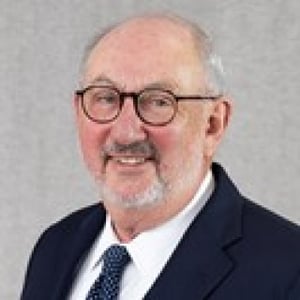
Partner, McGuireWoods LLP
George Terwilliger is co-head of the firm's white collar practice and leads the firm's Strategic Response and Crisis Management practice group. Following his fifteen years of public service in the US Department of Justice, where he began as a law clerk and concluded as Acting Attorney General, George has provided counsel in government and internal investigations, agency enforcement proceedings and in civil and criminal litigation. He has represented many of the nation's and the world's largest corporations, including major financial institutions, energy companies, public institutions as well as leading business and government officials, including members of the US Senate and House as well as cabinet officials. He has also represented lawyers and corporate legal departments in investigations. As a result of both his private sector work and government positions, George is called upon to provide counsel as well as commentary to government officials, Congress and private organizations on national security, homeland defense, terrorism, and other public policy and legal issues. George's work regularly involves providing counsel in the executive suites and boardrooms of major corporations.
In private practice for international law firms, George has represented national and international financial, energy, telecommunications, industrial and healthcare companies. He is a recognized expert in leading credible corporate internal investigations and his experience designing and executing both targeted and global legal compliance reviews has involved work in more than 60 countries around the globe. George is an expert on the Foreign Corrupt Practices Act and regularly provides counsel to companies addressing FCPA issues. No stranger to high stakes litigation and crisis events, George helped lead the Bush-Cheney legal team in the 2000 Florida vote recount, served as special outside counsel to a Senate committee investigating vote fraud allegations, served as counsel to an executive commission on gambling, and has represented many clients in politically charged election law and similar cases. He has guided corporations and individual through high stakes matters of intense public interest. He represented an incumbent president in First Amendment litigation concerning the right to have an inaugural prayer said in a public ceremony.
At the Department of Justice, George served for 10 years as a frontline federal prosecutor, handling hundreds of investigations, trials and appeals, including in white collar and national security cases. President Ronald Reagan appointed him as a U.S. attorney, and he next served as the deputy attorney general and as acting attorney general during the George H.W. Bush administration. As Deputy Attorney General, George ran the Justice Department's operations, overseeing all the nation's federal prosecutors, as well as the FBI and other law enforcement agencies. He also had leadership responsibility in several national and international crises, including a hostage-taking in a federal prison and the federal law enforcement response to domestic unrest in Los Angeles. In several instances, he personally handled negotiations of high-profile criminal and civil matters in the United States and abroad.
Partner, Gibson Dunn & Crutcher
Douglas R. Cox is a partner in the Washington, D.C. office of Gibson, Dunn & Crutcher and Vice-Chair of the firm's Crisis Management Practice Group. He practices in the areas of constitutional and general commercial litigation, appellate law, and governmental matters.
Mr. Cox has represented numerous clients in litigation before federal and state trial and appellate courts. He played a principal role in the firm's successful representation of the prevailing candidate before the Supreme Court of the United States in Bush v. Palm Beach County Canvassing Board and Bush v. Gore, stemming from the 2000 presidential election, and in other cases before the Supreme Court involving equal protection, voting rights and election law, the scope of the jury trial right under the Seventh Amendment, and other constitutional and statutory issues.
Mr. Cox successfully represented the National Association of Securities Dealers ("NASD") in a series of trial and appellate matters, including DL Capital Group, LLC v. Nasdaq Stock Market, Inc., 409 F.3d 93 (2d Cir. 2005) and Sparta Surgical Corp. v. NASD, 159 F.3d 1209 (9th Cir. 1998).
Mr. Cox frequently represents accounting firms in a variety of matters, including matters involving the SEC and PCAOB. He also has substantial experience representing clients before congressional investigating committees.
Mr. Cox previously served for five years during the Reagan and Bush Administrations in the Justice Department's Office of Legal Counsel, becoming Principal Deputy Assistant Attorney General during the Bush Administration. In that Office, he provided legal advice to Executive Branch departments; resolved legal disputes on behalf of the Attorney General between Executive Branch departments; prepared formal opinions of the Attorney General; drafted and issued opinions on legal issues of importance to the Executive Branch; and advised Congress as to the constitutionality of pending legislation.
From 1981 through 1987, Mr. Cox practiced in New York City with a national firm, representing major corporations in state and federal courts. His practice focused on intellectual property, securities, and international tax litigation.
Mr. Cox received his law degree, cum laude, from Harvard Law School in 1980, where he served as Editor-in-Chief of the Harvard Journal of Law and Public Policy from 1979-1980. He received his undergraduate degree in history, magna cum laude, from Princeton University in 1977. He attended Oxford University on a Knox Scholarship in 1980-1981.
In 2005, Chief Justice Rehnquist appointed Mr. Cox to serve as a member of the Judicial Conference Standing Committee on Rules of Practice and Procedure. In 2008 he was reappointed by Chief Justice Roberts.
Partner, Goldstein & Russell PC
Thomas C. Goldstein has argued 28 cases before the Supreme Court, including matters involving federal patent law, class action practice, labor and employment, and disability law. In addition to practicing law, Tom teaches Supreme Court Litigation at Harvard Law School and taught at Stanford Law School as well from 2004-2012.
In the Supreme Court and elsewhere, Mr. Goldstein litigates and advises clients in a broad range of issues. For example, he regularly litigates and lectures on questions of federal patent law. Mr. Goldstein frequently advises clients, litigates, and consults on legislative matters relating to the First Amendment. And he regularly represents parties in questions relating to the game of poker, including its lawfulness as a matter of federal and state law. Tom's clients include plaintiffs, criminal defendants, and major corporations such as BG Group, Home Depot, Humana, IMS Health, Nike, PokerStars, POM Wonderful, and Pemex.
In addition to practicing law, Tom founded, and is the publisher of, SCOTUSblog, which in 2013 became the only weblog ever to receive the Peabody Award for excellence in electronic media. It also won the 2013 Society of Professional Journalists (Sigma Delta Chi) prize for deadline reporting for its coverage of the Supreme Court’s healthcare ruling. In 2010, it became the first blog to receive the American Bar Association’s Silver Gavel Award for fostering the American public’s understanding of law and the legal system.
Tom has been repeatedly recognized as a leading member of the bar. In 2010, The National Law Journal named him one of the 40 most influential lawyers of the decade; Tom notably was ten years younger than any other law firm partner listed. Legal Times named him one of the “90 Greatest Washington Lawyers of the Last 30 Years” and praised him for “transforming the practice” of law before the Supreme Court. He is also included in both of the National Law Journal’s most recent lists of the nation’s 100 most influential lawyers (2006 and 2013). He has been repeatedly recognized as one of the nation’s top appellate advocates. GQ Magazine named him one of the 50 most powerful people in Washington, D.C.
Tom is an elected Fellow of the American Academy of Appellate Lawyers, and a member of the American Law Institute. He is involved with a number of professional organizations. He serves as the vice chair of the Amicus Committee of the ABA’s Intellectual Property Section and previously served for two years on the ABA’s Standing Committee on Amicus Curiae Briefs. In those capacities, he has authored several Supreme Court amicus briefs for the ABA. In addition, Tom serves on the boards of advisors of the Washington Legal Foundation and the Georgetown University Supreme Court Institute.
Before founding Goldstein & Howe in 1999, Tom practiced law at Boies & Schiller, LLP and at Jones Day Reavis & Pogue. Tom left the firm he founded in 2006 to create the Supreme Court Practice at Akin, Gump, Strauss, Hauer & Feld, where he also was a partner and principal co-chair of the firmwide litigation practice. He returned to what is now Goldstein & Russell in 2011.
Tom clerked for the Honorable Patricia M. Wald of the U.S. Court of Appeals for the D.C. Circuit.
Professor of Law, Georgetown University Law Center
Nicholas Quinn Rosenkranz teaches constitutional law and federal jurisdiction, and he writes articles for the Harvard Law Review and the Stanford Law Review.
He is currently developing a new theory of constitutional interpretation and judicial review. The first installment, entitledThe Subjects of the Constitution, was published in the Stanford Law Review in May of 2010, and it is among the most downloaded articles about constitutional interpretation, judicial review, and/or federal courts in the history of SSRN. The second installment, The Objects of the Constitution, was published in May of 2011, also in the Stanford Law Review. And the comprehensive version is forthcoming as a book by Oxford University Press.
Rosenkranz has served and advised the federal government in a variety of capacities. He clerked for Judge Frank H. Easterbrook on the U.S. Court of Appeals for the Seventh Circuit (1999-2000) and for Justice Anthony M. Kennedy at the U.S. Supreme Court (October Term 2001). He served as an Attorney-Advisor at the Office of Legal Counsel in the U.S. Department of Justice (November 2002 - July 2004). He often testifies before Congress as a constitutional expert—most recently before the House Financial Services Oversight Subcommittee, regarding the Obama Administration's use of bank settlement agreements to circumvent the Appropriations Clause. He has also filed briefs and presented oral argument before the U.S. Supreme Court. His most recent Supreme Court brief, in Los Angeles v. Patel, was cited by Justice Alito in dissent.
Rosenkranz is a member of the New York Bar and the U.S. Supreme Court Bar. He is a Senior Fellow at the Cato Institute. He serves on the Board of Directors of the Foundation for Individual Rights in Education (FIRE). He is a founding member of Heterodox Academy and a member of its Executive Committee. He also serves on the Board of Directors of the Federalist Society and as the faculty advisor to the Georgetown chapter.
President, JCN
Carrie Campbell Severino is the president of the JCN, and co-author with Mollie Hemingway of the bestselling book Justice on Trial: The Kavanaugh Confirmation and the Future of the Court. As a go-to expert on the confirmation process, Mrs. Severino has been extensively quoted in the media. She regularly appears on television, including FOX, CNN, MSNBC, C-SPAN, and ABC’s This Week.
Severino writes and speaks on a wide range of judicial issues, including the constitutional limits on government, the federal nomination process, and state judicial selection. She has testified before Congress on constitutional questions and briefed Senators on judicial nominations, and regularly files briefs in high-profile Supreme Court cases. She was a law clerk to Supreme Court Justice Clarence Thomas and to Judge David B. Sentelle of the U.S. Court of Appeals for the D.C. Circuit, and is a graduate of Harvard Law School (J.D.), Duke University (B.A., Biology), and Michigan State University (M.A., Linguistics).

Freelance Journalist and Author
Stuart Taylor, Jr. is a Washington writer focusing on legal and policy issues and a National Journal contributing editor. He occasionally practices law.
Taylor has coauthored three books. All have been acclaimed by commentators across the ideological spectrum. In January 2017, KC Johnson and Taylor authored The Campus Rape Frenzy: The Attack on Due Process at America's Universities. In 2012, Richard Sander and Taylor authored Mismatch: How Affirmative Action Hurts Students It's Intended to Help, and Why Universities Won't Admit It. In 2007, Taylor and Johnson authored Until Proven Innocent: Political Correctness and the Shameful Injustices of the Duke Lacrosse Rape Fraud. Sander and Taylor have also filed amicus briefs in Supreme Court cases involving admissions preferences.
Since 1980, Taylor has done reporting and commentary about issues ranging from the biggest Supreme Court cases to race, voting rights, mindlessly excessive criminal penalties, guilt-presuming campus rape processes, journalistic bias, the death penalty, war powers, gerrymandering, guns, polarization, civil liberties, national security, torture, campaign finance, education, impeachment, and other issues. He has often been called one of the nation's best legal journalists and is known for challenging both liberal and conservative conventional wisdom.
Taylor was a reporter for The New York Times from 1980-1988, covering legal affairs and then the Supreme Court. He wrote commentaries and long features for The American Lawyer, Legal Times and their affiliates from 1989-1997, and for National Journal and Newsweek from 1998 through 2010. He has written (less often) on a freelance basis for numerous publications since 2010. He has written op-eds for The Washington Post, The New York Times, The Wall Street Journal, The Los Angeles Times, USA Today, and The New York Daily News and longer commentaries for RealClearPolitics, The Atlantic, The New Republic, the (late) Weekly Standard, National Review, Slate, The Daily Beast, Harper’s, Reader’s Digest, Time and other magazines. He has been interviewed on all major television and radio networks. He taught “Law and the News Media” at Stanford Law School in 2011 and 2012 and practices law on occasion.
Taylor graduated from Princeton University in 1970 with an A.B. in History. After working as a reporter for the Baltimore Evening Sun and Sun from 1971-1974, he moved to Harvard Law School, was a Harvard Law Review note editor, and graduated in 1977 at the top of his class, with high honors. He also won a Frederick Sheldon Traveling Fellowship and traveled around the world in 1977-1978 while studying freedom of the press in the United Kingdom and Kenya.
Taylor practiced law with Wilmer, Cutler & Pickering, in Washington, D.C., from 1977-1980 before returning to journalism in 1980 by joining the Washington Bureau of The New York Times.
Taylor's journalism honors include the 2009 Northern California Innocence Project Media Award for his work on the Duke lacrosse rape fraud; a 2002 National Headliner Award for best special magazine column on one subject; and a share of The American Lawyer’s National Magazine Award for a March 1990 special issue on the drug war. He was a National Magazine Award finalist in 1993 and 1997 and was nominated by The New York Times for a Pulitzer Prize in 1988.
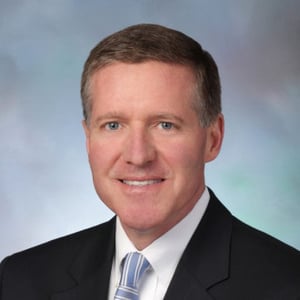
Partner, Davis Polk & Wardwell LLP
Kenneth Wainstein is a partner at Davis Polk & Wardwell, where he focuses his practice on corporate internal investigations and civil and criminal enforcement proceedings. Ken spent over 20 years in a variety of law enforcement and national security positions in the government. Between 1989 and 2001, Ken served as an Assistant U.S. Attorney in both the Southern District of New York and the District of Columbia, where he handled criminal prosecutions ranging from public corruption to gang prosecution cases and held a variety of supervisory positions, including Acting United States Attorney. In 2001, he was appointed Director of the Executive Office for U.S. Attorneys, where he provided oversight and support to the 94 U.S. Attorneys’ Offices. Between 2002 and 2004, Ken served as General Counsel of the Federal Bureau of Investigation and then as Chief of Staff to Director Robert S. Mueller III. In 2004, Ken was appointed and then confirmed as United States Attorney for the District of Columbia, where he had the privilege to lead the largest United States Attorney’s Office in the country. In 2006, the U.S. Senate confirmed Ken as the first Assistant Attorney General for National Security. In that position, Ken established and led the new National Security Division, which consolidated DOJ’s law enforcement and intelligence activities on counterterrorism and counterintelligence matters. In 2008, after 19 years at the Justice Department, Ken was named Homeland Security Advisor by President George W. Bush. In this capacity, he coordinated the nation’s counterterrorism, homeland security, infrastructure protection, and disaster response and recovery efforts. He advised the President, convened and chaired meetings of the Cabinet Officers on the Homeland Security Council, and oversaw the inter-agency coordination process for homeland security and counterterrorism programs.
NBC News Justice Correspondent
Pete Williams is an NBC News correspondent based in Washington, D.C. He has been covering the Justice Department and the U.S. Supreme Court since March 1993. Williams was also a key reporter on the Microsoft anti-trust trial and Judge Jackson's decision.
Prior to joining NBC, Williams served as a press official on Capitol Hill for many years. In 1986 he joined the Washington, DC staff of then Congressman Dick Cheney as press secretary and a legislative assistant. In 1989, when Cheney was named Assistant Secretary of Defense, Williams was appointed Assistant Secretary of Defense for Public Affairs. While in that position, Williams was named Government Communicator of the Year in 1991 by the National Association of Government Communicators.
A native of Casper, Wyo. and a 1974 graduate of Stanford University, Williams was a reporter and news director at KTWO-TV and Radio in Casper from 1974 to 1985. Working with the Radio-Television News Directors Association, for which he served as a member of its board of directors, he successfully lobbied the Wyoming Supreme Court to permit broadcast coverage of its proceedings and twice sued Wyoming judges over pre-trial exclusion of reporters from the courtroom. For these efforts, he received a First Amendment Award from the Society of Professional Journalists.
Partner, Gibson Dunn & Crutcher
Douglas R. Cox is a partner in the Washington, D.C. office of Gibson, Dunn & Crutcher and Vice-Chair of the firm's Crisis Management Practice Group. He practices in the areas of constitutional and general commercial litigation, appellate law, and governmental matters.
Mr. Cox has represented numerous clients in litigation before federal and state trial and appellate courts. He played a principal role in the firm's successful representation of the prevailing candidate before the Supreme Court of the United States in Bush v. Palm Beach County Canvassing Board and Bush v. Gore, stemming from the 2000 presidential election, and in other cases before the Supreme Court involving equal protection, voting rights and election law, the scope of the jury trial right under the Seventh Amendment, and other constitutional and statutory issues.
Mr. Cox successfully represented the National Association of Securities Dealers ("NASD") in a series of trial and appellate matters, including DL Capital Group, LLC v. Nasdaq Stock Market, Inc., 409 F.3d 93 (2d Cir. 2005) and Sparta Surgical Corp. v. NASD, 159 F.3d 1209 (9th Cir. 1998).
Mr. Cox frequently represents accounting firms in a variety of matters, including matters involving the SEC and PCAOB. He also has substantial experience representing clients before congressional investigating committees.
Mr. Cox previously served for five years during the Reagan and Bush Administrations in the Justice Department's Office of Legal Counsel, becoming Principal Deputy Assistant Attorney General during the Bush Administration. In that Office, he provided legal advice to Executive Branch departments; resolved legal disputes on behalf of the Attorney General between Executive Branch departments; prepared formal opinions of the Attorney General; drafted and issued opinions on legal issues of importance to the Executive Branch; and advised Congress as to the constitutionality of pending legislation.
From 1981 through 1987, Mr. Cox practiced in New York City with a national firm, representing major corporations in state and federal courts. His practice focused on intellectual property, securities, and international tax litigation.
Mr. Cox received his law degree, cum laude, from Harvard Law School in 1980, where he served as Editor-in-Chief of the Harvard Journal of Law and Public Policy from 1979-1980. He received his undergraduate degree in history, magna cum laude, from Princeton University in 1977. He attended Oxford University on a Knox Scholarship in 1980-1981.
In 2005, Chief Justice Rehnquist appointed Mr. Cox to serve as a member of the Judicial Conference Standing Committee on Rules of Practice and Procedure. In 2008 he was reappointed by Chief Justice Roberts.
Partner, Goldstein & Russell PC
Thomas C. Goldstein has argued 28 cases before the Supreme Court, including matters involving federal patent law, class action practice, labor and employment, and disability law. In addition to practicing law, Tom teaches Supreme Court Litigation at Harvard Law School and taught at Stanford Law School as well from 2004-2012.
In the Supreme Court and elsewhere, Mr. Goldstein litigates and advises clients in a broad range of issues. For example, he regularly litigates and lectures on questions of federal patent law. Mr. Goldstein frequently advises clients, litigates, and consults on legislative matters relating to the First Amendment. And he regularly represents parties in questions relating to the game of poker, including its lawfulness as a matter of federal and state law. Tom's clients include plaintiffs, criminal defendants, and major corporations such as BG Group, Home Depot, Humana, IMS Health, Nike, PokerStars, POM Wonderful, and Pemex.
In addition to practicing law, Tom founded, and is the publisher of, SCOTUSblog, which in 2013 became the only weblog ever to receive the Peabody Award for excellence in electronic media. It also won the 2013 Society of Professional Journalists (Sigma Delta Chi) prize for deadline reporting for its coverage of the Supreme Court’s healthcare ruling. In 2010, it became the first blog to receive the American Bar Association’s Silver Gavel Award for fostering the American public’s understanding of law and the legal system.
Tom has been repeatedly recognized as a leading member of the bar. In 2010, The National Law Journal named him one of the 40 most influential lawyers of the decade; Tom notably was ten years younger than any other law firm partner listed. Legal Times named him one of the “90 Greatest Washington Lawyers of the Last 30 Years” and praised him for “transforming the practice” of law before the Supreme Court. He is also included in both of the National Law Journal’s most recent lists of the nation’s 100 most influential lawyers (2006 and 2013). He has been repeatedly recognized as one of the nation’s top appellate advocates. GQ Magazine named him one of the 50 most powerful people in Washington, D.C.
Tom is an elected Fellow of the American Academy of Appellate Lawyers, and a member of the American Law Institute. He is involved with a number of professional organizations. He serves as the vice chair of the Amicus Committee of the ABA’s Intellectual Property Section and previously served for two years on the ABA’s Standing Committee on Amicus Curiae Briefs. In those capacities, he has authored several Supreme Court amicus briefs for the ABA. In addition, Tom serves on the boards of advisors of the Washington Legal Foundation and the Georgetown University Supreme Court Institute.
Before founding Goldstein & Howe in 1999, Tom practiced law at Boies & Schiller, LLP and at Jones Day Reavis & Pogue. Tom left the firm he founded in 2006 to create the Supreme Court Practice at Akin, Gump, Strauss, Hauer & Feld, where he also was a partner and principal co-chair of the firmwide litigation practice. He returned to what is now Goldstein & Russell in 2011.
Tom clerked for the Honorable Patricia M. Wald of the U.S. Court of Appeals for the D.C. Circuit.
Professor of Law, Georgetown University Law Center
Nicholas Quinn Rosenkranz teaches constitutional law and federal jurisdiction, and he writes articles for the Harvard Law Review and the Stanford Law Review.
He is currently developing a new theory of constitutional interpretation and judicial review. The first installment, entitledThe Subjects of the Constitution, was published in the Stanford Law Review in May of 2010, and it is among the most downloaded articles about constitutional interpretation, judicial review, and/or federal courts in the history of SSRN. The second installment, The Objects of the Constitution, was published in May of 2011, also in the Stanford Law Review. And the comprehensive version is forthcoming as a book by Oxford University Press.
Rosenkranz has served and advised the federal government in a variety of capacities. He clerked for Judge Frank H. Easterbrook on the U.S. Court of Appeals for the Seventh Circuit (1999-2000) and for Justice Anthony M. Kennedy at the U.S. Supreme Court (October Term 2001). He served as an Attorney-Advisor at the Office of Legal Counsel in the U.S. Department of Justice (November 2002 - July 2004). He often testifies before Congress as a constitutional expert—most recently before the House Financial Services Oversight Subcommittee, regarding the Obama Administration's use of bank settlement agreements to circumvent the Appropriations Clause. He has also filed briefs and presented oral argument before the U.S. Supreme Court. His most recent Supreme Court brief, in Los Angeles v. Patel, was cited by Justice Alito in dissent.
Rosenkranz is a member of the New York Bar and the U.S. Supreme Court Bar. He is a Senior Fellow at the Cato Institute. He serves on the Board of Directors of the Foundation for Individual Rights in Education (FIRE). He is a founding member of Heterodox Academy and a member of its Executive Committee. He also serves on the Board of Directors of the Federalist Society and as the faculty advisor to the Georgetown chapter.
President, JCN
Carrie Campbell Severino is the president of the JCN, and co-author with Mollie Hemingway of the bestselling book Justice on Trial: The Kavanaugh Confirmation and the Future of the Court. As a go-to expert on the confirmation process, Mrs. Severino has been extensively quoted in the media. She regularly appears on television, including FOX, CNN, MSNBC, C-SPAN, and ABC’s This Week.
Severino writes and speaks on a wide range of judicial issues, including the constitutional limits on government, the federal nomination process, and state judicial selection. She has testified before Congress on constitutional questions and briefed Senators on judicial nominations, and regularly files briefs in high-profile Supreme Court cases. She was a law clerk to Supreme Court Justice Clarence Thomas and to Judge David B. Sentelle of the U.S. Court of Appeals for the D.C. Circuit, and is a graduate of Harvard Law School (J.D.), Duke University (B.A., Biology), and Michigan State University (M.A., Linguistics).
Freelance Journalist and Author
Stuart Taylor, Jr. is a Washington writer focusing on legal and policy issues and a National Journal contributing editor. He occasionally practices law.
Taylor has coauthored three books. All have been acclaimed by commentators across the ideological spectrum. In January 2017, KC Johnson and Taylor authored The Campus Rape Frenzy: The Attack on Due Process at America's Universities. In 2012, Richard Sander and Taylor authored Mismatch: How Affirmative Action Hurts Students It's Intended to Help, and Why Universities Won't Admit It. In 2007, Taylor and Johnson authored Until Proven Innocent: Political Correctness and the Shameful Injustices of the Duke Lacrosse Rape Fraud. Sander and Taylor have also filed amicus briefs in Supreme Court cases involving admissions preferences.
Since 1980, Taylor has done reporting and commentary about issues ranging from the biggest Supreme Court cases to race, voting rights, mindlessly excessive criminal penalties, guilt-presuming campus rape processes, journalistic bias, the death penalty, war powers, gerrymandering, guns, polarization, civil liberties, national security, torture, campaign finance, education, impeachment, and other issues. He has often been called one of the nation's best legal journalists and is known for challenging both liberal and conservative conventional wisdom.
Taylor was a reporter for The New York Times from 1980-1988, covering legal affairs and then the Supreme Court. He wrote commentaries and long features for The American Lawyer, Legal Times and their affiliates from 1989-1997, and for National Journal and Newsweek from 1998 through 2010. He has written (less often) on a freelance basis for numerous publications since 2010. He has written op-eds for The Washington Post, The New York Times, The Wall Street Journal, The Los Angeles Times, USA Today, and The New York Daily News and longer commentaries for RealClearPolitics, The Atlantic, The New Republic, the (late) Weekly Standard, National Review, Slate, The Daily Beast, Harper’s, Reader’s Digest, Time and other magazines. He has been interviewed on all major television and radio networks. He taught “Law and the News Media” at Stanford Law School in 2011 and 2012 and practices law on occasion.
Taylor graduated from Princeton University in 1970 with an A.B. in History. After working as a reporter for the Baltimore Evening Sun and Sun from 1971-1974, he moved to Harvard Law School, was a Harvard Law Review note editor, and graduated in 1977 at the top of his class, with high honors. He also won a Frederick Sheldon Traveling Fellowship and traveled around the world in 1977-1978 while studying freedom of the press in the United Kingdom and Kenya.
Taylor practiced law with Wilmer, Cutler & Pickering, in Washington, D.C., from 1977-1980 before returning to journalism in 1980 by joining the Washington Bureau of The New York Times.
Taylor's journalism honors include the 2009 Northern California Innocence Project Media Award for his work on the Duke lacrosse rape fraud; a 2002 National Headliner Award for best special magazine column on one subject; and a share of The American Lawyer’s National Magazine Award for a March 1990 special issue on the drug war. He was a National Magazine Award finalist in 1993 and 1997 and was nominated by The New York Times for a Pulitzer Prize in 1988.
Partner, Davis Polk & Wardwell LLP
Kenneth Wainstein is a partner at Davis Polk & Wardwell, where he focuses his practice on corporate internal investigations and civil and criminal enforcement proceedings. Ken spent over 20 years in a variety of law enforcement and national security positions in the government. Between 1989 and 2001, Ken served as an Assistant U.S. Attorney in both the Southern District of New York and the District of Columbia, where he handled criminal prosecutions ranging from public corruption to gang prosecution cases and held a variety of supervisory positions, including Acting United States Attorney. In 2001, he was appointed Director of the Executive Office for U.S. Attorneys, where he provided oversight and support to the 94 U.S. Attorneys’ Offices. Between 2002 and 2004, Ken served as General Counsel of the Federal Bureau of Investigation and then as Chief of Staff to Director Robert S. Mueller III. In 2004, Ken was appointed and then confirmed as United States Attorney for the District of Columbia, where he had the privilege to lead the largest United States Attorney’s Office in the country. In 2006, the U.S. Senate confirmed Ken as the first Assistant Attorney General for National Security. In that position, Ken established and led the new National Security Division, which consolidated DOJ’s law enforcement and intelligence activities on counterterrorism and counterintelligence matters. In 2008, after 19 years at the Justice Department, Ken was named Homeland Security Advisor by President George W. Bush. In this capacity, he coordinated the nation’s counterterrorism, homeland security, infrastructure protection, and disaster response and recovery efforts. He advised the President, convened and chaired meetings of the Cabinet Officers on the Homeland Security Council, and oversaw the inter-agency coordination process for homeland security and counterterrorism programs.
NBC News Justice Correspondent
Pete Williams is an NBC News correspondent based in Washington, D.C. He has been covering the Justice Department and the U.S. Supreme Court since March 1993. Williams was also a key reporter on the Microsoft anti-trust trial and Judge Jackson's decision.
Prior to joining NBC, Williams served as a press official on Capitol Hill for many years. In 1986 he joined the Washington, DC staff of then Congressman Dick Cheney as press secretary and a legislative assistant. In 1989, when Cheney was named Assistant Secretary of Defense, Williams was appointed Assistant Secretary of Defense for Public Affairs. While in that position, Williams was named Government Communicator of the Year in 1991 by the National Association of Government Communicators.
A native of Casper, Wyo. and a 1974 graduate of Stanford University, Williams was a reporter and news director at KTWO-TV and Radio in Casper from 1974 to 1985. Working with the Radio-Television News Directors Association, for which he served as a member of its board of directors, he successfully lobbied the Wyoming Supreme Court to permit broadcast coverage of its proceedings and twice sued Wyoming judges over pre-trial exclusion of reporters from the courtroom. For these efforts, he received a First Amendment Award from the Society of Professional Journalists.
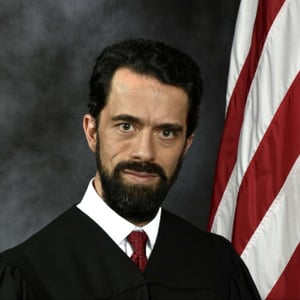
Judge, United States Court of Appeals, Third Circuit
Stephanos Bibas is a judge on the U.S. Court of Appeals for the Third Circuit. Judge Bibas was previously a professor of law and criminology at the University of Pennsylvania Law School. As director of the Penn Law Supreme Court Clinic, he argued six cases before the Supreme Court of the United States and filed briefs in dozens of others. He graduated summa cum laude and Phi Beta Kappa from Columbia University in 1989 with a B.A. in political theory and from Oxford University in 1991 with a B.A. in jurisprudence. He then earned his J.D. from Yale Law School in 1994.
After graduating from Yale Law, Judge Bibas clerked for Judge Patrick Higginbotham of the U.S. Court of Appeals for the Fifth Circuit and Justice Anthony Kennedy on the Supreme Court and was a litigation associate at Covington & Burling LLP in Washington, D.C. Thereafter, Judge Bibas served as an Assistant U.S. Attorney in the Southern District of New York, where he successfully prosecuted the world’s leading expert in Tiffany stained glass for hiring a grave robber to steal priceless Tiffany windows from cemeteries. Before his tenure at Penn Law, Judge Bibas taught at the University of Chicago Law School and the University of Iowa College of Law and was a research fellow at Yale Law School. He has published two books and seventy scholarly articles.
Professor of Law, Howard University School of Law
Professor Andrew E. Taslitz, over the course of his almost twenty years in legal academia, has taught at Duke University, Villanova University, and now currently at Howard University. He is also the Welsh S. White Distinguished Visiting Professor of Law at the University of Pittsburgh.
Professor Taslitz is the author of five books, and has published over 100 law review articles and book reviews. His writings have particularly centered on search and seizure issues, wrongful convictions, sexual assault, hate crimes legislation, freedom of speech, the expressive function of law, statutory interpretation methods, and scientific and character evidence, and constitutional issues.
He is a cum laude graduate of the University of Pennsylvania and, before entering teaching, worked both as a prosecutor in Philadelphia, PA., and as an associate at Schnader, Harrison, Segal, and Lewis in Philadelphia.
Gerald B. Lefcourt, PC
Gerald B. Lefcourt has spent his legal career practicing principally in the areas of criminal law and complex civil litigation. He is recognized as one of the country's foremost trial attorneys and is frequently called upon to represent individuals and corporations charged with the most serious crimes. In his thirty years practicing law, his clients have spanned the spectrum, from Yippie founder Abbie Hoffman and Black Panther Party leaders to Drexel Burnham Lambert securities trader Bruce Newberg, real estate mogul Harry Helmsley, actor Russell Crowe, New York State Assembly Speaker Mel Miller, and hip hop music promoter and Murder Inc. record label head Irv Gotti.
Mr. Lefcourt serves as the Speaker of the N.Y.S. Assembly's designee to the Statewide Commission on Judicial Nomination, which committee recommends to the Governor a slate of candidates for the New York Court of Appeals. He also serves on the Magistrate Selection Committee of the Southern District of New York. In the past, he has been a member of numerous other governmental and professional committees, including those addressing representation of the indigent, sentencing guidelines and the attorney-client privilege.
Mr. Lefcourt is currently President of the Criminal Justice Foundation of the National Association of Criminal Defense Lawyers. He also serves as program co-chair of the annual White Collar Crime Conference at Fordham Law School sponsored by the National Association of Criminal Defense Attorneys.
Mr. Lefcourt served for several years as the Chair of the Criminal Advocacy Committee of the Association of the Bar of the City of New York and other committees. He is past president of the National Association of Criminal Lawyers; a founder of the New York State Association of Criminal Defense Lawyers; and founder and past president of the New York Criminal Bar Association. He has been recognized in New York Magazine's survey of Outstanding Practitioners and in both Who's Who in the Criminal Defense Bar and in theInternational Who’s Who of Business Crime Defence and is AV rated.
Mr. Lefcourt has also been recognized by fellow practitioners as an outstanding lawyer, including by receipt of the Robert C. Heeney Memorial Lifetime Achievement Award from the National Association of Criminal Defense Lawyers; the Thurgood Marshall Lifetime Achievement Award from the New York State Association of Criminal Defense Lawyers; New York State Bar Association's Outstanding Practitioner Award; and New York University School of Law's Milton S. Gould Award for Outstanding Oral Advocacy. He was recently the Guest of Honor at a dinner sponsored by the New York Criminal Bar Association in recognition of "the distinction and commitment [he has] brought as an advocate for the rights of criminal defendants."
Mr. Lefcourt has also been recognized by Super Lawyers in each of 2006, 2007, 2008, 2009, 2010 and 2011 as among New York City's Best Criminal Lawyers.
Mr. Lefcourt was named in the 2010 edition of New York Area's Best Lawyers in the categories of both Criminal Defense: White-Collar and Criminal Defense: Non White-Collar.
Mr. Lefcourt is a graduate of New York University (B.A. Political Science 1964); Brooklyn Law School (J.D. 1967); and New York University School of Law (L.L.M. Tax 1968). He is admitted to practice in New York, the United States District Courts for the Southern and Eastern Districts of New York, and numerous Circuit Courts of Appeals.

Executive Vice President, The Federalist Society
Dean Reuter is Executive Vice President at the Federalist Society for Law and Public Policy Studies. He has served in two federal government agency Offices of the Inspector General, as Counsel to the Inspector General and Deputy Inspector General, responsible for policing the use of federal funds granted and contracted through those agencies. As such, he helped conduct and oversee criminal investigations across the country. He is the principal author of the non-fiction book, The Hidden Nazi: The Untold Story of America's Deal with the Devil, and editor of Liberty’s Nemesis: The Unchecked Expansion of the State and Confronting Terror: 9/11 and the Future of American National Security. He was appointed by the President and served as Vice-Chairman of the Board of Directors of the Corporation for National and Community Service, and recently served as an appointee on the U.S. Commission on Presidential Scholars. He is a graduate of Hood College (BA with Honors) and the University of Maryland School of Law.
Partner, King & Spalding LLP
Former U.S. Attorney for the Eastern District of California, a 34-county district with an area that stretches from the Oregon border to Bakersfield, Greg Scott is an experienced trial lawyer who represents major companies facing government investigations and litigation, with a focus in the healthcare, retail, and construction industries. He has extensive knowledge on matters involving consumer protection, construction disputes, the Foreign Corrupt Practices Act (FCPA) and the False Claims Act (FCA).
Greg represents corporations under investigation by state district attorneys concerning potential violations of consumer protection laws, as well as corporations operating senior assisted livingfacilities under investigation by the state attorney general regarding potential violations of elder abuse laws. In addition, he represents construction companies under investigation by state district attorneys when employees are involved in serious accidents at worksites.
A retired Lieutenant Colonel after serving more than 20 years in the California Army National Guard & United States Army Reserve, Greg went on to become a deputy district attorney in Contra Costa County and twice-elected District Attorney of Shasta County. He also served as an Adjunct Professor of National Security Law at the University of the Pacific, McGeorge School of Law following his first term as U.S. Attorney for the E.D. of California. Between his two terms as U.S. Attorney for the E.D. of California, Greg was the vice chair of the white-collar defense and corporate investigations practice at an AmLaw 50 firm.
Partner, Jenner & Block
Thomas P. Sullivan has handled civil and criminal trial and appellate litigation for over 55 years. He has been with the firm since 1954, except for his time as U. S. Attorney for the Northern District of Illinois, 1977-81. He has argued many cases in the Illinois Supreme Court, the U.S. Supreme Court, and many federal Courts of Appeal. He served as Co-Chair of Illinois Governor George Ryan’s Commission on Capital Punishment (2000-02), and the Illinois General Assembly’s Capital Punishment Reform Study Committee, whose reports recommending sweeping changes to Illinois homicide law and procedure were influential in Governor Ryan’s decision in 2003 to clear Illinois’ death row, and Governor Quinn’s signing the bill abolishing Illinois’ death penalty in 2010. He has represented many indigent persons in civil and criminal litigation, including prisoners incarcerated at Guantanamo Bay, Cuba.
Mr. Sullivan is a member of the Firm’s White Collar Defense and Investigations and Class Action practices. He serves as an arbitrator in a wide variety of business disputes. He is also a lecturer and author on civil and criminal trial and appellate litigation.
Professor of Criminology and Statistics, University of Pennsylvania
Richard A. Berk is a professor in the Departments of Statistics and Criminology at the University of Pennsylvania. He has a B.A. degree in psychology from Yale University and a Ph.D. in sociology from the Johns Hopkins University. He was previously a Distinguished Professor of Statistics at UCLA. He has also been on the faculty of the University of California Santa Barbara and Northwestern University. Professor Berk is an elected fellow of the American Statistical Association, the American Association for the Advancement of Science, and the Academy of Experimental Criminology. He has served on the National Research Council Committee on Applied and Theoretical Statistics and has been on the Board of Directors of the Social Science Research Council. He is frequently employed as an expert witness in civil litigation and two cases on which he worked were ultimately decided by the U.S. Supreme Court. Professor Berk’s interests include a wide range of policy-related matters: detecting violations of environmental regulations, properly allocating prison inmates to different security levels, forecasting which individuals on parole are likely to commit violent crimes, monitoring systems for consumer protection, and the role of race in capital cases. His work in applied statistics includes machine learning, causal inference, methods for evaluating the effectiveness of social programs, and the use of statistics in litigation.
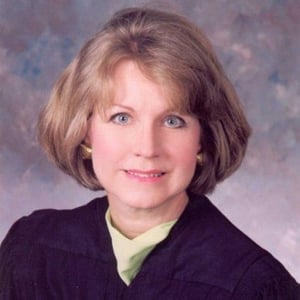
Judge, United States Court of Appeals, Fifth Circuit
Judge Edith Clement sits on the United States Court of Appeals for the Fifth Circuit. Judge Clement worked in a private practice as a maritime attorney in New Orleans, Louisiana, before being appointed in 1991 to the United States District Court for the Eastern District of Louisiana by President George H. W. Bush. In 2001, she was appointed by President George W. Bush to the United States Court of Appeals for the Fifth Circuit. Judge Clement is a member of the Maritime Law Association of the United States, the Federal Bar Association, the American Law Institute, the Federalist Society, the Tulane Law Schools Inn of Court, and the Committee on the Administrative Office of the Judicial Conference of the United States. She is a graduate of the University of Alabama and received her JD from Tulane Law School.
Partner, Krieg DeVault LLP
Deborah Daniels, former U.S. Attorney and U.S. Assistant Attorney General, has lengthy experience in criminal and civil investigations and public safety. Her work has included responsibilities at the U.S. Department of Justice directly related to the nation’s response to the September 11th attack on the U.S., data and communications interoperability, and the nation's ability to detect, prevent and respond to future terrorist acts. Ms. Daniels provides counsel to the firm’s public and private sector clients in matters affecting public safety, homeland security, disaster preparedness, leveraging of federal and state resources, federal and state regulatory compliance and internal investigations. She assists the firm’s clients in interacting with agencies of the federal government, including both the Executive Branch and the U.S. Congress, and advises clients ranging from government agencies to health care providers to other private sector entities on compliance and public policy matters.
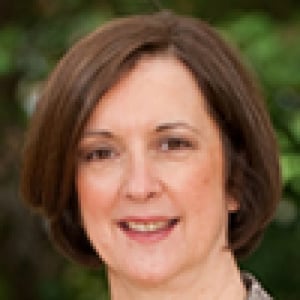
Assistant District Attorney, Philadelphia District Attorney
Sarah Hart has worked for over three decades in the criminal justice field at the federal, state and local levels.
From 1979-95, she served as a prosecutor in Philadelphia where (for 9 years) she represented the District Attorney in federal prison litigation involving mass releases of pretrial detainees. During this time, she provided substantial assistance to the U.S. Congress in drafting the Federal Prison Litigation Reform Act (PLRA).
From 1995-2001, Mrs. Hart served as the Chief Counsel for the Pennsylvania Department of Corrections where she successfully defended the constitutionality of the PLRA in the federal courts.
From 2001-2005, following unanimous Senate confirmation, she served as the Director of the National Institute of Justice (the research and evaluation arm of the U.S. Department of Justice) where, among other things, she developed the national $1 billion DNA initiative.
After an appointment as a Visiting Professor teaching graduate school courses at Rutgers University, she returned to Philadelphia to represent Philadelphia District Attorney in class action litigation concerning the Philadelphia Prison System. During this time she represented the Pennsylvania District Attorney’s Association in crafting comprehensive, bipartisan prison reform legislation in Pennsylvania that enacted sweeping changes in sentencing and parole practices. (Acts 81-84 of 2008).
Mrs. Hart previously served as Vice Chair of the Legal Affairs Committee of the American Corrections Association, a member of the Executive Committee of the Criminal Law Practice Group of the Federalist Society, a member of the Board of Directors of the Crime Victims Law Institute, and as a member of the Pennsylvania Supreme Court’s Appellate Procedural Rules Committee. She has also provided extensive training on the PLRA and corrections issues to the National Institute of Corrections, the National Association of Attorneys General, and the Association of State Correctional Administrators.
Mrs. Hart has published articles relating to corrections, forensics, and domestic violence. A recent publication focuses on the benefits and costs of prisoner class actions.
S. Hart, Evaluating Institutional Prisoners’ Rights Litigation: Costs and Benefits and Federalism Considerations, 11 U. Penn. J. Const. L. 73 (2008).
She is a graduate of Rutgers Law School and the University of Delaware.
Executive Director, Prison Law Office
Donald Specter is the Executive Director of the Prison Law Office at San Quentin, California. The Prison Law Office is a nonprofit law firm based in Berkeley, California that provides free legal services to California incarcerated offenders concerning their conditions of confinement. Mr. Specter has been lead counsel in numerous successful institutional reform cases challenging various conditions of confinement in California=s adult and juvenile prison systems. He has been chair of the California State Bar=s Commission on Corrections, was named Appellate Lawyer of the Week by the National Law Journal for his work in Brown v. Plata, 531 U.S. ___ (2011), has received the California Lawyers of the Year Award in 2006 and 2009 and was selected three times as one of the top 100 lawyers in California. Mr. Specter earned his B.A. in Economics from New College in Sarasota, Florida in 1974 and his J.D. from the University of San Francisco School of Law in 1978.
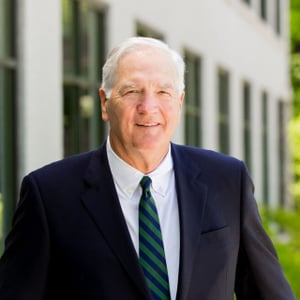
Former Senator, State of Alabama
Luther J. Strange, III is a former Republican member of the U.S. Senate from the state of Alabama. Strange was first appointed to the Senate position by Gov. Robert Bentley on February 9, 2017. He replaced Jeff Sessions, who was confirmed as United States Attorney General.
Strange is the former Republican Attorney General of Alabama. He was first elected to the statewide position in 2010 and assumed office on January 17, 2011. Strange's first four-year term ended on January 19, 2015, and he won re-election to a second term on November 4, 2014.
Prior to his election as Attorney General, Luther Strange practiced law in Birmingham, Alabama. In 2010, U.S. News-Best Lawyers "Best Law Firms" gave his firm a first-tier ranking, and the firm was named as one of the Top Ten Law Firms that Understand Economic Development by Southern Business & Development magazine.
Before establishing his own law firm, Strange was a partner with Bradley Arant Boult Cummings LLP. During his time in private practice, he was recognized in Best Lawyers in America® , named Best of the Bar by the Birmingham Business Journal, and called one of the "Best Lawyers" in Alabama by Birmingham magazine.
His tenure in office was marked by a strong emphasis on fighting public corruption, including the conviction and removal from office of the Alabama House Speaker in June 2016. He was also a leader in opposing costly overregulation and the expansion of the federal government at the expense of the states.
Luther Strange served as the court-appointed Coordinating Counsel for the Gulf Coast States in the historic Deepwater Horizon Oil spill litigation. Strange was actively involved in trying the case, which led to a landmark settlement agreement to compensate Alabama for both economic and environmental damages as a result of that disaster.
Among many civic commitments, he has served on the Advisory Board of the United States Merchant Marine Academy and as a Trustee of Talladega College, Alabama’s oldest historically black college.
An Eagle Scout since he was 13 and a recipient of the Distinguished Eagle Scout Award from the Boy Scouts of America in 2011, Strange is passionate about encouraging young people in Alabama to become involved in public service.
Strange received both his undergraduate and law degrees from Tulane University. He was a scholarship basketball player while earning his undergraduate degree at Tulane. In June of 2016, he was inducted into the Tulane Law School Hall of Fame.
Professor of Criminology and Statistics, University of Pennsylvania
Richard A. Berk is a professor in the Departments of Statistics and Criminology at the University of Pennsylvania. He has a B.A. degree in psychology from Yale University and a Ph.D. in sociology from the Johns Hopkins University. He was previously a Distinguished Professor of Statistics at UCLA. He has also been on the faculty of the University of California Santa Barbara and Northwestern University. Professor Berk is an elected fellow of the American Statistical Association, the American Association for the Advancement of Science, and the Academy of Experimental Criminology. He has served on the National Research Council Committee on Applied and Theoretical Statistics and has been on the Board of Directors of the Social Science Research Council. He is frequently employed as an expert witness in civil litigation and two cases on which he worked were ultimately decided by the U.S. Supreme Court. Professor Berk’s interests include a wide range of policy-related matters: detecting violations of environmental regulations, properly allocating prison inmates to different security levels, forecasting which individuals on parole are likely to commit violent crimes, monitoring systems for consumer protection, and the role of race in capital cases. His work in applied statistics includes machine learning, causal inference, methods for evaluating the effectiveness of social programs, and the use of statistics in litigation.
Judge, United States Court of Appeals, Fifth Circuit
Judge Edith Clement sits on the United States Court of Appeals for the Fifth Circuit. Judge Clement worked in a private practice as a maritime attorney in New Orleans, Louisiana, before being appointed in 1991 to the United States District Court for the Eastern District of Louisiana by President George H. W. Bush. In 2001, she was appointed by President George W. Bush to the United States Court of Appeals for the Fifth Circuit. Judge Clement is a member of the Maritime Law Association of the United States, the Federal Bar Association, the American Law Institute, the Federalist Society, the Tulane Law Schools Inn of Court, and the Committee on the Administrative Office of the Judicial Conference of the United States. She is a graduate of the University of Alabama and received her JD from Tulane Law School.
Partner, Krieg DeVault LLP
Deborah Daniels, former U.S. Attorney and U.S. Assistant Attorney General, has lengthy experience in criminal and civil investigations and public safety. Her work has included responsibilities at the U.S. Department of Justice directly related to the nation’s response to the September 11th attack on the U.S., data and communications interoperability, and the nation's ability to detect, prevent and respond to future terrorist acts. Ms. Daniels provides counsel to the firm’s public and private sector clients in matters affecting public safety, homeland security, disaster preparedness, leveraging of federal and state resources, federal and state regulatory compliance and internal investigations. She assists the firm’s clients in interacting with agencies of the federal government, including both the Executive Branch and the U.S. Congress, and advises clients ranging from government agencies to health care providers to other private sector entities on compliance and public policy matters.
Assistant District Attorney, Philadelphia District Attorney
Sarah Hart has worked for over three decades in the criminal justice field at the federal, state and local levels.
From 1979-95, she served as a prosecutor in Philadelphia where (for 9 years) she represented the District Attorney in federal prison litigation involving mass releases of pretrial detainees. During this time, she provided substantial assistance to the U.S. Congress in drafting the Federal Prison Litigation Reform Act (PLRA).
From 1995-2001, Mrs. Hart served as the Chief Counsel for the Pennsylvania Department of Corrections where she successfully defended the constitutionality of the PLRA in the federal courts.
From 2001-2005, following unanimous Senate confirmation, she served as the Director of the National Institute of Justice (the research and evaluation arm of the U.S. Department of Justice) where, among other things, she developed the national $1 billion DNA initiative.
After an appointment as a Visiting Professor teaching graduate school courses at Rutgers University, she returned to Philadelphia to represent Philadelphia District Attorney in class action litigation concerning the Philadelphia Prison System. During this time she represented the Pennsylvania District Attorney’s Association in crafting comprehensive, bipartisan prison reform legislation in Pennsylvania that enacted sweeping changes in sentencing and parole practices. (Acts 81-84 of 2008).
Mrs. Hart previously served as Vice Chair of the Legal Affairs Committee of the American Corrections Association, a member of the Executive Committee of the Criminal Law Practice Group of the Federalist Society, a member of the Board of Directors of the Crime Victims Law Institute, and as a member of the Pennsylvania Supreme Court’s Appellate Procedural Rules Committee. She has also provided extensive training on the PLRA and corrections issues to the National Institute of Corrections, the National Association of Attorneys General, and the Association of State Correctional Administrators.
Mrs. Hart has published articles relating to corrections, forensics, and domestic violence. A recent publication focuses on the benefits and costs of prisoner class actions.
S. Hart, Evaluating Institutional Prisoners’ Rights Litigation: Costs and Benefits and Federalism Considerations, 11 U. Penn. J. Const. L. 73 (2008).
She is a graduate of Rutgers Law School and the University of Delaware.
Executive Director, Prison Law Office
Donald Specter is the Executive Director of the Prison Law Office at San Quentin, California. The Prison Law Office is a nonprofit law firm based in Berkeley, California that provides free legal services to California incarcerated offenders concerning their conditions of confinement. Mr. Specter has been lead counsel in numerous successful institutional reform cases challenging various conditions of confinement in California=s adult and juvenile prison systems. He has been chair of the California State Bar=s Commission on Corrections, was named Appellate Lawyer of the Week by the National Law Journal for his work in Brown v. Plata, 531 U.S. ___ (2011), has received the California Lawyers of the Year Award in 2006 and 2009 and was selected three times as one of the top 100 lawyers in California. Mr. Specter earned his B.A. in Economics from New College in Sarasota, Florida in 1974 and his J.D. from the University of San Francisco School of Law in 1978.
Former Senator, State of Alabama
Luther J. Strange, III is a former Republican member of the U.S. Senate from the state of Alabama. Strange was first appointed to the Senate position by Gov. Robert Bentley on February 9, 2017. He replaced Jeff Sessions, who was confirmed as United States Attorney General.
Strange is the former Republican Attorney General of Alabama. He was first elected to the statewide position in 2010 and assumed office on January 17, 2011. Strange's first four-year term ended on January 19, 2015, and he won re-election to a second term on November 4, 2014.
Prior to his election as Attorney General, Luther Strange practiced law in Birmingham, Alabama. In 2010, U.S. News-Best Lawyers "Best Law Firms" gave his firm a first-tier ranking, and the firm was named as one of the Top Ten Law Firms that Understand Economic Development by Southern Business & Development magazine.
Before establishing his own law firm, Strange was a partner with Bradley Arant Boult Cummings LLP. During his time in private practice, he was recognized in Best Lawyers in America® , named Best of the Bar by the Birmingham Business Journal, and called one of the "Best Lawyers" in Alabama by Birmingham magazine.
His tenure in office was marked by a strong emphasis on fighting public corruption, including the conviction and removal from office of the Alabama House Speaker in June 2016. He was also a leader in opposing costly overregulation and the expansion of the federal government at the expense of the states.
Luther Strange served as the court-appointed Coordinating Counsel for the Gulf Coast States in the historic Deepwater Horizon Oil spill litigation. Strange was actively involved in trying the case, which led to a landmark settlement agreement to compensate Alabama for both economic and environmental damages as a result of that disaster.
Among many civic commitments, he has served on the Advisory Board of the United States Merchant Marine Academy and as a Trustee of Talladega College, Alabama’s oldest historically black college.
An Eagle Scout since he was 13 and a recipient of the Distinguished Eagle Scout Award from the Boy Scouts of America in 2011, Strange is passionate about encouraging young people in Alabama to become involved in public service.
Strange received both his undergraduate and law degrees from Tulane University. He was a scholarship basketball player while earning his undergraduate degree at Tulane. In June of 2016, he was inducted into the Tulane Law School Hall of Fame.
Senior Staff Attorney, ACLU Capital Punishment Project
Cassy Stubbs is a senior staff attorney with the ACLU Capital Punishment Project. Cassy joined the project in 2006 and since then has served as lead and associate counsel on behalf of death row inmates and defendants in trials and appeals throughout the South, including Alabama, Mississippi, Louisiana, South Carolina, North Carolina and Tennessee. Her clients have included Levon “Bo” Jones, a North Carolina death row inmate who was exonerated in 2008 when the state dismissed all charges against him, and Richard C. Taylor, a severely mentally ill man who was sentenced to death after a sham trial in Tennessee, but who won a new trial on appeal and was subsequently sentenced to life imprisonment.
Cassy has also worked with numerous organizations and ACLU affiliates to file amicus briefs in capital cases in state and federal courts around the country. She has written policy papers, editorials and blog posts on a wide range of capital issues, such as the persistence of racial disparities in capital punishment and the fundamental flaws of purported claims that the death penalty deters future murders.
Before joining the ACLU, Cassy worked as a New Mexico State public defender in Aztec, N.M. Previously, she litigated employment discrimination and wage and hour cases in state and federal court with Bet Tzedek Legal Services in Los Angeles, and with the New York Civil Liberties Union in New York City. She served as lead counsel in multiple influential employment cases, includingWet Seal v. Ochoa,In Re Metro FulfillmentandLochren v. Suffolk County.
Cassy is admitted to the bars of North Carolina, New York, New Mexico, and California. She received her B.S, with honors, from Brown University in 1996 and graduated magna cum laude from New York University School of Law in 2000. She served as a judicial clerk for Judge Harry Pregerson on the 9th Circuit Court of Appeals.
Former Adjunct Professor of Law; former Special Counsel to the President; former federal prosecutor, Georgetown Law (ret.)
Bill Otis is a former Adjunct Professor of Law at Georgetown University, a one-time federal prosecutor, and a former Special White House Counsel for President George H. W. Bush. After graduating from Stanford Law School, he started his career in the Criminal Division of the Justice Department, then became chief of appeals for the US Attorney's Office for the Eastern District of Virginia. In the 1980's he served on the Department's "Train the Trainer" team, which taught US Attorneys Offices across the county how to implement the then-new Sentencing Reform Act. He has held several posts in the federal government, including Special Assistant to the Secretary of Energy and Counselor to the head of the Drug Enforcement Administration, in addition to the White House post. He has testified before Congress on issues in criminal procedure, illegal drugs, the US Sentencing Commission, and the death penalty, and has given numerous media interviews on those and other subjects. He currently teaches a seminar at Georgetown Law titled "Conservatism in Law in America" with his wife, Federalist Society co-founder Lee Liberman Otis.
Executive Vice President, The Federalist Society
Dean Reuter is Executive Vice President at the Federalist Society for Law and Public Policy Studies. He has served in two federal government agency Offices of the Inspector General, as Counsel to the Inspector General and Deputy Inspector General, responsible for policing the use of federal funds granted and contracted through those agencies. As such, he helped conduct and oversee criminal investigations across the country. He is the principal author of the non-fiction book, The Hidden Nazi: The Untold Story of America's Deal with the Devil, and editor of Liberty’s Nemesis: The Unchecked Expansion of the State and Confronting Terror: 9/11 and the Future of American National Security. He was appointed by the President and served as Vice-Chairman of the Board of Directors of the Corporation for National and Community Service, and recently served as an appointee on the U.S. Commission on Presidential Scholars. He is a graduate of Hood College (BA with Honors) and the University of Maryland School of Law.
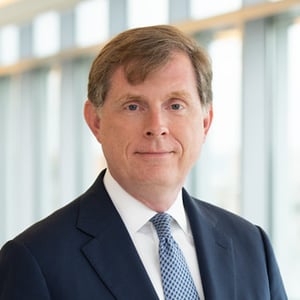
Partner, Arnold & Porter
John Elwood is the head of Arnold & Porter’s Appellate and Supreme Court practice. He has argued before the Supreme Court nine times, and appeared before most of the federal courts of appeals. He has successfully argued cases across a broad cross-section of subjects, with particular experience in environmental law, the False Claims Act, government contracting, and federal criminal law
Mr. Elwood’s work has earned him recognition as one of Washington’s top Supreme Court lawyers (Washingtonian, 2013), as one of “a small group of lawyers” with an “outsized influence at the U.S. Supreme Court” (Reuters, 2014), and as one of the country’s most innovative lawyers (Financial Times, 2014). Chambers USA reports that “[t]he much-admired John Elwood is praised for his advocacy skills” (2013), and describes Mr. Elwood as “phenomenal” (2014), “incredibly talented” (2012), and “a much-loved and widely respected lawyer who is quick on his feet” (2010).
Before joining the firm, Mr. Elwood served in senior-level positions in the U.S. Department of Justice. Beginning as an Assistant to the Solicitor General, and continuing with the firm, he has briefed more than 20 merits cases before the Supreme Court of the United States, and has briefed approximately 135 cases at the certiorari stage. As the senior Deputy in the Office of Legal Counsel, he advised the White House and federal agencies on a range of constitutional, statutory, and regulatory issues.
Attorney, Rathje Woodward LLC
Brian Murray is a first-chair trial and appellate lawyer with a nationwide practice, practicing at Rathje Woodward LLC. A former law clerk to Justice Antonin Scalia, he represents companies and individuals in complex commercial litigation, class actions and civil government enforcement and regulatory matters. In addition, Brian has briefed over a hundred appeals, and has personally argued over 30 of them — including cases before the U.S. Supreme Court, nearly every federal court of appeals, and a number of state supreme and intermediate appellate courts. Brian also served as Deputy to the Associate Attorney General for the United States Department of Justice. In this senior leadership office at the DOJ, Brian counseled Department and executive branch principals and helped formulate policies and strategies for investigating, litigating, and resolving civil regulatory and enforcement matters. Brian relies on his deep experience in guiding his clients through pressing legal challenges.
Brian is routinely called upon to present clients’ most complex and business-critical matters to tribunals nationwide. Notable first-chair jury trial wins include a full defense verdict in a sprawling civil rights class action against the City of Chicago. Key appellate wins include a victory at the Supreme Court that changed the course of CERCLA law, and multiple wins in courts across the country for pharmaceutical companies combatting consumer fraud claims related to drug pricing. Other engagements over the last twenty years have included matters involving environmental, consumer fraud, RICO, antitrust, Title VII, the FAA, and other statutory and common-law claims; enforcement litigation involving the False Claims Act, environmental, and constitutional claims; and other complex civil matters.
Brian has taught Complex Litigation and Class Actions at the University of Chicago Law School for almost a decade. He is a member of the Seventh Circuit Bar Association, the Chicago-Lincoln and Robert Jones American Inns of Court, and the Illinois Appellate Lawyers’ Association. His work has been featured in The Wall Street Journal, New York Times, Washington Post, Chicago Tribune, and on PBS’s Chicago Tonight.
Managing Partner, Schiff Hardin LLP
Ronald S. Safer concentrates in white collar criminal defense and also participates in our firm's civil litigation practice.
Mr. Safer, working with Northwestern University's Center on Wrongful Convictions, obtained a not guilty verdict for the firm's client, Julie Rea Harper. This trial involved the defense of a mother being retried for the murder of her son, even though a convicted felon in another state had confessed to the crime. Mr. Safer and his litigation team successfully discredited the prosecution's case, and her acquittal highlighted the need to reform the special prosecutor system in Illinois. ABC-TV's20/20 broadcast a feature story on this case, spotlighting Mr. Safer, in March 2007.
Mr. Safer has lectured for the U.S. Department of Justice (DOJ) on various subjects including the use of RICO, complex financial frauds, and numerous areas of trial practice.
Mr. Safer continues to lecture for the Federal Bureau of Investigation (FBI) concerning complex investigations.
Mr. Safer was an Assistant U.S. Attorney in the Northern District of Illinois from 1989 until he rejoined Schiff Hardin in 1999.
As Chief of the Criminal Division at the time he left the U.S. Attorney's Office, Mr. Safer oversaw all financial fraud cases and supervised all 100 Assistant U.S. Attorneys in the division. Earlier, he served as Deputy Chief of the Special Prosecution Section (also overseeing all financial fraud cases) and Deputy Chief of the General Crimes Division.
Mr. Safer successfully prosecuted literally hundreds of defendants during his tenure in the U.S. Attorney's Office, including:
Mr. Safer's role in the Gangster Disciples prosecution was described in a feature story in Newsweek, November 1, 1999. Mr. Safer also is spotlighted in the City Confidential and American Justice television programs produced for the A&E cable television network and on "The Prosecutors" television program produced for theDiscovery Channel.
Partner, Katten Muchin Rosenman LLP
Gil M. Soffer is Co-Chair of the firm's National White Collar Practice. He joined the Firm in August 2000, after six years as a federal prosecutor. Mr. Soffer concentrates his practice in white collar criminal litigation, particularly corporate fraud litigation; corporate investigations; insurance litigation; and anti-fraud counseling and litigation. Mr. Soffer is also involved in a wide range of matters involving reinsurance, health care, and alternative dispute resolution.
In January 2008, Mr. Soffer accepted a position as Counsel to the Deputy Attorney General in Washington, D.C., and shortly thereafter was appointed Associate Deputy Attorney General. During his year-long term with the Department of Justice, Mr. Soffer advised the Deputy Attorney General on criminal matters at the Department, with particular emphasis on corporate fraud prosecutions. He played an integral role in drafting the Department's Corporate Monitor Principles and Corporate Charging Principles, and provided training on the latter policy to U.S. Attorneys' Offices nationwide. Mr. Soffer also managed the President's Corporate Fraud Task Force and briefed members of Congress about criminal matters within the Department of Justice.
Mr. Soffer had previously served in the Department of Justice when he was an Assistant U.S. Attorney in the United States Attorney's Office in Chicago (1994 - 2000). In that capacity, he prosecuted a wide range of federal crimes, including bank, mail, wire, tax, and insurance fraud; narcotics and firearms trafficking; bank robbery; embezzlement; and money laundering. In November 1996, Mr. Soffer received the Director's Award for Superior Performance as an Assistant U.S. Attorney from then-Attorney General Janet Reno.
Mr. Soffer graduated magna cum laude from Brown University in 1986 and earned his J.D., cum laude, from Harvard Law School in 1989. Upon graduating from law school, Mr. Soffer clerked in the U.S. District Court for the Northern District of Illinois under Judge John A. Nordberg. After his clerkship, Mr. Soffer became an associate with the law firm of McCutchen, Doyle, Brown & Enersen in San Francisco, where he practiced in the general litigation department.
Mr. Soffer is a member of the American Bar Association and is admitted to practice in Illinois and California. He has served as an Adjunct Professor at Loyola University Law School, where he taught Federal Criminal Prosecution. Mr. Soffer has lectured on subjects ranging from corporate internal investigations to deferred prosecution agreements, appeared regularly as a legal expert on the ABC News Now program Guilt or Innocence, and testified before Congress about the use and selection of corporate monitors in criminal cases.
In December 2009, Mr. Soffer was appointed by Illinois Governor Quinn to serve as a Commissioner on the Illinois Executive Ethics Commission. The nine-member Commission was formed to promote ethics in the executive branch of public service and to ensure that state business is conducted with fairness and integrity. Toward that end, the Commission adjudicates alleged violations of the Illinois Ethics Act and provides guidance to the State's ethics officers.
Ronald N. Boyce Presidential Professor of Criminal Law and University Distinguished Professor of Law, The University of Utah College of Law
Paul G. Cassell is an internationally recognized legal scholar on criminal and civil justice, crime victims' rights, constitutional law, evidence, judicial process, and other legal issues. Cassell received a B.A. (1981) and a J.D. (1984) from Stanford University, where he graduated Order of the Coif and was President of the Stanford Law Review. He clerked for then-Judge Antonin Scalia when Scalia was on the U.S. Court of Appeals for the D.C. Circuit (1984-85) and for Chief Justice Warren Burger of the United States Supreme Court (1985-86). Cassell then served as an Associate Deputy Attorney General with the U.S. Justice Department (1986-88) and as an Assistant U.S. Attorney for the Eastern District of Virginia (1988 to 1991). Cassell joined the faculty at the College of Law in 1992, where he taught full-time until he was sworn in as a U.S. District Court Judge for the District of Utah in July 2002. In November 2007, he resigned his judgeship to return full-time to the College of Law to teach, write, and litigate concerning issues relating to crime victims' rights and criminal and civil justice reform. Professor Cassell has also published numerous law review articles in journals such as the Stanford Law Review, the Michigan Law Review, the Harvard Journal of Law and Public Policy, and the Journal of Criminal Law and Criminology. He is a co-author of the nation's only law school textbook on crime victims' rights, Victims in Criminal Procedure (various editions, most recently in its fifth edition published in 2025). Professor Cassell has argued pro bono cases relating to criminal procedure and crime victims' rights before the United States Supreme Court, the 2nd, 4th, 5th, 6th, 7th, 8th, 9th, 10th, 11th, and D.C. Circuits (including the 5th and 11th Circuits en banc), several U.S. District Courts, the Utah Supreme Court, and the Arizona Supreme Court. In 2020, Cassell received the Ronald Wilson Reagan Public Policy Award - National Crime Victims' Service Award from the U.S. Department of Justice. Cassell is a member of the American Law Institute, a fellow of the American Bar Foundation, and an inaugural member of the Council on Criminal Justice. He is also an occasional blogger at The Volokh Conspiracy.
Professor of Law, The University of Utah S.J. Quinney College of Law
In collaboration with other leading experts at the University of Utah S.J. Quinney College of Law, Professor Guiora helps lead the school's efforts to provide cutting-edge research, innovative training, and public service initiatives in the prevention and mitigation of global conflict.
Professor Guiora writes and lectures extensively on issues such as the legal aspects of counterterrorism, rearticulating international law, global perspectives on counterterrorism, terror financing, international law and morality in armed conflict, educating IDF commanders and soldiers on international law and morality, religion and terrorism, domestic terror courts, self defense, and geo-politics and international law. He has testified before the U.S. Senate Judiciary Committee on handling terrorism detainees within the American justice system, and before a subcommittee of the U.S. House of Representatives Committee on Homeland Security on the effectiveness, accountability, and resilience in homeland security. As an expert commentator, Professor Guiora is frequently interviewed by and quoted in the media, including CNN, the Washington Post, PBS, the New York Times, the Wall Street Journal, the Los Angeles Times, the Chicago Sun Times, the BBC, the Associated Press, the Jersualem Post, Al-Jazerrah TV, the Bloomberg Report, C-Span, the Christian Science Monitor, Fox TV, the New York Daily News, and NPR.
Prior to joining the faculty at the College of Law, Professor Guiora was Professor of Law and the Founding Director of the Institute for Global Security Law and Policy at Case Western Reserve University School of Law. Before joining Case Western in 2004, Professor Guiora served for 19 years in the Israel Defense Forces Judge Advocate General's Corps (Lt. Col. Ret.), where he held a number of senior command positions, including Commander of the IDF School of Military Law, Judge Advocate for the Navy and Home Front Command, and the Legal Advisor to the Gaza Strip. During his military service, Professor Guiora was involved in the capture of the PLO weapons ship Karine A, implementation of the Gaza-Jericho Agreement, the Israeli-Palestinian Interim Agreement, and "Safe Passage" between the Gaza Strip and the West Bank. Professor Guiora also had command responsibility for the development of an interactive software program that teaches an eleven point code-of-conduct based on International Law, Israeli Law, and the IDF code. This internationally acclaimed program is used to teach IDF soldiers and commanders their obligations regarding a civilian population during an armed conflict. Based on this experience, Professor Guiora was invited by the Center for Civic Education and Leadership Development of the Armed Forces of the Federal Republic of Germany to discuss research and developments in the ethical education of armed forces.
Professor Guiora teaches Criminal Law, Criminal Procedure, International Law, Global Perspectives on Counterterrorism, and Religion and Terrorism, and he uses innovative scenario-based instruction methods to educate students regarding national and international security issues.
Partner, Sidley Austin LLP
RICHARD D. KLINGLER is a partner based in the Washington, D.C., office. He focuses his practice on national security matters and complex litigation in U.S. courts involving constitutional law and cross-border disputes. He has extensive litigation and regulatory experience working on behalf of telecommunications, finance, energy, and media clients. He has participated in matters before the U.S. Supreme Court, other appellate courts, and trial and regulatory bodies. He has worked extensively on matters being addressed in Congressional and other investigations or pending before Executive Branch departments and agencies.
Mr. Klingler joined the firm in 1990 and first became a partner in 1996. He served from 2006-2007 as the General Counsel and Legal Adviser on the National Security Council staff, advising senior government officials on an array of intelligence, defense, foreign policy, litigation, and investigatory matters. From 2005-2007, he served in the Office of the Counsel to the President, concluding as Senior Associate Counsel to the President. His work focused on litigation, Congressional investigations, and issues before the Departments of State and Homeland Security. He worked from 1997-2002 as an investment banker with Credit Suisse First Boston on equity capital market and M&A transactions in the telecommunications, energy, and finance sectors. From 1994-96 he worked in Australia as Regulatory Advisor and then Regulatory Counsel for Telstra Corp., where he addressed litigation, legislative, transactional, and regulatory issues.
Mr. Klingler is an Adjunct Fellow with the American Enterprise Institute, addressing counter-terrorism legal issues, and, from 1993-94, was Guest Scholar at The Brookings Institution, which published his book, The New Information Industry: Regulatory Challenges and the First Amendment (1996). He testified several times before Congress on Constitutional, counter-terrorism, and sovereign immunity issues, and has written on public policy matters for various national publications.
Mr. Klingler was a law clerk to U.S. Supreme Court Justice Sandra Day O'Connor (1989-90) and Judge Kenneth W. Starr of the U.S. Court of Appeals for the D.C. Circuit (1988-89). He obtained law degrees from Oxford University, which he attended as a Rhodes Scholar, and from Stanford Law School, where he was Senior Articles Editor of The Stanford Law Review and a member of Order of the Coif.

Criminal Law: The Foreign Corrupt Practices Act
Lanny A. Breuer, Mark F. Mendelsohn, Michael B. Mukasey, William H. Pryor, George J. Terwilliger
2012 National Lawyers Convention
The Criminal Law & Procedure Practice Group hosted this panel on "The Foreign Corrupt Practices...
Supreme Court Preview: What Is in Store for October Term 2012?
Douglas R. Cox, Thomas C. Goldstein, Nicholas Quinn Rosenkranz, Carrie Campbell Severino, Stuart S. Taylor, Kenneth L. Wainstein, Pete Williams
Co-sponsored by the Practice Groups, the Washington DC Lawyers Chapter, and the Faculty Division
October 1st marks the first day of the 2012 Supreme Court Term. Thus far the...
Supreme Court Preview: What Is in Store for October Term 2012?
Douglas R. Cox, Thomas C. Goldstein, Nicholas Quinn Rosenkranz, Carrie Campbell Severino, Stuart S. Taylor, Kenneth L. Wainstein, Pete Williams
Co-sponsored by the Practice Groups, the Washington DC Lawyers Chapter, and the Faculty Division
October 1st marks the first day of the 2012 Supreme Court Term. Thus far the...
The Machinery of Criminal Justice - Faculty Book Podcast
Stephanos Bibas, Andrew Taslitz
Faculty Division Podcast 06-08-12 featuring Stephanos Bibas and Andrew Taslitz
The Machinery of Criminal Justice discusses the shift in American criminal law from being a system...
Grand Jury Reform
Gerald B. Lefcourt, Dean Reuter, McGregor W. Scott, Thomas P. Sullivan
Criminal Law & Procedure Practice Group Teleforum
The Fifth Amendment of the U.S. Constitution states that in federal criminal cases, "no person...
Criminal Law: Prisoner Releases and the Role of the Courts
Richard A. Berk, Edith Brown Clement, Deborah J. Daniels, Sarah V. Hart, Donald Specter, Luther Johnson Strange
2011 National Lawyers Convention
The Criminal Law & Procedure Practice Group hosted this panel on "Prisoner Releases and the...
Criminal Law: Prisoner Releases and the Role of the Courts
Richard A. Berk, Edith Brown Clement, Deborah J. Daniels, Sarah V. Hart, Donald Specter, Luther Johnson Strange
2011 National Lawyers Convention
The Criminal Law & Procedure Practice Group hosted this panel on "Prisoner Releases and the...
Death Penalty Debate
Cassandra Stubbs, William G. Otis, Dean Reuter
Criminal Law & Procedure Practice Group Podcast
Recently, an Ohio jury recommended a death sentence for Mr. Anthony Sowell, who lured 11...
Honest Services Fraud: What's Left?
John P. Elwood, Brian J. Murray, Ronald S. Safer, Gil Soffer
Chicago Lawyers Chapter and Criminal Law & Procedure Practice Group
Last year, in its "Honest Services Cases" the Supreme Court purported to confine the statute...
Miranda & Terror Suspects - Podcast
Paul G. Cassell, Amos N. Guiora, Richard D. Klingler
International & National Security Law Practice Group Podcast
To what extent are law enforcement personnel required to read the standard Miranda warning to...