

Senior Legal Fellow, the Meese Institute for the Rule of Law, Advancing American Freedom
Paul J. Larkin is a Senior Legal Fellow in the Meese Institute for the Rule of Law at Advancing American Freedom. Paul has held various positions in the federal and state governments throughout his career, such as being an attorney in the Organized Crime and Racketeering Section of the Criminal Division at the U.S. Department of Justice, an Assistant to the Solicitor General in the Office of the Solicitor General at the U.S. Department of Justice, Special Agent-in-Charge and Acting Director of the Criminal Investigation Division at the Environmental Protection Agency, and a member of the Parole Abolition and Sentencing Reform Commission and of the Juvenile Justice Reform Commission in the Office of Virginia Governor George Allen.
He has also worked at Verizon Communications and two law firms in Washington, D.C. His current research is principally in the fields of drug policy, criminal justice policy, and administrative law and policy. He has published numerous articles in law and public policy journals, both in print and online.

Senior Legal Fellow and Manager, National Security Law Program, The Heritage Foundation
Charles “Cully” Stimson is a widely recognized expert in national security, homeland security, crime control, drug policy and immigration. A senior legal fellow at The Heritage Foundation since 2007, Stimson became Manager of the National Security Law Program in Heritage’s Institute for Constitutional Government in April 2013 after serving as Heritage’s chief of staff for a year.
Stimson writes and lectures on policy issues such as the law of armed conflict, terrorist detainee policy and interrogations, the Geneva Conventions, military commissions, the Patriot Act and FISA, criminal law and the death penalty, immigration and the war on drugs. As chief of staff to then-Heritage President Edwin J. Feulner, he was a key adviser on public policy matters as well as manager of Feulner’s office staff and Heritage’s day-to-day operations.
Stimson’s many research papers, op-eds and articles include special reports such as “Adult Time for Adult Crime,” a comprehensive study on the constitutionality of life sentences for teen-age murderers, and Sexual Assault in the Military: Understanding the Problem and How to Fix It, a ground-breaking paper detailing the inner workings of the military justice system compared to its civilian counterpart. His work on criminal and immigration law has been cited in briefs before the U.S. Supreme Court.
He testifies before the U.S. Senate and House on national security issues, and recently testified before the Senate Armed Services Committee on the Law of Armed Conflict, Law of War, and the 2001 Authorization for Use of Military Force.
Before joining the think tank in 2007, Stimson served as Deputy Assistant Secretary of Defense for Detainee Affairs. He advised then-Secretaries of Defense Donald Rumsfeld and Robert Gates and coordinated the Pentagon’s global detention policy and operations, including at Guantanamo Bay and in Iraq and Afghanistan. He was chairman of detainee-related panels such as the Defense Senior Leadership Oversight Committee, and the Special Detainee Follow Up Group. He represented the United States before the U.N. in Geneva, Switzerland in May 2006 where he led the DOD delegation in defense of the United States’ Second Period Report on the Convention Against Torture.
An accomplished trial lawyer, Stimson worked as a prosecutor at the local, state and federal levels, where he concentrated on violent crimes such as homicide, sexual assault and domestic violence. A third generation naval officer, Cully also served as a military prosecutor, defense counsel, and recently served as Deputy Chief Judge of the Navy-Marine Corps Trial Judiciary. He continues to serve, with the rank of Captain, as the Commanding Officer of the Preliminary Hearing Unit.
Stimson’s thousands of media interviews and appearances include Fox News Channel, MSNBC, CNN, BBC, NPR and C-SPAN. He has been quoted by most major newspapers, including The Washington Post, Wall Street Journal, New York Times, Los Angeles Times, and London Times.
A businessman and educator by training, Stimson is Vice Chairman of his family’s commercial real estate company in Seattle. Before 9/11, he was a Vice President at a New York-based global financial services and insurance brokerage firm where ran the private equity mergers and acquisitions D.C. operation.
Stimson holds a law degree from the George Mason University School of Law, where he later taught as an Adjunct Professor of Law. He is a graduate of Kenyon College, where he was Captain of the men’s varsity soccer team and an All-Conference player. He also studied at Harvard and Exeter universities. An avid soccer player and triathlete, he serves as Chairman of the Board of the United States Soccer Foundation, the charitable giving arm of U.S. Soccer.

Director, Independent Women's Law Center, Independent Women's
Jennifer C. Braceras, a member of the Federalist Society Board of Visitors, is the director of Independent Women’s Law Center and a former member of the U.S. Commission on Civil Rights.
Ms. Braceras is a graduate of the Harvard Law School, where she served as an editor of the Law Review. After law school, she clerked for two federal judges and practiced labor and employment law with the Boston law firm Ropes & Gray.
A long time political columnist and editor, Ms. Braceras's writing has appeared in a variety of publications, including the Wall Street Journal, the Boston Globe, the Hill, and National Review Online. She co-hosts At the Bar, a bimonthly virtual happy hour discussion about issues at the intersection of law, politics, and culture.
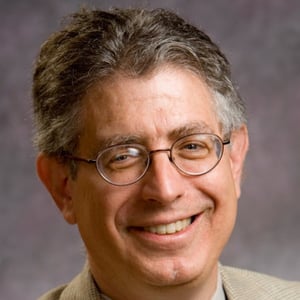
Sho Sato Professor of Law; Faculty Director, Center for Law, Energy, & the Environment, University of California, Berkeley
Dan Farber is the Sho Sato Professor of Law at the University of California, Berkeley. He is also the Co-Director of the Center for Law, Energy, and the Environment. Professor Farber serves on the editorial board of Foundation Press. He is a member of the American Academy of Arts and Sciences and a Life Member of the American Law Institute. He is the editor of Issues in Legal Scholarship.
Professor Farber is a graduate of the University of Illinois, where he earned his B.A., M.A., and J.D. degrees. He graduated, summa cum laude, from the College of Law, where he was the class valedictorian and served as Editor-in-Chief of the University of Illinois Law Review. After graduation from law school, he was a law clerk for Judge Philip W. Tone of the United States Court of Appeals for the Seventh Circuit and then for Justice John Paul Stevens of the Supreme Court of the United States. Professor Farber practiced law with Sidley & Austin, where he primarily worked on energy issues, before joining the University of Illinois College of Law faculty in 1978. He was a member of the University of Minnesota Law School faculty from1981 to 2002, where he was the McKnight Presidential Professor of Public Law. He also has been a Visiting Professor at the Stanford Law School, Harvard Law School, and the University of Chicago Law School.
Among Professor Farber’s eighteen books are RESEARCH HANDBOOK ON PUBLIC CHOICE AND PUBLIC LAW (Elgar 2010) (with A. O’Connell); JUDGMENT CALLS: POLITICS AND PRINCIPLE IN CONSTITUTIONAL LAW (Oxford University Press 2008) (with S. Sherry); RETAINED BY THE PEOPLE: THE “SILENT” NINTH AMENDMENT AND THE RIGHTS AMERICANS DON’T KNOW THEY HAVE (Basic Books 2007); and LINCOLN’S CONSTITUTION (University of Chicago Press 2003).
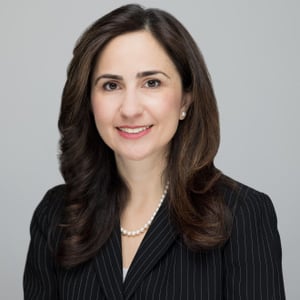
Partner, McGuireWoods LLP
Farnaz is a skilled litigator with extensive experience in representing employers and institutions of higher education, including academic medical centers, in breach of contract, constitutional, discrimination, and tort litigation. She has conducted investigations, advised clients on employment and education laws, and represented them before federal agencies, including the U.S. Department of Labor and U.S. Department of Education.
Farnaz successfully has defended employers, state agencies, government officials, and institutions of higher education in over 30 civil actions as first chair before federal and state courts as well as trial and appellate courts. Farnaz also has advised clients on investigations under civil rights laws such as Title VI of the Civil Rights Act of 1964 (discrimination based on race, color, or national origin), Title VII of the Civil Rights Act of 1964 (discrimination based on race, color, religion, sex, and national origin), and Title IX of the Education Amendments of 1972 (discrimination based on sex). Her deep knowledge of education laws and regulations includes the Higher Education Act of 1965, as amended; accreditation; borrower defense to repayment; gainful employment; financial responsibility standards; FERPA and other privacy laws; the Clery Act; and the Violence Against Women Act (VAWA).
Farnaz is experienced with student and employee disciplinary issues, including under Title IX, and has represented institutions in such matters in several of her previous roles. Representing institutions in Title IX cases requires a nuanced approach, as the institution must balance legal compliance with compassion and care, supporting victims while providing a fair process for both parties, including the accused. Farnaz strikes this balance and is a trusted resource for her clients.
Prior to joining McGuireWoods, Farnaz served as the Deputy General Counsel for Postsecondary Education at the U.S. Department of Education and also as in-house counsel at the University of Virginia. She advised the U.S. Department of Education on litigation strategy and worked closely with the U.S. Department of Justice in cases arising under federal antidiscrimination laws and the Administrative Procedure Act. Government officials also relied on her close counsel in preparation for congressional investigations and hearings. At the University of Virginia, she advised University officials on federal education and employment laws and represented the University and its academic medical center in litigation. She also drafted the University’s antidiscrimination and conduct policies, including free speech policies.
She began her legal career as a law clerk to the Honorable Eric G. Bruggink, Senior Judge, U.S. Court of Federal Claims, and later as a law clerk to the Honorable Leroy Rountree Hassell, Sr., the former Chief Justice, Supreme Court of Virginia.
Director, Independent Women's Law Center, Independent Women's
Jennifer C. Braceras, a member of the Federalist Society Board of Visitors, is the director of Independent Women’s Law Center and a former member of the U.S. Commission on Civil Rights.
Ms. Braceras is a graduate of the Harvard Law School, where she served as an editor of the Law Review. After law school, she clerked for two federal judges and practiced labor and employment law with the Boston law firm Ropes & Gray.
A long time political columnist and editor, Ms. Braceras's writing has appeared in a variety of publications, including the Wall Street Journal, the Boston Globe, the Hill, and National Review Online. She co-hosts At the Bar, a bimonthly virtual happy hour discussion about issues at the intersection of law, politics, and culture.
Sho Sato Professor of Law; Faculty Director, Center for Law, Energy, & the Environment, University of California, Berkeley
Dan Farber is the Sho Sato Professor of Law at the University of California, Berkeley. He is also the Co-Director of the Center for Law, Energy, and the Environment. Professor Farber serves on the editorial board of Foundation Press. He is a member of the American Academy of Arts and Sciences and a Life Member of the American Law Institute. He is the editor of Issues in Legal Scholarship.
Professor Farber is a graduate of the University of Illinois, where he earned his B.A., M.A., and J.D. degrees. He graduated, summa cum laude, from the College of Law, where he was the class valedictorian and served as Editor-in-Chief of the University of Illinois Law Review. After graduation from law school, he was a law clerk for Judge Philip W. Tone of the United States Court of Appeals for the Seventh Circuit and then for Justice John Paul Stevens of the Supreme Court of the United States. Professor Farber practiced law with Sidley & Austin, where he primarily worked on energy issues, before joining the University of Illinois College of Law faculty in 1978. He was a member of the University of Minnesota Law School faculty from1981 to 2002, where he was the McKnight Presidential Professor of Public Law. He also has been a Visiting Professor at the Stanford Law School, Harvard Law School, and the University of Chicago Law School.
Among Professor Farber’s eighteen books are RESEARCH HANDBOOK ON PUBLIC CHOICE AND PUBLIC LAW (Elgar 2010) (with A. O’Connell); JUDGMENT CALLS: POLITICS AND PRINCIPLE IN CONSTITUTIONAL LAW (Oxford University Press 2008) (with S. Sherry); RETAINED BY THE PEOPLE: THE “SILENT” NINTH AMENDMENT AND THE RIGHTS AMERICANS DON’T KNOW THEY HAVE (Basic Books 2007); and LINCOLN’S CONSTITUTION (University of Chicago Press 2003).
Partner, McGuireWoods LLP
Farnaz is a skilled litigator with extensive experience in representing employers and institutions of higher education, including academic medical centers, in breach of contract, constitutional, discrimination, and tort litigation. She has conducted investigations, advised clients on employment and education laws, and represented them before federal agencies, including the U.S. Department of Labor and U.S. Department of Education.
Farnaz successfully has defended employers, state agencies, government officials, and institutions of higher education in over 30 civil actions as first chair before federal and state courts as well as trial and appellate courts. Farnaz also has advised clients on investigations under civil rights laws such as Title VI of the Civil Rights Act of 1964 (discrimination based on race, color, or national origin), Title VII of the Civil Rights Act of 1964 (discrimination based on race, color, religion, sex, and national origin), and Title IX of the Education Amendments of 1972 (discrimination based on sex). Her deep knowledge of education laws and regulations includes the Higher Education Act of 1965, as amended; accreditation; borrower defense to repayment; gainful employment; financial responsibility standards; FERPA and other privacy laws; the Clery Act; and the Violence Against Women Act (VAWA).
Farnaz is experienced with student and employee disciplinary issues, including under Title IX, and has represented institutions in such matters in several of her previous roles. Representing institutions in Title IX cases requires a nuanced approach, as the institution must balance legal compliance with compassion and care, supporting victims while providing a fair process for both parties, including the accused. Farnaz strikes this balance and is a trusted resource for her clients.
Prior to joining McGuireWoods, Farnaz served as the Deputy General Counsel for Postsecondary Education at the U.S. Department of Education and also as in-house counsel at the University of Virginia. She advised the U.S. Department of Education on litigation strategy and worked closely with the U.S. Department of Justice in cases arising under federal antidiscrimination laws and the Administrative Procedure Act. Government officials also relied on her close counsel in preparation for congressional investigations and hearings. At the University of Virginia, she advised University officials on federal education and employment laws and represented the University and its academic medical center in litigation. She also drafted the University’s antidiscrimination and conduct policies, including free speech policies.
She began her legal career as a law clerk to the Honorable Eric G. Bruggink, Senior Judge, U.S. Court of Federal Claims, and later as a law clerk to the Honorable Leroy Rountree Hassell, Sr., the former Chief Justice, Supreme Court of Virginia.

Senior Counsel, First Liberty Institute
Stephanie N. Taub serves as Senior Counsel with First Liberty Institute, focusing on litigation, appellate advocacy, and legal education.
While at First Liberty, her article on the rights of faith-based organizations under Title VII of the Civil Rights Act of 1964 has been published in the Texas Review of Law and Politics. She has also authored pieces published in National Review, the Daily Signal, the Washington Times, the Des Moines Register, and the New York Daily News. In 2017, Taub was named one of 15 recipients of the James Wilson Fellowship in natural law.
Before joining First Liberty, Taub worked as a law clerk to the Honorable Reed O’Connor in the U.S. District Court of the Northern District of Texas.
Taub is a Harvard Law School graduate in the class of 2014 and a Blackstone Fellow in the class of 2012. During law school, she served as Co-President of the HLS Christian Fellowship and Managing Technical Editor of the Harvard Human Rights Journal. Taub spent her law school summers defending religious liberty in public interest law firms and clerking in the Texas Office of Solicitor General.
For her undergraduate studies at the University of Southern California, Taub graduated summa cum laude, majoring in Business Administration with a minor in Philosophy.
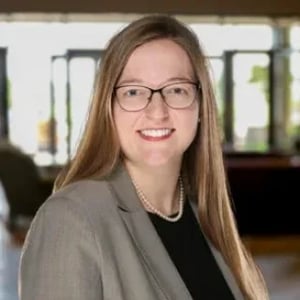
Counsel, First Liberty Institute
Kayla Toney is Associate Counsel with First Liberty Institute, concentrating on religious liberty matters and First Amendment rights for clients of all faiths.
Prior to joining First Liberty, Kayla litigated religious freedom cases as a Constitutional Law Fellow at the Becket Fund for Religious Liberty. She clerked for Judge Gregory E. Maggs on the U.S. Court of Appeals for the Armed Forces, where she gained valuable experience in the military justice system. Kayla also worked as a litigation associate in the D.C. office of Winston & Strawn LLP, where she enjoyed working on pro bono religious liberty matters.
Kayla earned her law degree from George Washington University, where she served as president of the Federalist Society chapter, a member of the GW International Law Review, and a writing fellow. She graduated summa cum laude from Grove City College with a degree in history and economics.
A native of Michigan, Kayla is based in First Liberty’s Washington, D.C. office and is licensed to practice law in Virginia and D.C.
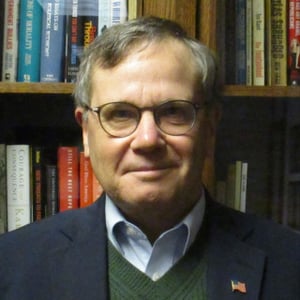
Senior Fellow in Constitutional Jurisprudence, Independence Institute
Professor Robert G. Natelson is a constitutional scholar and author.
Rob’s constitutional scholarship has been cited repeatedly by justices and parties at the U.S. Supreme Court—as well as by federal appeals courts, and at least 18 state supreme courts.
Rob’s research into the Constitution’s original meaning has carried him to libraries throughout the United States and in Britain, including four months at Oxford University. His books and articles span many different parts of the Constitution, including groundbreaking studies of the Necessary and Proper Clause, the Indian Commerce Clause, federalism, Founding-Era interpretation, regulation of elections, and the amendment process of Article V. He created the first-ever online bibliography for 18th century materials used in constitutional research. He is a contributing author to the Encyclopedia of the Supreme Court of the United States (on Magna Carta). He contributed eight essays to the third edition of the Heritage Guide to the Constitution: five on the amendment procedure and one each on the Guarantee Clause, the Postal Clause, and the Recess Appointments Clause.
U.S. Supreme Court justices have relied explicitly on Rob’s research in 41 citations in 13 separate cases.

Thomas M. Siebel Senior Fellow, The Hoover Institution, Stanford University; Gary T. Schwartz Distinguished Professor of Law Emeritus, UCLA School of Law
Eugene Volokh is the Thomas M. Siebel Senior Fellow at the Hoover Institution (Stanford), as well as the Gary T. Schwartz Distinguished Professor of Law Emeritus and Distinguished Research Professor at UCLA School of Law. He recently retired from teaching at UCLA, after 30 years there, and is now focusing on research.
Volokh is the author of the textbooks The First Amendment and Related Statutes (8th ed. 2023), and Academic Legal Writing (5th ed. 2016), as well as over 100 academic law journal articles, mostly on First Amendment law. He is a member of The American Law Institute; the editor-in-chief of the Journal of Free Speech Law; and the creator and coauthor of The Volokh Conspiracy, a leading legal blog founded in 2002 (hosted at the Washington Post from 2014 to 2017 and now at Reason Magazine).
Thomas M. Siebel Senior Fellow, The Hoover Institution, Stanford University; Gary T. Schwartz Distinguished Professor of Law Emeritus, UCLA School of Law
Eugene Volokh is the Thomas M. Siebel Senior Fellow at the Hoover Institution (Stanford), as well as the Gary T. Schwartz Distinguished Professor of Law Emeritus and Distinguished Research Professor at UCLA School of Law. He recently retired from teaching at UCLA, after 30 years there, and is now focusing on research.
Volokh is the author of the textbooks The First Amendment and Related Statutes (8th ed. 2023), and Academic Legal Writing (5th ed. 2016), as well as over 100 academic law journal articles, mostly on First Amendment law. He is a member of The American Law Institute; the editor-in-chief of the Journal of Free Speech Law; and the creator and coauthor of The Volokh Conspiracy, a leading legal blog founded in 2002 (hosted at the Washington Post from 2014 to 2017 and now at Reason Magazine).

Remedying Criminal Trial Errors: Retrial or Acquittal in Smith v. United States?
Paul James Larkin, Charles "Cully" Stimson
Federalist Society Review, Volume 24
The best-known rule of criminal procedure is that the government may not deprive someone of...
Title IX and the Major Questions Doctrine
Jennifer C. Braceras, Daniel Farber, Farnaz F. Thompson
In West Virginia v. EPA, the Supreme Court held that the major questions doctrine requires...
Title IX and the Major Questions Doctrine
Jennifer C. Braceras, Daniel Farber, Farnaz F. Thompson
In West Virginia v. EPA, the Supreme Court held that the major questions doctrine requires...
A Cord of Three Strands: How Kennedy v. Bremerton School District Changed Free Exercise, Establishment, and Free Speech Clause Doctrine
Stephanie Taub, Kayla Ann Toney
Federalist Society Review, Volume 24
In 2015, Bremerton High School football coach Joseph Kennedy lost his job for kneeling at...
Topics
Book Review: NOT Accountable, by Philip Howard (Part Two)
In light of the inequities and inefficiencies associated with monopolistic government unionism discussed in Part...
Topics
Book Review: NOT Accountable, by Philip Howard (Part One)
Many of the grave and chronic maladies of modern American governance, including a loss of...
The Meaning of "Regulate Commerce" to the Constitution's Ratifiers
Robert G. Natelson
Federalist Society Review, Volume 23
I. Previous Scholarship[1] A. Views of “Commerce”: Traditional and “Mega” The Constitution grants Congress power...
Topics
On the Constitutionality of Guantanamo Tribunals
The ABA’s Gellhorn-Sargentich Law Student Essay Award for 2022 has been won by Laura Stanley...
Litigation Update: Volokh et al v. James
Eugene Volokh
In early December, Prof. Eugene Volokh, Rumble Canada, and Locals Technology filed a complaint in...
Litigation Update: Volokh et al v. James
Eugene Volokh
In early December, Prof. Eugene Volokh, Rumble Canada, and Locals Technology filed a complaint in...