

Partner, Gibson, Dunn & Crutcher, LLP
Svetlana S. Gans is a partner in the Washington, D.C. office of Gibson, Dunn & Crutcher, LLP where she helps clients navigate complex consumer protection, privacy, and competition related regulatory proceedings before the U.S. Federal Trade Commission (FTC), , U.S. Department of Justice Antitrust Division, State Attorneys General and other enforcement bodies. Ms. Gans also assists on litigation matters and provides strategic counseling and advice related to public policy issues.
Before joining Gibson Dunn, she served as the Vice President & Associate General Counsel at NCTA, the Internet & Television Association, where she helped lead the association’s consumer protection and competition policy work. Prior to joining NCTA, Ms. Gans served with distinction as Chief of Staff to Acting Chairman Maureen K. Ohlhausen at the FTC. As the agency chief of staff, Ms. Gans managed and oversaw agency operations, including bureau and office heads reporting to the Chairman, a seven-member office staff, and an agency budget of over $300 million. She also served as the Acting Chairman’s key advisor on consumer protection and competition investigations and litigation, working with a diverse team of attorneys and economists to preserve competition and protect U.S. consumers. She created, executed, and oversaw several strategic initiatives for the agency, including the agency process reform, regulatory reform, and data security transparency initiatives. Previously, Ms. Gans had the unique experience of serving in both litigating bureaus of the FTC: the Bureau of Competition and the Bureau of Consumer Protection.
Prior to her time in government, Ms. Gans worked as an antitrust associate at major law firms. Her practice focused on defending consumer product, financial services, and trade association clients in regulatory and private investigations alleging conspiracy and violations of antitrust and consumer protection laws.
Ms. Gans has been an active leader in the ABA Antitrust Law Section (“Section”) for two decades, and currently serves as the Section’s Marketing Officer. Ms. Gans helped create the Section’s Young Lawyer Representative Program, now in its 10th year, and the Section’s Law Ambassador Program, each aimed at developing and promoting the next generation of consumer protection and competition attorneys. Ms. Gans is also active in the Federal Communications Bar Association, currently serving as Co-Chair of the Diversity Pipeline Initiative and the Women’s Leadership Committee.
Ms. Gans received her law degree with high honors from the University of Denver College of Law. During law school, Ms. Gans served as a Judicial Intern to the Honorable John L. Kane, Jr. and as an Honors Program Paralegal for the United States Department of Justice Antitrust Division, Merger Taskforce. Ms. Gans earned her undergraduate degree cum laude from Boston University.
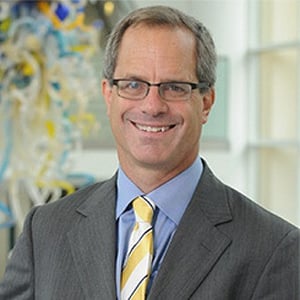
Elizabeth and Thomas Holder Chair, Scheller College of Business, Georgia Institute of Technology
Peter Swire has been a leading privacy and cyberlaw scholar, government leader, and practitioner since the rise of the Internet in the 1990’s. He came to the Georgia Institute of Technology in 2013, where he is the Elizabeth and Tommy Holder Chair in the Scheller College of Business, and Professor in the School of Cybersecurity and Privacy. He is senior counsel with the law firm of Alston & Bird LLP.
Swire served as one of five members of President Obama’s Review Group on Intelligence and Communications Technology. Prior to that, he was co-chair of the global Do Not Track process for the World Wide Web Consortium. He is a Senior Fellow with the Future of Privacy Forum, and has served on the National Academy of Sciences & Engineering Forum on Cyber Resilience.
Under President Clinton, Swire was the Chief Counselor for Privacy, in the U.S. Office of Management and Budget, the first person to have U.S. government-wide responsibility for privacy policy. Under President Obama, he was Special Assistant to the President for Economic Policy.

Professor of Economics, Stuart School of Business, Illinois Institute of Technology
Liad Wagman is Professor of Economics at the Illinois Institute of Technology’s Stuart School of Business.
Professor Wagman works on topics in the areas of Information Economics, Industrial Organization, Law and Economics, and Entrepreneurship, studying issues of data and privacy, information trade and utilization, and new venture financing. He is a recipient of the Sigma Xi Excellence in Research Award, the Bauer Family University Excellence in Teaching Award, the Yahoo Faculty Research and Engagement Award, and has been selected into Poet & Quants 2015 Top 40 Business School Faculty Under 40.
Professor Wagman is the Senior Economic and Technology Advisor of the Federal Trade Commission’s Office of Policy Planning, and was a Visiting Associate Professor of Executive Education and Managerial Economics & Decision Sciences at Northwestern University’s Kellogg School of Management, a Visiting Scholar at the Duke University Economics Department, a research fellow at the Duke University Computer Science Department, a research fellow at the Duke University Social Sciences Research Institute, a recipient of the Program for Advanced Study in the Social Sciences Fellowship, a recipient of the Education and Research Initiative Award, a recipient of the Institute of Industrial and Systems Engineers Best Paper Award, and a recipient of the International Conference on Artificial Intelligence Outstanding Paper Award.
Professor Wagman’s work is published in academic journals in economics, finance, operations research, and marketing, including the RAND Journal of Economics, the American Economic Journal: Microeconomics, the Journal of Corporate Finance, and Marketing Science.
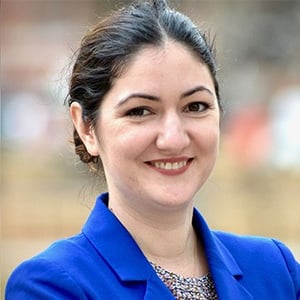
Senior Counsel, Future of Privacy Forum
Dr. Gabriela Zanfir-Fortuna is Senior Counsel for the Future of Privacy Forum, where she leads the work on Global privacy developments and European data protection law and policy, with their impact on all focus areas of FPF, including de-identification, AI, mobility, adtech and education.
Prior to moving to the US in 2016, Gabriela worked for the European Data Protection Supervisor in Brussels, being part of the team that advised the EU legislator on the GDPR during its legislative process. She dealt with both enforcement and policy matters, was a member of the EDPS litigation team, as well as actively participated in the work of the Article 29 Working Party. She worked on the assessments of both the draft EU-US Privacy Shield and the draft EU-US Umbrella Agreement during her time at the EDPS and the Article 29 Working Party.
Gabriela is currently serving as a Program Chair (Law) for the ACM Fairness, Accountability and Transparency Conference 2020 and she served as a member of the Program Advisory Committee for the ICDPPC 2019 Conference in Tirana. She is also a member of the Program Committee of PLSC Europe, CPDP – academic track, ACM – AIES 2020 and the ENISA Annual Privacy Forum.
She holds a PhD in law (2013, University of Craiova) with a thesis on the rights of the data subject from the perspective of their adjudication in civil law and an LLM in Human Rights (2010), after obtaining her law degree at the same university (2009). She is also an associated researcher with the Law, Science, Technology and Society Center at Vrije Universiteit Brussel and a Project Scientist supporting the IoT Privacy Infrastructure Project within the Institute for Software Research of Carnegie Mellon University.
Gabriela is a contributor-author to ‘The EU General Data Protection Regulation – A Commentary‘, edited by C. Kuner, C. Docksey and L.A. Bygrave, Oxford University Press, 2020 (on Articles 13, 14, 15, 21 and 82). She is also the author of the volume ‘Protecția Datelor Personale. Drepturile Persoanei Vizate‘, C.H. Beck, Bucharest, 2015.

Vice Dean and Professor of Law, Villanova University School of Law
Professor Michael Risch joined the Villanova faculty in 2010 from the West Virginia University College of Law, where he directed the Entrepreneurship, Innovation and Law Program. Prior to joining the West Virginia faculty, he served as an Olin Fellow in Law at Stanford Law School. Professor Risch’s teaching and scholarship focus on intellectual property and internet law, with an emphasis on patents, trade secrets and information access. His articles have been published in the Stanford Law Review and Duke Law Journal, among others; online in the Yale Law Journal Online and PENNumbra; and less formally at the Madisonian, Prawfsblawg, and Patently-O blogs. Two of his articles have been cited by the United States Supreme Court. Professor Risch received his A.B. with honors and distinction in Public Policy and with distinction in Quantitative Economics from Stanford University, and his J.D. with high honors from the University of Chicago Law School. Prior to entering academia, he was a partner at intellectual property boutique Russo & Hale LLP in Palo Alto, California.

Senior Fellow, Technology Policy, Cato Institute
Jennifer’s research focuses on the intersection of emerging technology and law with a particular interest in the interactions between technology and the administrative state. Her work covers topics including judicial deference, liability protection for Internet platforms, autonomous vehicles and other disruptive transportation technologies, the regulation of data privacy, and the benefits of technology and innovation. Her work has appeared in USA Today, the Chicago Tribune, the New York Daily News, the Sacramento Bee, the Washington Times, Real Clear Policy, and U.S. News and World Report. Jennifer has a JD from the University of Alabama School of Law and a BA in political science at Wellesley College.

Senior Legal Fellow, The Future of Free Speech, Vanderbilt University
Ashkhen Kazaryan is a renowned expert in First Amendment law and technology policy, specializing in digital free speech, artificial intelligence, and the intersection of constitutional rights with emerging technologies. As a Senior Legal Fellow at the Future of Free Speech at Vanderbilt University, she leads initiatives to protect free expression and shape policies that uphold the First Amendment in the digital age.
Previously, Ashkhen was the lead for North and Latin America on the content regulation team at Meta, where she also served as the company’s policy lead on Section 230. She has also been a Senior Fellow at Stand Together and the Director of Civil Liberties at TechFreedom, where she worked extensively on platform liability, free speech, and internet governance. She is currently Fellow for the First Amendment at the Freedom Forum.
Ashkhen earned her specialist in law degree summa cum laude from Lomonosov Moscow State University in 2012 and later received a master of law degree from Yale Law School in 2016. During her time at Yale, she contributed as an articles editor for the Yale Journal of Law and Feminism, a senior editor for the Yale Law and Policy Review, and an editor for the Yale Journal of Law and Technology, while also serving as co-chair of the Public Interest Fellowship.
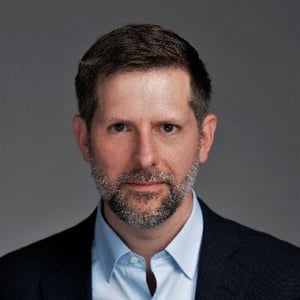
Head of AI Policy, Abundance Institute
Neil Chilson is the Head of AI Policy at the Abundance Institute. Prior to this position, he served as a Senior Research Fellow at the Center for Growth and Opportunity. Chilson is a lawyer, computer scientist, and author of the book “Getting Out of Control: Emergent Leadership in a Complex World.”
Chilson was previously the senior research fellow for Technology and Innovation at Stand Together, where he guided efforts to understand and promote the legal and cultural paradigms that best enable people to discover, innovate, and improve all our lives.
Before Stand Together, Chilson was the Chief Technologist at the Federal Trade Commission, where he focused on the economics of privacy and blockchain-related issues. Previously, he was an attorney advisor to Acting FTC Chairman Maureen K. Ohlhausen. In both roles he advised Chairman Ohlhausen and worked with staff on nearly every major technology-related case, report, workshop, or other FTC proceeding since January 2014. Neil joined the FTC from telecom firm Wilkinson Barker Knauer. Neil is frequently quoted by the press and his work has appeared in numerous news outlets, including The Wall Street Journal, The Washington Post, USAToday, and Newsweek. Neil has a J.D. from The George Washington Law School, a M.S. in computer science from University of Illinois, Urbana-Champaign, and a B.S. in computer science from Harding University.

Senior Vice President, Strand Consult
Roslyn Layton, PhD is a leading international expert on technology policy. She is Senior Vice President of Strand Consult, an independent consultancy serving the global mobile telecom industry. She is also a Visiting Researcher at Aalborg University Copenhagen where she earned a doctoral thesis on network neutrality by measuring the outcome of the policy across 53 countries over 5 years. She served on the Presidential Transition Team for the Federal Communications Commission (FCC), and her work was critical to the FCC’s defense for the Restoring Internet Freedom Order. She has testified to the United States Senate and House on multiple topics including spectrum, broadband, mobile mergers, competition, and privacy. She founded the think tank China Tech Threat to study the problems of technology produced by the People’s Republic of China. She serves as the Program Chair for the Telecom Policy Research Conference, the leading interdisciplinary academic gathering. Her recent paper on rural broadband describes the empirical case for policy reform to recover network infrastructure costs from streaming video entertainment providers. She is a Senior Contributor to Forbes.

Chief Economist, The Phoenix Center for Advanced Legal & Economic Public Policy Studies
George S. Ford is the chief economist for the Phoenix Center for Advanced Legal and Economic Public Policy Studies, a nonprofit 501(c)(3) research organization that studies broad public-policy issues related to governance, social and economic conditions, with a particular emphasis on the law and economics of the digital age.
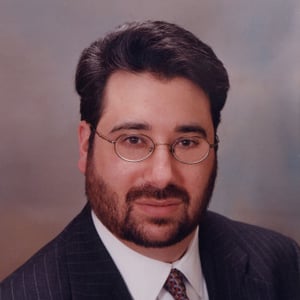
President, Phoenix Center for Advanced Legal and Economic Public Policy Studies
Lawrence J. Spiwak is President of the Phoenix Center for Advanced Legal & Economic Public Policy Studies, a non-profit 501(c)(3) organization that studies broad public-policy issues related to governance, social and economic conditions, with a particular emphasis on the law and economics of the digital age. Mr. Spiwak is a prolific scholar whose work is frequently cited by policymakers, major news media and academic journals around the world, and is in the top 1.3%of authors downloaded on the Social Science Research Network. Mr. Spiwak currently serves as the co-chair of the Federal Communications Bar Association’s (FCBA) committee responsible for overseeing the FEDERAL COMMUNICATIONS LAW JOURNAL and is a member of the program committee of the Telecommunications Policy Research Conference (“TPRC”). Mr. Spiwak is also the recipient of the FCBA’s Distinguished Service Award. Prior to joining the Phoenix Center, Mr. Spiwak was a Senior Attorney with the Competition Division in the FCC’s Office of General Counsel from 1994-1998. While in college, Mr. Spiwak was accepted into the Presidential Stay-In School program where he was responsible for delivering classified and confidential material among senior White House and Reagan Administration officials and received a full FBI security clearance. Mr. Spiwak received his B.A. with Special Honors from the George Washington University and his J.D. from the Benjamin N. Cardozo School of Law. Mr. Spiwak is a member in good standing of the bars of New York, Massachusetts, the District of Columbia, and the U.S. Court of Appeals for the D.C. Circuit.
Head of AI Policy, Abundance Institute
Neil Chilson is the Head of AI Policy at the Abundance Institute. Prior to this position, he served as a Senior Research Fellow at the Center for Growth and Opportunity. Chilson is a lawyer, computer scientist, and author of the book “Getting Out of Control: Emergent Leadership in a Complex World.”
Chilson was previously the senior research fellow for Technology and Innovation at Stand Together, where he guided efforts to understand and promote the legal and cultural paradigms that best enable people to discover, innovate, and improve all our lives.
Before Stand Together, Chilson was the Chief Technologist at the Federal Trade Commission, where he focused on the economics of privacy and blockchain-related issues. Previously, he was an attorney advisor to Acting FTC Chairman Maureen K. Ohlhausen. In both roles he advised Chairman Ohlhausen and worked with staff on nearly every major technology-related case, report, workshop, or other FTC proceeding since January 2014. Neil joined the FTC from telecom firm Wilkinson Barker Knauer. Neil is frequently quoted by the press and his work has appeared in numerous news outlets, including The Wall Street Journal, The Washington Post, USAToday, and Newsweek. Neil has a J.D. from The George Washington Law School, a M.S. in computer science from University of Illinois, Urbana-Champaign, and a B.S. in computer science from Harding University.

Senior Research Fellow, Center for Growth and Opportunity
William Rinehart is a Senior Research Fellow at the Center for Growth and Opportunity at Utah State University.
He specializes in telecommunication, Internet, and data policy, with a focus on emerging technologies and innovation. His work has appeared in The Wall Street Journal, Bloomberg, Wired, Morning Consult, The Hill, Forbes, Reason, Marginal Revolution, Overlawyered, and on BBC Radio and NPR, just to name a few. Rinehart speaks regularly on topics related to tech policy and has been cited in regulatory orders from the FCC as well as Supreme Court petitions.
Rinehart came to the Center from the American Action Forum, where he served as Director of Technology and Innovation Policy. He was also previously a Research Fellow at TechFreedom and the Director of Operations at the International Center for Law & Economics. Additionally, he worked for the Institute for Policy and Civic Engagement as the Research Assistant in Technology and Civic Engagement. Rinehart is currently a Frédéric Bastiat Fellow at the Mercatus Center and previously a Fellow at the Internet Law & Policy Foundry. Additionally, he served on the Federal Communications Commission’s Broadband Deployment Committee and Consumer Advocacy Committee.

Technology Director, Surveillance Technology Oversight Project
Liz O’Sullivan is the Technology Director of the Surveillance Technology Oversight Project (S.T.O.P.). She’s also co-founder and vice president of commercial operations at an AI explainability and bias monitoring startup called Arthur AI. She has been featured in articles on ethical AI in the NY Times, The Intercept, and The Register, and has written about AI for the ACLU and The Campaign to Stop Killer Robots. She has spent 10 years in tech, mainly in the AI space, most recently as the head of image annotations for computer vision startup, Clarifai. She has held various leadership roles in NYC startups, ranging from Customer Delivery and Support to Sales and Solutions Architecture. Her passion for ethics springs from her degree in Philosophy from UNC Chapel Hill.
EPIC Senior Counsel and Director, EPIC Domestic Surveillance Project
Jeramie Scott is Senior Counsel at EPIC and Director of the EPIC Domestic Surveillance Project. His work focuses on the privacy issues implicated by domestic surveillance programs with a particular focus on drones, cybersecurity, biometrics, and social media monitoring. Mr. Scott regularly litigates open government cases and cases arising under the Administrative Procedure Act. He is also a co-editor of “Privacy in the Modern Age: The Search for Solutions” and the author of a recently published essay entitled “Social Media and Government Surveillance: The Case for Better Privacy Protections of Our Newest Public Space.” Prior to joining EPIC, Mr. Scott graduated from the New York University Law School where he was a clinic intern at the Brennan Center’s Liberty and National Security Program. His work at the Brennan Center focused on civil liberty issues arising from local law enforcement surveillance. He also served as a research assistant for Professor Ira Rubinstein, focusing on the role of privacy-enhancing technologies in alleviating consumer privacy issues. Mr. Scott holds a Bachelor of Science in Symbolic Systems and a Master’s degree in Philosophy, both from Stanford University. He is a member of the bar of D.C. and New York State.

Deep Dive Episode 139 – Implications of Data Portability: A Consumer Protection Tool or Burden?
Svetlana Gans, Peter Swire, Liad Wagman, Gabriela Zanfir-Fortuna
A Regulatory Transparency Project Teleforum
Data portability has been a hot topic of late, from GDPR to CCPA to the...
Google LLC v. Oracle America Inc. - Post-Argument SCOTUScast
Michael Risch
featuring Michael Risch
The Supreme Court heard oral arguments for Google LLC v. Oracle America Inc. on October...
Explainer Episode 17 – A Big Week for Section 230
Jennifer Huddleston, Ashkhen Kazaryan
Regulatory Transparency Project's Fourth Branch Podcast
In this episode, Jennifer Huddleston and Ashkhen Kazaryan break down the recent news related to...
Explainer Episode 16 – An Update on Antitrust and Big Tech
Neil Chilson
Regulatory Transparency Project's Fourth Branch Podcast
Recent weeks have been chock-full of headlines regarding antitrust and big tech companies, from the House...
Topics
The FCC Should Not Engage in Section 230 Rulemaking
That's Debatable is a new blog initiative bringing together legal and policy experts with differing perspectives...
How Can the FCC Improve Provision of Telecommunications Services for the Deaf and Hearing Impaired?
Roslyn Layton
Federalist Society Review, Volume 21
Note from the Editor: The Federalist Society takes no positions on particular legal and public...
Topics
Trump Administration Asks SCOTUS to Determine Whether the First Amendment Bars @realDonaldTrump From Blocking Twitter Critics
The Federalist Society is pleased to announce its Student Blog Initiative, a project of the...
Topics
The FCC Should Address Distortions of Section 230
That's Debatable is a new blog initiative bringing together legal and policy experts with differing perspectives...
The Law and Economics of Municipal Broadband
George Ford, Lawrence J. Spiwak
Now six months into the COVID pandemic, the Internet has offered Americans a welcome economic,...
The Price of Privacy: A Debate over Corporate Surveillance
Neil Chilson, William Rinehart, Liz O?Sullivan, Jeramie Scott
Regulatory Transparency Project's Fourth Branch Video
Data is being collected on each of us every day by the apps that we...