
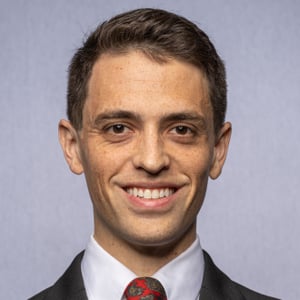
Director of the Center for Energy and Environment and Senior Fellow, Competitive Enterprise Institute
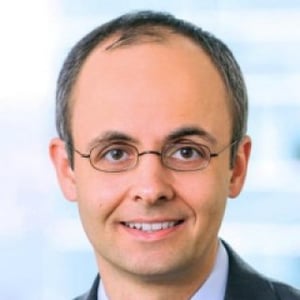
Daren Bakst is Director of the Competitive Enterprise Institute’s Center for Energy and Environment and a Senior Fellow. In this role, he manages, develops, and leads the coalition, advocacy, and research activities of the Center, which is one of the most effective advocates for Free Market Environmentalism.
Before joining CEI as Deputy Director in March, 2023, Daren was a Senior Research Fellow in Environmental Policy and Regulation at the Heritage Foundation, where he played a leading role in the launch of the organization’s new energy and environment center, and created and hosted the Heritage Foundation’s energy and environment podcast the “PowerCast.” During his decade at Heritage, Daren wrote about energy and environmental policy, food and agricultural policy (including editing and co-authoring the book Farms and Free Enterprise), regulation, and trade among other topics.
Daren also worked on environmental policy and regulation at the U.S. Chamber of Commerce, where he was a policy counsel and served as the executive to the association’s Government Oversight, Operations & Consumer Affairs committee, which was responsible for issues such as regulatory process reform. Daren has significant state level experience, working for seven years at the Raleigh, N.C.-based John Locke Foundation, one of the largest state-based, free-market think tanks. As director of legal and regulatory studies, his broad portfolio included energy and environmental policy, regulatory reform, and property rights.
Daren has testified numerous times before Congress, regularly submits comments to federal agencies and has appeared in or been quoted by a wide range of media outlets such as The Wall Street Journal, USA Today, The Washington Times, CNN, Fox Business News, Al-Jazeera America, and U.S. News and World Report. He is a member of the Federalist Society’s Environmental Law and Property Rights Executive Committee and serves on the College Level Advisory Board for Constituting America, an organization that informs and educates about the importance of the U.S. Constitution.
Daren, who hails from Florida, received his bachelor’s and master’s degrees from George Washington University. A licensed attorney, he holds a law degree from the University of Miami and a master of laws degree from American University.
Professor of Law, Georgetown Law
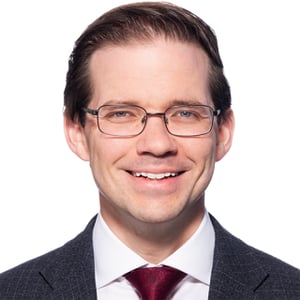
William W. Buzbee is a professor of law at Georgetown University Law Center. In his teaching and scholarship, he specializes in environmental law, legislation and regulation, and administrative law. Recent publications focus on climate regulation, deregulation and law governing agency policy change, and federalism. He also offers seminars on advanced environmental, regulatory, and constitutional law subjects, with his most recent seminar focused on “The Art of Regulatory War.”
Professor Buzbee’s books include the recently published Fighting Westway: Environmental Law, Citizen Activism, and the Regulatory War that Transformed New York City (Cornell University Press 2014) and Preemption Choice: The Theory, Law and Reality of Federalism’s Core Question(Cambridge University Press, hardcover 2009, paperback 2011) (William W. Buzbee editor and contributor). He has been a co-author of the 5th , 6th, 7th and forthcoming 8th editions of Environmental Protection: Law and Policy (Aspen/Wolters Kluwer). Law review scholarship includes publications in New York University Law Review, University of Pennsylvania Law Review, Michigan Law Review, Stanford Law Review (co-authored), Cornell Law Review (co-authored), Duke Law Journal (forthcoming), George Washington Law Review, Iowa Law Review, The Journal of Law and Politics and in an array of other journals, books, news outlets, and blogs. Three of his articles have been named among the 10 best environmental or land use law articles of that year and republished in the Land Use and Environment Law Review. He regularly assists with appellate and Supreme Court environmental, federalism, and regulatory litigation, and also has testified before congressional committees on environmental and regulatory matters. He has published op-eds on regulatory and environmental issues with The New York Times, The Hill, CNN, and been quoted and interviewed by numerous press and media outlets.
Professor Buzbee joined Georgetown from Emory Law School, where he was a professor of law and directed its Environmental and Natural Resources Law Program. He also co-directed Emory’s Center on Federalism and Intersystemic Governance. He has been a visiting professor of law at Columbia, Cornell and Illinois law schools. He has also served as a professor for the Leiden-Amsterdam-Columbia Law School Summer Program in American Law. Professor Buzbee is a founding Member Scholar of the Center for Progressive Reform, a Washington D.C.-based regulatory think tank. Professor Buzbee was awarded the 2007-2008 Emory Williams Teaching Award for excellence in teaching. Professor Buzbee clerked for United States Judge Jose A. Cabranes, and before becoming a professor was an attorney-fellow at the Natural Resources Defense Council, and did environmental, land use and litigation work for the New York City law firm, Patterson, Belknap, Webb & Tyler. JD, Columbia Law School, 1986; BA, Amherst College, magna cum laude, 1983.
Senior Attorney, Pacific Legal Foundation
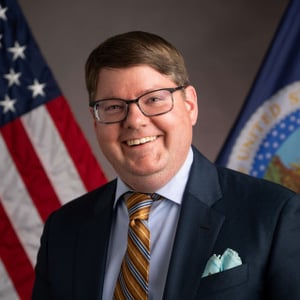
Damien Schiff is a senior attorney at Pacific Legal Foundation. He leads its environmental practice group, a unique initiative that draws broadly from PLF’s expertise and success in property rights and separation of powers litigation. Over the years, Damien has represented hundreds of landowners and property rights advocates to defend their liberties against heavy-handed and unwarranted environmental and land-use regulation. His litigation experience includes Sackett v. U.S. Environmental Protection Agency, a groundbreaking decision in which the U.S. Supreme Court upheld the right of landowners to challenge Clean Water Act compliance orders issued by EPA, and Contoski v. Norton, PLF’s successful effort to force the federal government to make good on its promise to delist the bald eagle from the Endangered Species Act.
Besides litigation, Damien has written academic articles on a variety of subjects, including the Endangered Species Act, the Clean Water Act, greenhouse gas torts, the duty to rescue, and international water law. He has appeared on a variety of television and radio programs and has been quoted in The New York Times, The Wall Street Journal, Harper’s Magazine, and The Economist, among other publications.
He obtained his law degree magna cum laude from the University of San Diego School of Law, and his undergraduate degree magna cum laude from Georgetown University. While at USD, he was a research assistant for Professor Bernard Siegan, a leading constitutional theorist and advocate for property rights and economic liberty. Immediately prior to joining PLF, Damien clerked for Judge (and former PLF attorney) Victor Wolski of the United States Court of Federal Claims. Damien credits the mentoring and examples of Professor Siegan and Judge Wolski for his decision to pursue a career in liberty-based public interest litigation.
Damien lives in Sacramento with his wife, two young sons, four chickens, and a cat named Princess. In his off hours he enjoys stamp collecting, Gregorian chant, and martinis—preferably at the same time.
Vice President, Policy & Advocacy, USTelecom
Diana Eisner joined USTelecom from Frontier Communications where she served as Director, Federal Regulatory Affairs and helped develop the communications company’s regulatory strategy on broadband deployment, robocalls and cybersecurity, among others. Previously Eisner worked as an associate attorney at Manatt, Phelps & Phillips, LLP. She is a graduate of Rutgers University and earned her JD from Temple University Beasley School of Law.
Director of Broadband and Spectrum Policy, Information Technology and Innovation Foundation
Joe Kane is director of broadband and spectrum policy at ITIF. Previously, he was a technology policy fellow at the R Street Institute, where he covered spectrum policy, broadband deployment and regulation, competition, and consumer protection. Earlier, Joe was a graduate research fellow at the Mercatus Center, where he worked on Internet policy issues, telecom regulation, and the role of the FCC.
Joe interned in the office of FCC Chairman Ajit Pai. He also interned with the satellite and terrestrial network provider SES, the Satellite Industry Association, the Competitive Enterprise Institute, and the American Action Forum. Joe holds a J.D. from The Catholic University of America, a master’s in economics from George Mason University, and a bachelor’s in political science from Grove City College.
Senior Policy Counsel, Public Knowledge
Jenna is a Senior Policy Counsel, where she focuses on promoting Public Knowledge’s mission through government affairs.
Prior to joining Public Knowledge, Jenna served as a Senior Policy Analyst for the Workforce Data Quality Campaign (WDQC) at the National Skills Coalition, where she led WDQC’s state policy advocacy and technical assistance efforts on state data system development and use. She also served as an Associate at Upturn, where she analyzed the civil rights implications of new technologies, and as Manager and Legal Counsel of the International Intellectual Property Institute, where she led the organization’s efforts to utilize intellectual property for international economic development. Jenna has also held internships with the American Civil Liberties Union and Senator Sherrod Brown (D-OH).
Jenna received her J.D, cum laude, and B.A from Case Western Reserve University. In her free time, Jenna enjoys yoga, international travel, and experimenting with new recipes.
Deputy Staff Director, United States Senate Committee on Commerce, Science & Transportation
Crystal Tully is the Deputy Staff Director at the United States Senate Committee on Commerce, Science & Transportation. Tully had previously led the Commerce Committee’s communications and technology policy team since September 2017. Prior to her current role, Ms. Tully served as counsel to Chairman Thune and senior advisor to Chairman Roger Wicker (R-MS) of the Commerce Subcommittee on Communications, Technology, Innovation and the Internet. Ms. Tully previously worked in the cable and mobile wireless industries advocating before Congress and Federal agencies. She also served as legislative aide to Senator John E. Sununu (R-NH) and as a law clerk at the Federal Communications Commission and Federal Trade Commission. Ms. Tully holds a JD from the George Washington University School of Law and a BA from the University of New Hampshire.
Special Advisor to Chairwoman Rosenworcel and Deputy Managing Director, The Office of the Managing Director, Federal Communications Commission
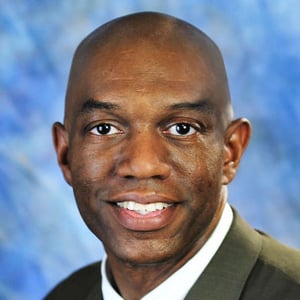
Sanford S. Williams has worked at the FCC since 1999, and is currently both a Special Advisor to FCC Chairwoman Jessica Rosenworcel and a Deputy Managing Director of the FCC. Mr. Williams is also a Lecturer in Law at UCLA School of Law.
Mr. Williams received his B.S. in Operations Research and Industrial Engineering and an MBA from Cornell University, and his J.D. from the University of Virginia School of Law where he was a member of the Virginia Law Review.
Mr. Williams was elected three times to the Manassas City Virginia School Board, and is the first African American Board Chair in the history of Manassas. Mr. Williams most recently wrote an article published in Medium, "It's Not Just About George Floyd."
Vice President, Policy & Advocacy, USTelecom
Diana Eisner joined USTelecom from Frontier Communications where she served as Director, Federal Regulatory Affairs and helped develop the communications company’s regulatory strategy on broadband deployment, robocalls and cybersecurity, among others. Previously Eisner worked as an associate attorney at Manatt, Phelps & Phillips, LLP. She is a graduate of Rutgers University and earned her JD from Temple University Beasley School of Law.
Director of Broadband and Spectrum Policy, Information Technology and Innovation Foundation
Joe Kane is director of broadband and spectrum policy at ITIF. Previously, he was a technology policy fellow at the R Street Institute, where he covered spectrum policy, broadband deployment and regulation, competition, and consumer protection. Earlier, Joe was a graduate research fellow at the Mercatus Center, where he worked on Internet policy issues, telecom regulation, and the role of the FCC.
Joe interned in the office of FCC Chairman Ajit Pai. He also interned with the satellite and terrestrial network provider SES, the Satellite Industry Association, the Competitive Enterprise Institute, and the American Action Forum. Joe holds a J.D. from The Catholic University of America, a master’s in economics from George Mason University, and a bachelor’s in political science from Grove City College.
Senior Policy Counsel, Public Knowledge
Jenna is a Senior Policy Counsel, where she focuses on promoting Public Knowledge’s mission through government affairs.
Prior to joining Public Knowledge, Jenna served as a Senior Policy Analyst for the Workforce Data Quality Campaign (WDQC) at the National Skills Coalition, where she led WDQC’s state policy advocacy and technical assistance efforts on state data system development and use. She also served as an Associate at Upturn, where she analyzed the civil rights implications of new technologies, and as Manager and Legal Counsel of the International Intellectual Property Institute, where she led the organization’s efforts to utilize intellectual property for international economic development. Jenna has also held internships with the American Civil Liberties Union and Senator Sherrod Brown (D-OH).
Jenna received her J.D, cum laude, and B.A from Case Western Reserve University. In her free time, Jenna enjoys yoga, international travel, and experimenting with new recipes.
Deputy Staff Director, United States Senate Committee on Commerce, Science & Transportation
Crystal Tully is the Deputy Staff Director at the United States Senate Committee on Commerce, Science & Transportation. Tully had previously led the Commerce Committee’s communications and technology policy team since September 2017. Prior to her current role, Ms. Tully served as counsel to Chairman Thune and senior advisor to Chairman Roger Wicker (R-MS) of the Commerce Subcommittee on Communications, Technology, Innovation and the Internet. Ms. Tully previously worked in the cable and mobile wireless industries advocating before Congress and Federal agencies. She also served as legislative aide to Senator John E. Sununu (R-NH) and as a law clerk at the Federal Communications Commission and Federal Trade Commission. Ms. Tully holds a JD from the George Washington University School of Law and a BA from the University of New Hampshire.
Special Advisor to Chairwoman Rosenworcel and Deputy Managing Director, The Office of the Managing Director, Federal Communications Commission
Sanford S. Williams has worked at the FCC since 1999, and is currently both a Special Advisor to FCC Chairwoman Jessica Rosenworcel and a Deputy Managing Director of the FCC. Mr. Williams is also a Lecturer in Law at UCLA School of Law.
Mr. Williams received his B.S. in Operations Research and Industrial Engineering and an MBA from Cornell University, and his J.D. from the University of Virginia School of Law where he was a member of the Virginia Law Review.
Mr. Williams was elected three times to the Manassas City Virginia School Board, and is the first African American Board Chair in the history of Manassas. Mr. Williams most recently wrote an article published in Medium, "It's Not Just About George Floyd."
Senior Legal Fellow, the Meese Institute for the Rule of Law, Advancing American Freedom
Paul J. Larkin is a Senior Legal Fellow in the Meese Institute for the Rule of Law at Advancing American Freedom. Paul has held various positions in the federal and state governments throughout his career, such as being an attorney in the Organized Crime and Racketeering Section of the Criminal Division at the U.S. Department of Justice, an Assistant to the Solicitor General in the Office of the Solicitor General at the U.S. Department of Justice, Special Agent-in-Charge and Acting Director of the Criminal Investigation Division at the Environmental Protection Agency, and a member of the Parole Abolition and Sentencing Reform Commission and of the Juvenile Justice Reform Commission in the Office of Virginia Governor George Allen.
He has also worked at Verizon Communications and two law firms in Washington, D.C. His current research is principally in the fields of drug policy, criminal justice policy, and administrative law and policy. He has published numerous articles in law and public policy journals, both in print and online.
Executive Director, Committee for Justice
Ashley Baker serves as Executive Director at the Committee for Justice. Her focus areas include the Supreme Court, regulatory policy, antitrust, and judicial nominations. Her writing has appeared in Fox News, USA Today, The Boston Globe, The Hill, RealClearPolitics, The American Spectator, and elsewhere. Ashley is also the founder of the recently-formed Alliance on Antitrust coalition. She has testified before the United States Senate on the topic of antitrust law.
Ashley is an active member of the Federalist Society, where she serves as a member of the Regulatory Transparency Project's Antitrust & Consumer Protection and Cyber & Privacy working groups. As a member of the Republican National Lawyers Association, she has served as a speaker on the Supreme Court and the federal judiciary.
As an expert on the judicial nominations process, Ashley worked closely on the efforts to confirm Justices Neil Gorsuch and Brett Kavanaugh.
Much of Ashley’s work is at the intersection of the courts, regulation, and technology. Ashley also engages in policy analysis and outreach on legislation and regulations related to these issues by writing op-eds, letters to Congress for committee hearings, and regulatory comments.
Consultant, American Edge Project and U.S. Chamber of Commerce
Partner, Steptoe & Johnson LLP
Stewart Baker is a partner in the law firm of Steptoe & Johnson in Washington, D.C. From 2005 to 2009, he was the first Assistant Secretary for Policy at the Department of Homeland Security. His law practice covers cybersecurity, data protection, homeland security, and travel and foreign investment regulation; he has been awarded one patent.
Mr. Baker has been General Counsel of the National Security Agency and General Counsel of the commission that investigated WMD intelligence failures prior to the Iraq war. He is the author of Skating on Stilts, a book on terrorism, cybersecurity, and other technology issues; he also hosts the weekly Cyberlaw Podcast.
Professor of International and European Law, University Grenoble Alpes
Theodore Christakis is Professor of International and European Law at University Grenoble Alpes, Director of Research for Europe with the Cross-Border Data Forum, and a former Distinguished Visiting Fellow at the New York University Cybersecurity Centre. He is also Chair on the Legal and Regulatory Implications of Artificial Intelligence with the Multidisciplinary Institute on AI (ai-regulation.com), Director of the Centre for International Security and European Studies, and Co-Director of the Grenoble Alpes Data Institute. He is a honorary member of the Institut Universitaire de France.
At the national level, he has exercised responsibilities on digital issues as an active member of the French National Committee for Digital Ethics (created in December 2019 at the request of the French Prime Minister) and as a past member of the French National Digital Council, an independent advisory commission of the French government (2018-2020).
He has published or co-edited 11 books, he is author or co-author of more than 90 academic articles and book chapters, and he has been invited to give lectures and present his work at conferences, workshops, and seminars on over a hundred occasions in more than 31 different countries.
As an international expert he has advised governments, international organisations, and private companies on issues concerning international and European law, cybersecurity, artificial intelligence, and data protection law. He also has experience working as external Data Protection Officer (GDPR compliance) for tech companies.
Professorial Lecturer in Law, The George Washington University
Paul Rosenzweig is an accomplished writer and speaker with a national reputation in cyber security and homeland security. He is the founder of Red Branch Consulting PLLC, a homeland security consulting company. He is also a Senior Advisor to The Chertoff Group. Mr. Rosenzweig formerly served as Deputy Assistant Secretary for Policy in the Department of Homeland Security.
He is a Professorial Lecturer in Law at George Washington University, and a Senior Fellow in the Tech, Law & Security Program at the American University, Washington College of Law. He serves as an advisor to and former member of the American Bar Association Standing Committee on Law and National Security, and a Contributing Editor of the Lawfare blog. He is a member of the ABA Cybersecurity Legal Task Force and of the United States Court of Appeals for the District of Columbia Circuit Advisory Committee on Admissions and Grievances. He serves, as well, as a Hearing Committee Member of the District of Columbia Board of Professional Responsibility. In 2011 he was a Carnegie Fellow in National Security Journalism at the Medill School of Journalism, Northwestern University.
Mr. Rosenzweig is a cum laude graduate of the University of Chicago Law School. He has an M.S. in Chemical Oceanography from the Scripps Institution of Oceanography, University of California at San Diego and a B.A from Haverford College. Following graduation from law school he served as a law clerk to the Honorable R. Lanier Anderson, III of the United States Court of Appeals for the Eleventh Circuit.
He is the author of Cyber Warfare: How Conflicts in Cyberspace are Challenging America and Changing the World and of three video lecture series from The Great Courses, Thinking About Cybersecurity: From Cyber Crime to Cyber Warfare; The Surveillance State: Big Data, Freedom, and You; and Investigating American Presidents.
He is the co-author (with James Jay Carafano) of Winning the Long War: Lessons from the Cold War for Defeating Terrorism and Preserving Freedom and co-editor (with Jill D. Rhodes and Robert S. Litt) of the Cybersecurity Handbook (3rd ed.). He is also co-editor (with Timothy McNulty and Ellen Shearer) of two books, Whistleblowers, Leaks and the Media: The First Amendment and National Security, and National Security Law in the News: A Guide for Journalists, Scholars, and Policymakers. Mr. Rosenzweig is a member of the Literary Society of Washington.
Elizabeth and Thomas Holder Chair, Scheller College of Business, Georgia Institute of Technology
Peter Swire has been a leading privacy and cyberlaw scholar, government leader, and practitioner since the rise of the Internet in the 1990’s. He came to the Georgia Institute of Technology in 2013, where he is the Elizabeth and Tommy Holder Chair in the Scheller College of Business, and Professor in the School of Cybersecurity and Privacy. He is senior counsel with the law firm of Alston & Bird LLP.
Swire served as one of five members of President Obama’s Review Group on Intelligence and Communications Technology. Prior to that, he was co-chair of the global Do Not Track process for the World Wide Web Consortium. He is a Senior Fellow with the Future of Privacy Forum, and has served on the National Academy of Sciences & Engineering Forum on Cyber Resilience.
Under President Clinton, Swire was the Chief Counselor for Privacy, in the U.S. Office of Management and Budget, the first person to have U.S. government-wide responsibility for privacy policy. Under President Obama, he was Special Assistant to the President for Economic Policy.
Sackett v. EPA: How Will the U.S. Supreme Court Define "Waters of the United States?"
Daren Bakst, William W. Buzbee, Damien Michael Schiff
A Regulatory Transparency Project Webinar
One of the most controversial and long-standing environmental issues deals with what waters are regulated...
"Digital Discrimination" Under the Infrastructure Investment and Jobs Act
Diana Eisner, Joe Kane, Jenna Leventoff, Crystal L. Tully, Sanford Williams
The 2021 Infrastructure Investment and Jobs Act requires the Federal Communications Commission and the Department...
"Digital Discrimination" Under the Infrastructure Investment and Jobs Act
Diana Eisner, Joe Kane, Jenna Leventoff, Crystal L. Tully, Sanford Williams
The 2021 Infrastructure Investment and Jobs Act requires the Federal Communications Commission and the Department...
Topics
Biden v. Texas: SCOTUS Decides Case Involving Remain in Mexico Policy
On June 30, 2022, the Supreme Court decided Biden v. Texas and, by a vote of...
Topics
After Fifty Years of Clean Water Act Confusion, the Supreme Court Should, in Sackett v. EPA, Finally Apply a Reasonable Standard to Federal Government Regulation
The first case of the Supreme Court’s October 2022 term is Sackett v. EPA, No....
Revitalizing the Nondelegation Doctrine
Paul James Larkin
Federalist Society Review, Volume 23
A Review of The Administrative State Before the Supreme Court: Perspectives on the Nondelegation Doctrine (Peter...
Explainer Episode 40 - FTC's New Strategic Plan and the Future of Agency Action
Ashley Baker, Asheesh Agarwal
Regulatory Transparency Project's Fourth Branch Podcast
Ashley Baker and Asheesh Agarwal discuss the FTC's Strategic Plan for 2022 - 2026, which...
Deep Dive Episode 235 - A Discussion on the US-EU Trans-Atlantic Data Privacy Framework
Stewart A. Baker, Theodore Christakis, Paul Rosenzweig, Peter Swire
Regulatory Transparency Project's Fourth Branch Podcast
The US-EU Trans-Atlantic Data Privacy Framework, announced in March of this year, is a new...
Topics
Title IX NPRM: Due Process and Potential Challenges
The U.S. Department of Education’s (ED) proposed rulemaking (NPRM) pursuant to Title IX’s anti-sex discrimination...
Topics
HHS’s Proposed Nondiscrimination Regulations Impose Transgender Mandate in Health Care
In accord with the Biden administration’s “health equity” and gender identity policy priorities, the Department...