
Explainer Episode 17 – A Big Week for Section 230
Regulatory Transparency Project's Fourth Branch Podcast
In this episode, Jennifer Huddleston and Ashkhen Kazaryan break down the recent news related to...

The Regulatory Transparency Project is a nonprofit, nonpartisan effort dedicated to fostering discussion and a better understanding of regulatory policies.


Jennifer Huddleston, Ashkhen Kazaryan
Regulatory Transparency Project's Fourth Branch Podcast
In this episode, Jennifer Huddleston and Ashkhen Kazaryan break down the recent news related to...

James W. Coleman, David D. Doniger, Susan E. Dudley, Charles Hernick, Andrew Wheeler, Nathan Kaczmarek
A Four-Part Virtual Movie Premiere
The creators of the award-winning documentary, They Say It Can't Be Done, in partnership with the...
James W. Coleman, David D. Doniger, Susan E. Dudley, Charles Hernick, Nathan Kaczmarek, Andrew Wheeler
A Four-Part Virtual Movie Premiere
The creators of the award-winning documentary, They Say It Can't Be Done, in partnership with the...

James W. Coleman, David D. Doniger, Charles Hernick, Andrew Wheeler, Susan E. Dudley
Regulatory Transparency Project's Fourth Branch Podcast
The creators of the award-winning documentary, They Say It Can’t Be Done, in partnership with...
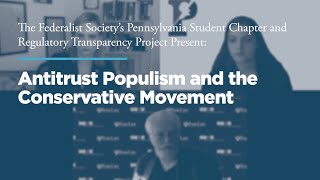
Ashley Baker, Herbert Hovenkamp
Pennsylvania Student Chapter
On October 7, 2020, the Federalist Society's Pennsylvania Student Chapter and the Regulatory Transparency Project...

Professor of Law, South Texas College of Law Houston
Josh Blackman is a national thought leader on constitutional law and the United States Supreme Court. Josh’s work was quoted during two presidential impeachment trials. He has testified before Congress and advises federal and state lawmakers. Josh regularly appears on TV, including NBC, CBS, ABC, Fox, and the BBC. Josh is also a frequent guest on NPR and other syndicated radio programs. He has published commentaries in the New York Times, Wall Street Journal, Washington Post, and leading national publications.
Since 2012, Josh has served as a professor at the South Texas College of Law Houston. He holds the Centennial Chair of Constitutional Law. Josh is an Adjunct Fellow at the Manhattan Institute. Josh has written more than seven dozen law review articles that have been cited more than a thousand times. Josh was selected as the Jurist of the Year by the Texas Journal of Law & Public Policy, received the inaugural Meese III Originalism Award, and was awarded the Inaugural Joseph Story Award. Josh was selected by Forbes Magazine for the “30 Under 30” in Law and Policy. Josh is the President of the Harlan Institute, and founded FantasySCOTUS, the Internet’s Premier Supreme Court Fantasy League. He blogs at the Volokh Conspiracyand posts@JoshMBlackman.
Clinical Professor of Law, Cornell Law School
William A. Jacobson is a Clinical Professor of Law and Director of the Securities Law Clinic.
He is a 1981 graduate of Hamilton College and a 1984 graduate of Harvard Law School. At Harvard he was Senior Editor of the Harvard International Law Journal and Director of Litigation for the Harvard Prison Legal Assistance Project.
Prior to joining the Cornell law faculty in 2007, Professor Jacobson had a highly successful civil litigation and arbitration practice in Providence, Rhode Island, concentrating in investment, employment, and business disputes in the securities industry, including many high profile cases reported in leading newspapers and magazines.
Professor Jacobson has argued cases in numerous federal and state courts, including the Courts of Appeal for the First, Fifth and Sixth Circuits, and the Rhode Island Supreme Court.
Professor Jacobson has a national reputation as a leading practitioner in securities arbitration. He was Treasurer, and is a former member of the Executive Committee and Board of Directors of the Public Investors Arbitration Bar Association, a professional organization of attorneys dedicated to protecting public investors. He frequently is quoted in national media on issues related to investment fraud and investor protection, and in the past has served as one of a small number of private practice attorneys who trained new arbitrators for the Financial Industry Regulatory Authority.
Professor Jacobson is co-author of the Securities Arbitration Desk Reference (Thomson-Reuters), updated annually.
Professor Jacobson also is the founder and publisher of Legal Insurrection, a popular politics and law website. He is frequently quoted in the media on political and legal topics, has authored many Op-Eds in major publications, and appears on television and radio to discuss politics and the law.
Vice President and Deputy Counsel, Wisconsin Institute for Law and Liberty
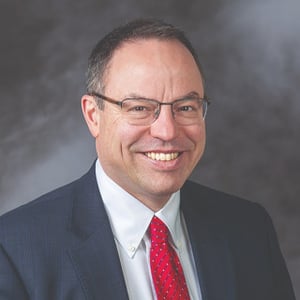
Professor of Law and J. Philip Johnson Faculty Fellow, University of North Dakota School of Law
Michael S. McGinniss is Professor of Law and J. Philip Johnson Faculty Fellow at the University of North Dakota School of Law, where he joined the faculty in 2010 and served as the Dean from 2019 to 2022. He chairs the executive committee for the Federalist Society's Practice Group on Professional Responsibility and Legal Education.
Before entering the legal academy, Professor McGinniss served for twelve years as a Disciplinary Counsel for the Supreme Court of Delaware. He currently teaches courses on Professional Responsibility, Advanced Legal Ethics, Civil Procedure, and Federal Courts. He also serves as Faculty Advisor for the North Dakota Law Review and the UND Law Federalist Society student chapter.
Professor McGinniss’ research and scholarship interests are wide-ranging and include lawyer and judicial ethics, lawyer discipline and regulation of the profession, constitutional law (especially First Amendment, separation of powers, and federalism), and cultural challenges faced by conservatives in the law schools and the legal profession. His most recent law review article, Declaring Independence to Secure Integrity: The Supreme Court Justices' Code of Conduct, was published in the Federalist Society Review. His article Expressing Conscience with Candor: Saint Thomas More and First Freedoms in the Legal Profession, was published in the Harvard Journal of Law & Public Policy.
Professor McGinniss has spoken to Federalist Society lawyer and student chapters across the country about judicial independence and ethics, especially relating to the federal courts and the United States Supreme Court Justices. In addition, he has spoken to several chapters about rising challenges to ideological diversity and targeting of conservative viewpoints in law schools and the legal profession. Although he is very pleased to speak on these and many other topics that may be of interest to lawyer and student chapters, in 2026-2027, he has particular interest in speaking on the topic “Lawyer Discipline as Political ‘Resistance’: Separation of Powers, Federalism, and the Rule of Law,” concerning his work-in-progress on the weaponization of professional disciplinary processes against conservative lawyers for political and ideological purposes.

Commissioner, U.S. Equal Employment Opportunity Commission

Founder, Chairman, and CEO, Louis D. Brandeis Center for Human Rights Under Law
Hon. Kenneth L. Marcus is an internationally recognized expert in civil and human rights, as well as a leader in the fight against anti-Semitism on and off university campuses. He is the Founder, Chairman, and CEO of The Louis D. Brandeis Center for Human Rights Under Law, the leading civil rights legal organization fighting against anti-Semitism. The New York Times has called him “The Man Who Helped Redefine Campus Anti-Semitism.” He been described, in that paper, as “the single most effective and respected force” to combat anti-Semitism.
During his public service career, Marcus served as Assistant U.S. Secretary of Education for Civil Rights; Staff Director at the U.S. Commission on Civil Rights; and General Deputy Assistant U.S. Secretary of Housing and Urban Development for Fair Housing and Equal Opportunity.
In academia, he serves as Professorial Lecturer in Law at George Washington University. He formerly held the Lillie and Nathan Ackerman Chair in Equality and Justice in America at the City University of New York’s Bernard M. Baruch College, served as Visiting Research Professor of Political Science at Yeshiva University, and was a Board of Visitors member George Mason University and Distinguished Senior Fellow at that university’s law school. He is a member of the editorial board of the Journal of Contemporary Antisemitism and previously served as Associate Editor of the Journal for the Study of Anti-Semitism.
Marcus is also author of The Definition of Anti-Semitism (Oxford University Press) and Jewish Identity and Civil Rights in America (Cambridge University Press). He has published widely in academic journals as well as in more popular venues such as The Wall Street Journal, Washington Post, Newsweek, USA Today, and Politico. He is a graduate of Williams College and the University of California at Berkeley School of Law.
Earlier in his career, he was a litigation partner in two major law firms, where he conducted complex commercial and constitutional litigation. He also serves as Chairman emeritus of the Executive Committee of the Federalist Society for Law & Public Policy Civil Rights Practice Group.
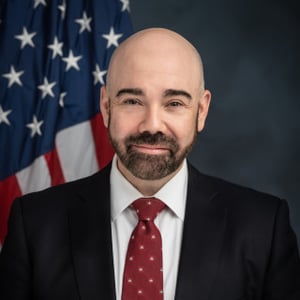
Assistant Secretary for Fair Housing and Equal Opportunity, United States Department of Housing and Urban Development
Craig Trainor is Assistant Secretary for Fair Housing and Equal Opportunity at the United States Department of Housing and Urban Development. President Trump nominated Mr. Trainor for this position on February 11, 2025, and the United States Senate confirmed him on October 7, 2025.
A “Day One” Trump-Vance Administration official, he previously served as Acting Assistant Secretary for Civil Rights and Principal Deputy Assistant Secretary for Civil Rights at the United States Department of Education, where he spearheaded the Department’s efforts to reorient America’s civil rights regime from an unjust spoils system to one that protects the rights of all Americans. Mr. Trainor’s February 14, 2025, “Dear Colleague” letter is widely considered the Trump Administration’s blueprint for enforcing civil rights laws and restoring the Constitution’s promise of equal protection.
Prior to serving in the Trump-Vance Administration, he was Senior Special Counsel with the United States House of Representatives Committee on the Judiciary under Chairman Jim Jordan (R-OH), and Senior Litigation Counsel with the America First Policy Institute under the Honorable Pam Bondi.
For over ten years, Mr. Trainor was a criminal defense and civil rights lawyer in New York City, litigating cases in New York state court and the United States District Court for the Southern and Eastern Districts of New York.
Prior to founding his law practice, he served as a New York City prosecutor, an associate attorney at a white collar criminal defense firm, and a law clerk to Chief Judge Frederick J. Scullin, Jr., United States District Court for the Northern District of New York.
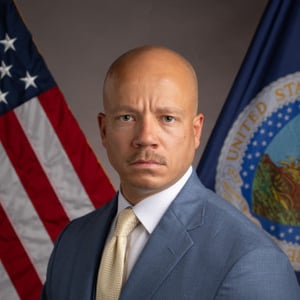
Assistant Secretary for Civil Rights, U.S. Department of Agriculture
Devon Westhill is the Assistant Secretary for Civil Rights at the U.S. Department of Agriculture. The U.S. Senate confirmed President Donald Trump’s nomination of Westhill on October 7, 2025.
Westhill returns to the USDA where he previously headed the civil rights office as Deputy Assistant Secretary in President Trump’s first term. His previous government appointments also include service at the U.S. Department of Labor, liaison to the Administrative Conference of the U.S., and liaison to the White House Initiative on Historically Black Colleges and Universities. Prior to returning to government service, Westhill was President and General Counsel of a nonprofit civil rights organization.
Westhill has testified on civil rights matters before Congress, federal agencies, and as an expert witness in federal court. He has spoken hundreds of times at college campuses, conferences, and on radio and TV programs, and he is frequently quoted in print publications, and his writing has appeared in numerous national outlets. A U.S. Navy veteran, Westhill earned his BA from the University of North Carolina at Chapel Hill and his JD from the University of Florida.
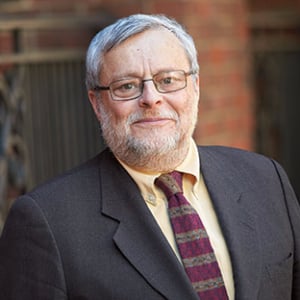
Dwight D. Opperman Professor of Law; Director, Center for Labor, New York University School of Law
Samuel Estreicher is a nationally preeminent scholar in US and international-comparative labor and employment law and arbitration law. He has authored more than a dozen books, including Beyond Elite Law: Access to Civil Justice in America (with Joy Radice, Cambridge Univ. 2016); leading casebooks on legislation and regulatory state, labor law and employment discrimination and employment law; and published more than 200 articles in professional and academic journals. He served as Chief Reporter for the American Law Institute’s Restatement of Employment Law (2015). After clerking for Judge Harold Leventhal of the US Court of Appeals for the DC Circuit, practicing in a labor law firm, and clerking for Justice Lewis F. Powell Jr. of the US Supreme Court, Prof. Estreicher joined the NYU School of Law faculty in 1978. In addition to serving as counsel to major law firms, he is the former secretary of the Labor and Employment Law Section of the American Bar Association, a former chair of the Committee on Labor and Employment Law of the Association of the Bar of the City of New York.15). He maintains an active appellate and ADR practice. The Labor and Employment Research Association awarded him its 2010 Susan C. Eaton Award for Outstanding Scholar-Practitioner. In recent years, Estreicher also has published work in public international law and authored several briefs in the Supreme Court and US courts of appeals on employment and US foreign relations law issues. Prof. Estreicher received his BA from Columbia College, his MS in industrial relations from Cornell University, and his JD from Columbia Law School, where he was editor-in-chief of the Columbia Law Review. He is a member of the College of Labor and Employment Lawyers and was appointed in 2016 by the UN Secretary General as a member of the UN’s Internal Justice Commission.
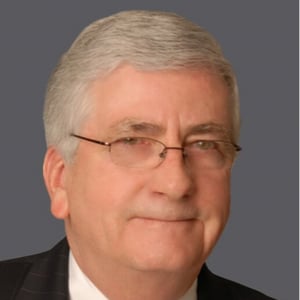
Shareholder, Ogletree Deakins
Brian Hayes is a Shareholder in the Washington, DC office of Ogletree Deakins and serves as Co-Chair of the law firm’s Traditional Labor Practice Group. Immediately prior to his joining the firm he was a Member of the National Labor Relations Board. He was confirmed to that post by the United States Senate in 2010 and his term ended in December of 2012. He is currently a Member of the U.S. Chamber of Commerce Litigation Advisory Committee and was recently named Chairman of the U.S. Chamber’s Subcommittee on the National Labor Relations Act. He also serves as editor in chief for The Practical NLRB Advisor.
Prior to his nomination and confirmation to the NLRB, Brian Hayes served as the Republican Labor Policy Director for the United States Senate Committee on Health, Education, Labor and Pensions. He came to Capitol Hill in 2005 after nearly thirty years in private legal practice devoted exclusively to representing management clients in labor and employment matters. While in private practice he represented clients in scores of cases before NLRB, state and federal courts, and a host of other federal agencies such as the EEOC, OFCCP, OSHA, the Department of Labor and their state counterparts. He also has had extensive private practice experience representing employers in collective-bargaining negotiations, arbitrations and other forms of dispute resolution. In addition to his private practice, he served as Counsel to the Employers’ Association of the Northeast, editor-in-chief and contributor to The Health Care Labor Manual, and also served on the adjunct faculty of Western New England Law School teaching courses in labor law, and collective-bargaining, arbitration and employment litigation. Before entering private practice he began his legal career at the NLRB working as a law clerk to the Chief Administrative Law Judge while in law school and subsequently as counsel to the then-Board Chairman. He is a graduate of Boston College and of Georgetown University Law School.

Principal, JacksonLewis
Marvin Kaplan is a principal in the New York City, New York, office of Jackson Lewis P.C.
Marvin, a former Chairman of the National Labor Relations Board (NLRB), advises clients on labor and employment issues, focusing on union organizing and labor-management relations. Over his eight years on the NLRB, Marvin participated in over 900 decisions, including decisions addressing the lawfulness of captive audience speeches and work rules, and the standards for determining the composition of a bargaining unit and whether an individual is an independent contractor, and several rulemakings, defining a joint-employer and laying out procedures governing representation elections.
Prior to his time on the NLRB, he served as Chief Counsel at the Occupational Safety and Health Review Commission and a Special Assistant at U.S. Department of Labor. His cross-disciplinary experience makes Marvin particularly well-suited to advise clients on strategic business planning.
His experience at all levels of government in different agencies and branches, including the U.S. House of Representatives, provides a unique perspective on Congressional oversight, legislation, regulations and federal investigations—enabling him to help clients navigate complex compliance challenges and anticipate regulatory developments that could impact their organizations.
He is a graduate of Cornell University and Washington University in St. Louis Law School.
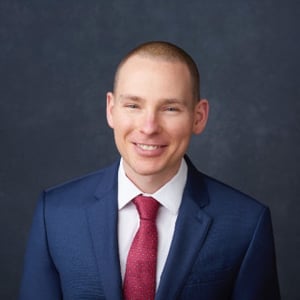
Shareholder & Co-Chair of the Workplace Policy Institute, Littler Mendelson P.C.
Alexander T. MacDonald advises employers on all aspects of the employment and labor landscape, focusing on emerging legislation and regulation. He has extensive experience advising businesses on worker classification, arbitration, the administrative and regulatory process, and the future of work. He frequently writes, publishes, and speaks on these subjects. His work has been cited by scholars and appellate courts. He is a recognized voice for the management perspective.
Alexander is a co-chair of the Workplace Policy Institute (WPI) team. With WPI, he advises employers on legislative, administrative, and regulatory developments at the state and federal level. He advocates for employers in the regulatory and administrative process. He also helps employers protect their businesses by understanding and anticipating cutting-edge legal developments.
Alexander also has extensive experience in traditional labor law. He represents management in all aspects of labor-management relations, including unfair labor practice charges, grievance arbitrations, representation elections, contract negotiations, and related litigation, including litigation in the U.S. courts of appeals.
Before joining Littler, Alexander served as the director, future of work, for a major technology company. He also worked in a national labor and employment law firm and a major public-sector general counsel’s office. He was a law clerk to the senior judges in the District of Columbia Court of Appeals.
He is also a veteran of the U.S. Air Force. He served in Operations Enduring Freedom and Iraqi Freedom. In law school, he graduated first in his class

Senior Fellow, Technology Policy, Cato Institute
Jennifer’s research focuses on the intersection of emerging technology and law with a particular interest in the interactions between technology and the administrative state. Her work covers topics including judicial deference, liability protection for Internet platforms, autonomous vehicles and other disruptive transportation technologies, the regulation of data privacy, and the benefits of technology and innovation. Her work has appeared in USA Today, the Chicago Tribune, the New York Daily News, the Sacramento Bee, the Washington Times, Real Clear Policy, and U.S. News and World Report. Jennifer has a JD from the University of Alabama School of Law and a BA in political science at Wellesley College.

Senior Legal Fellow, The Future of Free Speech, Vanderbilt University
Ashkhen Kazaryan is a renowned expert in First Amendment law and technology policy, specializing in digital free speech, artificial intelligence, and the intersection of constitutional rights with emerging technologies. As a Senior Legal Fellow at the Future of Free Speech at Vanderbilt University, she leads initiatives to protect free expression and shape policies that uphold the First Amendment in the digital age.
Previously, Ashkhen was the lead for North and Latin America on the content regulation team at Meta, where she also served as the company’s policy lead on Section 230. She has also been a Senior Fellow at Stand Together and the Director of Civil Liberties at TechFreedom, where she worked extensively on platform liability, free speech, and internet governance. She is currently Fellow for the First Amendment at the Freedom Forum.
Ashkhen earned her specialist in law degree summa cum laude from Lomonosov Moscow State University in 2012 and later received a master of law degree from Yale Law School in 2016. During her time at Yale, she contributed as an articles editor for the Yale Journal of Law and Feminism, a senior editor for the Yale Law and Policy Review, and an editor for the Yale Journal of Law and Technology, while also serving as co-chair of the Public Interest Fellowship.

Professor of Law, University of Minnesota Law School
Professor James W. Coleman is a scholar of energy law. He specializes in North American energy infrastructure, transport, and trade. He is also a nonresident senior fellow at the American Enterprise Institute focused on energy policy.
Professor Coleman has testified before Congress on steps to speed up energy infrastructure permits. He also worked with a team of experts as part of Alberta's Royalty Review to revise the Canadian province's management of its vast oil and gas resources.
Before joining Minnesota, Professor Coleman taught at Southern Methodist University's Dedman School of Law, the University of Calgary’s law and business schools, and Harvard Law School. Earlier, he practiced environmental and appellate law at Sidley Austin in Washington, D.C., and clerked for the Honorable Steven M. Colloton of the U.S. Court of Appeals for the Eighth Circuit.
Professor Coleman received two degrees from Harvard University—a J.D. (cum laude) and B.A. in biology (magna cum laude with highest honors in the field). As a result of his undergraduate thesis on butterfly genetics, which required fieldwork in Central Asia, a species of lycaenid butterfly was named after him—Agrodiaetus ripartii colemani.
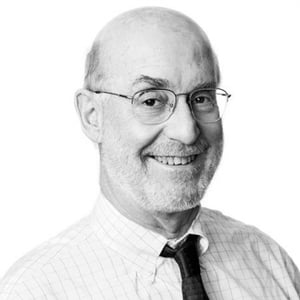
Director, Climate & Clean Air Program, Natural Resources Defense Council
David Doniger has been at the forefront of the battle against air pollution and global climate change since he joined NRDC in 1978. He helped formulate the Montreal Protocol, an international agreement designed to stop the depletion of the earth's ozone layer, as well as several essential amendments to the Clean Air Act. In 1993, he left NRDC to serve on the White House Council on Environmental Quality, followed by key posts at the U.S. Environmental Protection Agency. He rejoined NRDC in 2001 and has since been working to defend the Clean Air Act from assaults in Congress. He is based in Washington, D.C.
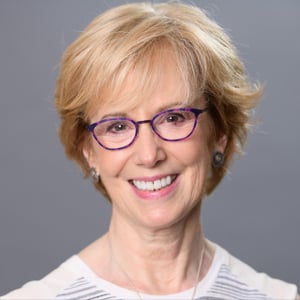
Director, GW Regulatory Studies Center & Distinguished Professor of Practice, Trachtenberg School of Public Policy & Public Administration, The George Washington University
Susan Dudley is the Founder and Director of the George Washington University Regulatory Studies Center, established in 2009 to raise awareness of regulations’ effects and improve regulatory policy through research, education, and outreach. She is also a distinguished professor of practice in the Trachtenberg School of Public Policy and Public Administration. She is past-president of the Society for Benefit Cost Analysis, a senior fellow of the Administrative Conference of the United States, and on the Regulatory Transparency Project Regulatory Practice Working Group. Her book, Regulation: A Primer, with Jerry Brito, is available on Amazon.com.
From April 2007 through January 2009, Professor Dudley served as the Presidentially-appointed Administrator of the Office of Information and Regulatory Affairs in the U.S. Office of Management and Budget and was responsible for the review of draft executive branch regulations under Executive Order 12866, the collection of federal-government-wide information under the Paperwork Reduction Act, the development and implementation of government-wide policies in the areas of information policy, privacy, and statistical policy, and international regulatory cooperation efforts.
Prior to OIRA, she directed the Regulatory Studies Program at the Mercatus Center at George Mason University, and taught courses on regulation at the George Mason University School of Law. Earlier in her career, Professor Dudley served as an economist at OIRA, as well as the Environmental Protection Agency and the Commodity Futures Trading Commission. She was also a consultant to government and private clients at Economists Incorporated. She holds a Master of Science degree from the Sloan School of Management at MIT and a Bachelor of Science degree (summa cum laude) in Resource Economics from the University of Massachusetts, Amherst.

Vice President of Policy and Advocacy, Citizens For Responsible Energy Solutions
Charles Hernick is the Vice President of Policy and Advocacy at Citizens for Responsible Energy Solutions (CRES) in Washington DC. Charles leads CRES Forum’s policy work and executes strategies to advance clean energy solutions and innovative approaches to reducing carbon emissions.
Charles is an energy expert who understands emerging clean technologies, market barriers, and policies and regulations. For over a decade he has worked at the crossroads of economic development, energy, and natural resource management across the U.S. and on the ground in over a dozen countries in Africa, Latin America, and the Caribbean. Before joining CRES, he advised executive-level decision-makers at the U.S. Environmental Protection Agency and U.S. Agency for International Development on energy and environmental issues, and identified project-level opportunities for clean energy expansion.
He is also a climate change expert who has integrated climate change considerations into U.S. government programs and policies and has authored climate mitigation and adaptation best practice guidelines for over a dozen development sectors.
Charles was the Republican candidate for U.S. House of Representatives in Virginia’s 8th Congressional District in the November 2016 election. He routinely advises candidates seeking public office on energy and economic growth.
He is a frequent guest on radio shows and webcasts, in university classrooms, and at international workshops to discuss clean energy and associated economic, national security, and environmental issues. He conducts interviews in English or Spanish.
Charles as an M.A. in International Relations and Environmental Policy from Boston University and a B.S. in Ecology, Evolution, and Behavior from the University of Minnesota.
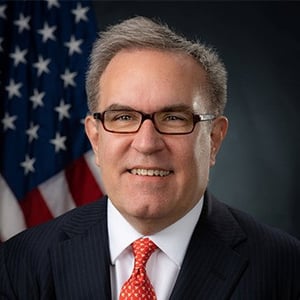
Holland & Hart, Partner
On February 28, 2019, the U.S. Senate confirmed Andrew Wheeler as the fifteenth Administrator of the Environmental Protection Agency. President Donald J. Trump had announced his appointment as the Acting EPA Administrator on July 5, 2018. Mr. Wheeler had previously been confirmed by the U.S. Senate as the EPA Deputy Administrator on April 12, 2018.
Mr. Wheeler has dedicated his career to advancing sound environmental policies. He began his career during the George H. W. Bush Administration as a Special Assistant in EPA’s Pollution Prevention and Toxics office.
He was a Principal and the team leader of the Energy and Environment Practice Group at FaegreBD Consulting, as well as Counsel at Faegre Baker Daniels law firm, where he practiced since 2009. He also served as the Co-chair of the Energy and Natural Resources Industry team across the entire firm.
Prior to his work with the firm, Mr. Wheeler served for six years as the Majority Staff Director and Chief Counsel, as well as the Minority Staff Director, of the Senate Committee on Environment and Public Works. Before his time at the full Senate EPW Committee, Mr. Wheeler served in a similar capacity for six years for the Subcommittee on Clean Air, Climate Change, Wetlands and Nuclear Safety.
Mr. Wheeler is the past Chairman of the National Energy Resource Organization (NERO) and a Stennis Fellow. Mr. Wheeler is also an Eagle Scout.
Mr. Wheeler is from Fairfield, Ohio. He completed his law degree at Washington University in St. Louis, his MBA at George Mason University, and his undergraduate work at Case Western Reserve University in English and Biology.
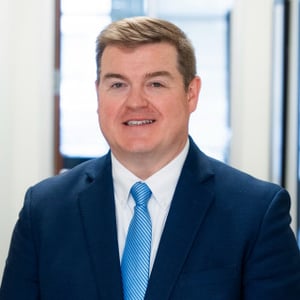
Vice President, Networks, The Federalist Society for Law and Public Policy Studies
Nathan Kaczmarek is Vice President for Networks at the Federalist Society. He began his legal career in Detroit representing nationwide clients in all phases of healthcare litigation and complex medical malpractice claims. He has since served as a Senior Legal and Policy Advisor in the U.S. House of Representatives and as Counsel for the Subcommittee on Regulatory Affairs and Federal Management in the U.S. Senate. Prior to overseeing the Networks, he was Director of the Practice Groups, the Regulatory Transparency Project, and the Article I Initiative for the Federalist Society.
Nathan holds degrees from Hillsdale College and Thomas M. Cooley Law School. He is a Liaison Representative for The Administrative Conference of the United States. He also serves as Vice President of the Associates of St. John Bosco, a Virginia based non-profit dedicated to Catholic high school and college students.
Professor of Law, University of Minnesota Law School
Professor James W. Coleman is a scholar of energy law. He specializes in North American energy infrastructure, transport, and trade. He is also a nonresident senior fellow at the American Enterprise Institute focused on energy policy.
Professor Coleman has testified before Congress on steps to speed up energy infrastructure permits. He also worked with a team of experts as part of Alberta's Royalty Review to revise the Canadian province's management of its vast oil and gas resources.
Before joining Minnesota, Professor Coleman taught at Southern Methodist University's Dedman School of Law, the University of Calgary’s law and business schools, and Harvard Law School. Earlier, he practiced environmental and appellate law at Sidley Austin in Washington, D.C., and clerked for the Honorable Steven M. Colloton of the U.S. Court of Appeals for the Eighth Circuit.
Professor Coleman received two degrees from Harvard University—a J.D. (cum laude) and B.A. in biology (magna cum laude with highest honors in the field). As a result of his undergraduate thesis on butterfly genetics, which required fieldwork in Central Asia, a species of lycaenid butterfly was named after him—Agrodiaetus ripartii colemani.
Director, Climate & Clean Air Program, Natural Resources Defense Council
David Doniger has been at the forefront of the battle against air pollution and global climate change since he joined NRDC in 1978. He helped formulate the Montreal Protocol, an international agreement designed to stop the depletion of the earth's ozone layer, as well as several essential amendments to the Clean Air Act. In 1993, he left NRDC to serve on the White House Council on Environmental Quality, followed by key posts at the U.S. Environmental Protection Agency. He rejoined NRDC in 2001 and has since been working to defend the Clean Air Act from assaults in Congress. He is based in Washington, D.C.
Director, GW Regulatory Studies Center & Distinguished Professor of Practice, Trachtenberg School of Public Policy & Public Administration, The George Washington University
Susan Dudley is the Founder and Director of the George Washington University Regulatory Studies Center, established in 2009 to raise awareness of regulations’ effects and improve regulatory policy through research, education, and outreach. She is also a distinguished professor of practice in the Trachtenberg School of Public Policy and Public Administration. She is past-president of the Society for Benefit Cost Analysis, a senior fellow of the Administrative Conference of the United States, and on the Regulatory Transparency Project Regulatory Practice Working Group. Her book, Regulation: A Primer, with Jerry Brito, is available on Amazon.com.
From April 2007 through January 2009, Professor Dudley served as the Presidentially-appointed Administrator of the Office of Information and Regulatory Affairs in the U.S. Office of Management and Budget and was responsible for the review of draft executive branch regulations under Executive Order 12866, the collection of federal-government-wide information under the Paperwork Reduction Act, the development and implementation of government-wide policies in the areas of information policy, privacy, and statistical policy, and international regulatory cooperation efforts.
Prior to OIRA, she directed the Regulatory Studies Program at the Mercatus Center at George Mason University, and taught courses on regulation at the George Mason University School of Law. Earlier in her career, Professor Dudley served as an economist at OIRA, as well as the Environmental Protection Agency and the Commodity Futures Trading Commission. She was also a consultant to government and private clients at Economists Incorporated. She holds a Master of Science degree from the Sloan School of Management at MIT and a Bachelor of Science degree (summa cum laude) in Resource Economics from the University of Massachusetts, Amherst.
Vice President of Policy and Advocacy, Citizens For Responsible Energy Solutions
Charles Hernick is the Vice President of Policy and Advocacy at Citizens for Responsible Energy Solutions (CRES) in Washington DC. Charles leads CRES Forum’s policy work and executes strategies to advance clean energy solutions and innovative approaches to reducing carbon emissions.
Charles is an energy expert who understands emerging clean technologies, market barriers, and policies and regulations. For over a decade he has worked at the crossroads of economic development, energy, and natural resource management across the U.S. and on the ground in over a dozen countries in Africa, Latin America, and the Caribbean. Before joining CRES, he advised executive-level decision-makers at the U.S. Environmental Protection Agency and U.S. Agency for International Development on energy and environmental issues, and identified project-level opportunities for clean energy expansion.
He is also a climate change expert who has integrated climate change considerations into U.S. government programs and policies and has authored climate mitigation and adaptation best practice guidelines for over a dozen development sectors.
Charles was the Republican candidate for U.S. House of Representatives in Virginia’s 8th Congressional District in the November 2016 election. He routinely advises candidates seeking public office on energy and economic growth.
He is a frequent guest on radio shows and webcasts, in university classrooms, and at international workshops to discuss clean energy and associated economic, national security, and environmental issues. He conducts interviews in English or Spanish.
Charles as an M.A. in International Relations and Environmental Policy from Boston University and a B.S. in Ecology, Evolution, and Behavior from the University of Minnesota.
Vice President, Networks, The Federalist Society for Law and Public Policy Studies
Nathan Kaczmarek is Vice President for Networks at the Federalist Society. He began his legal career in Detroit representing nationwide clients in all phases of healthcare litigation and complex medical malpractice claims. He has since served as a Senior Legal and Policy Advisor in the U.S. House of Representatives and as Counsel for the Subcommittee on Regulatory Affairs and Federal Management in the U.S. Senate. Prior to overseeing the Networks, he was Director of the Practice Groups, the Regulatory Transparency Project, and the Article I Initiative for the Federalist Society.
Nathan holds degrees from Hillsdale College and Thomas M. Cooley Law School. He is a Liaison Representative for The Administrative Conference of the United States. He also serves as Vice President of the Associates of St. John Bosco, a Virginia based non-profit dedicated to Catholic high school and college students.
Holland & Hart, Partner
On February 28, 2019, the U.S. Senate confirmed Andrew Wheeler as the fifteenth Administrator of the Environmental Protection Agency. President Donald J. Trump had announced his appointment as the Acting EPA Administrator on July 5, 2018. Mr. Wheeler had previously been confirmed by the U.S. Senate as the EPA Deputy Administrator on April 12, 2018.
Mr. Wheeler has dedicated his career to advancing sound environmental policies. He began his career during the George H. W. Bush Administration as a Special Assistant in EPA’s Pollution Prevention and Toxics office.
He was a Principal and the team leader of the Energy and Environment Practice Group at FaegreBD Consulting, as well as Counsel at Faegre Baker Daniels law firm, where he practiced since 2009. He also served as the Co-chair of the Energy and Natural Resources Industry team across the entire firm.
Prior to his work with the firm, Mr. Wheeler served for six years as the Majority Staff Director and Chief Counsel, as well as the Minority Staff Director, of the Senate Committee on Environment and Public Works. Before his time at the full Senate EPW Committee, Mr. Wheeler served in a similar capacity for six years for the Subcommittee on Clean Air, Climate Change, Wetlands and Nuclear Safety.
Mr. Wheeler is the past Chairman of the National Energy Resource Organization (NERO) and a Stennis Fellow. Mr. Wheeler is also an Eagle Scout.
Mr. Wheeler is from Fairfield, Ohio. He completed his law degree at Washington University in St. Louis, his MBA at George Mason University, and his undergraduate work at Case Western Reserve University in English and Biology.
Professor of Law, University of Minnesota Law School
Professor James W. Coleman is a scholar of energy law. He specializes in North American energy infrastructure, transport, and trade. He is also a nonresident senior fellow at the American Enterprise Institute focused on energy policy.
Professor Coleman has testified before Congress on steps to speed up energy infrastructure permits. He also worked with a team of experts as part of Alberta's Royalty Review to revise the Canadian province's management of its vast oil and gas resources.
Before joining Minnesota, Professor Coleman taught at Southern Methodist University's Dedman School of Law, the University of Calgary’s law and business schools, and Harvard Law School. Earlier, he practiced environmental and appellate law at Sidley Austin in Washington, D.C., and clerked for the Honorable Steven M. Colloton of the U.S. Court of Appeals for the Eighth Circuit.
Professor Coleman received two degrees from Harvard University—a J.D. (cum laude) and B.A. in biology (magna cum laude with highest honors in the field). As a result of his undergraduate thesis on butterfly genetics, which required fieldwork in Central Asia, a species of lycaenid butterfly was named after him—Agrodiaetus ripartii colemani.
Director, Climate & Clean Air Program, Natural Resources Defense Council
David Doniger has been at the forefront of the battle against air pollution and global climate change since he joined NRDC in 1978. He helped formulate the Montreal Protocol, an international agreement designed to stop the depletion of the earth's ozone layer, as well as several essential amendments to the Clean Air Act. In 1993, he left NRDC to serve on the White House Council on Environmental Quality, followed by key posts at the U.S. Environmental Protection Agency. He rejoined NRDC in 2001 and has since been working to defend the Clean Air Act from assaults in Congress. He is based in Washington, D.C.
Vice President of Policy and Advocacy, Citizens For Responsible Energy Solutions
Charles Hernick is the Vice President of Policy and Advocacy at Citizens for Responsible Energy Solutions (CRES) in Washington DC. Charles leads CRES Forum’s policy work and executes strategies to advance clean energy solutions and innovative approaches to reducing carbon emissions.
Charles is an energy expert who understands emerging clean technologies, market barriers, and policies and regulations. For over a decade he has worked at the crossroads of economic development, energy, and natural resource management across the U.S. and on the ground in over a dozen countries in Africa, Latin America, and the Caribbean. Before joining CRES, he advised executive-level decision-makers at the U.S. Environmental Protection Agency and U.S. Agency for International Development on energy and environmental issues, and identified project-level opportunities for clean energy expansion.
He is also a climate change expert who has integrated climate change considerations into U.S. government programs and policies and has authored climate mitigation and adaptation best practice guidelines for over a dozen development sectors.
Charles was the Republican candidate for U.S. House of Representatives in Virginia’s 8th Congressional District in the November 2016 election. He routinely advises candidates seeking public office on energy and economic growth.
He is a frequent guest on radio shows and webcasts, in university classrooms, and at international workshops to discuss clean energy and associated economic, national security, and environmental issues. He conducts interviews in English or Spanish.
Charles as an M.A. in International Relations and Environmental Policy from Boston University and a B.S. in Ecology, Evolution, and Behavior from the University of Minnesota.
Holland & Hart, Partner
On February 28, 2019, the U.S. Senate confirmed Andrew Wheeler as the fifteenth Administrator of the Environmental Protection Agency. President Donald J. Trump had announced his appointment as the Acting EPA Administrator on July 5, 2018. Mr. Wheeler had previously been confirmed by the U.S. Senate as the EPA Deputy Administrator on April 12, 2018.
Mr. Wheeler has dedicated his career to advancing sound environmental policies. He began his career during the George H. W. Bush Administration as a Special Assistant in EPA’s Pollution Prevention and Toxics office.
He was a Principal and the team leader of the Energy and Environment Practice Group at FaegreBD Consulting, as well as Counsel at Faegre Baker Daniels law firm, where he practiced since 2009. He also served as the Co-chair of the Energy and Natural Resources Industry team across the entire firm.
Prior to his work with the firm, Mr. Wheeler served for six years as the Majority Staff Director and Chief Counsel, as well as the Minority Staff Director, of the Senate Committee on Environment and Public Works. Before his time at the full Senate EPW Committee, Mr. Wheeler served in a similar capacity for six years for the Subcommittee on Clean Air, Climate Change, Wetlands and Nuclear Safety.
Mr. Wheeler is the past Chairman of the National Energy Resource Organization (NERO) and a Stennis Fellow. Mr. Wheeler is also an Eagle Scout.
Mr. Wheeler is from Fairfield, Ohio. He completed his law degree at Washington University in St. Louis, his MBA at George Mason University, and his undergraduate work at Case Western Reserve University in English and Biology.
Director, GW Regulatory Studies Center & Distinguished Professor of Practice, Trachtenberg School of Public Policy & Public Administration, The George Washington University
Susan Dudley is the Founder and Director of the George Washington University Regulatory Studies Center, established in 2009 to raise awareness of regulations’ effects and improve regulatory policy through research, education, and outreach. She is also a distinguished professor of practice in the Trachtenberg School of Public Policy and Public Administration. She is past-president of the Society for Benefit Cost Analysis, a senior fellow of the Administrative Conference of the United States, and on the Regulatory Transparency Project Regulatory Practice Working Group. Her book, Regulation: A Primer, with Jerry Brito, is available on Amazon.com.
From April 2007 through January 2009, Professor Dudley served as the Presidentially-appointed Administrator of the Office of Information and Regulatory Affairs in the U.S. Office of Management and Budget and was responsible for the review of draft executive branch regulations under Executive Order 12866, the collection of federal-government-wide information under the Paperwork Reduction Act, the development and implementation of government-wide policies in the areas of information policy, privacy, and statistical policy, and international regulatory cooperation efforts.
Prior to OIRA, she directed the Regulatory Studies Program at the Mercatus Center at George Mason University, and taught courses on regulation at the George Mason University School of Law. Earlier in her career, Professor Dudley served as an economist at OIRA, as well as the Environmental Protection Agency and the Commodity Futures Trading Commission. She was also a consultant to government and private clients at Economists Incorporated. She holds a Master of Science degree from the Sloan School of Management at MIT and a Bachelor of Science degree (summa cum laude) in Resource Economics from the University of Massachusetts, Amherst.

Executive Director, Committee for Justice
Ashley Baker is Executive Director of the Committee for Justice and founder of the Alliance on Antitrust coalition. Her work focuses on antitrust law, technology regulation, administrative-agency authority, the Supreme Court, and judicial nominations. She closely follows the Federal Trade Commission and the Department of Justice’s Antitrust Division, with particular attention to merger review, agency procedure, and the effects of regulation on American innovation and competitiveness. She is also founder of the Alliance on Antitrust Coalition.
Ashley has testified before the United States Senate on antitrust law. Her writing has appeared in Fox News, USA Today, The Boston Globe, The Hill, RealClearPolitics, The American Spectator, and other national publications. She also provides policy analysis through congressional testimony and correspondence, regulatory comments, and public commentary.
Ashley serves on the Federalist Society’s Regulatory Transparency Project and Antitrust and Consumer Protection Practice Group Executive Committee. She is also active in the Republican National Lawyers Association and has spoken on the Supreme Court and the federal judiciary. An authority on the judicial-confirmation process, she worked closely on the successful confirmation efforts for Justices Neil Gorsuch and Brett Kavanaugh, as well as multiple federal appellate judges.
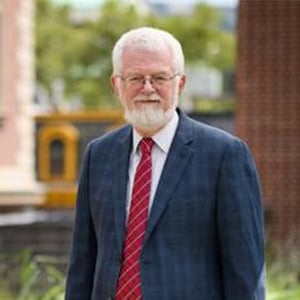
James G. Dinan University Professor, Carey Law School, University of Pennsylvania
Herbert Hovenkamp is a Fellow of the American Academy of Arts and Sciences, and in 2008 won the Justice Department’s John Sherman Award for his lifetime contributions to antitrust law. In 2012 he served on the ABA’s Committee to advise the President-elect on antitrust matters. His principal writing includes The Opening of American Law: Neoclassical Legal Thought, 1870-1970 (Oxford, 2015); Antitrust Law (formerly with Phillip E. Areeda and Donald F. Turner) (22 vols., Aspen 2008-18); Principles of Antitrust (West, 2017); Creation Without Restraint: Promoting Liberty and Rivalry in Innovation (Oxford, 2012, with Bohannan); The Making of Competition Policy (Oxford, 2012, with Crane); The Antitrust Enterprise: Principle and Execution (Harvard, 2006); Federal Antitrust Policy: The Law of Competition and Its Practice (West, 5th ed. 2015); IP and Antitrust (2 vols., Aspen, 2017, with Janis, Lemley, Leslie, and Carrier); and Enterprise and American Law, 1836-1937 (Harvard, 1991). He has also co-authored casebooks in antitrust, property law, and a free open source casebook on innovation and competition policy. He has consulted on numerous antitrust cases for various government entities and private plaintiffs. He has two sons.