
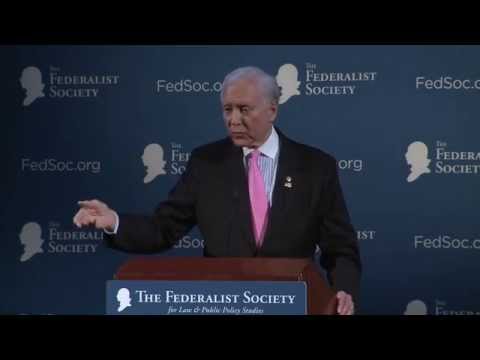
Address by Senator Orrin Hatch
2015 National Lawyers Convention
The Mayflower Hotel1127 Connecticut Avenue, NW
Washington, DC 20036

Here are the latest events.
![Luncheon and Address by John Norton Moore [Archive Collection]](https://fedsoc.org/cdn-cgi/image/fit=scale-down,width=560,format=jpeg/https://img.youtube.com/vi/lDwmZT6BaH8/0.jpg)
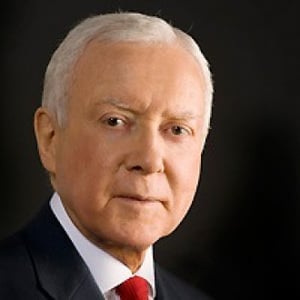
Former United States Senator, Utah
Over nearly four decades of public service, Senator Orrin Hatch established himself as a leading conservative voice in the United States Senate. As the upper chamber’s most senior Republican, he served as President Pro Tempore and as Chairman of the Senate Finance Committee. In this capacity, he fought to create jobs and strengthen the economy by repealing and replacing Obamacare, reforming the tax code, and opening up overseas markets to American exports.
As a long-time member and former Chairman of the Senate Judiciary Committee, Senator Hatch also fought to check judicial activism and protect our liberties. He was instrumental in confirming conservative judges to the federal bench and played an indispensable role in confirming Supreme Court Justices Antonin Scalia, Clarence Thomas, and Samuel Alito as well as scores of district and circuit court judges.
One of Senator Hatch’s particularly noteworthy achievements on the Judiciary Committee is the Religious Freedom Restoration Act of 1993—a bill he co-authored with the late Senator Ted Kennedy. This landmark legislation prohibits substantial government burdens on the free exercise of religion, allowing all Americans to live, work, and worship in accordance with their beliefs.
In addition to protecting our individual liberties, Senator Hatch was on the front lines of legislative battles to protect our free-market economy and system of limited government under the Constitution. His reputation as a statesman and his record of fiscal responsibility earned him the nickname “Mr. Balanced Budget” from President Reagan.
By virtually all measures, Senator Hatch was among the most effective and consequential legislators in history. Since he first came to Congress in 1977, no legislator alive today has authored more bills that have become law than Senator Hatch.
Of all Senator Hatch’s achievements, he is proudest of his family, and he credits the love of his wife and children as the key to his success. He and Elaine have been married for more than fifty years. Together, they are the parents of six children, twenty-three grandchildren, and sixteen great-grandchildren.
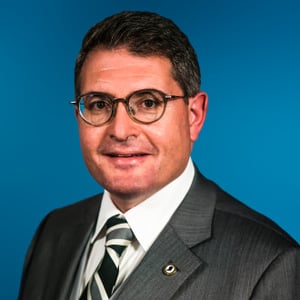
Co-Chairman, The Federalist Society for Law and Public Policy Studies
Leonard is Co-Chairman and former Executive Vice President of the Federalist Society, joining the organization over 25 years ago. Since that time he has been instrumental in helping the organization top 70,000, focusing on the growth of lawyers membership, operations and activities advancing limited, constitutional government. In addition to his work at the Society, Leonard has advised President Trump on judicial selection, assisted with the Gorsuch and Kavanaugh Supreme Court selection and confirmation process, and served as a member of the transition team. He also organized the outside coalition efforts in support of the Roberts and Alito U.S. Supreme Court confirmations. Leonard was appointed by President George W. Bush to three terms to the U.S. Commission on International Religious Freedom as chairman. He was also a U.S. Delegate to the UN Council and UN Commission on Human Rights during the Bush Administration. Leonard was the recipient of the 2009 Bradley Prize, along with the other founders and directors of the Federalist Society, for his work in advancing freedom and the rule of law. He is the coeditor of Presidential Leadership: Rating the Best and the Worst in the White House, as well as the author of opinion editorials in the New York Times,The Wall Street Journal, and Washington Post. Leonard holds degrees from Cornell University and Cornell Law School. He presently resides in Northern Virginia, where he and his wife Sally have raised their seven children.
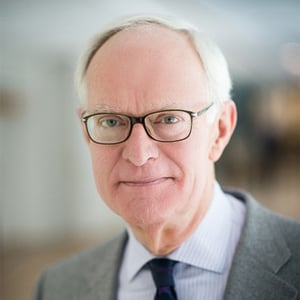
Distinguished Fellow, Hudson Institute
Christopher DeMuth is a distinguished fellow at Hudson Institute. He was president of the American Enterprise Institute for Public Policy Research (AEI) from 1986 to 2008 and was the D.C. Searle Senior Fellow at AEI from 2008 to 2011.
Mr. DeMuth was raised in Kenilworth, Illinois, and attended the Lawrenceville School (1964), Harvard College (A.B. 1968), and the University of Chicago Law School (J.D. 1973). He served as staff assistant to President Richard M. Nixon from 1969 to 1970, working first for Daniel P. Moynihan (then assistant to the President for Urban Affairs) on urban policy matters and then as chairman of the White House Task Force on Environmental Policy. Following law school, he practiced regulatory, antitrust, and general corporate law with Sidley & Austin in Chicago (1973-1976) and was associate general counsel of the Consolidated Rail Corporation (Conrail) in Philadelphia (1976-1977).
From 1977 to 1981, Mr. DeMuth was lecturer in public policy at the Kennedy School of Government at Harvard University, and director of the Harvard Faculty Project on Regulation. There he taught courses on law, economics, and regulatory policy and conducted and sponsored research on health, safety, environmental, and economic regulation.
Returning to Washington in 1981, Mr. DeMuth served as administrator for information and regulatory affairs in the U.S. Office of Management and Budget, and as executive director of the Presidential Task Force on Regulatory Relief during President Ronald Reagan’s first term of office. From 1984 to 1986, he was managing director of Lexecon Inc., a law-and-economics consulting firm; in 1986, he was also publisher and editor-in-chief of Regulation magazine. He was elected president of the American Enterprise Institute in December 1986.
Many of Mr. DeMuth’s articles, lectures, and occasional talks are posted on his website (https://www.ccdemuth.com).
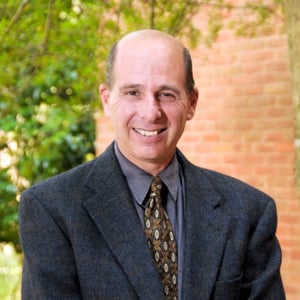
Sandra Day O'Connor Professor of Law & Professor of Government, William & Mary Law School
Neal Devins is the Sandra Day O’Connor Professor of Law and Professor of Government at the College of William and Mary. He is the author of several books and more than 100 articles and book chapters on courts, constitutional law, and law & politics. His books include The Company They Keep (Oxford 2019) (with Larry Baum), The Democratic Constitution (Oxford 2d ed. 2015) (with Louis Fisher), Political Dynamics of Constitutional Law (West 6th ed. 2019) (with Louis Fisher), and Shaping Constitutional Values: The Supreme Court, Elected Government, and the Abortion Dispute (Johns Hopkins University Press 1996). His articles have appeared in The Yale Law Journal, The Stanford Law Review, The Columbia Law Review, The Michigan Law Review, The California Law Review, The Virginia Law Review, The University of Pennsylvania Law Review, The University of Chicago Law Review, The New York University Law Review, and several other journals and magazines. Professor Devins is also the author of op-eds appearing in The Wall Street Journal, The New York Times, The Washington Post, The Los Angeles Times, Slate, and several other newspapers. He has testified before House and Senate committees on budget reform and the separation of powers. Professor Devins is a graduate of Georgetown University (A.B. 1978) and Vanderbilt Law School (J.D. 1982).
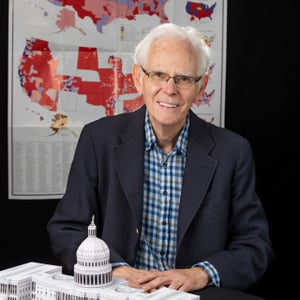
David Mayhew, Sterling Professor of Political Science Emeritus, Yale University
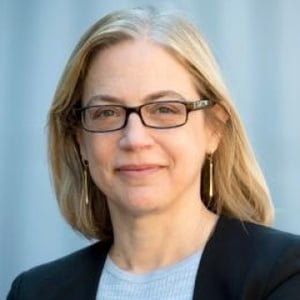
Harlan Fiske Stone Professor of Constitutional Law, Columbia Law School
A leading administrative and constitutional law scholar, Gillian Metzger ’96 writes and teaches in the areas of administrative law, constitutional law, and federal courts, with an emphasis on federalism and privatization. In 2023-2024, she served as Acting Assistant Attorney General and Deputy Assistant Attorney General in the Office of Legal Counsel in the Department of Justice.
Metzger's recent work covers topics ranging from constitutional attacks on the administrative state to appropriations, administrative law under the Roberts Court, and the role of administrative agencies in a polarized world. In 2015, Metzger won the American Bar Association Administrative Law Section Annual Scholarship Award for “The Constitutional Duty to Supervise,” which examined presidential control and oversight of the modern administrative state. She is a co-editor of Gellhorn & Byse’s Administrative Law: Cases and Comments, 13th ed. (Foundation Press, 2023), a seminal administrative law casebook.
Professor Metzger was recently elected to the American Academy of Arts & Sciences and is a Senior Fellow of the Administrative Conference of the United States. In 2020, she was awarded Columbia University's Faculty Mentorship Award and in 2014, the Law School’s graduating class awarded Metzger the Willis L.M. Reese Prize for Excellence in Teaching, recognizing, among many other accomplishments, her commitment to mentoring new generations of law students.
In 2012, Metzger helped launch Columbia Law School’s Center for Constitutional Governance (CCG)—where she now serves as faculty director—a nonpartisan legal and policy organization devoted to the study of constitutional structure and authority. CCG brings together a diverse group of constitutional scholars to explore policy areas such as health care, civil rights, immigration, financial regulation, and national security.
Metzger also has co-authored and filed numerous amicus briefs in major constitutional and administrative law challenges before the Supreme Court and other courts. Most recently, Metzger filed a brief in Seila Law Center v. CFPB, a separation of powers challenge, and in Kisor v. Wilkie, a case involving judicial deference to agencies. She has also filed briefs in cases involving reproductive rights and the Affordable Care Act, among others.
Previously, Metzger served as vice dean of intellectual life at Columbia Law School. Before joining the Law School, she worked as an attorney with the Brennan Center for Justice. Metzger also clerked for U.S. Supreme Court Justice Ruth Bader Ginsburg ’59 and Judge Patricia M. Wald of the U.S. Circuit Court of Appeals for the District of Columbia. In 2018, Metzger moderated a panel discussion with Justice Ginsburg on impact litigation at Columbia Law School.

Judge, United States Court of Appeals, District of Columbia Circuit
Judge Rao was appointed to the United States Court of Appeals for the District of Columbia Circuit in March 2019. She graduated from Yale College in 1995 and the University of Chicago Law School in 1999. Following graduation, she served as a law clerk to Judge J. Harvie Wilkinson III of the U.S. Court of Appeals for the Fourth Circuit and, in the 2001 October Term, as law clerk to Justice Clarence Thomas of the U.S. Supreme Court. Between her clerkships, Judge Rao served as counsel for nominations and constitutional law to the U.S. Senate Committee on the Judiciary. In 2002, she joined the international arbitration group of Clifford Chance LLP in London, England. From 2005-2006, she served as Special Assistant and Associate White House Counsel to President George W. Bush. From 2006 to 2017, Judge Rao was a professor at the Antonin Scalia Law School at George Mason University, where she taught constitutional law, legislation and statutory interpretation, and the history and foundations of the administrative state. In 2014, she founded the Center for the Study of the Administrative State, a non-profit Center that promotes academic scholarship and public policy debates about administrative law. In July 2017, she was appointed to serve as the Administrator of the Office of Information and Regulatory Affairs in the Office of Management Budget. She served in this position until her appointment to the D.C. Circuit.

Executive Vice President, The Federalist Society
Dean Reuter is Executive Vice President at the Federalist Society for Law and Public Policy Studies. He has served in two federal government agency Offices of the Inspector General, as Counsel to the Inspector General and Deputy Inspector General, responsible for policing the use of federal funds granted and contracted through those agencies. As such, he helped conduct and oversee criminal investigations across the country. He is the principal author of the non-fiction book, The Hidden Nazi: The Untold Story of America's Deal with the Devil, and editor of Liberty’s Nemesis: The Unchecked Expansion of the State and Confronting Terror: 9/11 and the Future of American National Security. He was appointed by the President and served as Vice-Chairman of the Board of Directors of the Corporation for National and Community Service, and recently served as an appointee on the U.S. Commission on Presidential Scholars. He is a graduate of Hood College (BA with Honors) and the University of Maryland School of Law.
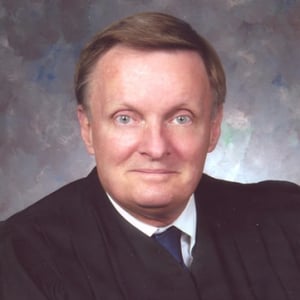
Judge, United States Court of Appeals, Fifth Circuit
Judge Smith was appointed U.S. Circuit Judge for the Fifth Circuit by President Reagan and entered on duty in January 1988. He attended public schools in Lubbock, Texas, and graduated from Yale University, receiving a B.A. in 1969 and a J.D. in 1972.
Judge Smith was a Law Clerk to U.S. District Judge Halbert Woodward, Northern District of Texas, 1972-1973; with the Houston law firm of Fulbright & Jaworski as an Associate, 1973-1981, and as Partner, 1981-1984; and as City Attorney, City of Houston, 1984-1988. He was Chairman, Civil Service Commission, City of Houston, 1982-1984; and a Director, Harris County Housing Authority, 1978-1980.
Judge Smith lives in Houston and is married to Mary Jane Smith and has four children: Ruth Ann, Clark, J.J., and Brandon. He formerly was Chair of the Advisory Committee on Federal Rules of Evidence of the Judicial Conference of the United States. He assists LexisNexis/Matthew Bender & Co. in periodic revisions of several chapters of Moore’s Federal Practice.
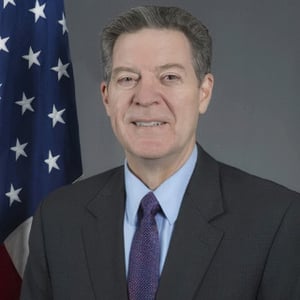
Former Senator of Kansas and Ambassador-at-Large for International Religious Freedom
Samuel Dale Brownback is an American attorney, politician, and diplomat who served as a United States senator from Kansas from 1996 to 2011 and as the 46th governor of Kansas from 2011 to 2018. Brownback also served as the United States Ambassador-at-Large for International Religious Freedom during the administration of President Donald Trump and was a candidate for the Republican nomination for President in 2008.
Born in Garnett, Kansas, Brownback grew up on a family farm in Parker, Kansas. He graduated from Kansas State University with a degree in agricultural economics in 1978 and received a J.D. from the University of Kansas in 1982. He worked as an attorney in Manhattan, Kansas, before being appointed Secretary of Agriculture of Kansas in 1986 by Democratic Governor John W. Carlin. Brownback ran for Congress in 1994 and defeated Carlin in the general election in a landslide. He represented Kansas's 2nd congressional district for a single term before running in a 1996 special election for the U.S. Senate seat previously held by Bob Dole. He won the election and was reelected by large margins in 1998 and 2004.
Governor, State of Georgia
Under Gov. Nathan Deal’s leadership, Georgia has risen to become the No. 1 place in the nation in which to do business, a goal achieved by creating the Competitiveness Initiative, reforming our tax code, shaping our educational system to support our workforce needs and recruiting businesses to relocate here.
As Georgia’s 82nd governor since January 2011, he has cut state taxes, eliminated state agencies, reduced the state government workforce, saved HOPE from the brink of bankruptcy, championed education innovations and implemented significant cost-saving reforms in our criminal justice system. He fought to increase public safety on our waterways, improved our workforce by aiding veterans and technical college students and enacted stricter rules on lobbying to boost public trust.
Though he has reduced the size of state government, Gov. Deal has prioritized education and child safety funding as state revenues rebound from the Great Recession. In 2014, the governor increased k-12 spending by more than half a billion dollars, the largest increase in education in seven years, and in his 2015 State of the State address he proposed the creation of a new Opportunity School District to rescue failing schools. As concerned about our children’s safety as he is about their education, Gov. Deal has also started a three-year plan to add nearly 500 new child welfare case workers at DFCS.
Gov. Deal’s public service to his state spans four decades. The Sandersville native served in the U.S. Army at Fort Gordon in Augusta after graduating with a law degree from Mercer University, and then began a private law practice in Gainesville, the hometown of his wife, Sandra Dunagan Deal. While his wife taught in Hall County public schools, the governor began a long span of service to his community as prosecutor, judge, state senator and U.S. congressman.
During his 17 years in Congress, Deal rose to chair the Health Subcommittee of Energy and Commerce, where he became a noted expert on entitlement reform and health care policy.
Deal ended his congressional career to campaign for governor, becoming the Republican nominee in August 2010 and then winning the governorship in November of that year. In November 2014, Deal was re-elected to a second term in office. He was sworn in again as governor on Jan. 12, 2015.
The governor and first lady have four adult children and six grandchildren.
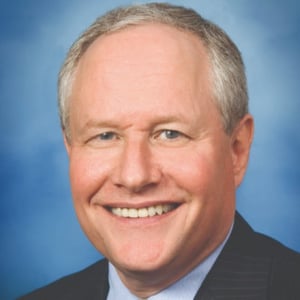
Editor, The Weekly Standard
William Kristol is the editor of The Weekly Standard. He is also a regular panelist on Fox News Sunday, a contributor for the Fox News Channel, and a monthly columnist for the Washington Post. Before starting the Weekly Standard in 1995, Mr. Kristol led the Project for the Republican Future, where he helped shape the strategy that produced the 1994 Republican congressional victory. Prior to that, Mr. Kristol served as chief of staff to Vice President Dan Quayle during the first Bush Administration, and to Education Secretary William Bennett under President Reagan. Before coming to Washington in 1985, Mr. Kristol was on the faculty of Harvard University’s Kennedy School of Government and the Department of Political Science at the University of Pennsylvania.
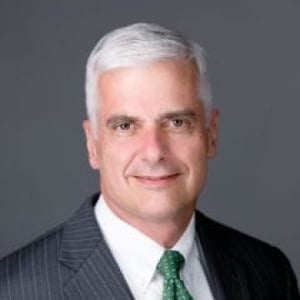
David McIntosh is a leader for the principles of limited constitutional government and individual freedom. He is president of the Club for Growth, the leading advocate for economic liberty.
Former Congressman David McIntosh represented Indiana's 2nd Congressional District in the United States Congress from 1995-2001. As a Freshman, David chaired the Subcommittee on Regulatory Relief. He passed the Congressional Review Act and held extensive oversight and field hearings to build a record of public support for regulatory relief initiatives in energy, biotechnology, pharmaceutical, healthcare, transportation and technology sectors. Another issue that he championed was the elimination of the marriage penalty in the Federal Tax Code.
David served during the Reagan administration as special assistant to Attorney General Edwin Meese III, and as special assistant to President Reagan for Domestic Affairs. During the first Bush administration, he served as executive director of the President's Council on Competitiveness and assistant to the Vice President. The Competitiveness Council coordinated the cost/benefit review of major regulations and promoted legal reform measures.
David is a co-founder of the Federalist Society for Law and Public Policy and serves on the Board of Directors. He remains active with several free market and conservative think tanks and grassroots organizations. David has also had stints at the Hudson Institute and as a Professor of Economics at Ball State School of Business.
Prior to the Club for Growth, David was a partner at Mayer Brown, LLP in Washington, DC.
David graduated from the University of Chicago Law School in 1983, and Yale University, BA, cum laude, in 1980. He and his wife, Ruthie, are the proud parents of Ellie age 17 and Davey age 13.
Governor, State of Nebraska
Governor Pete Ricketts was sworn in as Nebraska’s 40th Governor on January 8, 2015. Governor Ricketts was first elected to office upon winning the Nebraska gubernatorial election on November 4, 2014. Prior to his election as governor, he worked to support Nebraska entrepreneurs and startup companies.
Born in Nebraska City and raised in Omaha, Ricketts is the son of an entrepreneur and a public school teacher. Governor Ricketts and his wife, First Lady Susanne Shore, have been married for 18 years and live in Omaha with their three children, juniors Roscoe and Margot and freshman Eleanor.
Ricketts graduated from Westside High School before attending the University of Chicago where he earned his bachelor’s degree in biology and an MBA in marketing and finance. After graduate school, Ricketts returned to Omaha and worked for Union Pacific before working as a customer services representative in his family’s business, a company that would eventually become known as Ameritrade. He went on to hold leadership roles in the company including Senior Vice President of Strategy and Business Development, Senior Vice President of Product Development, Senior Vice President of Marketing, President, and Chief Operating Officer (COO). He is also a past board member of TD Ameritrade’s Board of Directors.
Ricketts is the founder of Drakon, LLC that supports local entrepreneurs and startup companies. He also serves as a director for the Chicago Cubs baseball team.
Driven by a desire to give back to his community and create education and job opportunities, Governor Ricketts has taken on leadership roles in local and state associations and organizations. Currently, he serves on the boards of the Mid-America Council of the Boy Scouts and the Christian Urban Education Service (CUES). Additionally, he serves as a director for the Children’s Scholarship Fund Foundation, a director of the Nebraska Game and Parks Foundation, a member of the Board of Advisors of Opportunity Education Foundation, a member of the Archbishop’s Committee for Development, a member of the Knights of Columbus, and a Knight of the Holy Sepulchre. Governor Ricketts and his family attend St. Margaret Mary’s church.
Governor, State of Wisconsin
Born on November 2, 1967 to Llew and Pat Walker in Colorado Springs, Colorado, Scott spent his early years in Plainfield, Iowa, where Llew served as pastor of a local church.
The family moved to Delavan, Wisconsin, in 1977 when Scott’s father was called to pastor a church there. Scott was involved in sports, band, church, and achieved the rank of Eagle Scout, remaining active in the Boy Scouts of America to this day.
In 1986, Scott moved to Milwaukee to attend Marquette University. While still in school, he worked for IBM before leaving to work full-time in financial development for the American Red Cross.
Scott was elected to the State Assembly in 1993. While there, he chaired several committees and authored important pieces of legislation. He was re-elected four times.
In 2002, Scott was elected as Milwaukee County Executive and went to work reforming the scandal-ridden county government. For the next eight years, Scott faithfully kept his promise to spend taxpayer money as if it were his own. He cut the county’s debt by 30 percent, reduced the county workforce by more than 25 percent, and authored nine consecutive budgets without increasing the property tax levy from the previous year.
Walker was first inaugurated as Governor on January 3, 2011, and immediately set our state on a path toward government reform and fiscal order. When he took office, Wisconsin faced a projected $3.6 billion deficit, more than $800 million in unpaid bills, and the loss of nearly 134,000 jobs over the previous four years. Governor Walker made tough, but prudent, decisions to ensure our children and grandchildren were not buried under a mountain of economically crippling debt; he paid the bills, balanced the budget, cut taxes, and put in place reforms that are growing jobs in Wisconsin.
Governor Walker was sworn in to his second term on January 5, 2015. He is focused on continuing to move Wisconsin forward with his vision of freedom and prosperity for all who live in this great state. He will continue to reform education to ensure accountability for all schools receiving public funds, as well as make sure no school district in the state is required to adopt the Common Core standards. He will also continue cutting bureaucratic red tape so government is more effective, more efficient, and more accountable.
Scott is married to Tonette, and they have two sons in college. They are active in the community and their church.
Former United States Senator, Oklahoma
Tom A. Coburn, M.D. was elected to the U.S. Senate on November 2, 2004. Dr. Coburn's priorities in the Senate included reducing wasteful spending, protecting your liberty, balancing the budget, improving health care access and affordability, protecting the sanctity of all human life - including the unborn - and representing traditional, Oklahoma values. As a citizen legislator, Dr. Coburn pledged to serve no more than two terms in the Senate and to continue to care for patients. He was a member of the Senate Judiciary Committee, Homeland Security and Governmental Affairs Committee, and the Committee on Finance.
As a Senator, Dr. Coburn offered more amendments than any of his colleagues. He offered amendments to eliminate funding for the "Bridge to Nowhere," the "Woodstock Museum" in New York and countless other special interests earmarks sponsored by members of both parties. Dr. Coburn also worked to make government more accountable and transparent. In 2006, he teamed up with then-Senator Barack Obama to create http://www.usaspending.gov/, an online database of all federal spending.
Prior to his election to the Senate, Dr. Coburn represented Oklahoma's Second Congressional District in the House of Representatives from 1995 through 2001. He was first elected in 1994, then re-elected in 1996 and 1998, becoming the first Republican to hold the seat for consecutive terms. Dr. Coburn retired from Congress in 2001, fulfilling his pledge to serve no more than three terms in the House.
In 1970, Dr. Coburn graduated with an accounting degree from Oklahoma State University. From 1970 to 1978, Dr. Coburn served as manufacturing manager at the Ophthalmic Division of Coburn Optical Industries in Colonial Heights, Virginia. Under his leadership, the Virginia division of Coburn Optical grew from 13 employees to more than 350 and captured 35 percent of the U.S. market.
After the family business was sold, Dr. Coburn changed the course of his life by returning to school to become a physician at the University of Oklahoma Medical School where he graduated in 1983. He then did his internship in general surgery at St. Anthony's Hospital in Oklahoma City and family practice residency at the University of Arkansas, Fort Smith.
Dr. Coburn returned to Muskogee where he specialized in family medicine, obstetrics and the treatment of allergies. Dr. Coburn personally delivered more than 4,000 babies.
Distinguished Fellow, Hudson Institute
Christopher DeMuth is a distinguished fellow at Hudson Institute. He was president of the American Enterprise Institute for Public Policy Research (AEI) from 1986 to 2008 and was the D.C. Searle Senior Fellow at AEI from 2008 to 2011.
Mr. DeMuth was raised in Kenilworth, Illinois, and attended the Lawrenceville School (1964), Harvard College (A.B. 1968), and the University of Chicago Law School (J.D. 1973). He served as staff assistant to President Richard M. Nixon from 1969 to 1970, working first for Daniel P. Moynihan (then assistant to the President for Urban Affairs) on urban policy matters and then as chairman of the White House Task Force on Environmental Policy. Following law school, he practiced regulatory, antitrust, and general corporate law with Sidley & Austin in Chicago (1973-1976) and was associate general counsel of the Consolidated Rail Corporation (Conrail) in Philadelphia (1976-1977).
From 1977 to 1981, Mr. DeMuth was lecturer in public policy at the Kennedy School of Government at Harvard University, and director of the Harvard Faculty Project on Regulation. There he taught courses on law, economics, and regulatory policy and conducted and sponsored research on health, safety, environmental, and economic regulation.
Returning to Washington in 1981, Mr. DeMuth served as administrator for information and regulatory affairs in the U.S. Office of Management and Budget, and as executive director of the Presidential Task Force on Regulatory Relief during President Ronald Reagan’s first term of office. From 1984 to 1986, he was managing director of Lexecon Inc., a law-and-economics consulting firm; in 1986, he was also publisher and editor-in-chief of Regulation magazine. He was elected president of the American Enterprise Institute in December 1986.
Many of Mr. DeMuth’s articles, lectures, and occasional talks are posted on his website (https://www.ccdemuth.com).
Founder, Law Office of Eileen J. O'Connor PLLC
After nearly 30 years as a national tax specialist with the IRS and major accounting firms, Eileen J. O’Connor, now an attorney in private practice, was Assistant Attorney General for the Justice Department’s Tax Division for six years during the administration of President George W. Bush and a member of then-President-elect Trump’s Treasury Department Transition Team. She focuses on federal administrative and tax law.
Judge, United States Court of Appeals, D.C. Circuit
Judge Randolph was confirmed by the Senate and appointed to the United States Court of Appeals for the District of Columbia Circuit by President George H. W. Bush in July 1990.
Judge Randolph received his B.S. degree in 1966 from Drexel University, majoring in economics and basic engineering. At Drexel, he was president of the debate society, vice president of the Student Senate, and a member of the varsity wrestling squad. In 1969, he received his J.D. from the University of Pennsylvania, summa cum laude. Judge Randolph ranked first in his law school class all three years and was managing editor of the Law Review.
After graduation, Judge Randolph served as a law clerk to Judge Henry J. Friendly of the United States Court of Appeals for the Second Circuit in New York.
Admitted to the California Bar in 1970 (and to the District of Columbia bar in 1973), Judge Randolph worked as Assistant to the Solicitor General, U.S. Department of Justice, in Washington, D.C., 1970-1973.
After two years in private practice, Judge Randolph was named Deputy Solicitor General of the United States, a position he held from 1975-1977.
In 1979, Judge Randolph was appointed Special Counsel to the Committee on Standards of Official Conduct (the Ethics Committee) of the United States House of Representatives, remaining in this position until 1980.
In the 1980s, Judge Randolph held a number of positions while in private practice, including Special Assistant Attorney General for the states of New Mexico (1985 90), Utah (1986-1990) and Montana (1983-1990). He also served as a Member of the Advisory Panel of the Federal Courts Study Committee.
From 1971-1990, Judge Randolph argued 23 times in the United States Supreme Court, winning 20 of his cases.
As an Adjunct Professor of Law at Georgetown University Law Center from 1974-1978 he taught courses in civil procedure and injunctions. In 1992 he taught a course in constitutional law. He is a Distinguished Adjunct Professor of Law at George Mason School of Law and for the past ten years has been teaching First Amendment law. He also serves on the Judicial Advisory Board of the George Mason University Law and Economics Center.
From 1993 through 1995 Judge Randolph was a member of the Committee on Codes of Conduct of the Judicial Conference of the United States, and from 1995 to 1998 served as the Committee's chairman. He also served as the judicial liaison to the American Bar Association’s Administrative Law Section.
Judge Randolph is a member of the Board of Visitors at Drexel University Law School and was named to the “Drexel One Hundred” as a leading alumnus. In 2002 he was presented the James Wilson Award by the University of Pennsylvania Law School. In November 2005 he delivered the Fifth Annual Barbara K. Olson Memorial Lecture at the Annual Lawyers Convention of the Federalist Society. He has published numerous articles, the most recent of which is in the June 2006 issue of the Harvard Journal of Law and Public Policy.
Judge Randolph is married to the Honorable Eileen J. O’Connor, formerly Assistant Attorney General, Tax Division, U.S. Department of Justice. His son John Trevor Randolph is an investment banker in New York. His daughter Cynthia Lee Randolph is an artist living in San Francisco.
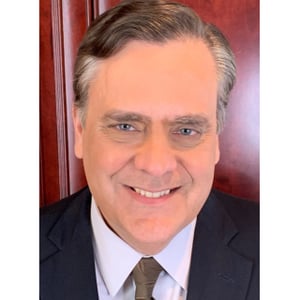
J.B. and Maurice C. Shapiro Professor of Public Interest Law; Director of the Environmental Law Advocacy Center; Executive Director, Project for Older Prisoners, The George Washington University Law School
Jonathan Turley is a nationally recognized legal scholar who has written extensively in areas ranging from constitutional law to legal theory to tort law. After a stint at Tulane Law School, Professor Turley joined the GW Law faculty in 1990, and in 1998, became the youngest chaired professor in the school’s history.
He is the founder and executive director of the Project for Older Prisoners (POPS). He has written more than three dozen academic articles that have appeared in a variety of leading law journals including those of Cornell, Duke, Georgetown, Harvard, and Northwestern Universities, among others. He most recently completed a three-part study of the historical and constitutional evolution of the military system.
Professor Turley has served as counsel in some of the most notable cases in the last two decades, including his representation of the Area 51 workers at a secret air base in Nevada; the nuclear couriers at Oak Ridge, Tennessee; the Rocky Flats grand jury in Colorado; Dr. Eric Foretich, the husband in the Elizabeth Morgan custody controversy; and four former U.S. Attorney Generals during the Clinton impeachment litigation. Professor Turley also has served as counsel in a variety of national security and terrorism cases, and has been ranked as one of the top 10 lawyers handling military cases.
He has served as a consultant on homeland security and constitutional issues, and is a frequent witness before the House and Senate on constitutional and statutory issues as well as tort reform legislation. He also is a nationally recognized legal commentator; he ranked 38th in the top 100 most cited ‘public intellectuals’ in a recent study by Judge Richard Posner and was found to be the second most cited law professor in the country.
He is a member of the USA Today board of contributors and the recipient of the “2005 Single Issue Advocate of the Year” – the annual opinion award for the Aspen Institute and The Week magazine. More than 400 of his articles on legal and policy issues regularly appear in national newspapers. He also has worked as the CBS and NBC legal analyst, respectively, during national controversies.
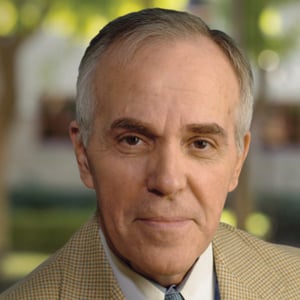
Professor of Government, Claremont Graduate University
Michael Uhlmann has been a professor in the Division of Politics & Economics at Claremont Graduate University since 2002. His research specializations include American presidency, executive–congressional relations, and the federal judiciary—namely, the federal administrative process and national security decision making. In addition to his regular coursework at CGU, Uhlmann teaches in and directs CGU’s Tribal Administration Certificate Program, made possible through a generous grant from the San Manuel Band of Mission Indians.
Uhlmann received his PhD in Government from Claremont Graduate University after receiving his BA in History from Yale University and his LLB from the University of Virginia Law School. Immediately prior to joining the CGU faculty, Uhlmann served as a senior vice president of the Lynde and Harry Bradley Foundation in Milwaukee, Wisconsin. Before that, he was a senior fellow at the Ethics and Public Policy Center in Washington, D.C. He had also served for many years as a partner in the Washington office of Pepper, Hamilton, & Scheetz, a large international law firm, where he specialized in federal antitrust and administrative law. Concurrently held alongside his position at CGU, Uhlmann is an adjunct professor at Claremont McKenna College, teaching a variety of courses in the Department of Government.
In addition to his academic career, private legal practice, and philanthropic work, Uhlmann has had a distinguished career in government, beginning with service as a staff and committee counsel in the U.S. Senate and as assistant general counsel of the Federal Trade Commission. In 1974, following Senate confirmation, he was appointed by President Gerald Ford to be assistant attorney general for Legislative Affairs in the Department of Justice. From 1981 to 1984, he served as special assistant to President Ronald Reagan and associate director of the White House Office of Policy Development. He directed legal and administrative policy for the Reagan presidential transition in 1980–1981 and chaired the Department of Justice transition team for President-Elect George H. W. Bush in 1988–1989.
Uhlmann has written for many leading newspapers and journals of opinion, including National Review, Weekly Standard, Philadelphia Inquirer, Los Angeles Times, Washington Post, First Things, and Claremont Review of Books.
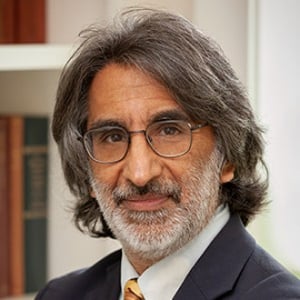
Sterling Professor of Law, Yale Law School
Akhil Reed Amar is Sterling Professor of Law and Political Science at Yale University, where he teaches constitutional law in both Yale College and Yale Law School. After graduating from Yale College, summa cum laude, in 1980 and from Yale Law School in 1984, and clerking for Judge (later Justice) Stephen Breyer, Amar joined the Yale faculty in 1985 at the age of 26. He is Yale’s only living professor to have won the University’s unofficial triple crown — the Sterling Chair for scholarship, the DeVane Medal for teaching, and the Lamar Award for alumni service.
Amar’s work has won awards from both the American Bar Association and the Federalist Society, and he has been cited by Supreme Court justices across the spectrum in more than 50 cases — tops among scholars under age 70. According to both Fred Shapiro’s landmark 2021 study of lifetime scholarly citations and Heinonline’s most recent tabulation of lifetime law-review citations, Amar is America’s second most-cited legal scholar still under age 70. He is a member of the American Academy of Arts and Sciences and has written widely for popular publications, including The New York Times, The Washington Post, The Wall Street Journal, Time, and The Atlantic. He was an informal consultant to the popular TV show The West Wing and his scholarship has been showcased on many broadcasts, including The Colbert Report, Morning Joe, AC360, Velshi, Fox News @ Night with Shannon Bream, Fareed Zakaria GPS, Erin Burnett Outfront, and Constitution USA with Peter Sagal.
He is the author of more than a hundred law review articles and several books, including The Bill of Rights (1998 — winner of the Yale University Press Governors’ Award), America’s Constitution (2005 — winner of the ABA’s Silver Gavel Award), America’s Unwritten Constitution (2012 — named one of the year’s 100 best nonfiction books by The Washington Post), and The Constitution Today (2016 — named one of the year’s top ten nonfiction books by Time magazine). The first volume of his ambitious trilogy on American constitutional history from the Founding to the present, The Words That Made Us: America’s Constitutional Conversation, 1760-1840, came out in May 2021. The second volume, Born Equal: Remaking America’s Constitution, 1840-1920, will be published in September 2025 and is already available for pre-order. All together, his nonfiction books have won two starred reviews from Publishers Weekly and three starred reviews from Kirkus—tops, it is believed, among legal scholars under age 70. Together with Vikram David Amar (YLS ’88), he has a bi-weekly column on the Supreme Court on the distinguished website SCOTUSblog. Along with Andy Lipka, he co-hosts a popular and free weekly podcast, Amarica’s Constitution, whose listeners are eligible for CLE credit in most American jurisdictions. A wide assortment of his articles and op-eds and video links to many of his public lectures and free online courses may be found at akhilamar.com.
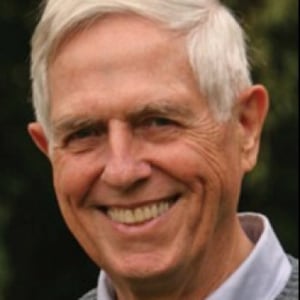
U.S. Court of Appeals for the D.C. Circuit (ret.) and former U.S. Senator
James L. Buckley was born in New York City in 1923, grew up in rural Connecticut, and received his B.A. degree from Yale. Following service as a naval officer in World War II, he returned to New Haven to secure his law degree. After several years in private practice, he joined a group of small companies engaged in oil exploration abroad. He was elected to the United States Senate in 1970 as the candidate of New York's Conservative Party. He failed of re-election; but he has since served as an under secretary of state in the Reagan administration, as president of Radio Free Europe/Radio Liberty in Munich, Germany, and, most recently, as a judge on the U.S. Court of Appeals for the District of Columbia Circuit. He retired in 2000 and now resides in Bethesda, Maryland.
Scholar in Residence, The Constitution Project
Louis Fisher is Scholar in Residence at the Constitution Project. Previously he worked for four decades at the Library of Congress as Senior Specialist in Separation of Powers (Congressional Research Service, from 1970 to 2006) and Specialist in Constitutional Law (the Law Library, from 2006 to 2010). During his service with CRS he was research director of the House Iran-Contra Committee in 1987, writing major sections of the final report. Fisher's specialties include constitutional law, war powers, budget policy, executive-legislative relations, and judicial-congressional relations.
After completing his doctoral work in political science at the New School for Social Research in 1967, he taught full-time at Queens College for three years. Later he taught part-time at Georgetown University, American University, Catholic University law school, Indiana University, Catholic University, the College of William and Mary law school, and Johns Hopkins University. Currently he is a Visiting Professor at the William and Mary law school.
His books include President and Congress (1972), Presidential Spending Power (1975), The Constitution Between Friends (1978), The Politics of Shared Power (4th ed. 1998), Constitutional Conflicts Between Congress and the President (6th ed. 2014), Constitutional Dialogues (1988),American Constitutional Law (with Katy J. Harriger, 10th ed. 2013), Presidential War Power (3rd ed. 2014), Political Dynamics of Constitutional Law (with Neal Devins, 5th ed. 2011), Congressional Abdication on War and Spending (2000), Religious Liberty in America: Political Safeguards (2002), Nazi Saboteurs on Trial: A Military Tribunal & American Law (2003; 2d ed. 2005), The Politics of Executive Privilege (2004), The Democratic Constitution (with Neal Devins, 2004), Military Tribunals and Presidential Power: American Revolution to the War on Terrorism (2005), In the Name of National Security: Unchecked Presidential Power and the Reynolds Case (2006), The Constitution and 9/11: Recurring Threats to America’s Freedoms (2008), The Supreme Court and Congress: Rival Interpretations (2009), On Appreciating Congress: The People’s Branch (2010), Defending Congress and the Constitution (2011), On the Supreme Court: Without Illusion and Idolatry(2013), and The Law of the Executive Branch: Presidential Power (2014). His textbook in constitutional law is available in two paperbacks:Constitutional Structures: Separation of Powers and Federalism and Constitutional Rights: Civil Rights and Civil Liberties. With Leonard W. Levy he edited the four-volume Encyclopedia of the American Presidency (1994).
He has twice won the Louis Brownlow Book Award (for Presidential Spending Power and Constitutional Dialogues). The encyclopedia he co-edited was awarded the Dartmouth Medal. In 1995 he received the Aaron B. Wildavsky Award “For Lifetime Scholarly Achievement in Public Budgeting” from the Association for Budgeting and Financial Management. In 2006 he received the Neustadt Book Award for Military Tribunals and Presidential Power. In 2011 he received the Walter Beach Pi Sigma Alpha Award from the National Capital Area Political Science Association for strengthening the relationship between political science and public service. In 2012 he received the Hubert H. Humphrey Award from the American Political Science Association in recognition of notable public service by a political scientist. The July 2013 issue of PS: Political Science & Politics includes a symposium on "Law and (Disciplinary) Order: A Dialogue about Louis Fisher, Constitutionalism, and Political Science.
Dr. Fisher has been invited to testify before Congress more than 50 times on such issues as war powers, state secrets privilege, NSA surveillance, executive spending discretion, presidential reorganization authority, Congress and the Constitution, the legislative veto, the item veto, the Gramm-Rudman deficit control act, executive privilege, committee subpoenas, executive lobbying, CIA whistleblowing, covert spending, the pocket veto, recess appointments, the budget process, the balanced budget amendment, biennial budgeting, and presidential impoundment powers.
He has been active with CEELI (Central and East European Law Initiative) of the American Bar Association, traveling to Bulgaria, Albania, and Hungary to assist constitution-writers; participating in CEELI conferences in Washington, D.C. with delegations from Bosnia-Herzegovina, Lithuania, Romania, and Russia; serving on CEELI "working groups" on Armenia and Belarus; and assisted in drafting constitutional amendments for the Kyrgyz Republic. As part of CRS delegations he traveled to Russia and Ukraine to assist on constitutional questions. For the International Bar Association he helped analyze the draft constitutions for Swaziland and Zimbabwe.
He is the author of more than 500 articles in law reviews, political science journals, encyclopedias, books, magazines, and newspapers. He has been invited to speak in Albania, Australia, Belgium, Bulgaria, Canada, China, the Czech Republic, Denmark, England, France, Germany, Greece, Israel, Japan, Macedonia, Malaysia, Mexico, the Netherlands, Oman, the Philippines, Poland, Romania, Russia, Slovenia, South Korea, Sweden, Taiwan, Ukraine, and the United Arab Emirates. The topics include a range of constitutional, political, and institutional issues.
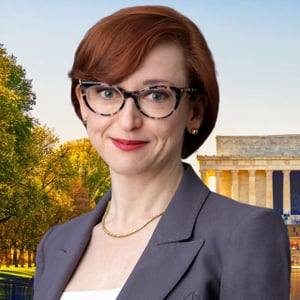
Partner, Torridon Law PLLC
Tara Helfman is a Partner at Torridon Law PLLC. Her practice includes internal investigations, general advising, litigation, and crisis management. She has represented clients in matters involving constitutional law, public and private international law, employment discrimination, commercial litigation, and federal agency litigation.
Helfman served as Associate Counsel and Special Assistant to the President during the administration of President Donald J. Trump. In that capacity, she managed the background investigation process for all nominees to Senate-confirmed positions, advised on judicial selection, and liaised with the USDA on policy initiatives, rulemaking, and litigation. She has also held leadership positions in the Department of Justice Civil Rights Division and at the Equal Employment Opportunity Commission.
A British Marshall Scholar, Helfman was a tenured Associate Professor at Syracuse University College of Law and a Visiting Scholar at the Georgetown University Law Center. She has published a two-volume constitutional history of the United States and numerous scholarly articles.
Clerkship
Education
Bar Admissions
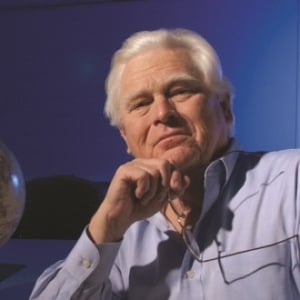
Robert and Katheryn Dockson Professor of Public Policy and Professor Emeritus, Pepperdine University School of Public Policy
Gordon Lloyd is the Robert and Katheryn Dockson Professor of Public Policy at Pepperdine University. He earned his bachelor of arts degree in economics and political science at McGill University. He completed all the course work toward a doctorate in economics at the University of Chicago before receiving his master of arts and PhD degrees in government at Claremont Graduate School. The coauthor of three books on the American founding and sole author of a book on the political economy of the New Deal, he also has numerous articles, reviews, and opinion-editorials to his credit. His latest coauthored book, The New Deal & Modern American Conservatism: A Defining Rivalry, was published in 2013, and he most recently released as editor, Debates in the Federal Convention of 1787, in September 2014. He is the creator, with the help of the Ashbrook Center, of four highly regarded websites on the origin of the Constitution. He has received many teaching, scholarly, and leadership awards including admission to Phi Beta Kappa and the Howard White Award for Teaching Excellence at Pepperdine University. He currently serves on the National Advisory Council for the Walter and Leonore Annenberg Presidential Learning Center through the Ronald Reagan Presidential Foundation.
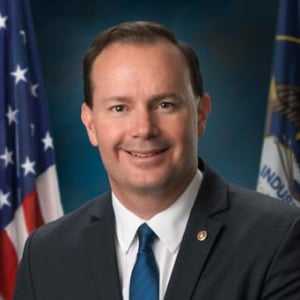
United States Senator, Utah
Elected in 2010 as Utah's 16th Senator, Mike Lee has spent his career defending the basic liberties of Americans and Utahns as a tireless advocate for our founding constitutional principles.
Senator Lee acquired a deep respect for the Constitution early on. His father, Rex Lee, who served as the Solicitor General under President Ronald Reagan, would often discuss varied aspects of judicial and constitutional doctrine around the kitchen table, from Due Process to the uses of Executive Plenary Power. He attended most of his father's arguments before the U.S. Supreme Court, giving him a unique, hands-on experience and understanding of government up close.
Lee graduated from Brigham Young University with a Bachelor of Science in Political Science, and served as BYU's Student Body President in his senior year. He graduated from BYU's Law School in 1997 and went on to serve as law clerk to Judge Dee Benson of the U.S. District Court for the District of Utah, and then with future Supreme Court Justice Judge Samuel A. Alito, Jr. on the U.S. Court of Appeals for the Third Circuit.
Lee spent several years as an attorney with the law firm Sidley & Austin specializing in appellate and Supreme Court litigation, and then served as an Assistant U.S. Attorney in Salt Lake City arguing cases before the U.S. Court of Appeals for the Tenth Circuit.
Lee served the state of Utah as Governor Jon Huntsman's General Counsel and was later honored to reunite with Justice Alito, now on the Supreme Court, for a one-year clerkship. He returned to private practice in 2007.
Throughout his career, Lee earned a reputation as an outstanding practitioner of the law based on his sound judgment, abilities in the courtroom, and thorough understanding of the Constitution.
Today, Lee fights to preserve America's proud founding document in the United States Senate. He advocates efforts to support constitutionally limited government, fiscal responsibility, individual liberty, and economic prosperity.
Lee is a member of the Judiciary Committee, and serves as Chairman of the Antitrust, Competition Policy and Consumer Rights Subcommittee protecting business competition and personal freedom.
He also oversees issues critical to Utah as the Chairman of the Water and Power Subcommittee of the Energy and Natural Resources Committee. He serves on the Commerce Committee and the Joint Economic Committee, as well.
In the 114th Congress, Lee also began his tenure as Chairman of the Senate Steering Committee, where he works with his Republican colleagues in the Senate to introduce bold and innovative solutions to issues facing the American people.
Lee and his wife Sharon live in Alpine, Utah, with their three children. He is a member of The Church of Jesus Christ of Latter-day Saints and served a two-year mission for the Church in the Texas Rio Grande Valley.
Co-Chairman, The Federalist Society for Law and Public Policy Studies
Leonard is Co-Chairman and former Executive Vice President of the Federalist Society, joining the organization over 25 years ago. Since that time he has been instrumental in helping the organization top 70,000, focusing on the growth of lawyers membership, operations and activities advancing limited, constitutional government. In addition to his work at the Society, Leonard has advised President Trump on judicial selection, assisted with the Gorsuch and Kavanaugh Supreme Court selection and confirmation process, and served as a member of the transition team. He also organized the outside coalition efforts in support of the Roberts and Alito U.S. Supreme Court confirmations. Leonard was appointed by President George W. Bush to three terms to the U.S. Commission on International Religious Freedom as chairman. He was also a U.S. Delegate to the UN Council and UN Commission on Human Rights during the Bush Administration. Leonard was the recipient of the 2009 Bradley Prize, along with the other founders and directors of the Federalist Society, for his work in advancing freedom and the rule of law. He is the coeditor of Presidential Leadership: Rating the Best and the Worst in the White House, as well as the author of opinion editorials in the New York Times,The Wall Street Journal, and Washington Post. Leonard holds degrees from Cornell University and Cornell Law School. He presently resides in Northern Virginia, where he and his wife Sally have raised their seven children.
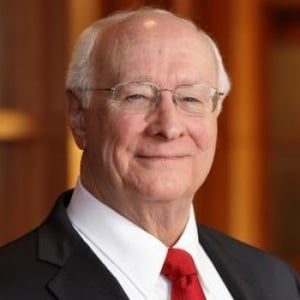
Walter L. Brown Professor of Law, University of Virginia School of Law
John Norton Moore, who joined the faculty in 1966, is an authority on international law, national security law and the law of the sea. He also teaches advanced topics in national security law and the rule of law. Moore taught the first course in the country on national security law and conceived and co-authored the first casebook on the subject. From 1991-93, during the Gulf War and its aftermath, Moore was the principal legal adviser to the Ambassador of Kuwait to the United States and to the Kuwait delegation to the U.N. Iraq-Kuwait Boundary Demarcation Commission.
From 1985 to 1991, he chaired the board of directors of the U.S. Institute of Peace, one of six presidential appointments he has held. From 1973 to 1976, he was chair of the National Security Council Interagency Task Force on the Law of the Sea and ambassador and deputy special representative of the president to the law of the sea conference. Previously he served as the counselor on international law to the State Department. With the deputy attorney general of the United States, he was co-chair in March 1990 of the U.S.-USSR talks in Moscow and Leningrad on the rule of law. As a consultant to the Arms Control and Disarmament Agency, he was honored by the director for his work on the ABM Treaty Interpretation Project. He has been a frequent witness before congressional committees on maritime policy, legal aspects of foreign policy, national security, war and treaty powers, and democracy and human rights. He has been a fellow of the Woodrow Wilson International Center for Scholars at the Smithsonian Institution.
Moore is a member of advisory and editorial boards for nine journals and numerous professional organizations, and he has published many articles on oceans policy, national security and international law.
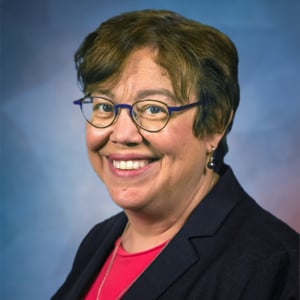
Executive Vice President and Senior Counselor to the President, The Federalist Society for Law and Public Policy Studies
B.A., Yale; J.D., University of Chicago. Lee Liberman Otis is the Executive Vice President and Senior Counselor to the President at the Federalist Society. She also serves as a member of the American Law Institute (ALI), a senior fellow of the Administrative Conference (ACUS), and as the co-chair of the National Constitution Center's Coalition of Freedom Advisory Board. She previously was a special assistant and an Associate Deputy Attorney General at the U.S. Department of Justice, General Counsel of the Department of Energy, an associate in the appellate section of Jones, Day, Reavis & Pogue, an associate counsel to President George H.W. Bush, and a law clerk to Associate Justice Antonin Scalia. She also served as an assistant professor of law at George Mason, where she taught legislation, federal jurisdiction, constitutional law, civil procedure, and appellate advocacy. Ms. Otis has been an important member of the Federalist Society team since the organization’s beginnings. Together with David McIntosh, she led the effort to start what became the Chicago chapter of the Society. She also helped organize the Society’s first conference at Yale, its second conference at Chicago, and its first Lawyers Division chapter in Washington DC, as well as the effort to incorporate the Society, recruit its permanent staff, and obtain its early funding. She was a Founding Director of the Federalist Society.