
Is the Modern Congress Doing More Harm Than Good?
Fifth Annual Executive Branch Review Conference
The Mayflower Hotel1127 Connecticut Ave NW
Washington, DC 20036

Here are the latest events.


Justice William J. Brennan, Jr., Professor of Law, Georgetown University Law Center
Lisa Heinzerling is the Justice William J. Brennan, Jr. Professor of Law at Georgetown University. Her primary specialties are administrative law and environmental law. She is the author of several books, including Priceless: On Knowing the Price of Everything and the Value of Nothing, a critique of the use of cost-benefit analysis in environmental policy. Professor Heinzerling has received the Georgetown University President's Award for Distinguished Scholar-Teachers, the faculty teaching award at Georgetown Law, and several awards related to her scholarship and advocacy in environmental law. She was the lead author of the winning briefs in Massachusetts v. EPA, in which the Supreme Court held that the Clean Air Act gives EPA the authority to regulate greenhouse gases. From January 2009 to July 2009, Heinzerling served as Senior Climate Policy Counsel to the Administrator of the Environmental Protection Agency and then, from July 2009 to December 2010, she served as Associate Administrator of EPA’s Office of Policy. She was a law clerk to Judge Richard A. Posner of the U.S. Court of Appeals for the Seventh Circuit and Justice William J. Brennan, Jr. of the U.S. Supreme Court.

Executive Vice President, The Federalist Society
Dean Reuter is Executive Vice President at the Federalist Society for Law and Public Policy Studies. He has served in two federal government agency Offices of the Inspector General, as Counsel to the Inspector General and Deputy Inspector General, responsible for policing the use of federal funds granted and contracted through those agencies. As such, he helped conduct and oversee criminal investigations across the country. He is the principal author of the non-fiction book, The Hidden Nazi: The Untold Story of America's Deal with the Devil, and editor of Liberty’s Nemesis: The Unchecked Expansion of the State and Confronting Terror: 9/11 and the Future of American National Security. He was appointed by the President and served as Vice-Chairman of the Board of Directors of the Corporation for National and Community Service, and recently served as an appointee on the U.S. Commission on Presidential Scholars. He is a graduate of Hood College (BA with Honors) and the University of Maryland School of Law.
Vice President of Washington Operations and Dean of the Van Andel Graduate School of Government, Hillsdale College
Matthew Spalding is the Kirby Professor in Constitutional Government at Hillsdale College and the Dean of the Van Andel Graduate School of Government at Hillsdale College’s Washington, D.C., campus. As Vice President for Washington Operations, he also oversees the Allan P. Kirby, Jr. Center for Constitutional Studies and Citizenship and the academic and educational programs of Hillsdale in the nation’s capital.
He is the best-selling author of We Still Hold These Truths: Rediscovering Our Principles, Reclaiming Our Future, which details America’s core principles, shows how they have come under assault by modern progressive-liberalism, and lays out a strategy to recover them. Spalding is also executive editor of The Heritage Guide to the Constitution, a line-by-line analysis of each clause of the U.S. Constitution. His other books include A Sacred Union of Citizens: Washington’s Farewell Address and the American Character; Patriot Sage: George Washington and the American Political Tradition; and The Founders’ Almanac: A Practical Guide to the Notable Events, Greatest Leaders & Most Eloquent Words of the American Founding.
Prior to joining Hillsdale, Dr. Spalding was vice president of American Studies at The Heritage Foundation and founding director of its B. Kenneth Simon Center for Principles and Politics. He is a Fellow at the Claremont Institute for the Study of Statesmanship and Political Philosophy, and serves on the boards of the Steamboat Institute and the Philadelphia Society.
He received his B.A. from Claremont McKenna College and his M.A. and Ph.D. in government from the Claremont Graduate School. In addition to teaching at Hillsdale, he has taught at George Mason University, the Catholic University of America, and Claremont McKenna College. He and his wife Elizabeth, a Hillsdale alumna, reside with their two children in Arlington, Virginia.
Laurence H. Silberman Chair in Constitutional Governance, American Enterprise Institute; Executive Director, Antonin Scalia Law School’s C. Boyden Gray Center for the Study of the Administrative State
Adam J. White is the Laurence H. Silberman Chair in Constitutional Governance and senior fellow at the American Enterprise Institute, where he focuses on the Supreme Court and the administrative state. He also directs the Antonin Scalia Law School’s C. Boyden Gray Center for the Study of the Administrative State.
He writes on regulation and constitutional government for a variety of publications. He practiced law in Washington, D.C., after clerking for the D.C. Circuit's Judge David Sentelle. He also has been chairman of the ABA's Administrative Law Section.
In 2021, he served on the Presidential Commission on the Supreme Court of the United States, where he criticized “Court packing” and other efforts to restructure the Supreme Court.
President, Constitutional Accountability Center
Elizabeth is Constitutional Accountability Center’s President. From 2008-2016, she served as CAC's Chief Counsel, representing the Center as well as clients including preeminent constitutional scholars and historians, state and local government organizations, and groups such as the League of Women Voters and the AARP. She frequently participates in Supreme Court litigation and her legal brief writing has been recognized as “exemplary” by the Green Bag Almanac & Reader. Elizabeth has also argued several important cases in the federal courts of appeals on a range of issues, including immigration law, habeas corpus, and sovereign immunity. She joined CAC from private practice at Quinn Emanuel Urquhart & Sullivan in San Francisco, where she was an attorney working with former Stanford Law School Dean Kathleen Sullivan in the firm’s Supreme Court/appellate practice. Previously, Elizabeth was a supervising attorney and teaching fellow at the Georgetown University Law Center appellate litigation clinic, a law clerk for Judge James R. Browning of the U.S. Court of Appeals for the Ninth Circuit, and a lawyer at Pillsbury Winthrop Shaw Pittman, a law firm in Washington. She has appeared as a legal expert for NBC, ABC, PBS, CNN, Fox News, the BBC, Current TV, and NPR, among other outlets. Elizabeth has been quoted extensively in the print media and is a regular contributor to the ABA’s Preview of United States Supreme Court Cases. Her writings have appeared in The New York Times, Reuters, USA Today, Politico, CNN.com, Slate, and on numerous political and legal blogs, such as Huffington Post, SCOTUSblog, and ACSblog. She has also published in the UCLA Journal of Environmental Law & Policy, Syracuse Law Review, The Cato Institute’s Supreme Court Review, and the Yale Journal of International Law. Elizabeth is a graduate of Yale Law School.
Program Director, Elections, Democracy Fund Voice
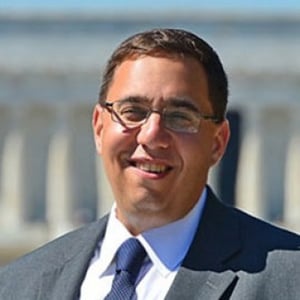
Partner, Consovoy McCarthy Park PLLC
Mr. Consovoy assists clients on a broad range of litigation and appellate issues primarily before the Supreme Court of the United States and federal appellate and district courts, as well as before federal agencies. Mr. Consovoy represents clients in cases involving constitutional issues, interpretation and enforcement of federal statutes, administrative law, civil rights disputes, and a variety of other civil litigation issues. Mr. Consovoy recently argued two cases—Spokeo v. Robbins and Evenwel v. Abbott—before the Supreme Court of the United States.
Mr. Consovoy is a former law clerk to Supreme Court Justice Clarence Thomas, Judge Edith H. Jones of the United States Court of Appeals for the Fifth Circuit, and the 17th Judicial Circuit of Virginia. Mr. Consovoy is a member of the Edward Coke Appellate Inn of Court and was named by Law360 as a “rising star” in appellate law for 2013. Since 2011, Mr. Consovoy has been the co-director of the Supreme Court Clinic at the Antonin Scalia Law School at George Mason University, where he also is the co-director of the Administrative Law Clinic.
Mr. Consovoy earned his B.A. from Monmouth University, and his J.D. magna cum laude from George Mason University School of Law. Mr. Consovoy is a member of the Virginia and District of Columbia bars.
Senior Attorney and Director, Election Integrity Project, Judicial Watch
Robert Popper joined Judicial Watch in September 2013 as a senior attorney and as director of Judicial Watch’s Election Integrity Project. Prior to joining Judicial Watch, Mr. Popper worked for eight years, five as deputy chief of the Voting Section, in the Civil Rights Division of the Department of Justice, in which capacity he garnered numerous professional awards. Before that, Mr. Popper worked as a private attorney in New York City for 17 years, where his practice extended to a wide range of legal matters, including voting rights. Mr. Popper served as counsel in a successful constitutional challenge alleging racial segregation in the design of New York’s congressional districts, and successfully defended the appeal to the U.S. Supreme Court. Mr. Popper is a published author on the topic of voting rights law. He developed a legal standard relating to gerrymandering that is widely cited by experts and was adopted by the Arizona Independent Redistricting Commission. He has testified before the Missouri Senate Redistricting Committee and the Pennsylvania House State Government Committee; and he has spoken about voting rights to a conference of U.S. Attorneys at the National Advocacy Center, to state officials, and to countless local community representatives. Mr. Popper is a graduate of the University of Pennsylvania and Northwestern University Law School. He is admitted to practice in the Southern and Eastern Districts of New York, the Court of Appeals for the Second Circuit, and the U.S. Supreme Court.
General Counsel, Committee on House Administration
Former Chief, United States Department of Justice Voting Section
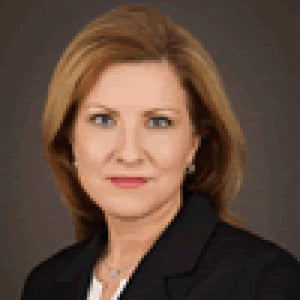
Senior Advisor, Patomak Global Partners, LLC
Kathleen Casey is a senior advisor with Patomak Global Partners. Her Patomak client work spans corporate governance issues; international regulatory developments, including interaction with U.S. policies; and technical market regulations. She has more than two decades of experience in senior government regulatory, legal and policy roles.
Ms. Casey completed her five-year term as a Commissioner with the U.S. Securities and Exchange Commission in August 2011.
During her tenure, Ms. Casey acted as the SEC’s principal representative in various international fora, including multilateral and bilateral regulatory dialogues, the G-20 Financial Stability Board, and the International Organization of Securities Commissions (IOSCO). In this capacity, she also served in several international leadership positions, including as Chairman of the IOSCO Technical Committee and Co-chair of the CPSS/IOSCO Review of Standards, the IOSCO OTC Derivatives Task Force, the IOSCO Task Force on Supervisory Cooperation, and the FSB Working Group on Provisioning.
Prior to being appointed Commissioner, Ms. Casey served in various legal and policy roles in the United States Senate. From 2003 to 2006, she served as Staff Director and Counsel of the U.S. Senate Banking, Housing, and Urban Affairs Committee. Before serving as Staff Director for the Senate Banking Committee, Ms. Casey served in a series of senior advisory roles to U.S. Senator Richard Shelby (R-AL), including Chief of Staff from 2002 to 2003 and Legislative Director from 1996 to 2002. From 1994 to 1996, Ms. Casey served as the Staff Director of the Subcommittee on Financial Institutions and Regulatory Relief on the U.S. Senate Banking Committee; and from 1993 to 1994, she served as a Legislative Assistant for tax, budget, and finance matters for Senator Richard Shelby.
Currently, Ms. Casey serves as a non-executive director on the Board of HSBC Holdings plc, and is a member of the Board of Trustees of The Pennsylvania State University and Chairman of the Board of Penn State Health. She is also a member of the Library of Congress Trust Fund Board, the Board of Trustees of the International Valuation Standards Council, and the Public Company Accounting Oversight Board Advisory Council.
Previous roles include serving as a member and Non-Executive Chairman of the Council of the Alternative Investment Management Association, a group of over 1,300 hedge fund managers, fund of hedge funds managers, prime brokers, legal and accounting firms, investors, fund administrators, and independent fund directors based in more than 50 countries worldwide; as a distinguished policy fellow with the Georgetown Center for Financial Markets and Policy at Georgetown University's McDonough School of Business; an adjunct lecturer at George Mason University School of Law; a non-executive director of FX Alliance Inc., an independent electronic foreign exchange trading platform; Vice Chairman of the Board of Trustees of the Pennsylvania State University and a member of the Board of the Milton S. Hershey Medical Center.
Ms. Casey received her J.D. from George Mason University Antonin Scalia Law School, and her B.A. in International Politics from Pennsylvania State University.
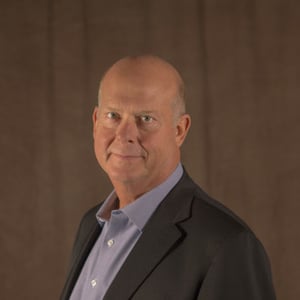
Managing Member, Aviation Perspectives LLC
Partner, Sidley Austin LLP
Alan Raul is the founder and leader of Sidley’s highly ranked Privacy, Data Security and Information Law practice. He represents companies on federal, state and international privacy and cybersecurity issues, including global data protection and compliance programs, data breaches, consumer protection issues and Internet law. Mr. Raul advises companies regarding their cybersecurity and information governance and preparedness, and helps them address crisis management for data security incidents. Mr. Raul’s practice involves litigation and counseling regarding consumer class actions and investigations, enforcement actions and policy development by the FTC, State Attorneys General, SEC, Department of Justice and other government agencies.
Mr. Raul provides clients with perspective gained from extensive government service. He previously served as Vice Chairman of the White House Privacy and Civil Liberties Oversight Board, General Counsel of the Office of Management and Budget, General Counsel of the U.S. Department of Agriculture, and Associate Counsel to the President.
Mr. Raul serves as a member of the Data Security, Privacy, and Intellectual Property Litigation Advisory Committee of the U.S. Chamber Litigation Center (affiliated with the U.S. Chamber of Commerce). He also serves ex officio on the American Bar Association’s Cybersecurity Legal Task Force by past appointment of the ABA President, and as a member of the Practicing Law Institute’s (PLI) Privacy Law Advisors Group.
Mr. Raul has represented a Special Cybersecurity Review Committee of the Board of Directors of a major tech company in connection with its independent investigation of the company’s handling of major data breaches.
In addition to leading a “Privacy and Data Security” practice nationally rated by Chambers Global and Chambers USA, Mr. Raul is ranked by Chambers in its top tier of Privacy and Data Security practitioners. Chambers USA has described Mr. Raul as a “true ‘ambassador’ for the privacy sector” who “attracts praise for his deep knowledge of the field. Interviewees stress that ‘he gives invaluable advice’ and is known to be a strong litigator. He also earns plaudits for his regulatory compliance and data protection policy expertise.” He has been named as a leading international Internet and E-Commerce Lawyer in Who’s Who Legal. Mr. Raul was also named to Ethisphere Institute’s “Attorneys Who Matter” in Data Privacy/Security, which recognizes lawyers with the highest commitment to public service, legal community engagement and academic involvement. In 2016, the Washingtonian named Mr. Raul one of Washington, DC’s Best Lawyers: Cybersecurity.
In 1991, Mr. Raul co-founded the “Lawyers Have Heart” 10K run and walk, to benefit the American Heart Association. He continues his active involvement with the event.
Staff Director & Chief Counsel for Ranking Member Gary Peters, S, United States Senate
Zachary Schram serves as Staff Director and Chief Counsel for Ranking Member Gary Peters on the Subcommittee on Federal Spending Oversight and Emergency Management in the United States Senate. From October 2015 until February 2017, Mr. Schram served as Senior Advisor and Investigations Counsel at the Department of State. Previously, he led complex bipartisan investigations as Senior Counsel to Senator Carl Levin on the Permanent Subcommittee on Investigations. Mr. Schram also spent two years as Counsel at WilmerHale representing a wide variety of clients in congressional investigations.
Former Congressman, Vice-President, U.S. Association of Former Members of Congress
The Honorable Martin Frost served in the U.S. House of Representatives from 1979-2005.
With 26 years of legislative experience, he is regarded as a preeminent political analyst among his peers. He held numerous leadership positions in his party and is also considered to be one of its top strategists, an innovative lawmaker who is able to craft bipartisan legislation, and a strong fundraiser for fellow Democrats. He is also the co-author, with Congressman Tom Davis (V-RA) of The PARTISAN DIVIDE: Congress in Crisis, which looks at how to solve the gridlock in Washington. In his presentations, Martin Frost addresses our current political climate, what to expect from Congress after the election, and what it takes to achieve bi-partisan cooperation.n, and what it takes to achieve bi-partisan cooperation.
Early in his political career, Frost served six years on the House Budget Committee and was chairman of the Health Task Force from 1985–1988. During the 1996 and 1998 elections, Frost was the chair of the Democratic Congressional Campaign Committee, a position he utilized to help his party gain 14 seats in the House. In 1999, he earned the distinguished role of chairman of the House Democratic Caucus, the party’s third-highest leadership role. During his last term, Frost held noteworthy positions as the ranking member of the House Rules Committee and highest ranking Southerner in the House Democratic Leadership. He was also the senior southern democrat in the House and the dean of the Texas congressional delegation.
Frost earned his bachelor’s degree in journalism and history from the University of Missouri-Columbia. Following his graduation from Georgetown Law School, he practiced in Dallas until his election in 1978. In 2005, Frost was a fellow at the Institute of Politics at the John F. Kennedy School of Government at Harvard, and in 2006, the Woodrow Wilson International Center for Scholars named him a public policy scholar.
Trustee Professor of Law, New York Law School
From 1972-79, Schoenbrod served as one of the leaders of the Natural Resources Defense Council, where he campaigned to reduce lead in gasoline, resurrect the then-decrepit New York City subway, and protect the environment of Puerto Rico. Previously, he was Director of Program Development at the community development project that Senator Robert Kennedy established in Bedford Stuyvesant. He has also been a senior fellow at the Cato Institute and the American Enterprise Institute.
His books include
D.C. Confidential: Inside the Five Tricks of Washington (Encounter Books, 2017) with forewords by Governor Howard Dean and Senator Mike Lee;
Breaking the Logjam: Environmental Protection That Will Work (Yale University Press, 2010)(with Richard B. Stewart and Katrina M. Wyman);
Saving Our Environment from Washington: How Congress Grabs Power, Shirks Responsibility, and Shortchanges the People (Yale University Press, 2005);
Democracy by Decree: What Happens When Courts Run Government (Yale University Press, 2003) (with Ross Sandler); and
Power Without Responsibility: How Congress Abuses the People Through Delegation (Yale University Press, 1993).
In addition to writing scholarly articles, he has frequently contributed opinion pieces to the Wall Street Journal, The Hill, the New York Times, and other publications.
He has an undergraduate degree from Yale College, a graduate degree in economics from Oxford University, which he attended as a Marshall Scholar, and a law degree from Yale Law School.
Laurence H. Silberman Chair in Constitutional Governance, American Enterprise Institute; Executive Director, Antonin Scalia Law School’s C. Boyden Gray Center for the Study of the Administrative State
Adam J. White is the Laurence H. Silberman Chair in Constitutional Governance and senior fellow at the American Enterprise Institute, where he focuses on the Supreme Court and the administrative state. He also directs the Antonin Scalia Law School’s C. Boyden Gray Center for the Study of the Administrative State.
He writes on regulation and constitutional government for a variety of publications. He practiced law in Washington, D.C., after clerking for the D.C. Circuit's Judge David Sentelle. He also has been chairman of the ABA's Administrative Law Section.
In 2021, he served on the Presidential Commission on the Supreme Court of the United States, where he criticized “Court packing” and other efforts to restructure the Supreme Court.
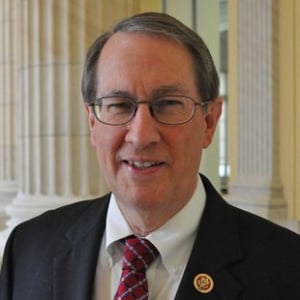
Former Congressman, United States House of Representatives
Bob Goodlatte served in the United States House of Representatives representing Virginia's 6th congressional district for 13 terms.
Goodlatte’s service to the people of the Sixth District began in 1977 when he became District Director for former Congressman Caldwell Butler. He served in this position for two years until 1979, and was responsible for helping folks across the District seeking assistance with or encountering problems from various federal agencies. In 1979, he founded his own private law practice in Roanoke. Later, he was a partner in the law firm of Bird, Kinder and Huffman, working there from 1981 until taking office.
Rep. Goodlatte was first elected to serve as Chairman of the House Judiciary Committee in the 113th Congress. He was the first Judiciary Committee Chairman from Virginia in the last 125 years. Rep. Goodlatte was an active Member of the Judiciary Committee since arriving in Congress, serving in a variety of leadership positions on the Committee including taking the lead on many intellectual property issues. During his time in Congress, Rep. Goodlatte made a name for himself as a leader on Internet and technology issues. He was Co-Chair of the Congressional Internet Caucus and the International Creativity and Theft-Prevention Caucus.
Rep. Goodlatte is a graduate of Washington and Lee University School of Law, and his undergraduate degree in Government was earned at Bates College in Lewiston, Maine.
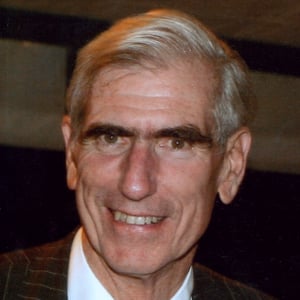
Founding Partner, Boyden Gray & Associates
Ambassador C. Boyden Gray is the founding partner of Boyden Gray & Associates, a law and strategy firm in Washington, D.C., focused on constitutional and regulatory issues.
Mr. Gray worked in the White House for twelve years, first as counsel to the Vice President during the Reagan administration and then as White House Counsel to President George H.W. Bush. In the Reagan administration, he was Counsel to the Presidential Task Force on Regulatory Relief, for which he wrote the original Executive Order 12291 requiring cost-benefit analysis and White House review of regulations (later renumbered as current EO 12866). In the George H.W. Bush Administration, Mr. Gray was in charge of judicial selection and was also instrumental in the enactment of the Clean Air Act Amendments of 1990, the Energy Policy Act of 1992, and a cap-and-trade system for acid rain emissions. In 1993, he received the Presidential Citizens Medal. Under President George W. Bush, Mr. Gray was U.S. Ambassador to the European Union and U.S. Special Envoy to Europe for Eurasian Energy.
Mr. Gray practiced law for 25 years at the law firm of Wilmer, Cutler & Pickering and was chairman of the Administrative Law and Regulatory Practice Section of the American Bar Association from 2000 to 2002. Early in his career, Mr. Gray helped to develop the Business Roundtable and served as its first counsel. He is an adjunct professor at Antonin Scalia Law School and a former adjunct professor at NYU Law School (teaching energy and environmental law). Mr. Gray is on the Board of Directors of the Atlantic Council, the Federalist Society, Reason Foundation, and the Trust for the National Mall.
Mr. Gray earned his A.B. magna cum laude from Harvard, where he was an editor of the Crimson, and his J.D. with high honors from the University of North Carolina at Chapel Hill, where he was editor-in-chief of the Law Review. Mr. Gray served in the United States Marine Corps, and after law school, he clerked for Earl Warren, Chief Justice of the United States Supreme Court.
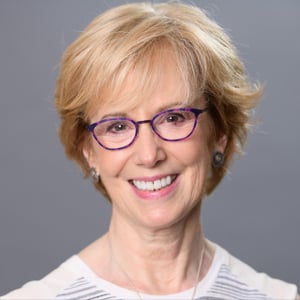
Director, GW Regulatory Studies Center & Distinguished Professor of Practice, Trachtenberg School of Public Policy & Public Administration, The George Washington University
Susan Dudley is the Founder and Director of the George Washington University Regulatory Studies Center, established in 2009 to raise awareness of regulations’ effects and improve regulatory policy through research, education, and outreach. She is also a distinguished professor of practice in the Trachtenberg School of Public Policy and Public Administration. She is past-president of the Society for Benefit Cost Analysis, a senior fellow of the Administrative Conference of the United States, and on the Regulatory Transparency Project Regulatory Practice Working Group. Her book, Regulation: A Primer, with Jerry Brito, is available on Amazon.com.
From April 2007 through January 2009, Professor Dudley served as the Presidentially-appointed Administrator of the Office of Information and Regulatory Affairs in the U.S. Office of Management and Budget and was responsible for the review of draft executive branch regulations under Executive Order 12866, the collection of federal-government-wide information under the Paperwork Reduction Act, the development and implementation of government-wide policies in the areas of information policy, privacy, and statistical policy, and international regulatory cooperation efforts.
Prior to OIRA, she directed the Regulatory Studies Program at the Mercatus Center at George Mason University, and taught courses on regulation at the George Mason University School of Law. Earlier in her career, Professor Dudley served as an economist at OIRA, as well as the Environmental Protection Agency and the Commodity Futures Trading Commission. She was also a consultant to government and private clients at Economists Incorporated. She holds a Master of Science degree from the Sloan School of Management at MIT and a Bachelor of Science degree (summa cum laude) in Resource Economics from the University of Massachusetts, Amherst.
Senior Counsel and Head of Regulatory Advocacy, General Electric Company
Michael A. Fitzpatrick currently serves as Senior Counsel and Head of Regulatory Advocacy for General Electric Company. He previously served as the Associate Administrator of the Office of Management and Budget’s Office of Information and Regulatory Affairs, where he helped lead the development of regulatory policy and White House review of significant Executive Branch regulatory actions. He served as the Executive Branch liaison to the ABA’s Administrative Law Section and has led several U.S. delegations abroad for meetings with the European Union and Canada.
During the Presidential Transition, Fitzpatrick served as deputy lead of the Executive Office of the President and Government Operations Agency Review Teams. From 2001 to 2009, Fitzpatrick was in the Washington, D.C. office of Akin Gump Strauss Hauer & Feld LLP, where he was a partner in the Litigation Practice Group, specializing in white collar, complex civil, and regulatory matters. Before joining Akin Gump, Fitzpatrick served as an Assistant United States Attorney in Washington, D.C., and as a Senior Advisor to the Administrator of the Office of Information and Regulatory Affairs at the Office of Management and Budget.
Fitzpatrick clerked for Judge William Norris on the U.S. Court of Appeals for the Ninth Circuit after graduating from Stanford Law School.
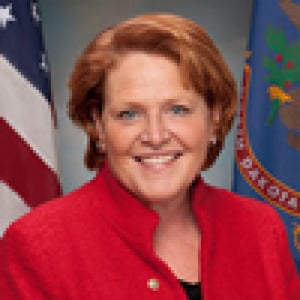
United States Senate, North Dakota
U.S. Senator Heidi Heitkamp is the first female Senator elected from North Dakota. She took the oath of office on January 3, 2013.
Already in her short time in the Senate, Senator Heitkamp has quickly become a proven Senator who works across the aisle to fight for North Dakotans. Senator Heitkamp has personally shown that if Senators work together, it can lead to real solutions.
As a former director of the one-of-a-kind Dakota Gasification synfuels plant, Senator Heitkamp has a long record of serving as a champion for North Dakota’s energy jobs and industry. She is continuing those efforts in the Senate, working to responsibly harness North Dakota’s energy resources, promoting the state’s all-of-the-above energy plan which she believes should serve as a model for the entire country, and fighting to lift the 40-year old ban on exporting U.S. crude oil.
Senator Heitkamp sits on the Senate Committee on Agriculture, Nutrition, and Forestry, where she has been fighting for North Dakota’s farmers and ranchers, and to make sure they get the resources and support they need to continue to feed North Dakota, the country, and the world. Starting on day one in the Senate, she helped write, negotiate, and pass a long-term, comprehensive Farm Bill which Congress passed in 2014.
As a member on the Senate Committee on Indian Affairs, Senator Heitkamp is continuing her pledge -- from her time as North Dakota’s Attorney General -- to stand up for Native American families and make sure the U.S. government lives up to its treaty and trust responsibilities. The first bill she introduced in the Senate would better protect Native children and make sure they have the economic and educational tools to thrive.
Through her leadership on the Senate Committee on Banking, Housing and Urban Affairs, Senator Heitkamp has worked to reform the nation’s housing finance system, make housing more affordable, address North Dakota’s housing shortage, and provide relief to small financial institutions.
Senator Heitkamp also serves on the Senate Committee on Homeland Security and Governmental Affairs and the Senate Committee on Small Business and Entrepreneurship.
Senator Heitkamp previously served as North Dakota’s Attorney General, battling drug dealers, protecting senior citizens from scams, and working to keep sexual predators off streets and away from kids, even after their prison terms were up.
During her time as North Dakota’s Attorney General, Senator Heitkamp brokered an agreement between 46 states and the tobacco industry, which forced the tobacco industry to tell the truth about smoking and health. The settlement resulted in the award of about $336 million to North Dakota taxpayers to date. It was one of the largest civil settlements in U.S. history. When very little of this funding was being sent to anti-tobacco programs as intended, Senator Heitkamp led a successful ballot initiative in 2008 that mandated significant increases.
Previously, Senator Heitkamp served as North Dakota’s Tax Commissioner. Under her tenure, the State of North Dakota attempted to make catalog retailers collect the sales tax the state and municipalities were already owed on sales. The debate went all the way to the Supreme Court in the caseQuill v. North Dakota.
Senator Heitkamp received a B.A. from the University of North Dakota and a law degree from Lewis and Clark Law School. She lives in Mandan, North Dakota with her husband, Dr. Darwin Lange, a family practitioner. They have two children, Ali and Nathan.
Executive Vice President, The Federalist Society
Dean Reuter is Executive Vice President at the Federalist Society for Law and Public Policy Studies. He has served in two federal government agency Offices of the Inspector General, as Counsel to the Inspector General and Deputy Inspector General, responsible for policing the use of federal funds granted and contracted through those agencies. As such, he helped conduct and oversee criminal investigations across the country. He is the principal author of the non-fiction book, The Hidden Nazi: The Untold Story of America's Deal with the Devil, and editor of Liberty’s Nemesis: The Unchecked Expansion of the State and Confronting Terror: 9/11 and the Future of American National Security. He was appointed by the President and served as Vice-Chairman of the Board of Directors of the Corporation for National and Community Service, and recently served as an appointee on the U.S. Commission on Presidential Scholars. He is a graduate of Hood College (BA with Honors) and the University of Maryland School of Law.
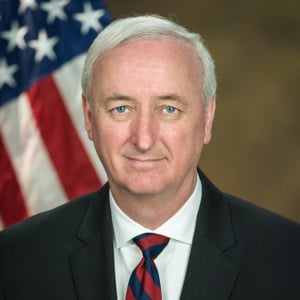
Former Acting Attorney General
Jeffrey A. Rosen is a member of the Investigations and Regulatory Enforcement Practice of Cravath, Swaine & Moore LLP. He previously served in the U.S. Department of Justice (DOJ) as Acting Attorney General and Deputy Attorney General, as well as Deputy Secretary and General Counsel at the U.S. Department of Transportation (DOT), and General Counsel and Senior Policy Advisor at the White House Office of Management and Budget (OMB).
With decades of both public and private sector executive leadership experience, including past service on the global management committee of one of the world’s leading law firms, he has built a career specializing in the management of complex, sensitive, and consequential matters.
Laurence H. Silberman Chair in Constitutional Governance, American Enterprise Institute; Executive Director, Antonin Scalia Law School’s C. Boyden Gray Center for the Study of the Administrative State
Adam J. White is the Laurence H. Silberman Chair in Constitutional Governance and senior fellow at the American Enterprise Institute, where he focuses on the Supreme Court and the administrative state. He also directs the Antonin Scalia Law School’s C. Boyden Gray Center for the Study of the Administrative State.
He writes on regulation and constitutional government for a variety of publications. He practiced law in Washington, D.C., after clerking for the D.C. Circuit's Judge David Sentelle. He also has been chairman of the ABA's Administrative Law Section.
In 2021, he served on the Presidential Commission on the Supreme Court of the United States, where he criticized “Court packing” and other efforts to restructure the Supreme Court.
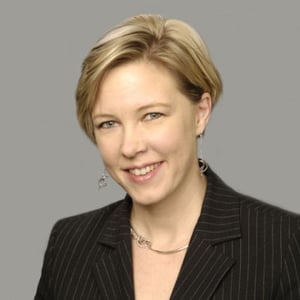
Clinical Professor and Senior Scholar and Senior Fellow for Copyright Research and Policy of C-IP2, Antonin Scalia Law School, George Mason University
Sandra Aistars is Senior Fellow for Copyright Research and Policy and a Senior Scholar at the Center for Intellectual Property x Innovation Policy (C-IP2). She also leads the law school’s Arts & Entertainment Advocacy Program. Professor Aistars has over twenty years of advocacy experience on behalf of copyright and other intellectual property owners. She has served on trade missions and been an industry advisor to the Department of Commerce on intellectual property implications for international trade negotiations; worked on legislative and regulatory matters worldwide; frequently testified before Congress and federal agencies regarding intellectual property matters; chaired cross-industry coalitions and technology standards efforts; and is regularly tapped by government agencies to lecture in U.S. government-sponsored study tours for visiting legislators, judges, prosecutors, and regulators.
Immediately prior to joining Scalia Law, Professor Aistars was the Chief Executive Officer of the Copyright Alliance – a nonprofit, public interest organization that represents the interests of artists and creators across the creative spectrum. While at Scalia Law, she continues to collaborate with the Copyright Alliance as a member of its Academic Advisory Board. Professor Aistars currently serves on the boards of the Washington Area Lawyers for the Arts (WALA) and the Howard Intellectual Property Program (HIPP), and she has previously served as trustee of the Copyright Society of the USA (CSUSA). Professor Aistars has also previously served as Vice President and Associate General Counsel at Time Warner Inc. She began her legal career in private practice at Weil, Gotshal and Manges LLP.
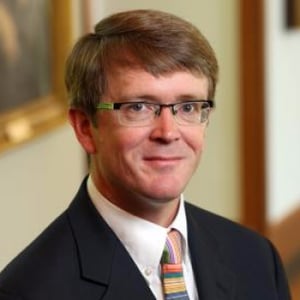
Samuel H. McCoy II Professor of Law, University of Virginia School of Law
John F. Duffy is the Samuel H. McCoy II Professor of Law and Class of 1966 Research Professor of Law at the University of Virginia School of Law, where he teaches administrative law, torts and intellectual property. Professor Duffy has published articles on a wide range of administrative law and regulatory issues in journals such as University of Chicago Law Review, Yale Law Journal, Stanford Law Review, Virginia Law Review, Columbia Law Review, Texas Law Review, Northwestern University Law Review, NYU Law Review, University of Pennsylvania Law Review and the Supreme Court Review. His 1998 article Administrative Common Law in Judicial Review, 77 Tex. L. Rev. 113 (1998), was one of the first articles to criticize the Chevron doctrine as being irreconcilable with § 706 of the APA; it won the American Bar Association’s Scholarship Award in Administrative Law. His 2008 article “Are Administrative Patent Judges Unconstitutional?” was covered on National Public Radio), in the New York Times (Adam Liptak, In One Flaw, Questions on Validity of 46 Judges, May 6, 2008), and in the Wall Street Journal (Dan Slater, Patently Unconstitutional, May 6, 2008). The NYT and WSJ agreed that he was “a different kind of law professor,” “one of the lucky few” whose “writings actually wind up changing the law.”
As an attorney in the courts, Duffy has twice successfully convinced the Supreme Court to overturn lower court doctrines that had been applied in many cases over decades but that were unanimously held to be irreconcilable with Supreme Court precedents. See TC Heartland v. Kraft Foods Group Brands, 581 U.S. 258 (2017); KSR v. Teleflex, 550 U.S. 398 (2007).
Prior to entering legal academics, Duffy clerked on the D.C. Circuit for Stephen Williams and on the Supreme Court for Antonin Scalia. While clerking, he became known as Justice Scalia’s “hapless law clerk,” who had been tasked with unearthing three-quarters of a century of legislative history that made “no difference” to the outcome in an otherwise forgettable case. See Conroy v. Aniskoff, 507 U.S. 511, 527-28 (1993) (Scalia, J., concurring in the judgment).
In earlier days, Duffy enjoyed being a professional blackjack player unwelcome in all Atlantic City casinos and a semi-professional road runner (best marathon time 2:24:33). He holds an A.B. in physics from Harvard and a J.D. from the University of Chicago.
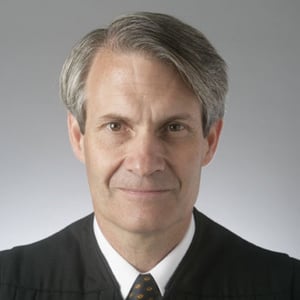
Special Counsel, Hunton Andrews Kurth
After serving on the United State Court of Appeals for the D. C. Circuit from 2005, Judge Griffith stepped down from the bench in 2020. Currently he is a Lecturer on Law at Harvard Law School, a Fellow at the Wheatley Institute at Brigham Young University, and Special Counsel in the Washington, DC office of the law firm of Hunton Andrews Kurth. Most recently, he was a member of President Biden's Commission on the Supreme Court. He is the author of Civic Charity and the Constitution , and the co-author, along with former judges Michael Luttig and Michael McConnell, of Lost, Not Stolen: The Conservative Case that Trump Lost and Biden Won the 2020 Presidential Election. https://lostnotstolen.org/ . Before being appointed to the D. C. Circuit, Judge Griffith was the General Counsel at BYU; Senate Legal Counsel, the non-partisan chief legal officer of the U. S. Senate; and a partner at Wiley, Rein & Fielding. Long active in rule-of-law programs in former communist nations, Judge Griffith is a member of the international advisory board of the CEELI Institute in Prague. He is a graduate of BYU and the University of Virginia School of Law and is a member of the American Law Institute.
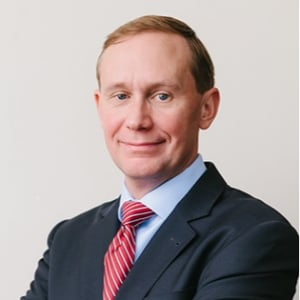
Associate Professor, Boston College Law School
David Olson is an associate professor and the Faculty Director of the Program on Innovation and Entrepreneurship. He teaches patent law, intellectual property law, antitrust law, and various seminars. His research and writing primarily focus on patents, copyrights, antitrust, and incentives for innovation and competition. Since joining BC Law in 2007, he has been recognized for his teaching excellence and contributions. In 2011, he received the Business & Law Society Faculty Award for Achievement in Business & Law. In 2012, he received the Professor Emil Slizewski Award for Faculty Excellence. For one semester in 2015, Olson served as a visiting professor at Pontifical Catholic University, Rio de Janeiro, Brazil, where he conducted research and taught a course on intellectual property.
Olson has published scholarly articles on patent law, copyright law, antitrust, music licensing, and first amendment copyright issues. His writing has been cited in Supreme Court and other legal opinions. He has testified before the U.S. Congress on matters of drug patents, FDA regulation, and antitrust.
The media frequently seeks Olson’s insights and opinions. He has been quoted in the Wall Street Journal, Associated Press, and Reuters, among others. He has appeared as a guest panelist on WBUR’s Radio Boston, WAMU's Kojo Namdi Show, and Public Radio Canada. His op-eds have appeared in the Chicago Tribune, Washington Times, and The Hill.
Olson came to Boston College from Stanford Law School's Center for Internet and Society, where he conducted research on patent law and litigated copyright fair use impact cases. Before entering academia, Olson practiced law as a patent litigator. He clerked for Judge Jerry Smith of the U.S. Court of Appeals for the Fifth Circuit.
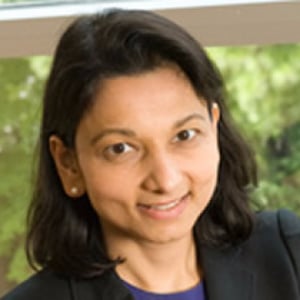
Elvin R. Latty Professor of Law, Duke University School of Law
Arti Rai, Elvin R. Latty Professor of Law and co-Director, Duke Law Center for Innovation Policy, is an internationally recognized expert in intellectual property (IP) law, administrative law, and health policy. Rai has also taught at Harvard, Yale, and the University of Pennsylvania law schools. Rai's research on IP law and policy in biotechnology, pharmaceuticals, and software has been funded by NIH, the Kauffman Foundation, and the Woodrow Wilson Center. She has published over 50 articles, essays, and book chapters on IP law, administrative law, and health policy. Her publications have appeared in both peer-reviewed journals and law reviews, including Science, the New England Journal of Medicine, the Journal of Legal Studies, Nature Biotechnology, and the Columbia, Georgetown, and Northwestern law reviews. She is the editor of Intellectual Property Law and Biotechnology: Critical Concepts (Edward Elgar, 2011) and the co-author of a 2012 Kauffman Foundation monograph on cost-effective health care innovation.
From 2009-2010, Rai served as the Administrator of the Office of External Affairs at the U.S. Patent and Trademark Office (USPTO). As External Affairs Administrator, Rai led policy analysis of the patent reform legislation that ultimately became the America Invents Act and worked to establish the USPTO’s Office of the Chief Economist. Prior to that time, she had served on President-Elect Obama’s transition team reviewing the USPTO. Prior to entering academia, Rai clerked for the Honorable Marilyn Hall Patel of the U.S. District Court for the Northern District of California; was a litigation associate at Jenner & Block (doing patent litigation as well as other litigation); and was a litigator at the Federal Programs Branch of the U.S. Department of Justice's Civil Division.
Rai regularly testifies before Congress and relevant administrative bodies on IP law and policy issues and regularly advises federal agencies on IP policy issues raised by the research that they fund. She is a member of the National Advisory Council for Human Genome Research and of an Expert Advisory Council to the Defense Advanced Projects Research Agency (DARPA). Rai is a public member of the Administrative Conference of the United States, a member of the American Law Institute, and co-chair of the IP Committee of the Administrative Law Section of the ABA. Rai is currently a member of the Institute of Medicine Committee on Strategies for Responsible Sharing of Clinical Trial Data and has served on, or as a reviewer for, numerous National Academies of Science committees. In 2011, Rai won the World Technology Network Award for Law.
Rai graduated from Harvard College, magna cum laude, with a degree in biochemistry and history (history and science), attended Harvard Medical School for the 1987-1988 academic year, and received her J.D., cum laude, from Harvard Law School in 1991. Rai's moot court team at Harvard Law School won Best Brief and Team honors at the school's prestigious Ames Moot Court Competition.
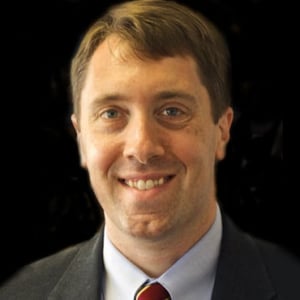
Professor of Law, Antonin Scalia Law School, George Mason University
Eric R. Claeys is Professor of Law at the Antonin Scalia Law School, George Mason University. He has written widely in the fields of property, private law, and constitutional law. Professor Claeys’s current research interests focus on flourishing- and labor-based natural rights justifications for property—in American property theory, in intellectual property, and in contemporary regulation of shale gas exploration and hydraulic fracturing. He is a member of the American Law Institute, he serves on the ALI’s Members’ Consultative Group for the first Restatement of Copyright, and he also serves as an adviser to the Restatement (Fourth) of the Law of Property.
Professor Claeys received his JD from the University of Southern California Gould School of Law. He received his AB from Princeton University, and he is a former visiting fellow and current member of Princeton’s Politics Department’s James Madison Program in American Ideals and Institutions. After law school, Professor Claeys clerked for the Hon. Melvin Brunetti, U.S. Court of Appeals for the Ninth Circuit, and the Hon. William H. Rehnquist, Chief Justice of the United States.
Professor Claeys’s main teaching interests include Property, Torts, Jurisprudence, and Intellectual Property. In recent years, he has also taught Water Law, Remedies, Estates and Trusts, Trade Secrecy, Constitutional Law, Torts, and Oil and Gas law. Spring 2018, he is teaching Torts and Jurisprudence as a Visiting Professor at Harvard Law School.
U.S. Court of Appeals, Eighth Circuit
Steven M. Colloton is a federal judge on the United States Court of Appeals for the Eighth Circuit. He joined the court in 2003 after being nominated by President George W. Bush.
Born in Iowa City, Iowa, Colloton received his bachelor's degree from Princeton University in 1985 and a J.D. from Yale Law School in 1988.
Policy Counsel on Energy, Environment, and Agriculture, U.S. Senate Republican Policy Committee
Matt Leggett serves as Policy Counsel for the U.S. Senate Republican Policy Committee. He provides in-depth analysis on energy, environment, and agriculture issues, policy solutions and alternatives, and strategic guidance for all Republican members of the U.S. Senate. He manages the committee's advancement of Republican energy, environment, and agriculture policies by providing positions on legislation, floor debate, and votes. Senator John Barrasso, an orthopedic surgeon from Wyoming, serves as chairman of the committee and is the fourth ranking member of Republican leadership in the U.S. Senate.
Mr. Leggett formerly served as Legislative Counsel in the U.S. House of Representatives where he managed a Republican Congressman's Energy & Commerce Committee assignment, co-chairmanship of the Congressional Natural Gas Caucus, and co-chairmanship of the Congressional Steel Caucus. Previously, he served as a legislative aide for the U.S. House Committee on Agriculture and for a senior U.S. Senator. He also practiced corporate law in Washington, DC for two years.
Mr. Leggett graduated from the University of Virginia and Vanderbilt University Law School. He is a member of the Virginia State Bar and the District of Columbia Bar. He is also a member of the Energy Bar Association.
University Professor on the Environment, and Kerlin Professor Em, Pace University School of Law
Nicholas A. Robinson is University Professor for the Environment at Pace University and the Gilbert & Sarah Kerlin Distinguished Professor of Environmental Law at Pace Law School, and since 2006 also holds an appointment as Professor Adjunct at the Yale University School of Forestry & Environmental Studies. He served from 1996-2004 as the Legal Advisor of the International Union for the Conservation of Nature and Natural Resources (IUCN), and chaired its Commission on Environmental Law. He served on the President’s Council on Environmental Quality’s Legal Advisory Committee from 1970-72, and pioneered the early practice of environmental law in New York with James Marshall and then David Sive. In 2012, IUCN’s World Conservation Congress conferred upon him IUCN’s Honorary Membership for his contributions to IUCN and its environmental law program. In 1978, he inaugurated Pace Law School’s degree programs in environmental legal studies, taking a leave to serve as the General Counsel of the NY State Department of Environmental Conservation (1983-85). He was an environmental law delegate to the bilateral USA-USSR negotiations on cooperation in the field of environmental protection under five presidents (1974-1996). He currently serves on the Environmental & Social Advisory Council to the European Bank for Reconstruction and Development (EBRD) in London. He has chaired both the Environmental Law and International Environmental Law Committees of the New York City Bar, and served on the Board of the Environmental Law Institute (2005-11). His publications including editing the annotated 5-volume edition of the traveaux préparatoires for the 1992 Rio Earth Summit’s Agenda 21 and the UNCED Proceedings, and two volumes on Capacity Building for Environmental Law in the Asia and Pacific Region for the Asian Development Bank. He co-edited the UN Environment Programme’s Manual on International Environmental Law (2006). He has been a draftsman for the UN World Charter for Nature (UNGA Res. 37/7) and international agreements, for New York’s wetlands legislation and wild birds law, and for environmental impact assessment rules, and other domestic environmental legislation. He is a graduate of Brown University (Phi Beta Kappa, 1967) and Columbia University School of Law (1970).
Trustee Professor of Law, New York Law School
From 1972-79, Schoenbrod served as one of the leaders of the Natural Resources Defense Council, where he campaigned to reduce lead in gasoline, resurrect the then-decrepit New York City subway, and protect the environment of Puerto Rico. Previously, he was Director of Program Development at the community development project that Senator Robert Kennedy established in Bedford Stuyvesant. He has also been a senior fellow at the Cato Institute and the American Enterprise Institute.
His books include
D.C. Confidential: Inside the Five Tricks of Washington (Encounter Books, 2017) with forewords by Governor Howard Dean and Senator Mike Lee;
Breaking the Logjam: Environmental Protection That Will Work (Yale University Press, 2010)(with Richard B. Stewart and Katrina M. Wyman);
Saving Our Environment from Washington: How Congress Grabs Power, Shirks Responsibility, and Shortchanges the People (Yale University Press, 2005);
Democracy by Decree: What Happens When Courts Run Government (Yale University Press, 2003) (with Ross Sandler); and
Power Without Responsibility: How Congress Abuses the People Through Delegation (Yale University Press, 1993).
In addition to writing scholarly articles, he has frequently contributed opinion pieces to the Wall Street Journal, The Hill, the New York Times, and other publications.
He has an undergraduate degree from Yale College, a graduate degree in economics from Oxford University, which he attended as a Marshall Scholar, and a law degree from Yale Law School.
Senior Advisor, Covington & Burling LLP
Congressman Howard Berman advises clients on a wide range of foreign affairs and domestic policy matters, including defense and national security issues, investment, intellectual property, entertainment, technology and immigration. He also serves on the board of trustees of the Asia Foundation, the board of the National Democratic Institute, the Immigration Task Force of the Bipartisan Policy Center, and the Board of Directors of the Pacific Council on International Policy.
First elected to Congress in 1982, Congressman Berman became known as one of Capitol Hill’s preeminent deal-makers. National Journal described him as “one of the most creative members of the House and one of the most clear-sighted operators in American politics.”
As the chairman of the House Foreign Affairs Committee, Congressman Berman was one of Congress’ leading experts on international relations. On the Committee, he repeatedly helped build bipartisan consensus within the House, and between Congress and the Executive Branch. A long-time senior member on the House Judiciary Committee, Congressman Berman chaired the Subcommittee on Courts, the Internet and Intellectual Property, where he successfully led efforts resulting in major changes to intellectual property laws affecting the entertainment and high-tech industries.
Congressman Berman, a senior advisor not practicing law until admitted in the District of Columbia, will provide policy and legislative advice to clients and members of the firm.
Harry F. Byrd Professor of Politics, University of Virginia
James W. Ceaser is Harry F. Byrd Professor of Politics at the University of Virginia, where he has taught since 1976, and a senior fellow at the Hoover Institution. He has written several books on American politics and political thought, including Presidential Selection, Liberal Democracy and Political Science, Reconstructing America, Nature and History in American Political Development, and Designing a Polity. Professor Ceaser has served as the Academic Chairman of the Jack Miller Center since its inception in 2004. He is a regular contributor to the popular press and comments frequently on American politics for La Voix d’Amérique, the French-African outlet for the Voice of America.
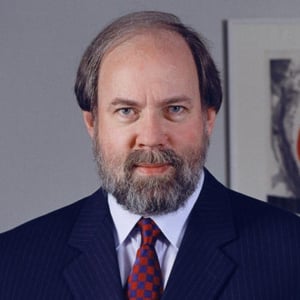
U.S. Court of Appeals, Seventh Circuit
Frank H. Easterbrook is a judge of the United States Court of Appeals for the Seventh Circuit and a Senior Lecturer at the Law School of the University of Chicago. He was Chief Judge from 2006–2013. Before joining the court in 1985, he was the Lee andBrena Freeman Professor of Law at the University of Chicago, where he taught and wrote in antitrust, securities, corporate law, jurisprudence, and criminal procedure. He has published The Economic Structure of Corporate Law (with Daniel R. Fischel) and about 100 scholarly articles. He served as Co-Editor of the Journal of Law and Economics from 1982 to 1991 and as a member of the Judicial Conference’s Standing Committee on Rules of Practice and Procedure from 1991 to 1997. Before joining the faculty of the Law School in 1979, Judge Easterbrook was Deputy Solicitor General of the United States. He holds degrees from Swarthmore College (B.A. with high honors, 1970) and the University of Chicago (J.D. cum laude, 1973), and is a member of the American Academy of Arts and Sciences, the American Law Institute, the Mont Pelerin Society, Phi Beta Kappa, and the Order of the Coif.
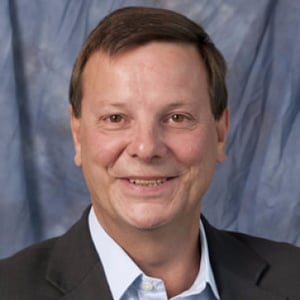
Professor of Law, Antonin Scalia Law School, George Mason University
Professor of Law Michael S. Greve joined the faculty of the Antonin Scalia Law School, George Mason University in fall 2012 after having served as John G. Searle Scholar at the American Enterprise Institute (AEI), where he specialized in constitutional law, courts, and business regulation and served as chairman of the Competitive Enterprise Institute. Prior to joining AEI, Greve was founder and co-director of the Center for Individual Rights, a public interest law firm specializing in constitutional litigation.
Greve has served previously as an adjunct professor at a number of universities, including Cornell and Johns Hopkins Universities, and has been a visiting professor at Boston College since 2004. He was awarded a PhD and an MA in government by Cornell University. Greve also earned a Diploma from the University of Hamburg in Germany.
A prolific writer, Greve is the author of nine books and a multitude of articles appearing in scholarly publications, as well as numerous editorials, short articles, and book reviews. He is a frequent speaker for professional and scholarly organizations and has made many appearances on radio and television.
In addition Greve has provided congressional and state legislative testimony, has lobbied and consulted in federal agency proceedings, and has provided litigation services and management in over 30 cases, including matters before the U.S. Supreme Court.
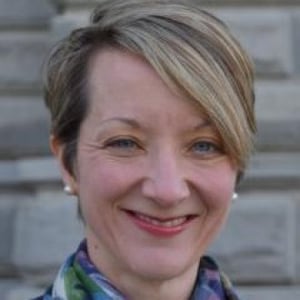
Professor of Politics and Public Affairs, Princeton University
Frances E. Lee is jointly appointed in the Department of Politics and the Woodrow Wilson School of Public and International Affairs where she is Professor of Politics and Public Affairs.
Lee has broad interests in American politics, with a special focus on congressional politics, national policymaking, party politics, and representation. She is author of Insecure Majorities: Congress and the Perpetual Campaign (2016) and Beyond Ideology: Politics, Principles, and Partisanship in the U.S. Senate (2009). She is also coauthor of Sizing Up The Senate: The Unequal Consequences of Equal Representation (1999) and a textbook, Congress and Its Members (Sage / CQ Press). Her research has appeared in the American Political Science Review, American Journal of Political Science, Perspectives on Politics, Journal of Politics, Legislative Studies Quarterly, and other outlets.
Lee is editor of the Cambridge Elements Series in American Politics and a series editor for the Chicago Studies in American Politics. She was co-editor of Legislative Studies Quarterly from 2014 to 2019.
Lee earned her B.A. from the University of Southern Mississippi and her Ph.D. from Vanderbilt University. She is a fellow of the American Academy of Arts and Sciences.
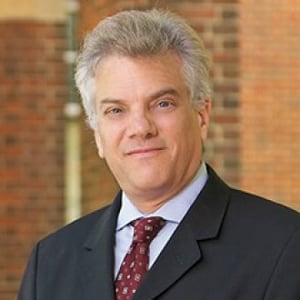
Sudler Family Professor of Constitutional Law, New York University School of Law
Richard H. Pildes is one of the nation’s leading scholars of constitutional law and a specialist in legal issues affecting democracy. He is a Member of the American Academy of Arts and Sciences and the American Law Institute, and has received recognition as a Guggenheim Fellow and a Carnegie Scholar. His acclaimed casebook, The Law of Democracy: Legal Structure of the Political Process (now in its fourth edition), helped create an entirely new field of study in the law schools. The Law of Democracy systematically explores legal and policy issues concerning the structure of democratic elections and institutions, such as the role of money in politics, the design of election districts, the regulation of political parties, the design of voting systems, the representation of minority interests in democratic institutions, and similar issues. He has written extensively on the rise of political polarization in the United States, the Voting Rights Act, the dysfunction of America’s political processes, the role of the Supreme Court in overseeing American democracy, the powers of the American President and Congress, and he has criticized excessively “romantic” understandings of democracy. In addition to his scholarship on these issues, he has written on national-security law, the design of the regulatory state, and American constitutional history and theory.
Respect for his expertise in these areas is reflected in frequent citations of his work in U.S. Supreme Court opinions, the translation of his work into many languages, and his frequent public lectures and appearances around the world, including his nomination with the NBC News Team for an Emmy Award for coverage of the 2000 Presidential election litigation.
His work has been translated and published in Chinese, French, Spanish, and Portuguese. In addition to his scholarship, Professor Pildes plays an active role litigating in these areas. He has won two cases before the United States Supreme Court, including a 2015 victory in Alabama Democratic Conference v. Alabama, a case involving race and redistricting. He served as counsel to a group of former chairmen of the Securities and Exchange Commission in litigation defending the constitutionality of the Sarbanes-Oxley Act; as counsel in election litigation to the Puerto Rico Electoral Commission; as counsel to the government of Puerto Rico; as a federal court-appointed independent expert on voting rights litigation; and as counsel in successful Supreme Court litigation that challenged the way the United States Tax Court operated. He was also a senior legal advisor to the 2008 and 2012 campaigns of President Obama.
Pildes received his A.B. in physical chemistry summa cum laude from Princeton, and his J.D. magna cum laude from Harvard, where he served as Supreme Court Note Editor on the Harvard Law Review. He clerked for Judge Abner J. Mikva of the U.S. Court of Appeals for the District of Columbia Circuit and for Justice Thurgood Marshall of the U.S. Supreme Court. After practicing law in Boston, he began his academic career at the University of Michigan Law School, before joining the NYU School of Law in 2001.
Executive Vice President, The Federalist Society
Dean Reuter is Executive Vice President at the Federalist Society for Law and Public Policy Studies. He has served in two federal government agency Offices of the Inspector General, as Counsel to the Inspector General and Deputy Inspector General, responsible for policing the use of federal funds granted and contracted through those agencies. As such, he helped conduct and oversee criminal investigations across the country. He is the principal author of the non-fiction book, The Hidden Nazi: The Untold Story of America's Deal with the Devil, and editor of Liberty’s Nemesis: The Unchecked Expansion of the State and Confronting Terror: 9/11 and the Future of American National Security. He was appointed by the President and served as Vice-Chairman of the Board of Directors of the Corporation for National and Community Service, and recently served as an appointee on the U.S. Commission on Presidential Scholars. He is a graduate of Hood College (BA with Honors) and the University of Maryland School of Law.
Lecturer in Law, University of Pennsylvania Carey Law School
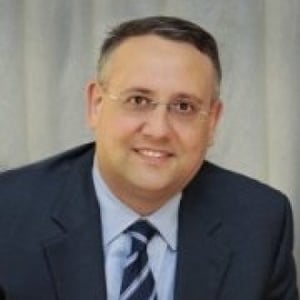
Matthew Lee Wiener served until recently as the twice-presidentially appointed Acting Chair and Vice Chair of the Administrative Conference of the United States (ACUS), as well as a member of its Council and its Executive Director. (In 2016, President Obama nominated him to be ACUS’s Chairman.)
He is now a special counsel to ACUS, co-chair of its Council on Federal Administrative Adjudication, and a lecturer at the University of Pennsylvania Carey Law School, where he teaches Administrative Law.
Before affiliating with ACUS, Mr. Wiener was general counsel to U.S. Senator Arlen Specter (Senate Committee on the Judiciary), counsel to the U.S. House of Representatives Committee on the Judiciary, a partner at Dechert LLP, and special counsel to Cuneo Gilbert & LaDuca.
He has taught courses on administrative law, administrative practice, regulation remedies, statutory interpretation, and separation of powers at the law schools of the University of Pennsylvania, Rutgers University, and George Mason University.
Mr. Wiener is an elected member of the American Law Institute, a fellow of the American Bar Foundation, and co-chair of the Adjudication Committee of the American Bar Association’s Section of Administrative Law and Regulatory Practice.
Mr. Wiener holds a J.D. from Stanford Law School, where he was Articles Editor of the Stanford Law Review, and an A.B. from William and Mary.