Showcase Panel IV: Law, Science, and Public Policy
2021 National Lawyers Convention
The Mayflower Hotel1127 Connecticut Avenue, NW
Washington, DC 20036

Here are the latest events.






Distinguished Fellow, Foundation for Applied Molecular Evolution
Steven Benner heads the Foundation for Applied Molecular Evolution, which he founded after serving on the faculty at Harvard, ETH Zurich, and University of Florida. His research combines two traditions in science, one from natural history, the other from the physical sciences. In His laboratory has been a leader in the field of synthetic biology, where it has redesigned DNA to better understand how these molecules work, generate new classes of diagnostics tools, and to open new avenues to disease therapy. Separately, he also created the field of paleogenetics, where genes and proteins from now-extinct organisms are sesurrected to better understand how those proteins functioned in those organisms in changing environments. He has founded or contributed technology to a dozen different biotechnology companies, whose products include those that personalize the care of HIV, hepatitis B and hepatitis C patients, detect insect-borne pathogens, and monitor COVID. The work also guides NASA missions to see alien life and how life originated. His most recent book is: "Life, the Universe, and the Scientific Method."
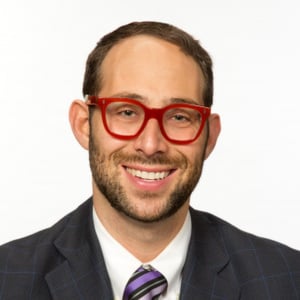
James A. Attwood and Leslie Williams Professor of Law, Deputy Dean, and Faculty Director, Petrie-Flom Center for Health Law Policy, Biotechnology & Bioethics, Harvard Law School
Prof. Cohen is one of the world's leading experts on the intersection of bioethics (sometimes also called "medical ethics") and the law, as well as health law. He also teaches civil procedure. From Seoul to Krakow to Vancouver, Professor Cohen has spoken at legal, medical, and industry conferences around the world and his work has appeared in or been covered on PBS, NPR, ABC, CNN, MSNBC, Mother Jones, the New York Times, the New Republic, the Boston Globe, and several other media venues.
He was the youngest professor on the faculty at Harvard Law School (tenured or untenured) both when he joined the faculty in 2008 (at age 29) and when he was tenured as a full professor in 2013 (at age 34), though not the youngest in history.
Prof. Cohen's current projects relate to big data, medical AI, health information technologies, mobile health, reproduction/reproductive technology, research ethics, organ transplantation, rationing in law and medicine, health policy, FDA law, COVID-19, translational medicine, and to medical tourism – the travel of patients who are residents of one country, the "home country," to another country, the "destination country," for medical treatment.
He is the author of more than 200 articles and chapters and his award-winning work has appeared in leading legal (including the Stanford, Cornell, and Southern California Law Reviews), medical (including the New England Journal of Medicine, JAMA), bioethics (including the American Journal of Bioethics, the Hastings Center Report), scientific (Science, Cell, Nature Reviews Genetics) and public health (the American Journal of Public Health) journals, as well as Op-Eds in the New York Times, Washington Post, New Republic, Time Magazine, and other venues.
Cohen is the author, co-author, editor, or co-editor of more than 18 books. They include: Consumer Genetic Technologies: Ethical and Legal Considerations (Cambridge University Press, 2021); Reproductive Technologies and the Law (Caroline Academic Press, 2021); Readings in Comparative Health Law and Bioethics (Carolina Academic Press, 2020); Disability, Health, Law, and Bioethics (Cambridge University Press, 2020); Transparency in Health and Health Care in the United States (Cambridge University Press, 2019); Health Care Law and Ethics (Aspen, 2018); Big Data, Health Law, and Bioethics (Cambridge University Press, 2018); Law, Religion, and Health in the United States (Cambridge University Press, 2017); Specimen Science (MIT Press, 2017); Nudging Health: Health Law and Behavioral Economics (John Hopkins University Press, 2016) The Oxford Handbook of U.S. Health Care Law (Oxford University Press, 2016); FDA in the Twenty-First Century: The Challenges of Regulating Drugs and New Technologies (Columbia University Press, 2015); Identified Versus Statistical Lives: An Interdisciplinary Perspective (Oxford University Press, 2015); Patients with Passports: Medical Tourism, Law, and Ethics (Oxford University Press, 2014); Human Subjects Research Regulation: Perspectives on the Future (MIT Press, 2014); The Globalization of Health Care: Legal and Ethical Issues (Oxford University Press, 2013).
For his law school teaching he was awarded the HLS Student Government Teaching and Advising Award in 2017. He also sometimes teaches courses at Harvard College and Harvard Medical School. For the public he created the free online Harvard X class Bioethics: The Law, Medicine, and Ethics of Reproductive Technologies and Genetics, which was nominated by Harvard for the Japan Prize. More than 97,000 students have taken the course so far. You can also watch his Tedx talk, Are There Non-Human Persons? Are There Non-Person Humans? He is also the faculty lead on Zero-L, an online course to help law students transition to law school that is now being used by more than half of all U.S. law schools.
Prior to becoming a professor he served as a law clerk to Judge Michael Boudin of the U.S. Court of Appeals for the First Circuit and as a lawyer for U.S. Department of Justice, Civil Division, Appellate Staff, where he handled litigation in the Courts of Appeals and (in conjunction with the Solicitor General’s Office) in the U.S. Supreme Court. In his spare time (where he can find any!) he still litigates, having authored an amicus brief in the U.S. Supreme Court for leading gene scientist Eric Lander in Association of Molecular Pathology v. Myriad, concerning whether human genes are patent eligible subject matter, a brief that was extensively discussed by the Justices at oral argument. Most recently he submitted an amicus brief to the U.S. Supreme Court in Whole Women's Health v. Hellerstedt (the Texas abortion case, on behalf of himself, Melissa Murray, and B. Jessie Hill).
Cohen was selected as a Radcliffe Institute Fellow for the 2012-2013 year and by the Greenwall Foundation to receive a Faculty Scholar Award in Bioethics. He is also a Fellow at the Hastings Center, the leading bioethics think tank in the United States as well as being a fellow of the Pierre Elliot Trudeau Foundation. He leads the Project on Precision Medicine, Artificial Intelligence, and the Law (PMAIL), which is part of the larger Centre for Advanced Studies in Biomedical Innovation Law (CeBIL). He co-leads the Regulatory Foundations, Ethics, and Law Program of Harvard Catalyst | The Harvard Clinical and Translational Science Center program. He is also the lead on the Project on Psychedelics Law and Regulation (POPLAR). He previously served as one of the key co-investigators on the multi-million dollar Football Players Health Study at Harvard which is committed to improving the health of NFL players (for more on this work click here). He is also one of three editors-in-chief of the Journal of Law and the Biosciences, a peer-reviewed journal published by Oxford University Press and serves on the editorial board for the American Journal of Bioethics. He served on the Steering Committee for Ethics for the Canadian Institutes of Health Research (CIHR), the Canadian counterpart to the NIH, and the Ethics Committee for the American College of Obstetricians and Gynecologists (ACOG). He currently serves on the Ethics Committee of the U.S. Organ Procurement and Transplantation Network (OPTN).
You can freely download his work here, and follow him on twitter @CohenProf.
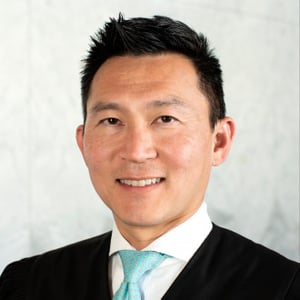
Judge, United States Court of Appeals, Ninth Circuit
Kenneth Kiyul Lee is a judge on the U.S. Court of Appeals for the Ninth Circuit. He was appointed in June 2019 and is based in San Diego, California.
Prior to his appointment, he was a partner at the law firm of Jenner & Block in Los Angeles. Judge Lee previously served as an Associate Counsel to President George W. Bush and as Special Counsel to Senator Arlen Specter, then-chair of the Senate Judiciary Committee. He started his legal career at Wachtell, Lipton, Rosen & Katz in New York.
Judge Lee received his J.D. from Harvard Law School, magna cum laude, and his A.B. from Cornell University, summa cum laude. He clerked for Judge Emilio M. Garza of the U.S. Court of Appeals for the Fifth Circuit.

Executive Vice President, Goldwater Institute
Christina Sandefur is the Executive Vice President at the Goldwater Institute. She develops policies and litigates cases advancing healthcare freedom, free enterprise, private property rights, free speech, and taxpayer rights.
Christina is a co-drafter of the Right to Try initiative, now federal law, which protects terminally ill patients' right to try safe investigational treatments that have been prescribed by their physician but are not yet FDA-approved. She has won important victories for property rights in Arizona and works nationally to promote the Institute's Private Property Rights Protection Act, a state-level reform that requires government to pay owners when regulations destroy property rights and reduce property values.
Christina is the co-author of the book Cornerstone of Liberty: Private Property Rights in 21st Century America (2016). She is a frequent guest on national television and radio programs, has provided expert legal testimony to various legislative committees, and is a frequent speaker at conferences. She is the recipient of the 2018 Buckley Award in recognition of her leadership in the freedom movement, and she is an Advisory Board Member of the Network of enlightened Women. Christina serves on the board of the Phoenix Lawyers Chapter of the Federalist Society and is a member of the executive committee for the Federalist Society's Regulatory Transparency Project: FDA & Health.
Christina is a graduate of Michigan State University College of Law and Hillsdale College.

Tazewell Taylor Professor of Law and William H. Cabell Research Professor, William & Mary Law School
Jonathan H. Adler joined the William & Mary law faculty as the Tazwell Taylor Professor of Law and William H. Cabell Research Professor in 2025. Prior to joining the faculty, he was the inaugural Johan Verheij Memorial Professor of Law and the founding Director of the Coleman P. Burke Center for Environmental Law at the Case Western Reserve University School of Law.
Professor Adler is the author or editor of seven books, including Climate Liberalism: Perspectives on Liberty, Property and Pollution (Palgrave, 2023), Marijuana Federalism: Uncle Sam and Mary Jane (Brookings Institution Press, 2020), Business and the Roberts Court (Oxford University Press, 2016) and Rebuilding the Ark: New Perspectives on Endangered Species Act Reform (AEI Press, 2011).
His articles have appeared in publications ranging from the Harvard Environmental Law Review and Yale Journal on Regulation to the Wall Street Journal, New York Times, and Washington Post. He has testified before Congress a dozen times, and his work has been cited in the U.S. Supreme Court. A 2024 study identified Professor Adler as the seventh most cited legal academic in administrative and environmental law from 2019 to 2023.
Professor Adler is a contributing editor to Civitas Outlook and a regular contributor to the popular legal blog, The Volokh Conspiracy. A regular commentator on constitutional and regulatory issues, he has appeared on numerous radio and television programs, ranging from the PBS Newshour and National Public Radio to the Fox News Channel and Entertainment Tonight.
Professor Adler is a senior fellow at the Property & Environment Research Center in Bozeman, Montana. In 2018, Professor Adler was elected to membership in the American Law Institute and helped co-found the organization Checks and Balances. In 2024, Professor Adler was appointed a public member of the Administrative Conference of the United States.
Professor Adler clerked for the Honorable David B. Sentelle on the U.S. Court of Appeals for the District of Columbia Circuit.
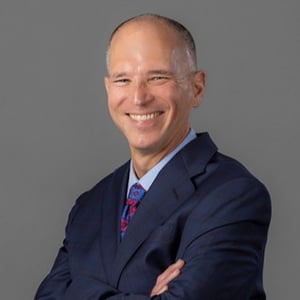
George Mason University Foundation Professor of Law, Antonin Scalia Law School, George Mason University
TODD J. ZYWICKI is George Mason University Foundation Professor of Law at Antonin Scalia Law School at George Mason University and Research Fellow of the George Mason Law and Economics Center. During the Fall 2023 semester he served as the Visiting Scholar in Conservative Thought and Policy for the Bruce Benson Center for the Study of Western Civilization at the University of Colorado-Boulder. From 2020-2021 he was Chair of the Consumer Financial Protection Bureau Taskforce on Federal Consumer Financial Law. In 2021 he was inducted to the American College of Consumer Financial Services Lawyers. He is also a Senior Fellow of the F.A. Hayek Program for the Advanced Study of Politics, Philosophy, and Economics at George Mason University and a former Senior Fellow of the Cato Institute. From 2015-2017 he was Executive Director of the George Mason Law and Economics Center. He served as Co-Editor of the Supreme Court Economic Review from 2006-2017. From 2003-2004, Professor Zywicki served as the Director of the Office of Policy Planning at the Federal Trade Commission. He has also taught at Vanderbilt University Law School, Georgetown University Law Center, Boston College Law School, Mississippi College School of Law, and China University of Political Science and Law.
Professor Zywicki clerked for Judge Jerry E. Smith of the U.S. Court of Appeals for the Fifth Circuit and worked as an associate at Alston & Bird in Atlanta, Georgia, where he practiced bankruptcy and commercial law. He received his J.D. from the University of Virginia, where he was executive editor of the Virginia Tax Review and John M. Olin Scholar in Law and Economics. Professor Zywicki also received an M.A. in Economics from Clemson University and an A.B. cum Laude with high honors in his major from Dartmouth College.
Professor Zywicki is also a Lone Mountain Fellow of the Property and Environment Research Center, a Fellow of the International Centre for Economic Research in Turin, Italy, and a former Senior Fellow of the Goldwater Institute. During the Fall 2008 Semester Professor Zywicki was the Searle Fellow of the George Mason University School of Law and was a 2008-09 W. Glenn Campbell and Rita Ricardo-Campbell National Fellow and the Arch W. Shaw National Fellow at the Hoover Institution on War, Revolution and Peace. He has lectured and consulted with government officials around the world, including Iceland, Italy, Japan, and Guatemala. In 2006 Professor Zywicki served as a Member of the United States Department of Justice Study Group on “Identifying Fraud, Abuse and Errors in the United States Bankruptcy System.”
Professor Zywicki is the author of more than 130 articles in leading law reviews and peer-reviewed economics journals. He is one of the Top 10 most-cited law professors in the field of Commercial Law and one of the Top 25 law professors on Twitter as measured by engagement levels. He is one of the Top 50 Most Downloaded Law Authors at the Social Science Research Network. He has testified multiple times before Congress on issues of consumer bankruptcy law and consumer credit and is a frequent commentator on legal issues in the print and broadcast media, including the Wall Street Journal, New York Times, The Washington Post, The Washington Times, Nightline, The Newshour with Jim Lehrer, Neil Cavuto Show, Fox & Friends, Smerconish, Fox News @ Night with Shannon Bream, Fox Business, CNN, CNBC, Bloomberg News, BBC, The Diane Rehm Show, Lou Dobbs Show, Jerry Doyle Show, and The Laura Ingraham Show.
Professor Zywicki is former Chairman and a current member of the Board of Directors of the Competitive Enterprise Institute, and is a member of the Board of Directors of the Institute for Humane Studies, Bill of Rights Institute, the Executive Committee for the Federalist Society's Financial Institutions and E-Commerce Practice Group, the Board of Trustees of the Foundation for Research on Economics and the Environment. He formerly served on the Governing Board and the Advisory Council for the Financial Services Research Program at George Washington University School of Business. He is currently the Chair of the Academic Advisory Council for the following organizations: The Bill of Rights Institute, the film “We the People in IMAX,” and the McCormick-Tribune Foundation “Freedom Museum” in Chicago, Illinois. He is a member of the Board of Visitors of Ralston College and was a member of the Board of Trustees of Yorktown University. From 2005-2009 he served as an elected Alumni Trustee of the Dartmouth College Board of Trustees.
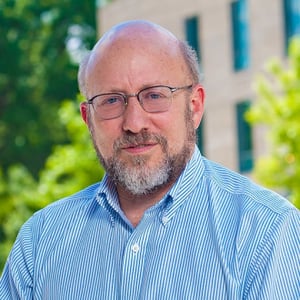
Professor of Law, American University; Washington College of Law
Robert Dinerstein is professor of law and director of the Disability Rights Law Clinic at American University Washington College of Law (AUWCL), where he has taught since 1983. His previous positions include serving as the law school's acting dean (2020-2021), associate dean for academic affairs from (1997-2004), associate dean for experiential education (2012-2018), and director of the clinical program (1988-96 and 2008-2018). He specializes in the fields of clinical education and disability law, especially mental disabilities law (including issues of consent/choice, capacity and supported decision-making and other alternatives to guardianship), the Americans with Disabilities Act, the UN Convention on the Rights of Persons with Disabilities, legal representation of clients with mental disabilities, and disability and international human rights.
Dinerstein has made numerous presentations on clinical legal education and disability law, among other topics, and has published a number of books, articles, chapters and other writing on these subjects.
He is the author/editor of two books. He is co-editor and co-author, with the late Stanley Herr and Joan O’Sullivan, of A Guide to Consent (AAMR, 1999). He is co-author, with the late Stephen Ellmann, Isabelle Gunning, Kate Kruse and Ann Shalleck, of Lawyers and Clients: Critical Issues in Interviewing and Counseling (Thomson West 2009) and the accompanying Teacher’s Manual.
Among Dinerstein’s recent publications in the disability law area, he is the author of:
In the area of legal education and lawyering, his recent articles include “New Wine and New Bottles (on experiential legal education),” 44 Syllabus 2 (Winter 2012-13), Publication of ABA Section on Legal Education and Admissions to the Bar; as co-author (with Margaret Barry, Phyllis Goldfarb, Peggy Maisel and Linda Morton) “Exploring the Meaning of Experiential Deaning,” 67(3) Journal of Legal Education 660 (2018); and ‘The Clinical Law Review at 25: What Hath We Wrought?, 26(1) Clinical Law Review 147 (2019) (25th Anniversary Symposium Issue). He has written extensively on issues of clinical pedagogy and lawyering, in particular, client-centered counseling [especially in his article, “Client-Centered Counseling: Reappraisal and Refinement,” 32 Arizona L. Rev. 501 (1990).] He has also written and presented on the US Department of Justice’s record of enforcement of the rights of persons with disabilities under several administrations.
Dinerstein was appointed by President Clinton in 1994 to serve on the President's Committee on Mental Retardation (now called the President’s Committee on People with Intellectual Disabilities), on which he served until 2001. From 2018-2021, he was a commissioner on the ABA Commission on Disability Rights, and from 2021-present serves as the ABA Section on Civil Rights and Social Justice’s liaison to the Commission. Internationally, he has consulted for the World Health Organization (Ghana and Malawi) and the Open Society Foundations (Ghana and Zambia) regarding the revision of mental health laws and was a signatory to the Montreal Declaration on Intellectual Disabilities, adopted in Montreal, Canada in October 2004. He also has consulted with the Open Society Foundations regarding disability rights clinics and disability rights curricula in Latin America and Southern Africa. Domestically, he has consulted for the Ford Foundation, Public Welfare Foundation and the US Department of Health and Human Services and the US Department of Education on issues related to legal services, disability law and poverty law. He is the principal investigator for the Disability and Human Rights Fellows program, which receives support from the Open Society Foundations.
Prior to joining AUWCL, Dinerstein worked as an attorney in the U.S. Department of Justice's Civil Rights Division, Special Litigation Section, where he handled federal court cases on the rights of people in institutions for people with psychosocial disabilities, people with intellectual disabilities and juveniles. In addition to the Disability Rights Law Clinic, which he founded (and which handles special education, supported decision making, advance mental health directives, Titles I-III of the ADA, and other cases), he teaches a seminar on law and disability and has taught interviewing and counseling, legal ethics, the supervised externship seminar, and the criminal justice clinic (which he directed from 1989-1996).
Dinerstein is actively involved in organizations related to legal education nationally. He was a member (elected) of the Council of the American Bar Association Section on Legal Education and Admissions to the Bar (2006-2011), and previously was on the section’s Standards Review Committee, where he was vice chair. He has been a member of 17 ABA-AALS joint site inspection teams, chairing four teams. Within the Association of American Law Schools, he was a member of the membership review committee and has, among other things, chaired the sections on clinical legal education, law and community, disability law and law and mental disability law, as well as the committees on clinical legal education, sections and the annual meeting, and the planning committee for the 2006 clinical teachers’ conference. He has been a member of a number of other planning committees, including for the AALS New Teachers’ Conference.
Dinerstein currently sits on the boards of directors of the Equal Rights Center (president), and the New Hope Community, Inc. and Foundation, and in the past has served on the boards of the Quality Trust for Individuals with Disabilities, Inc. (founding board member & president, 2001-2016), Washington Legal Clinic for the Homeless, Inc. (founding board member and long-term treasurer, 1986-2015), Advocates for Justice and Education (treasurer), the District of Columbia Bar Board of Governors (elected; 2002-05), Society of American Law Teachers (elected), Mental Disability Rights International (founding board member; now called Disability Rights International), Legal Counsel for the Elderly, and the Maryland Disability Law Center; and the steering committee for the Jacobus tenBroek annual disability law symposium sponsored by the National Federation of the Blind (founding member, and member until 2019).
Among his many awards and honors, Dinerstein has received the WCL Outstanding Service Award (2017-18); been named a Fellow of the American Association on Intellectual and Developmental Disabilities (2016) and received the Paul G. Hearne Award for Disability Rights (ABA, 2013); (with Ann Shalleck) the Egon Guttman Casebook Award (2011-12) for Lawyers and Clients; the William Pincus Award for his contributions to clinical legal education (2010); American University Awards for Scholar-Teacher of the Year (2013), Outstanding Teaching in a Full-Time Appointment (2009) and Faculty-Administrator Award for Outstanding Service to the University Community (2002); and the Pro Bono Service Award from the International Human Rights Law Group (1988).
He has an A.B. degree from Cornell University and a J.D. degree from Yale Law School. He is listed in Who's Who in America).
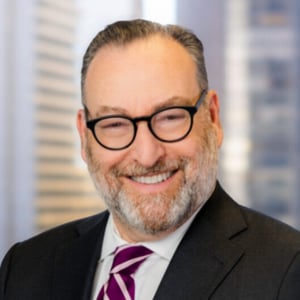
Founder, Chairman, and CEO, Louis D. Brandeis Center for Human Rights Under Law
Hon. Kenneth L. Marcus is an internationally recognized expert in civil and human rights, as well as a leader in the fight against anti-Semitism on and off university campuses. He is the Founder, Chairman, and CEO of The Louis D. Brandeis Center for Human Rights Under Law, the leading civil rights legal organization fighting against anti-Semitism. The New York Times has called him “The Man Who Helped Redefine Campus Anti-Semitism.” He been described, in that paper, as “the single most effective and respected force” to combat anti-Semitism.
During his public service career, Marcus served as Assistant U.S. Secretary of Education for Civil Rights; Staff Director at the U.S. Commission on Civil Rights; and General Deputy Assistant U.S. Secretary of Housing and Urban Development for Fair Housing and Equal Opportunity.
In academia, he serves as Professorial Lecturer in Law at George Washington University. He formerly held the Lillie and Nathan Ackerman Chair in Equality and Justice in America at the City University of New York’s Bernard M. Baruch College, served as Visiting Research Professor of Political Science at Yeshiva University, and was a Board of Visitors member George Mason University and Distinguished Senior Fellow at that university’s law school. He is a member of the editorial board of the Journal of Contemporary Antisemitism and previously served as Associate Editor of the Journal for the Study of Anti-Semitism.
Marcus is also author of The Definition of Anti-Semitism (Oxford University Press) and Jewish Identity and Civil Rights in America (Cambridge University Press). He has published widely in academic journals as well as in more popular venues such as The Wall Street Journal, Washington Post, Newsweek, USA Today, and Politico. He is a graduate of Williams College and the University of California at Berkeley School of Law.
Earlier in his career, he was a litigation partner in two major law firms, where he conducted complex commercial and constitutional litigation. He also serves as Chairman emeritus of the Executive Committee of the Federalist Society for Law & Public Policy Civil Rights Practice Group.
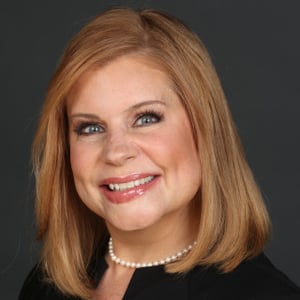
Vice President & Senior Legal Fellow, Defending Education
Sarah Parshall Perry is vice president and senior legal fellow at Defending Education.
Before coming to Defending Education, Sarah served as a Senior Legal Fellow for the Edwin Meese III Center for Legal and Judicial Studies, part of the Institute for Constitutional Government at Heritage, where her work centered on civil rights and the proper role of the courts.
Sarah joined Heritage after serving as Senior Counsel to the Assistant Secretary for Civil Rights at the U.S. Department of Education where she focused on policy reform, technical guidance, and the Office for Civil Rights’ (OCR) annual report to Congress. While at OCR, she was appointed by the Acting Assistant Secretary to co-chair the Employment Engagement, Diversity, & Inclusion Council and, in coordination with the Deputy Assistant Secretary for Enforcement oversee the hiring of dozens of attorneys for OCR’s 12 regional offices nationwide. Prior to her tenure at the Department of Education, she spent six years at the Family Research Council in Washington, D.C. where she was Senior Fellow for Education Reform and later, became the regular substitute host for the “Washington Watch” radio show. Her work at the Family Research Council also included the building and oversight of multiple policy coalitions geared toward the fight against antisemitism in academia, curbing tech censorship, and protecting religious liberty.
Before joining FRC, Sarah was in-house counsel and director of development for a Baltimore advertising agency, providing management of all new business transactions from pitch to contract execution for the multi-million-dollar enterprise. She began her practice at the litigation firm of Simms Showers, LLP where her work included Title VII employment discrimination, maritime/admiralty, and False Claims Act (“Qui Tam”) law. Sarah has a law degree from the University of Virginia School of Law, where she was an editor of the Virginia Journal of International Law, a recipient of the American Jurisprudence award, a Phi Delta Phi honor society member, and a student practitioner in the appellate litigation clinic where she argued before the 4th Circuit Court of Appeals. She holds a B.S. in Journalism with honors from Liberty University.
Her commentary and analysis have appeared in media outlets across the country, including the AP, BBC, Fox News, NPR, The Hill, Washington Post, Washington Times, and the New York Times. She is the mother of three children, and the author of just as many books on the trials and triumphs of parenting children on the autism spectrum. Sarah is a member of the Kirkpatrick Society at the American Enterprise Institute, and makes her home north of Baltimore, Maryland.
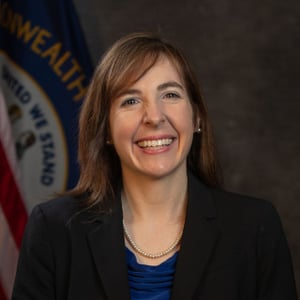
Auditor of Public Accounts, Commonwealth of Kentucky
Allison Ball is the 48th Auditor of Public Accounts for the Commonwealth of Kentucky. Prior to being elected Auditor, Ball served two terms as Kentucky State Treasurer. Before that, she spent four years as Assistant Floyd County Attorney, prosecuting child abuse and juvenile delinquency cases. When first appointed to office, Ball was the youngest statewide elected official in the country.
Ball has a rich Kentucky history; her family has been in Eastern Kentucky since the 1790s, and she holds a degree from the University of Kentucky College of Law.
She is a fierce watchdog for Kentucky taxpayer dollars. As Auditor, Ball protects against waste, fraud, and abuse.
As Treasurer, she returned more unclaimed property than any Treasurer in state history and established a savings and investment program for people with disabilities. She has been a national leader for improved financial literacy; Ball established the Kentucky Financial Empowerment Commission, and she successfully advocated for a financial literacy high school graduation requirement.
A Floyd County native, Ball and her husband, Dr. Asa James Swan, have two children, Levi and Marigold. Upon birth of her son, she was the first Kentucky Constitutional Officer to give birth while in office.
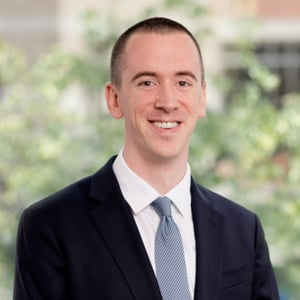
Principal Deputy Solicitor General, Director of Tenth Amendment Litigation, Virginia Office of the Attorney General
Kevin Gallagher currently serves as Principal Deputy Solicitor General and Director of Tenth Amendment Litigation at the Virginia Office of the Attorney General. In this role, he represents the governor, the attorney general, and government agencies of Virginia in appeals in the United States Supreme Court, the Fourth Circuit, and the Virginia Supreme Court, and in strategic litigation in district courts and federal courts of appeals throughout the United States.
Prior to working in state government, Kevin worked at the law firm Wilmer Cutler Pickering Hale and Dorr LLP from 2015 to 2022, most recently as Counsel. He clerked for the Honorable Alice M. Batchelder of the United States Court of Appeals for the Sixth Circuit in 2014-15, attended the University of Virginia School of Law for law school, and completed undergraduate study at Grove City College with majors in political science and history and a minor in national security.
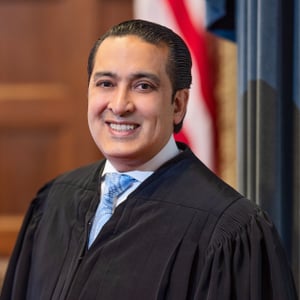
Judge, United States Court of Appeals, Sixth Circuit
John B. Nalbandian serves as a United States Circuit Judge from Kentucky on the U.S. Court of Appeals for the Sixth Circuit. He was nominated and confirmed to that position in 2018. Prior to that, Judge Nalbandian was a partner in the litigation practice group of Taft Stettinius & Hollister LLP in Cincinnati, where he served as the firm’s lead appellate lawyer and also practiced complex litigation in state and federal courts. Judge Nalbandian was board certified by the Ohio State Bar Association as a specialist in appellate law. Prior to joining Taft, Judge Nalbandian practiced for five years in the appellate section of Jones Day in Washington, DC. Upon graduation from law school, Judge Nalbandian clerked for the Honorable Jerry E. Smith of the U.S. Court of Appeals for the Fifth Circuit in Houston. While in private practice, he also served as a board member of the State Justice Institute, a nonprofit organization established by the federal government to improve the administration of justice in state courts. He served as President of the Cincinnati Lawyers Chapter of the Federalist Society. He has also been involved in his community as a board member of the Greater Cincinnati Minority Counsel Program, and as a board member of the Asian Pacific Bar Association of Southwest Ohio. Judge Nalbandian earned his B.S., magna cum laude, from the Wharton School at the University of Pennsylvania and his J.D. from the University of Virginia School of Law, where he was inducted into the Order of the Coif and served as managing editor of the Virginia Law Review.
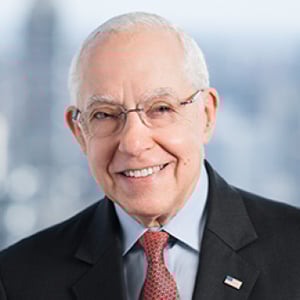
Former United States Attorney General
Michael B. Mukasey is the former Attorney General of the United States, the nation’s chief law enforcement officer. As Attorney General from November 2007 to January 2009, he oversaw the U.S. Department of Justice and advised on critical issues of domestic and international law.
From 1988 to 2006, Judge Mukasey served as a district judge in the United States District Court for the Southern District of New York, becoming Chief Judge in 2000.
From 1972 to 1976, Judge Mukasey served as an Assistant United States Attorney for the Southern District of New York, and as Chief of the Official Corruption Unit from 1975 to 1976. His practice consisted of criminal litigation on behalf of the government, including investigation and prosecution of narcotics, bank robbery, interstate theft, securities fraud, fraud on the government and bribery. From 1976 to 1987 and from 2006 to 2007 he was in private practice.
Judge Mukasey has received numerous honors, including the Federal Bar Council’s Learned Hand Medal for Excellence in Federal Jurisprudence. He served as Chairman of the Committee on Public Access to Information and Proceedings of the New York Bar Association from 1984 to 1987. He served on the Federal Courts Committee of the Association of the Bar of the City of New York from 1979 to 1982 and its Communications Law Committee from 1983 to 1986. Judge Mukasey was also a part-time lecturer at Columbia School of Law from January 1993 to May 2007, teaching trial advocacy.
He received his LL.B. from Yale Law School in 1967 and his B.A. from Columbia College in 1963.
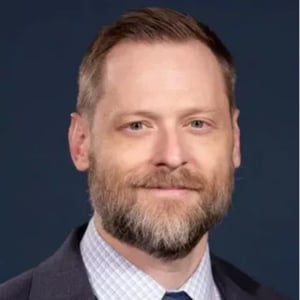
Litigation Director, Center for Individual Rights
Caleb Kruckenberg is CIR’s Litigation Director.
Caleb previously worked as a prosecutor, a public defender, a lobbyist for a national advocacy organization and, most recently, an impact litigator protecting the separation of powers at both the Pacific Legal Foundation and the New Civil Liberties Alliance. He has won major victories against numerous federal agencies, including the U.S. Department of Justice, Department of Labor, Bureau of Alcohol Tobacco and Firearms, and the Securities and Exchange Commission. He is also proud to have sued every U.S. attorney general, eight so far, since he has been litigating against the government on behalf of liberty-minded clients. Caleb has also argued more than 20 times in the U.S. Courts of Appeals, winning cases in 8 of the 12 regional circuit courts.
He graduated cum laude from Temple University Beasley School of Law in Philadelphia, where he was the lead articles editor for the Temple Law Review. Caleb also attended the Pennsylvania Academy of the Fine Arts, where he studied figurative painting.
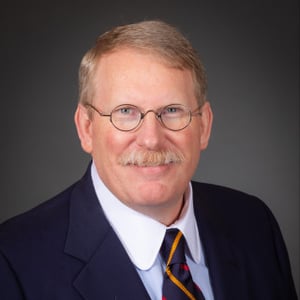
Co-Founder and President, Defense of Freedom Institute
Bob is a co-founder and President of DFI. He previously served as Senior Counselor to the Secretary of Education from 2017 through 2020 and Deputy General Counsel of the U.S. Department of Education from 2005 until 2009.
During his most recent tenure at the Department, Bob served on the Secretary’s Leadership Team as a strategic and legal adviser on higher education, civil rights, and congressional oversight matters. As the Department’s Regulatory Reform Officer, he also supervised the implementation of the Secretary’s regulatory agenda and was an architect of the Secretary’s reforms concerning Title IX and the Higher Education Act. As Deputy General Counsel, Bob advised on a wide variety of regulatory, legislative, and oversight matters.
Prior to joining the Department in 2017, Bob was vice president for regulatory compliance matters for several postsecondary institutions and practiced education and employment law in Washington, D.C. Before coming to the Department in 2005, he practiced law in New Orleans, litigating commercial, employment, and bankruptcy cases in Louisiana, Texas, and Mississippi.
Bob earned his A.B. in History from Georgetown University, studied British government and international politics at the London School of Economics and Political Science, and received his law degree from Tulane University Law School. His articles have been published by National Review, Real Clear Education, Washington Examiner, and other media outlets. Fox News has featured his work.
Bob is a member of the District of Columbia and Louisiana Bars and the Federalist Society for Law and Public Policy Studies.
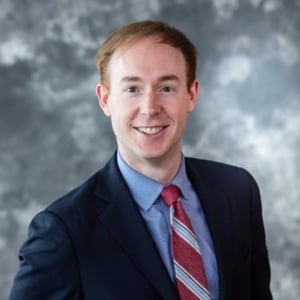
Attorney, Institute for Justice
Before joining Institute for Justice in 2021, Benjamin Field was a member of the appellate group at Hogan Lovells US LLP, where his practice focused on the U.S. Supreme Court and the federal courts of appeals. Before that, Ben clerked for Judge Diarmuid F. O’Scannlain of the U.S. Court of Appeals for the Ninth Circuit and Judge Kent A. Jordan of the U.S. Court of Appeals for the Third Circuit.
Ben received his law degree from Yale Law School in 2015, and an A.B. in economics from the University of Chicago in 2010.
Ben Field is a member of the New York and District of Columbia bars.
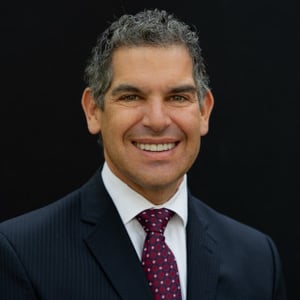
United States District Judge, Eastern District of Pennsylvania
Judge Wolson was nominated to the United States District Court for the Eastern District of Pennsylvania in May 2018 and was confirmed in May 2019. Judge Wolson earned his J.D., cum laude, from Harvard Law School, B.A., magna cum laude, from the University of Pennsylvania. After graduating from law school, he served as a law clerk for Hon. Jan E. DuBois of the U.S. District Court for the Eastern District of Pennsylvania. He then maintained a complex commercial litigation practice, first as an associate with Covington & Burling in Washington, D.C., and then as a partner with Dilworth Paxson in Philadelphia.
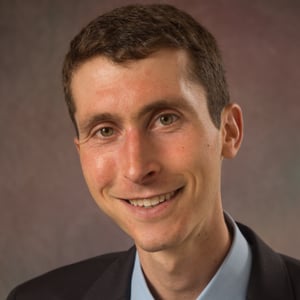
Professor of Law, University of Chicago Law School
Daniel Hemel’s research focuses on taxation, nonprofit organizations, administrative law, and federal courts. His academic work has appeared in the California Law Review, Cornell Law Review, Columbia Law Review, Georgetown Law Journal, Journal of Legal Analysis, National Tax Journal, NYU Law Review, Supreme Court Review, Tax Law Review, Texas Law Review, University of Chicago Law Review, and Yale Law Journal, and has been cited by the US Supreme Court as well as the Ninth Circuit and Federal Circuit Courts of Appeals. His op-eds and other writing have appeared in the New York Times, Washington Post, Wall Street Journal, Atlantic, Politico, Slate, TIME Magazine, and Vox. He also has provided on-air legal analysis for CNN, MSNBC, and NPR.
Daniel graduated summa cum laude from Harvard College and received an MPhil with distinction from Oxford University, where he was a Marshall Scholar. He then earned his JD from Yale Law School, where he was editor-in-chief of the Yale Law Journal. Before joining the University of Chicago Law School faculty, he was a law clerk to Associate Justice Elena Kagan on the US Supreme Court. He also clerked for Judge Michael Boudin on the US Court of Appeals for the First Circuit and Judge Sri Srinivasan on the US Court of Appeals for the District of Columbia Circuit, and served as visiting counsel at the Joint Committee on Taxation. He has held visiting professorships at Harvard Law School and Stanford Law School.
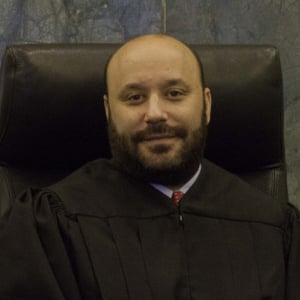
Judge, United States District Court, Eastern District of Arkansas
Lee Philip Rudofsky is a judge on the United States District Court for the Eastern District of Arkansas. Prior to his 2019 appointment by President Trump, Judge Rudofsky served as the Solicitor General of Arkansas, an Assistant General Counsel at Walmart, a Senior Litigation Associate at Kirkland & Ellis, and counsel to several Republican political campaigns. Today, in addition to his judicial service, Judge Rudofsky teaches law school classes on founding-era constitutional history and, separately, speaks to students across the country about the October 7th Massacre and the subsequent Israeli response. In 2024, Judge Rudofsky helped establish an annual judicial education mission to Israel that offers American judges the opportunity to learn first-hand about the Israeli legal system, Israeli society, and legal issues related to the Israel-Hamas war.
George Mason University Foundation Professor of Law, Antonin Scalia Law School, George Mason University
TODD J. ZYWICKI is George Mason University Foundation Professor of Law at Antonin Scalia Law School at George Mason University and Research Fellow of the George Mason Law and Economics Center. During the Fall 2023 semester he served as the Visiting Scholar in Conservative Thought and Policy for the Bruce Benson Center for the Study of Western Civilization at the University of Colorado-Boulder. From 2020-2021 he was Chair of the Consumer Financial Protection Bureau Taskforce on Federal Consumer Financial Law. In 2021 he was inducted to the American College of Consumer Financial Services Lawyers. He is also a Senior Fellow of the F.A. Hayek Program for the Advanced Study of Politics, Philosophy, and Economics at George Mason University and a former Senior Fellow of the Cato Institute. From 2015-2017 he was Executive Director of the George Mason Law and Economics Center. He served as Co-Editor of the Supreme Court Economic Review from 2006-2017. From 2003-2004, Professor Zywicki served as the Director of the Office of Policy Planning at the Federal Trade Commission. He has also taught at Vanderbilt University Law School, Georgetown University Law Center, Boston College Law School, Mississippi College School of Law, and China University of Political Science and Law.
Professor Zywicki clerked for Judge Jerry E. Smith of the U.S. Court of Appeals for the Fifth Circuit and worked as an associate at Alston & Bird in Atlanta, Georgia, where he practiced bankruptcy and commercial law. He received his J.D. from the University of Virginia, where he was executive editor of the Virginia Tax Review and John M. Olin Scholar in Law and Economics. Professor Zywicki also received an M.A. in Economics from Clemson University and an A.B. cum Laude with high honors in his major from Dartmouth College.
Professor Zywicki is also a Lone Mountain Fellow of the Property and Environment Research Center, a Fellow of the International Centre for Economic Research in Turin, Italy, and a former Senior Fellow of the Goldwater Institute. During the Fall 2008 Semester Professor Zywicki was the Searle Fellow of the George Mason University School of Law and was a 2008-09 W. Glenn Campbell and Rita Ricardo-Campbell National Fellow and the Arch W. Shaw National Fellow at the Hoover Institution on War, Revolution and Peace. He has lectured and consulted with government officials around the world, including Iceland, Italy, Japan, and Guatemala. In 2006 Professor Zywicki served as a Member of the United States Department of Justice Study Group on “Identifying Fraud, Abuse and Errors in the United States Bankruptcy System.”
Professor Zywicki is the author of more than 130 articles in leading law reviews and peer-reviewed economics journals. He is one of the Top 10 most-cited law professors in the field of Commercial Law and one of the Top 25 law professors on Twitter as measured by engagement levels. He is one of the Top 50 Most Downloaded Law Authors at the Social Science Research Network. He has testified multiple times before Congress on issues of consumer bankruptcy law and consumer credit and is a frequent commentator on legal issues in the print and broadcast media, including the Wall Street Journal, New York Times, The Washington Post, The Washington Times, Nightline, The Newshour with Jim Lehrer, Neil Cavuto Show, Fox & Friends, Smerconish, Fox News @ Night with Shannon Bream, Fox Business, CNN, CNBC, Bloomberg News, BBC, The Diane Rehm Show, Lou Dobbs Show, Jerry Doyle Show, and The Laura Ingraham Show.
Professor Zywicki is former Chairman and a current member of the Board of Directors of the Competitive Enterprise Institute, and is a member of the Board of Directors of the Institute for Humane Studies, Bill of Rights Institute, the Executive Committee for the Federalist Society's Financial Institutions and E-Commerce Practice Group, the Board of Trustees of the Foundation for Research on Economics and the Environment. He formerly served on the Governing Board and the Advisory Council for the Financial Services Research Program at George Washington University School of Business. He is currently the Chair of the Academic Advisory Council for the following organizations: The Bill of Rights Institute, the film “We the People in IMAX,” and the McCormick-Tribune Foundation “Freedom Museum” in Chicago, Illinois. He is a member of the Board of Visitors of Ralston College and was a member of the Board of Trustees of Yorktown University. From 2005-2009 he served as an elected Alumni Trustee of the Dartmouth College Board of Trustees.
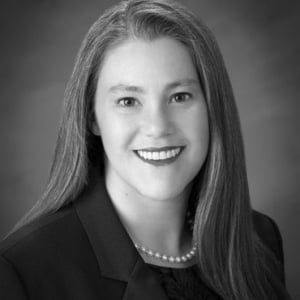
Judge, Arizona Court of Appeals, Division One
The Honorable Jennifer M. Perkins began service on the Arizona Court of Appeals, Division One, on October 30, 2017. At the time of her appointment by Governor Douglas Ducey, Judge Perkins was Assistant Solicitor General for the State of Arizona.
Judge Perkins was born in Portales, New Mexico, and primarily raised in Albuquerque. She attended the prestigious Albuquerque Academy from 1988-1995, before moving to Washington D.C. to attend the Elliott School of International Affairs at the George Washington University as a National Merit Scholar. Therafter, she relocated again to Dallas, Texas, and earned her juris doctor from the SMU Dedman School of Law, graduating cum laude in 2002.
Judge Perkins started her career at the law firm of Browning & Peifer (now Peifer, Hanson, Mullins, and Baker) in Albuquerque, New Mexico. While there, she litigated complex commercial matters including class action plaintiff and defense work, and assisted with employment and contract litigation. In 2003, the judge accompanied the Honorable James O. Browning in transitioning to the federal district court bench, serving as his first law clerk.
After her clerkship, Judge Perkins moved to Arizona to work for the Institute for Justice, Arizona Chapter, a public interest law firm. She spent five years with IJ-AZ litigating civil rights cases in Arizona and across the country. In 2009, the judge became Disciplinary Counsel for the Arizona Commission on Judicial Conduct, where she reviewed and prosecuted ethics complaints against state court judges throughout Arizona. After five years serving the state in this capacity, Judge Perkins entered private practice by joining an appellate law firm in Phoenix. While there, she worked on state and federal appeals involving a wide range of legal subjects, including complex business disputes, property rights, judicial ethics, and personal injury matters.
In January 2015, Judge Perkins joined the Office of the Arizona Attorney General to serve as the first Assistant Solicitor General; in that capacity, she was responsible for oversight of Attorney General Opinions and served as ethics counsel to the entire office. In addition to these two primary roles, the judge assisted on a variety of matters including trial and appellate litigation of election-related matters; federal appellate litigation with the Federalism Unit; state criminal appeals; and drafting amicus briefs on behalf of Arizona in state and federal courts.