Courthouse Steps Decision: Becerra v. San Carlos Apache Tribe

Event Video




The Indian Self-Determination and Education Assistance Act (ISDA), which allows Native tribes to administer their healthcare programs instead of the Indian Health Service (IHS), also requires IHS to pay “contract support costs” (CSCs) to tribes to offset overhead costs incurred by the tribes while administering their healthcare programs. Becerra v. San Carlos Apache Tribe (consolidated with Becerra v. Northern Arapaho Tribe) asks whether the IHS must pay CSCs not only to support IHS-funded activities but also to support tribes’ expenditure of income collected directly from third-party insurers.
The San Carlos Apache Tribe, exercising its sovereignty in Arizona, managed its healthcare programs and billed outside insurers directly. However, the Tribe encountered difficulties funding the additional healthcare services from third-party revenue because IHS would not pay CSCs for these transactions. The Tribe sued the U.S. Department of Health & Human Services, IHS, and the United States for the CSC for the years 2011–2013. The district court dismissed the Tribe’s claim for the third-party-revenue-funded portions of the Tribe’s healthcare program from CSC reimbursement, and the Tribe appealed. The U.S. Court of Appeals for the Ninth Circuit concluded that the statutory text of 25 U.S.C. § 5325(a) warranted a reversal of the dismissal and remanded further proceedings.
The Court heard oral arguments on March 25, 2024, and ruled in the case on June 6, 2024, affirming the Ninth Circuit's holding in a 5-4 decision.
Join us for a Courthouse Steps Decision program, where we will analyze this decision and its possible ramifications.
Featuring:
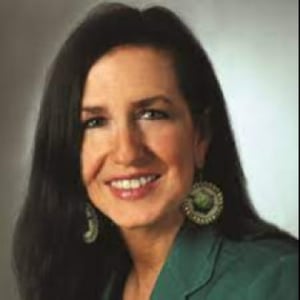
- Jennifer H. Weddle, Shareholder, Greenberg Traurig
*******
As always, the Federalist Society takes no position on particular legal or public policy issues; all expressions of opinion are those of the speaker.
Event Transcript
Chayila Kleist: Hello and welcome to this FedSoc Forum webinar call. Today, June 18th, 2024, we're delighted to host a post-decision Courthouse Steps on Becerra v. San Carlos Apache Tribe, which was decided recently by the court. My name is Chayila Kleist and I'm an Associate Director of Practice Groups here at the Federalist Society. As always, please note that all expressions of opinion are those of the expert on today's program as the Federalist Society takes no position on particular legal or public policy issues. Now, in the interest of time, I'll keep my introduction of our guest today brief, but if you'd like to know more, you can access her impressive full bio at fedsoc.org. Today we are fortunate to have with us Jennifer Weddle, who is a shareholder at Greenberg Traurig and co-chair of Greenberg Traurig's, American Indian Law Practice. Ms. Weddle has wide-ranging experience in complex regulatory and jurisdictional issues with a focus on Indian law, handling a variety of matters for tribal and non-tribal clients.
Her practice centers on providing strategies for resolving complex jurisdictional problems and focuses on the areas of tribal economic development and natural resources development. Ms. Weddle is the past President of the National Native American Bar Association and the past two-term Chair of the Federal Bar Association's Indian Law Section. She also currently serves as a 10th Circuit representative, on the American Bar Association standing committee on the federal judiciary, a role she's held since 2018, spanning evaluations for more than two dozen federal judicial nominees at every level of the federal courts. I'll leave it there. A last note and then we'll move into a time of opening remarks. Throughout the program, if you have any questions, please submit them via the question-and-answer feature so they'll be accessible when we get to that extended portion of today's webinar. With that, thank you all for joining us today. Ms. Weddle, the floor is yours.
Jennifer H. Weddle: Thank you so much Chayila, and thank you to the Federalist Society for having me. I'm delighted to provide this post-courthouse steps update on the opinions in Becerra v. San Carlos Apache Tribe and Becerra v. Northern Arapahoe tribe that were argued on March 25th where we entered the exciting world of contract healthcare costs and statutory interpretation. I was very happy to attend the argument and also happy to say that the case ended up pretty much exactly how I thought it would based on the oral arguments. What was this case about? The Indian Self-Determination Education Assistance Act or ISDA as it's commonly referred to in an acronym, permits eligible Indian tribes to contract with the federal government to assume responsibility for federal healthcare programs administered for the benefit of Indians. Upon entering into the contract, a tribe is entitled to the appropriated funds that the Indian Health Service or IHS would've otherwise allocated to the federal program.
The act also requires IHS to pay contract support costs - funds that are added to the appropriated amount to cover the cost of activities that tribes must undertake to operate the transferred program, but which either normally are not carried on by IHS when acting as the program operator or which IHS would've provided from resources other than the appropriated funds transferred under the contract. Separately, contracting tribes are permitted to collect payment from third-party payers like Medicare, Medicaid, and private insurers when they provide healthcare to covered individuals. The question before the court was whether IHS must pay contract support costs not only to support IHS-funded activities, but also to support tribes' expenditure of income collected from third-party healthcare payers like Medicaid, Medicare, and private insurers. In a five-four decision penned by Chief Justice Roberts joined by Justices Gorsuch, Jackson, Kagan and Sotomayor, the tribal view prevailed.
From the tribal perspective, this case was always about equality and being able to fully step into the shoes of the United States. All the tribes want is the same program funding IHS would have if IHS was still running the program with those billings and collections IHS would be spending all that money on the program and that's what the tribes are seeking to do in this case, nothing more and nothing less. And again, that's the view that prevailed. The specific statute before the court had Congress recognizing that tribes incur a wide range of overhead costs that a federal agency does not incur much of which is common to the sorts of overhead costs that any government contractor incurs like auditing, reporting insurance, government compliance costs, et cetera. Tribes also incur a variety of costs for services that a particular agency gets from its sister agencies. Here HHS gets its assistance from GSA, OMB, DOJ, et cetera, but tribes don't have access to those services.
These are unique government contracts designed to put tribes on an equal level with IHS in terms of program dollars from whatever source. The tribes sought to enforce the special ISDA mandate to add extra overhead costs on top of those program dollars so that all program dollars go into program services. The court agreed, essentially adopting the views of 10th Circuit Judge Allison Eid who wrote in her concurring opinion in the case below, "The statutory scheme here is undoubtedly complex and requires a good deal of analysis, but that does not mean it is ambiguous. In my view, the tribe presents the only reasonable construction because the government's interpretation vitiates much of the statutory scheme." Note that this is the first Judge Eid case on review at the court and out of the three circuit courts take on the issue, her views prevailed and the court agreed with her. Chief Justice Roberts wrote for the court, "Even if there are minor differences between what IHS and tribes can do with program income, that should not be surprising. Given ISDA's design to provide tribes greater flexibility in planning and implementing healthcare programs attuned to the needs of their communities. The government points to nothing in ISDA's text to suggest that those differences excuse IHS from paying contract support costs when tribes spend program income on the programs they have assumed from IHS"
So both Judge Eid and the majority of the Supreme Court have said, "We're going to live within the four corners of ISDA. We read the language, the government's interpretation takes a lot of Congress's intent off the table so the tribe's interpretation would appear to be correct." The focus for tribes was not being penalized by having to take on extra tribal overhead out of program dollars when the agency here - IHS - gets to use all of the program dollars on the IHS programs. That is a theme that made it into the majority opinion, perhaps where we can most see Justice Gorsuch's influence. Chief Justice Roberts wrote about this, "If IHS does not cover costs to support a tribe's expenditure of income, the tribe would have to divert some program income to pay such costs or it would have to pay them out of its own pocket. Either way, the tribe would face a systemic funding shortfall relative to IHS - a penalty for pursuing self-determination, and importantly, the court rejected that penalty for self-determination."
But the federal government's counter-narrative had prevailed at the DC circuit before judges Katsas, Rao, and Walker plus before three District Judges, Friedrich, Wake, and Freudenthal, and in the 10th Circuit before Judge Baldock. So it definitely had force, and it got four justices dissenting here. Basically, the government read ISDA as requiring only overhead reimbursement for the portion of the contracted program IHS funds, not the portion that Medicaid, Medicare, or private insurers fund. The government didn't consider it dispositive that the tribe was required by the same act to spend Medicaid, Medicare, and private insurance reimbursements on more healthcare to Indians under their contract. The government focused on the funding aspect, not on the contracted program.
As I say, the DC Circuit, three district judges, and Judge Baldock found that convincing, as did Justices Kavanaugh, Alito, Barrett, and Thomas here. Justice Kavanaugh wrote the dissenting opinion. The dissent seized on the alleged consequences of the majority's decision, including the numbers which appeared for the first time before the court without any citation or support whatsoever, namely that the tribe's position could cost between 800 million and $2 billion annually. These numbers were completely made up by the DOJ without citation or explanation of the methodology and yet they appear three times in the dissenting opinion. There was even an interesting colloquy between Adam Unikowsky who argued for the Northern Arapaho Tribe and Justice Alito at oral argument on this issue saying, well, what are the numbers? And Adam Unikowsky answered that the numbers appeared to have come from a conversation between somebody in the SG's office and somebody at IHS.
But those numbers were compelling nonetheless to the four dissenting justices. Justice Kavanaugh stated "As of now, Congress appropriates about $8 billion annually for Indian healthcare. So if Congress does not change the overall appropriations for Indian healthcare, the court's decision will divert funding from poorer tribes to richer tribes." And in footnote five, he added "Indeed it is not clear that all Indian tribes want to win on the grounds that the court relies on today. Going forward from the court's opinion today, as I understand it, the tribes may face greater restrictions on the spending of their third-party income than they have previously faced." That's one thing that I was very surprised to see in the dissenting opinion. There has never been some preference for unanimity among governments on an issue before the court, but here all of Indian country was totally unified on this case with absolutely no amicus in support of the United States' position, and the vast majority of tribes weighing in positively in support of San Carlos and Northern Arapaho either directly as amicus or through tribal organizations as amicus.
This "poor versus rich tribes" thread was raised by the United States for the first time before the court and candidly, it's absurd. Both the San Carlos Apache tribe and the Northern Arapaho tribe are very, very poor tribes who are trying to make the most of their contracting dollars. There was never any debate or dissent amongst tribes related to this issue and really a complete red herring raised by the DOJ. The dissenters offered five reasons they agreed with the government here. First, the statutory authorization for contract support funding found in section 53 25 A2 of ISDA does not mention third-party income that tribes collect pursuant to the Separate Improvement Act from Medicaid, Medicare, and private insurance companies. Then they repeat the unsupported $800 million to $2 billion annual consequence, and Justice Kavanaugh wrote as follows, "Congress does not usually employ subtle indirection to dish out significant pots of federal money to agency programs and if the executive branch for three decades had somehow misunderstood Congress's instructions, Congress could have amended the statute. It did not."
The idea that Congress should be fly-specking executive branch implementation of funding here is really an interesting one. In point of fact, tribes have for decades argued - and Congress has held numerous hearings on - the gross underfunding and inadequacy of IHS. It almost seems like an abdication of the court's role here to say that Congress should be proactively fixing bugs in the system before the court rules on the interpretation of the statute. Indeed, the dissent has teed up that if Congress thinks the court is wrong, they could certainly fix it now, as Congress has done following other Indian law cases by the court, for example, the "Duro fix" for criminal jurisdiction over non-member Indians following the court's decision in Duro v. Reina in 1990, but here I think it's highly unlikely that Congress will think that the court majority is wrong, that they'll enact legislation to reflect that and reduce the contract support costs available to tribes under ISDA and under the majority's opinion. If this is a case that was always about equality, it would be really tremendously unpopular for Congress to come in after the fact and take that equality away. But again, I think it's interesting that the dissenters are really honed in on this issue that Congress hasn't taken action to correct the executive branch's interpretation.
Their second dissenting ground is that that same section of ISDA, 53 25 82, authorizes contract support funding only for the activities that a tribe must perform to comply with its self-determination contract and support its contracted program and that third-party billing is essentially not a must. Their third ground, turning to section 53 26 of ISDA, is that that provision independently restricts contract support funding to those costs that are directly attributable to tribe self-determination contracts and that contracts with Medicaid, Medicare, and private insurers do not address - the IHS contracts do not address how tribes spend that third-party income so that it's a separate contracting issue.
Fourth, and this is really I think kind of the same as their third reason, is there's not an associated contract between a tribe and Indian Health Service relative to Medicaid and Medicare payments. Those are separate contracting through the Secretary of Health and Human Services for Medicare and Medicaid. And then fifth, the dissenters say that another statutory provision in the Self-Determination Act underscores that separation between, on the one hand, the federal funding that tribes received due to their self-determination contracts and on the other hand, the third-party income that tribes collect from Medicaid, Medicare, and private insurers. So you've got five justices sticking to the plain four corners of ISDA with what they feel is their best reasonable interpretation in a statute that they ultimately decided was not ambiguous. There was no application of the Indian canons finding that you had to defer to the tribal-friendly interpretation that the Ninth Circuit had done, which Judge Moritz's writing for the 10th Circuit had done, they didn't even feel the need to get to that. But you still have this very vigorous dissent from four justices who want to really closely follow the position of the US DOJ, which all tribes disagreed with.
Another point of interest here is that from a government contract lawyer's perspective, those of you who do that would be very familiar with the concept of program income - income earned during the course of administering a reimbursable contract. A standard government contracting clause requires that all program income be folded back in and used to provide additional services under the contract. That is exactly the situation with Indian tribes that are administering ISDA contracts. So the situation that tribes are dealing with in this case is very routine in that government contracting context. These are cost-reimbursable government contracts and all that money should be going back in. IHS had totally resisted acknowledging those costs here, those overhead costs for the enlarged contract, and the court rejected that outlier approach so that there can't be one rule for all government contracting except when it involves Indian tribes.
I raised this for a couple of reasons. One is Justice Barrett had a very intensive focus at oral argument as she often does pressing counsel on how does the statute actually work. She gets very focused on the implementation of federal statutes sometimes at a very granular level and it's interesting to see how that plays out at oral argument when you often have Supreme Court specialists who are arguing who are not subject matter specialists. And here I think the tribal interests were really well-served by having Adam Unikowsky for the Northern Arapahoe tribe who's an excellent Supreme Court litigator paired with Lloyd Miller on behalf of the San Carlos Apache tribe, who truly is the nation's leading subject matter expert on Indian Health Service contracts support costs. And that one-two punch I think answered a lot of the court's very specific questions, but definitely something to look out for as the court continues to weigh with a lot of amicus support, how specific federal statutes are implemented.
The second reason to think about why we don't have an exception to the general government contracting approach I'll get to in just a minute, but I want you to know what's happened here after the court's decision. Congressional offices are now in the heat of the relevant appropriations efforts and the authorizing committees are working to understand the impact of the ruling in these cases right after the decision, HHS Secretary Becerra and IHS Director Tso both released statements acknowledging the court's decision and both urged Congress to act on the fiscal year 2025 president's budget proposal to shift the IHS budget from discretionary to mandatory funding starting in FY 2026. So really an interesting position there where the Biden administration seems to almost be trying to pretend that they were on the side of tribes here, that this was always a cost savings measure, that somehow they really do think there'll be this significant impact and that they'll have to make scarce resources go further with additional demands on that typically $8 billion annual appropriation. So trying to shift that from discretionary to mandatory, but the Biden administration Department of Justice has routinely opposed tribal interests including in this case.
Other examples include the Navajo Nation water Rights case and the Lac du Flambeau bankruptcy immunity cases from last term. And all of these cases have been about avoiding the monetary liability of the United States and not tied to the administration's Indian law policies in any way. That's a problem that tribes have noted for a long time, that internal conflict within the Department of Justice, and hence why tribes continue to call for the establishment of an office of Treaty Rights Enforcement within the DOJ.
Many of you will observe that the court often calls for the views of the solicitor general in nearly every case involving tribal interests. It's definitely worth watching whether that continues and how much confidence the court has in the views of the SG. Note here that Justice Kagan is the former SG herself and in the majority that rejected the government's position here. Another observation I have about this case is the court's continuing trend to stick to their knitting and decide Indian law cases on very narrow grounds here. The four corners of the ISDA statute, as the justices have discussed in various cases for a long time the court had just made it up on Indian law, but as I've suggested in previous presentations, I think the court recognizes they're in a hole on Indian law and they have decided to stop digging. So they are exercising very significant restraint. They have stopped what the court often did in the past. They've stopped trying to match the law to the current state of affairs, which often caused a rash of unintended and terrible consequences. And they're instead really closely sticking to the words of Congress and while they highlight the potential policy consequences of their decisions as the dissent did here, they're really teeing those up for Congress to address and in Congress, tribal rights inequality are ascendant with the increased political engagement of tribes right now. So that's my summary and report. I'm happy to take any questions, Chayila.
Chayila Kleist: Well, thank you. I really appreciate that summary, both of how we got here and of the opinions. I will issue the reminder to our audience if you have questions, please go ahead and submit those. In the meantime, I have a couple of my own that I'd love to pose for you. You've touched on some of this because your summary was so helpful, but up to this point, since the IHS wasn't funding the third-party admin costs, not for collection but for spending that money, how were those admin costs being funded, and what could change now that we have this decision?
Jennifer H. Weddle: So the costs were being funded by the tribes themselves, they were absorbing it in order to be able to redirect that income. And for the San Carlos Apache tribe, we're talking about over the relevant periods, about $1.6 million, which they should now get. It might seem like a de minimis amount. Most of these self-determination contracts are very small, so a tribe might get only a few hundred thousand dollars to administer an entire program to thousands of people over the course of a year. And so the associated third-party income is likewise pretty minimal flowing from that. The big dollars come in when you consider that this is all of Indian country and really more of a question now on how are those dollars allocated. Will Congress increase appropriations? They're under constant pressure to do that, and that's true not only in the context of IHS but across Indian country. Law enforcement is another key area of priority where tribal programs have been persistently and grossly underfunded so that tribes are typically funded at less than 10% of need under these federal self-determination contracts.
Chayila Kleist: Got it. Following up on that and then your commentary concerning the government's argument as to what this would cost. First off, do we have better numbers as to what sort of admin costs will now have to be reimbursed could be, and what then might be the impact of that on the way funding is allocated both to the IHS and within the IHS?
Jennifer H. Weddle: No, we don't have better numbers, and the court was pressing for that at oral argument and it was very clear when they pressed counsel for the United States on that question that there had been no real analysis, there's nothing in the record on this, and counsel went on to explain that that was their guesstimate based on current litigation that is out there and that they anticipate the court also pressed counsel for the tribes on that, but they said, "Hey, we're just two tribes. We don't know what anybody else gets. How would we know what the federal government spends or doesn't spend?" And I think there are efforts underway now to get GAO involved and do more analysis and we're in the thick of it in the appropriations process and hopefully there'll be some modest increase but how much confidence there is in Congress's ability to do anything may waver on a given day, so we'll have to see.
Chayila Kleist: Got it. Following up on the split that seems to be between the majority opinion and the dissent, is it clear that collecting and spending of third-party funds is within the contracts of the tribes and why is there a difference between the two opinions on that?
Jennifer H. Weddle: I would argue that it is clear and a majority of the court agrees that it is clear within the four corners of ISDA and it's something I've seen routinely addressed in the contracts, the self-determination contracts that tribes enter into with IHS. So it's pretty routine. And why is there that split? I think a lot of it deals with unfamiliarity with Indian country, concern about policy consequences that the court has had, and a lack of confidence that I think the dissenters have and a lot of previous precedent there of the court in the Indian law space, and I think there's maybe some differing views on what the solutions to that are. This is an area where Justice Gorsuch has emerged as a clear leader on the court and I think is helping steer colleagues to what is that path of narrowest ruling that's least likely to create policy consequences that really honor the separation of powers and defers to Congress that if an executive agency has gotten it wrong, if tribes or states have gotten it wrong, the ball is firmly back in Congress's court to fix it and not that of the judiciary.
Chayila Kleist: Thanks. You mentioned this five-four split is pretty much what you anticipated the court was going to do. Is there anything particularly worth noting about how the court broke out on the issue?
Jennifer H. Weddle: I think the one to watch now is always Justice Barrett. She's, I think, very focused on potential impacts to women and children especially. She of course wrote the majority in the Brackeen case on the Indian Child Welfare Act. She's a swing vote on Indian law matters right now, and I think she's always going to be concerned about what could make services less available to women and children in Indian country. And so I think arguing, making sure that her concerns are always addressed in your briefing and your oral arguments is going to be really key in the future. Justice Thomas, Justice Alito, and Justice Kavanaugh tend to have more, I would say, traditional views on the court's approach to Indian law. I also think it's particularly interesting here that Justice Kavanaugh goes out of his way to write on this Indian law case. I think it's kind of shadowing Chief Justice Rehnquist's approach to Indian law, so that'll also be interesting to continue to watch.
Chayila Kleist: Thanks. You've touched on this a little bit, but I'd love to open up this in case there are any other comments. Other than the impact for the parties in the case itself, what seems to be or what could be the immediate impact of this decision? Are there other cases currently ongoing that would be affected by this ruling, the budget's coming up shortly. What changes?
Jennifer H. Weddle: I think there are maybe five or six other active litigation matters where tribes have brought similar contract support cost claims that were stayed pending the Supreme Court's opinion, those are now resolved, so I think we'll see that litigation proceed and probably settle relatively quickly would be my guess. Instead, the focus will really be on the appropriations process in Congress and how to maybe pivot from discretionary to mandatory funding. But I think much bigger than pivoting to mandatory funding would be increasing that appropriations amount to something that actually comes somewhere in the universe of meeting the need, which it absolutely does not.
Chayila Kleist: Got it. And longer-term, more downstream effects. Are there industries or areas of law that should be paying attention to the possible indirect effects of this decision?
Jennifer H. Weddle: I think it also gives some clarity to government contractors that they've been doing this the right way all along and they don't need to anticipate any shenanigans with how they engage in their billing and application of contract support costs. It really levels the playing field. I think it is about equality. Tribes now stand fully in the shoes of the United States in a contract, and I think that that helps everybody who has a contract to stand in the shoes of the United States to provide services to the United States.
Chayila Kleist: Got it. Last question, barring any audience questions, now that we have a decision, are there any questions that remain unanswered?
Jennifer H. Weddle It's all sunshine and positivity here.
Chayila Kleist: Fair enough. Well, that's all I got and I think that well covers the case, so we really appreciate you taking the time. Unless you have final thoughts you'd like to offer on the case, we can wrap it there. On behalf of the Federalist Society, thanks so much. Really appreciate you lending us this portion of your morning, and thank you also to our audience for joining and participating. We welcome listener feedback by email at fedsocforums@fedsoc.org. As always, keep an eye on our website and your emails for announcements about other upcoming virtual events. With that, thank you all for joining us today. We can wrap early, and we're adjourned.